
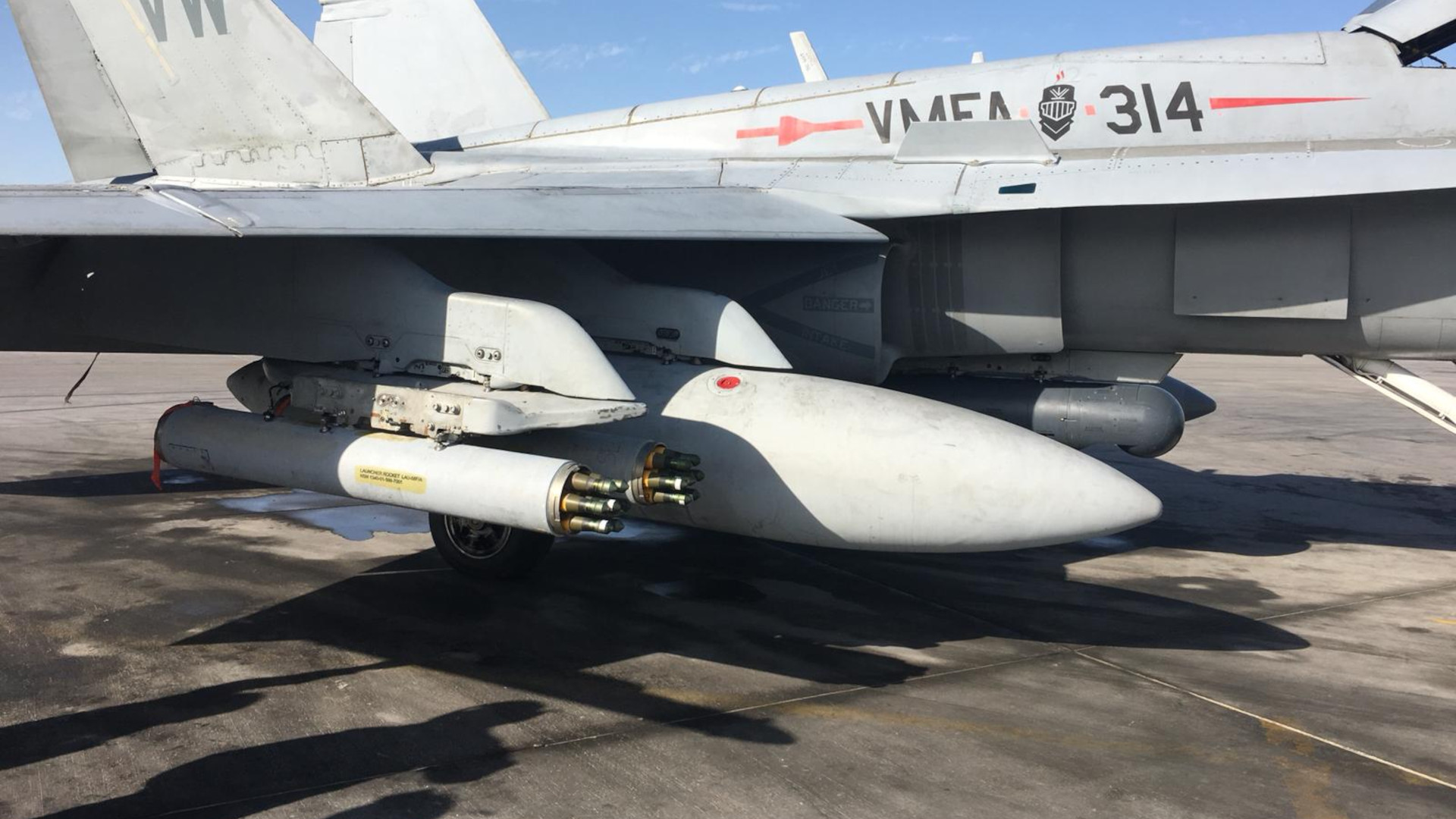
U.S. Marine Corps legacy F/A-18C/D Hornets are in line to add air-to-air optimized versions of the 70mm Advanced Precision Kill Weapon System II (APKWS II) rocket to their arsenal. This will give the jets an important, lower-cost boost in their ability to take down drones, as well as certain cruise missiles. APKWS II has already become a principal air-to-air counter-drone weapon for the U.S. force, which began using the rockets in this way on F-16 Vipers back in 2024, and has now extended the capability to the F-15E Strike Eagle and A-10 Warthog.
The recently released 2026 Marine Corps Aviation Plan highlighted a “high-density low-cost counter-Unmanned Aerial Systems (C-UAS)/cruise missile capability” as a top funding priority for the service’s F/A-18C/D fleet. The Marines currently have some 125 legacy Hornets in service, which have been receiving other key upgrades and additions to their arsenal in recent years to help ensure their relevance ahead of their expected retirement around the end of the decade.
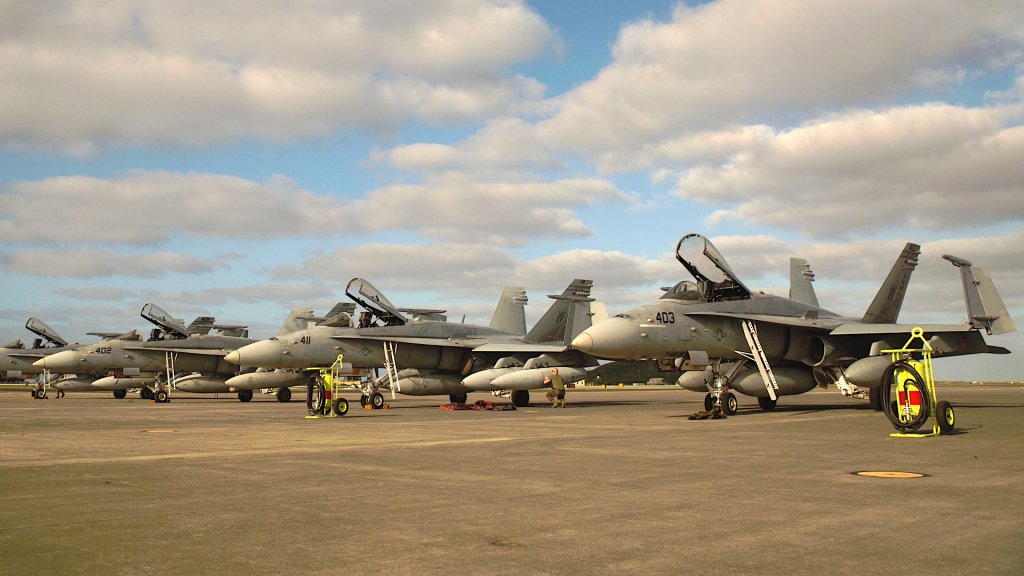
“The Legacy Hornet continues to generate increased lethality, relevance, and survivability through its final fit,” a Marine Corps spokesperson told TWZ when asked for more information. “Addressing the C-UAS and Cruise missile capability, the F/A-18 has a previously funded, U.S.C. Title X-compliant requirement to incorporate the APKWS in an air-to-air mode and LAU-115/LAU-127 [missile launch rails] to integrate with the AIM-9X.”
Marine legacy Hornets already have the ability to employ the AIM-9X Sidewinder, so it is unclear exactly what changes are being made in this regard, and TWZ has reached back out for details. It is possible that this could entail work to increase the total number of AIM-9Xs the jets can carry at once. The U.S. Navy pursued a similar crash upgrade program for its F/A-18E/F Super Hornets back in 2024 in response to an urgent need for increased capacity to shoot down drones being employed by Iranian-backed Houthi militants in Yemen.
The decision to integrate the air-to-air APKWS II capability onto Marine F/A-18C/Ds is more clear cut, and is a logical development. The Air Force has already proven that the rockets are capable anti-air weapons against drones in real combat, which TWZ was first to report. The service initially disclosed that it was experimenting with using APKWS II in this role back in 2019. This is a capability that may also now be in service in Ukraine on that country’s second-hand F-16s, and could be set to appear elsewhere globally. The laser-guided rockets have separately demonstrated their ability to knock down drones when used as surface-to-air weapons in the course of the ongoing conflict in Ukraine.
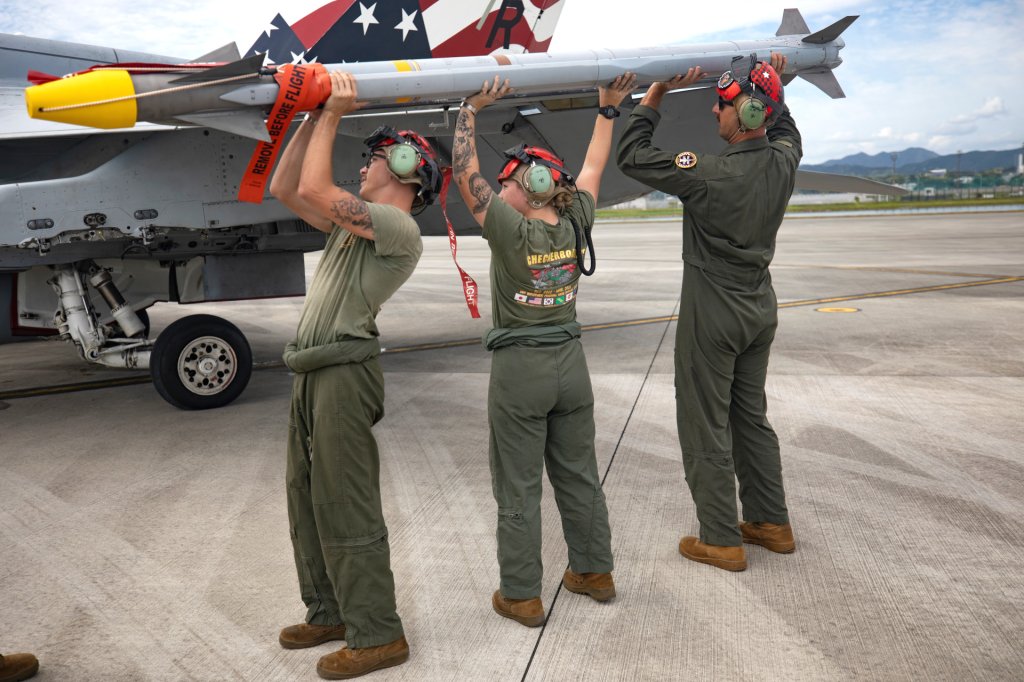
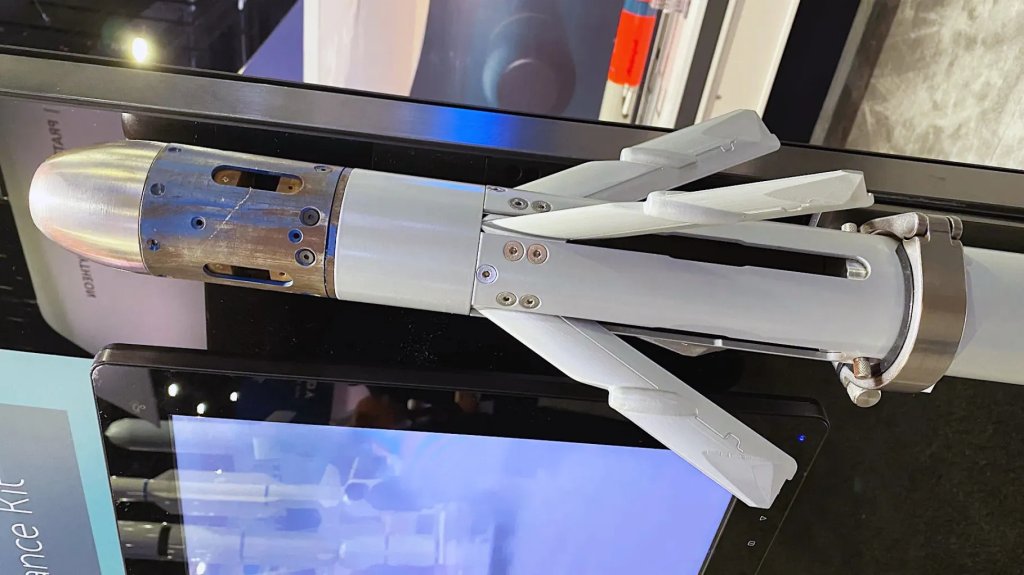
APKWS II was originally designed as an air-to-surface weapon, and Marine legacy Hornets can already employ them in this mode. The rockets also have a demonstrated surface-to-surface capability. Each one of the rockets has three main parts: a 70mm rocket motor at the rear, one of several standardized warhead options at the front, and a laser guidance section in between.

The air-to-air optimized variant, designated the AGR-20F and also referred to as the Fixed Wing, Air Launched, Counter-Unmanned Aircraft Systems Ordnance (FALCO), incorporates a proximity fuze and changes to the munition’s guidance and sensing algorithms.
In the air-to-air role, APKWS II offers valuable cost and magazine depth benefits. The unit cost for the APKWS II guidance section has historically been between $15,000 and $20,000. 70mm rocket motors run in the $1,000 to $2,000 range. The price point for warheads fluctuates more widely, given the breadth of options available, as you can read about more here. By comparison, current generation AIM-9Xs each cost around $450,000, while the latest versions of the AIM-120 Advanced Medium Range Air-to-Air Missile (AMRAAM) have price tags around $1 million.
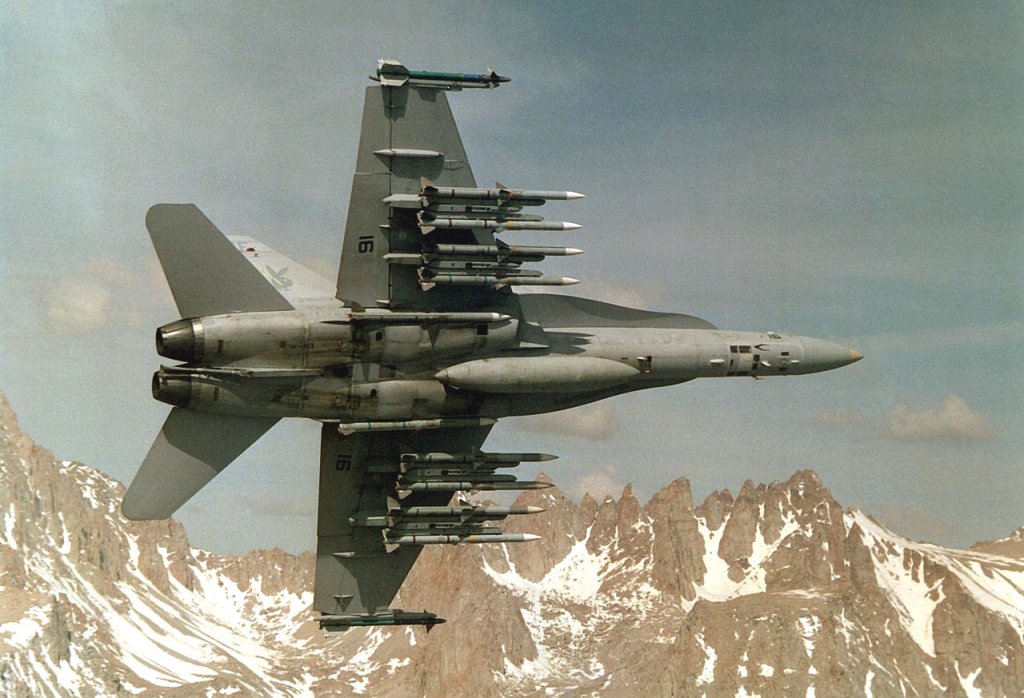
For tactical jets like the Marine Corps’ legacy Hornets, APKWS II rockets also come loaded in seven-shot pods. At most, an F/A-18C/D can carry up to 12 traditional air-to-air missiles at once, spread across its wingtip, underwing, and intake stations. However, many of those stations are often taken up by range-extending drop tanks and/or podded sensors. Substituting just one seven-shot pod for a single air-to-air missile would give a jet six more engagement opportunities during a sortie. Multiple pods can also be carried on certain pylons, further increasing the aircraft’s magazine depth.
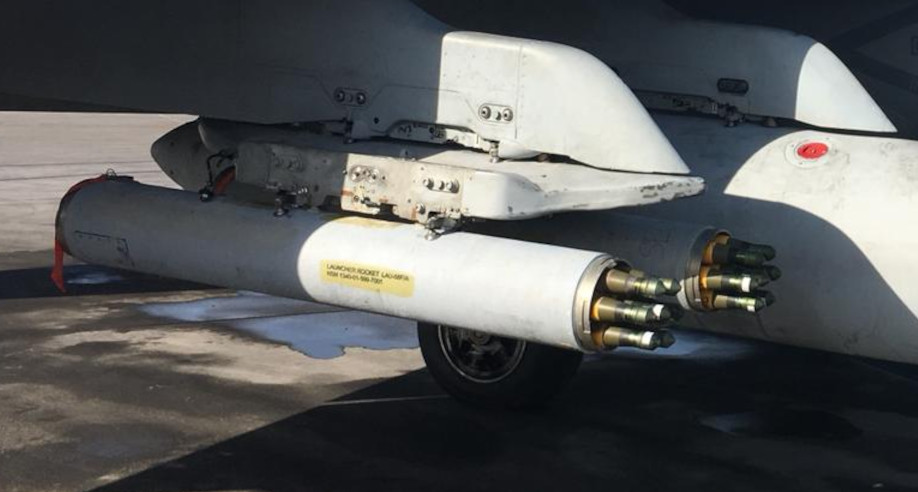
U.S. operations in recent years against the Houthis in Yemen, as well as in the defense of Israel from Iranian drone and missile attacks, have underscored the importance of more total anti-air capacity, as well as capability. Complex attacks involving large volumes of disparate threats present a real danger of simply overwhelming defenders. This was made clear during Iran’s strikes on Israel in April 2024, when American fighters had to land to rearm and refuel after running out of missiles, all while threats were still passing overhead. In that instance, Air Force F-15E Strike Eagle crews had also unsuccessfully attempted to down Iranian drones with Laser Joint Direct Attack Munition (LJDAM) precision-guided bombs – something else TWZ was first to report – and their aircraft’s built-in 20mm M61 Vulcan cannon.
The specific pairing of air-to-air optimized versions of APKWS II with Marine legacy Hornets will also benefit from the new AN/APG-79(V)4 radars that those aircraft have been receiving in recent years. The APG-79(V)4 is an active electronically scanned array (AESA) type that can ‘see’ further, scan faster, and spot and track targets, even smaller ones, with greater accuracy compared to the previous APG-73 type on the Marine jets.
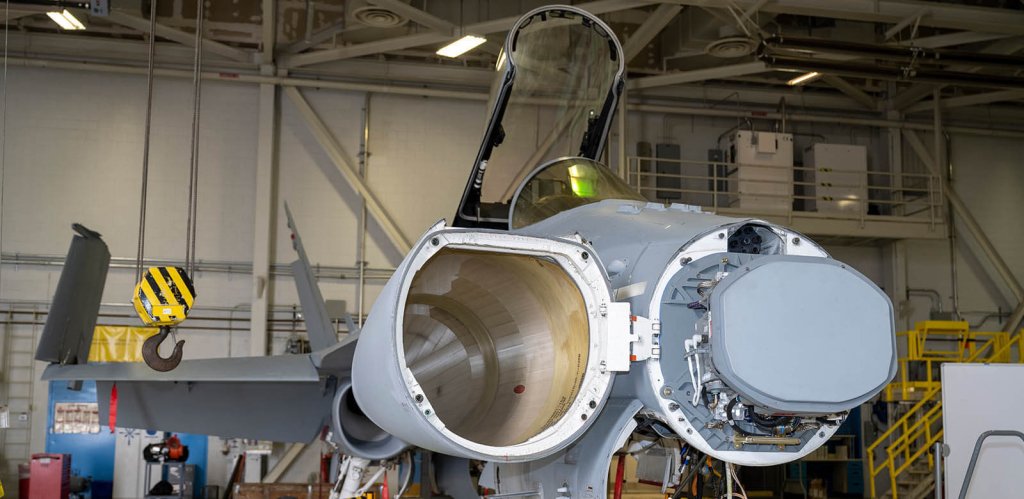
In their current form, FALCO rockets still have to be guided to their target via laser. This, in turn, requires the active lazing of that target throughout the entire engagement cycle, either by aircraft launching the rocket or another platform. This imposes limits on how fast a launch platform can move on from engaging one target to the next. BAE Systems, the APKWS II’s prime contractor, is now working on a new dual-mode guidance system that adds in an imaging infrared seeker. What this will allow for has been described as a pseudo-fire-and-forget capability, as the rocket would still have to be cued to the target initially via laser.
It should also be stressed that the APKWS II is not a dogfighting weapon. The drones and subsonic cruise missiles that the rockets are capable of engaging are relatively steady, non-reactionary, low-performance targets.
Still, APKWS II has clearly emerged as a valuable, if not increasingly critical, lower-cost companion to traditional air-to-air missiles. As already noted, other countries are beginning to at least take notice. For instance, consideration is being given to adding them to the arsenal of the Eurofighter Typhoon.
More platforms are likely to gain this capability in the future. Given the Navy’s own experiences in operations in and around the Red Sea against the Houthis, it is increasingly curious that there has been no announcement of adding air-to-air versions of the APKWS II to the arsenal available for that service’s F/A-18E/F Super Hornets. The discrepancy is even more pronounced now in light of the Marine Corps’ plans for its legacy Hornets.
Contact the author: joe@twz.com
Loading comments…
Comments couldn’t be loaded. Please refresh the page.