
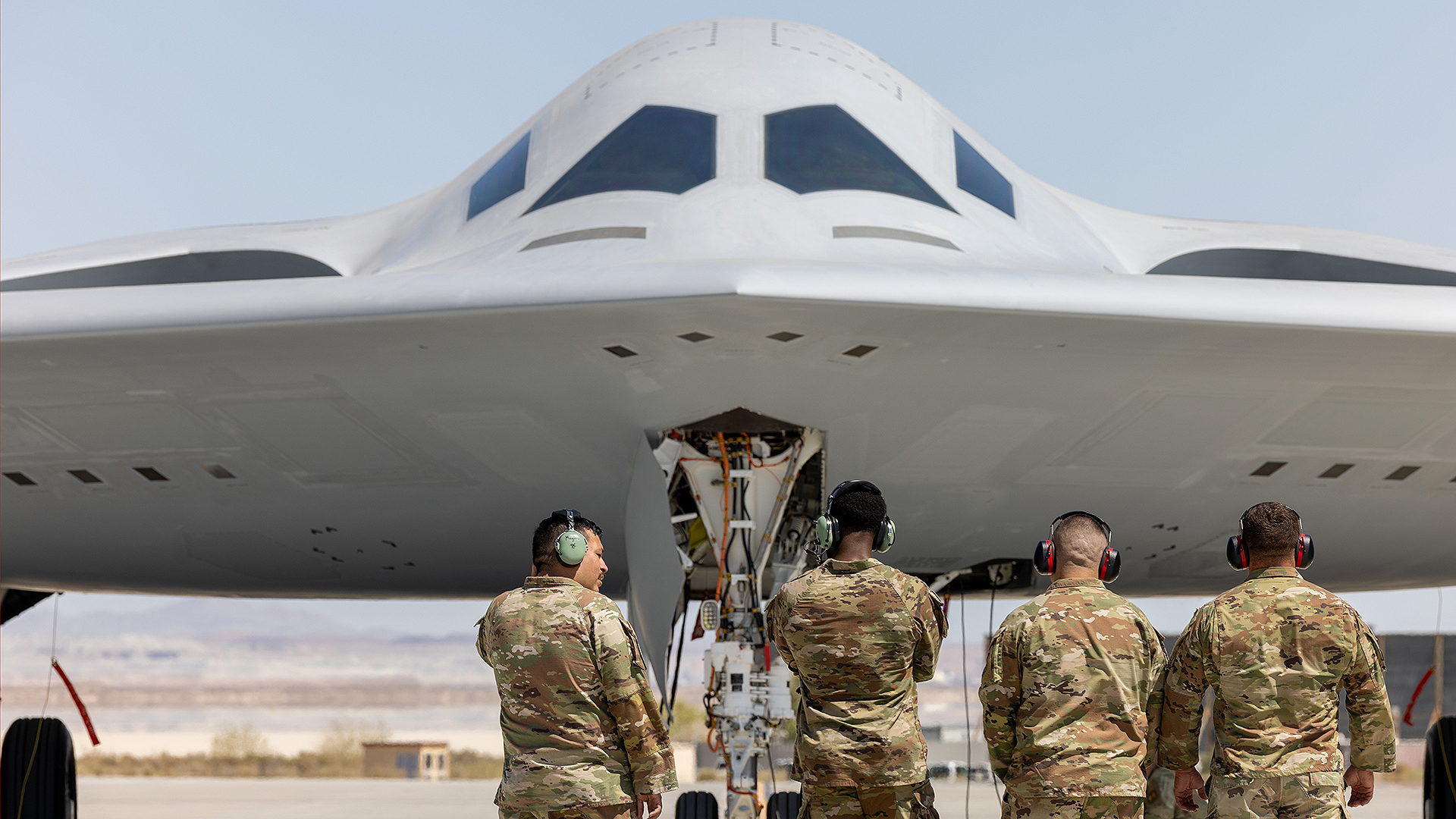
The B-21 Raider stealth bomber is one of the Air Force’s most ambitious weapons programs, designed to carry out deep-penetrating nuclear and conventional strikes over heavily defended skies and other missions its predecessor, the B-2, was never envisioned as doing. As the head of the U.S. Air Force Global Strike Command (AFGSC), one of Gen. Stephen L. Davis’s main tasks is guiding the development of the Raider, of which 100 are currently slated for procurement and that number could grow substantially larger in the coming years.
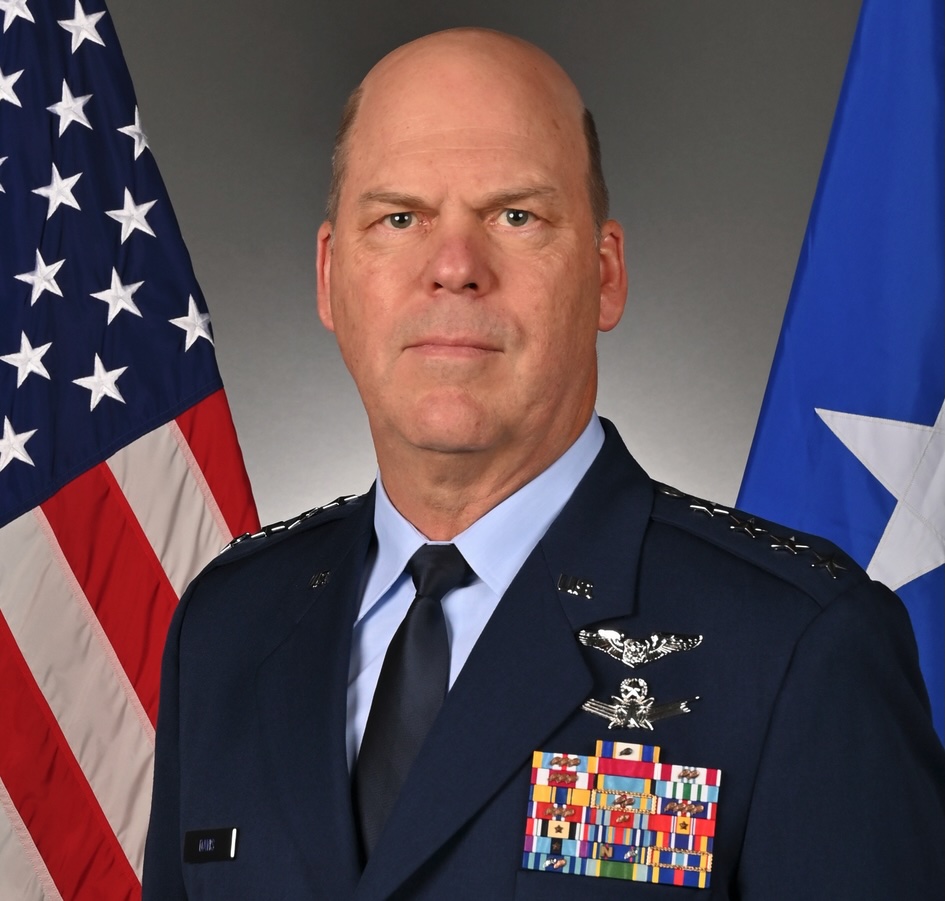
In his first interview since taking command on Nov. 4, 2025, from Gen. Thomas Bussiere, Davis offered The War Zone exclusive insights about the B-21 and what it can bring to the table in a future high-end fight. As the leader of AFGSC, Davis also oversees B-1B Lancer, B-2A Spirit, and B-52 Stratofortress strategic bombers and all U.S. Air Force intercontinental ballistic missiles (ICBMs). During his Monday morning conversation with us, Davis talked about a host of other topics beyond just the Raider, including the future of the E-4C “Doomsday Plane,” the way forward for the troubled Sentinel ICBM program, and challenges posed by China and Russia.
You can read the first part of our interview here.
Some of the questions and answers have been lightly edited for clarity.
Q: What capabilities will the B-21 have by the time it achieves initial operating capability (IOC), and what will come later?
A: Right now, I’m focused on delivering the initial capability. And unfortunately, I can’t talk too much about the capabilities of the bomber. They are significant, and they are impressive. From the command’s perspective, we’re concentrating on getting everything in place up at Ellsworth Air Force Base in South Dakota to bed down that capability. Really, it’s the acquisition community that’s still delivering that plane, and I’m certainly interested in that, but I’m probably more focused on the bed down and getting those things right.
Q: Can you provide an update on the Raider’s Initial Operating Capability (IOC)?
A: As for IOC, we are thinking of it in an OPSEC framework. We are not building prototypes, and the infrastructure to support the B-21 is on time. The program remains a benchmark of acquisition and has validated the value of the digital engineering that went into it from the beginning; I can tell you that the penetrating global strike platform we are building and will get with the Raider is amazing.
Q: Will the B-21 still be optionally manned?
A: That’s a future capability for the aircraft. Right now, we’re planning for the manned implementation of that aircraft and getting the crews ready to be at Ellsworth when the plane arrives.
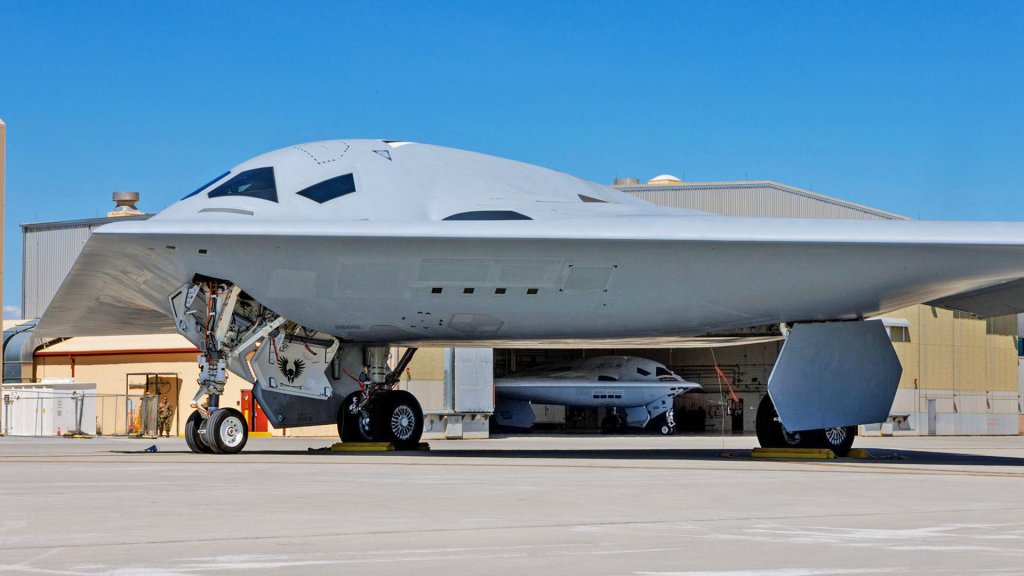
Q: What roles will the B-21 be capable of executing beyond the standard deep strike mission set of the B-2? Will they be able to defend themselves kinetically from air threats as well as ground threats?
A: I really don’t want to talk about those specific attributes of the B-21 because some of those are classified. What I can say is that it will continue to build on the capabilities of the B-2. As you know, in the environment and the places where it might operate, those people are improving their defenses, and likewise, we have to improve the capabilities so we can deliver for the president and the nation a penetrating bomber. Clearly, with a nuclear mission, there are places that we’re going to have to go to deliver nuclear weapons, if ever called upon by the president of the United States, and that’s something that I have to provide to the Department of War and to the president.
Q: We have heard so much about the Long-Range Strike family of systems, but so far, we only know of two members of that family, the B-21 and the Long-Range Stand-Off Weapon (LRSO). What other types of systems make up this family and when will we be able to meet them in the future?
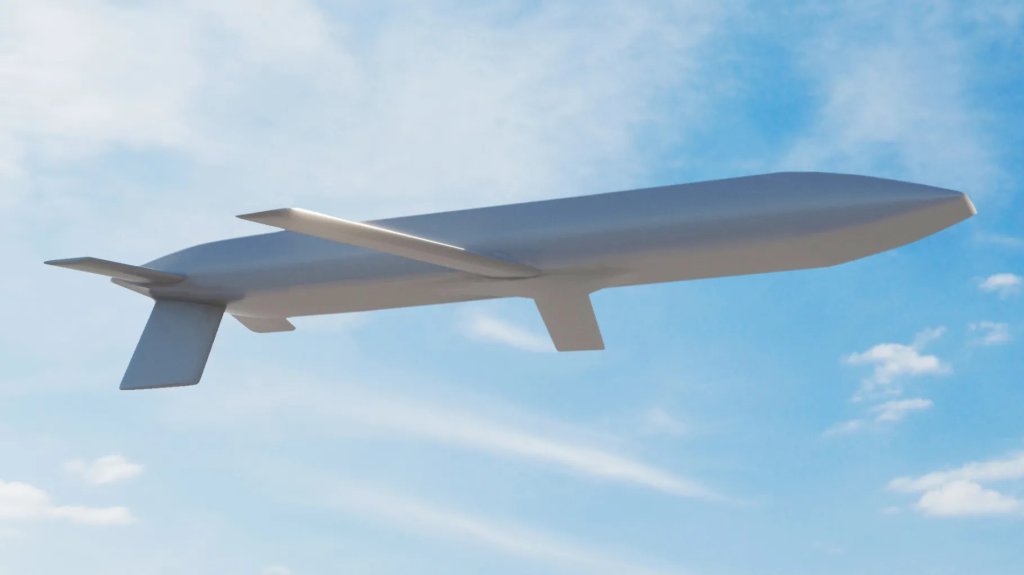
A: Well, once again, you hit me on all the classified aspects of the program. I would say any platform operating today is in a family of systems that’s connected to other things within the Department of the Air Force, and the Department of War, and that’ll continue to be the case of the B-21. And, as a matter of fact, we’re going to extend those, and it will be more connected than the B-2 in order to do its penetrating global strike mission. I think one thing you could add to family systems is the F-47 6th-generation fighter. You know, it’s going to be paired with the F-47 under certain circumstances. So we certainly consider that new 6th-generation stealth fighter as part of the family of systems that might be employed with the B-21.
Q: Any update on that program?
A: Nothing other than I believe it still remains on track. I was recently out of St. Louis, and they got a chance to take a look at the work that they were doing out there. As you know, Air Force Gen. Dale White has just been announced as the Direct Reporting Portfolio Manager for Critical Major Weapon Systems, leading the F-47 and the B-21 programs, so that will create some integration there as well. I know Dale. He’s a very talented acquirer, so I think that bodes well for both those programs.

Q: How will unmanned systems, specifically aerial drones, be paired with the future bomber force? What capabilities are you looking at in this regard?
A: In terms of what we might incorporate into both the B-21 and the B-52 in future environments, we’re going to take every bit of information we get on board that aircraft to improve situational awareness. So I’m agnostic on where that comes from, whether that’s overhead capabilities, whether that’s remotely piloted capabilities, or UASs. Our plan is to integrate as much information as we can of that platform.
Q: Will B-21s be able to control collaborative combat aircraft (CCAs) or longer-range drones? What about the B-52J?

A: In terms of CCAs, I think where the Air Force is right now is that they’re building those to be incorporated into the F-47 primarily in fighter aircraft. That’s the first step. It’s certainly possible in the future that they might become part of that family of systems. When you think about long-range strike, when we’re doing [continental U.S.] CONUS-based missions, it really would limit the ability to use some of those platforms as they don’t quite have the extended flight envelopes that the B-21 and the B-52 have.
Q: And with the B-52, as far as working with CCAs, is that still to be determined?
A: I would say yes. I would think that the B-21 would be the more logical partner for that. But once again, we have to deliver that capability that the Air Force does and integrate with fighters. That’s the first step. Assuming that goes well. I think we’ll look at the next steps.
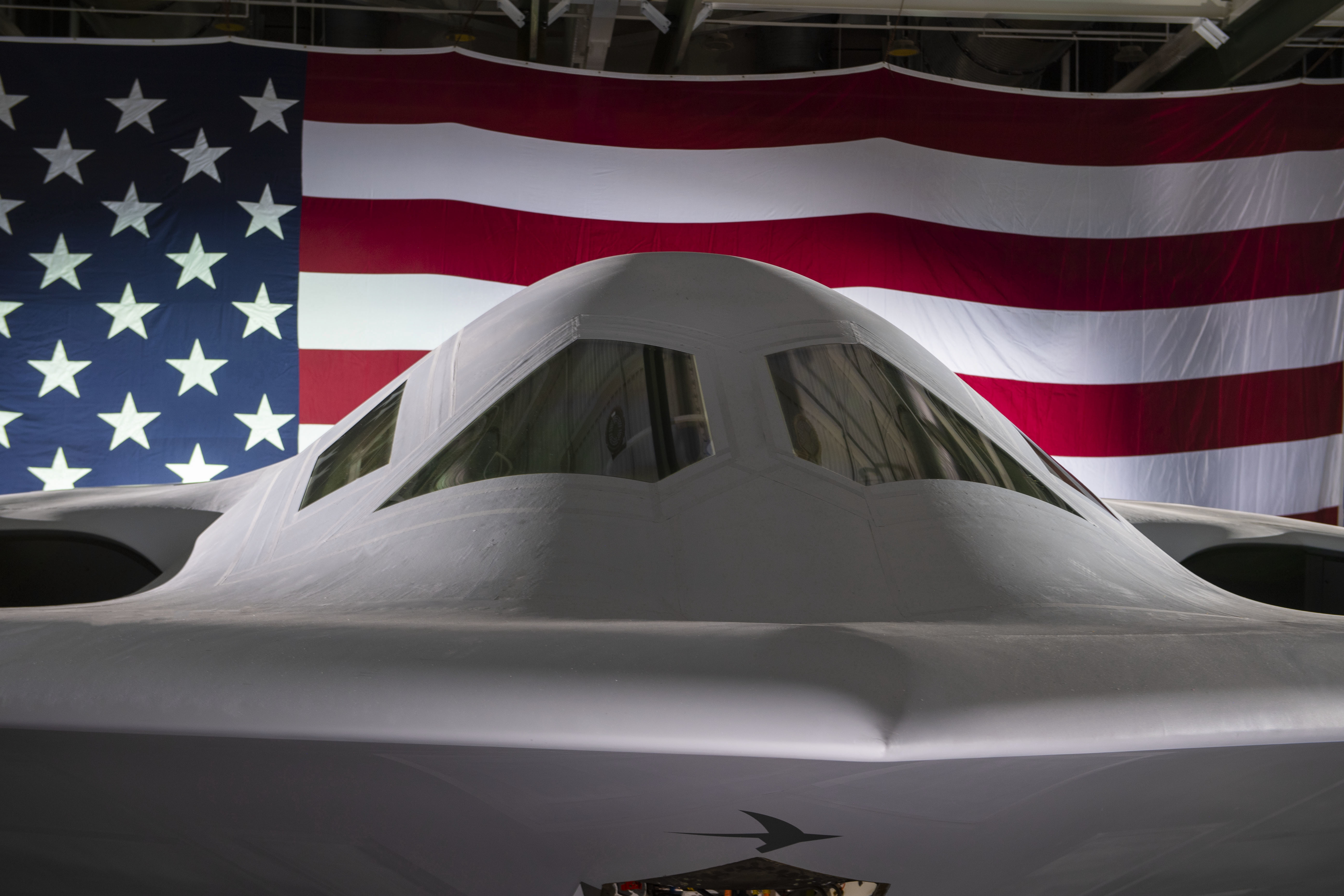
Q: What will it take to pierce China’s A2AD [anti-access/area denial] umbrella? What capabilities do you need to do the job, from a [ground moving GMTI/AMTI target indicator/air moving target indicator] space layer to drones to accompany B-21s? What is your vision?
A: We have a requirement to be able to do that day-to-day for the president. We have to be able to penetrate adversary air defenses and deliver capabilities as directed. And we’ll continue to do that, taking all the information we can get and integrating it into the B-21. Obviously, one of the great things about the B-21 is that it’s going to be much more capable. It will have more sensors. It will have more inputs to it that will make it even stronger and more capable as a penetrating bomber.
Q: What role will your bombers play in taking down the Chinese Navy?
A: That’s an operational plan. I really can’t talk much about it, other than to say that long-range strike contributes to every important mission set that we have in the Department of War. Obviously, one of the attributes of the modern force is the variety of weapons they can carry, and the number and types of targets they can attack. I think in any major confrontation that the U.S. would find itself in, you’re going to find your bomber forces are bringing those skill sets to bear.
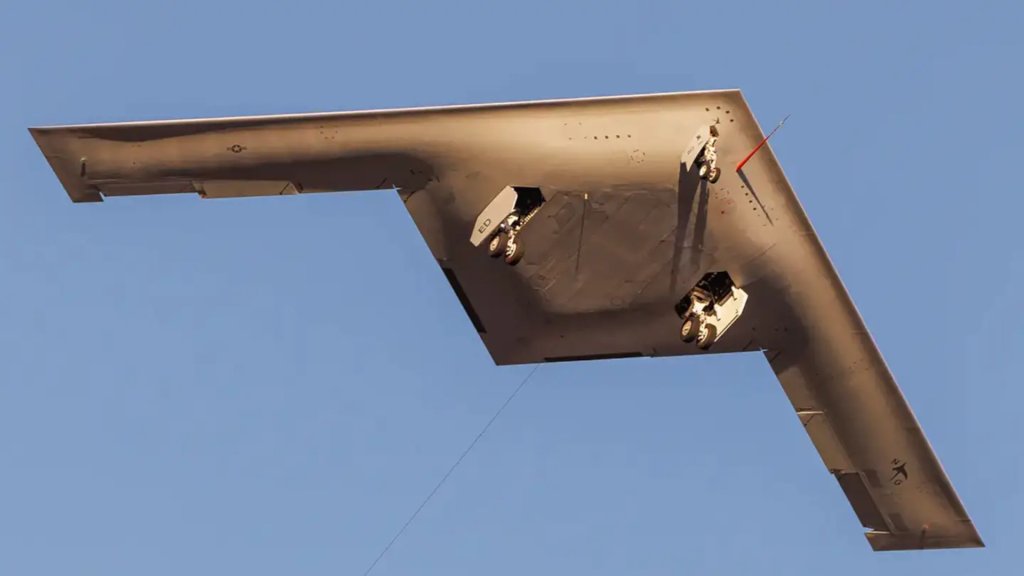
Q: What makes the move to put a single pilot onboard the B-21, along with a weapon systems officer (WSO) instead of two pilots, possible, and why is that the right call?
A: In terms of the crew complement for the B-21, that’s an ongoing discussion within the Department of the Air Force. No final decision has been made. Frankly, we had the same discussion on the B-2 on how it would be manned. And ultimately, they went with two pilots, in part because of the cost of the platform and the number they were producing. Actually, at the time, it was a requirement to have navigator or WSO experience to be a B-2 pilot. We went away from that over time, but that was one of the initial requirements. With B-21 pilots, it’s a different plane, as it has a number of different capabilities. So we think that the right thing to do is look carefully at that crew complement and decide how to best make that the most capable combat platform we can.
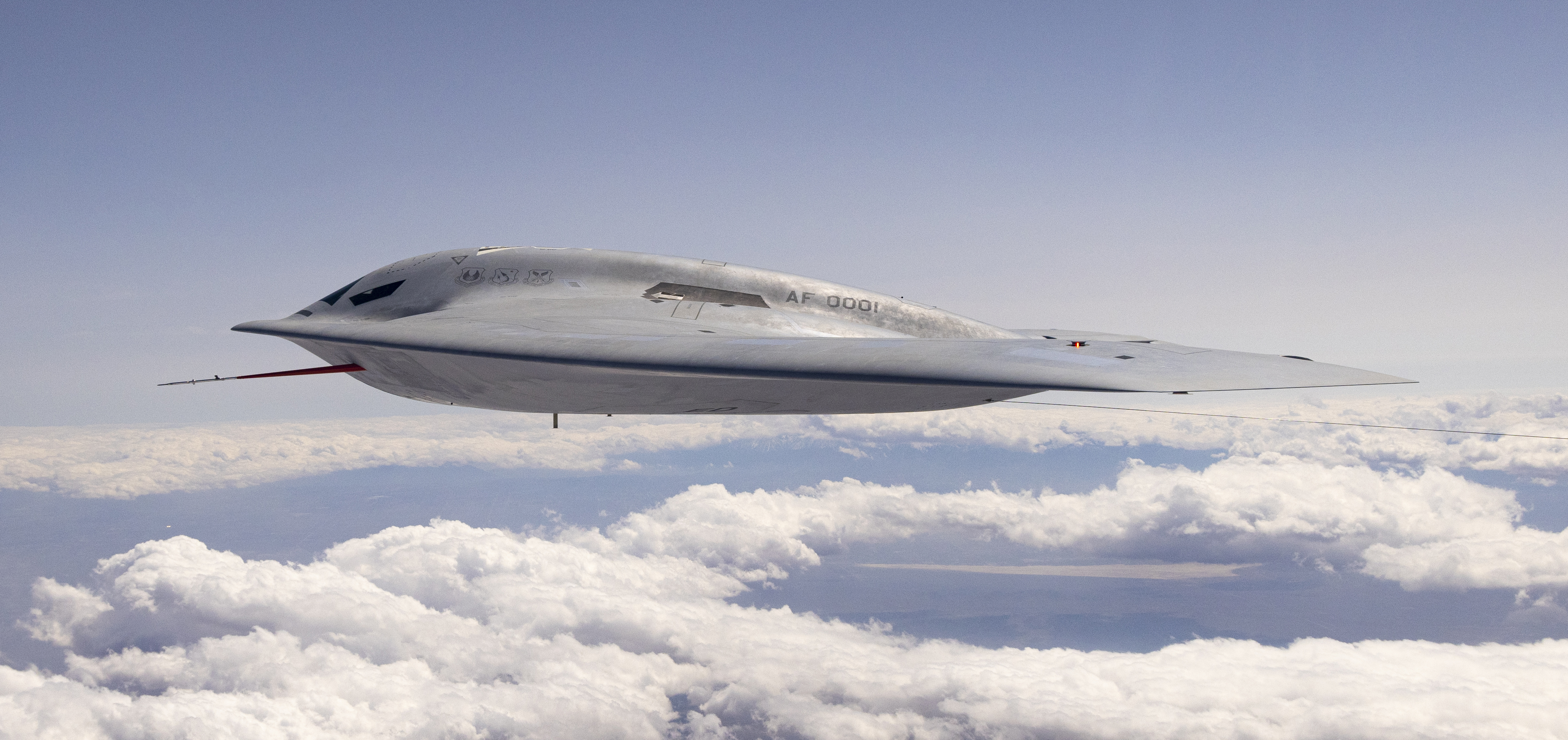
Q: Will the B-21 have creature comforts that the B-2 doesn’t have to help the crew out during long missions?
A: I think the B-21 is going to be largely like the B-2 in how it supports the crews. There’s enough room for crew members to go on rest status. There’s a place to go to the bathroom, obviously, and to prepare food. All those things will exist in the B-21.
Contact the author: howard@thewarzone.com
Loading comments…
Comments couldn’t be loaded. Please refresh the page.