
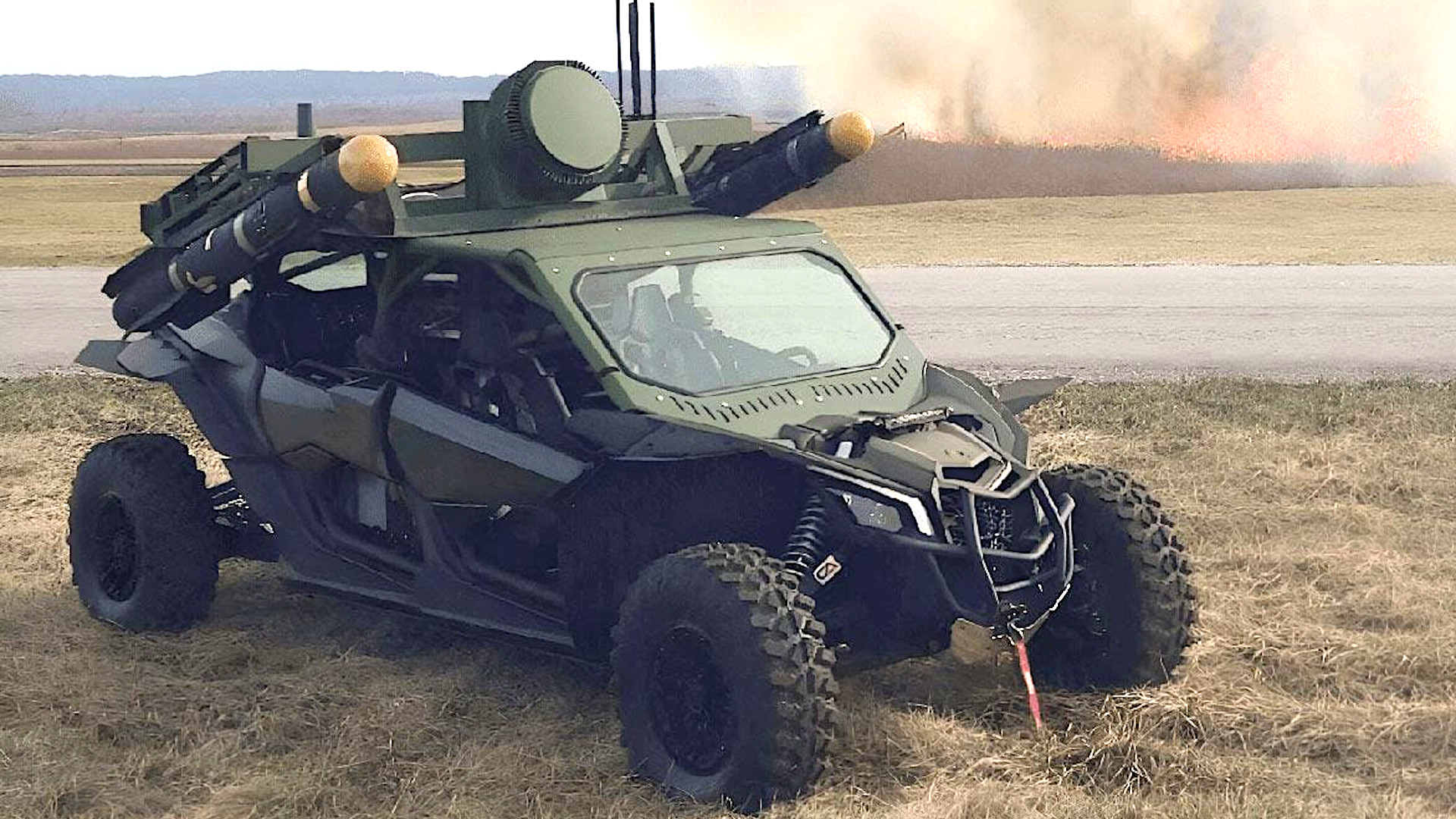
The U.S. Marine Corps says it is planning to award a sole-source contract for a new AGM-114 Hellfire missile-armed mobile counter-drone system to defense contractor V2X. This is the same firm that developed the Tempest, a high-mobility 4×4 vehicle with launchers for radar-guided Longbow Hellfires and optimized for shooting down uncrewed aerial threats. At least two Tempest vehicles are now in active service in Ukraine, where they first emerged unexpectedly earlier this month.
Last week, Marine Corps Systems Command (MARSCORSYSCOM) quietly put out a contracting notice regarding what it is currently referring to as the Denied Area Sprinter-Hellfire (DASH) system.
“The program office within Program Executive Officer, Land Systems (PEO LS) Marine Corps for the Ground Based Air Defense (GBAD) intends to award a hybrid contract (Firm-Fixed Price and Cost Type) on a sole-source basis to V2X … for the Denied Area Sprinter-Hellfire (DASH) system,” according to the notice. “The Marine Corps has a unique and specific need to procure Counter-small Unmanned Aircraft System already at a Technology Readiness Level (TRL)-9 level, to support dismounted Marines.”
“The DASH system fills a critical need to detect, identify, track, and defeat small UAS in a highly mobile, rugged form factor that will help protect Marines,” the notice continues. “The United States Government intends to procure up to 50 systems to include training, initial spares, and reimbursable repairs with an expected delivery date for two systems of no later than 30 May 2026 and delivery of the remaining 48 systems no later than December 2026 to meet an FY27 initial operational capability requirement. This effort is expected to be awarded in Fiscal Year 2026.”
The notice does not provide specific details about the DASH system’s configuration. TWZ has reached out to the U.S. Marine Corps and V2X for more information.
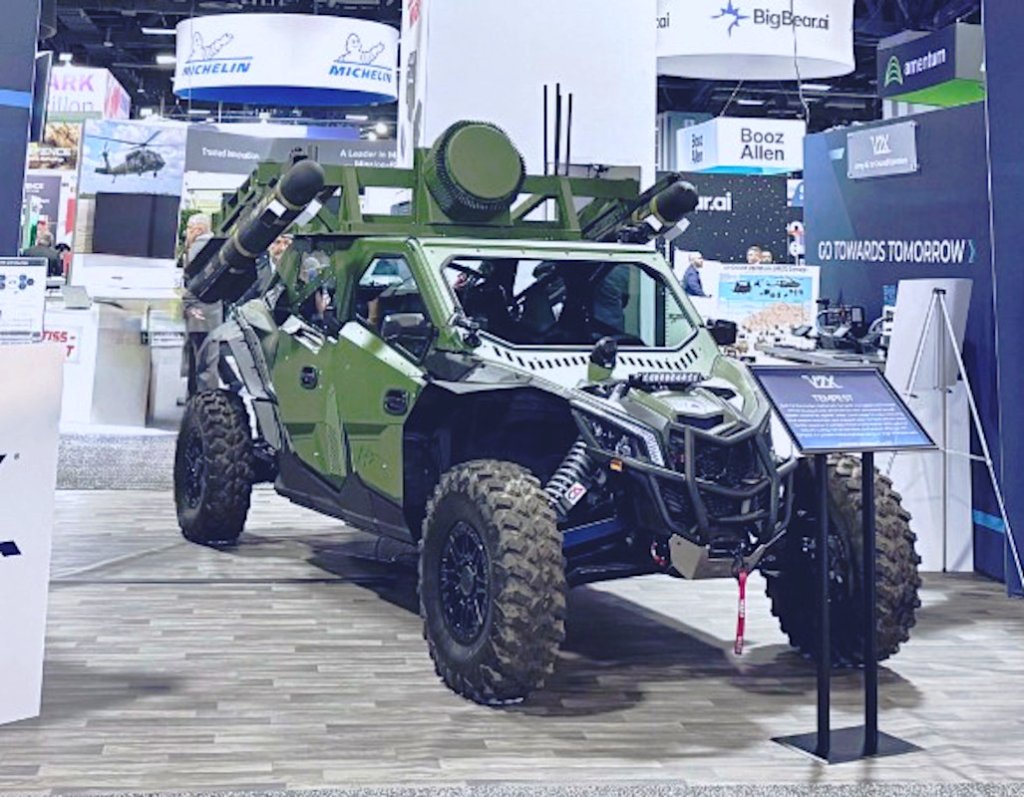
However, the mention of TRL-9 does point to DASH being a Marine Corps version of Tempest or a direct derivative thereof. In U.S. government contracting parlance, TRL-9 refers to systems that are not just fully developed, but that have also proven themselves in operationally relevant conditions.
V2X first unveiled Tempest at the Association of the U.S. Army’s (AUSA) main annual convention in Washington, D.C., last October. The configuration that has been seen to date, including in Ukraine, consists of a pair of launch rails for Hellfire missiles and a small form factor active electronically scanned array (AESA) radar mounted on what looks to be a modified Can-Am Maverick X3 4×4 off-road buggy.
The vehicle also has an array of antennas mounted on the left rear side, which are likely tied to a passive radio frequency (RF) detection system. The system does not have any other readily apparent sensors, such as electro-optical and/or infrared cameras.
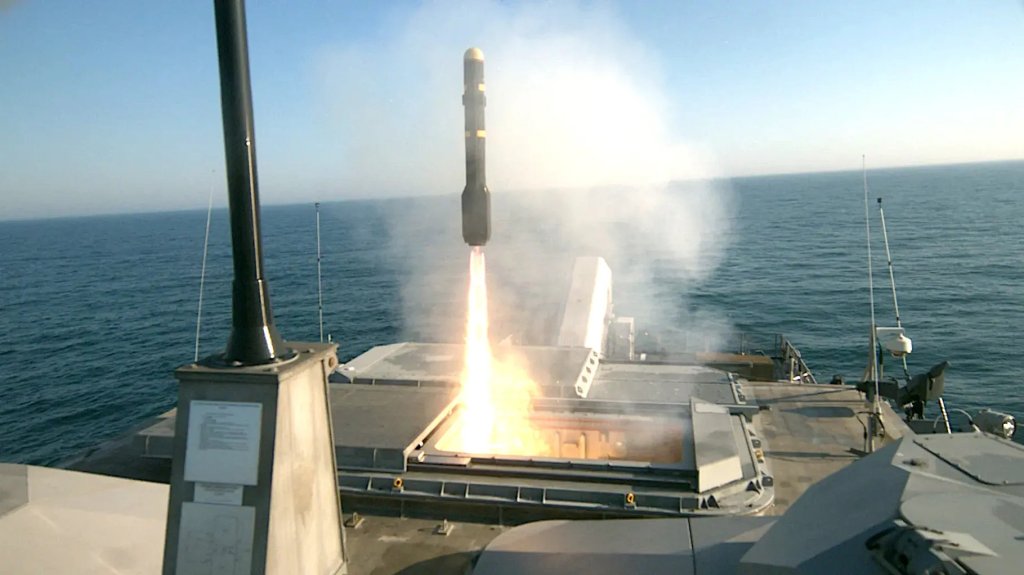
The combination of the radar and a passive RF detection system would be enough to enable the vehicle to be able to spot and track drones, and then cue its AGM-114L Longbow Hellfires to intercept them. Unlike the majority of Hellfire variants that are laser-guided, the AGM-114L has a millimeter wave radar seeker. Despite originally being designed to engage targets on land and at sea, the Longbow variant of the Hellfire has been in increasing use in the anti-air role in recent years. This extends beyond ground-based platforms, with the AGM-114L now having demonstrated counter-drone capability when employed in the surface-to-air mode from ships and as an air-to-air weapon launched from crewed and uncrewed aircraft.
At the same time, it is still possible that V2X may have developed a variation on this concept for the Marine Corps that uses a different underlying platform. The fact that the Tempest system can be installed on something as small and lightweight as a modified Can-Am Maverick X3 underscores the potential for it to be ported over to an array of other vehicles. V2X itself has said in the past that it was working on a trailer-based version intended primarily for point defense of static sites. It’s also worth noting here that laser-guided Hellfires can even be employed in a man-portable configuration using tripod launchers on the ground, further speaking to the adaptability of the missile to different launch environments.
For its part, the Marine Corps has already fielded counter-drone systems mounted on 4×4 Polaris MRZR all-terrain vehicles, which it calls Light Marine Air Defense Integrated Systems (LMADIS). A complete LMADIS system consists of one MRZR with small AESA radars, electro-optical cameras, and passive RF detection capability paired with another one of the vehicles carrying an electronic warfare jammer. Marines also train to employ shoulder-fired heat-seeking Stinger surface-to-air missiles, also known as man-portable air defense systems (MANPADS), in conjunction with LMADIS. An early version of LMADIS, lashed to the deck of the Wasp class amphibious assault ship USS Boxer, was used to knock down an Iranian drone as the ship transited the Strait of Hormuz back in 2019.

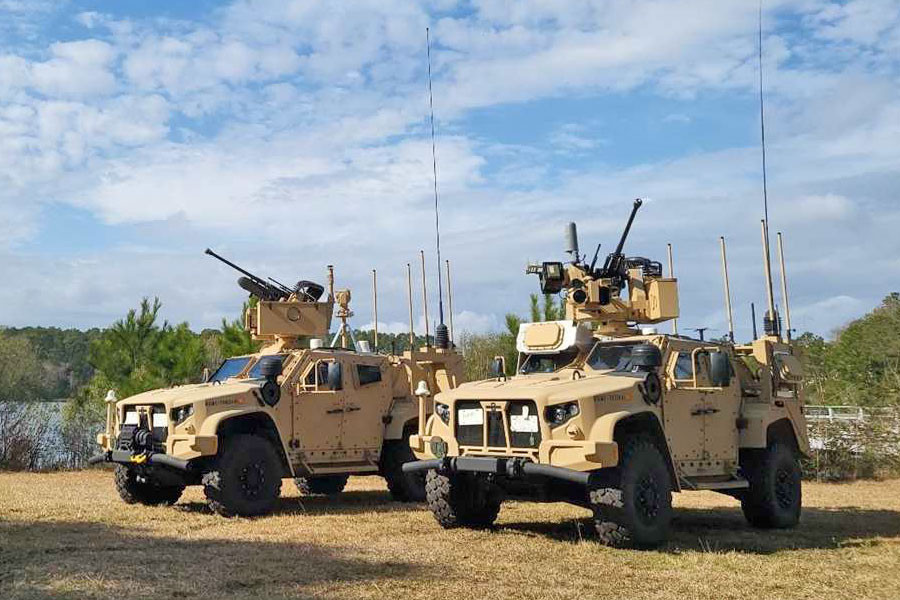
The Marines also have MADIS systems that utilize the 4×4 Joint Light Tactical Vehicle (JTLV). Like LMADIS, the larger MADIS distributes different sensors and effectors between individual JLTVs, as you can read more about here.
Regardless, V2X’s Tempest or a variation on the system mounted on a different vehicle would give the Marines a new, highly mobile platform for engaging drones and potentially other aerial threats. AGM-114Ls could be used against helicopters and some types of cruise missiles under certain conditions. It might also be possible to engage fixed-wing aircraft, but the range and speed of the Hellfire present significant limitations against that target set.
A platform like the Can-Am Maverick X3 also allows for the employment of ‘shoot and scoot’ tactics. This means the system can pop up suddenly and reposition just as quickly, helping to create unpredictability for opponents and reduce vulnerability to counterattacks. This is a capability that is also beneficial for responding to aerial threats that might emerge unexpectedly. As already noted, Ukrainian authorities say they have been making good use of their Tempest systems to knock down incoming Russian drones.
All of this aligns with the Marine Corps vision for future expeditionary and distributed operations, especially in island-hopping scenarios in the context of a high-end fight in the Pacific. The service sees relatively small force packages operating from forward bases spread across broad areas, likely within range of enemy stand-off weapons. These are concepts of operations in which mobile air defense capabilities with low operational and logistical footprints would be advantageous, if not essential, to mission success.
Hellfire-armed air defense systems have historically presented cost benefits, as well. As of 2020, Hellfire had an average cost, across all variants, of more than $200,000, though AGM-114Ls were likely substantially more expensive. As a comparison, the cost of a single Stinger missile has reportedly surged in recent years to as high as $400,000. Past reports have also said that Raytheon’s Coyote Block 2 counter-drone interceptors, which are growing in popularity across the U.S. military, have unit costs in the $100,000 range.
It is important to point out that the AGM-114L is now out of production, according to prime contractor Lockheed Martin. That company has recently been touting potential anti-air applications for the successor to the Hellfire family, the AGM-179A Joint Air-to-Ground Missile (JAGM), which has a dual-mode laser and millimeter wave guidance system.
With the schedule the Marines have laid out for the DASH effort, targeting delivery of the first pair of systems by May, more specific details about the system and its capabilities may now emerge in the coming weeks and months.
Contact the author: joe@twz.com
Loading comments…
Comments couldn’t be loaded. Please refresh the page.