
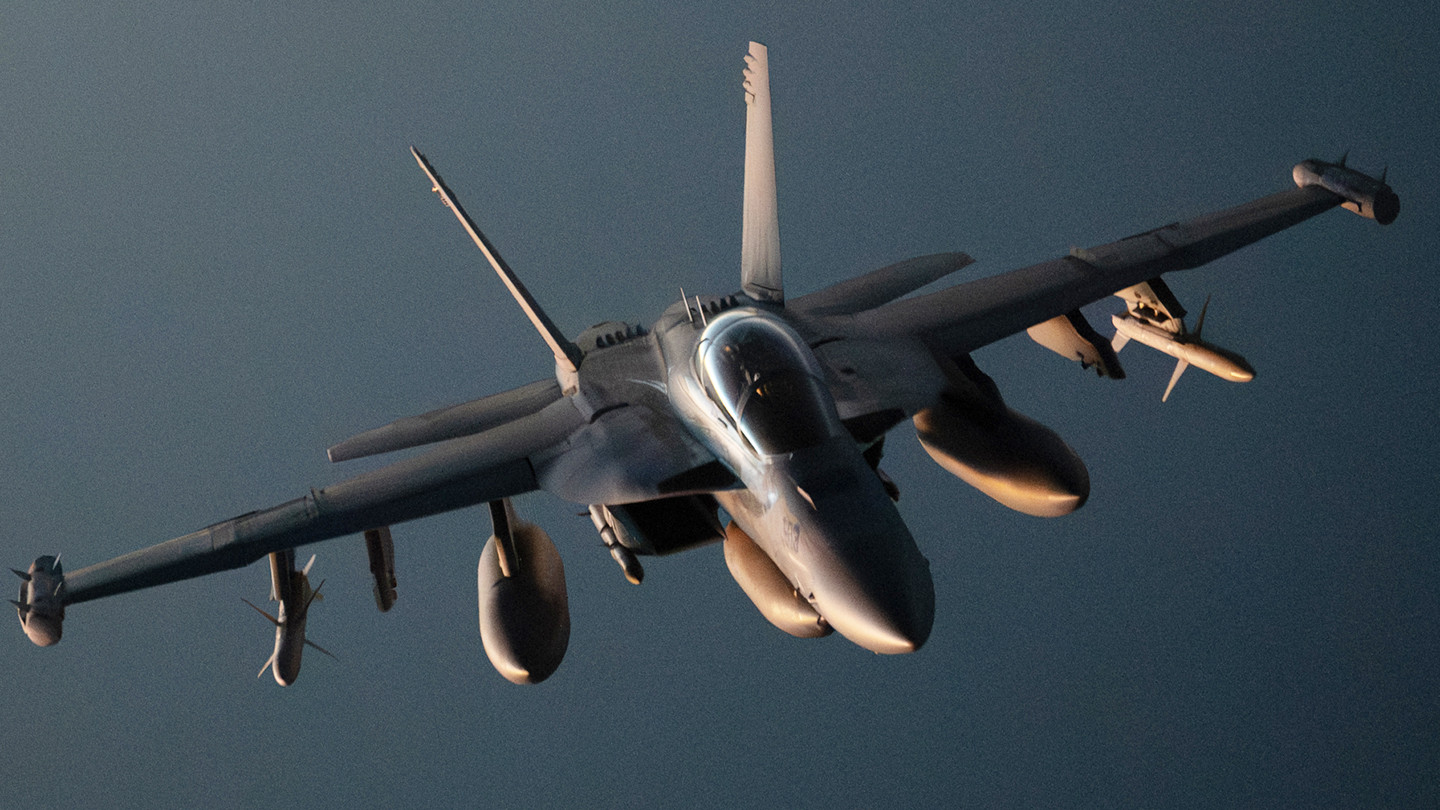
A contingent of six U.S. Navy EA-18G Growler electronic warfare jets, roughly a full squadron, is now forward-deployed at the former Naval Station Roosevelt Roads in Puerto Rico. This is a particularly notable addition to the ongoing build-up of U.S. forces in the region that goes beyond a typical show of force and a general bolstering of capacity to support current counter-drug operations.
The EA-18Gs now in Puerto Rico are critical force multipliers. Their deployment is indicative of what one would see in the lead-up to a kinetic operation centered heavily on strikes on targets in inland areas, such as ones the United States might carry out in Venezuela in the future. Growlers could provide electronic warfare support for platforms launching standoff attacks or penetrating through enemy air defenses to get closer to their objectives. The jets could also help ensure the survivability of standoff munitions themselves.
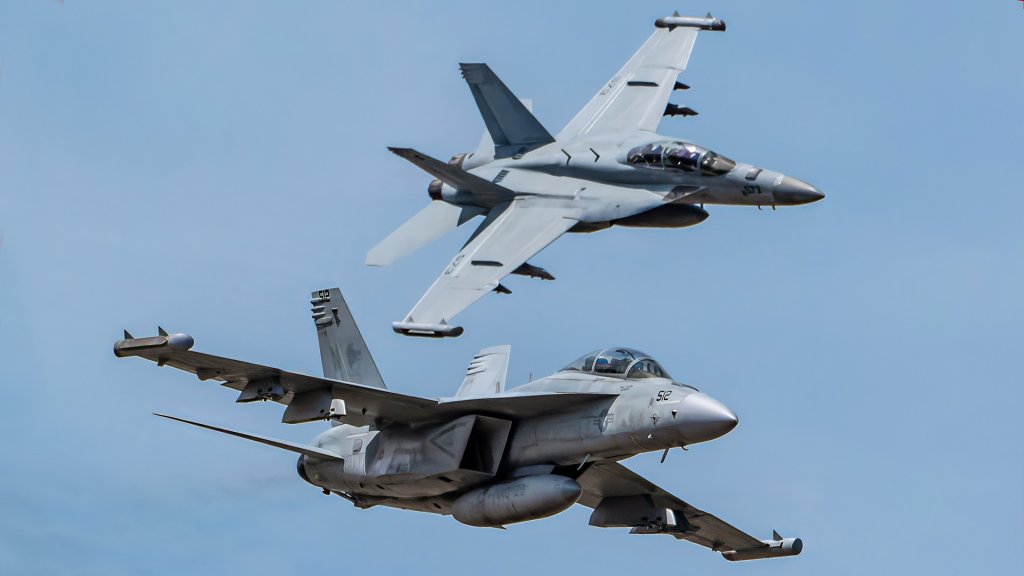
Other mission sets, including the insertion and/or extraction of special operations forces or other ground units, as well as combat search and rescue, would benefit from Growler support. In the context of Venezuela, as TWZ has previously explored in detail, the elements that currently make up that country’s air defense network do present varying degrees of threats that U.S. mission planners would have to take into account in any such operations.
Just yesterday, TWZ highlighted the role that Growlers could play in future operations aimed at Venezuela after a pair of those jets took part in a new major show of force off the coast of that nation. As part of that mission, two F/A-18 Super Hornets flew right into the middle of the Gulf of Venezuela, which is bounded on three sides by that country’s national territory. You can read more about those sorties in our previous reporting here.
There had already been signs that a deployment of EA-18Gs to Puerto Rico was in progress earlier in the week. Online flight tracking data and other open-source information had pointed to U.S. Air Force aerial refueling tankers ‘dragging’ a group of Growlers from Naval Air Station (NAS) Whidbey Island in Washington State toward the Caribbean. Video said to show those aircraft touching down at the former Naval Station Roosevelt Roads base, also now known as Jose Aponte de la Torre Airport, appeared on social media late last night. Reuters subsequently published a picture, seen earlier in this story, offering further visual confirmation that these aircraft are indeed Growlers. The paint job on one of the jets points more specifically to the aircraft belonging to Electronic Attack Squadron 132 (VAQ-132). TWZ has reached out to the Navy and U.S. Southern Command (SOUTHCOM) for more information.
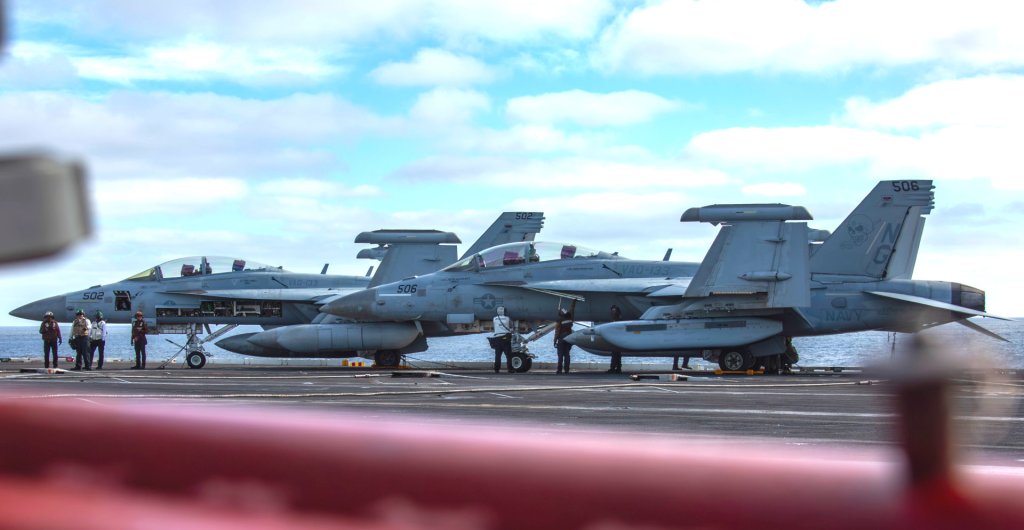
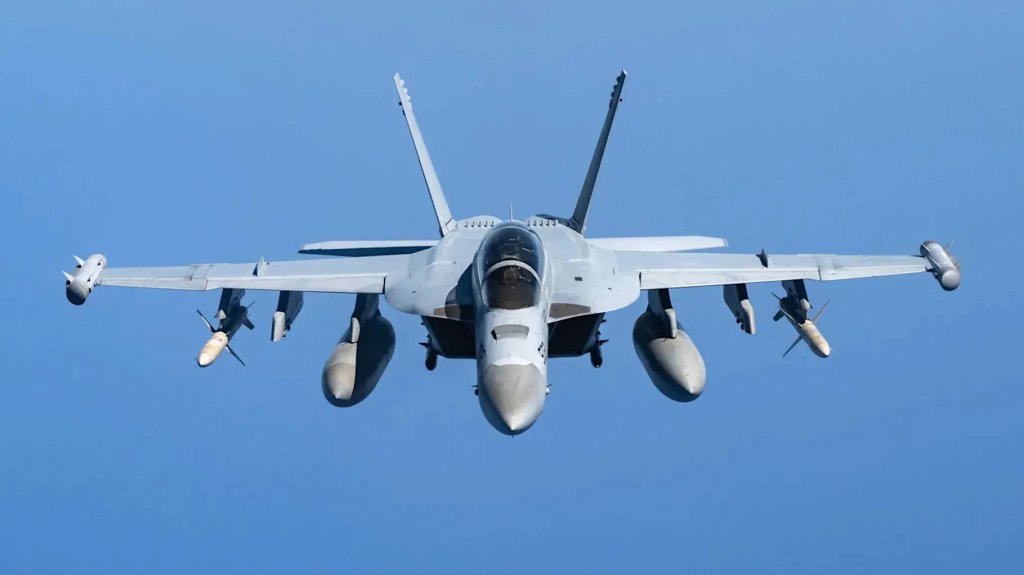
The picture from Reuters shows some of the EA-18Gs now in Puerto Rico are carrying new AN/ALQ-249(V)1 Next Generation Jammer-Mid Band (NGJ-MB) electronic warfare pods under their wings. Other Growlers in the contingent have older AN/ALQ-99 types. With the transition from the ALQ-99 to the ALQ-249 still underway, this mixture of pods is commonly seen among deployed Growler units.
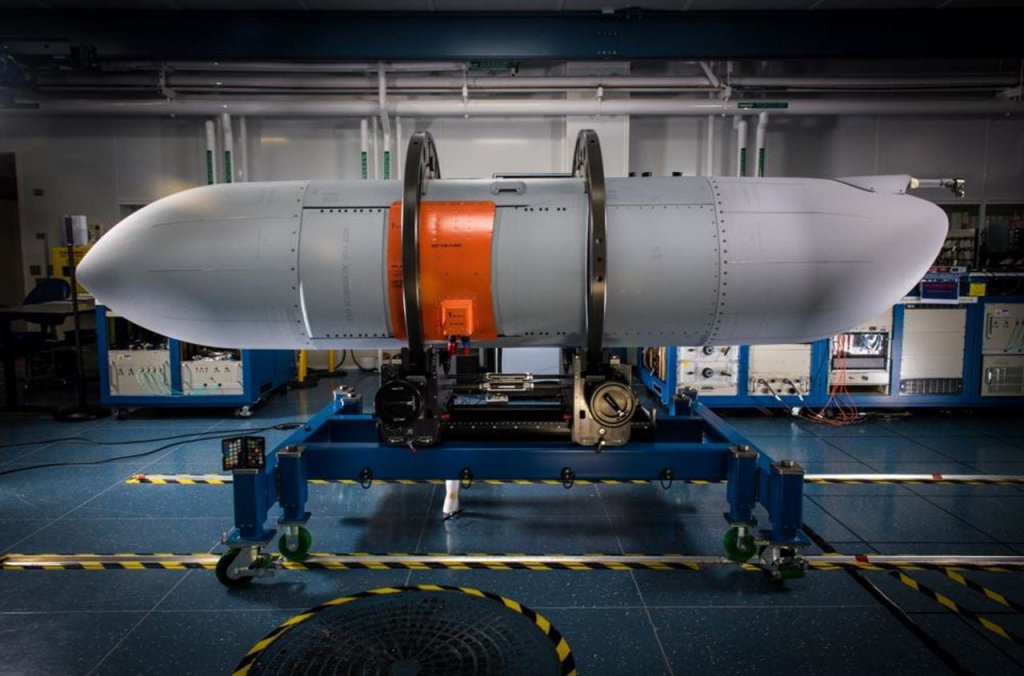
NGJ-MB, with its new active electronically scanned array (AESA) antennas and modular open-architecture design, represents a significant leap in capability over its predecessor. It offers “increased jamming capability at higher power and longer ranges than the AN/ALQ-99 Tactical Jammer System, as well as the ability to rapidly update hardware and software to counter rapidly evolving threat capabilities,” according to a report the Pentagon’s Office of the Director of Test and Evaluation (DOT&E) released earlier this year.
NGJ-MB, with its new active electronically scanned array (AESA) antennas and modular open-architecture design, represents a significant leap in capability over its predecessor. It offers “increased jamming capability at higher power and longer ranges than the AN/ALQ-99 Tactical Jammer System, as well as the ability to rapidly update hardware and software to counter rapidly evolving threat capabilities,” according to a report the Pentagon’s Office of the Director of Test and Evaluation (DOT&E) released earlier this year.
The new pod “is designed to improve EA-18G capabilities against modern, advanced RF [radiofrequency] threats, communications, datalinks, and non-traditional RF targets,” a previous DOT&E report had also explained. The ALQ-249 is designed “to deny, degrade, or deceive the enemy’s use of the electromagnetic spectrum by employing both reactive and preemptive jamming techniques while enhancing the friendly force’s use of the electromagnetic spectrum.”
The Growler’s electronic warfare suite also allows for the collection of intelligence data that can be used to help glean insights into adversary capabilities and to create so-called “Electronic Orders of Battle” outlining the disposition of their forces in a given area. The latter information is especially useful for mapping out air defense networks and communications nodes as part of planning for future strike operations.
The EA-18Gs can also directly attack enemy air defense assets, as well as other targets on the surface, using AGM-88-series anti-radiation missiles. The Navy jets are also able to carry AIM-120 Advanced Medium Range Air-to-Air Missiles (AMRAAM), primarily for self-defense. All of this underscores the specialized capabilities the Growlers provide, which do not fall directly in line with the demands of current enhanced counter-narcotics operations in the region. The centerpiece of those efforts so far has been controversial strikes on small boats alleged to be involved in drug smuggling.
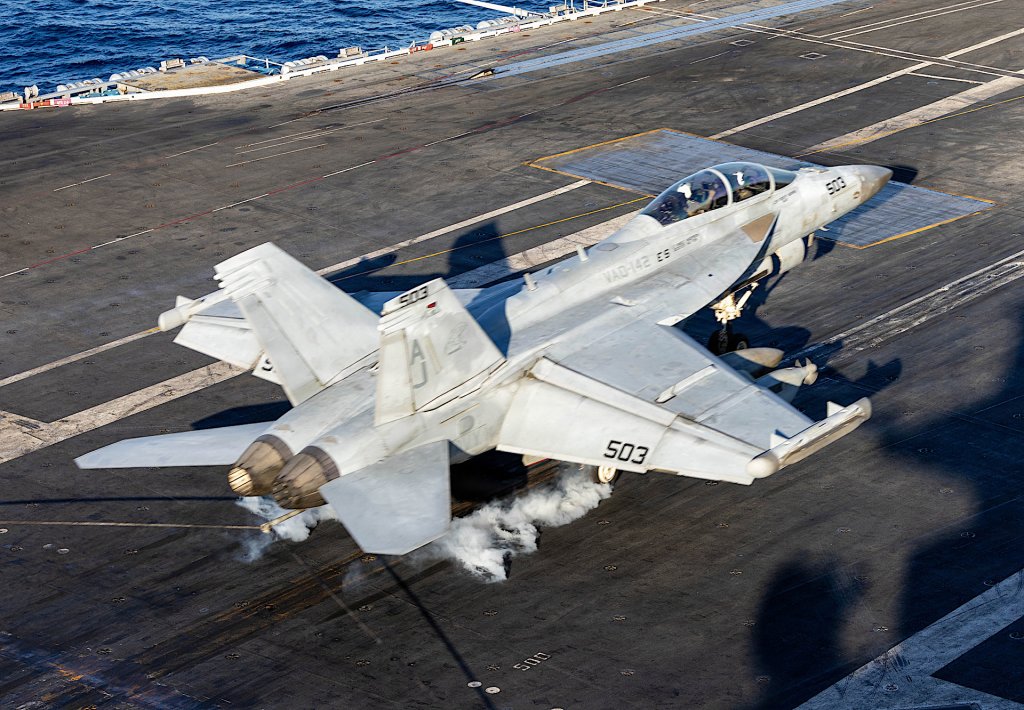
As noted, EA-18Gs Electronic Attack Squadron 142 (VAQ-142), also based at NAS Whidbey Island, was already in the Caribbean before yesterday. Those jets arrived in November along with the rest of the air wing aboard the Navy’s supercarrier USS Gerald R. Ford. A typical Growler squadron consists of five to seven jets, including when embarked on a carrier, meaning the number of these jets now in the region has effectively doubled. It is also worth mentioning here that EA-18Gs regularly operate from bases on land.
Ford and its air wing are just a part of the significant array of forces the United States has already amassed in the region, with a host of other surface warships, crewed and uncrewed aircraft, and ground forces being present, as well. Marine F-35B Joint Strike Fighters and other aircraft have already been operating from Puerto Rico for months now. In total, there are some 15,000 American military personnel forward-deployed across the Caribbean, which also includes a major special operations component.
All this being said, whether or not U.S. President Donald Trump’s administration decides to pursue direct military action in Venezuela remains to be seen. American authorities have made it no secret that a maximum pressure campaign against Maduro’s regime is very much underway. U.S. and other foreign officials have called for him to step down. The Venezuelan leader is also alleged to have ties to an entity referred to as the Cartel of the Suns, which is now also designated as a terrorist organization, and has been under indictment in the United States on narcotics and other charges since 2020. American authorities are currently offering a $50 million bounty for information leading to his arrest.
“His [Maduro’s] days are numbered,” President Trump said yesterday during an interview with Politico’s Dasha Burns when asked if he would like to see the Venezuelan leader out of power.
In that same interview, Trump declined to say how far the U.S. government might be willing to go to achieve that aim, but also declined to rule out the possibility of a ground invasion or other military action. TWZ has previously explored what American ground operations and/or strikes against targets inside Venezuela might entail.
With the new contingent of Growlers now on the ground in Puerto Rico, it may not be long before it becomes more apparent what role they have to play in operations in the region.
Update, 4:05 PM EST:
In another new development regarding the U.S. maximum pressure campaign against Venezuela, President Donald Trump has confirmed the seizure today of an oil tanker off the coast of the South American country.
“We’ve just seized a tanker on [sic] the coast of Venezuela,” Trump told members of the press at the start of a meeting with business leaders. “And other things are happening. You’ll be seeing that later.”
Trump did not name the ship or otherwise elaborate. Reuters had earlier reported that the U.S. Coast Guard had led the interdiction of the tanker, citing unnamed U.S. officials. A British maritime risk firm, Vanguard, told that outlet that the vessel in question is believed to be named Skipper. The seizure is said to be ostensibly linked to U.S. sanctions on the trade of Iranian oil.
Politico has reported that the seized tanker was bound for Cuba, citing an unnamed source.
Update, 7:15 PM EST:
U.S. Attorney General Pam Bondi has shared video footage, seen below, of the seizure of the tanker off the coast of Venezuela today. Personnel are seen rappelling onto the deck of the ship from a Navy MH-60S Seahawk helicopter.
“Today, the Federal Bureau of Investigation, Homeland Security Investigations, and the United States Coast Guard, with support from the Department of War, executed a seizure warrant for a crude oil tanker used to transport sanctioned oil from Venezuela and Iran,” Bondi wrote in an accompanying post on social media. “For multiple years, the oil tanker has been sanctioned by the United States due to its involvement in an illicit oil shipping network supporting foreign terrorist organizations. This seizure, completed off the coast of Venezuela, was conducted safely and securely—and our investigation alongside the Department of Homeland Security to prevent the transport of sanctioned oil continues.”
CBS News has also now reported that the Navy helicopters used in the operation, which also included U.S. Marines, launched from the aircraft carrier USS Gerald R. Ford.
Contact the author: joe@twz.com
Loading comments…
Comments couldn’t be loaded. Please refresh the page.