
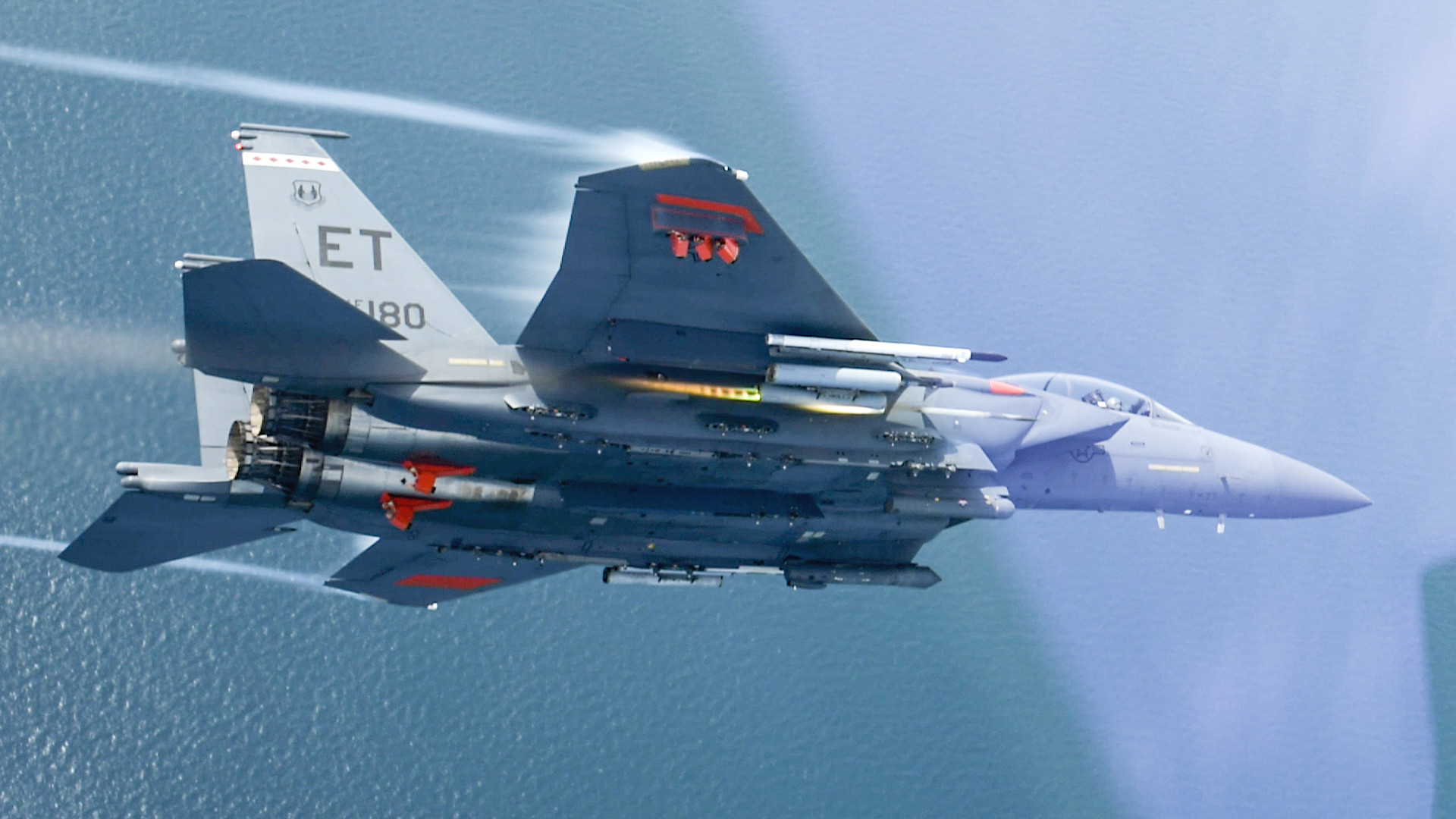
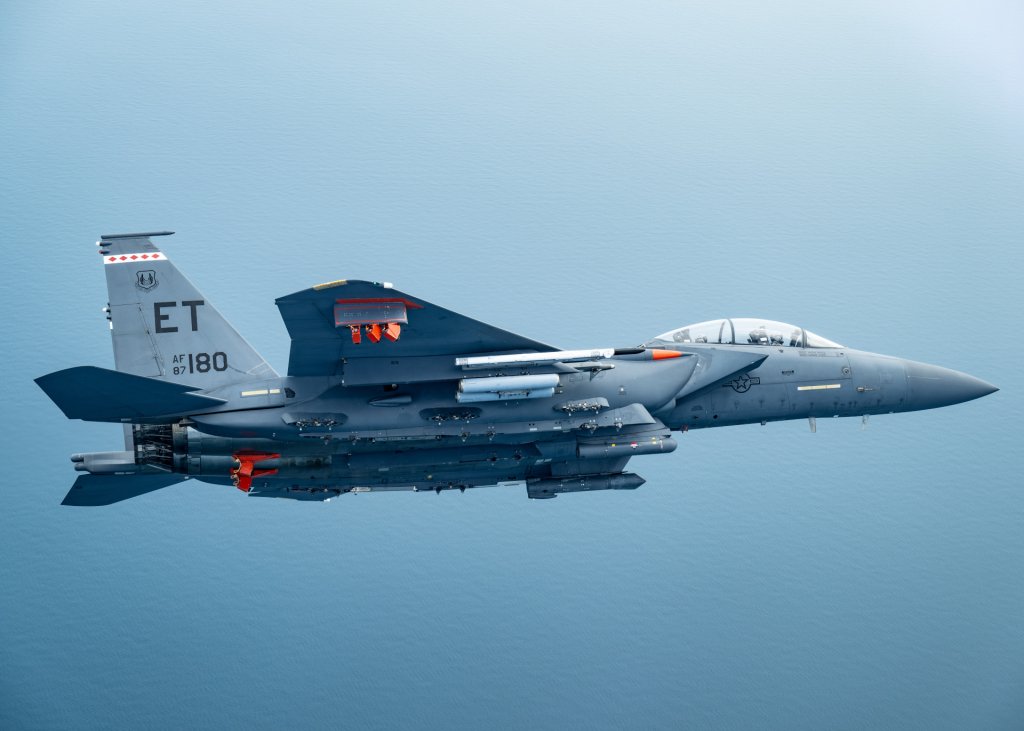
We now have our first look at a U.S. Air Force F-15E Strike actually firing air-to-air optimized variants of the laser-guided 70mm Advanced Precision Kill Weapon System II (APKWS II) rocket. This is a still relatively new capability for the F-15E that was rushed into service earlier this year, which TWZ was first to report on. With loads of up to 42 APKWS II rockets, plus traditional air-to-air missiles, the Strike Eagle is transformed into a highly capable counter-drone and cruise missile ‘weapons truck.’
The F-15E/APKWS II test images were all taken on May 22, but were only posted on the U.S. military’s Defense Visual Information Distribution Service (DVIDS) website yesterday. The very first picture of an APKWS II-armed F-15E, flying out of Eglin Air Force Base in Florida, notably also appeared on social media accounts for The Merge, a military aviation podcast and associated newsletter, on May 22.
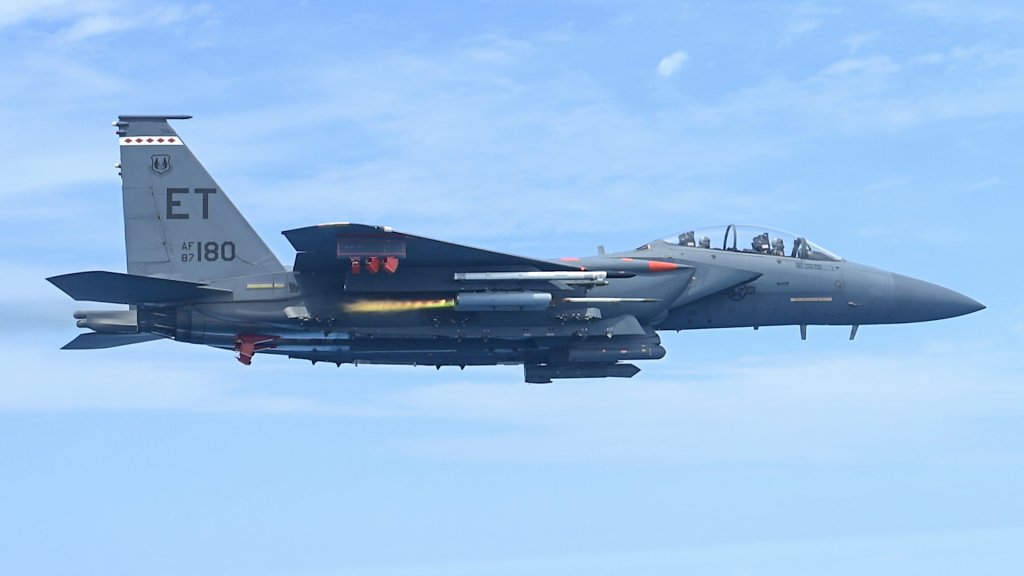
The new images come by way of the 40th Flight Test Squadron, part of the 96th Test Wing at Eglin. They each have the same caption, which is as follows:
“A 96th Test Wing F-15E Strike Eagle flies during a test mission May 22, 2025 over Eglin Air Force Base, Florida. The 96 TW and the 53rd Wing teamed up to test AGR-20F Advanced Precision Kill Weapon System II laser-guided rockets on the F-15E in May in an effort to get the capability to the warfighter as quickly as possible.”
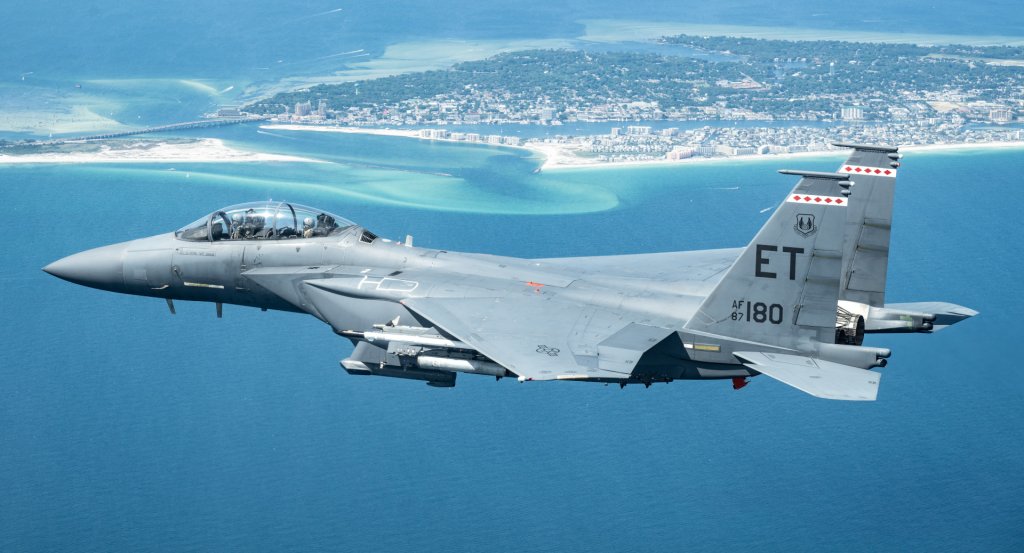
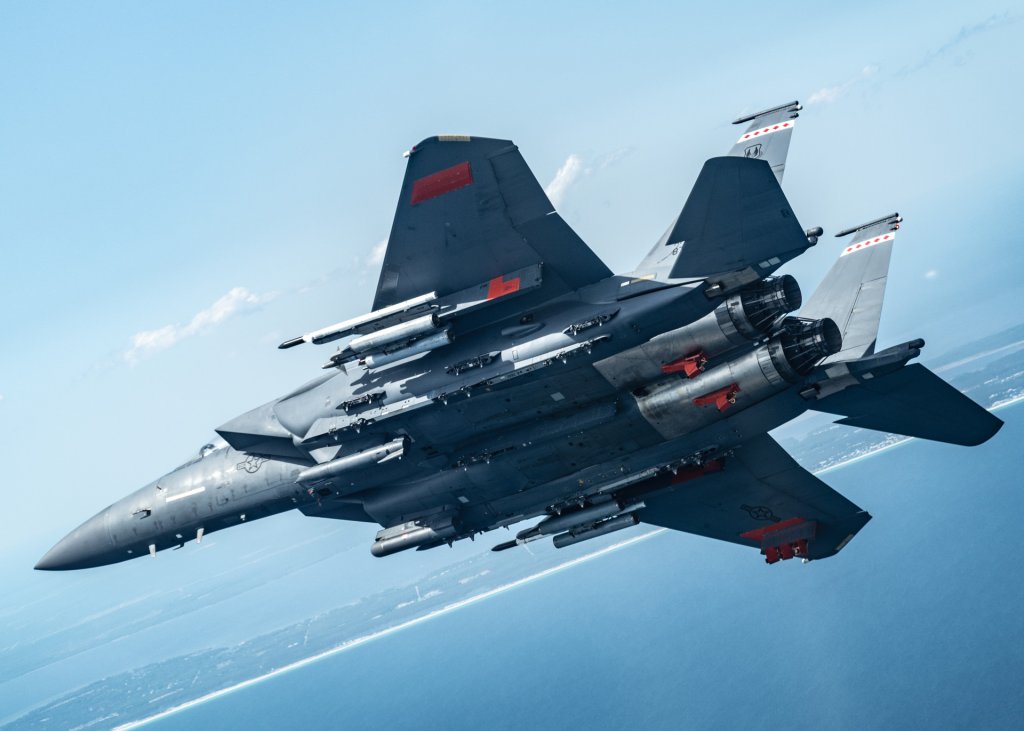
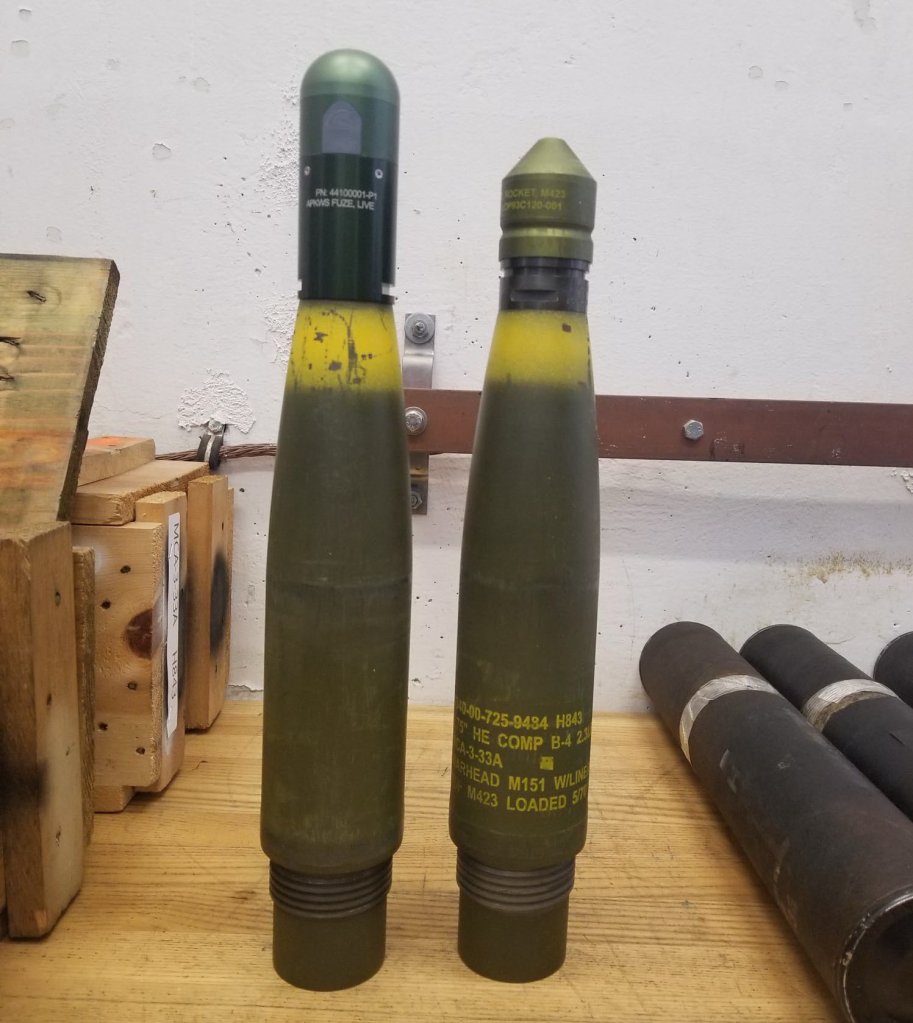
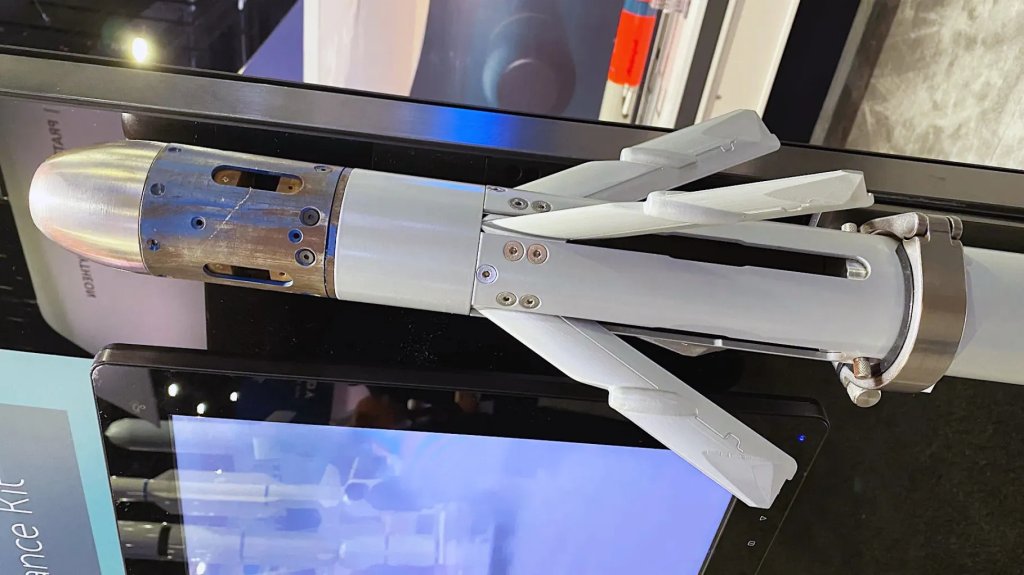
AGR-20F is the designation for the air-to-air optimized variant of the APKWS II, also known as the Fixed Wing, Air Launched, Counter-Unmanned Aircraft Systems Ordnance (FALCO) configuration. All APKWS II rockets consist of three key components: a laser guidance section inserted between one of a variety of warhead options and a standard 70mm rocket motor in between.

The FALCO version includes a warhead with a proximity fuze and “air-to-air optimized guidance and sensing algorithms,” according to a U.S. Army briefing in July. The Army manages the 70mm Hydra-70 rocket program for the entire U.S. military, while the APKWS II guidance kit is a U.S. Navy-run program.
As an air-launched weapon for use against relatively steady flying, non-reactionary, low-performance targets, APKWS II offers significant magazine depth and cost benefits compared to traditional air-to-air missiles. Multiple seven-shot rocket pods can be loaded in a single pylon that could otherwise just hold one missile. The laser guidance section of the APKWS II rocket costs between $15,000 and $20,000, with the rocket motor and warhead adding a few thousand dollars more to the total price tag. In comparison, the latest variants of the AIM-120 Advanced Medium-Range Air-to-Air Missile (AMRAAM) cost around $1 million apiece, while current-generation AIM-9X Sidewinders each have a price tag around $450,000.
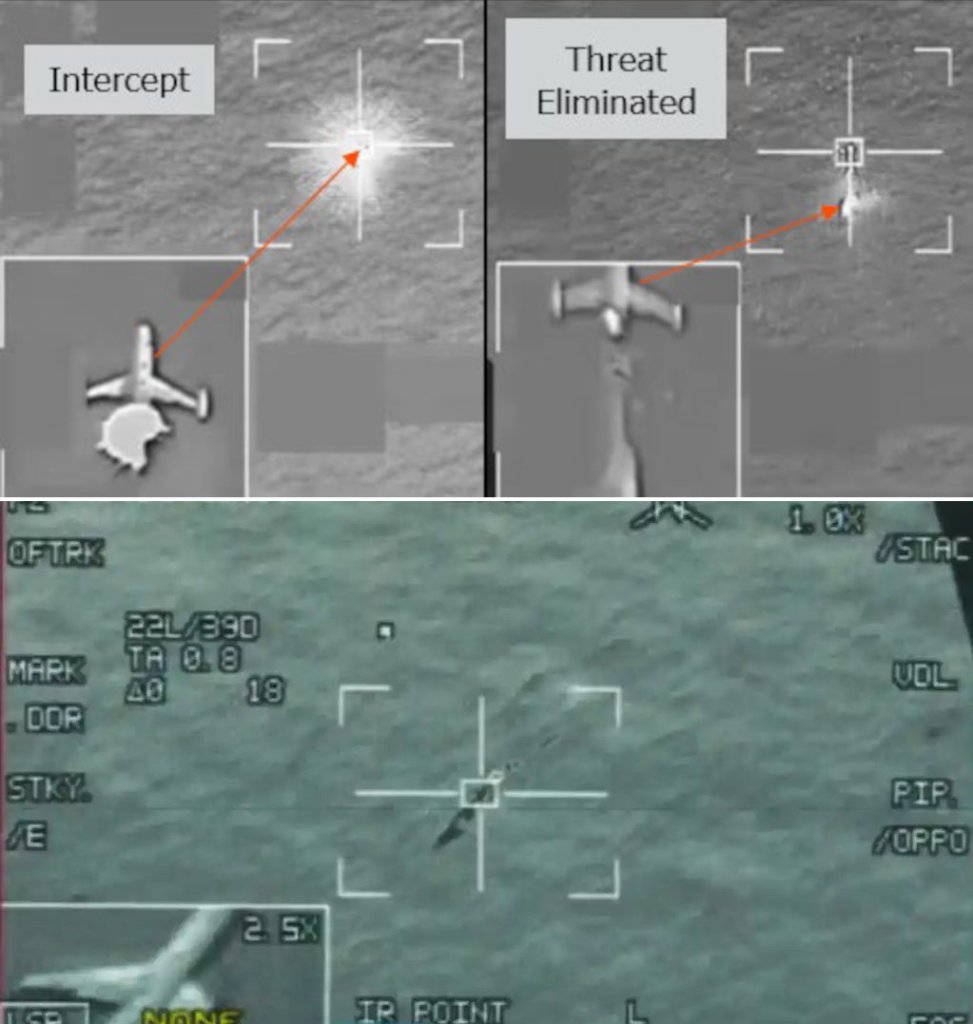
The idea of employing APKWS II rockets as air-to-air weapons against drones and cruise missiles dates back to at least 2019, when the Air Force disclosed that it conducted a test of the weapon in that role using an F-16C Viper. The first known combat use of this capability came in 2024, when Air Force F-16s began using the rockets to swat down drones launched by Iranian-backed Houthi militants in Iran, another story TWZ was first to report.

On multiple occasions in the past two years or so, Air Force F-15Es forward deployed in the Middle East were also very actively involved in defending Israel from incoming Iranian drone and missile attacks. Air Force Strike Eagle crews found themselves running out of missiles in the course of those operations, further underscoring the value of APKWS II in the air-to-air role. U.S. Central Command, the U.S. military’s top command, released a picture, seen below, showing a rocket-armed F-15E somewhere in the Middle East in late May, just weeks before an intense 12-day conflict between Israel and Iran erupted.
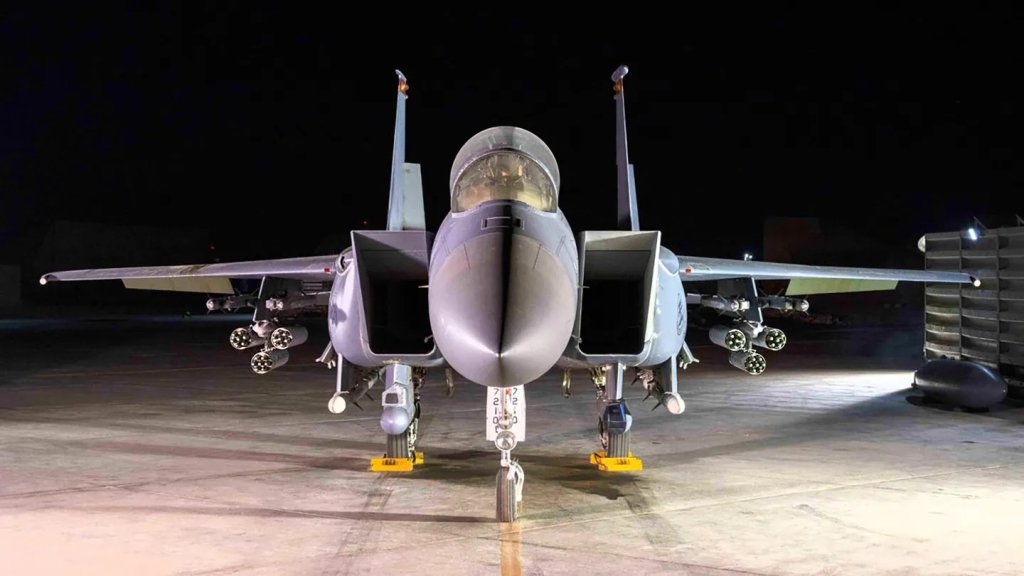
As it stands now, U.S. Air Force F-15E Strike Eagle, F-16C Viper, and A-10 Warthog combat jets are known to be cleared to employ AGR-20Fs, though more types like the U.S. Navy’s F/A-18E/F Super Hornet are likely to follow. However, as TWZ has highlighted in the past, the F-15E/APKWS II combination is especially significant given the jet’s underlying payload and endurance benefits. As such, a rocket-armed F-15E has the ability to provide a much more persistent counter-air screen with a huge magazine depth against drones and some cruise missile types.
In addition, APKWS II’s capabilities in the air-to-air role are set to further expand with a new dual-mode guidance package. This will incorporate an infrared seeker that is designed to offer a pseudo-fire-and-forget capability to make it easier to move on from engaging one target to the next, as you can read more about here. Future dual-mode APKWS IIs could also be employed against targets on land and at sea.
It is worth noting here that APKWS II is now also combat-proven in the surface-to-air role against drones. The rockets continue to offer a low-cost precision-guided air-to-surface weapon that can be employed in a surface-to-surface mode, as well.
The new images of the F-15E/APKWS II testing this year underscore the firepower boost the Strike Eagle has received, as well as the increasingly important role the laser-guided rockets are now playing in multiple domains.
Contact the author: joe@twz.com
Loading comments…
Comments couldn’t be loaded. Please refresh the page.