
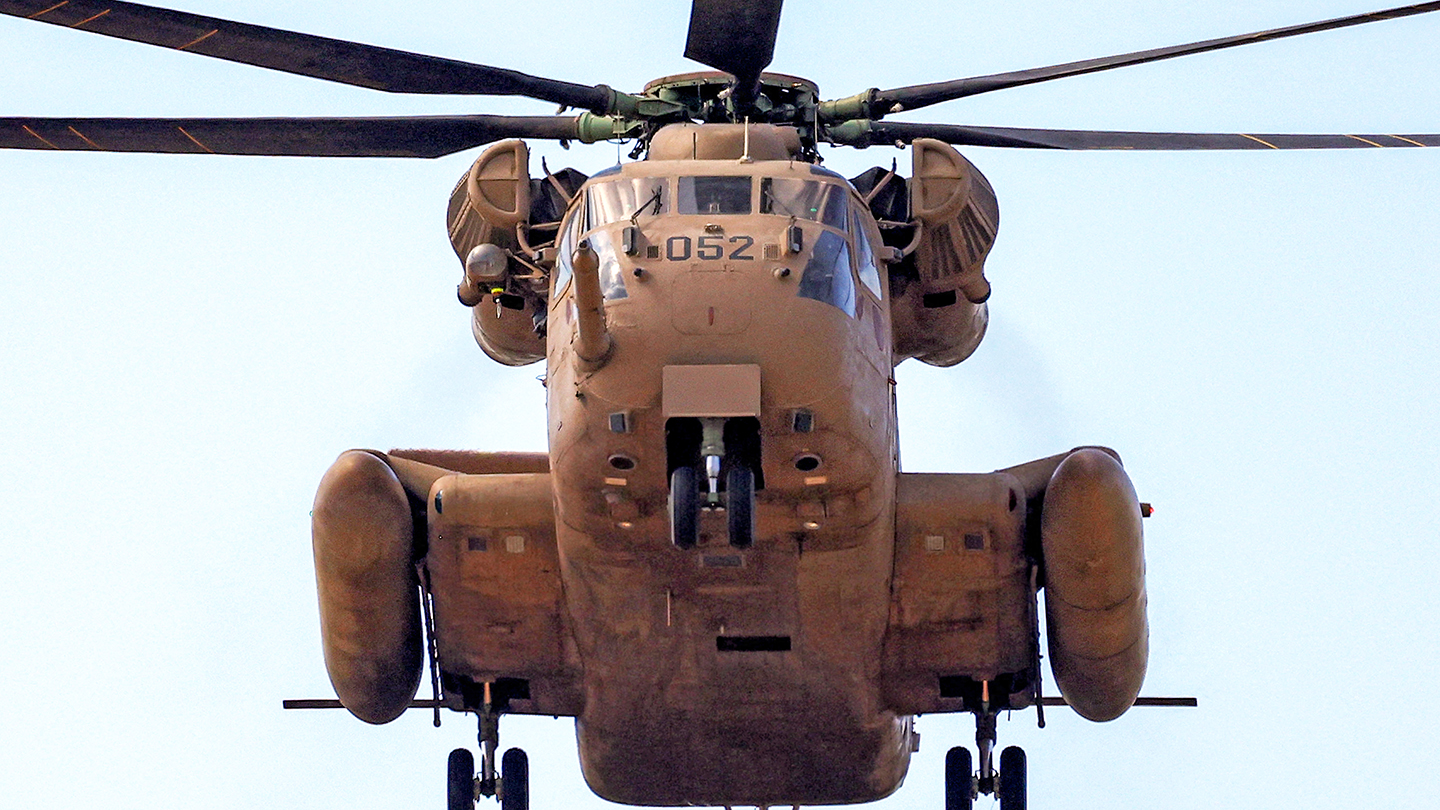
Remarkable videos have emerged showing the dramatic failure of an Israeli Air Force (IAF) helicopter sling-load operation, involving a CH-53 Sea Stallion carrying a UH-60 Black Hawk, resulting in the transported rotorcraft plummeting to the ground. Fortunately, there were no injuries reported among any of the crew or on the ground, but the incident does illustrate the fine margins involved during these kinds of missions.
According to the Israel Defense Forces (IDF), the sling-load operation was originally launched to recover an IAF Yanshuf medium-lift helicopter — the local name for the S-70/UH-60 Black Hawk. The Yanshuf had made an emergency landing earlier this week when it encountered bad weather in the Gush Etzion area, directly south of Jerusalem, in the West Bank.
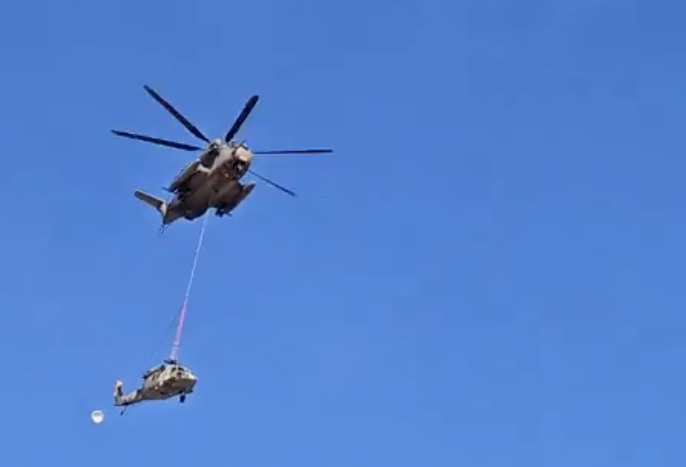
Earlier today, a Yasur (S-65/CH-53 Sea Stallion) heavy-lift helicopter was sent to recover the Yanshuf, using the sling-load method. It’s unclear what exactly went wrong at this point, but the IDF confirmed that the damaged aircraft became detached while being airlifted.
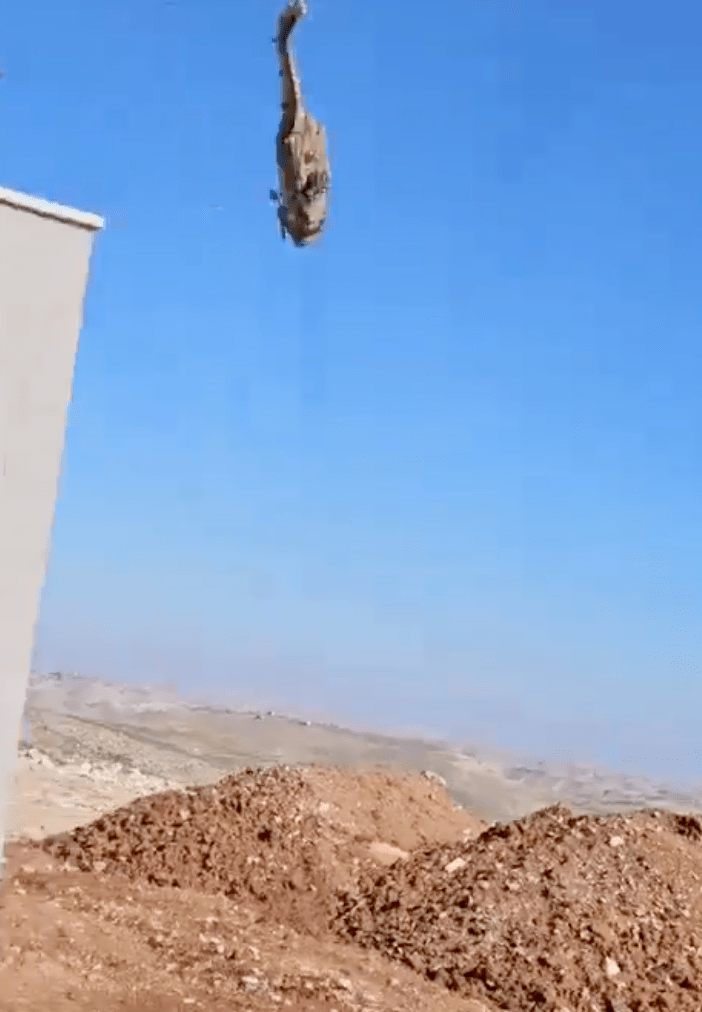
Subsequent images reveal the Yanshuf lying on its side in rocky terrain, with the tail boom broken off, but otherwise largely intact. Nearby is another Yanshuf, which had landed at the crash site, having also been involved in the recovery effort.
The chief of the IAF, Maj. Gen. Tomer Bar, has ordered a military investigative committee to work out what happened.
The CH-53 has long been a go-to platform for sling-load operations, most prominently with the U.S. Marine Corps. The Marine Corps, in particular, is expected to undertake these types of recoveries both in peacetime and especially during a conflict. For a fight in the Pacific, being able to rapidly pluck stricken aircraft from remote locales is regarded as a critical capability, with the latest CH-53K King Stallion version bringing additional performance in this regard.
The CH-53K was originally cleared to conduct a 27,000-pound external lift, subsequently increased to 36,000 pounds. The CH-53K can also lift heavier objects for longer distances compared to its predecessor. Externally, it is designed to carry up to 27,000 pounds over a distance of 110 nautical miles in a high and hot environment. This is compared to the CH-53E’s ability to carry 9,654 pounds over the same distance.

Sling-load operations involving aircraft are an especially delicate balance act. As well as the sling being strong enough for the load, the overall set-up of the rig, as well as the pitch and bank attitudes of the aircraft being transported, and its control surface states, where applicable, need to be worked out in advance. Should something go wrong during the flight, there remains the option of jettisoning the load, as in the video below. This could be required if the payload starts moving dangerously outside of parameters, or if there is any issue with the transporting aircraft, such as a loss of power. In this case, we don’t know if the crew deliberately jettisoned the load.
A CH-53E jettisons a CH-47 carried as a slung load during operations in Afghanistan, after it began to swing out of control:

As to the aircraft involved in the mishap, the Yanshuf (Desert Owl in Hebrew) is the workhorse of the IAF’s rotary-wing fleet. First acquired in the mid-1990s, the fleet comprises ex-U.S. Army UH-60A/L aircraft as well as new-build UH-60Ls, the last of which arrived in 2002. More recently, Israel has ordered ex-U.S. Navy SH-60F Seahawks as its new naval helicopters, which will be used aboard the Israeli Navy’s Sa’ar 6 class missile corvettes.

The Yanshuf has been widely used in the IDF’s various campaigns and has undergone local modifications, including a new self-protection system and hoist. Some of the aircraft have been additionally configured with external fuel tanks and an in-flight refueling probe for longer-range missions. The Yanshuf fleet is split between two squadrons at Palmachim Air Base and Hatzerim Air Base.
As for the Yasur (Petrel in Hebrew), this is very much the veteran of the IAF’s helicopter fleet.
The first S-65s began to be supplied to Israel in 1969, during the War of Attrition. These aircraft were then supplemented by former U.S. Marine Corps CH-53As, delivered in two batches in 1974 and in 1991. In the 1990s, survivors were upgraded to the Yasur 2000 standard and, with no replacement in sight, they were then brought up to the Yasur 2025 standard in the 2000s.
Between them, the Yasur 2000/2025 upgrades brought modernized avionics, structural improvements, new self-protection equipment, communication systems, and terrain-avoidance systems.
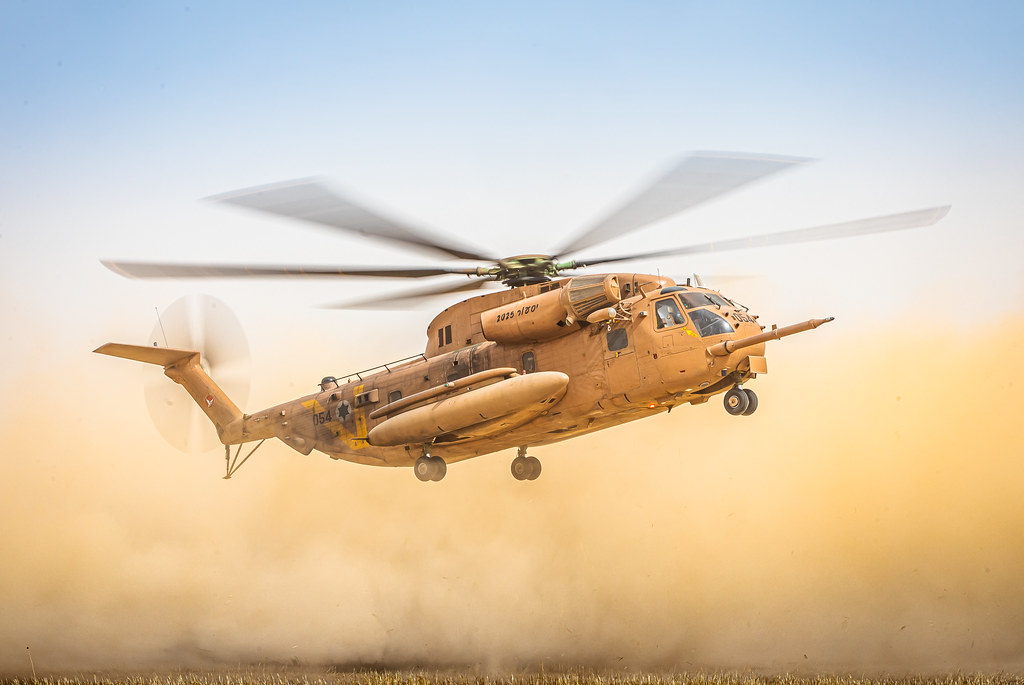
Two IAF squadrons were equipped with Yasur helicopters, both operating from Tel Nof Air Base, but these have more recently been combined as a single super-squadron at the same location. Some aircraft have been converted for electronic warfare missions, as you can read about here.
For both the Yanshuf and Yasur, the primary role is troop transport, but they also regularly fly search and rescue and combat search and rescue (CSAR) missions. The latter usually involve carrying teams from the elite Unit 669.
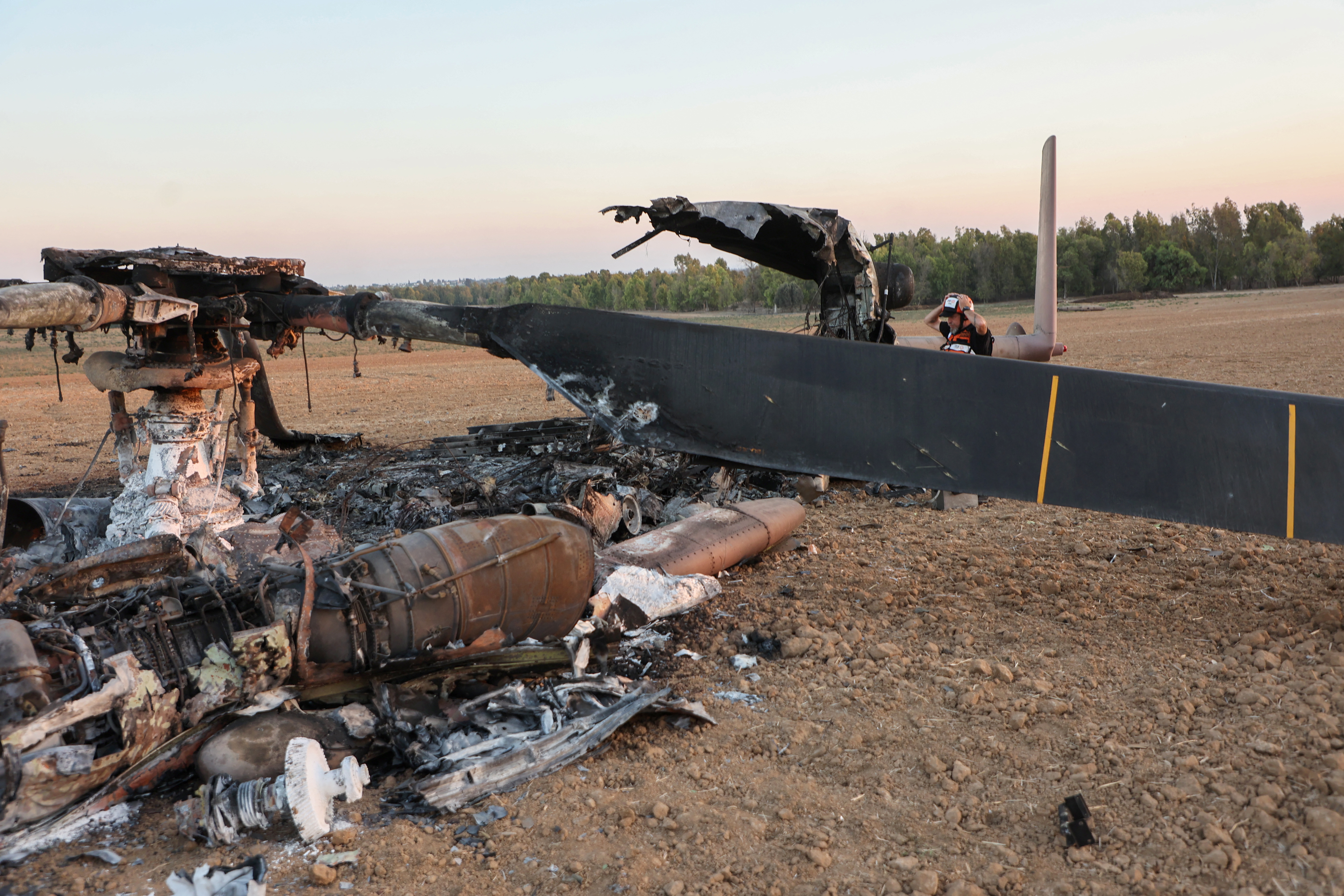
Due to its age, the Yasur fleet is becoming more difficult to operate and maintain, something that has become increasingly apparent in recent years. In November 2019, a Yasur made an emergency landing after a fire broke out on board. Everyone on the helicopter escaped unscathed, but the CH-53 was destroyed. The incident led to the grounding of the entire fleet. In January 2020, two weeks after that grounding was lifted, another Yasur had to make an emergency landing due to a technical issue. Three months later, yet another one of the helicopters suffered a technical fault that forced it to land. More recently, the Yasur has suffered combat attrition, with one example being destroyed by Hamas militants on October 7, 2023, with no casualties reported among the dozens of troops (plus crew) on board.
The IAF is now looking forward to updating its helicopter fleet, while retaining and even enhancing its heavy-lift capabilities, through the acquisition of the CH-53K — which will be named Onager (a type of wild donkey).
In 2021, Israel officially selected the CH-53K, which was developed for the U.S. Marine Corps, and which was chosen in favor of a variant of Boeing’s CH-47 Chinook. An initial batch of 12 is on order at a cost of around $2 billion.
“It [the CH-53K] is essential to the IDF’s ability to carry out a wide range of operational activities,” the then Israeli Minister of Defense Benny Gantz said at the time. “The new helicopter is adapted to the [IAF’s] operational requirements and to the challenges of the changing battlefield.”
Once the CH-53Ks arrive, the Israeli Air Force will be even better equipped to carry out heavy-lift rotary transport tasks, including sling-load operations. While we don’t yet know what went wrong in this morning’s sling-load sortie, the incident does underscore the inherent challenges in these kinds of movements. For now, we should be thankful that no one was injured as a result.
Contact the author: thomas@thewarzone.com
Loading comments…
Comments couldn’t be loaded. Please refresh the page.