
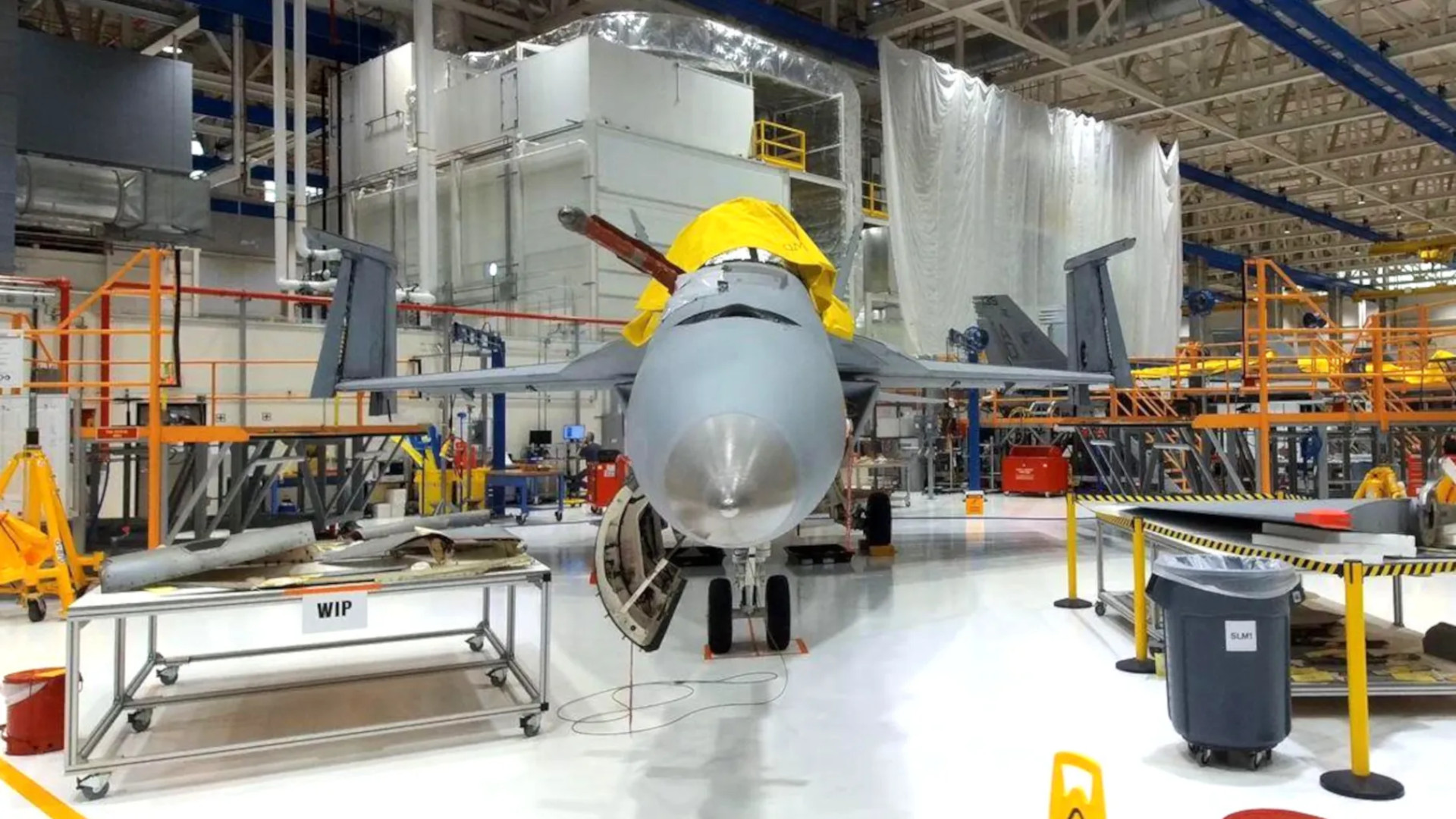
Boeing’s F/A-18E/F Super Hornet production line is one major step closer to shuttering with the completion of the last batch of fuselage sections and vertical tails for those jets by subcontractor Northrop Grumman. The company has also confirmed that production of the EA-18G Growler electronic warfare jets ended after the completion of orders for the U.S. Navy and Australia in the late 2010s. Boeing does plan to continue working on upgrades and otherwise supporting Super Hornets and Growlers in service with the U.S. Navy and elsewhere globally.
In a quarterly earnings call yesterday, Northrop Grumman CFO John Greene noted that his company had completed its final lot of components for the F/A-18E/F last year. TWZ subsequently reached out to Boeing for an update on the Super Hornet and Growler production lines.
“Northrop Grumman is a subcontractor to Boeing, producing the F/A-18’s aft/center fuselage section and vertical tails and integrating all associated subsystems,” a Boeing spokesperson told TWZ. “NG has now completed the final aft/center fuselage section for the final new-build F/A-18 Super Hornet fighter aircraft.”
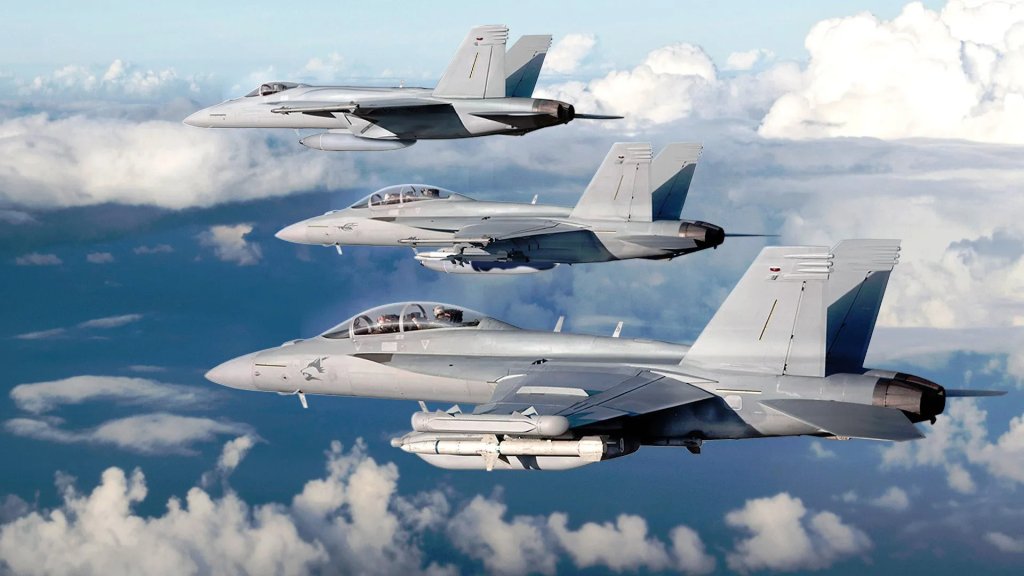
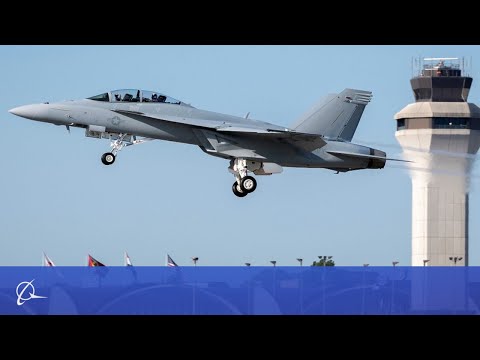
“Boeing is concluding new-build production of the F/A-18 with final deliveries expected in 2027. Boeing no longer produces the EA-18G,” they added. “However, we continue to develop advanced capabilities and upgrades for the global F/A-18 Super Hornet and EA-18G Growler fleet. Throughout the next decade, all Block II Super Hornets in Service Life Modification will receive the Block III capability suite. Boeing will also continue to add advanced electronic attack capability as part of ongoing Growler modifications.”
Boeing has been open about its plans to end production of the F/A-18E/F and, by extension, of the related EA-18G. In 2023, the company said it was looking to shutter the line in 2025. A U.S. Navy order for 17 more Super Hornets in 2024 subsequently pushed that timeline back to 2027.

The Navy first began flying Super Hornets and Growlers in 1999 and 2009, respectively. It remains, by far, the largest operator of both types worldwide. As of April 9, 2025, the service had 325 single-seat F/A-18Es, 250 two-seat F/A-18Fs, and 160 EA-18Gs in inventory, according to official budget documents. In cooperation with Boeing, the Navy is also continuing to bring more F/A-18E/Fs up to the latest Block III standard, which you can read more about here. As noted, the Growler fleet is also being upgraded.
The size of the Navy’s F/A-18E/F and EA-18G fleets also reflects that they continue to be the primary workhorses of the service’s carrier air wings, as well as for supporting operations from bases on land. Super Hornets and Growlers have been heavily involved in combat operations in the Middle East in the past two years or so. They also played key roles in the recent operation to capture Venezuelan dictator Nicolas Maduro after months of flying in the Caribbean as part of a huge U.S. military build-up in the region.
The Navy’s plan has been to eventually replace both types with a new sixth-generation fighter commonly referred to as F/A-XX, but that program has been in purgatory for the past year. Congress is now pushing to get it moving again, as you can read here.
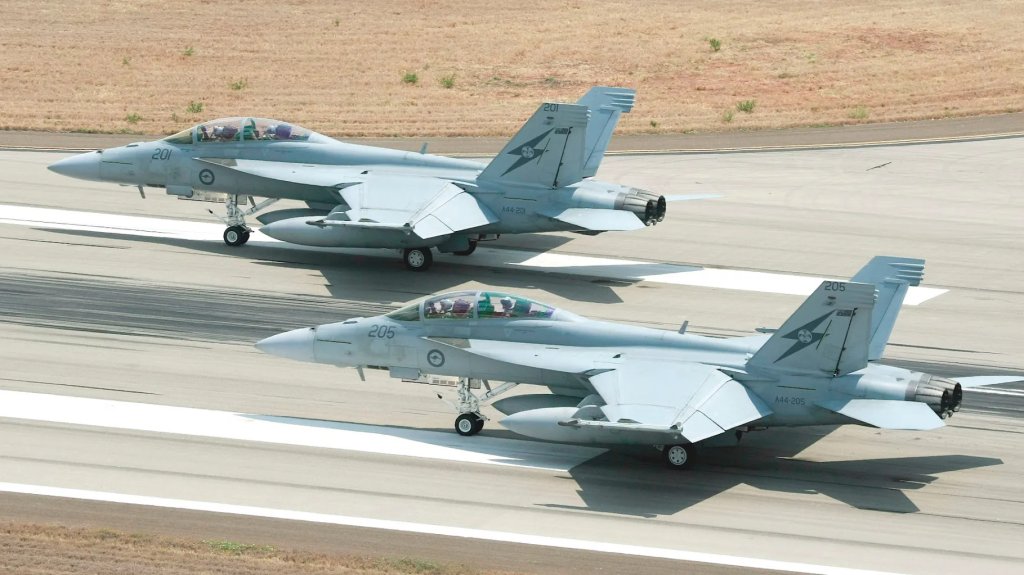
When it comes to Super Hornet and Growler globally, the Royal Australian Air Force also operates 24 F/A-18Fs and 12 EA-18Gs. In 2021, Boeing delivered another 28 Super Hornets – 22 Es and six Fs – to the U.S. Navy, but which were ultimately bound for Kuwait. There were reported delays in the final delivery of those jets, and it is unclear whether they have formally entered service with the Kuwait Air Force.
Boeing had unsuccessfully pitched F/A-18E/Fs and EA-18Gs to a number of countries over the years. For a time in the early 2020s, it looked like Germany might acquire both types to replace its aging swing-wing Panavia Tornado combat jets, driven in large part by requirements to support the country’s continued participation in NATO’s nuclear sharing agreements. German authorities subsequently chose to acquire F-35As instead. In that same timeframe, Finland, which operates legacy F/A-18C/D Hornets, also passed over a Super Hornet/Growler combination, as well as other proposals, for the F-35A.
The F/A-18E/F had also been heavily pitched to India. Boeing went so far as to demonstrate the Super Hornet’s ability to fly from ski-jump-equipped carriers, as well as ones with catapults, as part of those efforts. India has instead been steadily acquiring more French-made Rafales in recent years to meet its needs for new land and carrier-based fighters.
Back in 2023, Boeing had made clear that it was looking to refocus resources from the F/A-18E/F and EA-18G to support other pursuits on both the military and civilian sides of business.
“Boeing St. Louis will increase production of the world’s first all-digital training system, the T-7A Red Hawk, and the world’s first carrier-deployed autonomous refueling aircraft, the MQ-25 Stingray, along with ongoing production of new F-15EX Eagle IIs and 777X wing components,” Boeing said in a press release at that time. The company also said the shift would “support work on the next generation of advanced crewed and uncrewed aircraft.”
Last March, the U.S. Air Force announced that it had picked Boeing to build its new sixth-generation fighter, the F-47. The company remains in the running for F/A-XX, where it is facing off with Northrop Grumman.
On the uncrewed side, in addition to the aforementioned MQ-25, Boeing has been pushing ahead with work on the MQ-28 Ghost Bat, a loyal wingman-type drone originally developed for the Royal Australian Air Force and that the U.S. Air Force has also used in testing. The MQ-28 falls into a large category now referred to as Collaborative Combat Aircraft (CCA), where there is steadily growing global interest. In addition to further iterations on the land-based design, Boeing has also put forward a concept for a carrier-based derivative, and it is one of the companies now on contract to produce CCA concepts for the U.S. Navy. The Navy has previously expressed a strong interest in the MQ-28.
Boeing is certainly not exiting the tactical aviation space, and the company will continue to support existing F/A-18E/F and EA-18G fleets for years to come. However, the Super Hornet line is very much in its a twilight period with the conclusion of Northrop Grumman’s work related to the final new production jets.
Contact the author: joe@twz.com
Loading comments…
Comments couldn’t be loaded. Please refresh the page.