
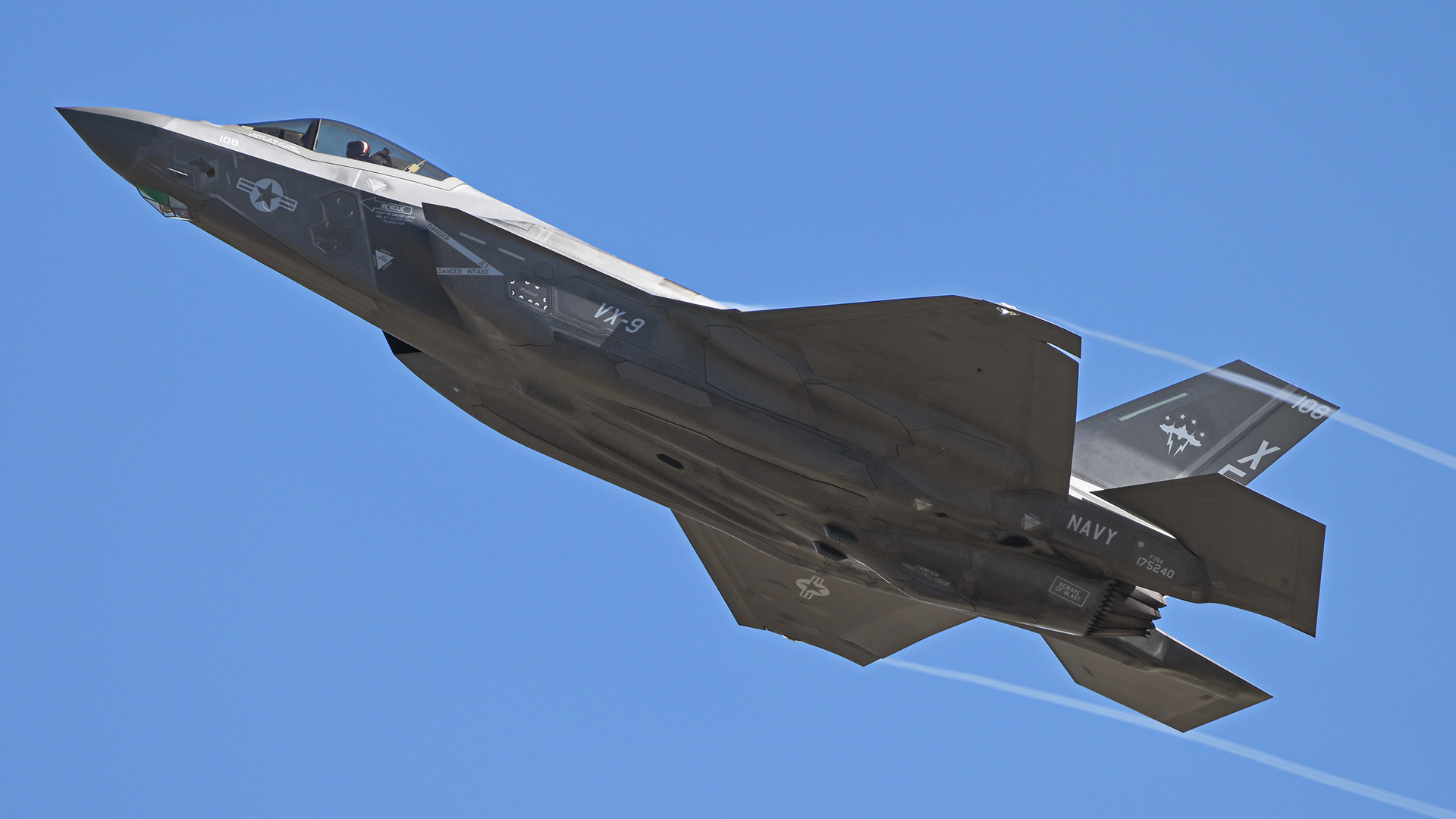
An elite U.S. Navy test and evaluation squadron, the VX-9 “Vampires” based out of NAWS China Lake, are now flying the U.S. Air Force’s F-35A model. The Navy traditionally flies the carrier-capable F-35C and the Marines fly both the short-takeoff and vertical landing (STOVL) F-35B and the F-35C.
The news that the seagoing service is operating the A model of the Joint Strike Fighter came from aviation photographer @Task_Force23, who captured the VX-9 F-35A as it did a low-approach at Mojave Air and Space Port on January 23rd. He was kind enough to share his photos with our readers.
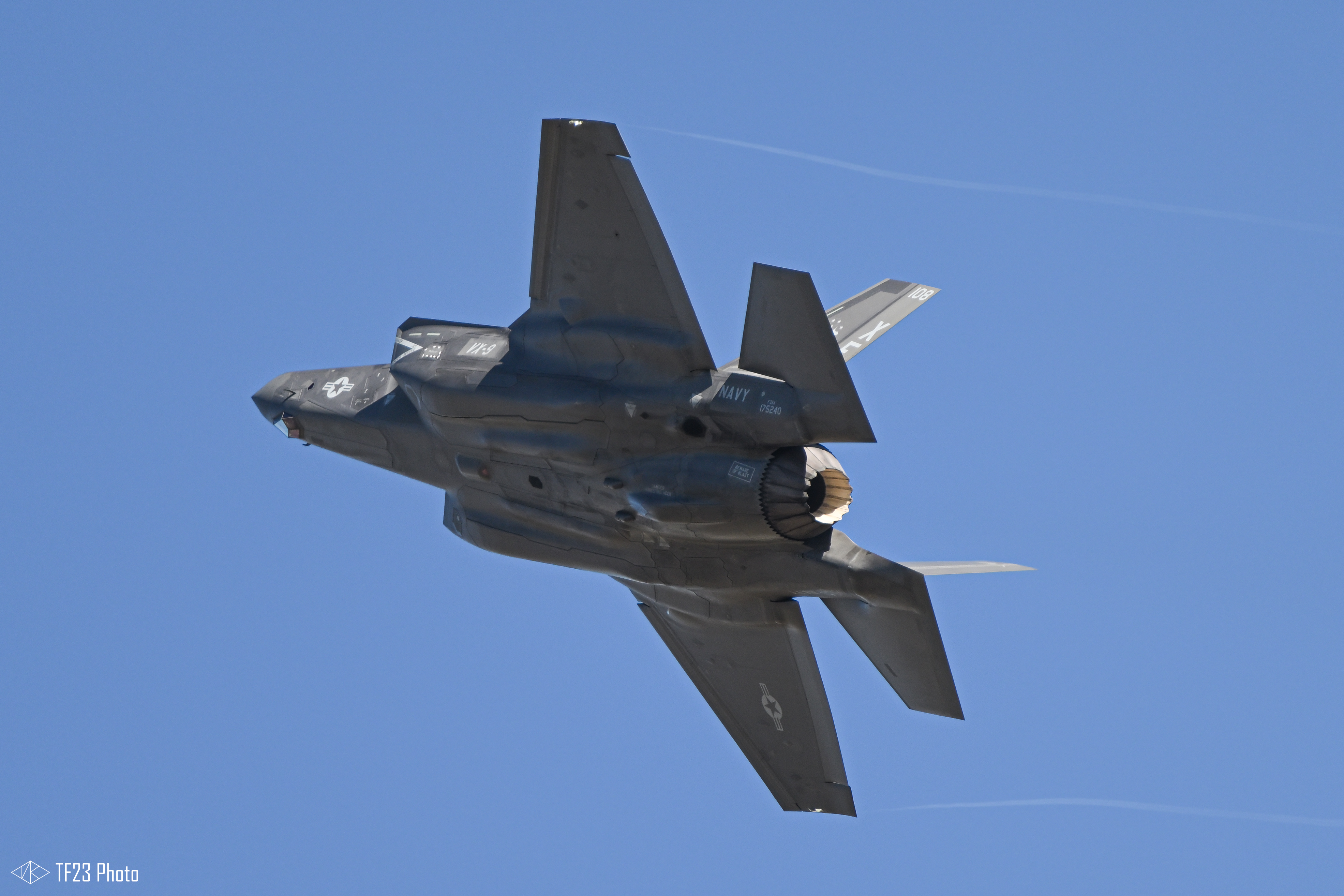
The aircraft in question was 17-5240, an F-35A that had previously served in a test capacity with the USAF’s 422nd Test and Evaluation Squadron based at Nellis Air Force Base. As for how the jet ended up being flown by the USN, the F-35 Joint Program Office (JPO) tells us:
“We have a service agreement whereby the Air Force can loan the Navy an aircraft and they have done that before.”
We have asked additional questions about the arrangement to the JPO, we will update this post when we hear back.
Regardless, it makes sense that Navy can pull from the Air Force’s much larger F-35A fleet for test and evaluation duties, the activities of which often benefit both services due to the joint nature of the F-35 program. The entire F-35C production target for the Navy and Marines is 273 aircraft (as of 2024), and many of those aircraft are yet to be ordered and delivered. In comparison, the USAF had well over 500 F-35As in its inventory at the start of fiscal year 2025. That number has only grown.
The F-35C that the Navy flies has much larger wings than the A, allowing it to approach the carrier at lower speeds. It also has a beefier landing gear for carrier operations, a robust tail hook, and it carries more fuel, among other tweaks. While the two fly similar and conversion from F-35C to A is likely relatively seamless, the C model is restricted to 7.5Gs compared to the A’s 9Gs. Due to the big wing and G restriction, they perform different in areas of the envelope, such as turns. High speed performance is also a bit different due to the big wings on the C. But those differences are fairly minimal, especially for test duties of a relatively mature aircraft that often have more to do with avionics, software, and weapons integration than raw performance and flying qualities. There are other use cases VX-9 could have for F-35As, as well, but generally this would be a capacity issue.
Still, it is certainly… different… seeing an F-35A emblazoned with NAVY on its side and VX-9’s iconic bat on its tail.
Contact the author: Tyler@twz.com
Loading comments…
Comments couldn’t be loaded. Please refresh the page.