
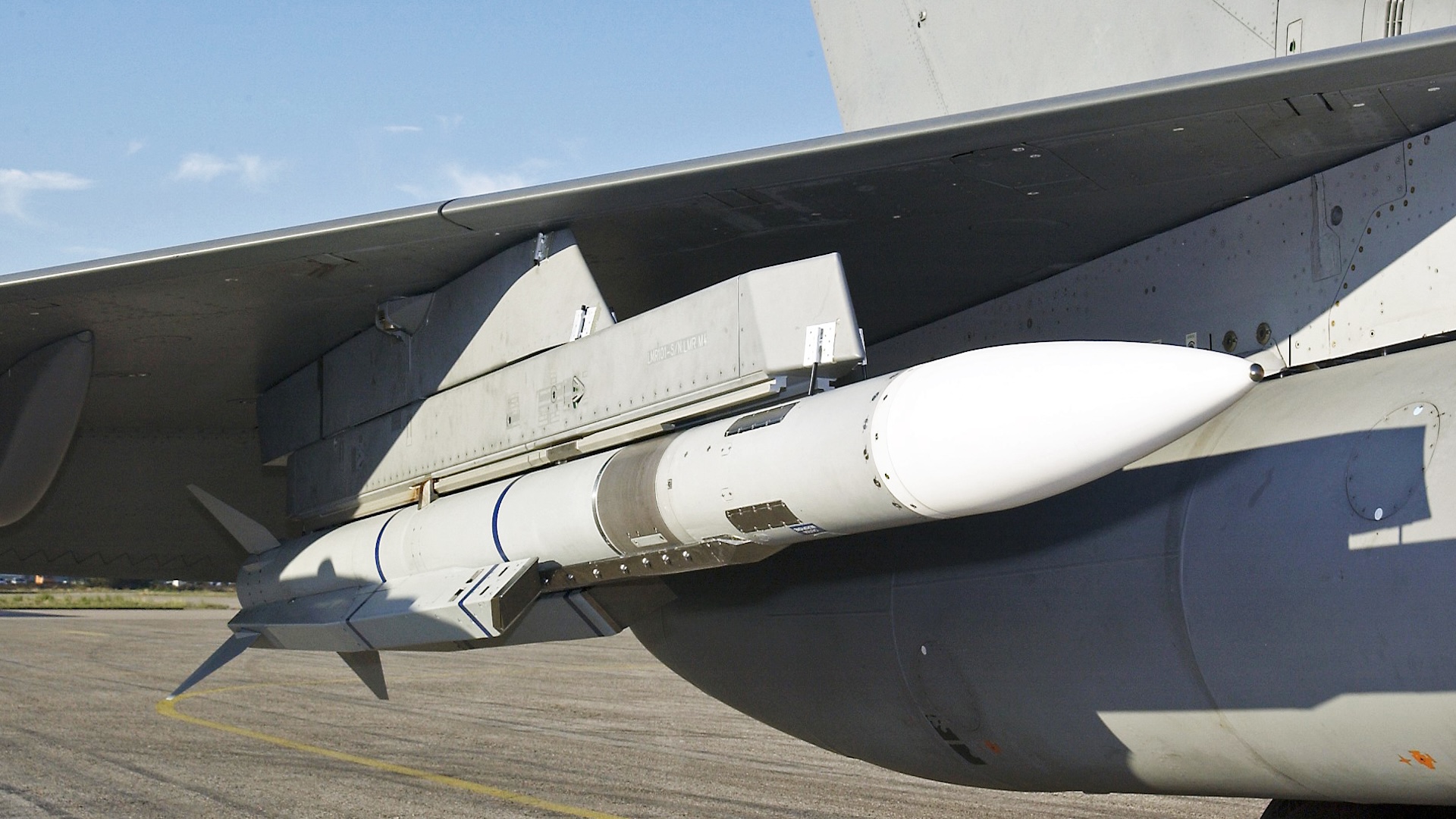
Good news for Ukraine: it looks increasingly likely that it will get its hands on European-made Meteor beyond-visual-range air-to-air missiles, a class of weapon that it badly needs to redress the balance against Russian fighter jets. Bad news: the Meteors would likely only be made available once Kyiv acquires Saab Gripen fighters, a plan that remains questionable, especially in terms of the timelines for when they might materialize.
Earlier this week, the Ukrainian Ministry of Defense confirmed that the Meteor was one of the weapons being lined up for the next Swedish security aid package for Ukraine. Also on the agenda were the Gripen E and undisclosed air defense systems, Saab radars, electronic warfare systems, and drones, including long-range one-way attack drones. The announcement came after talks between the Ukrainian Minister of Defense Mykhailo Fedorov and his Swedish counterpart, Paul Jonsson.
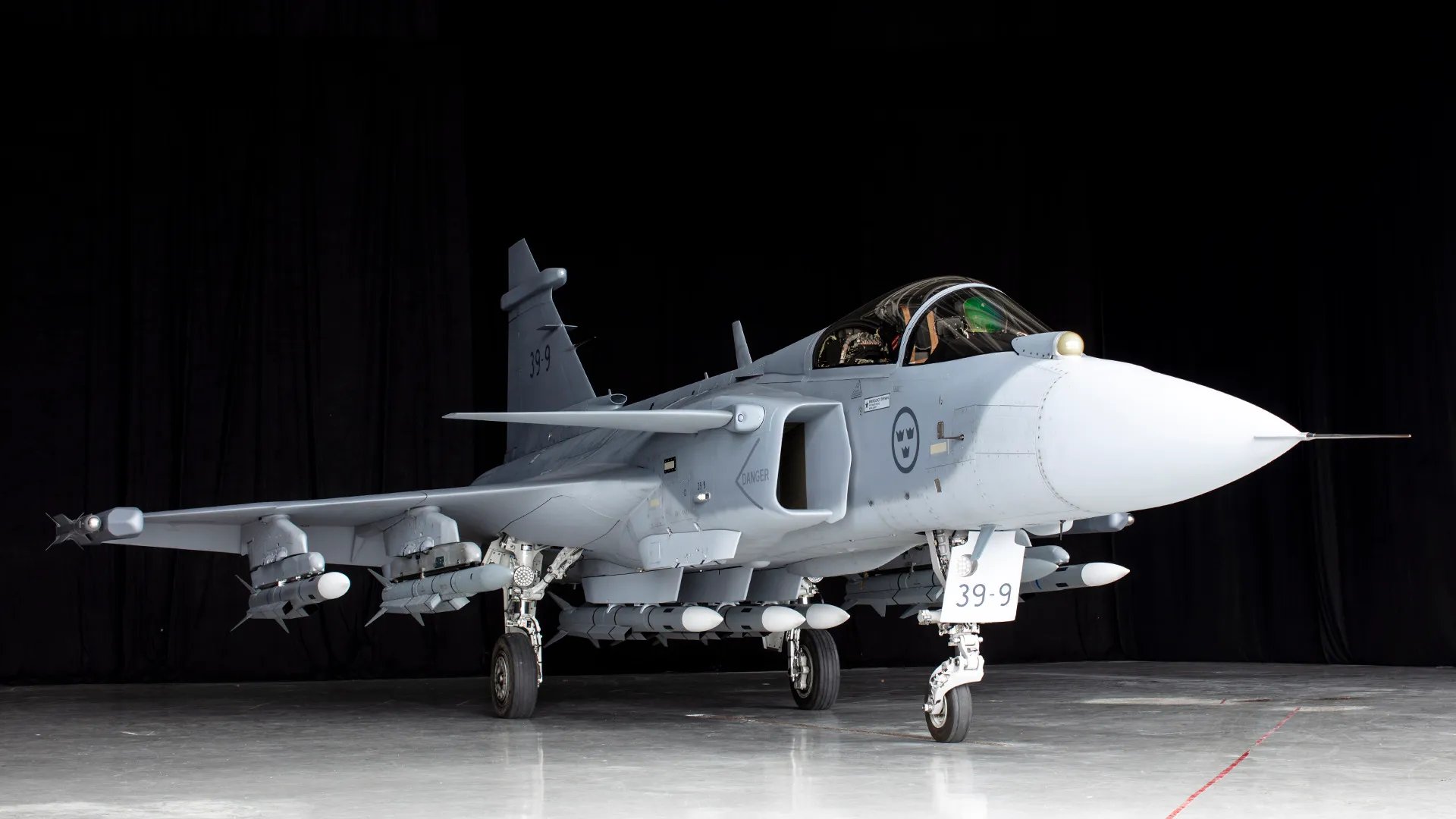
At the Singapore Airshow this week, a Saab official told Defense News that transfer of the Meteor was under discussion and that it would be “natural” for it to be included in any Gripen package.
“The Meteor missile would be a natural content in a weapon package for any Gripen user […] discussions are taking place with several export nations, including Ukraine,” said Jussi Halmetoja, operations advisor in the air domain at Saab.
The Ukrainian Air Force’s need for a weapon in the Meteor class has long been apparent.
As we have discussed in the past, the Meteor is one of the most capable air-to-air missiles in operational service anywhere in the world.
Its key feature is its unique ramjet propulsion system, which can be throttled during different phases of flight. This ensures the missile still has considerable energy reserves during the terminal attack — it’s at this point that more conventional air-to-air missile motors lose energy, leading to a decrease in agility.

Propelled by its ramjet motor, the Meteor’s all-important ‘no-escape zone’ is therefore far greater than for comparable weapons. This means the target has a much-reduced chance of evading the missile at the endgame of the engagement, something that would otherwise be far more realistic, using high-energy maneuvering. Another advantage of being able to throttle the motor is that the missile’s autopilot can calculate the most efficient route to the target for very long-range shots.
Highly significant for Ukraine is the fact that the Meteor is among the longest ranged of any Western air-to-air missile, generally considered to be able to engage certain types of targets out to around 130 miles.
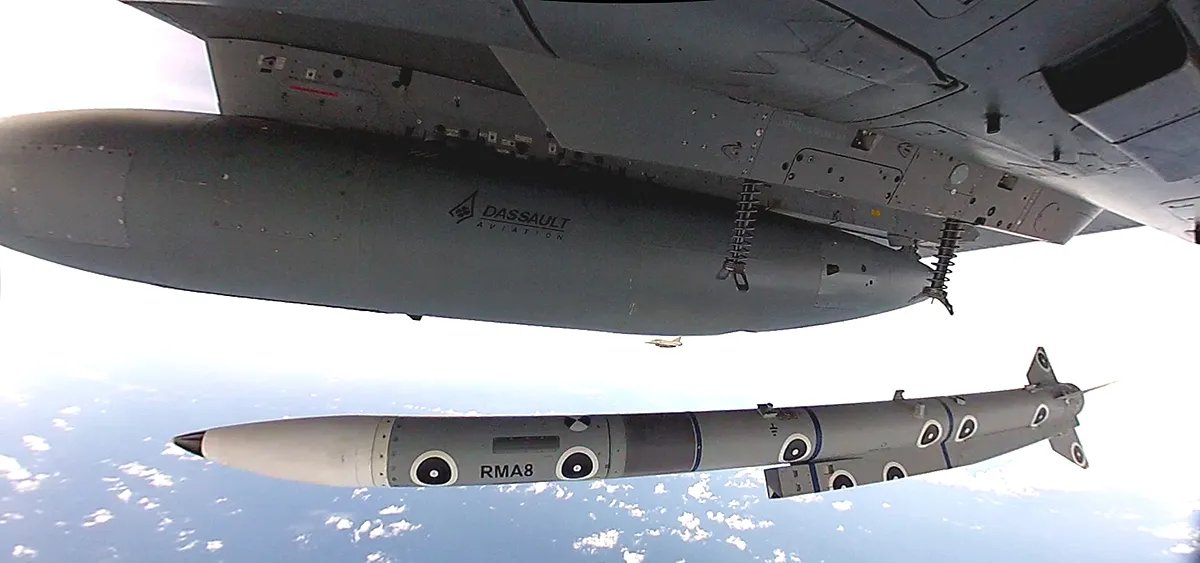
The Meteor has an active radar seeker for the terminal phase and a two-way datalink. The datalink feeds the missile with in-flight updates as it flies out to its target and provides the pilot in the launch aircraft with information on the Meteor’s fuel, energy, and tracking state. That data can help determine if and when to fire another, disengage, or even assign a different target of opportunity.
Currently, the Ukrainian Air Force’s most capable air-to-air missile is the AIM-120 Advanced Medium-Range Air-to-Air Missile (AMRAAM), which arms its F-16 fighters.
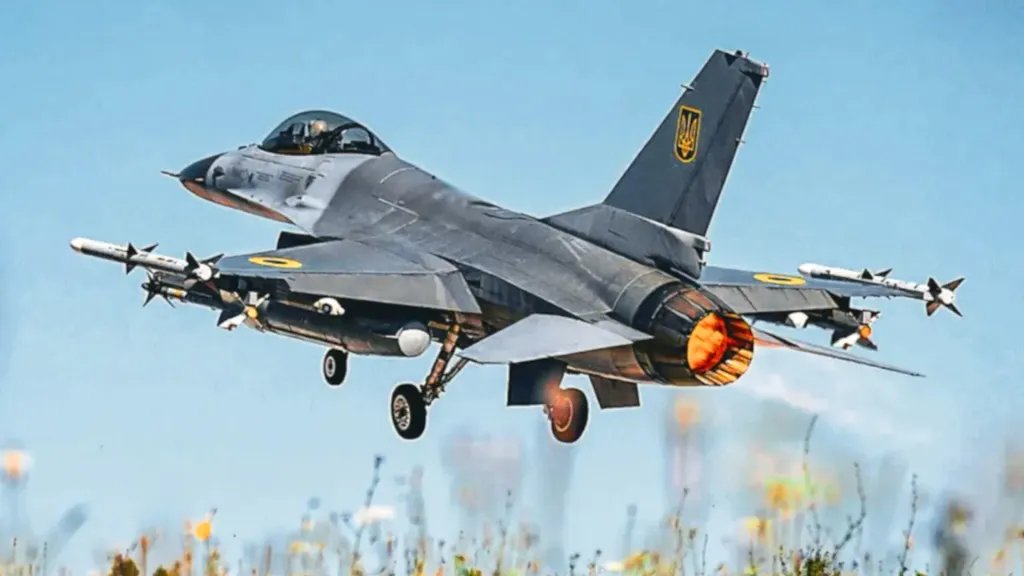
Ukraine’s AMRAAMs include the AIM-120C version, which, as we’ve discussed in the past, offers some significant advantages over the earlier AIM-120A/B models. Most importantly, the AMRAAM is Ukraine’s first active-radar-guided air-to-air missile. This is a class of weapons that was long sought after by Ukraine. Early on in the conflict, one of its fighter pilots, the late Andrii Pilshchykov, better known by his callsign “Juice,” told TWZ: “The lack of fire and forget missiles is the greatest problem for us.”
According to data from one of its operators, the AIM-120C-5 subvariant provides a maximum range of around 46 miles, although the actual range of the missile is tightly controlled information and based on many engagement factors.
For all its capabilities, the AMRAAM’s reach is far outstripped by Russia’s long-range R-37M air-to-air missile, known to NATO as AA-13 Axehead. Typical Russian tactics involve firing the R-37M from outside the range of the missiles carried by Ukrainian fighters.
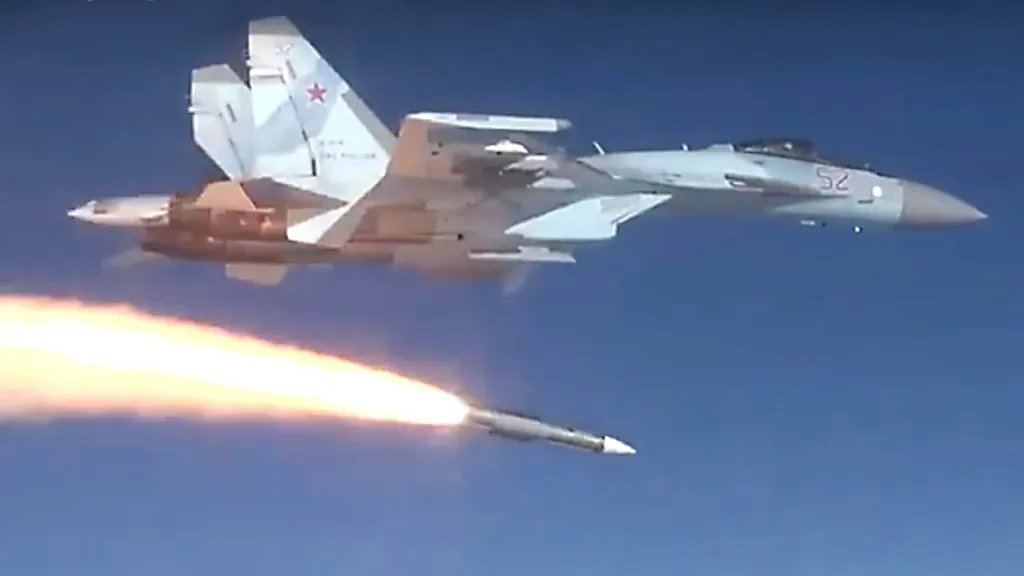
Mainly used by Su-35S Flanker multirole fighters and MiG-31BM Foxhound interceptors, the R-37M is a missile we have examined in detail in the past.
Last week, we discussed a video showing the shootdown of a Ukrainian Air Force Su-25 Frogfoot close air support jet, apparently by an R-37M.
With a reported range of 124 miles against certain types of targets, the R-37M flies to its target on a lofted trajectory, controlled by an inertial navigation system with mid-course radio correction, and uses an active radar seeker for its terminal phase attack.
Speaking to TWZ back in 2022, Ukrainian MiG-29 Fulcrum pilot Pilshchykov said that the R-37M, typically fired from within Russian airspace, was “limiting our capabilities to conduct our missions. Of course, if you’re maneuvering, we are not able to provide an airstrike or something else, so the game is still very, very, very tough in the air and very, very risky. If you’re not aware of the launch of a missile, you’re dead.”
As it stands, the Meteor is the best candidate for Ukraine to try and redress the balance in the air war when faced by the far-reaching R-37M, and would finally put Russian aircraft at risk within their own missile ranges.
The Meteor is a product of the European MBDA missile house, with manufacture undertaken by its U.K. branch. Other partners in the Meteor program are France, Germany, Italy, Spain, and Sweden, which placed an order for more of the missiles last year. All of these nations are firm supporters of Ukraine, but whether they approve a transfer of the missiles to Kyiv will also depend on how they judge the intelligence risk. After all, the wreckage of such a long-range weapon is very likely to end up on Russian territory, which would expose its technologies to analysis and exploitation.
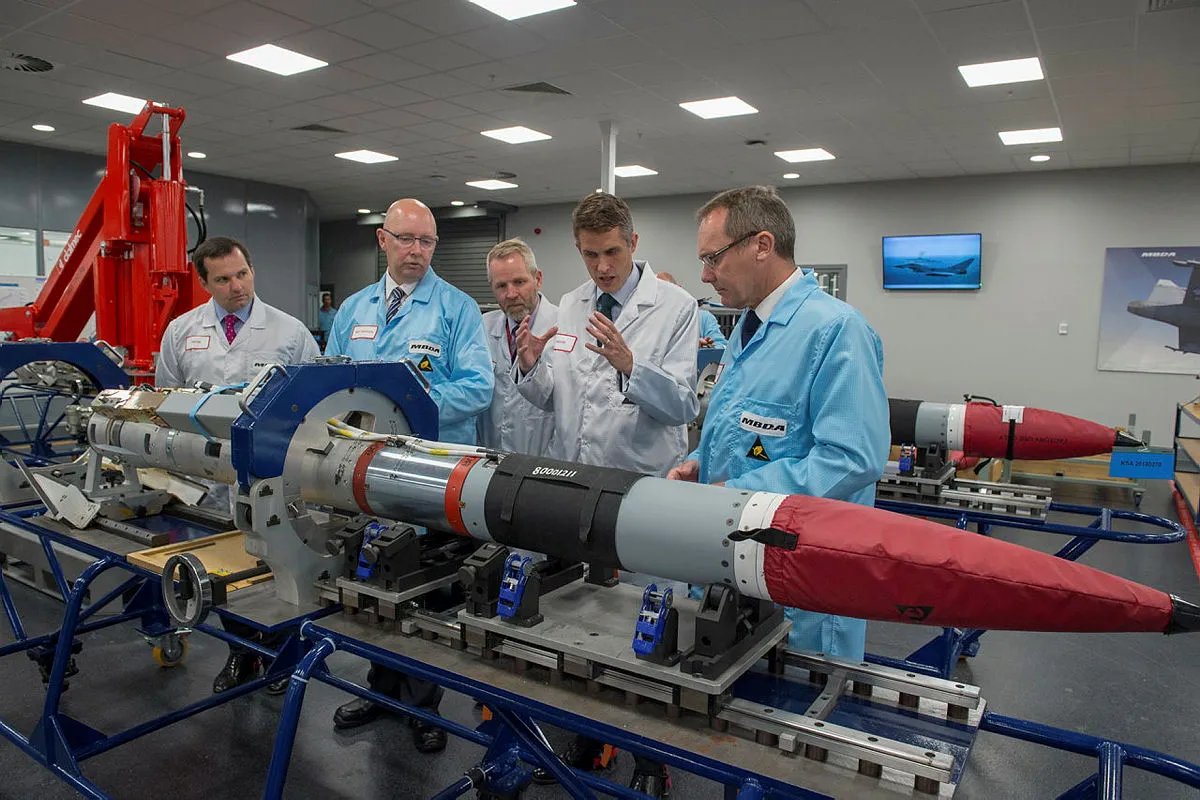
However, Ukraine will only be able to use the Meteor once it starts to receive Gripens (or, alternatively, Dassault Rafales offered by France).
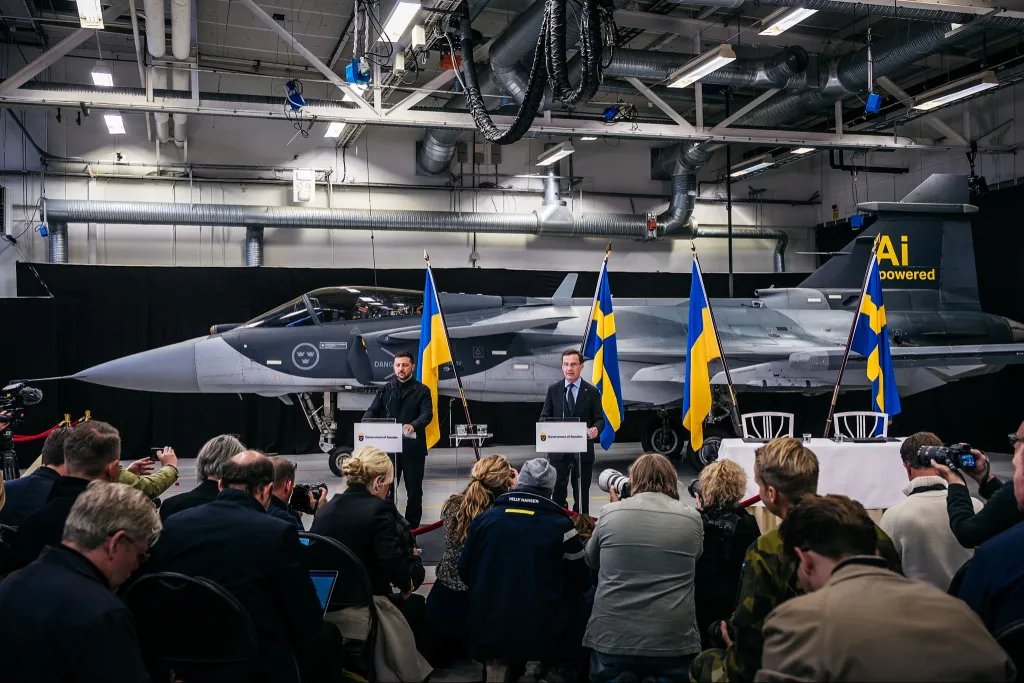
As it stands, Ukraine has signed letters of intent to acquire as many as 150 Gripen E fighters from Sweden and up to 100 Rafales from France over the next 10 years.
For Ukraine, the Gripen and Meteor could be used in a very powerful combination with the two Saab 340 airborne early warning and control (AEW&C) aircraft equipped with Erieye radar that have been donated by Sweden.
The Saab 340 AEW&C will be able to work as a fighter control asset, detecting targets, prioritizing them, and then assigning them to the fighters for interception. Using its datalink, the radar plane can also directly provide the missile with mid-course guidance updates. In fact, the fighter pilot may never have to use their own radar to engage a target. Instead, the missile is assigned a target, is fired, and then gets continuous updates from the AEW&C platform.
As we have discussed in the past, either the Rafale or Gripen E would become the most advanced combat aircraft in Ukraine’s inventory, but there remain glaring questions about whether the acquisition of one of these aircraft types, let alone two, is actually feasible, especially in such numbers.
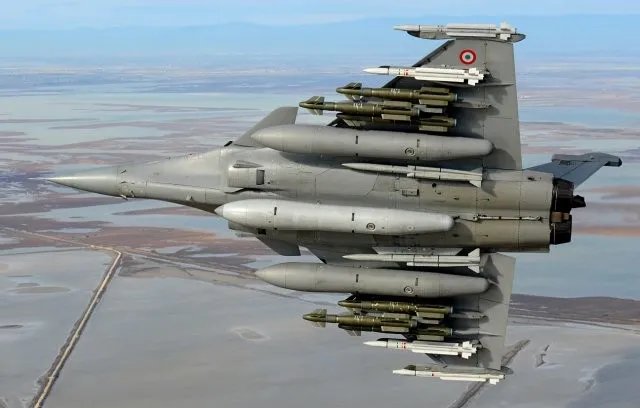
The letters of intent underscore Ukraine’s political commitment to buy these fighters, but don’t constitute a purchase deal. For Ukraine, there’s nothing to lose here, and it can cement its relationships with the nations that support it by showing interest in huge arms buys without any liability.
The same applies to the Meteor.
However, official discussions about the missile, together with the Gripen and Rafale, once again signal the scope of Kyiv’s ambitious re-equipment plans, especially when it comes to its air force.
A faster route to getting Meteor operational in Ukraine might involve Sweden providing secondhand Gripen C/Ds, something that has been proposed in the past.
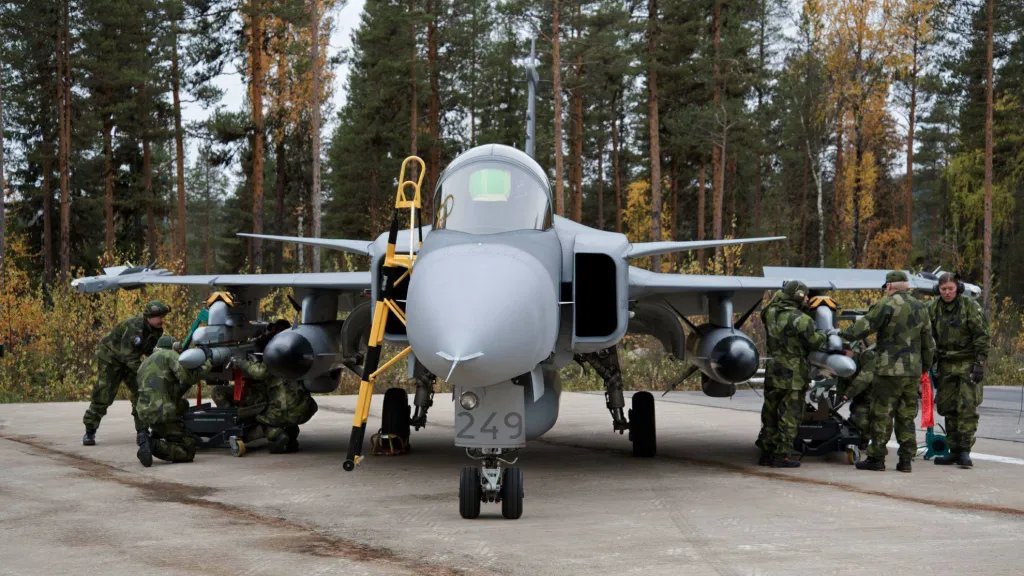
Swedish officials have said it would take around three years for new-build Gripen Es to arrive in Ukraine. With an urgent need for fighters, Ukraine has said in the past that it wants to get its first Gripens delivered by 2026. The earlier Gripen C/D is also compatible with the Meteor.
While we wait for any final Gripen or Rafale deals to be concluded, Ukraine has at least made a first step toward acquiring an air-to-air missile that would finally allow its pilots to engage Russian aircraft at extended ranges, which would offer a powerful challenge to Russia’s current freedom of movement in the air war.
Contact the author: thomas@thewarzone.com
Loading comments…
Comments couldn’t be loaded. Please refresh the page.