
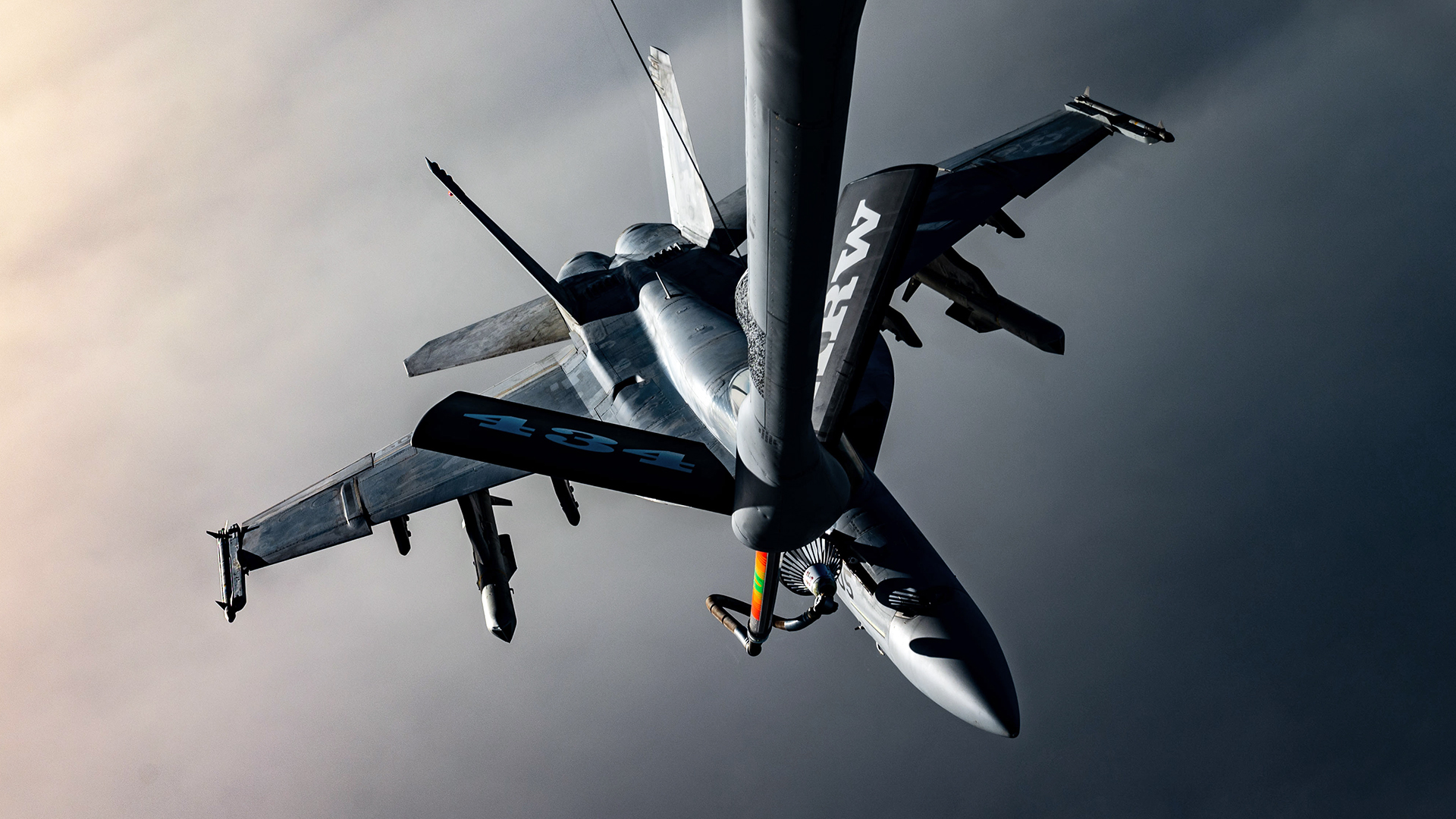
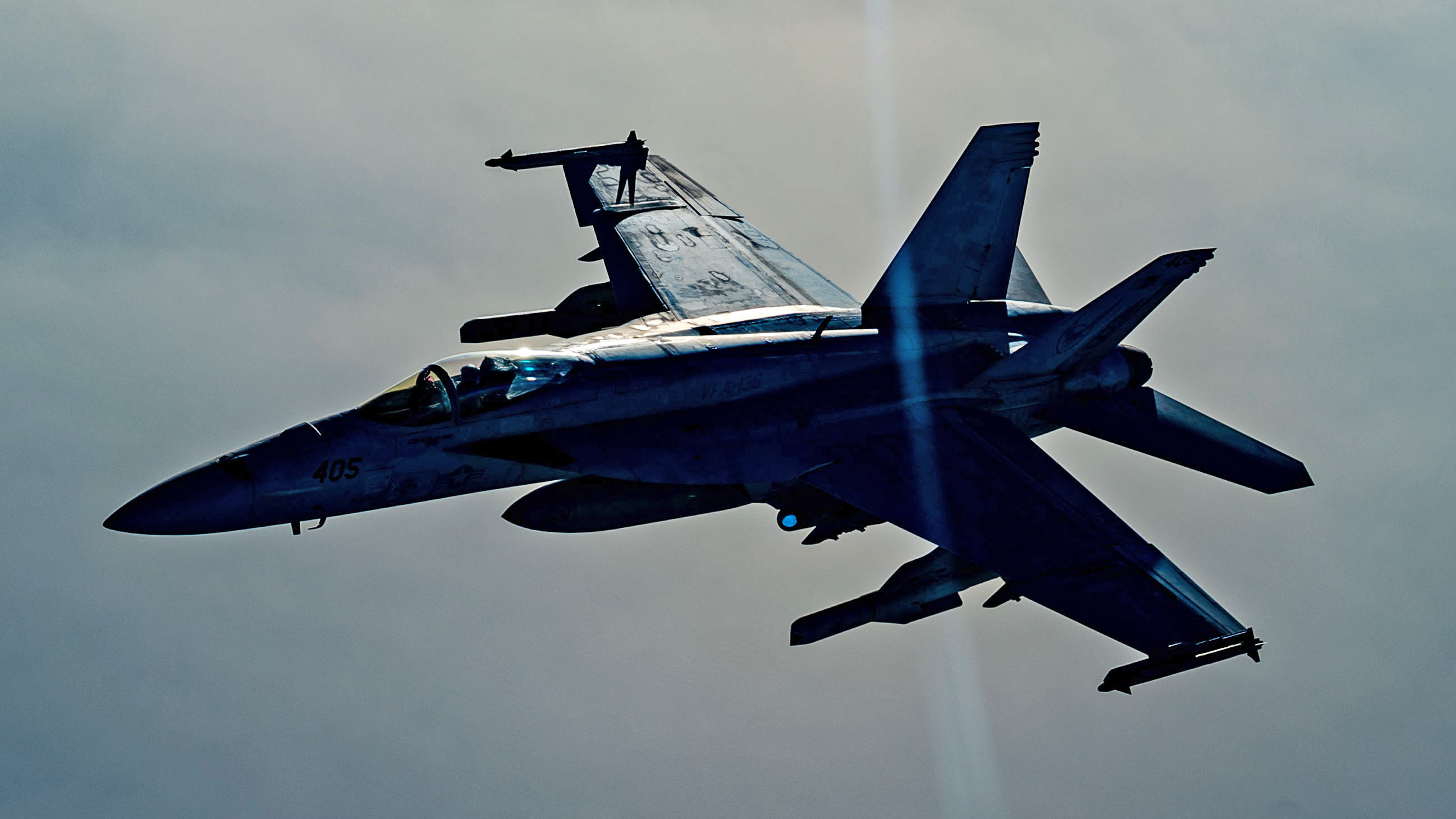
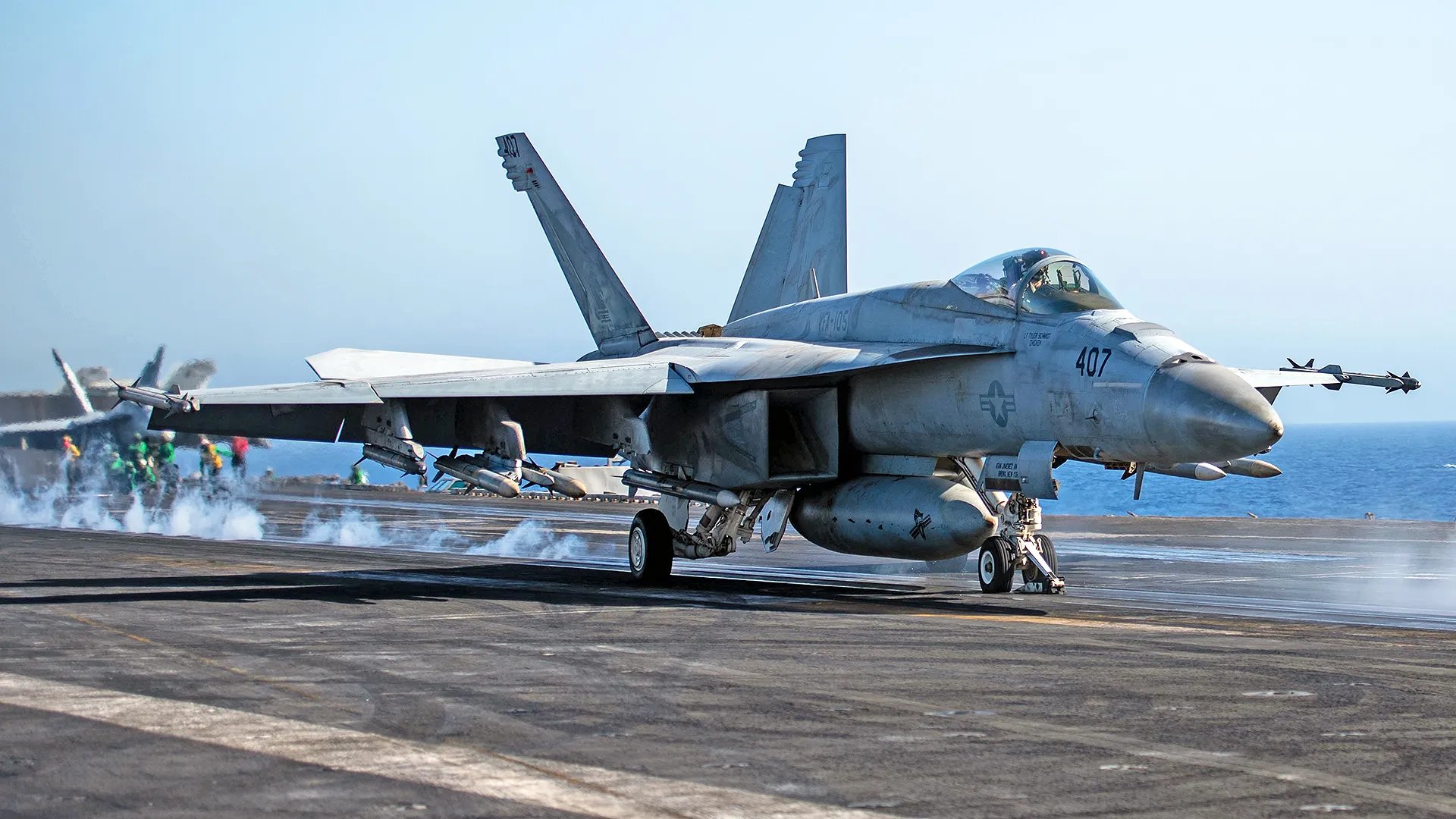
Imagery has emerged of a U.S. Navy F/A-18E Super Hornet fighter with a rare payload of AGM-84H/K Standoff Land Attack Missile–Expanded Response, better known as SLAM-ER. While only published recently, the photos date back to earlier this year and provide more evidence of the diverse munitions during operations against Houthi targets in Yemen. They also record part of what was a highly eventful deployment for the aircraft carrier USS Harry S. Truman (CVN 75), on which the Super Hornet was embarked.
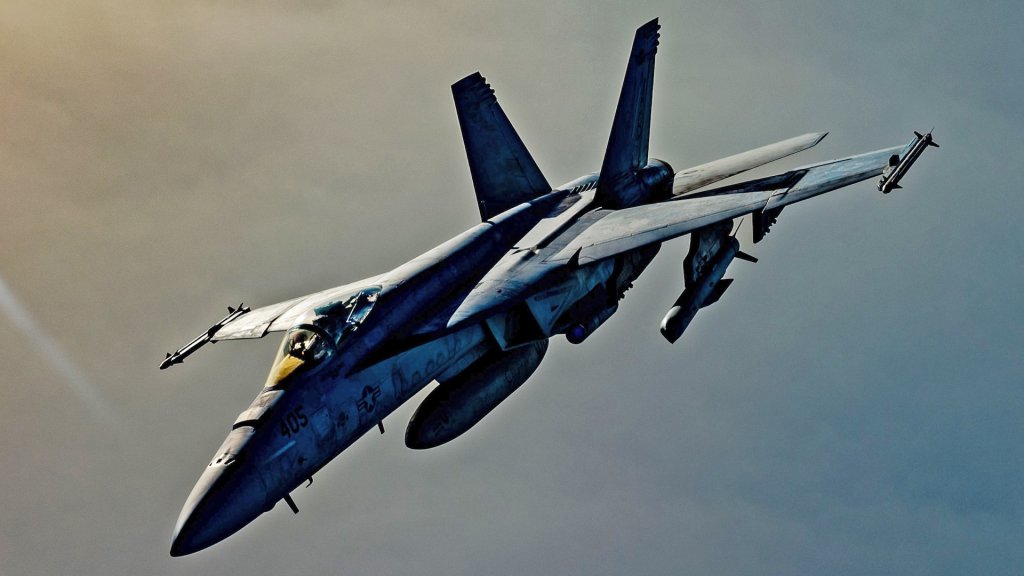
The imagery in question, posted by the U.S. Department of Defense last week, was originally taken on April 8, 2025. The photos were snapped from a U.S. Air Force KC-135 Stratotanker refueling Super Hornets, which were assigned to the Harry S. Truman Carrier Strike Group, over the Red Sea, in the U.S. Central Command (CENTCOM) area of responsibility.
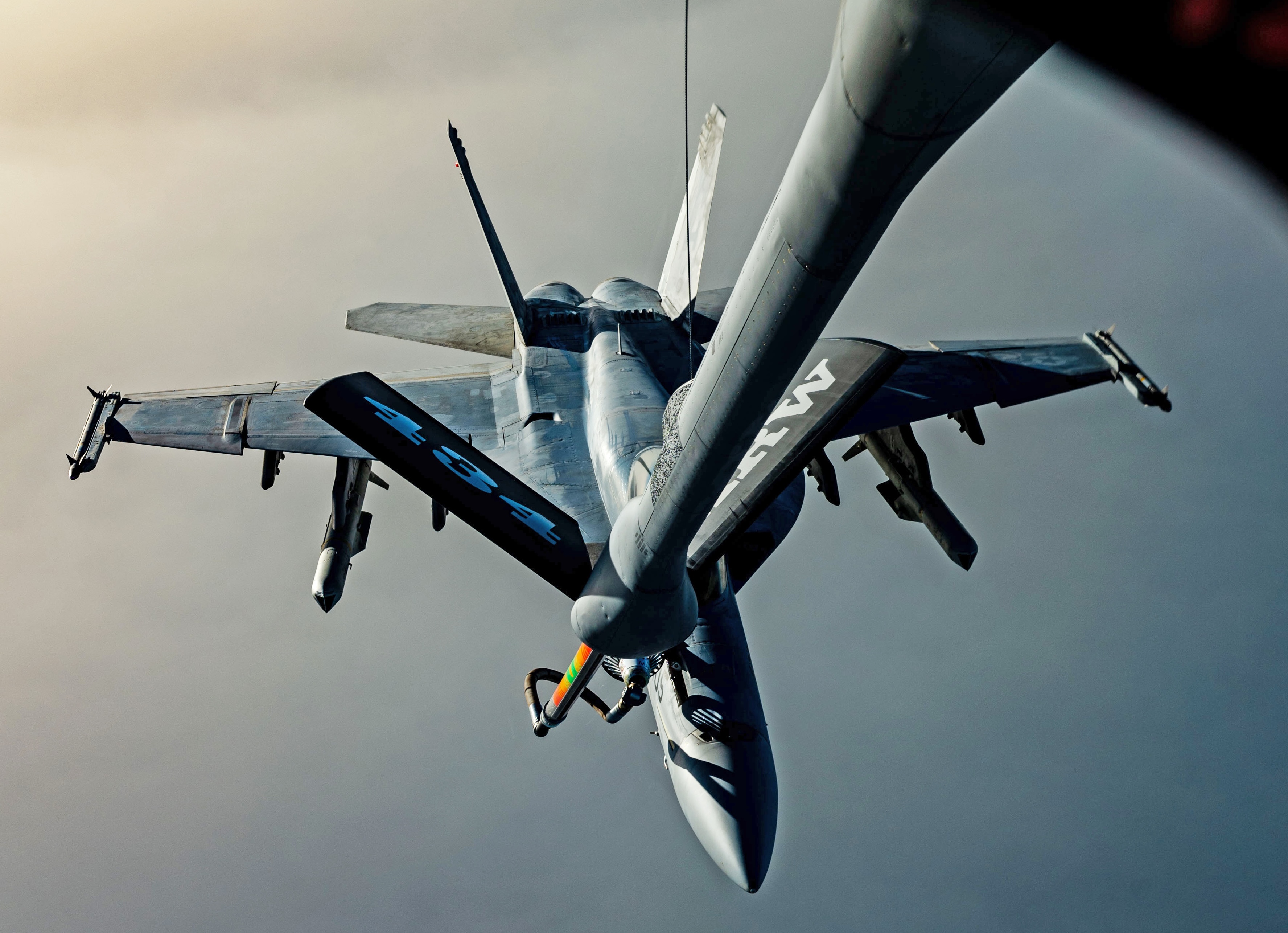
Apart from the SLAM-ER missiles carried on each of the inboard underwing pylons, the F/A-18E from Strike Fighter Squadron (VFA) 136 carries AIM-9X Sidewinder air-to-air missiles on the wingtip stations and a 480-gallon centerline fuel tank. No other weapons are visible, but there may well be an AIM-120 Advanced Medium-Range Air-to-Air Missile (AMRAAM) on the left-hand ‘shoulder’ station. The right-hand shoulder station mounts an AN/ASQ-228 Advanced Targeting Forward-Looking Infrared (ATFLIR) targeting pod.
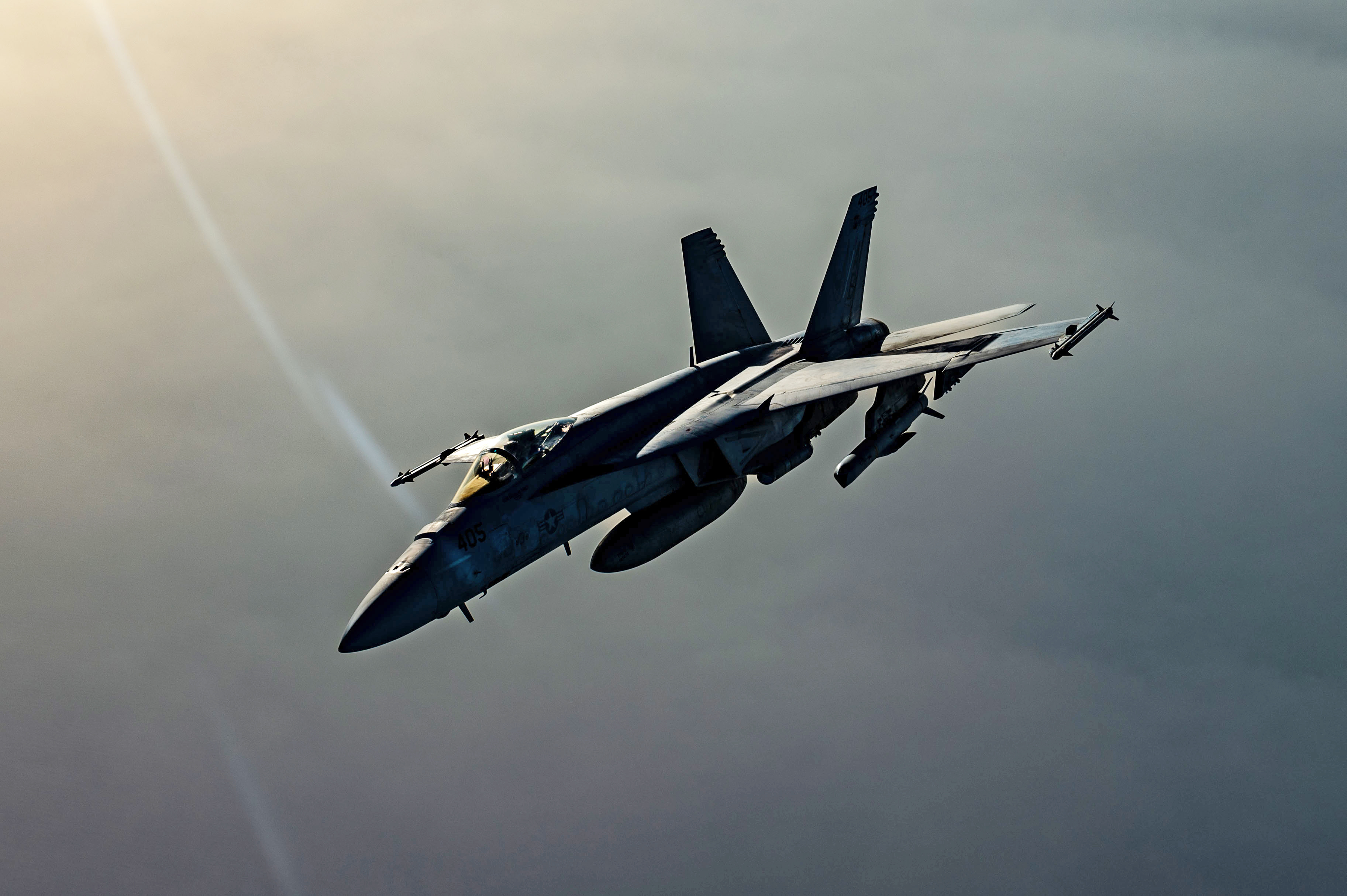
The most unusual feature is the presence of the SLAM-ER, a weapon not often seen carried by operational F/A-18E/F Super Hornets.
The SLAM-ER is an air-launched land-attack development of the Harpoon anti-ship cruise missile. It has a reported range of around 170 miles and flies at high subsonic speed. The SLAM-ER has a reduced radar signature from its frontal aspect and is capable of attacking land and sea targets with a considerable degree of accuracy, making it very suitable for littoral environments. The missile is guided by a combination of GPS and infrared imaging and can strike both moving and stationary targets. The standoff range of the SLAM-ER would have been particularly useful in Yemen, where the Houthis assembled a hodgepodge of air defense threats that we profiled at the time. This, in turn, required some complex and hazardous suppression of enemy air defense (SEAD) missions.
As well as being used in a fire-and-forget mode against a known target, the SLAM-ER can provide man-in-the-loop control. This involves a two-way datalink pod on the launching aircraft that allows the missile to be manually steered by the aircraft’s crew to its final impact point after it makes its way autonomously to the target area. This allows very precise targeting, re-targeting in real-time, and even the ability to engage certain moving targets.
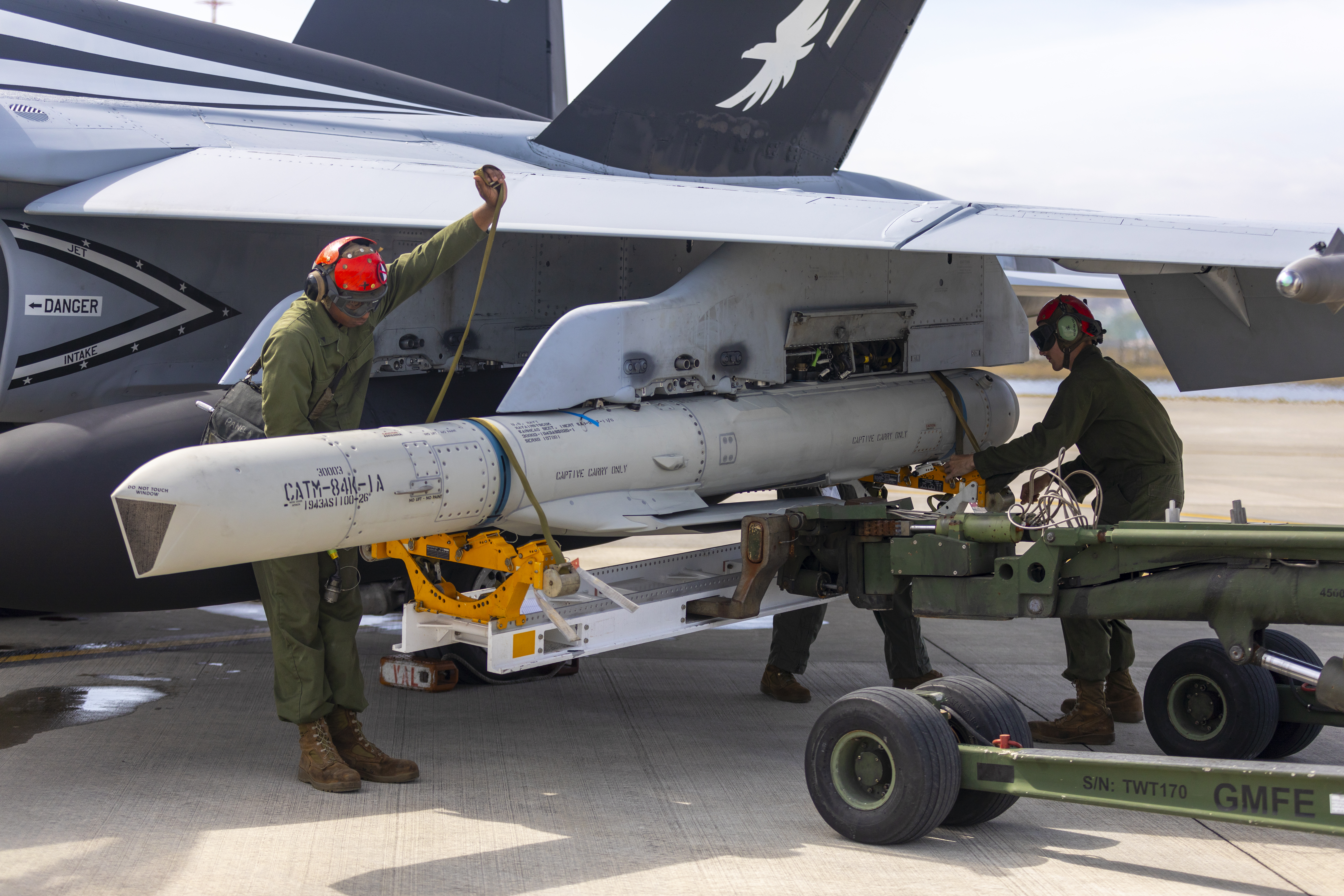
As we have explained in the past, using an active datalink for human-in-the-loop control does have some drawbacks, including the need to maintain line-of-sight with the missile during its terminal stage of the attack. However, in the context of the campaign against the Houthis, this guidance method would have been especially relevant. One of the biggest issues during the operation was finding the targets, and the ability of the SLAM-ER missile to be flexibly retargeted in flight, attacking a fleeting target, such as a missile or drone unit, would have been prized by commanders.
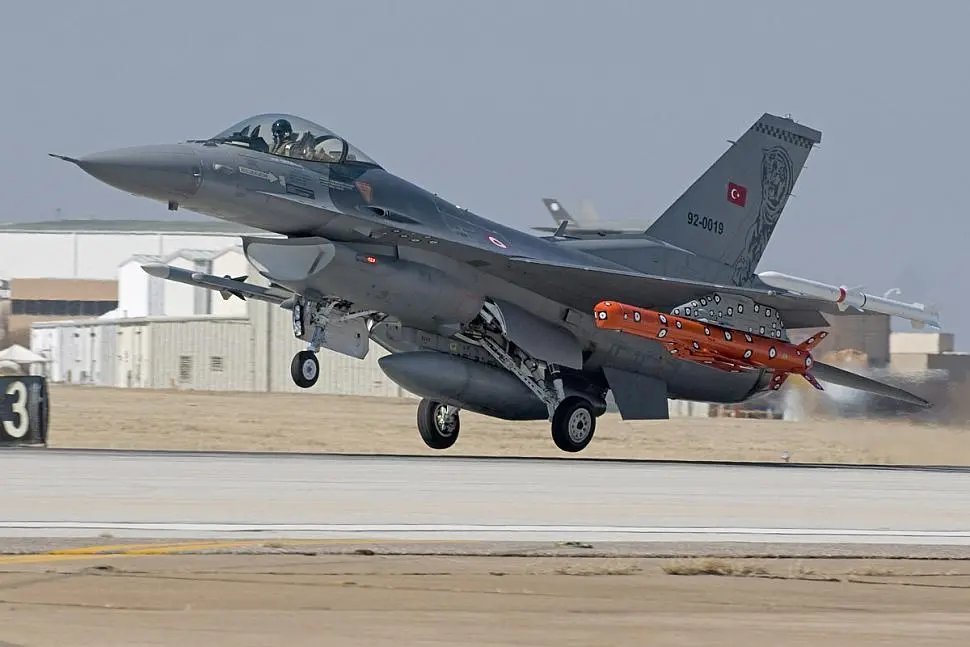
Outside of the U.S. military, SLAM-ER operators include Saudi Arabia, South Korea, Taiwan, Turkey, and the United Arab Emirates.
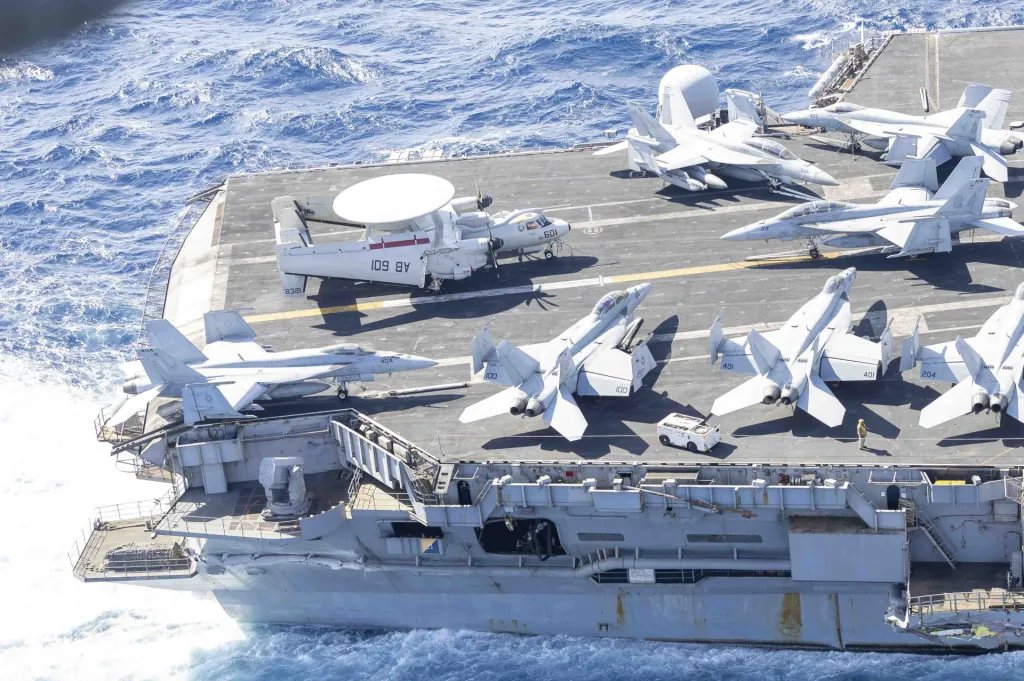
On July 1, USS Harry S. Truman returned to Norfolk, Virginia, after an eight-month deployment, dominated by operations against the Houthis, as the Yemeni group waged its campaign of attacks on merchant vessels and warships in the Red Sea.
As well as playing a central role in Operation Rough Rider, the 52-day bombing campaign against the Houthis, the Harry S. Truman Carrier Strike Group lost three F/A-18E/Fs, one in a friendly fire incident involving the cruiser USS Gettysburg, which you can read about here. The Truman was also involved in a collision with a merchant ship near the Suez Canal, leading to a change of command for the carrier.
F/A-18E/F and their EA-18G Growler cousins were seen with some other interesting loadouts on operations against the Houthis.
Carrier-based F/A-18E/Fs were seen carrying a notably wide array of air-to-ground ordnance during these operations. As well as SLAM-ER missiles, stores included the AGM-154 Joint Standoff Weapon (JSOW) and the more common Joint Direct Attack Munitions (JDAM), specifically equipped with ‘bunker-buster’ bomb bodies.
In the air-to-air domain, the Navy started using the “Murder Hornet” name to refer to F/A-18E/Fs armed with five AMRAAMs and four AIM-9X Sidewinders. That ordnance configuration made its combat debut last year in operations over and around the Red Sea and was enabled by a crash program to allow F/A-18E/Fs to carry more AIM-9Xs, which TWZ was first to report on.
Meanwhile, the Super Hornet’s EA-18G Growler cousins were seen with heavy loads of anti-radiation missiles to target air defenses, and expanded air-to-air missile capabilities via additional AIM-120 AMRAAM carriage options, primarily intended to counter Houthi drones over and around the Red Sea. One Growler also used an AGM-88E Advanced Anti-Radiation Guided Missile (AARGM) to score a ground kill against a Mi-24/35 Hind attack helicopter in Yemen.
The SLAM-ER was notably absent from a Pentagon budget document dated May 22, 2025, which also apparently confirmed that the U.S. military fired AGM-158C Long Range Anti-Ship Missiles (LRASM) in the course of operations in or around the Middle East.
Navy F/A-18E/Fs were one of the first aircraft known to be cleared to employ AGM-158Cs operationally.

The May reprogramming document did not make any mention of making up for Navy expenditures of SLAM-ER missiles, and the U.S. military does not appear to have procured any new stocks of these munitions for its own use in years.
As we have suggested in the past, it could be the case that the LRASM may eventually replace, at least in part, the Navy’s SLAM-ER missiles.
However, the extent of the AGM-158C’s land-attack capabilities are unclear. It was going to have secondary land attack capability, but that was later stripped from development, although it may have been added back in, or it still has a very austere ability to strike land targets by default. The missile is designed to use a GPS-assisted inertial navigation system (INS) guidance package to get to a target area before switching over to a passive infrared seeker. The seeker then searches for targets and autonomously categorizes them using pre-programmed parameters that are stored in its built-in maritime-centric threat database. It then attacks its target by striking it in the best possible spot for destruction using its infrared guidance. It also has electronic support measures (ESM) that can detect emissions of certain threat radars. This can be used to avoid those threats in real time or to classify them and attack them if they are emanating from a vessel. Its onboard datalink allows for swarming with other LRASMs and communications as to its status with controllers, in some cases. Neither LRASM nor the AGM-158 Joint Air-to-Surface Standoff Missile (JASSM), from which it was derived, offers the human-in-the-loop control of the SLAM-ER.
Regardless, the evidence from the U.S. campaign against the Houthis earlier this year confirms that the SLAM-ER missile is very much still an important weapon for Navy Super Hornets, albeit one not often seen.
Contact the author: thomas@thewarzone.com
Loading comments…
Comments couldn’t be loaded. Please refresh the page.