
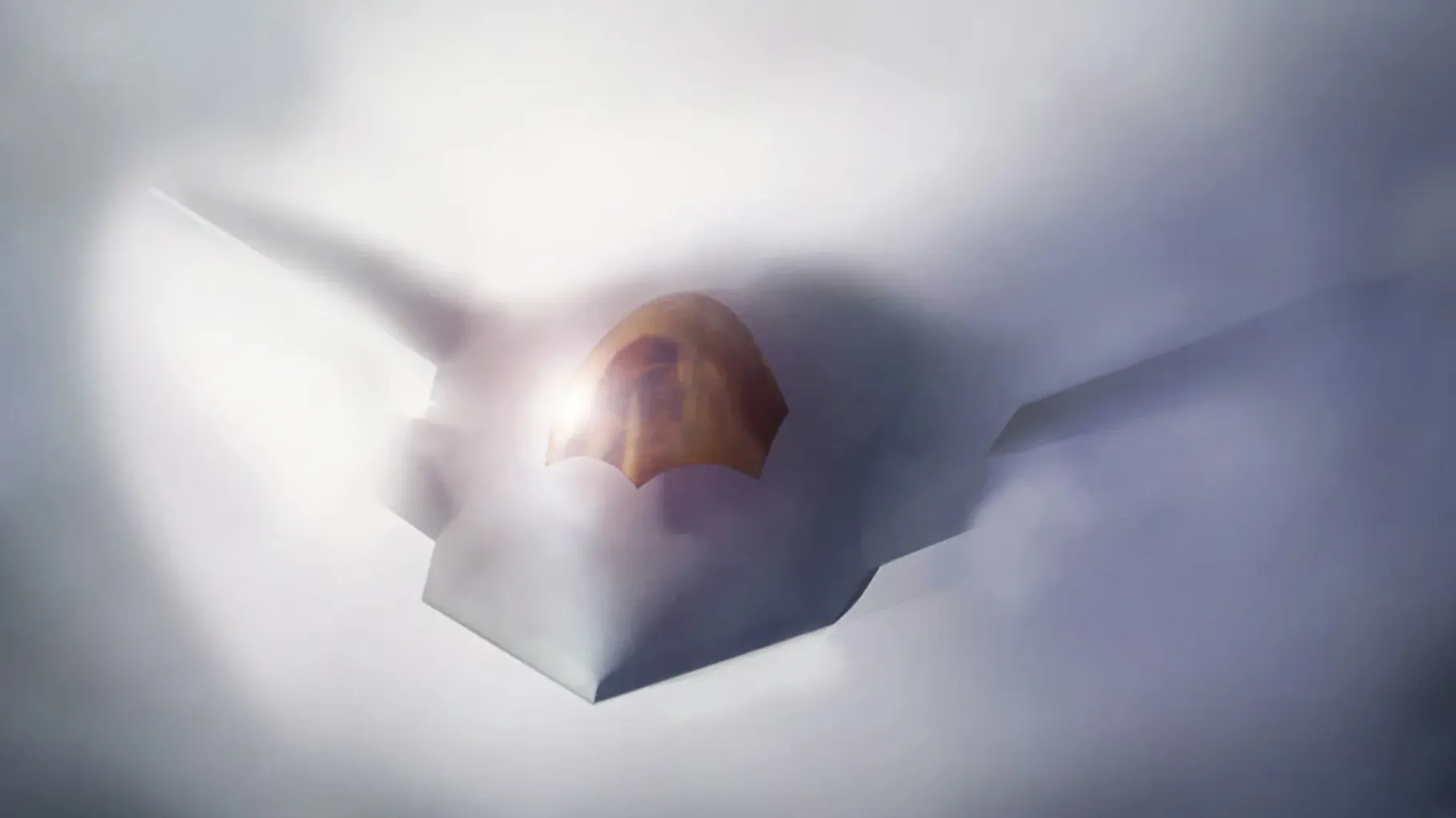
President Donald Trump has brought up the possibility of changing the designation of the U.S. Air Force’s F-47 sixth-generation stealth fighter if the program gets to a point where “I don’t like it.” The nomenclature was chosen in part to highlight his personal support for the program, which is currently one of the top acquisition priorities across the entire U.S. military.
Trump highlighted the F-47 as an example of the U.S. military having the “best equipment” in a speech today at the World Economic Forum’s annual meeting at Davos in Switzerland. He also remarked on the jet’s designation. The Air Force announced in March 2025 that it had picked Boeing to build the F-47. The service views the jet as critical to providing air superiority for U.S. forces in future conflicts, especially high-end fights, such as a potential one against China in the Pacific. The Air Force has said it plans to buy at least 185 F-47s, with the first examples entering operational service toward the end of the decade.
“They say it’s [the F-47] the most devastating plane, fighter jet ever,” Trump said. “They called it 47. If I don’t like it, I’m going to take the 47 off it.”
“I don’t know why they called it 47. We’ll have to think about that,” he continued. “But if I don’t like it, I’m going to take that 47 off.”
Whether anything in particular spurred Trump’s comments today is unknown. TWZ has reached out to the Air Force and the White House.
The Air Force has previously explained, in detail, how it arrived at the F-47 designation.
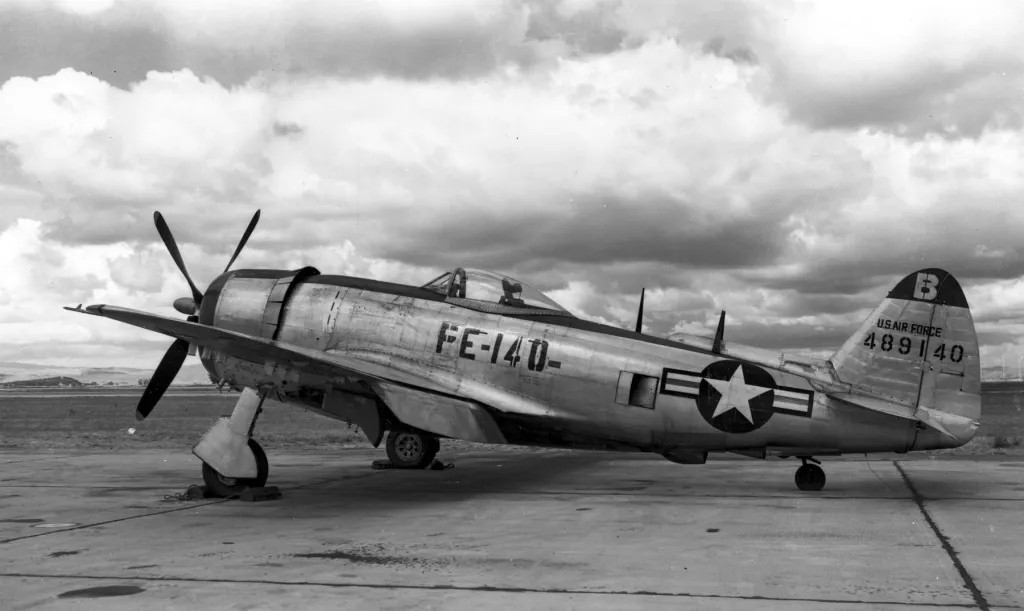
Firstly, it is a reference to the World War II-era piston-engine P-47 Thunderbolt fighter. P-47s continued to serve for years afterward in the United States and elsewhere globally, long enough to see their nomenclature change to F-47 with the decision to phase out the “P” for “Pursuit” prefix.
The “47” in F-47 is also a reference to the founding year of the independent U.S. Air Force, 1947. The service was originally a branch of the U.S. Army.
Lastly, the F-47’s designation is a reference to Trump, the 45th and 47th President of the United States. For a time, the future of the program that led to the F-47 was very uncertain, and there was a real possibility it might have been cancelled. The Trump administration ultimately decided to proceed, announcing Boeing as the winner of the competition last March.
“The generals picked a title, and it’s a beautiful number,” Trump had himself said during the televised unveiling of the F-47 at the White House last year.
Trump does have a long history of being outspoken when it comes to the aesthetics of major U.S. military weapon systems, especially warships, as well as more technical aspects of their design. The president has also made pronouncements about ordering substantial changes to high-profile programs in the past that have not come to pass.
Even before being elected president, Trump was well known for being particularly conscious of his personal brand, as well.
With all this in mind, it would make sense that Trump would not want to be so directly associated with the F-47 if the program were to run into serious trouble or become the subject of some other controversy, or even if he just does not personally like the design of the jet. Whether or not any such developments have already occurred, but have not yet been publicly disclosed, is not known.
U.S. military aircraft designations are not set in stone. Sometimes significant changes are made to the nomenclature of designs still in development, as well as those already in service. The decision to change the designation of the Air Force’s newest electronic warfare jets from EC-37B to EA-37B is just one recent example.
To date, the Air Force and Boeing have been upbeat publicly about progress on the F-47. The Air Force confirmed last year that the initial prototype is in the process of being built and that a first flight is targeted for 2028. When asked today for an update on how many F-47s are now in any stage of production, and if there have been any changes to the first flight schedule, Boeing directed TWZ to contact the Air Force.
“I won’t even touch the first flight day the Air Force has put the date out there; I’m just going to stay away from all of that,” Steve Parker, president and CEO of Boeing Defense, Space and Security, had said at a media roundtable last November. “It’s all about execution, and that’s what is getting all of my attention. We’re in a good spot.”
Though much about the F-47 is currently classified, it is known that much groundwork for the program had already been laid before Boeing won the contract last year. This includes the Air Force, in cooperation with the Defense Advanced Research Projects Agency, having test-flown relevant X-plane demonstrators for years beforehand.
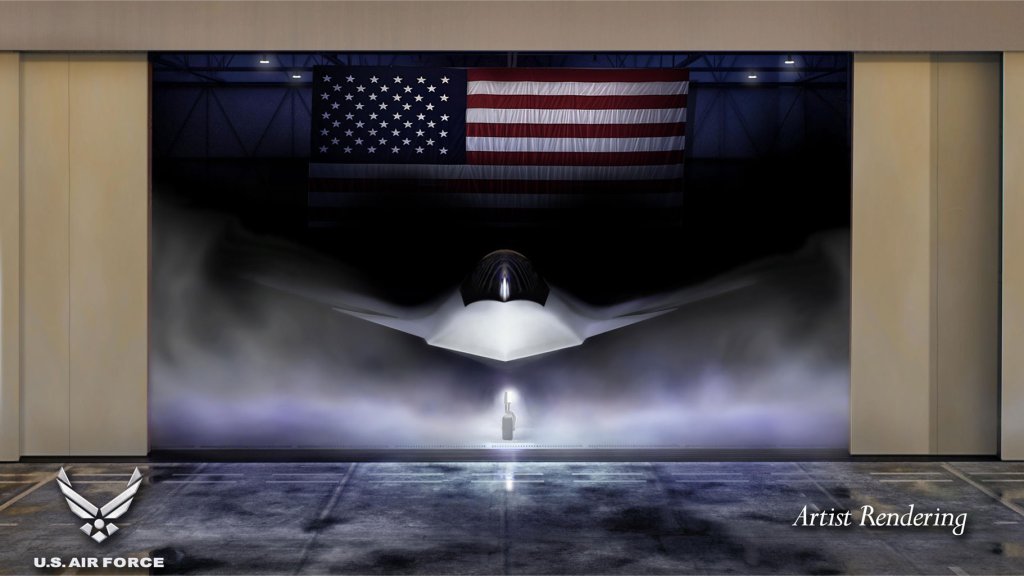
The Air Force has acknowledged delays with the separate Next Generation Adaptive Propulsion (NGAP) program, which is developing advanced jet engines that could power the F-47 and other aircraft in the future. What engines are expected to power the F-47 initially is unclear. You can read more about what is otherwise known about the design here.
The Pentagon has also thrown its full weight behind the F-47 program. Last year, U.S. officials announced plans to effectively shelve the U.S. Navy’s F/A-XX sixth-generation fighter program in part to ensure there would be no competition for resources with the F-47.
Congress is now moving to get the F/A-XX effort out of purgatory in a new defense spending bill, but certainly not at the expense of F-47. In addition to nearly $900 million for F/A-XX, the legislation would appropriate an extra $505 million for F-47. That would bring the total budget for the Air Force’s sixth-generation fighter program in the current fiscal year to almost $3.1 billion.
It remains to be seen whether the F-47’s designation ultimately changes as work on the jet continues to move ahead.
Contact the author: joe@twz.com
Loading comments…
Comments couldn’t be loaded. Please refresh the page.