
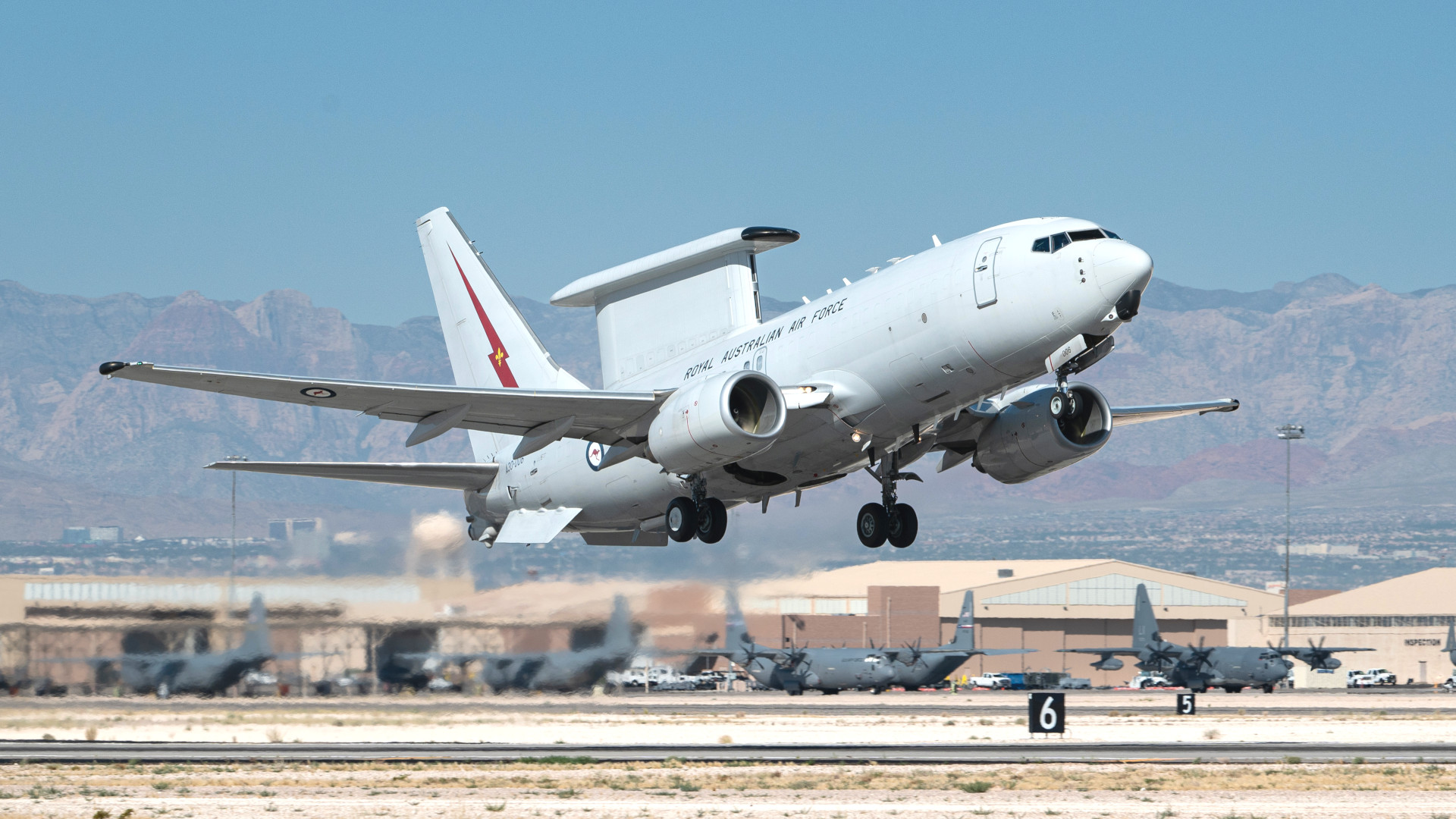
A new draft defense spending bill making its way through Congress seeks to boost funding for the U.S. Air Force’s E-7 Wedgetail airborne early warning and control aircraft to $1.1 billion for the current fiscal year. This is hundreds of millions of dollars more than Congress had already authorized in a defense policy bill signed into law last month. This underscores the changing fortunes of the E-7 program, which the Pentagon had sought to cancel last year.
The Senate Appropriations Committee released a draft of the Defense Appropriations Act for the 2026 Fiscal Year, which reflects negotiations with its counterparts in the House, earlier today. The proposed defense spending legislation is currently consolidated with other bills covering funding for an array of other government agencies. A separate annual defense policy bill, or National Defense Authorization Act (NDAA), for the current fiscal cycle became law in December, and had already approved $846.676 million in funding for E-7. Congress also included a separate tranche of $200 million for Wedgetail in a short-term spending bill signed into law in November to reopen the federal government following a protracted shutdown.
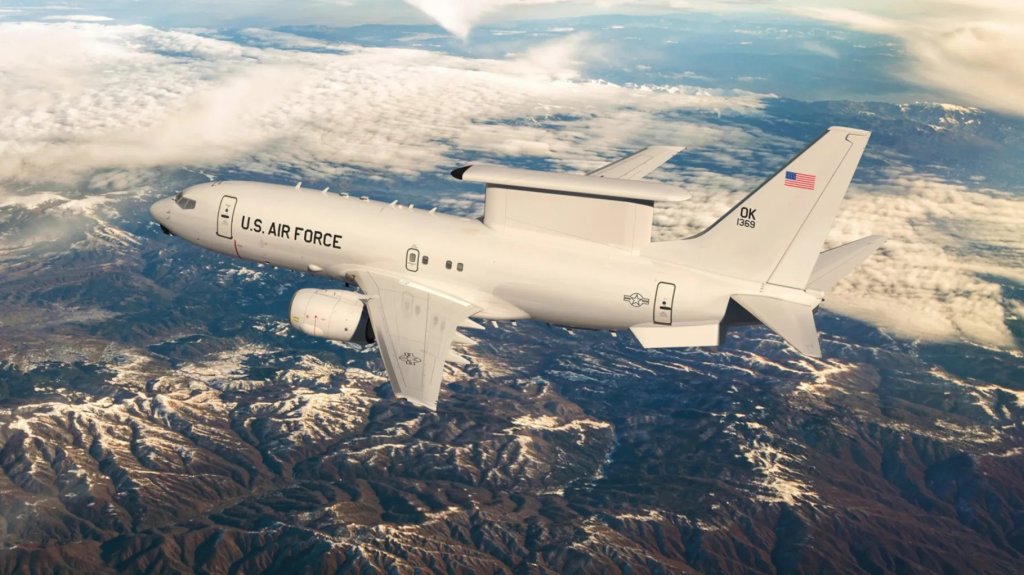
“The agreement emphasizes the importance of the E-7 Wedgetail platform and the airborne early warning and battle management mission for the Department ofthe Air Force. Therefore, $1,100,000,000 is included in Research, Development, Test and Evaluation, Air Force for fiscal year 2026 to continue E-7 rapid prototyping activities and transition to engineering and manufacturing development aircraft,” according to a Joint Explanatory Statement report the Senate Appropriations Committee also released today. “The Secretary of the Air Force is directed to present a plan to the congressional defense committees, not later than 90 days after the enactment of this Act, on ongoing actions to streamline requirements and control costs on future production of the E-7 aircraft.”
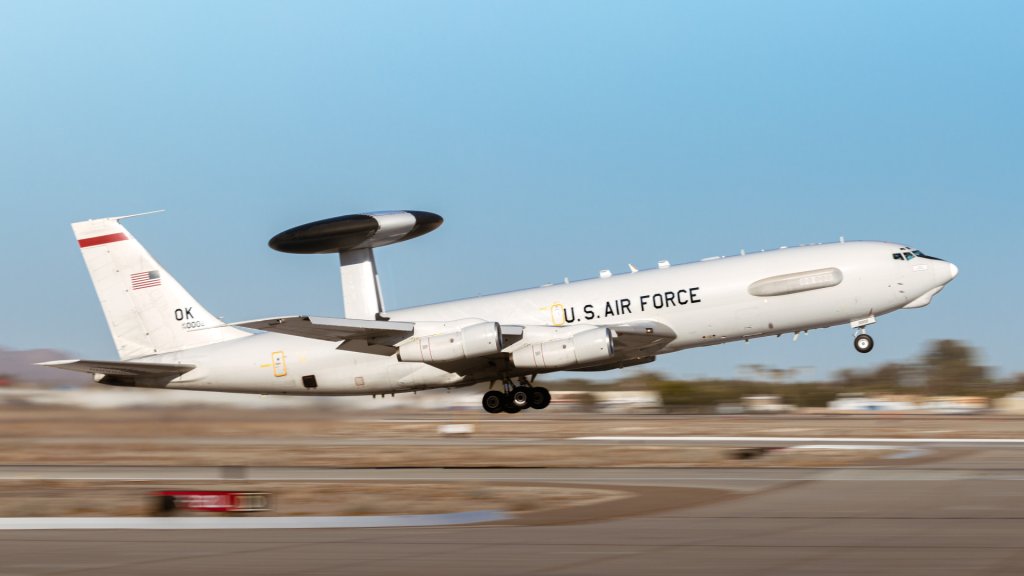
The Boeing 737-based E-7s are part of a larger Air Force plan to supplant its current fleet of E-3 Sentry Airborne Warning and Control System (AWACS) aircraft, which we will come back to later on. The Air Force’s 16 remaining E-3s provide essential airborne early warning, data-sharing, and command and control capabilities, but are aging and have become increasingly difficult to operate and maintain. The Wedgetail features a newer radar and other improved systems over the E-3 in a package that also offers better fuel economy and other benefits, as you can read more about here. Versions of the Wedgetail are already in service in Australia, South Korea, and Turkey. The United Kingdom is still on track to field the E-7, but the NATO alliance cancelled plans to buy a fleet that multiple members would operate collectively after the U.S. military separately withdrew from that effort.
Furthermore, “the agreement bolsters the E-7 Wedgetail aircraft program and includes a new general provision that prohibits the use of funds to pause, cancel, or terminate the E- 7,” the Joint Explanatory Statement adds.
The Air Force first announced plans to buy E-7s in 2022, but, as noted, the Pentagon had moved to cancel the program last year. The Air Force had requested just under $200 million for Wedgetail in Fiscal Year 2026, but explicitly to support the process of closing it out, including a full financial audit. The Pentagon and the Air Force had also laid out an alternative plan involving the purchase of additional E-2D Hawkeye airborne early warning and control aircraft as interim gap-fillers for the retiring E-3s until the Air Force could push most, if not all, airborne target warning sensor layer tasks into space. Officials justified the decision, in part, by raising concerns about the E-7 vulnerability, especially in future high-end fights, such as one against China in the Pacific. Significant delays and cost overruns were also cited as key factors.
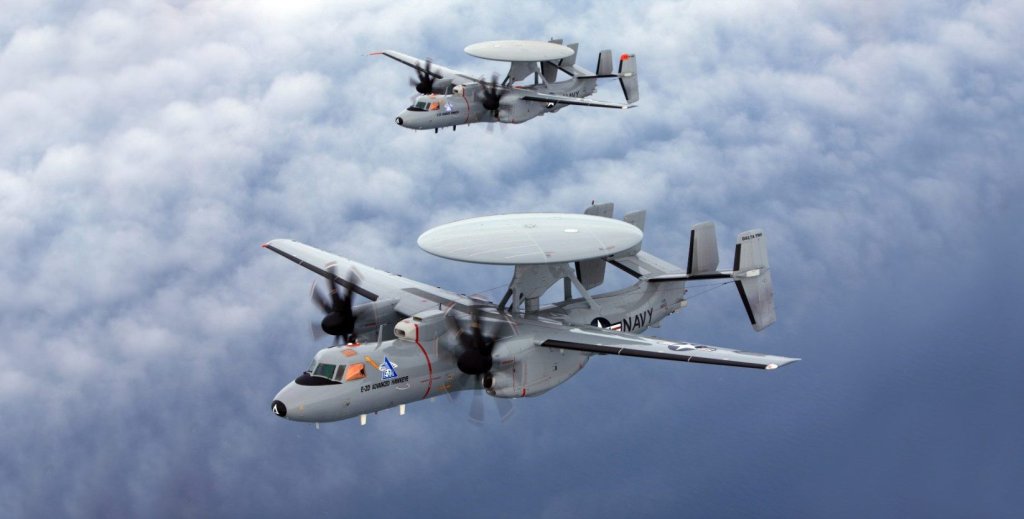
Members of Congress, as well as independent observers, were quick to question various aspects of this plan, including whether E-2s would be an adequate interim substitute for the E-7 and what the realistic timeline might be for new space-based capabilities to become operational. In the U.S. military, the Hawkeye is currently in service with the Navy. The lower and slower flying aircraft was designed with the unique requirements of carrier-based operations, and their constraints, in mind. Survivability concerns would apply just as much to the E-2 as the E-7, the latter of which also offers a larger platform that is more adaptable to expanded mission needs, such as battle management and acting as a networking node.
When it comes to future space-based capabilities, the U.S. officials have touted progress on being able to persistently track targets on the ground and at sea from orbit, but have acknowledged challenges in doing the same with ones in the air.
“So GMTI [ground moving-target indicator capability] and AMTI [air moving-target indicator capability] sound like they’re really close, just because one little letter that is all you changed, [but it] turns out they’re pretty different,” Chief of Space Operations Gen. Chance Saltzman, U.S. Space Force’s top officer, said during a press briefing on the sidelines of a conference in December, according to Breaking Defense. “What it takes to accomplish AMTI is different than what it takes to accomplish GMTI.”
“Things on the ground move slower than things on [sic] the air, so [they] require different levels of fidelity tracks,” he added.

With all this in mind, there had already been a steady drumbeat of moves in Congress to preserve the E-7 program since last summer. The NDAA for Fiscal Year 2026 was the first piece of legislation to enshrine this into law. That bill also included a provision blocking the retirement of any E-3s in the current fiscal cycle.
When the Air Force may now begin to field E-7s operationally, even with a further boost in funding, does remain to be seen. When the Pentagon revealed plans to cancel the program last year, the Air Force was still working to acquire two initial production representative prototypes. The original plan had been to use those aircraft for test and evaluation purposes in the lead-in to the production of Wedgetails in a full U.S.-specific configuration. The Air Force had hoped to have the first examples flying missions in 2027. As of January of last year, the initial operational capability timeline had been pushed back to 2032, according to the Government Accountability Office, a Congressional watchdog.
In the meantime, Congress does look set to further underscore its support for the E-7, a program already in a completely different position from where it was a year ago.
Contact the author: joe@twz.com
Loading comments…
Comments couldn’t be loaded. Please refresh the page.