
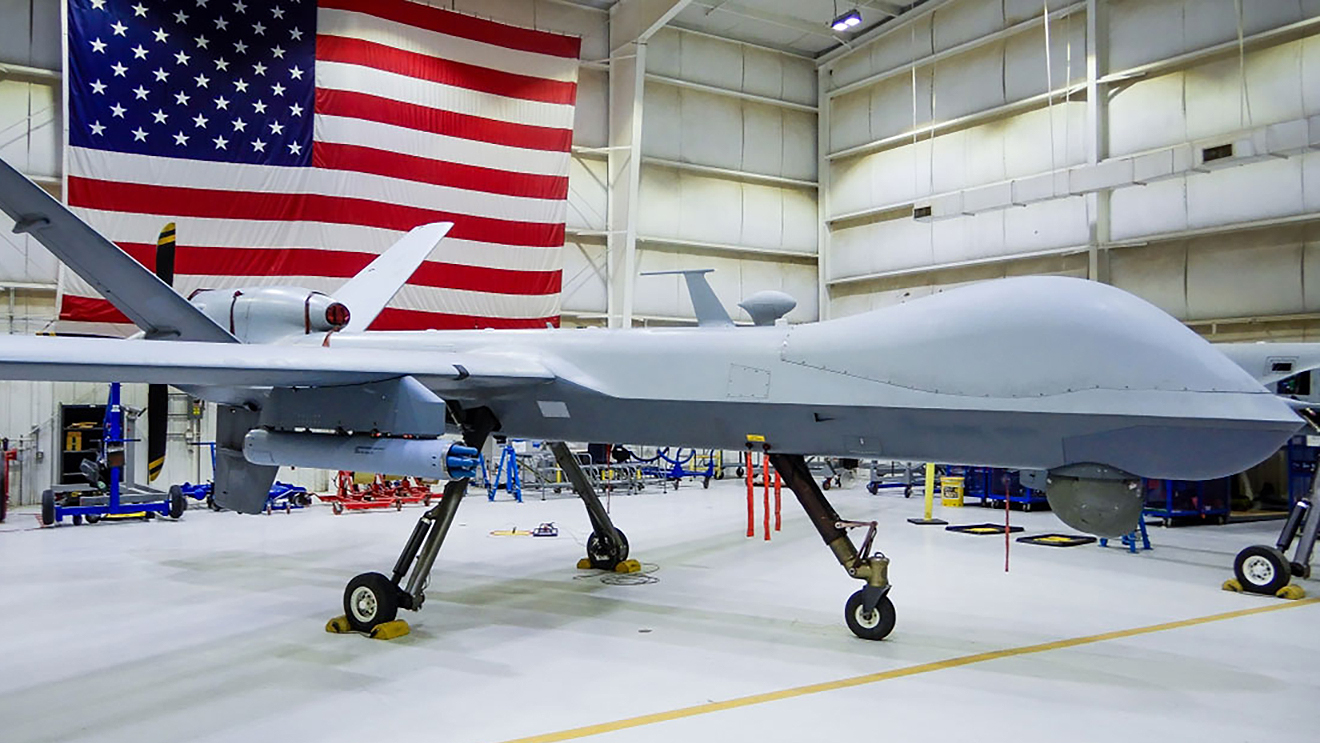
The MQ-9 Reaper has become the latest platform to test-fire laser-guided 70mm Advanced Precision Kill Weapon System (APKWS) rockets. The trials, conducted with the U.S. Air Force, involved an MQ-9 employing the APKWS in its original air-to-ground capacity, as well as against aerial targets. While giving MQ-9’s standard APKWS capability against ground targets seems relatively straight forward, putting the air-to-air optimized variant of the rocket on the MQ-9 would open up another option for the counter-uncrewed air system (C-UAS) mission, which has only gained in importance since the war with Iran.
General Atomics Aeronautical Systems, Inc. (GA-ASI), the manufacturer of the MQ-9, confirmed today that it had conducted recent flight tests of an Air Force MQ-9A armed with APKWS at the Nevada Test and Training Range (NTTR).
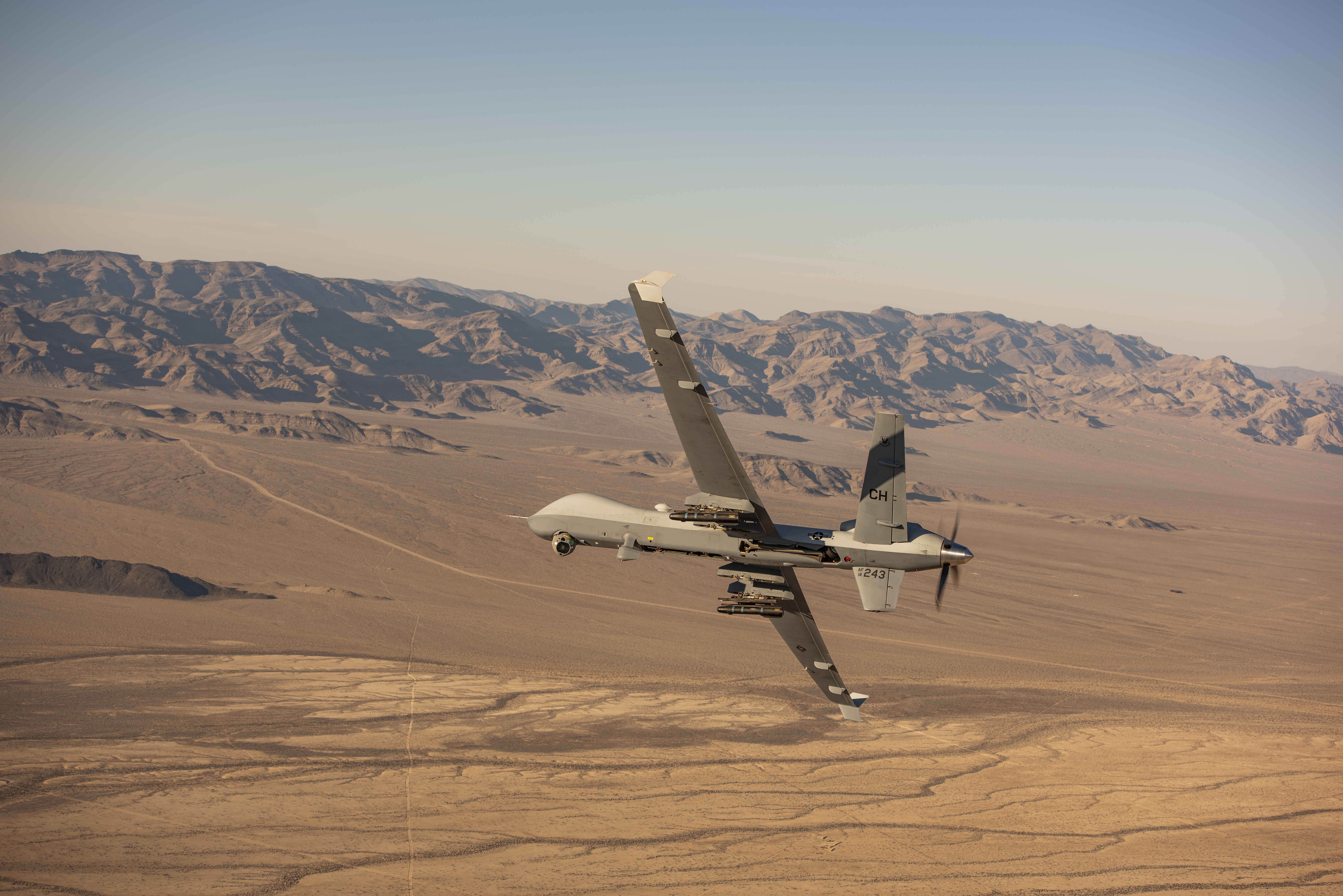
According to the company, “the demonstration featured multiple types and variations of shot profiles, including aerial targets. All shots were executed flawlessly by the MQ-9A crews using laser-guided rockets and a specialized launcher.”
The utility of APKWS against ground targets for the MQ-9 family of drones is abundantly clear. It provides an extremely precise, relatively low-collateral option that can also drastically expand the drone’s magazine depth. Standard APKWS can be used against a large number of ground and surface targets, from lightly armored vehicles to troops under shallow cover.

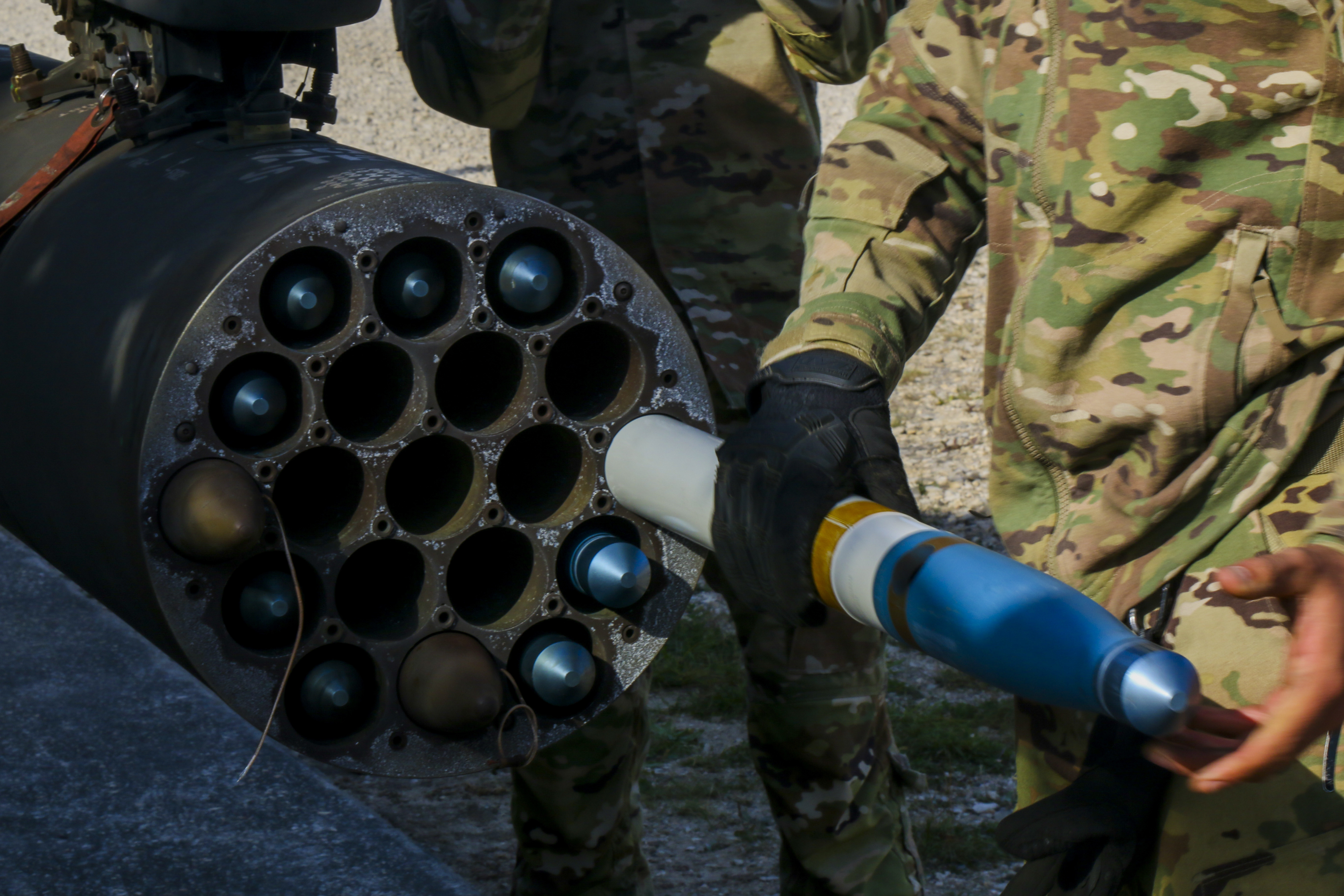
Then there is the air-to-air application. In U.S. military service, the laser-guided air-to-air rocket is known as AGR-20F, a variant of the APKWS II, specifically, also known as the Fixed Wing, Air Launched, Counter-Unmanned Aircraft Systems Ordnance (FALCO). In its press release, GA-ASI refers to the rocket simply as APKWS. FALCO includes the modified laser-guidance and control section and a proximity fuze that is ideal for taking down smaller aerial targets. FALCO-equipped rockets can also be used against soft ground targets, like standard vehicles and fast boats.
The test campaign was, in part, a response to “real-time technological adaptation requirements,” GA-ASI explained. The urgent need for C-UAS capabilities saw the trials accelerated, reducing the time between planning, integration, and flight test.
“We recognize the value that a system like APKWS brings to the MQ-9 aircraft as a tool to counter one-way attack drones,” said GA-ASI President David R. Alexander. “APKWS can increase the number of weapons the MQ-9A is able to carry, as well as being able to carry new, lower-cost weapons. More than anything, this integration effort underscores how government and industry can collaborate to rapidly test and make new capabilities available to warfighters.”
Exactly how many APKWS a single MQ-9 can carry is unclear, but the standard pods used for these weapons are loaded with seven rounds, as seen loaded on the MQ-9A involved in the live-fire trials. Nineteen-round rocket pods are also a possibility. The MQ-9 in its standard configuration has seven hardpoints, with six main underwing pylons usually utilized for weapons.
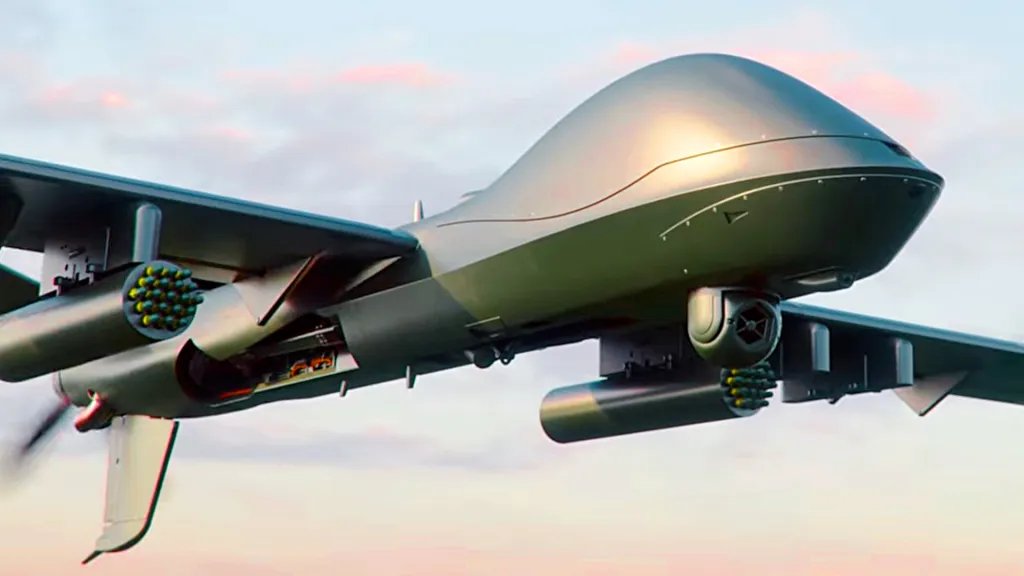
The potential of the MQ-9, or MQ-9 variants, to carry APKWS for the C-UAS role is something that GA-ASI brought up last month.
In particular, the Mojave short takeoff and landing (STOL) drone was earmarked for C-UAS, as part of a broader mission scope for the aircraft.
“We’ve shown APKWS mounted to Mojave in a static display at some of the recent U.S. Army shows where Mojave STOL was present,” General Atomics spokesperson C. Mark Brinkley told TWZ in April. “Integrating new weapons is a multi-part process. Fit tests, weight considerations, captive carry for airworthiness, software, [and] actual live-fire.”
“For Mojave STOL and other GA-ASI aircraft, we’re inside that process now with APKWS,” he added. “It’s flying and firing soon, [in] weeks, not months.”
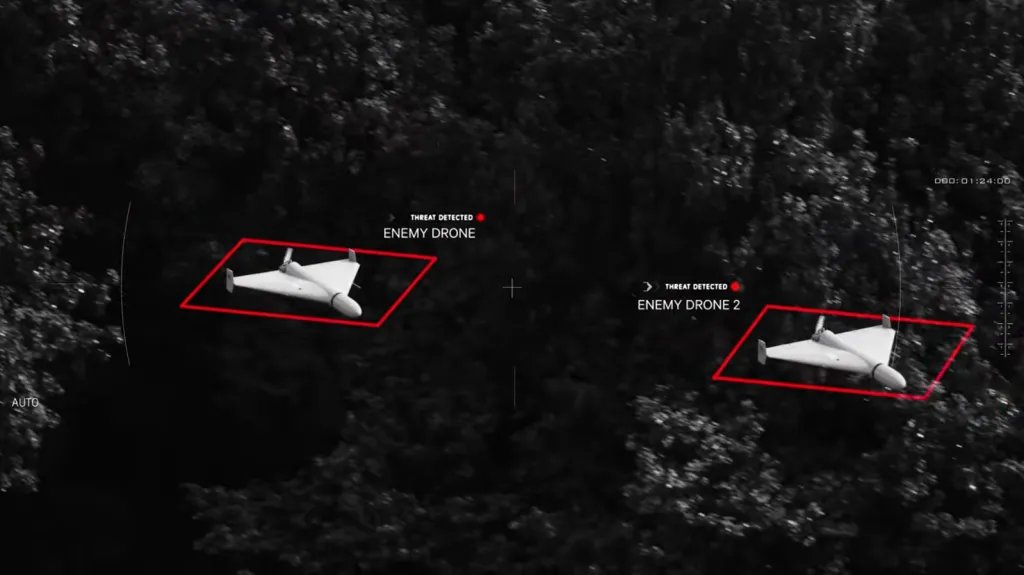
Meanwhile, GA-ASI presented a CGI video showing the Mojave STOL undertaking the rocket-armed drone-hunter mission “somewhere in the Western Pacific.” In this scenario, the Mojave STOL used an EagleEye multi-mode radar, as well as its infrared sensor in the turret under its nose, to spot and track a pair of kamikaze drones clearly modeled on the Iranian-designed Shahed-136 pattern.

The drone is then depicted warning a forward U.S. outpost about incoming uncrewed aerial threats through a satellite link. From a ruggedized laptop on the ground, an operator directs that the kamikaze drones be neutralized. A Mojave equipped with two 19-shot rocket pods then moves in and destroys them. The aircraft is later shown being rearmed at a very austere jungle airstrip.
It is noteworthy that, prior to APKWS, MQ-9s and related drones have demonstrated, during testing, their ability to destroy airborne targets using various other weapons, including AIM-9X and Hellfire missiles.
Meanwhile, APKWS has emerged as an increasingly popular choice in the air-to-air C-UAS role since U.S. Air Force F-16s began employing the rockets this way in combat against Houthi drones in 2024. TWZ was first to report on this development. The total number of U.S. military and foreign aircraft platforms cleared to use a variant of the rocket specifically optimized for air-to-air use continues to grow.
There are advantages and disadvantages to using a drone like the MQ-9 or Mojave STOL as a drone-hunter.
Drones of this kind have questionable survivability in high-end operations. The latest conflict with Iran has underscored the vulnerability of the Reaper, in particular.
On the other hand, TWZ has previously highlighted how a drone like the Mojave could be used to provide more localized force protection, including against uncrewed aerial threats, at forward outposts and rear areas in the context of a larger conflict.
The attributes of the Mojave STOL — including its short- and rough-field capabilities — make it especially relevant for a future conflict in the Pacific. Here, it would be able to push its C-UAS and other capabilities far forward, including to island outposts. As for the MQ-9, as used in the live-fire trials, this aircraft is not rough-field-optimized like the Mojave STOL, but can still operate from forward areas with semi-prepared airstrips.
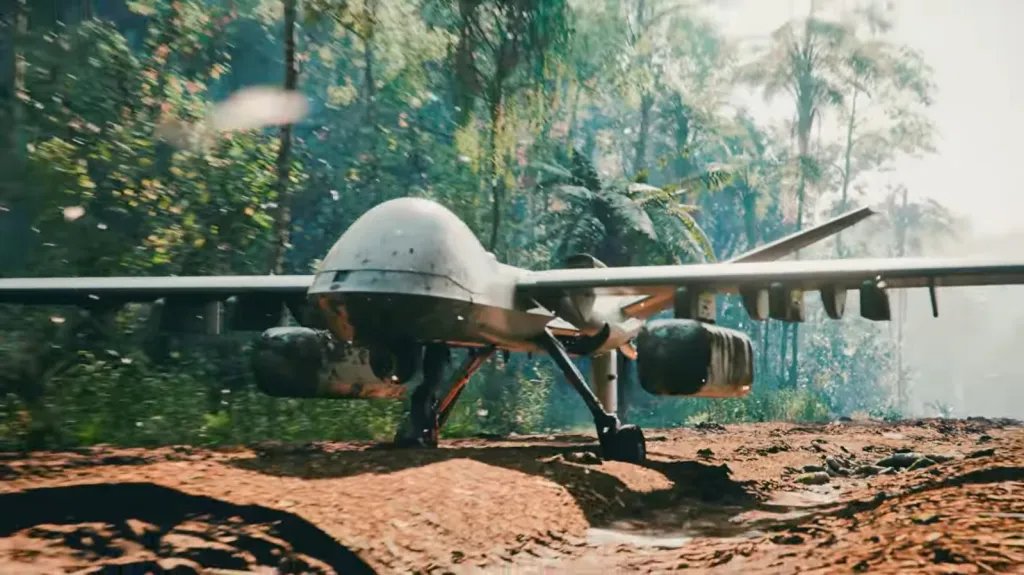
At the same time, the capabilities inherent in the Mojave STOL mean it can also operate from aircraft carriers and big-deck assault ships, opening up the possibility of rocket-armed examples setting up counter-drone screens in maritime scenarios.
When it comes to the air-to-air APKWS, this weapon is well-suited to slower-flying and less dynamic targets. Compared to traditional air-to-air missiles, it comes with a much lower cost-per-engagement and offers greater magazine depth, as you can read about here.
In terms of finding targets, drones like the MQ-9 and Mojave STOL have limited situational awareness compared to traditional air-to-air platforms. They can be fitted with onboard radar with air-to-air modes, which could serve as a primary detection sensor. So, too, could infrared search and track (IRST) sensors, which have been tested extensively on other GA-ASI drones. Thereafter, the MQ-9’s MTS electro-optical/infrared (EO/IR) turret would provide target ID and engagement functions. Taking advantage of tactical networks could also provide the drone with critical initial telemetry to aid in the IR/EO sensor’s lock-up.
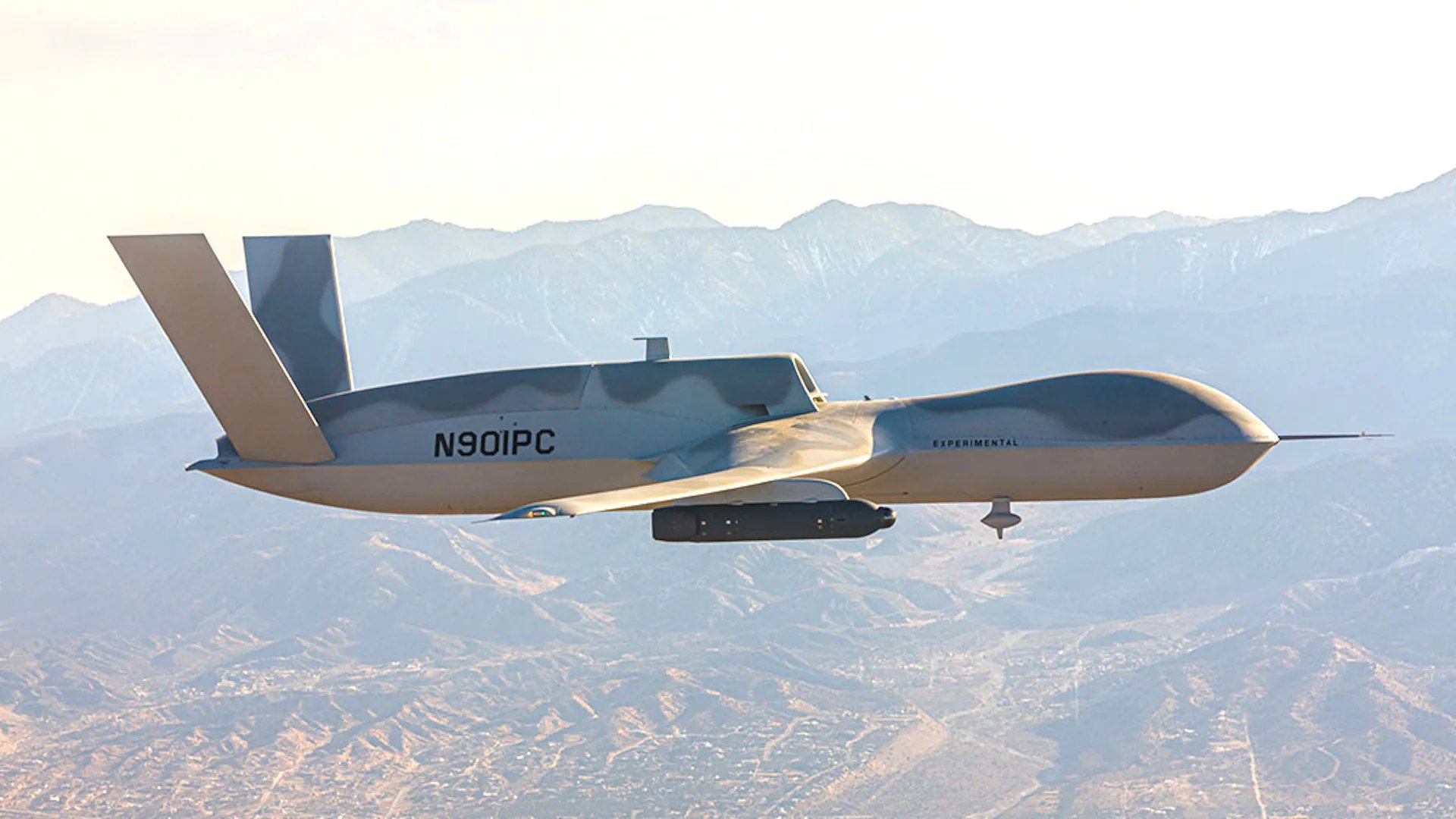
It’s also worth noting that drones like the MQ-9 or Mojave STOL are not anywhere near as quick to respond to incoming drone threats, and especially run down multiple incoming hostiles in a short period of time, as fighters. On the other hand, they are able to loiter for far longer at a fraction of the cost, providing resilient combat air patrols. They could also perform strike and intelligence, surveillance, and reconnaissance (ISR) support while on station.
For its part, the MQ-9 offers these capabilities coupled with a higher performance and a more extreme endurance over the Mojave STOL. With hundreds of MQ-9s available, many could be armed with APKWS and tasked to provide anti-drone screening against lower-volume raids across large areas.
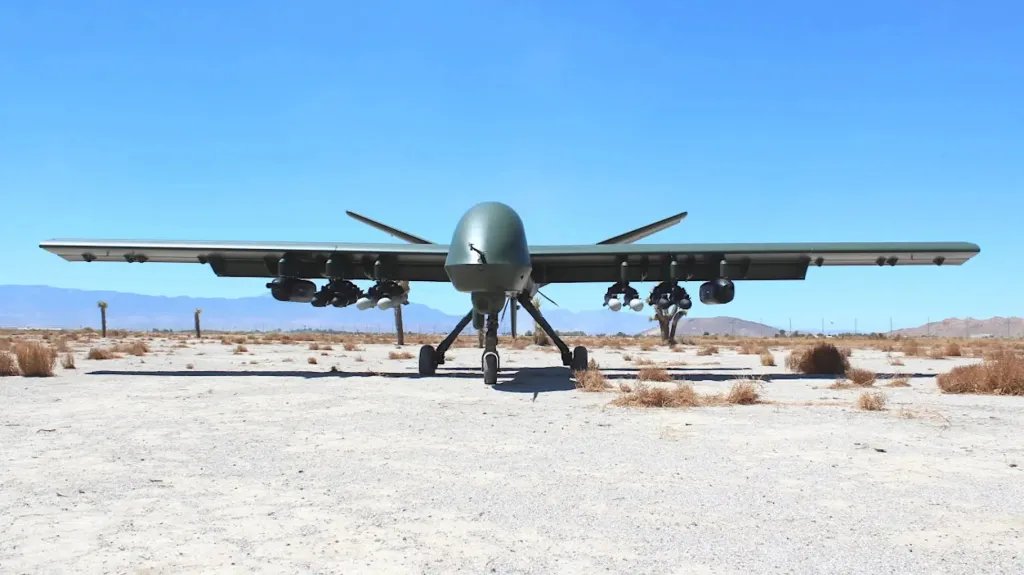
Indeed, it could be well imagined how APKWS-armed MQ-9s could have played a valuable role in this context during the conflict with Iran earlier this year, protecting allied Arab gulf states and U.S. installations from incoming one-way attack munitions. An MQ-9 picket line of sorts could have been set up over the Gulf, for instance, thinning incoming drones waves. Or these aircraft could have been perched to the east of major bases, providing a final airborne layer counter-drone defense.
With the MQ-9 and the related MQ-1C Gray Eagle being widely operated by the U.S. military and a number of export customers, the ability to transform these aircraft into rocket-armed drone hunters could be of high interest indeed.
Contact the author: thomas@thewarzone.com
Loading comments…
Comments couldn’t be loaded. Please refresh the page.