

At least one U.S. Air Force A-10C Warthog has returned from a deployment to the Middle East with kill markings revealing drone kills. The evidence most likely confirms that the attack jets are now using laser-guided air-to-ground rockets as counter-drone weapons in an operational context. TWZ was the first to reveal that the A-10 has received the ability to employ the Advanced Precision Kill Weapons System II (APKWS II) in the air-to-air role, as you can read about here. The image of the jet in question was captured by @mhtplanes, who posted it to the social media site X.
Two kill markings depicting Shahed-type long-range one-way attack drones were seen on the nose of one of the 12 A-10s that landed at Portsmouth International Airport, in Pease, New Hampshire, on October 7 and 10. The aircraft in question, named “Ares,” was in the second cell. As well as the Shahed kill marks and Ares nose art, the jet carries further markings that appear to denote a Small Diameter Bomb (SDB) and 30mm cannon employment during the same deployment.
The dozen A-10s from the 124th Fighter Wing of the Idaho Air National Guard, home-stationed at Gowen Field Air National Guard Base in Boise, had returned from a deployment to the Central Command (CENTCOM) area of responsibility, where they had first arrived at the end of March. This meant they were in theater during the 12-day conflict between Iran and Israel, in the summer, in which the U.S. military, including Air Force assets, played a significant role in downing Iranian attack drones. It isn’t clear if this is when the engagements occurred, but it is possible, if not probable that was the case.
TWZ reached out to U.S. Air Forces Central (AFCENT) for an official statement about whether the 124th Fighter Wing had used APKWS II rockets in the counter-drone role while in CENTCOM. While the command confirmed the A-10s referenced were returning from CENTCOM, no further details were provided, “due to ongoing security concerns.”
However, as we reported back in July, we do know that the APKWS II, adapted for air-to-air engagements, is now a part of the A-10’s repertoire.
The Pentagon’s budget request for 2026 confirmed that APKWS II rockets with the Fixed-Wing Air-Launched Counter Unmanned Aerial Systems Ordnance (FALCO) software installed were cleared for use on the A-10, as well as the F-16 and F-15E.
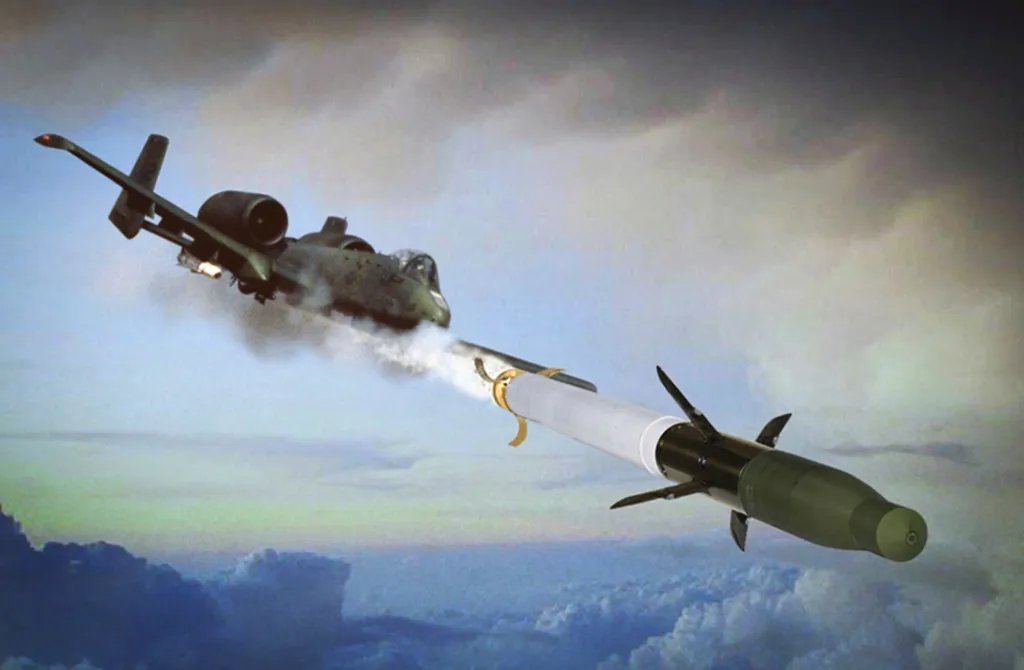
In this way, standard 2.75 in. (70mm) Hydra rockets are transformed into drone and cruise missile busters, with laser guidance and a proximity fuze.
TWZ was first to report on the testing of this configuration of APKWS back in 2019. Subsequently, the APKWS II was operationally proven as an anti-air weapon by Ukraine. In this configuration, the rockets were employed in a surface-to-air role after Ukraine received the VAMPIRE system.
The APKWS II has the huge advantage of being able to deal with drones and cruise missiles at a fraction of the price of an air-to-air missile, which, even in its most inexpensive form, comes with a price tag of close to half a million dollars. The anti-air APKWS II costs less than a tenth of that.

At the same time, rockets provide a much-expanded ‘magazine capacity’ for aircraft, something that is of critical importance when faced by barrages of drones and cruise missiles.
The combination of the APKWS II and the A-10 also offers some advantages and disadvantages, as we have discussed in our previous coverage:
“The aircraft’s loiter time, slow and low-flying capabilities, and even its unique air-to-air dogfighting agility, could come in as a real benefit for taking out long-range one-way attack drones, especially the most prevalent propeller-driven type. Where the A-10 would be less effective is in rapidly taking out faster-flying drones and cruise missiles. This is due to its lower speed, with less ability to ‘run down’ multiple targets in a short time period during incoming saturation raids. Still, AH-64 Apaches have become critical counter-drone weapons, providing screening for lower-performance, long-range one-way attack munitions, particularly in Israel.”
Compared with rotorcraft, the A-10 offers higher speed, which would render it quite suitable for combating lower-end, long-range drones, especially when screening a highly specific area from these threats.
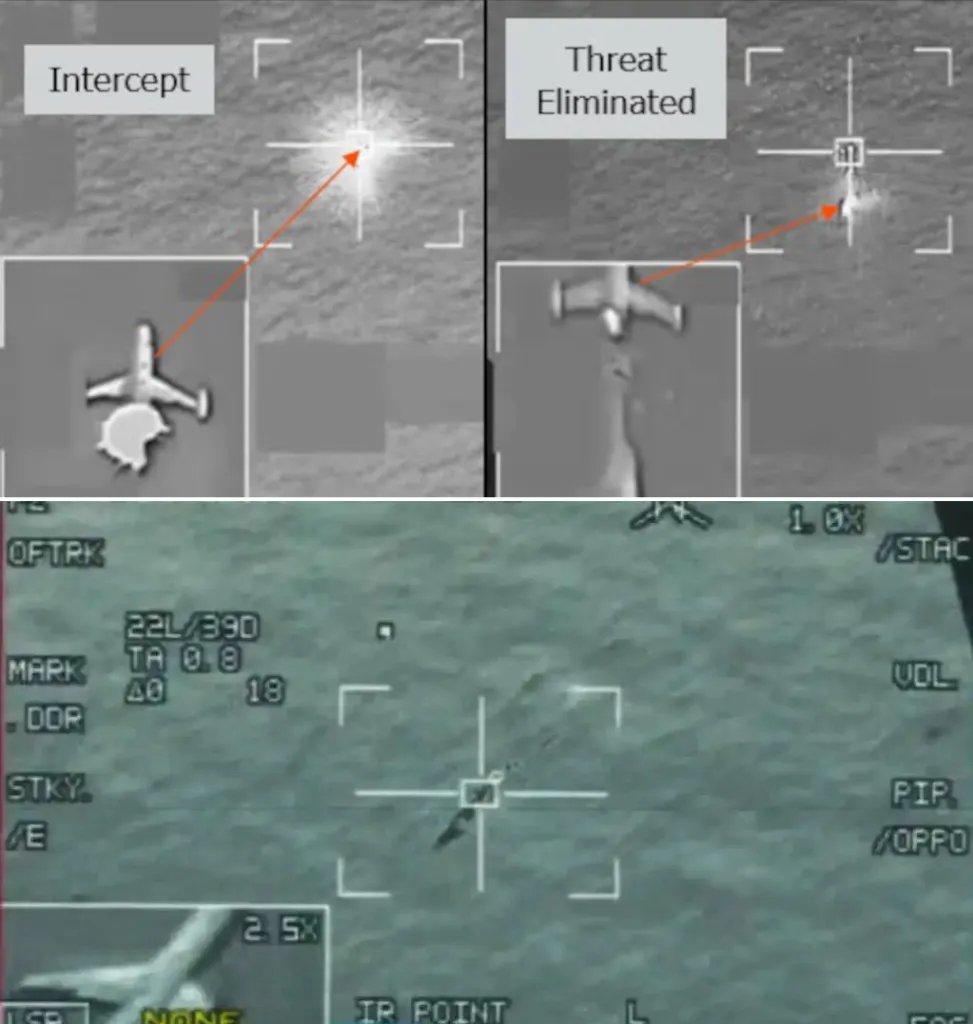
On the other hand, the A-10 has no radar, which makes it a challenge to independently detect an incoming target at any kind of longer range. For engagements of this kind, it relies on its targeting pod. This limitation could also be overcome by receiving target tracks via datalink, after they’ve been detected by other platforms. Being verbally vectored to aerial drone targets via ground control intercept (GCI) or airborne early warning and control aircraft could also work.
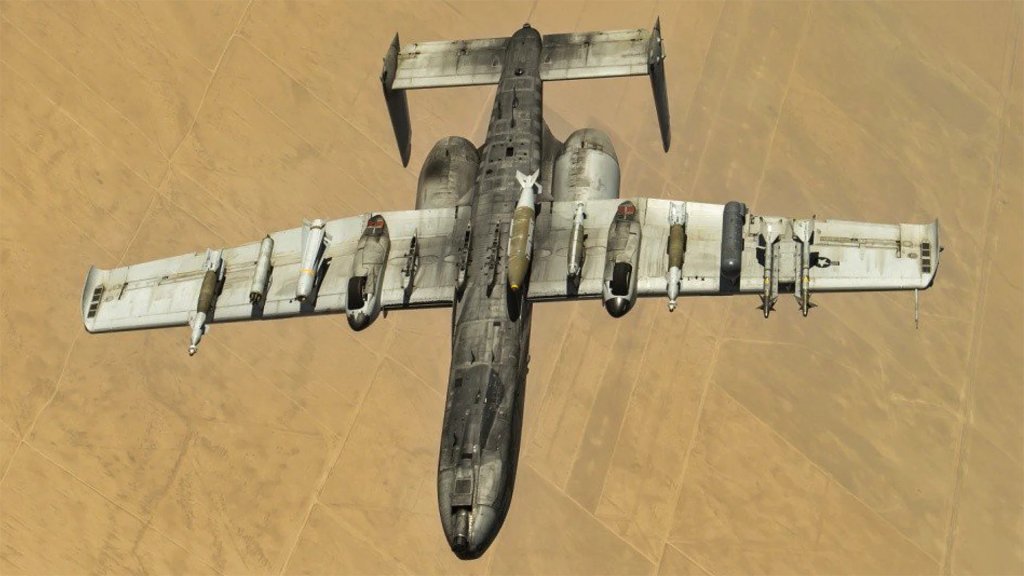
The A-10 is also able to go into battle against aerial threats with a very significant rocket payload, as well as AIM-9 Sidewinder air-to-air missiles, and the 30mm cannon. The air-to-air optimized APKWS II can also be used against certain types of surface targets when they present themselves. As for the cannon, aircraft guns can be problematic for counter-drone work and even downright dangerous. In the A-10, with no radar, this is especially the case.
There’s also the promise of a more capable counter-air APKWS II, with work now underway on a seeker kit for the rockets. This will provide something akin to a ‘fire-and-forget’ capability. This will make the weapon more flexible, including being able to engage a larger number of targets in a shorter period of time.
At this point, we don’t know to what extent the A-10 has utilized the air-to-air APKWS II, but this new capability comes very much at the end of the aircraft’s Air Force career.
In its latest budget request, the Air Force calls for the last A-10s to be divested by the end of the 2026 Fiscal Year. This means there is time for perhaps just two more six-month deployments to CENTCOM.
After an illustrious career with the U.S. Air Force, it’s somewhat ironic, therefore, that the A-10’s combat swansong appears to be pitting its specialized capabilities against drones.
Contact the author: thomas@thewarzone.com
Loading comments…
Comments couldn’t be loaded. Please refresh the page.