
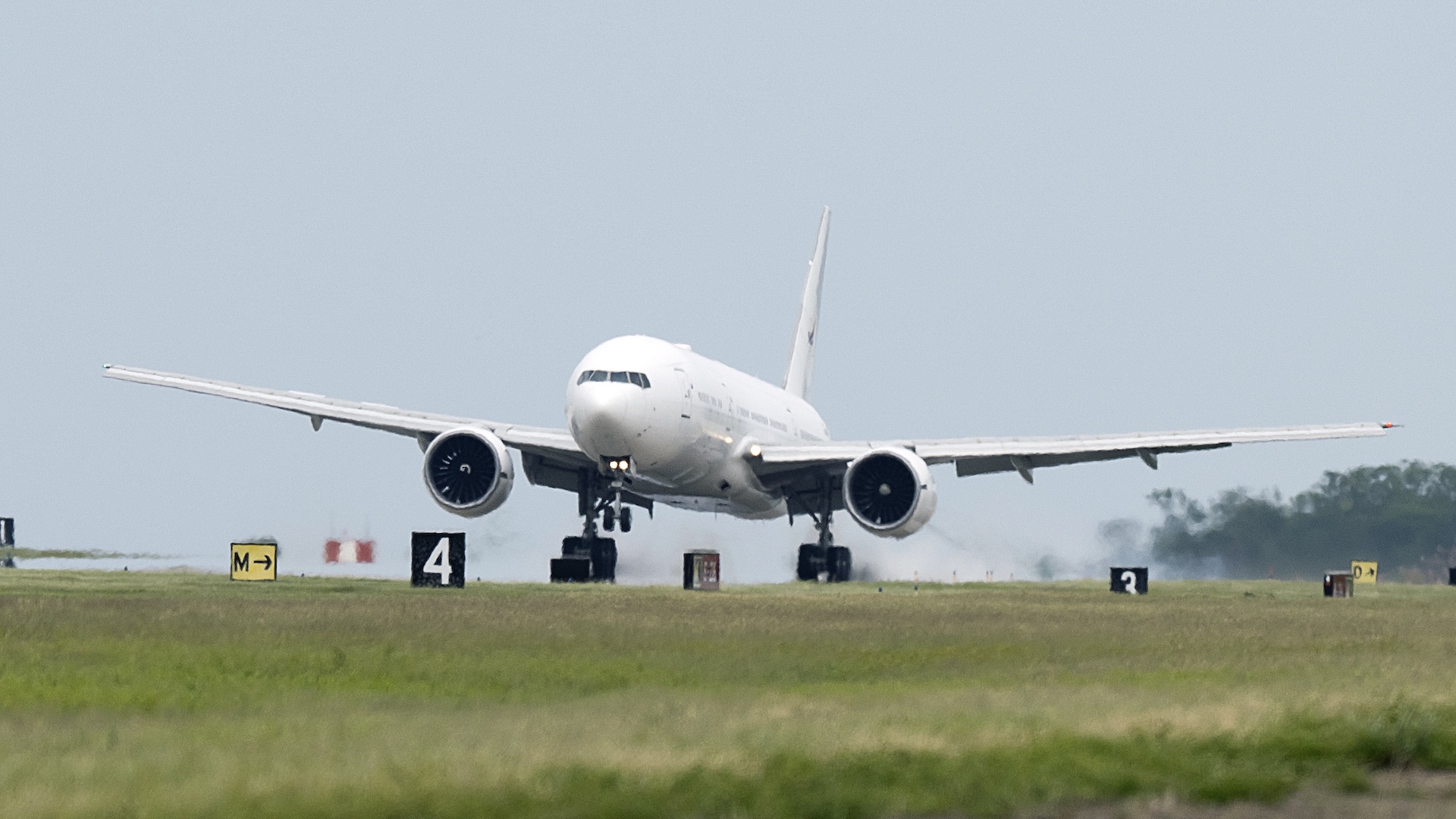
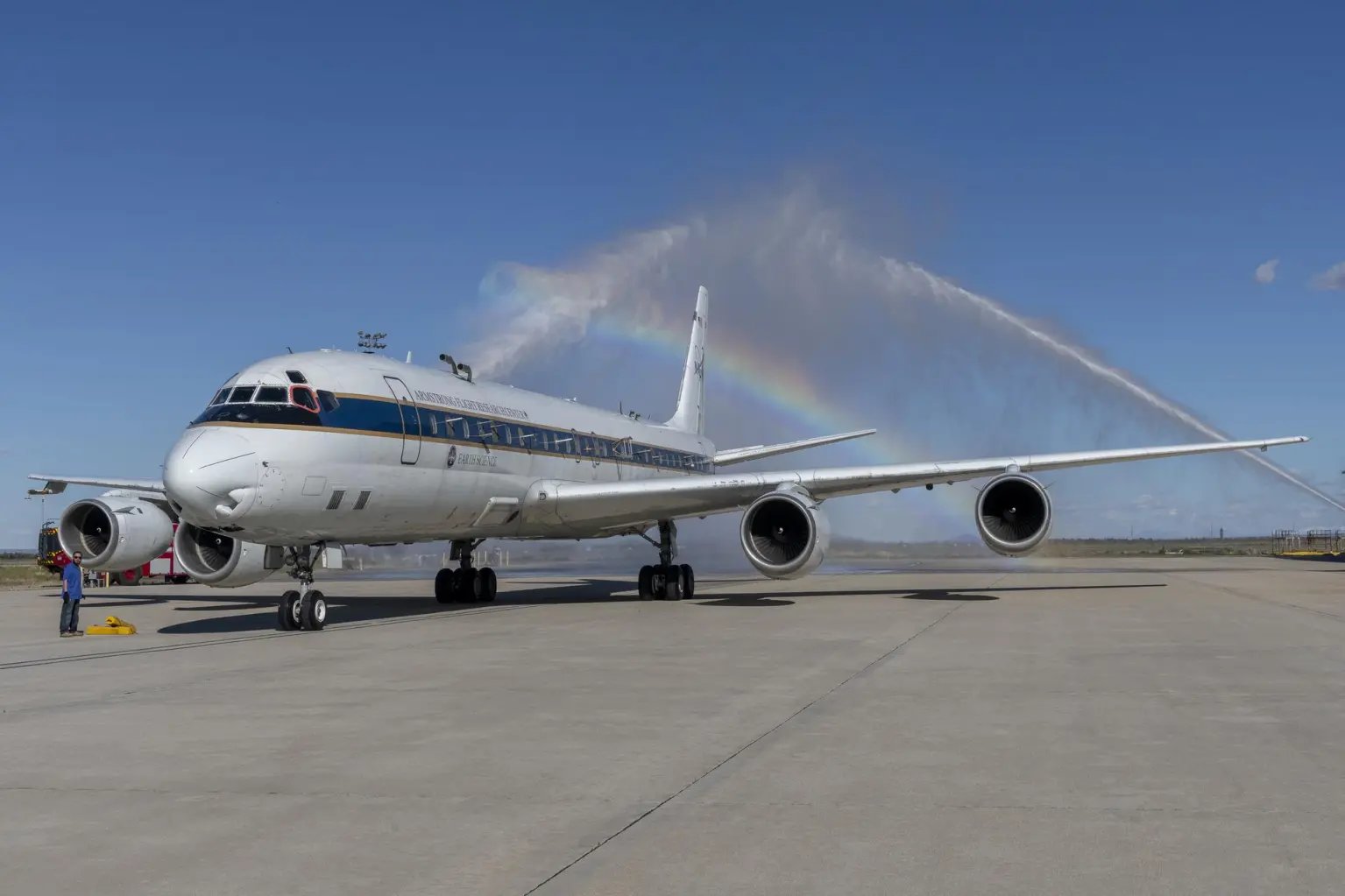
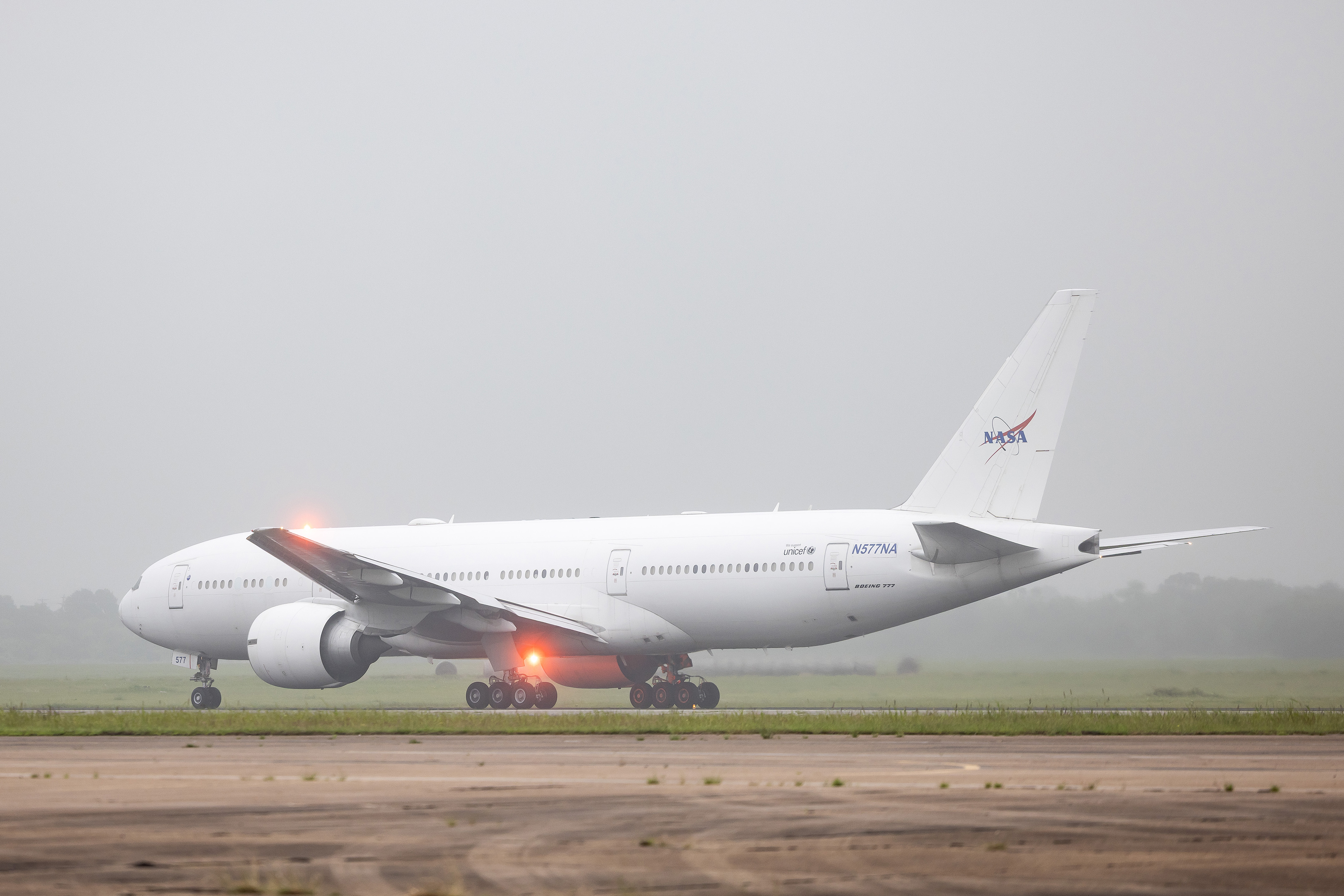
NASA has received its new flying laboratory, the ex-commercial Boeing 777 airliner that had previously undergone modifications for its research mission in Waco, Texas. The research aircraft will become NASA’s largest platform, taking over from the agency’s now-retired Douglas DC-8, an aircraft that you can read about here.
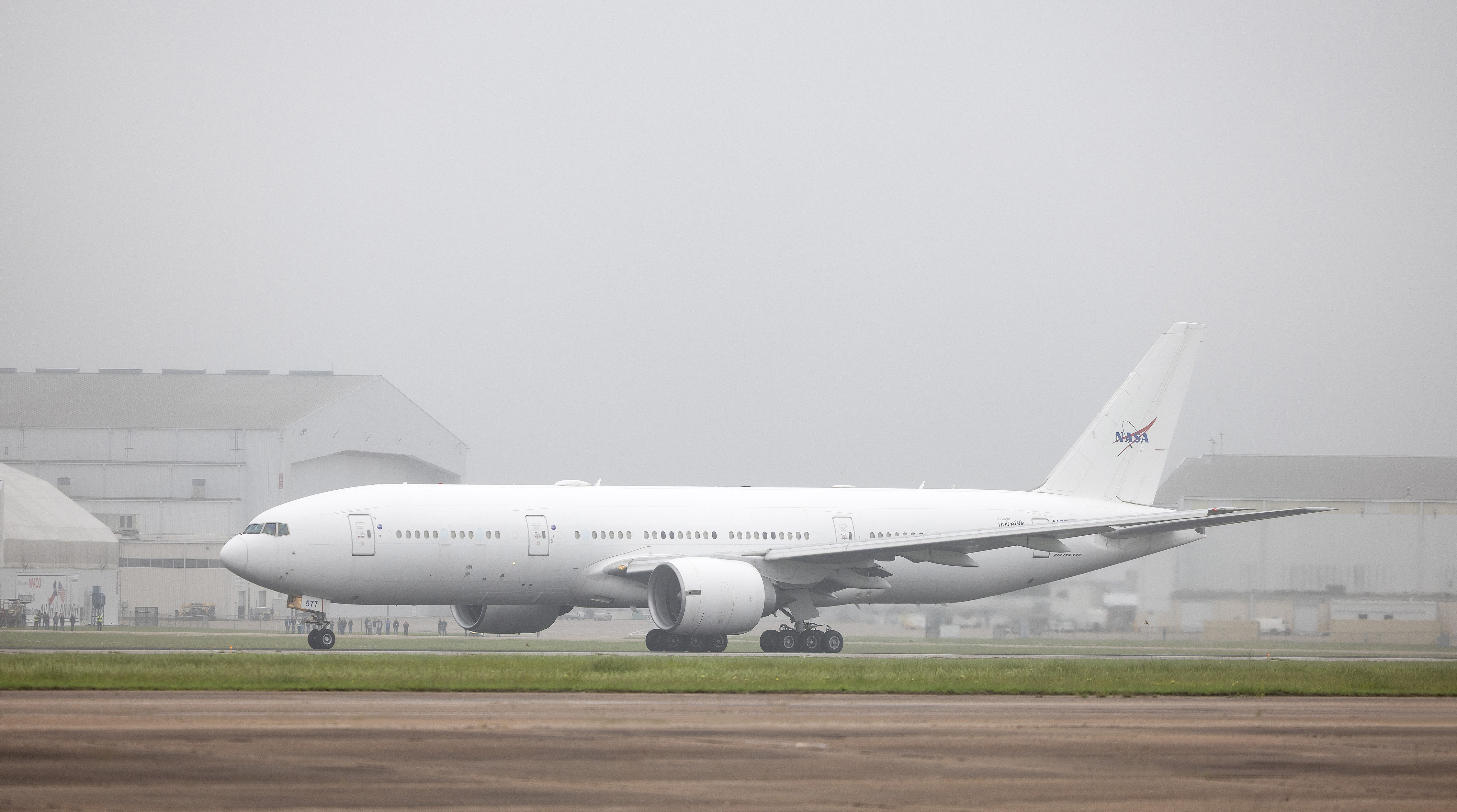
L3Harris told TWZ that the aircraft arrived at NASA’s Langley Research Center in Hampton, Virginia, yesterday, after a check flight and a three-hour transit from Waco. The company says that it “completed extensive structural modifications” and delivered it ahead of schedule. The program was accelerated by using “advanced engineering techniques,” including 3D scanning and specialized installation tooling.
The company also confirmed that it partnered with Yulista on the modification work. According to its website, Yulista provides “integrated modernization, sustainment, readiness, and mission support for defense and aerospace customers.”
As we reported in the past, the 777-200ER was manufactured in 2003 and saw commercial service with Japan Airlines as JA704J (as seen in the tweet below) before going into storage in Southern California in 2020.
NASA bought the aircraft in December 2022, at a cost of less than $30 million. It underwent a first series of modifications at the NASA Langley Research Center before arriving at Waco in January 2025.
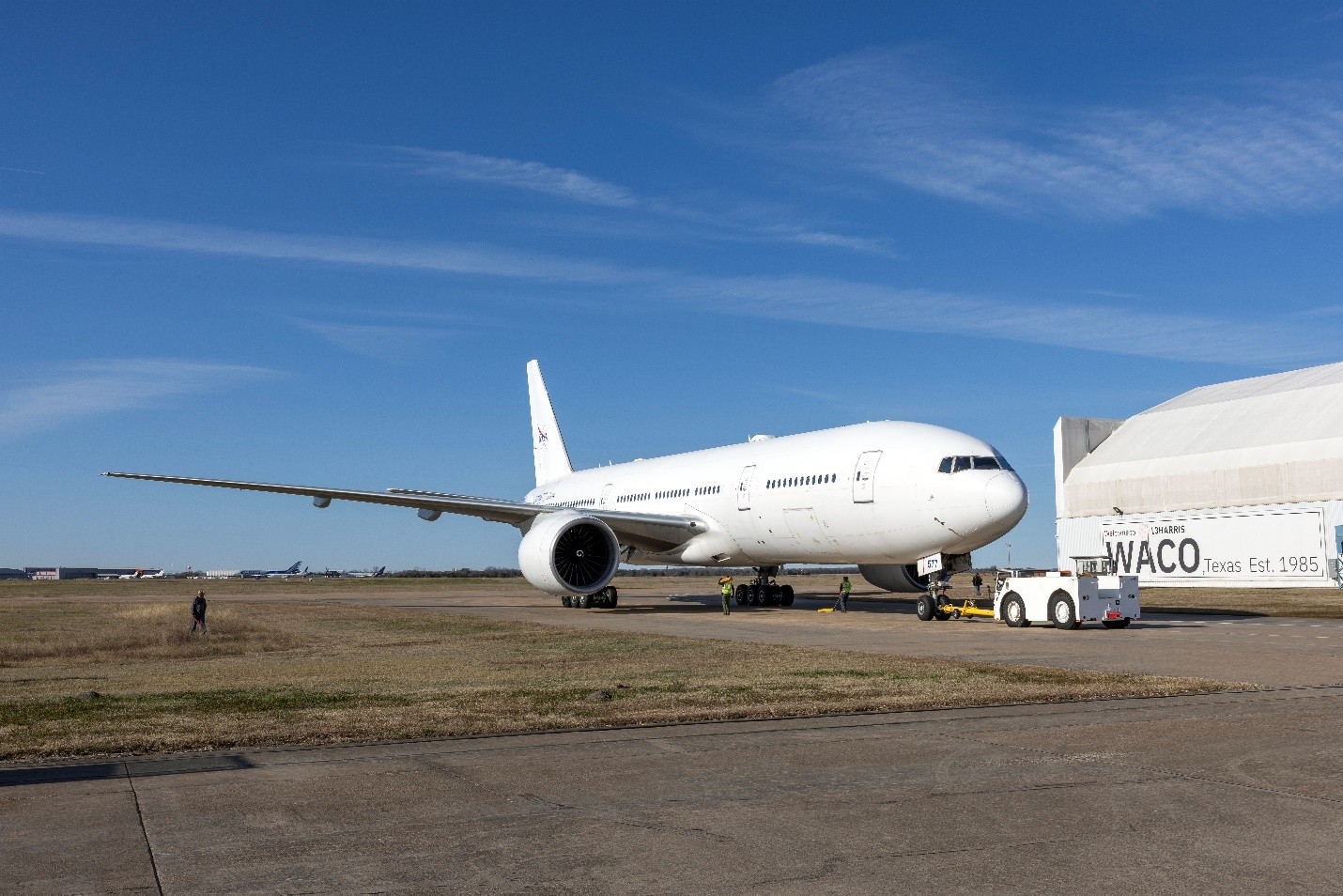
While L3Harris and Yulista handled major structural modifications, research station and wiring upgrades in the cabin are being performed by NASA and HII, better known as America’s largest shipbuilder.
As a flying laboratory, the 777 will be able to accommodate between 50 and 100 onboard operators, compared to the 45 researchers and flight crew that typically flew aboard the 1969-vintage DC-8. The 777 also offers a useful payload of 75,000 pounds, considerably more than the 30,000 pounds of scientific instruments and equipment that the Douglas jetliner could carry. The Boeing jet will conduct missions of up to 18 hours at a maximum altitude of 43,000 feet; DC-8 missions typically lasted between six and 10 hours.
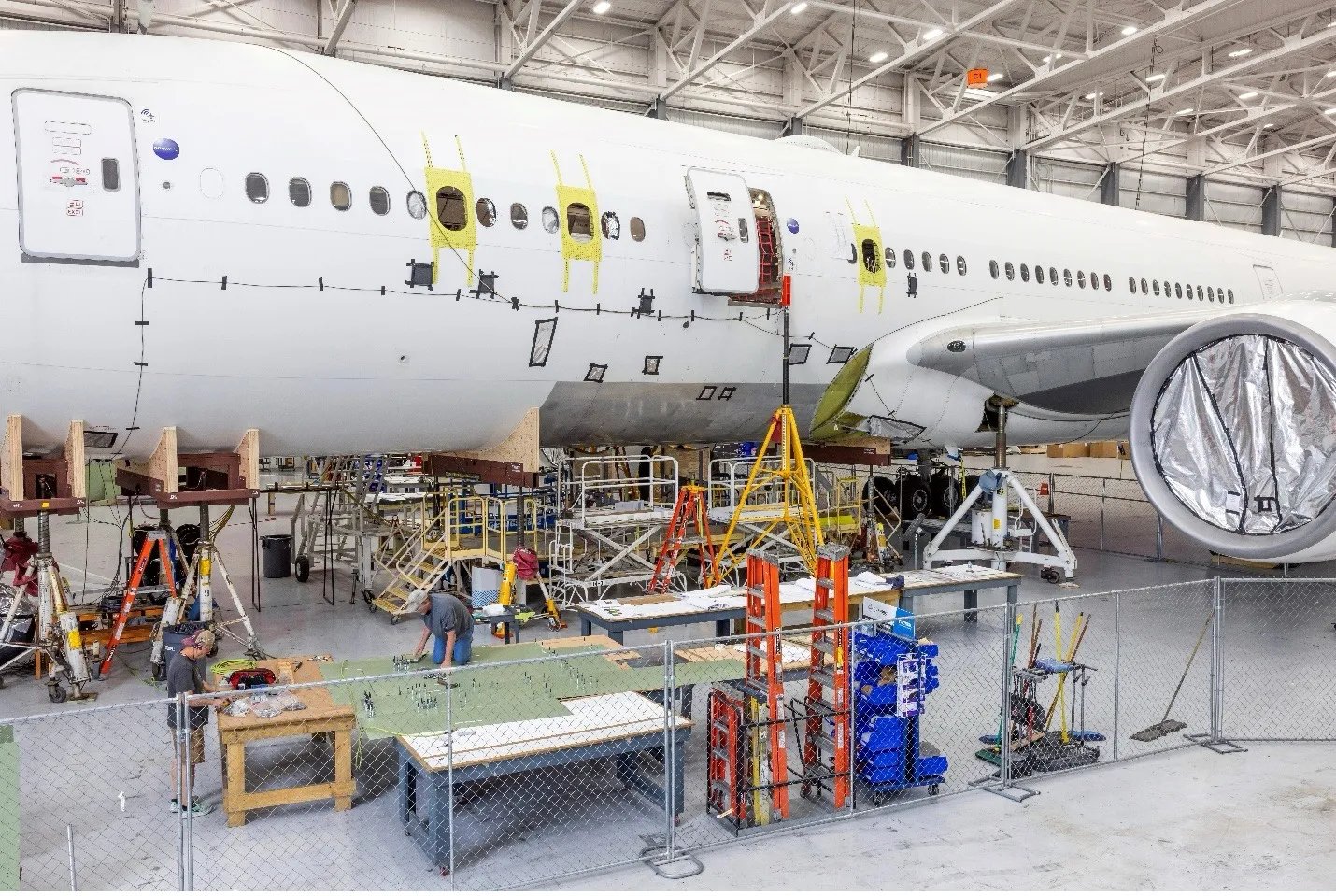
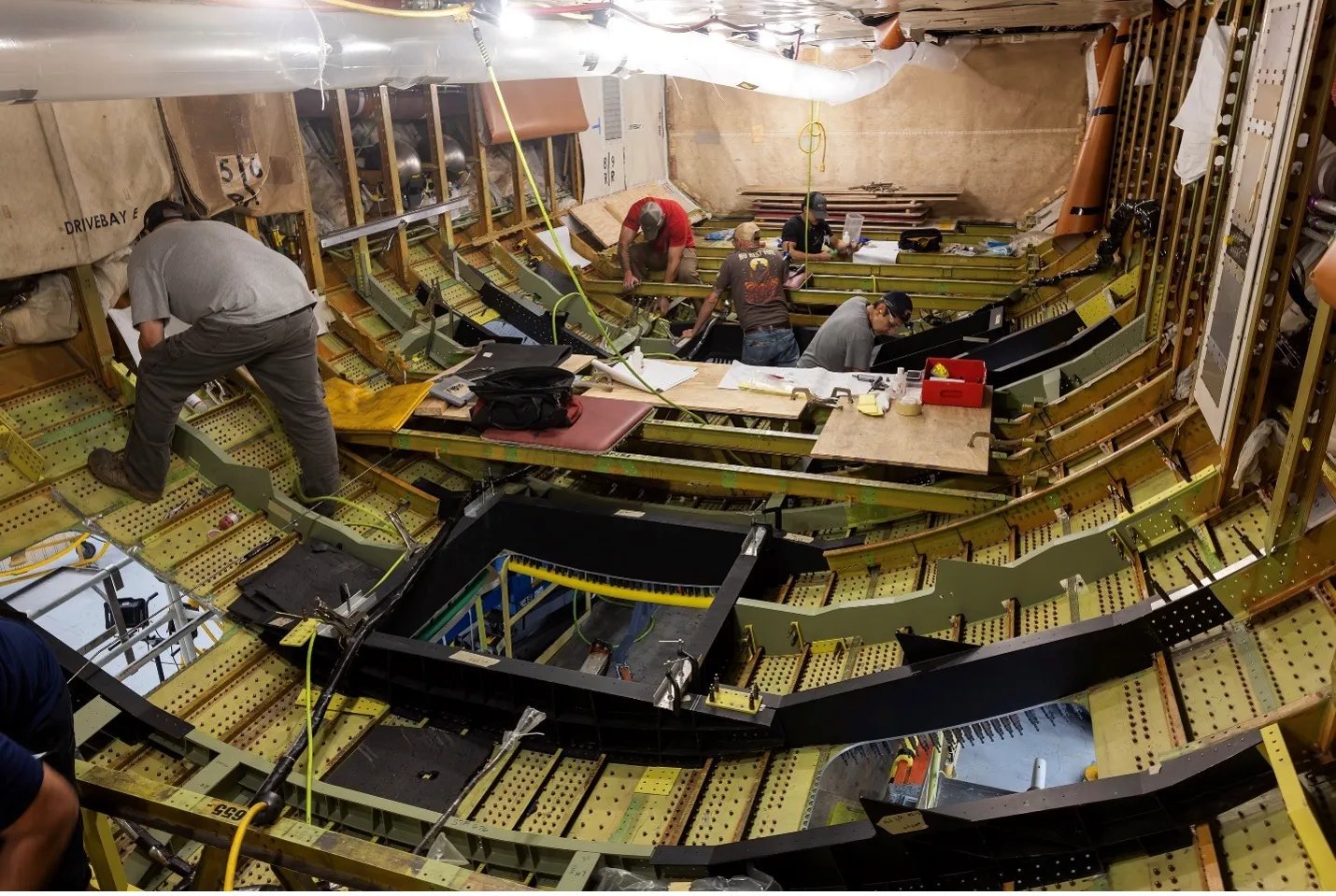
While in Waco, the 777 underwent modifications, including the installation of dedicated research stations and extensive wiring. Wiring harnesses running through the fuselage are needed to allow the operators’ workstations to communicate with sensors such as LIDAR and infrared imaging spectrometers during flights.
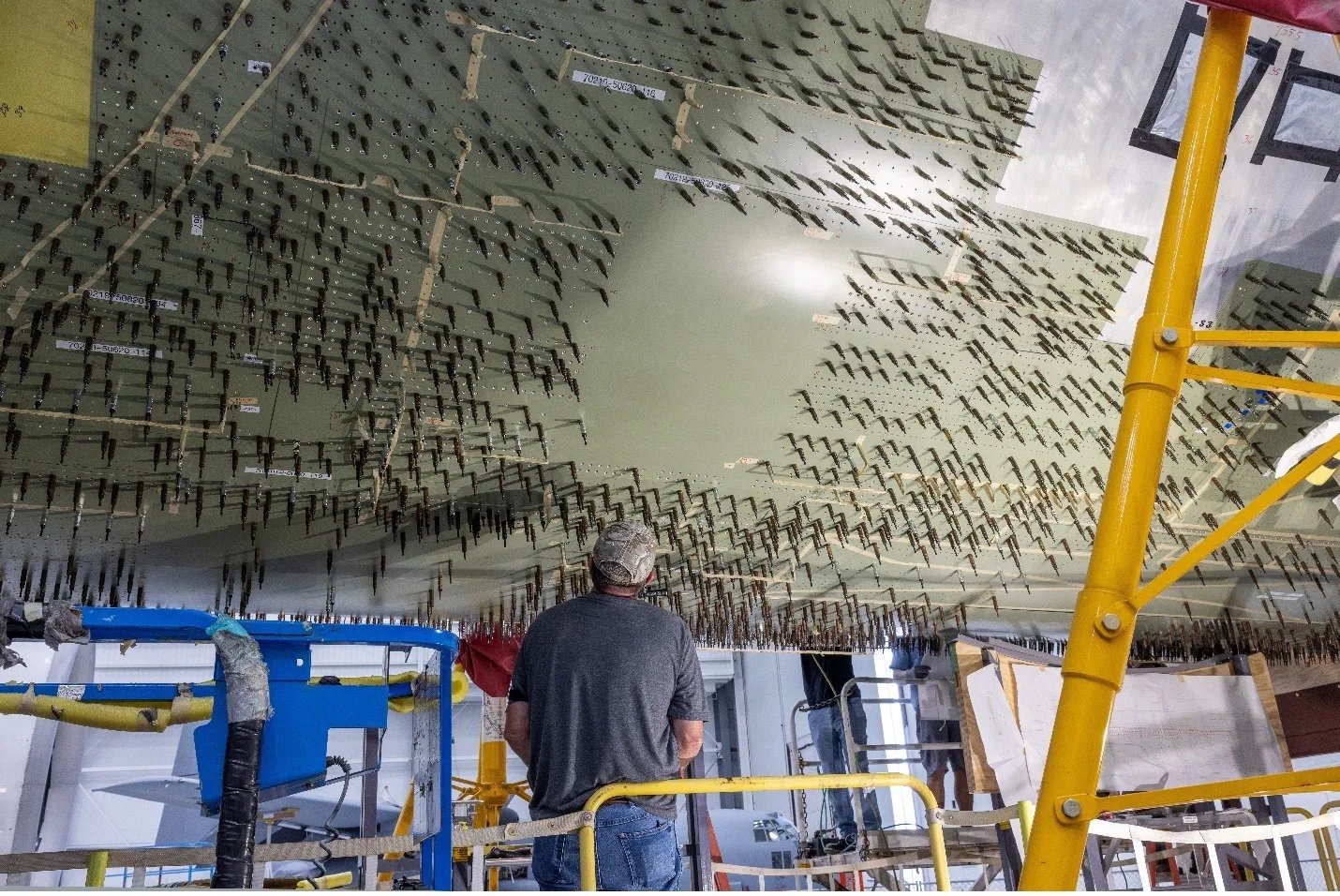
Other changes included enlarged cabin windows and ports installed in the bottom of the fuselage to mount remote-sensing instruments. Meanwhile, the aircraft received new power, data, and communications systems and accommodation for instrument operators.
“Airborne missions at NASA use cutting-edge instruments to explore and understand our home planet,” explained Derek Rutovic, program manager for the Airborne Science Program at NASA Headquarters in Washington, in a press release. “The 777 will be the largest airborne research laboratory in our fleet, collecting data to improve life on our home planet and extend our knowledge of the Earth system as a whole.”
“I’m excited for what the 777 will bring,” added Kirsten Boogaard, the NASA 777 program manager at Langley and former deputy program manager of NASA’s DC-8. “Being part of that team, I got to see the impact up close. It gives us the ability to bring together more partners, more educational opportunities, and more instruments. That will make a real difference in the data we collect moving forward.”
The 777 is expected to fly its first science mission in January 2027. This will be part of the North American Upstream Feature-Resolving and Tropopause Uncertainty Reconnaissance Experiment (NURTURE), and will involve the aircraft studying high-impact winter weather events, including severe cold air outbreaks, wind, snow and ice storms, and hazardous seas. This will be an extensive mission, gathering data in North America, Europe, Greenland, and the Arctic and North Atlantic Oceans.
The NURTURE payload has been installed alongside the general modification work.
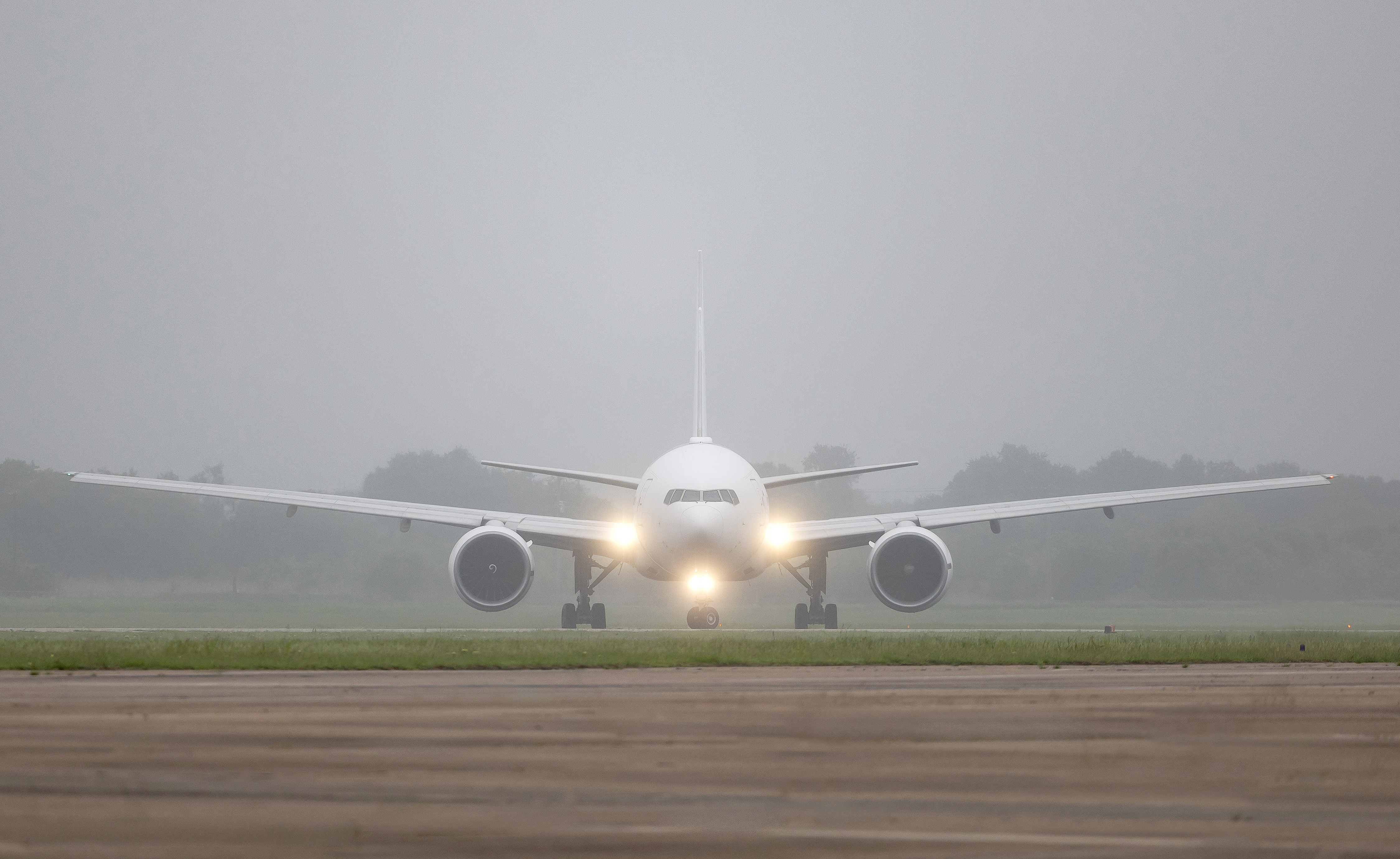
NASA’s DC-8 mission spectrum was broken down into four main categories: sensor development, satellite sensor verification, telemetry data retrieval, and optical tracking for space vehicle launch and re-entry, and research studies of the Earth’s surface and atmosphere.
According to a press release from L3Harris, the 777 will be used for gathering Earth science data. In response to our question about other mission sets, a NASA spokesperson confirmed that the 777 “will primarily be used for airborne science campaigns, but similar to the DC-8, it will support a variety of other mission requests as the aircraft is available.”
Broadly speaking, Earth sciences missions include using sensors aboard the aircraft to monitor all kinds of activities and phenomena on the surface of the globe, including studying polar ice fields and monitoring wildfires. Among the main tools used for this are remote sensing and gas sampling instruments.
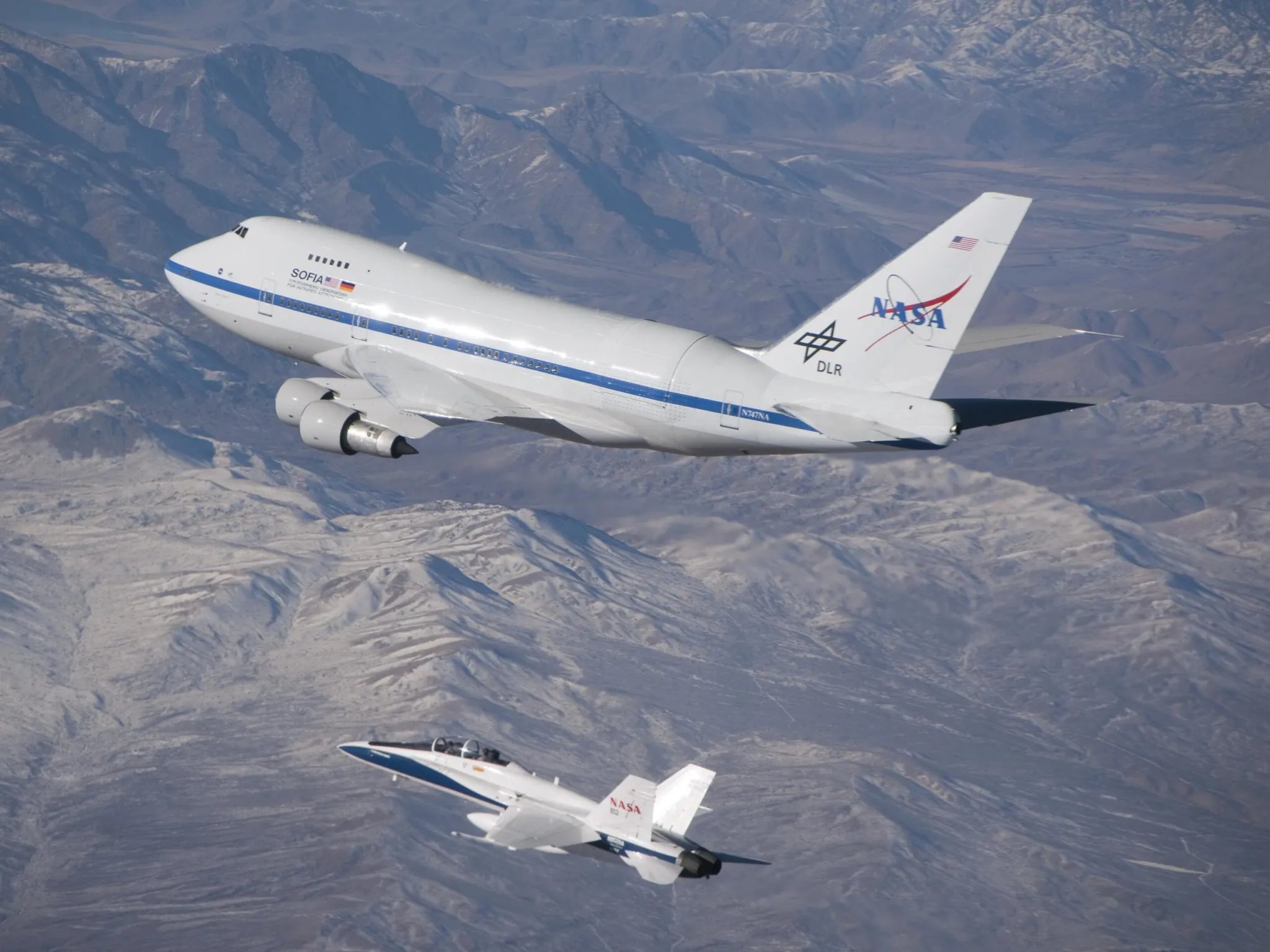
The arrival of the 777 continues the modernization and rationalization of NASA’s test aircraft fleet. This has included the retirement of the DC-8 as well as the Stratospheric Observatory for Infrared Astronomy, or SOFIA, a kind of flying telescope housed in an adapted Boeing 747SP, in 2022.
NASA’s new flying laboratory is now set to serve as a highly capable successor to the DC-8, continuing its legacy of delivering critical data to federal and state agencies, U.S. academic institutions, and scientists worldwide. At the same time, it underscores the ongoing commitment to advancing the tools and expertise needed to tackle some of the most pressing and complex questions in Earth science.
Contact the author: thomas@thewarzone.com
Loading comments…
Comments couldn’t be loaded. Please refresh the page.