
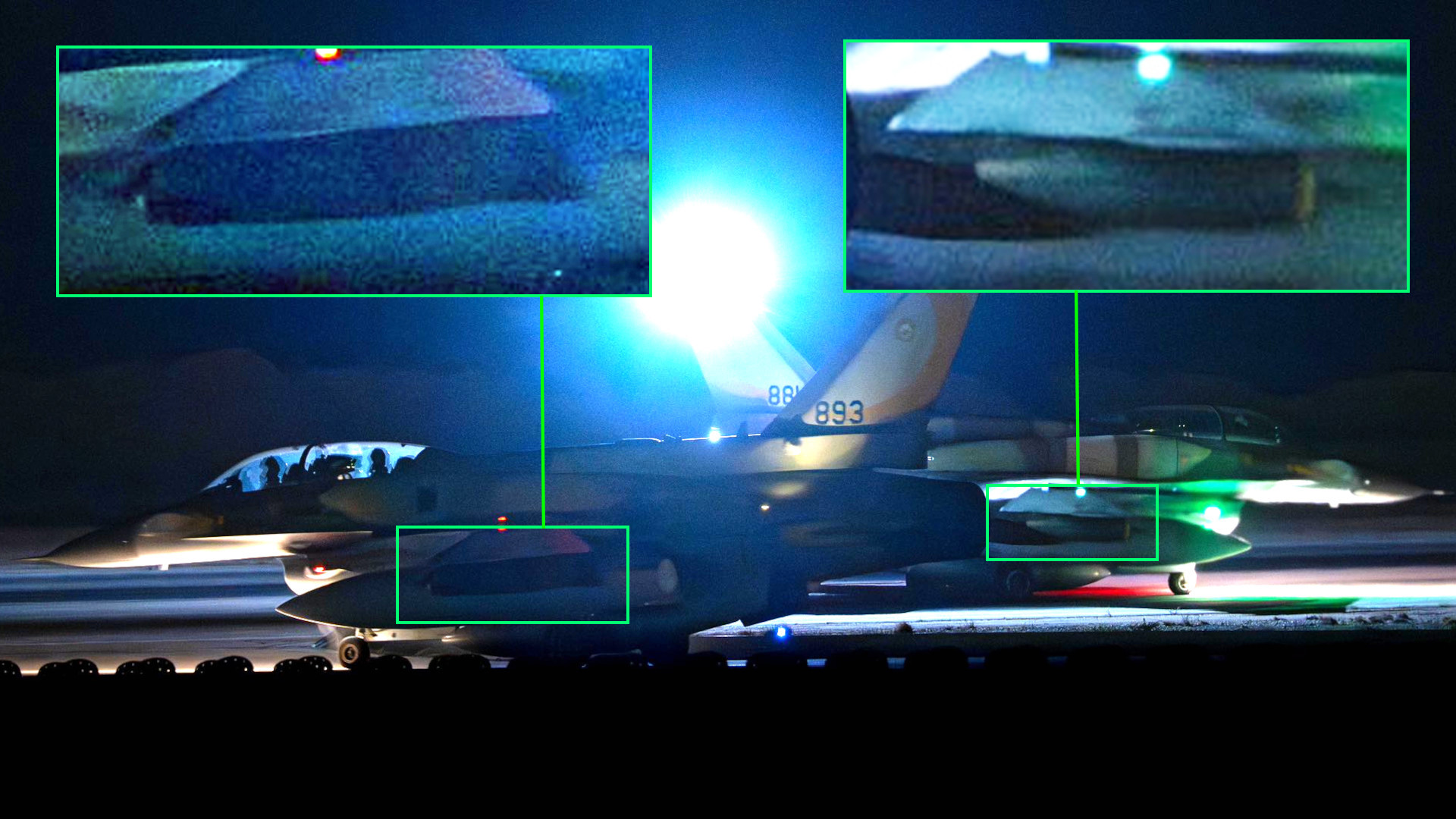
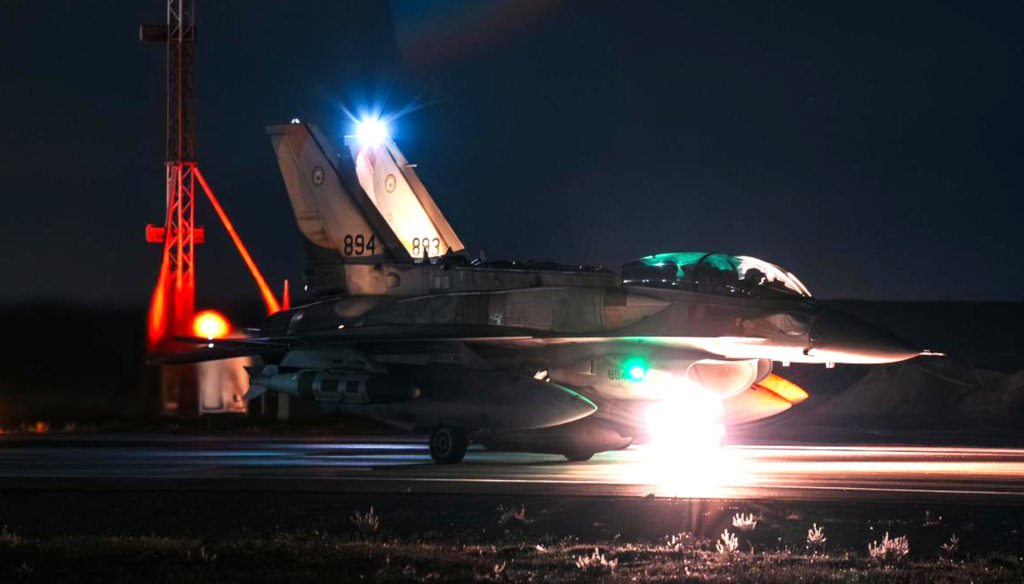
The Israeli Air Force has released a picture of F-16I Sufa fighters taking part in strikes on Iran, and the jets appear to be carrying cluster munitions. What submunitions might be inside is unknown. However, just three days before the image was posted, Iranian officials accused the United States of employing air-dropped BLU-91/B anti-tank mines, which are delivered via cluster bomb. This seems most likely to be part of a limited-use area denial strategy to contain long-range missile launches, as you can read about in our previous reporting here.
“In parallel, the Air Force struck sites used for storing and launching ballistic missiles, which pose a direct threat to the citizens of the State of Israel, as well as several defense systems of the terror regime. More than 150 fighter jets struck, over the past day, weapons production sites throughout Tehran,” the Israeli Air Force wrote in a Hebrew language post on X accompanying the picture on March 29, according to a machine translation. “The strikes on the regime’s military industries in Tehran continue at this hour as well. The Air Force continues to deepen the strikes on the regime’s military industries in order to deny the production capabilities it has built up over [the] years.”
The picture, seen at the top of this story and in parts below, is a nighttime shot, making it hard to definitively identify the munitions under the wings of the F-16Is. However, they look to have blunt noses with prominent fuzes sticking out from the center, as well as largely straight bodies and flat tail ends. This is all in line with features typically seen on air-dropped cluster munitions, especially U.S. types that make use of variants of the Tactical Munitions Dispenser (TMD), which we will come back to later on. TMDs, as well as other types of bomb-shaped ‘dispensers,’ can be loaded with different payloads, and each specific configuration generally has its own designation.
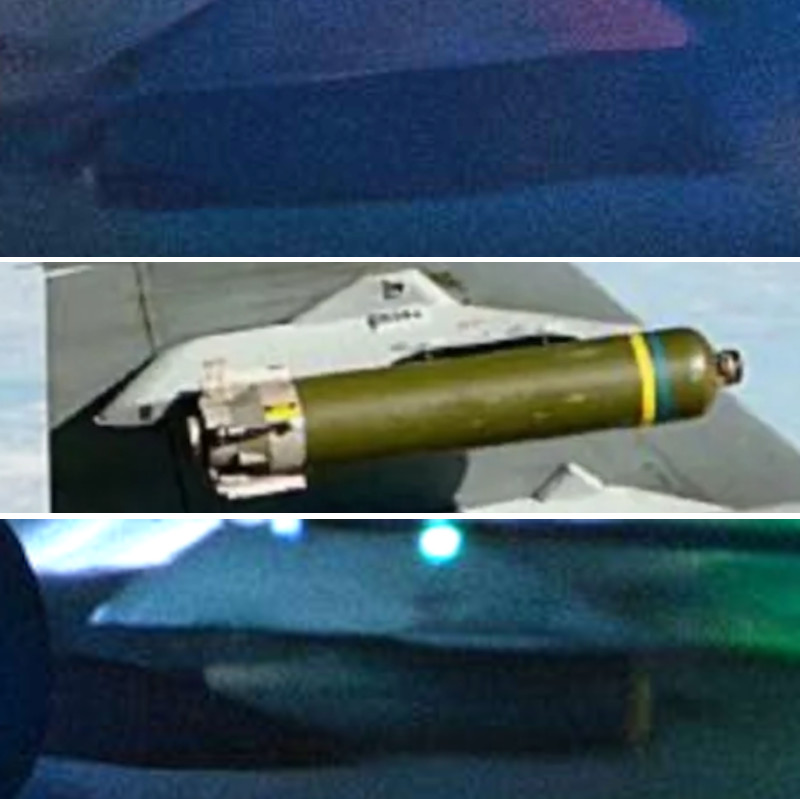
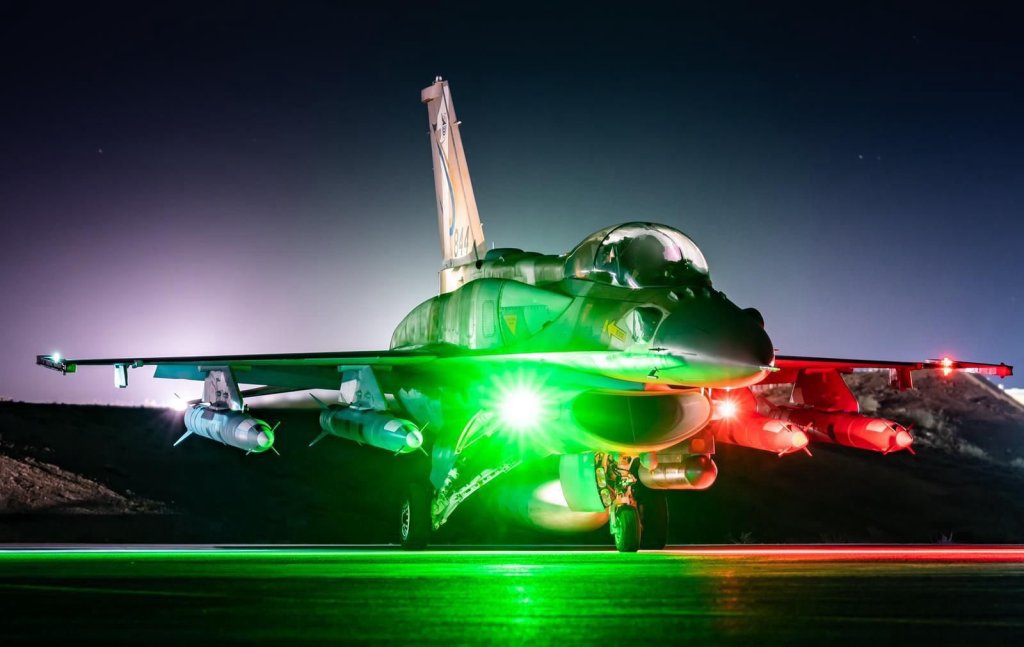
It is possible that the munitions seen under the wings of the F-16I are not cluster bombs, but this seems less likely to be the case. The features that are visible are distinctly different from the kinds of precision-guided bombs and missiles more typically seen loaded on Israeli tactical jets.
In terms of what submunitions might be inside the dispensers, as already noted, Iran has previously alleged the use of air-dropped BLU-91/B anti-tank mines, which it blamed on the United States. Reports about the employment of the mines first emerged last week, with Iranian state and quasi-state media publishing what it said were pictures of examples recovered in outlying areas around the city of Shiraz, as seen below.
Part of a larger scatterable mine system called Gator, BLU-91/Bs, as well as a companion anti-personnel mine designated the BLU-92/B, can be employed via TMD-series dispensers. They can also be dropped using the Mk 7 or SUU-58/B dispensers, the former of which has a notably different nose shape from what is seen in the picture the IAF released. The SUU-58/B is derived from the Mk 7, but has a distinct nose profile. Examples of complete cluster munitions loaded with Gator mines include the CBU-78/B (45 BLU-91/Bs and 15 BLU-92/Bs loaded in either a Mk 7 or SUU-58/B) and the CBU-89/B (72 BLU-91/Bs and 22 BLU-92/Bs loaded in a SUU-64/B TMD).
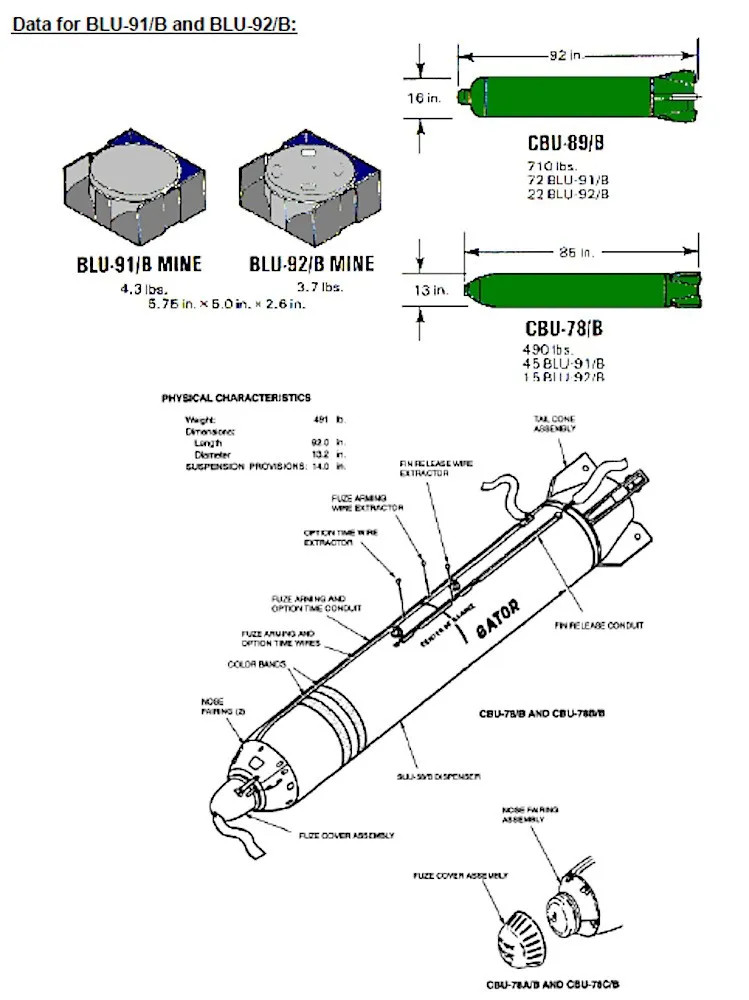
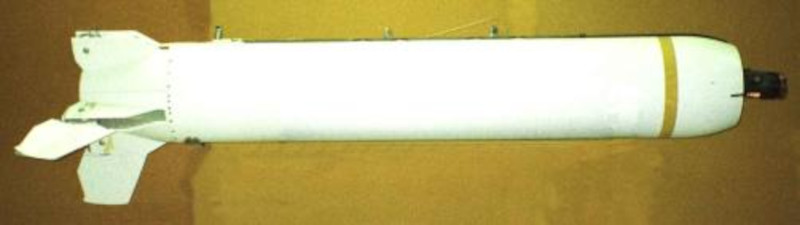
“The US is the only participant in the Iran war known to possess Gator Scatterable Mines,” Bellingcat reported last week. However, “known users of the CBU-89/B and the CBU-78/B weapons include Israel, the Netherlands, and the United States,” according to a 2003 report from Forecast International.
The F-16 is also on the broad list of platforms that can drop cluster munitions loaded with Gator mines.
As to why BLU-91/Bs might have been scattered over parts of Iran, as TWZ previously wrote:
“Iran has been able to preserve a number of its missile launchers, which could involve moving them in and out of underground facilities like the one near Shiraz or hiding them elsewhere in the area and moving them to designated launch points. This is occurring even after these facilities have been repeatedly bombed. These aerial attacks have focused on keeping their entrances caved in. These strikes are on top of the vast, resource-consuming interdiction effort to hunt for and strike launchers that are exposed. So, continued launches from these areas would be a major reason why resorting to deploying anti-tank mines there makes sense and would have a high military value. Mining the entrances of the underground missile cities would also make it harder for heavy equipment to access them in order to open them back up.“
“Designed to attack tanks and trucks, the mines could destroy or disable the launchers and likely the payloads they carry. They could also make roads to and around the underground missile cities unpassable. Even limiting where the launchers could go within these areas could make them more vulnerable.“
This would also align with the IAF’s post on X accompanying the image of the two F-16Is, which discussed new strikes on “sites used for storing and launching ballistic missiles.”
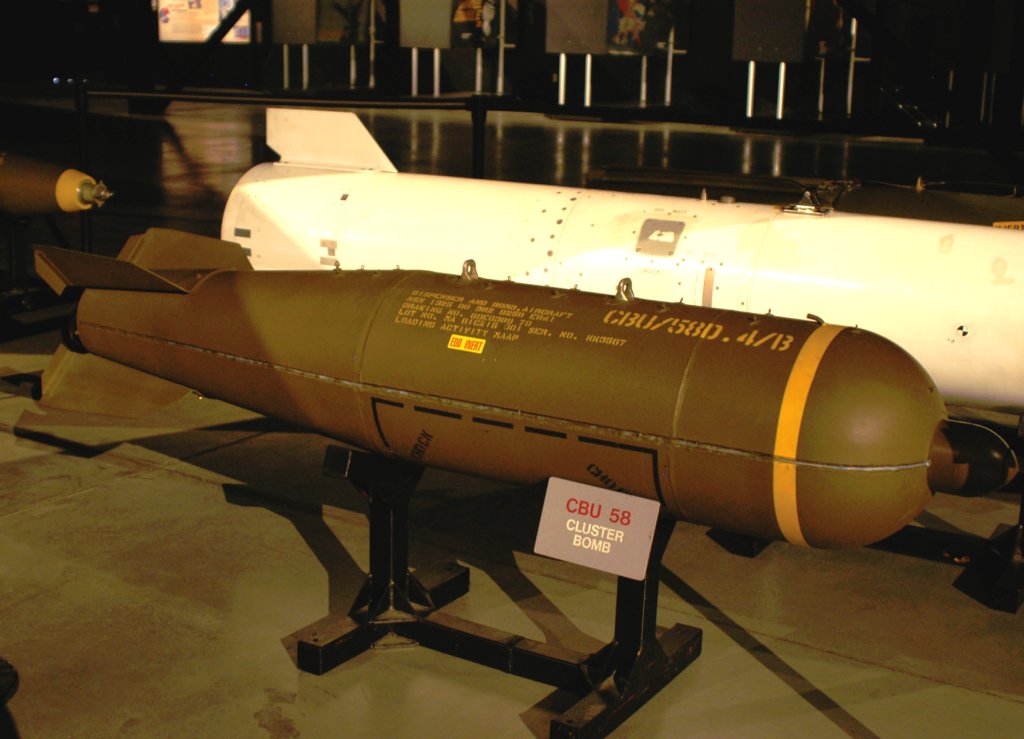
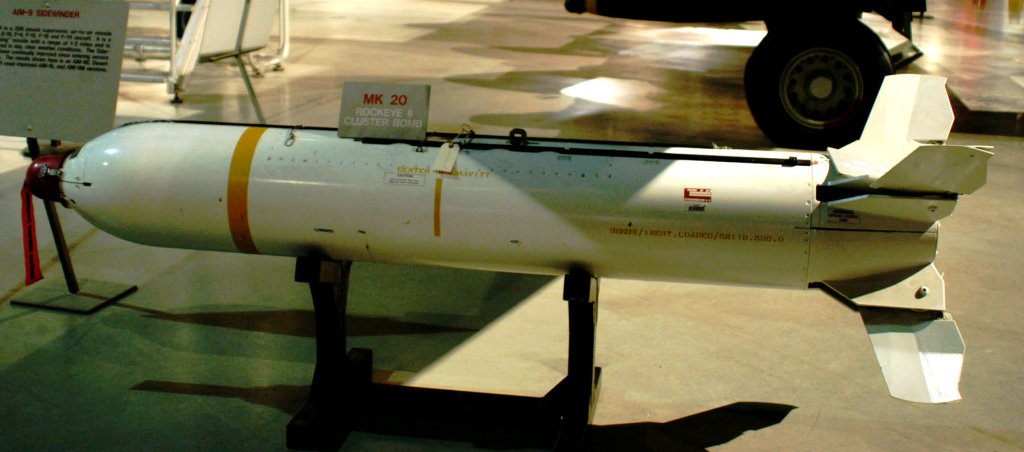
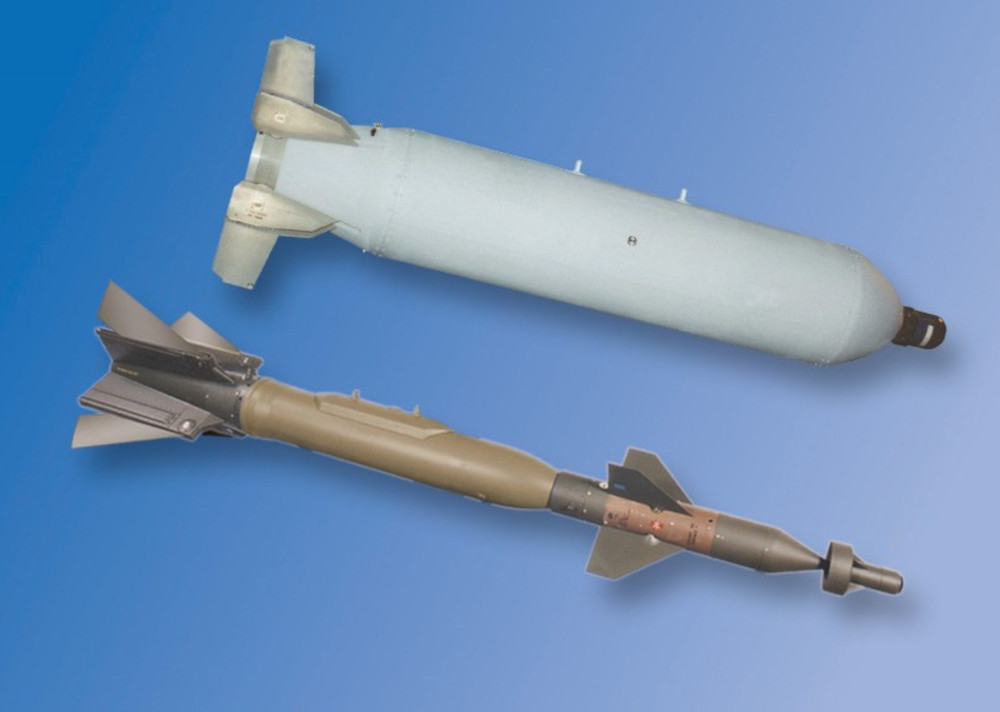
Israel does have, or at least had, other air-dropped cluster munitions in its inventory. The IAF employed Cold War-era CBU-58/Bs during the country’s intervention in Lebanon in 2006. Each of those munitions consists of 650 grenade-like BLU-63/B anti-personnel bomblets in a SUU-30-series dispenser, which has a distinctly tapered tail section that is not seen on the munitions in the recently released IAF picture. Israel has also received Rockeye cluster bombs from the United States in the past, which consist of 247 Mk 118 anti-tank bomblets in Mk 7-series dispensers. The current status of either of these munitions in Israeli service is unclear.
Israel Military Industries (IMI) also previously developed an air-dropped cluster bomb called the Runway Attack Munition, which is filled with submunitions specifically designed to crater runways. The RAM has reportedly been in Israeli service since 2008.
Runways at Iranian air bases have been cratered by U.S. and Israeli strikes in the course of the current conflict, but there have been no signs so far of the use of cluster munitions to do so. Israel could be employing anti-personnel and/or anti-tank cluster munitions against various other targets in Iran, including missile and drone launchers, but, again, there has been no evidence of this so far.
The employment of BLU-91/Bs in the current conflict with Iran also remains unconfirmed, though the picture of the IAF F-16Is with what look to be cluster munitions does add to the existing evidence. Whether the employment of those mines, whether by the United States or Israel, was an isolated event or a new part of the ongoing campaign is also still not clear. As mentioned earlier, dropping the mines fits with an effort to deny access to remote missile storage and launch areas.
Cluster munitions and landmines are both controversial weapons in their own right, particularly given the risks they can pose to civilians well after a conflict has ended. Many countries have agreed to ban their use. At the same time, the U.S. military and others continue to stress the operational utility these weapons offer, and the steps that can be taken to mitigate the risks of their use. The BLU-91/B, for instance, has a built-in self-destruct feature. Cluster munitions and landmines can also be employed under tightly controlled parameters to reduce the dangers they might pose to innocent bystanders, such as targeting only facilities far from population centers.
If cluster munition use by Israeli and/or U.S. forces does become a more widespread aspect of the ongoing conflict, more evidence of this could continue to emerge.
Special thanks to user @blocksixtynine on X for bringing the IAF picture of the two F-16Is carrying what look to be cluster munitions to our attention.
Contact the author: joe@twz.com
Loading comments…
Comments couldn’t be loaded. Please refresh the page.