
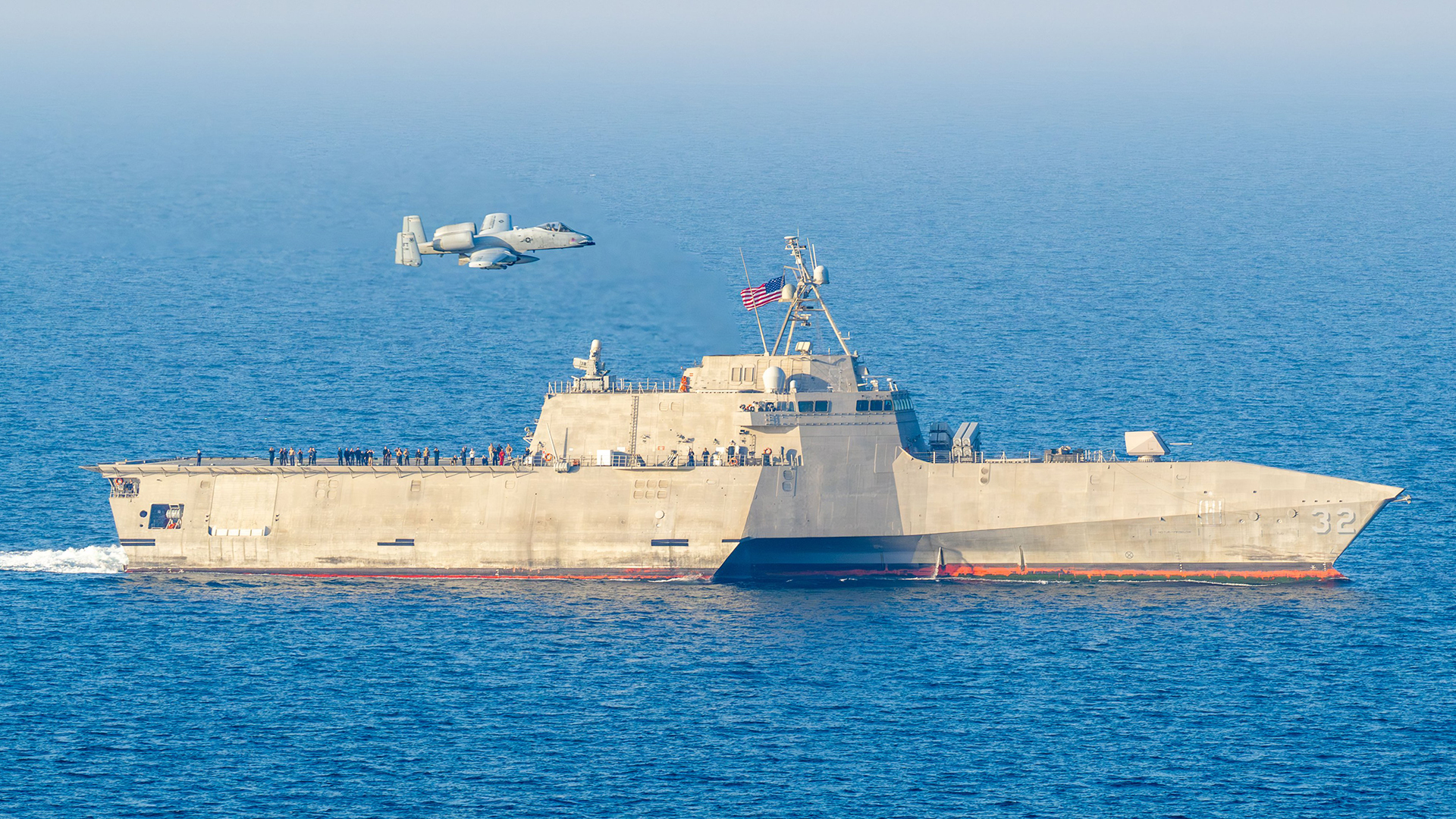
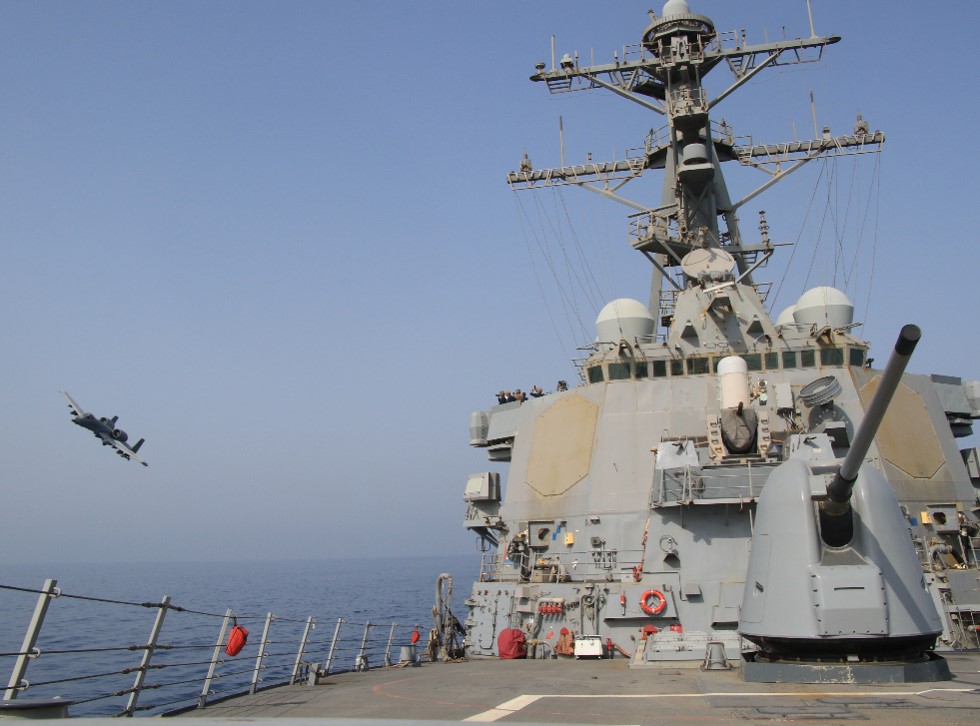
We just got some interesting photos out of U.S. Central Command (CENTCOM) showing A-10C Warthog ground attack jets exercising with the USS Santa Barbara (LCS-32), an Independence class Littoral Combat Ship (LCS) that is currently deployed in the region. At a glance, the two assets seem somewhat strangely paired, but the images highlight a long-standing mission of the A-10, and one that has grown far more prominent in the twilight of its career.
A-10s are currently forward deployed to Jordan, where they primarily fly missions over Syria, striking ISIS-related targets and providing close air support and overwatch to the roughly 1,000 troops still deployed there. The Warthog’s current work in Syria is particularly notable because the aircraft’s future is very much in doubt. As it sits, the Air Force intends to retire the A-10 fully no later than 2029, but that day could come much sooner.
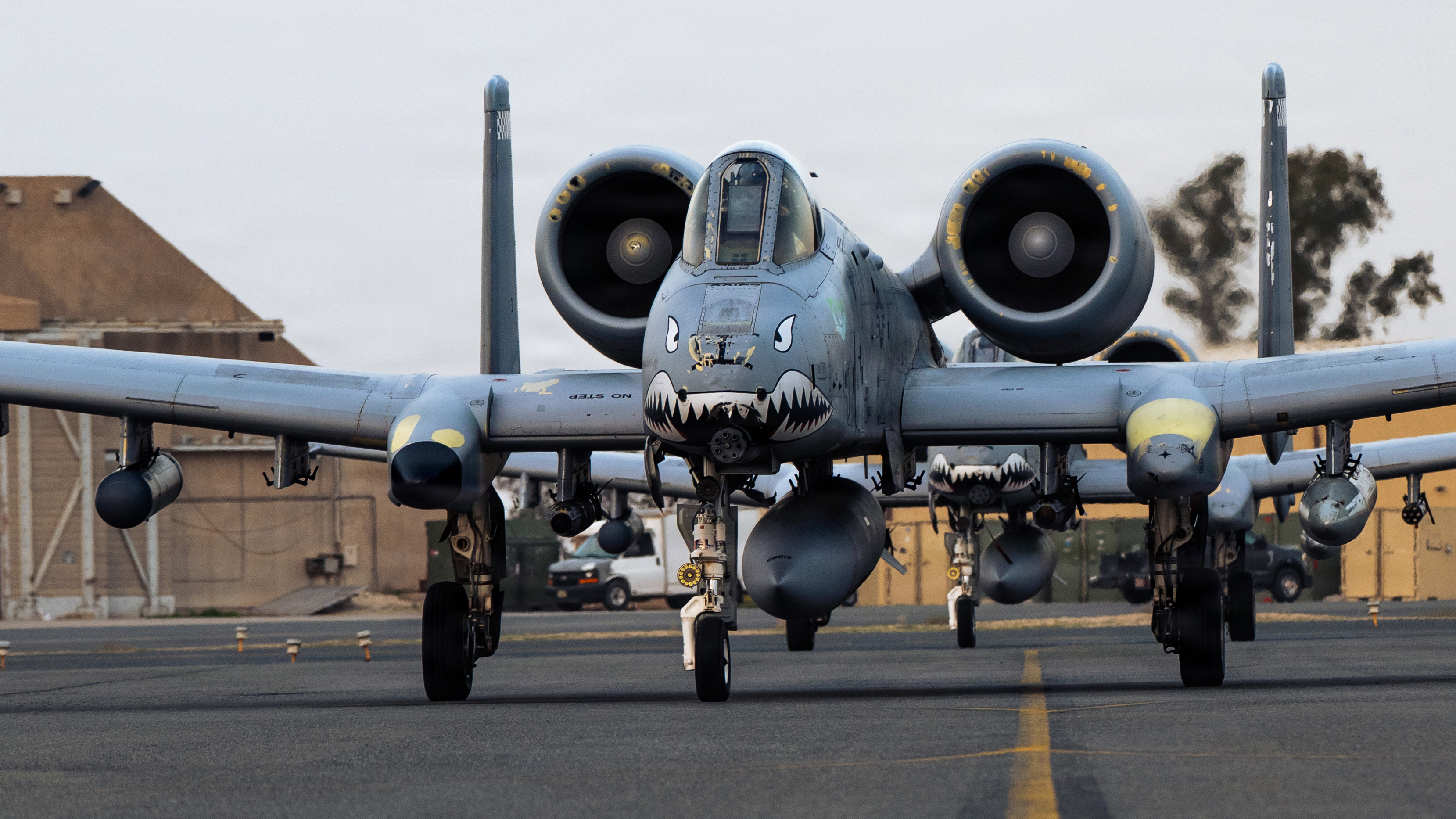
The irony here is that the A-10’s continued use in the Middle East goes against a prevailing narrative that the Warthog needs to go because its utility is limited on the modern battlefield. This argument is not without merit, but it assumes that every tactical air asset in the inventory needs to be able to fight on the front lines on day one of a conflict with a peer-adversary, and that there are not many other tasks needing to be done beyond firing the shots at the ‘tip of the spear’ during such a conflict. It’s also worth noting that the A-10 remains the least expensive tactical jet to operate in the USAF’s stable.
Regardless of the A-10’s impending fate, its ability to deliver rapid, highly precise attacks on small, fast-moving targets, and its ability to loiter for extended periods while soaking up small arms fire, means that its talents can be applied directly to the maritime domain. This is especially true when it comes to countering small boats that can pose a big danger to much larger ships. Such asymmetric dangers are only amplified for ships operating in tight, complex littoral environments, where threats can emerge quickly and attack in large packs, leaving even the most powerful warship’s defenses overwhelmed.
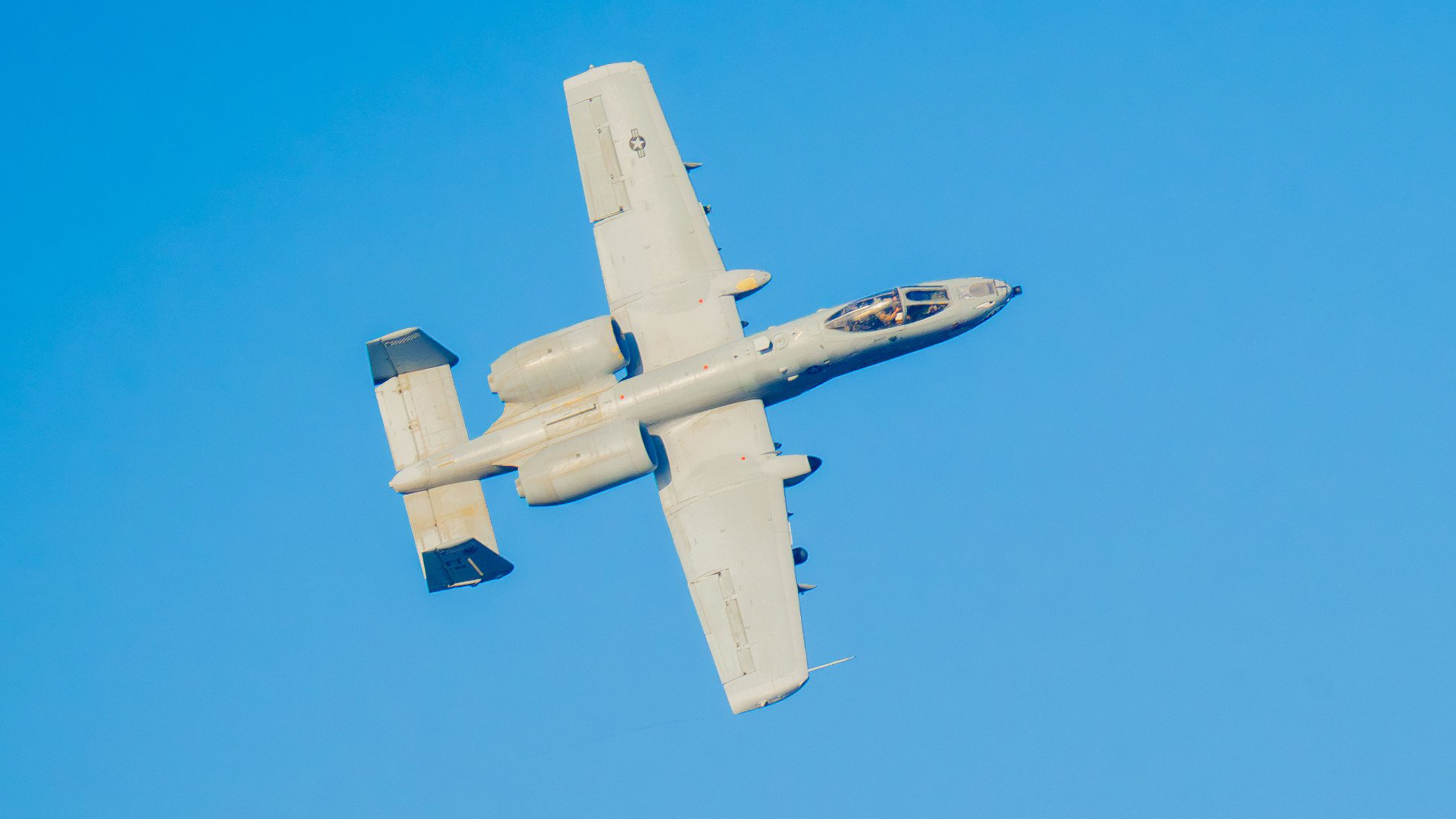
The threat of small boat attacks is something we have discussed regularly for many years, but it has become much more urgent since the advent and rapid advancement of unmanned surface vessels. Iran and its proxies pioneered these weapons, at least in a modern sense, in relatively crude form. Back in 2017, a Houthi drone boat successfully struck a Saudi frigate in the Red Sea, heralding in a new era of naval combat.

Since then, these capabilities have evolved drastically, largely thanks to the war in Ukraine, where the USV has become a major multi-faceted threat that leverages and combines new technologies to achieve exponentially greater effects. Ukraine’s use of kamikaze USVs was so brutally effective that it resulted in the bulk of Russia’s vaunted Black Sea Fleet running from its crown jewel home port in Crimea to safer (but not fully safe) berths on Russia’s western Black Sea coast. Today, Ukrainian drone boats work in the kamikaze role for attacks on ships and shoreline targets and as drone delivery systems for inshore attacks, among other missions.
That takes us to today and the current predicament in the Middle East. The United States and Iran may go at it unlike ever before. As always, fears that Iran could mine the Strait of Hormuz, and areas of the Persian Gulf and the North Arabian Sea, are relevant. For ships operating in these areas, especially U.S. Navy vessels, the danger posed by swarms of fast boats belonging to Iran’s Islamic Revolutionary Guard Corps (IRGC), some of which carry missiles themselves, is also highly palpable. This is where the Santa Barbara’s unique mission comes into play — it’s primarily a mine hunter. These ships have fully taken over that role since the sunset of the U.S. Navy’s Avenger class mine hunting vessels, the last of which had recently departed the Middle East once and for all.

While mine hunting is a critical mission set, keeping the mines from being dropped in the water in the first place is a very high priority mission, too, and something the A-10 can really help with. Interdicting boats before they can sow the minefields would be an ideal use of the Warthog’s talents.
For the mines that are already in the water, allowing the Santa Barbara to do its mission without getting destroyed by small boats would be an absolutely top tasking. These ships would become Iran’s top targets, and they would be forced to work right in the highest threat areas where the mines were laid. Their maneuvering would also be restricted. All of this makes force protection for these vessels absolutely essential. The A-10 is a uniquely capable asset for providing overwatch and close air support for the LCS.
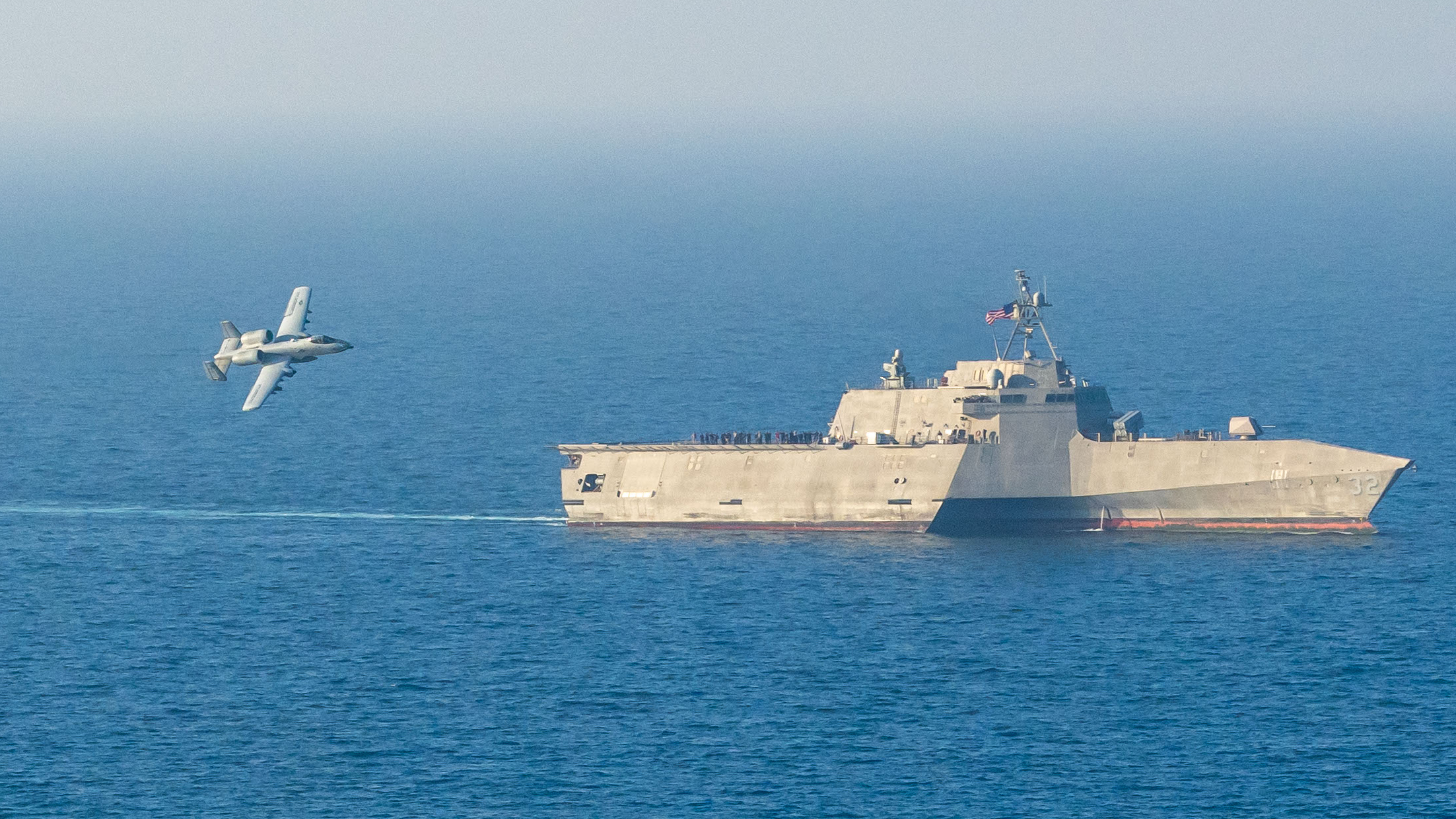
Beyond that, any ship in the Persian Gulf and Arabian Sea that can be seen as unfriendly is at risk of small boat attacks if a major war were to break out between the United States and Iran.
A-10s have always had a latent maritime application as it is baked into its basic capability set. However, in the 2000s, as the threat of small boat attacks rose to prominence, especially after the 2000 attack on USS Cole and the 2002 Millennium Challenge war game that highlighted just how big of a problem this threat was, they slowly began to train more actively for it. By the 2010s, this was a publicized mission for the A-10. You can read all about this in this previous post of ours.
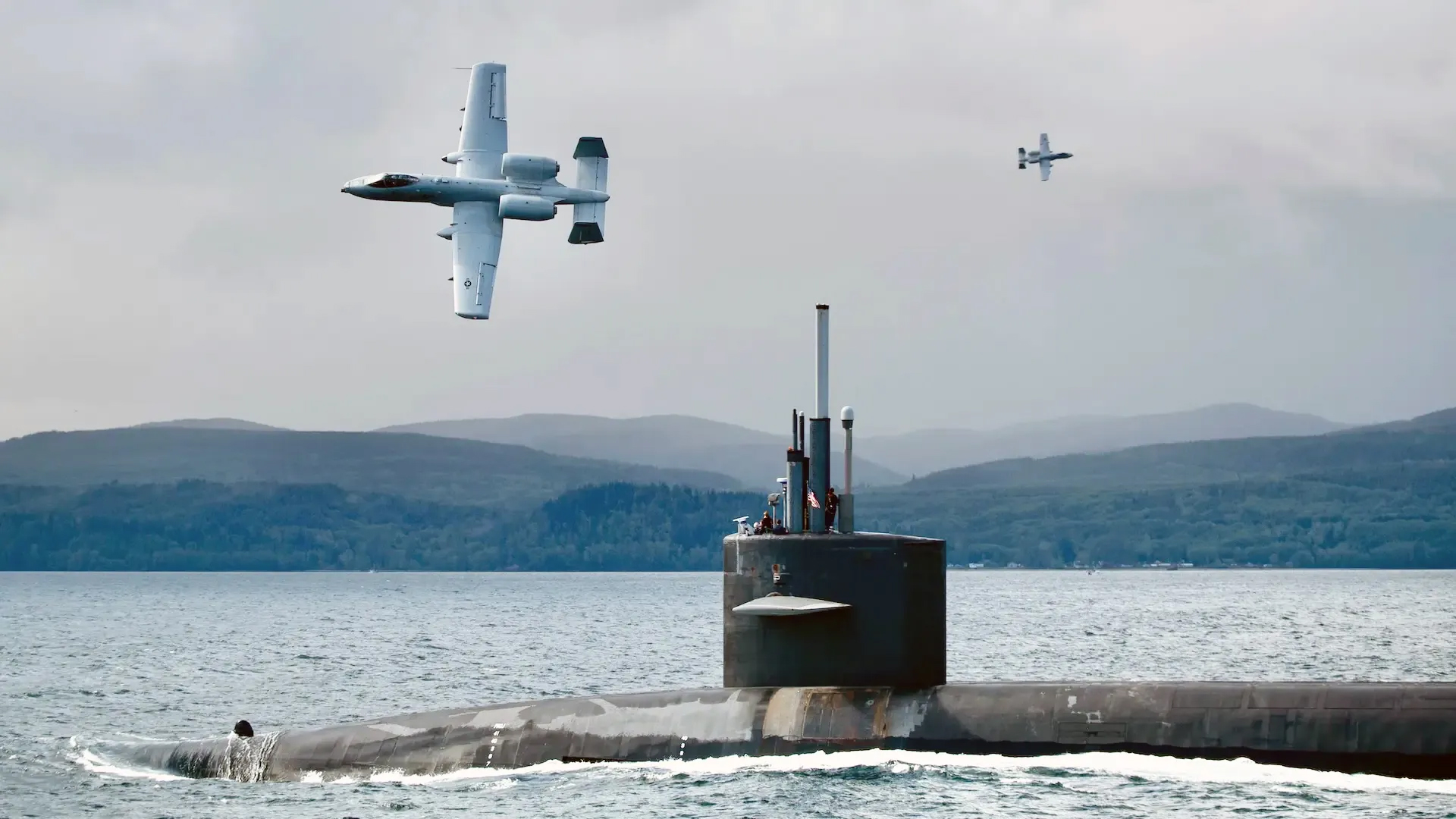
Today, we see the A-10 being used for maritime force protection in surprising ways. One of the most unique examples of this is tasking Warthogs to provide overhead defense for U.S. Navy Ohio class ballistic missile submarines while transiting in and out of port. This is where these incredible vessels, which are designed to basically disappear into an acoustic black hole far out to sea, are most vulnerable. The fact that they pack a nuclear powerplant and dozens of the world’s most powerful nuclear warheads that sit atop solid fuel rockets means that an attack could have impacts far beyond losing a submarine, which would be massively tragic in its own right. So, with this in mind, the A-10 has applied its talents in a bit of an experimental manner to guard America’s most prized strategic underwater assets.
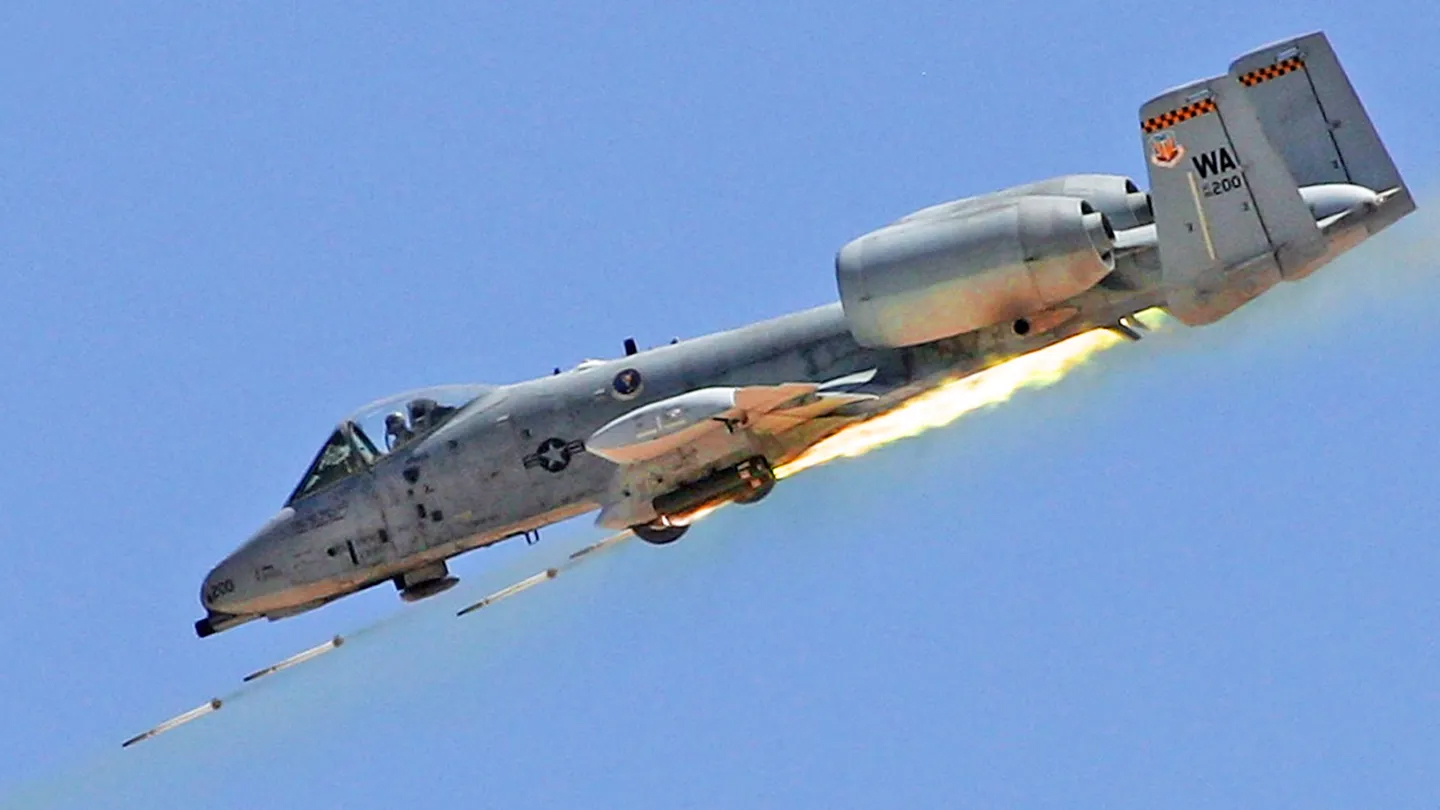
In addition, the A-10 is gaining a few extra capabilities just before it heads out to pasture once and for all. This includes the ability to use laser-guided Advanced Precision Kill Weapon System II (APKWS II) rockets in the air-to-air realm. This could also be a big help to ships under threat in the Middle East, especially mine-hunters, which Iran would attempt to pummel with its one-way attack drones if it gets a chance during a time of war. Pods of APKWS rockets can also be extremely useful in plinking small fast boats, as they can drastically increase the number of engagements a single Warthog can make without needing to rearm. It can also help the A-10 make precision attacks on swarms of boats relatively quickly if need be.

The A-10’s usual menu of cluster bombs and other weapons can also help stop swarms of small boats before they do major damage to nearby ships. Its massive gun can also be put to use. Finally, Warthogs are finally getting Link 16 connectivity, which will greatly help with their situational awareness and the ability to share targeting info with all types of platforms on the fly. This would be a huge help for making quick sense out of a complex battlespace, and especially when it comes to shooting down aerial drones.
So there you have it, the unlikely pairing of Littoral Combat Ships and A-10s is one born out of logic as much as necessity. Hopefully this team won’t ever have to be put to the test, but that is an increasing possibility as relations between Washington and Tehran continue to erode.
Contact the author: Tyler@twz.com
Loading comments…
Comments couldn’t be loaded. Please refresh the page.