
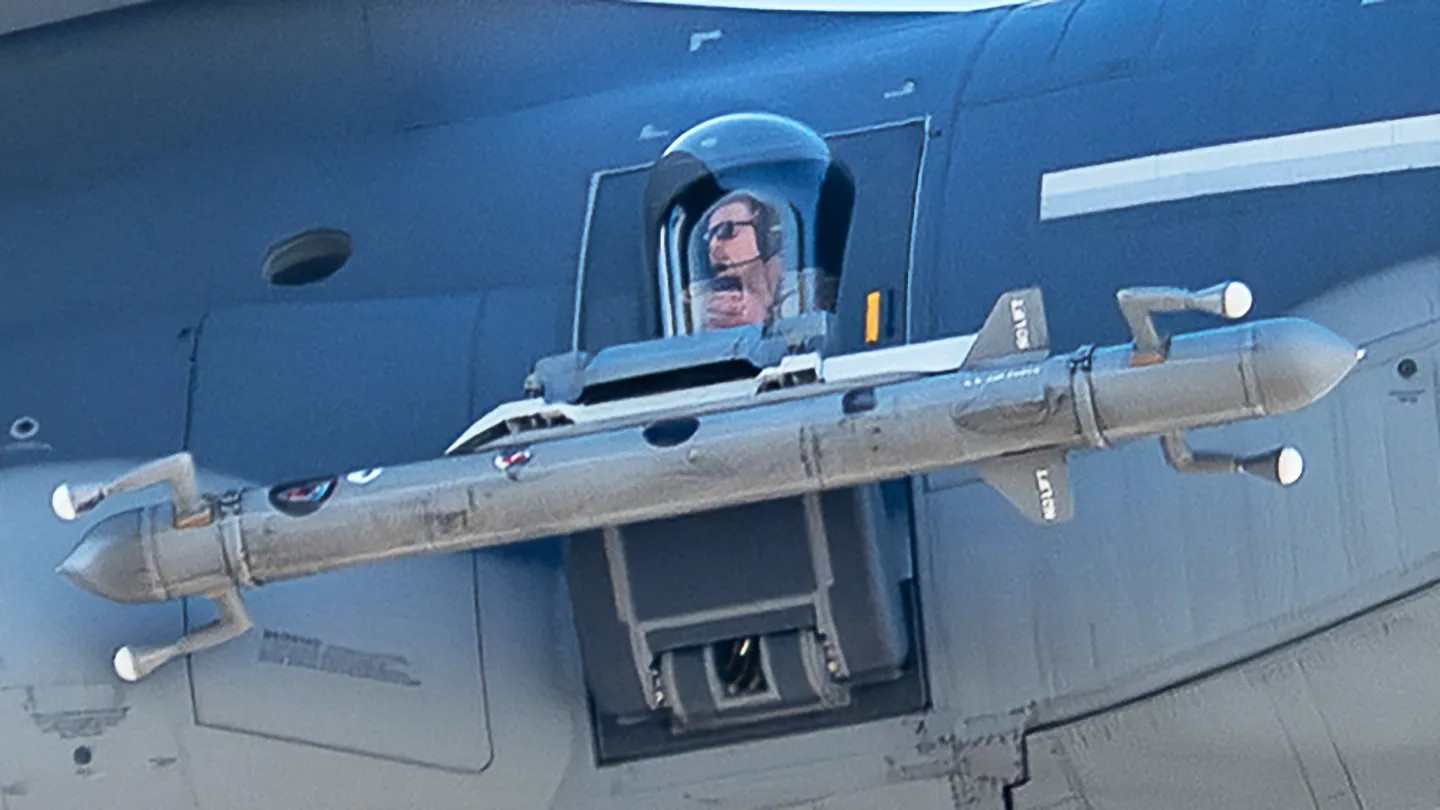
The U.S. Air Force is continuing to expand on the capabilities of the Angry Kitten electronic warfare pod, which just recently made its combat debut on the F-16 fighter in the latest conflict with Iran.
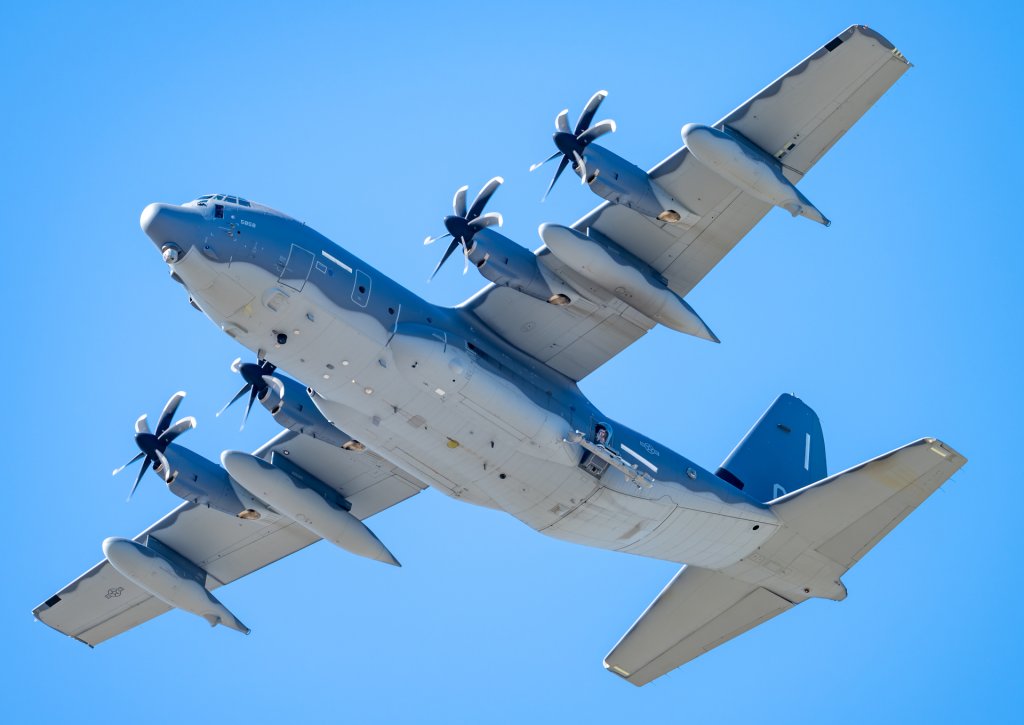
New testing has focused on improving the ability of HC-130J Combat King II combat search and rescue aircraft carrying the pods to receive reprogramming updates in near-real-time via satellite. HC-130Js just recently flew extremely high-risk and high-profile sorties over Iran as part of the effort to rescue the crew of a downed F-15E Strike Eagle. Being able to rapidly refine and optimize Angry Kitten’s capabilities will help the system remain as effective as possible, even in a very quickly evolving threat environment, and could be a stepping stone to more advanced functionality.
The Air National Guard Air Force Reserve Command Test Center (AATC) recently shared details about new testing of Angry Kitten on the HC-130J during an iteration of the Bamboo Eagle exercise. Bamboo Eagle is a large-scale air combat exercise series focused on preparedness for a high-end fight in the Pacific. AATC has already been test flying Angry Kitten on the HC-130J for more than a year now.
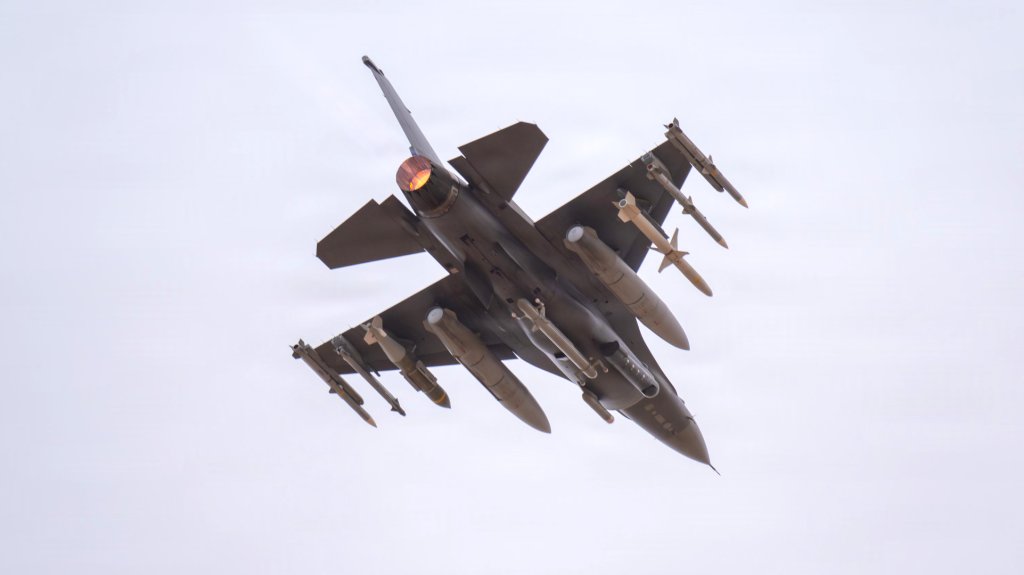
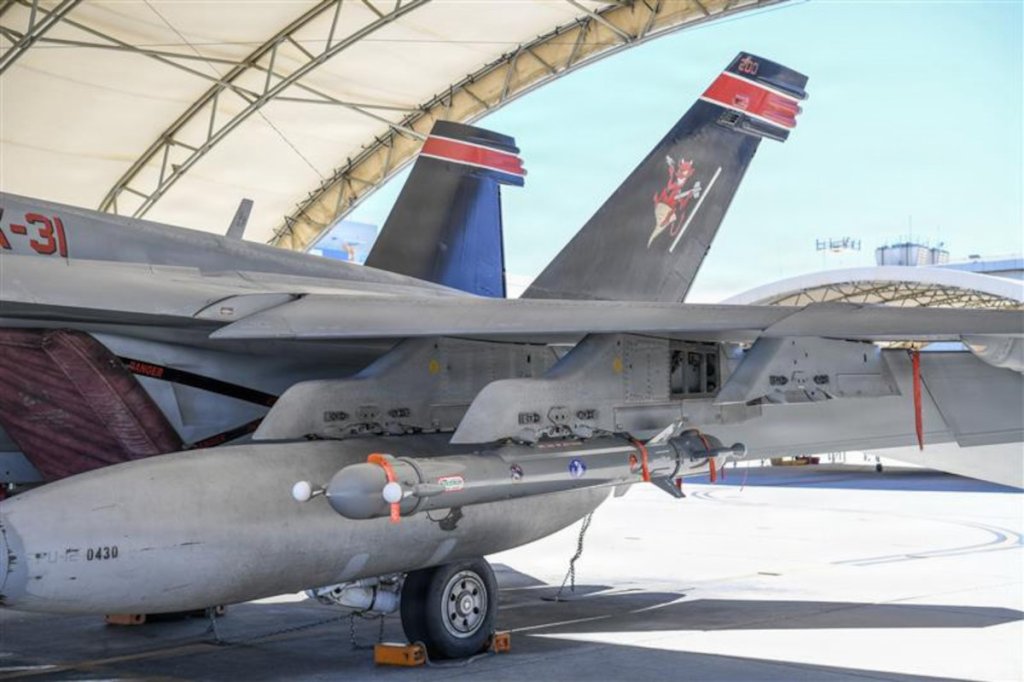
The pods have also been test flown on Air Force A-10 Warthog ground attack jets and Navy F/A-18 Super Hornet fighters. As noted, it is now being employed operationally on Air Force F-16s, as well. Angry Kitten was originally developed to replicate hostile electronic warfare threats during testing and training, as part of a cooperative effort between the Air Force and the Navy, and worked so well that it was adapted to operational use. We will come back to this later on.
During Bamboo Eagle, “AATC’s primary evaluation centered on the Angry Kitten electronic warfare pod integrated aboard a HC-130J Combat King II. The force development evaluation built directly on an operational assessment completed the previous year, which found the system potentially effective and suitable on the platform,” according to a press release that the center put out last week. “Testers incorporated recommendations from that assessment while the 130th Rescue Squadron flew the pod against simulated ship-based and ground-based threats during exercise vulnerability periods, evaluating both survivability and the system’s broader electronic attack capability.”
The 130th Rescue Squadron is part of the California Air National Guard’s 129th Rescue Wing.
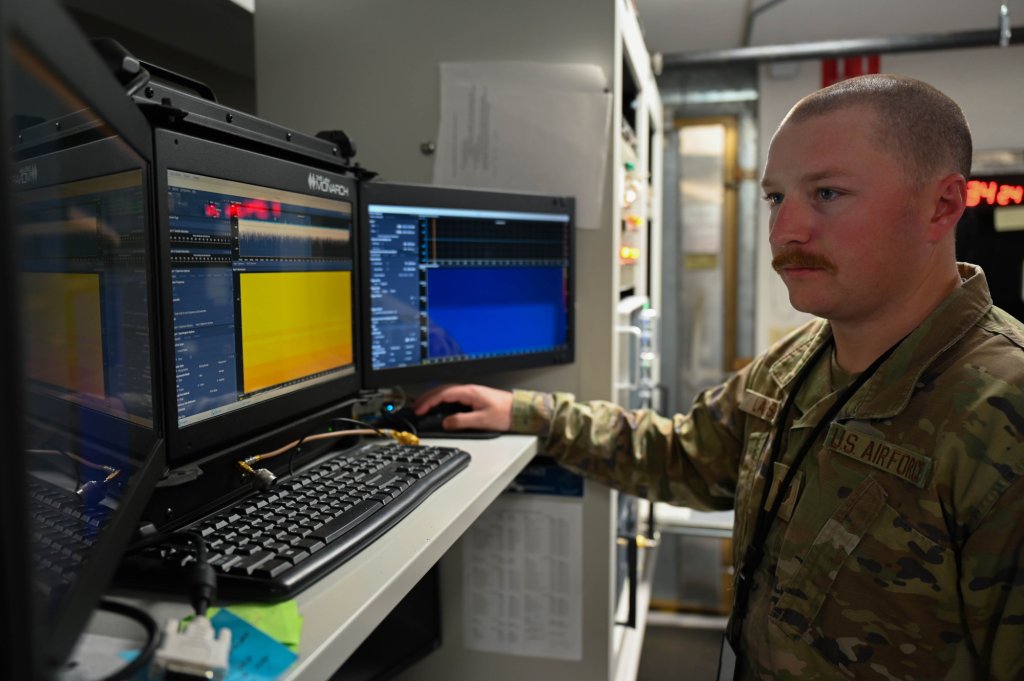
“Running alongside that effort, AATC continued maturing the Ka/Ku-band communications suite, which enables over-the-horizon communications and near-real-time electronic warfare reprogramming via satellite link,” the release adds. “The suite compresses what was previously a multi-day technique development and distribution process to near-real-time between sorties.”
AATC has previously disclosed that it has been working on this capability, which looks to be unique to the integration of Angry Kitten on the HC-130J, at least currently. The Combat King II has the benefit of a wide-band satellite communication system, which is also found on U.S. special operations C-130 variants and other aircraft. The HC-130J carries the pod using a Special Airborne Mission Installation and Response (SABIR) system installed in place of its left rear paratrooper door.
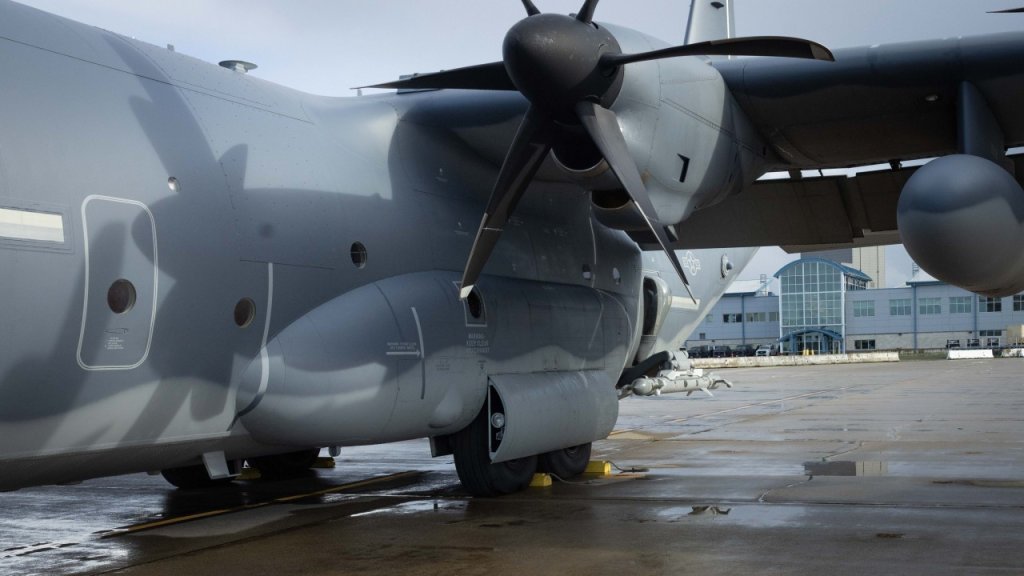
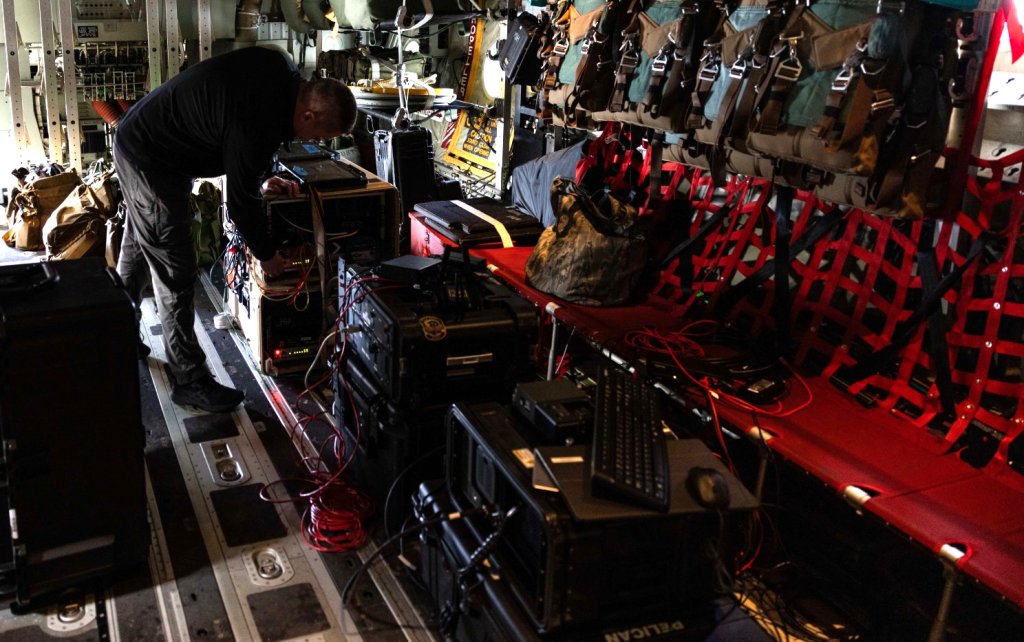
“The C-130 testing features innovative real-time updates to electronic warfare techniques,” AATC said in a previous press release in March 2025. “Unlike the F-16 tests, where pre-programmed mission data files were used, the C-130 testing includes development engineers aboard the aircraft who can modify jamming techniques mid-mission based on feedback from range control.”
As can be seen above, to date, AATC has largely framed the benefits of this reprogramming capability within the context of accelerating continuing test and evaluation of Angry Kitten. At that same time, this would also be extremely valuable in an operational context.
In general, electronic warfare systems use built-in threat libraries to accurately detect, categorize, and respond to waveforms. In turn, their effectiveness is inherently determined by the breadth of data in that library. Specialists, often working in purpose-built reprogramming laboratories far from the front lines, have to work tirelessly to keep these systems up to date. Historically, this has been a very lengthy process, and one that has increasingly had trouble keeping pace with the rate at which threats are evolving.
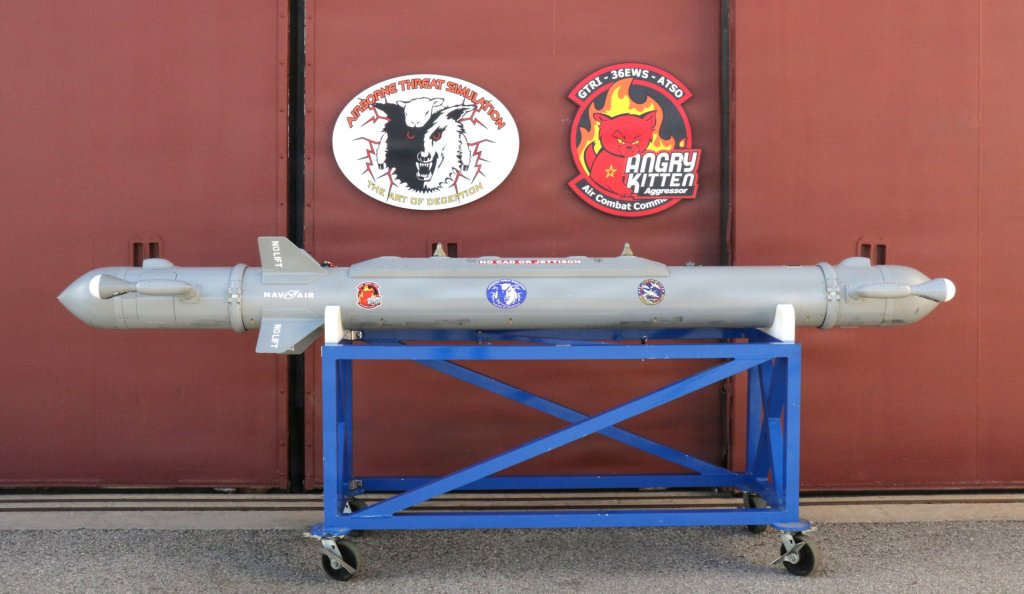
As noted, Angry Kitten was developed first as a training and testing tool. It is a direct outgrowth of the AN/ALQ-167 electronic warfare pod, variants of which have been used in those contexts for decades to mimic hostile electronic warfare threats. However, Angry Kitten was designed from the start to be more readily updatable and modifiable in order to make it easier to adapt it to new and evolving threats.
“At the core of that technology is Angry Kitten’s Technique Description Language architecture. Georgia Tech designed TDL as a hybrid that pairs dedicated hardware modules for speed and bandwidth with software for complex decision-making,” according to a press release Naval Air Systems Command (NAVAIR) put out last month. “The practical result: government programmers can reprogram the jammer to counter new threats without sending it back to the contractor for expensive, time-consuming code changes. When an adversary adapts its radar tactics, NAWCWD’s team can update the jammer’s response in days instead of waiting months for a contract modification.”
Angry Kitten is also known to make use of advanced Digital Radio Frequency Memory (DRFM) technology. Using DRFM, radio frequency (RF) signals can be detected and ‘captured.’ Those same signals can then be manipulated and retransmitted. As an example of what this means in practice, signals from enemy air defense radars or radar seekers on incoming missiles can be recorded and pumped back in a way that creates false or otherwise confusing tracks. That same data can also be used as part of the reprogramming process to improve the stability capabilities, as well as be further exploited for general intelligence-gathering purposes.
This all already contributed to the evolution of Angry Kitten into an operational system.
“We had a jammer called ‘Angry Kitten.’ It was built to be an adversary air jamming tool,” now-retired Air Force Gen. Mark Kelly, then commander of Air Combat Command (ACC), told TWZ and other outlets back in 2022. “And all of a sudden, the blue team said, ‘you know, hey, we kind of need that, can we have that for us?’ And so I see this iterating and testing our way into this.”
When it comes to near-real-time updates for Angry Kitten, even if the communications suite used on the HC-130J won’t fit on smaller tactical jets, it could potentially be ported over into a capability that is readily deployable to forward locations. Another possibility is that an aircraft with a wide-band satellite communications system could then pass updates for Angry Kitten to other aircraft within line of sight using other datalink capabilities.
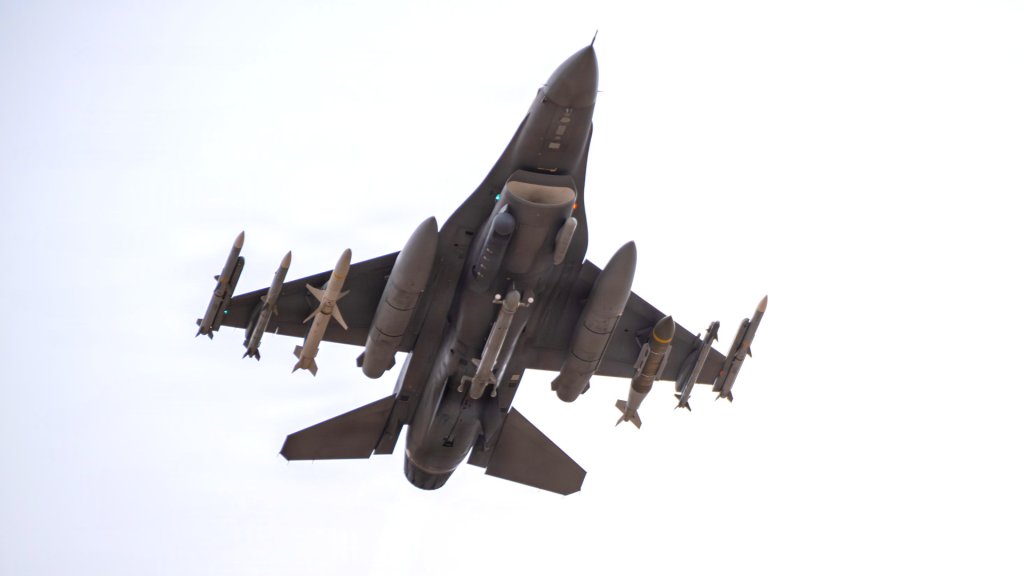
The underlying developments have further implications when it comes to developing so-called cognitive electronic warfare capabilities. Cognitive electronic warfare is a broad area of development focused on new technologies to further automate or otherwise accelerate the reprogramming process. The absolute ‘holy grail’ of the overall concept is an electronic warfare system that can adapt autonomously in real time to new threat waveforms, or known ones being modulated in unexpected ways, even right in the middle of a mission. You can read more about all of this here.
Ongoing work to expand and improve Angry Kitten’s capabilities will also now benefit from lessons learned from the employment of the pods in combat sorties over and around Iran.
The multi-day effort to recover the crew of an F-15E Strike Eagle downed in that country earlier this month also highlighted the immense risks involved in combat search and rescue (CSAR) operations, and the importance of adding new self-protection capabilities to the HC-130J, specifically. Air Force Combat King IIs can expect to face far greater threats while conducting CSAR missions during a conflict with a near-peer adversary like China. This has prompted questions about the utility of HC-130Js and other traditional CSAR assets in the context of any future high-end fight.
In the meantime, Angry Kitten continues to evolve in significant ways, including its growing ability to receive key updated data remotely in near-real-time when paired with the HC-130J.
Contact the author: joe@twz.com
Loading comments…
Comments couldn’t be loaded. Please refresh the page.