
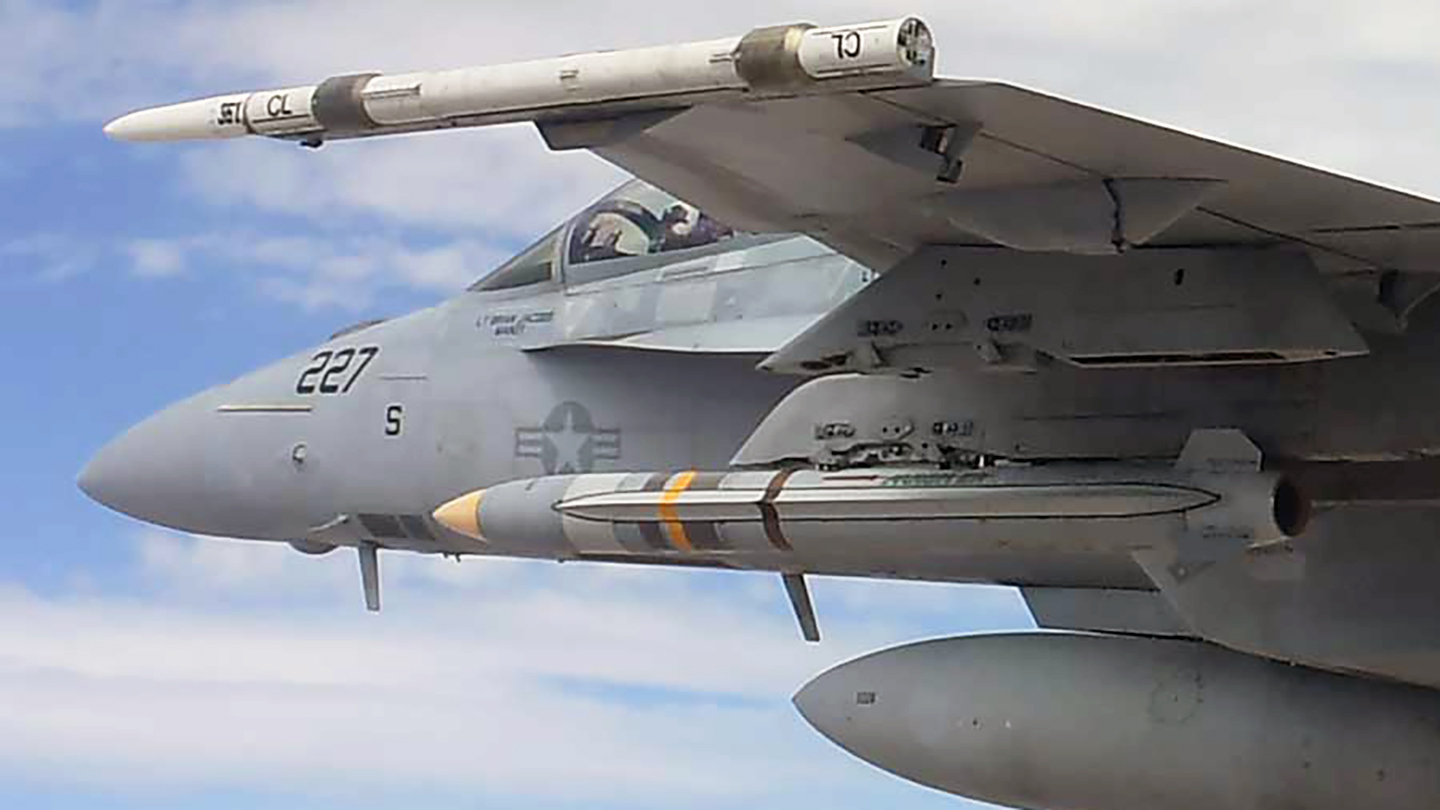
The U.S. Navy says it is still aiming to see the AGM-88G Advanced Anti-Radiation Guided Missile-Extended Range (AARGM-ER) enter operational service this year. This is despite the announcement of a planned “strategic pause” in purchases of the missiles in the 2027 Fiscal Year. AARGM-ER is set to give Navy carrier air wings a critical boost in their ability to neutralize ever-more capable hostile integrated defense networks.
AARGM-ER has been in the works since the late 2010s. Northrop Grumman is the current prime contractor, through its previous acquisition of Orbital ATK. The Navy has ordered dozens of the missiles already. Hence, it was very surprising when the service’s latest proposed budget for the 2027 Fiscal Year, rolled out in full last week, included no request for funding to buy more AGM-88Gs due to the aforementioned pause. All of this, coupled with previous delays and technical issues encountered in testing, had prompted new questions about the future of the program.
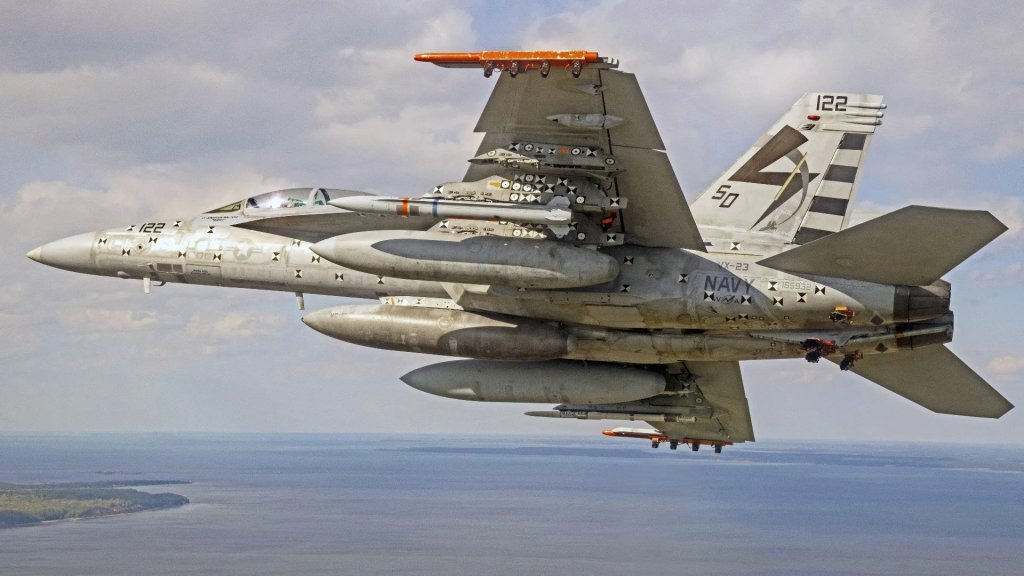
“U.S. procurements for the AARGM-ER program are planned to resume once the system has successfully completed all necessary testing and software updates. Our immediate priority is ensuring the weapon passes these rigorous testing milestones to achieve Initial Operational Capability (IOC) in September 2026,” a Navy spokesperson told TWZ. “After validating the software and testing, the plan would be to ramp up production to clear a backlog of over 150 missiles, with U.S. procurements officially restarting in FY28 [Fiscal year 2028]. In the interim, FY27 production will be allocated to Foreign Military Sales to fulfill our commitments to five signed international cases.”
The spokesperson did not name the foreign customers in question. However, Italy is a full partner in the development of the AGM-88G. The U.S. government has also previously approved sales of the missiles to Australia, Finland, and the Netherlands. Norway has publicly announced its intention to purchase AARGM-ERs, as well. The U.S. Air Force is also set to acquire these missiles. We will come back to this later on.
The AGM-88 family, also known as the High-speed Anti-Radiation Missile (HARM), traces its roots back to the 1970s. The AARGM-ER is a major redesign of the preceding AARGM variant, also designated the AGM-88E. The AGM-88G features a completely redesigned body optimized for high speed and range, as well as a new, more powerful rocket motor and control actuation system.
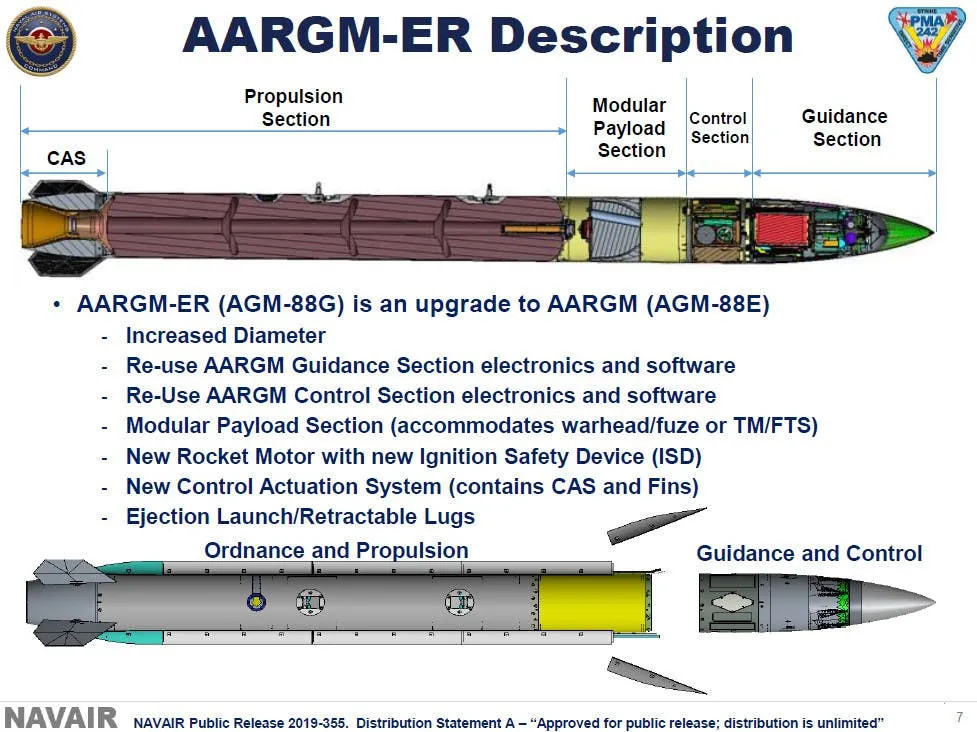
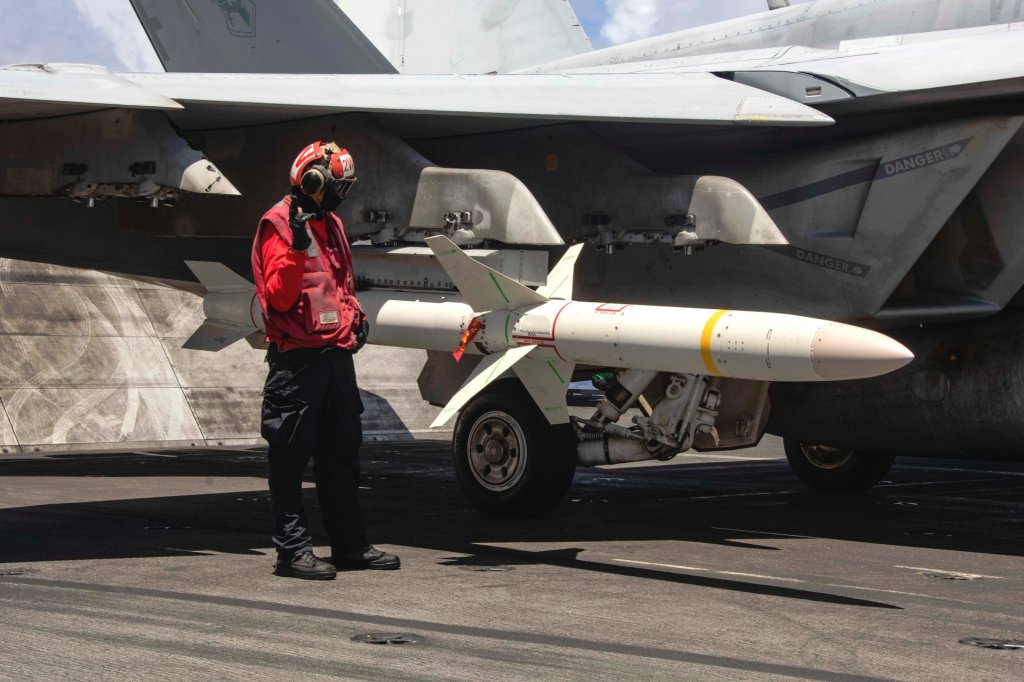
Inside, the AGM-88G reuses the guidance and control systems from the AGM-88E. By extension, this means the AGM-88G retains the same multi-mode guidance capability of its predecessor, which includes a GPS-assisted inertial navigation system and a millimeter-wave radar seeker. The AARGM-ER’s primary target set is hostile emitters, especially air defense radars, but the guidance package is designed to allow it to find its mark even if they shut down and stop sending out signals to home in on. The AGM-88E also has a more general, secondary ability to strike targets on land or at sea, including by just being directed to hit a specified set of coordinates.

The Navy sees the AGM-88G entering service first integrated with its F/A-18E/F Super Hornet fighters and EA-18G Growler electronic warfare jets, both of which can already employ the AGM-88E. AARGM-ER’s boosts in speed and range are seen as critical to ensuring the survivability and effectiveness of those non-stealthy aircraft in the face of an ever more capable air defense threat ecosystem.
AARGM-ER is also sized to allow for internal carriage on F-35A and C variants. There are plans to eventually integrate it for external carriage on all three F-35 variants, as well as legacy F/A-18C/D Hornets, as well.
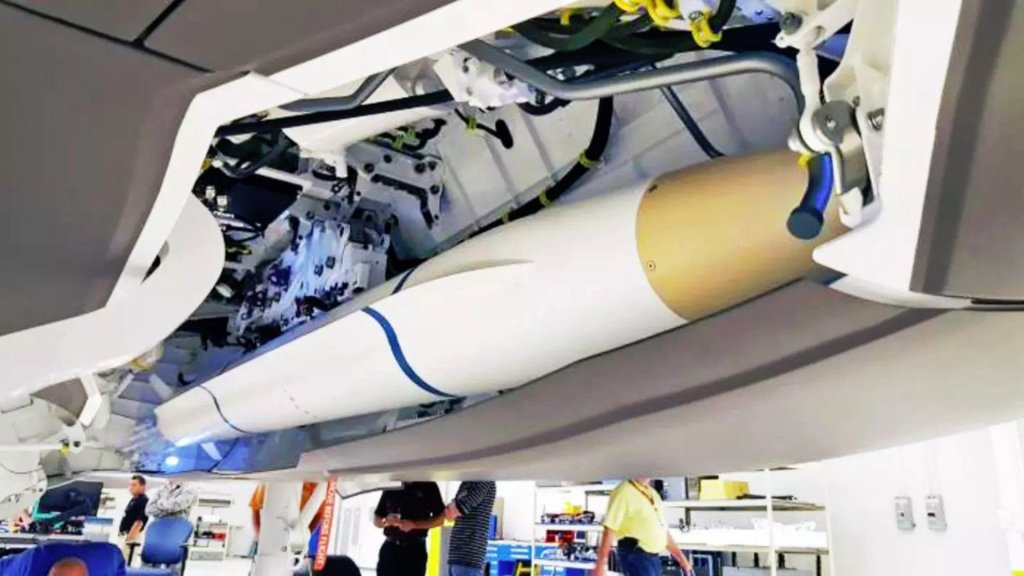
As noted, the development of the AARGM-ER has had to contend with technical issues and delays over the years. Originally, the goal was to reach IOC on F/A-18E/F and EA-18G in Fiscal Year 2023.
“The AARGM-ER experienced significant delays as a result of rocket motor, structural, and software problems discovered during testing,” the Government Accountability Office (GAO) said in a report published in June 2025. “Contracting officials noted that the program worked with the prime contractor to investigate the root causes of the identified deficiencies and implement corrective actions, including changes in the production process.”
“The program is still experiencing production delays as well. Since our last assessment, program officials stated that testing issues, supply chain challenges, and construction delays for a new production facility slowed completion of the first two production contracts by 1 year,” GAO’s report added. “We have found that starting production before demonstrating a system will work as intended – which the Navy did – increases the risk of discovering deficiencies that require costly, time-intensive rework.”
“In FY25 [Fiscal Year 2025], the [AARGM-ER] program attempted three IT [integrated test] weapon employment tests using F/A-18F aircraft against a threat-representative integrated air defense land target at the China Lake Range in California,” according to a separate report from the Pentagon’s Office of the Director of Test and Evaluation (DOT&E), released in March of this year. “AARGM-ER successfully completed one of the three weapon events but exhibited performance discrepancies during the other two, to include one event during which range safety terminated the weapon after release. No further weapons employment testing was accomplished in FY25 pending implementation of updates required to address the problems that were identified.”
DOT&E warned in that report that the IOC schedule for AGM-88G could slip further to the first quarter of Fiscal Year 2027, which starts on October 1 of this year.
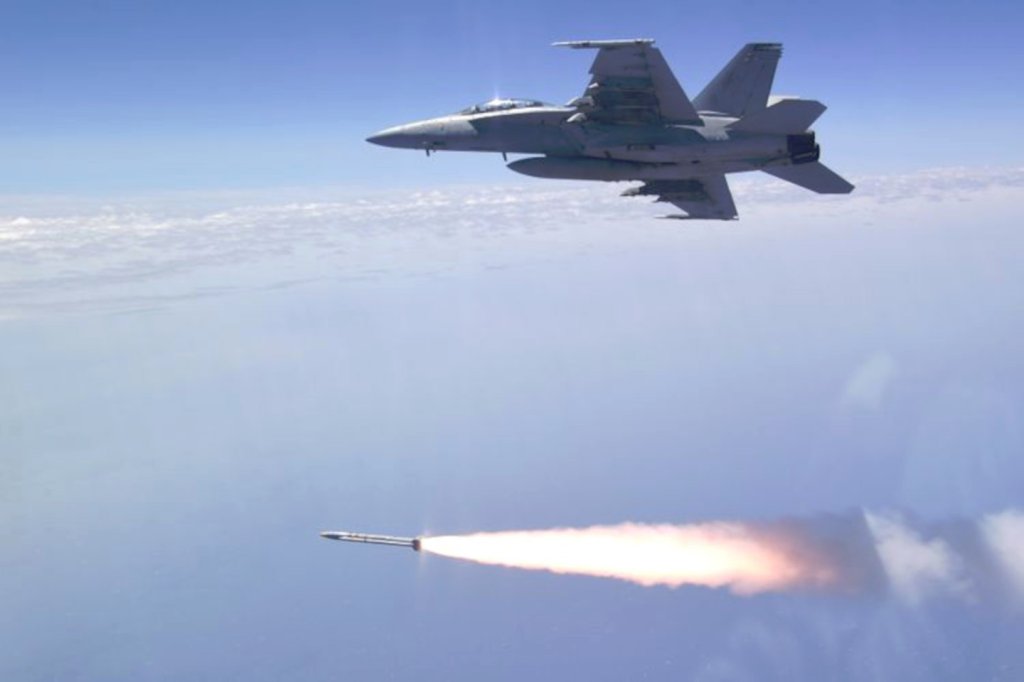
Earlier this year, the Navy somewhat urgently put out a contracting notice saying it was exploring options for a new long-range anti-radiation missile. The stated requirements for this Advanced Emission Suppression Missile (AESM) were very much in line with how the AARGM-ER has been discussed in the past, with one notable exception: a new demand for the ability to engage targets in the air, as well as on the surface. You can read more about why that is significant here. With the Navy confirming that it is still pushing ahead on AARGM-ER, it remains unclear how exactly the service sees AESM fitting into its broader plans. There does not appear to be any explicit mention of AESM in the Navy’s latest budget request.
As noted, the U.S. Air Force is also in line to acquire AGM-88Gs. An AARGM-ER subvariant with “improved warhead/fuze” is set to serve as a bridge to the Stand-in Attack Weapon (SiAW), as well. Reportedly now designated the AGM-88J, SiAW is a derivative of the AARGM-ER being developed to provide a broader high-speed strike capability. The Air Force expects to primarily employ SiAW against time-sensitive and/or high-value assets on the ground, especially ballistic and cruise missile launchers, air and missile defense nodes, electronic warfare systems, and even anti-satellite weapons.
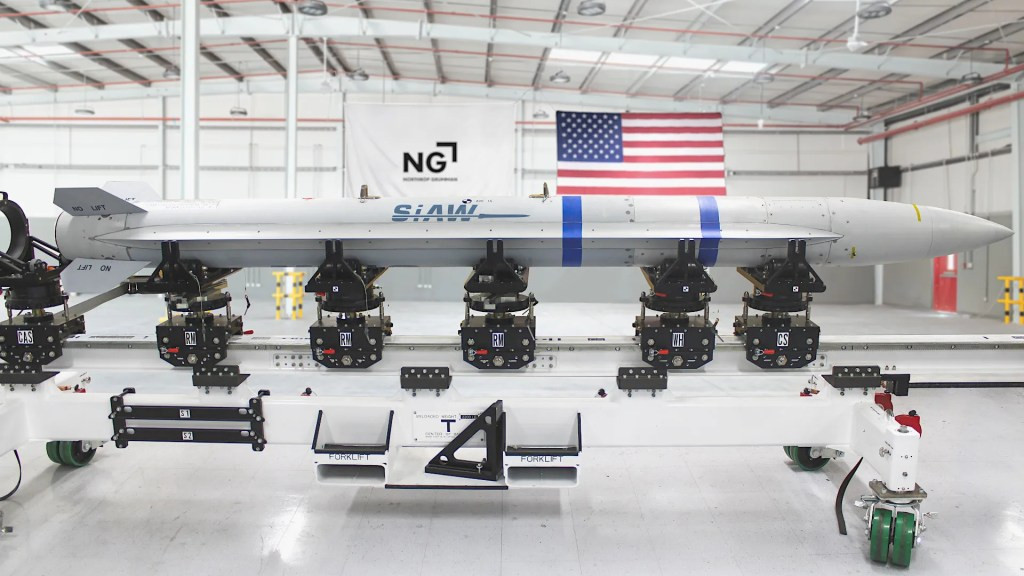
Despite the Navy’s “strategic pause” with AARGM-ER, the Air Force is asking for more funds to purchase additional SiAWs in Fiscal Year 2027. The Air Force has said in the past that it has been targeting 2026 for reaching IOC with SiAW on the F-35A. SiAW flight testing to date, at least that has been disclosed, has involved carriage by F-16 fighters, and it is possible the missile could be integrated operationally onto that aircraft and others, as well. As an aside, Northrop Grumman has also been pitching a ground-launched member of the AARGM-ER/SiAW family, called the Advanced Reactive Strike Missile (AReS).
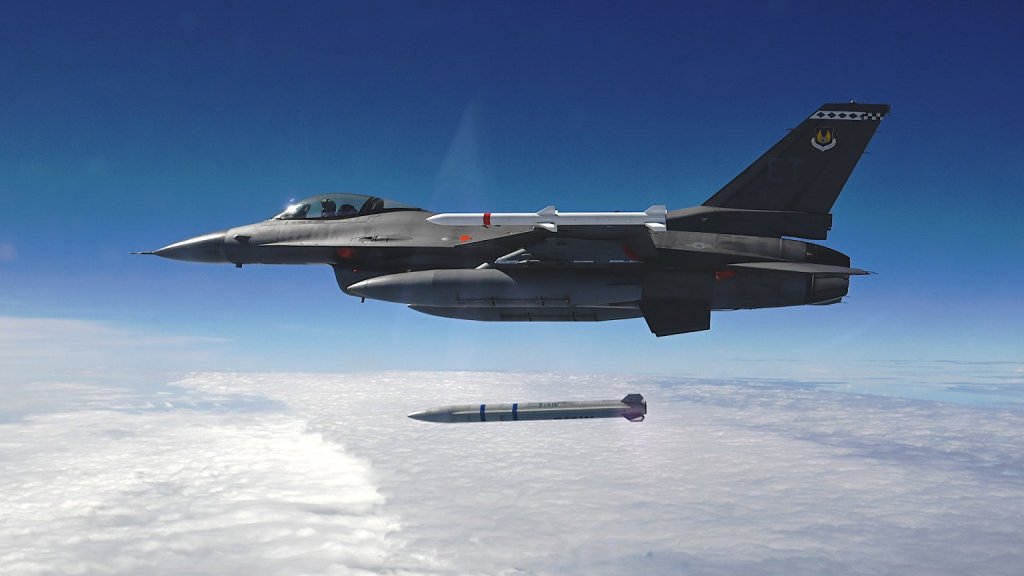
As mentioned, the Navy has made clear that procurement of AARGM-ERs for foreign customers through the FMS program is also continuing.
Time will tell whether or not the Navy can meet its IOC target for AARGM-ER by September, or the timeline slips into the next fiscal year. Still, the service looks to remain committed to the program, at least for the time being, regardless of its intent to put a year-long pause on buying more AGM-88G.
Contact the author: joe@twz.com
Loading comments…
Comments couldn’t be loaded. Please refresh the page.