
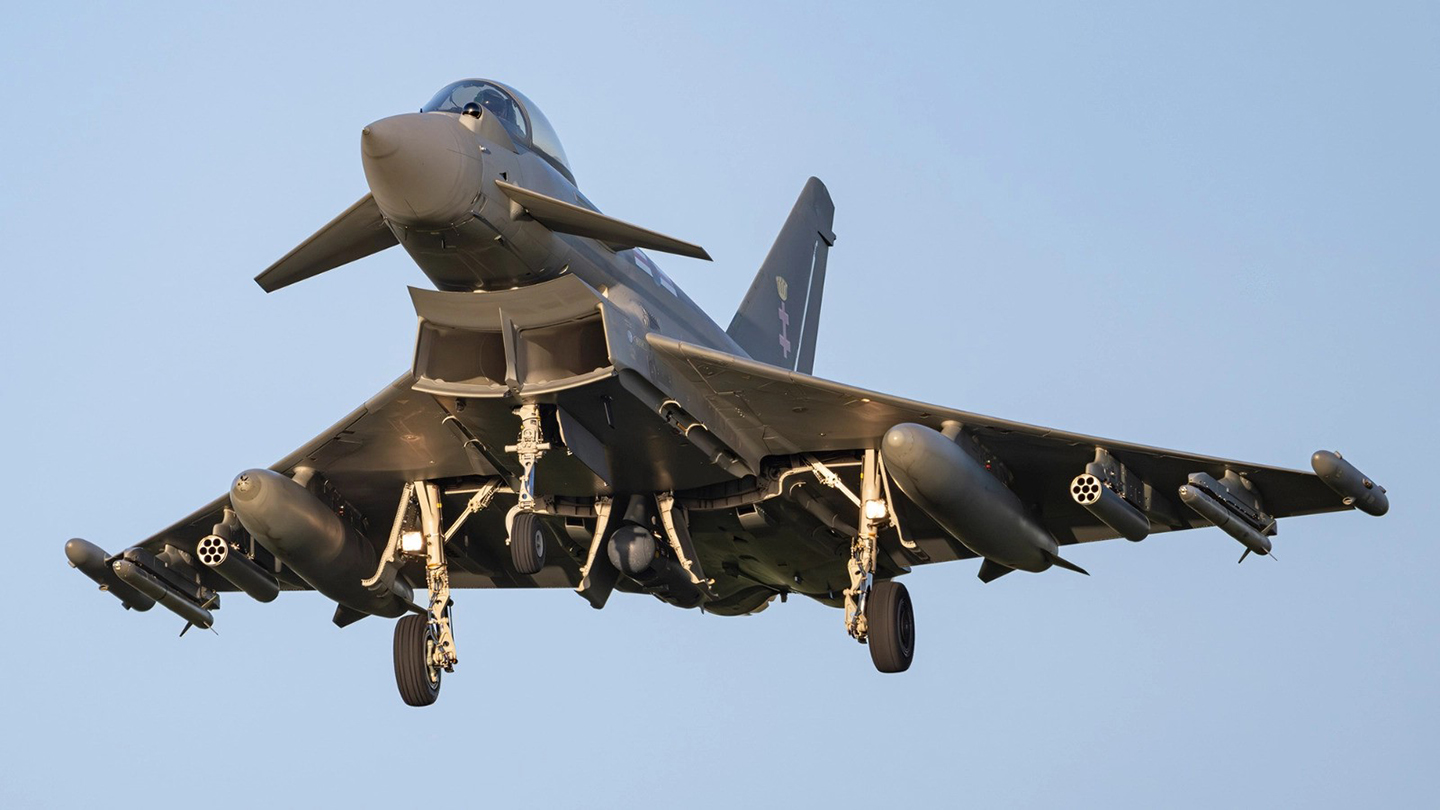
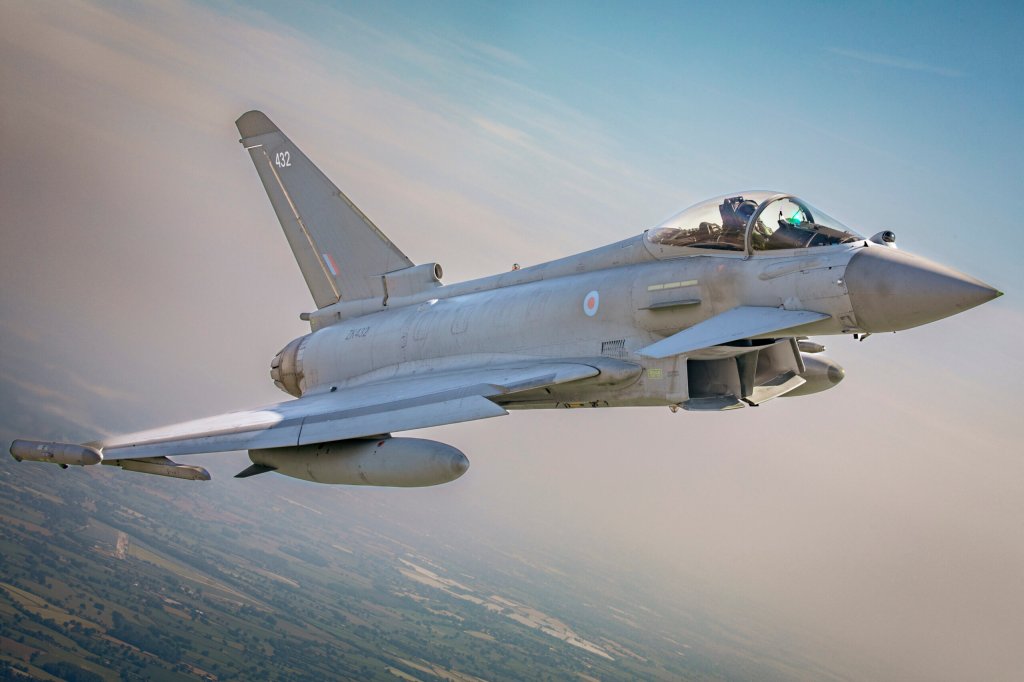
In another step toward what would be a major boost to the drone-killing capabilities of Royal Air Force (RAF) Eurofighter Typhoons, BAE Systems test fired its air-to-air optimized variant of the laser-guided 70mm Advanced Precision Kill Weapon System (APKWS) rockets from one of the jets. The move comes as the RAF seeks a lower-cost option to counter drones at a time when its Typhoons and those from Gulf nations have been tasked with fighting off Iranian one-way attack munitions during the war with Iran. This is all on the heels of continued successful use of these rockets by U.S. fighters that The War Zone was the first to document.
BAE Systems, which makes the weapon and is the British partner in the Eurofighter consortium, said it conducted the trial on an unspecified date at its flight test development center in Warton, Lancashire. The sortie involved a RAF Typhoon test and evaluation aircraft launching “a successful strike on a ground-based target at a UK military testing range,” the company said in a statement.
After hitting a ground target with the APKWS, the next step for the Typhoon will be testing them on air-to-air targets, BAE noted. A special proximity fuzed FALCO version APKWS is used for engaging aerial drones, but it can also be used against ground targets. Typhoons are already equipped with targeting pods that can laser designate aerial and ground targets for APKWS.

“This trial with the APKWS laser-guidance kit on Typhoon demonstrates a game-changing capability and a cost-effective solution that would enhance Typhoon’s already impressive range of weapons capabilities,” Richard Hamilton, Managing Director – Air Operations at BAE Systems’ Air sector, said in a statement.
The announcement of the test firing comes after BAE confirmed last September that feasibility studies for the integration of APKWS on the Typhoon were underway. At the time, BAE was investigating how it could improve the Typhoon’s counter-drone role and what it would take to make the APKWS system work on the fighters.
Speaking at the 2025 Defense and Security Equipment International (DSEI) exhibition in London, Paul Smith, BAE Systems head of Typhoon Strategy Delivery, said the company was trying to ascertain the level of risk and integration maturity Typhoon customers want when adapting the jets for the counter drone role.
The proliferation of one-way attack drones, especially in the Ukraine war and in the Middle East, has sparked a mad dash to find cheaper ways for fighters to shoot them down. As we have frequently noted, there is a huge mismatch between the cost of the drones and the interceptors used to defeat them.
For example, the latest variants of the AIM-120 Advanced Medium-Range Air-to-Air Missile (AMRAAM), which also arm the Typhoon, cost around $1 million each, while current-generation AIM-9X Sidewinders each have a price tag around $450,000. The standard short-range missiles on the Typhoon — IRIS-T and ASRAAM — are similarly expensive.
In comparison, the unit cost for the standard APKWS II guidance section has typically been between $15,000 and $20,000. The 70mm rocket motors run in the $1,000 to $2,000 range. The price point for warheads fluctuates more widely, given the breadth of options available, as you can read about more here.
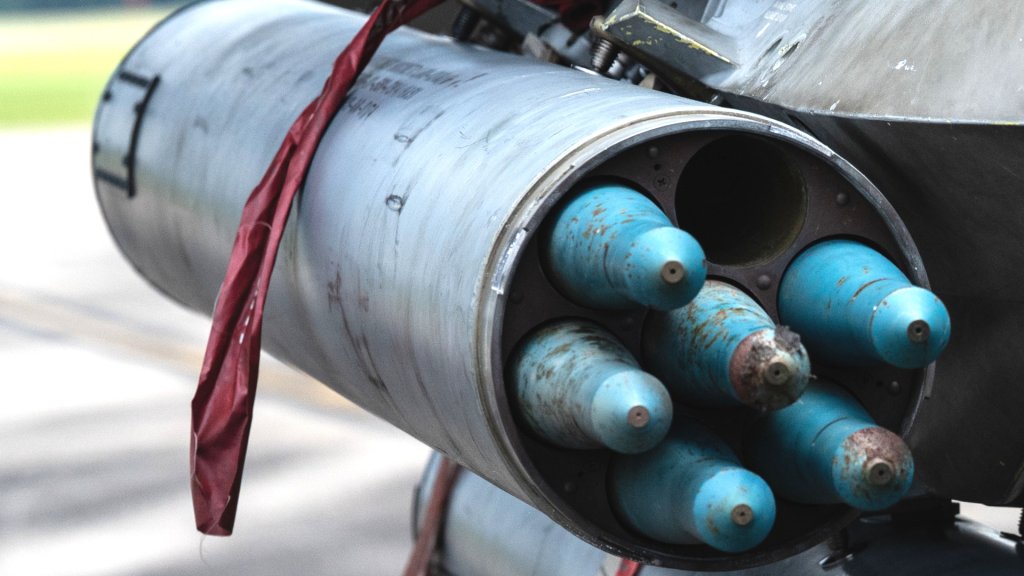
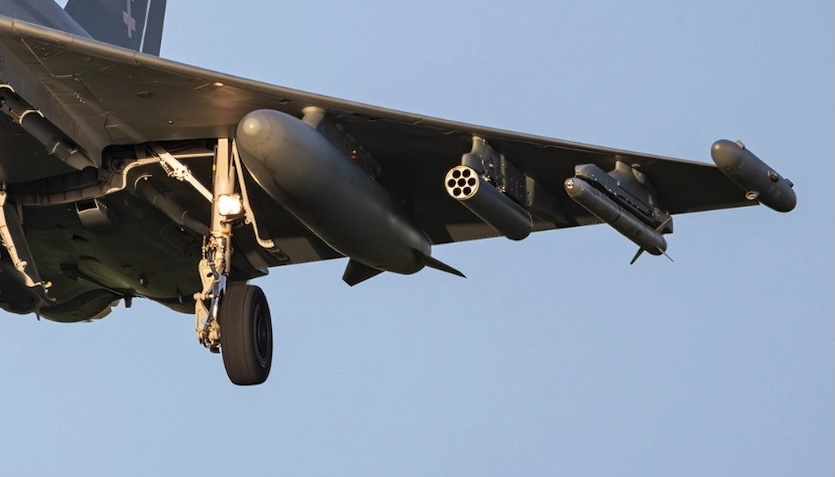
In addition to offering Eurofighters a cheaper option for countering drones, APKWS rockets would significantly increase each fighter’s magazine depth. The standard pod holds seven rockets. It would take the place of a weapons pylon that would otherwise normally be loaded with just one air-to-air missile.
An image shared by BAE shows two APKWS pods, one under each wing for a total of 14 rockets. The jet would still be able to carry six additional air-to-air missiles.
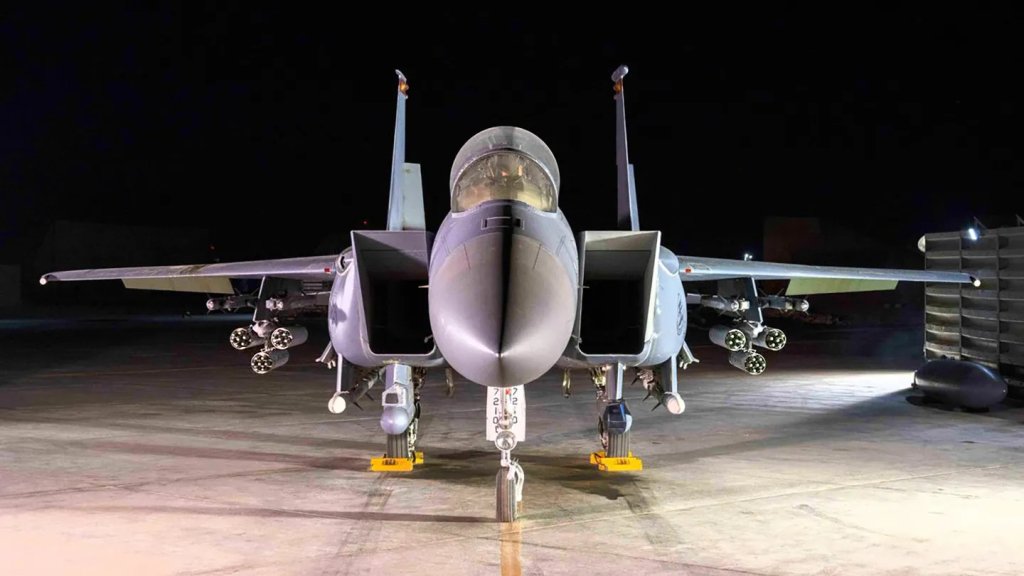
Air-to-air APKWS capability is being rapidly added to an increasing number of U.S. military aircraft. U.S. Air Force F-15E Strike Eagle, F-16C Viper, and A-10 Warthog combat jets are known to be cleared to employ the weapon. USMC’s F/A-18C/D Legacy Hornets will receive it too. As we have pointed out in the past, certain individual pylons on U.S. fighters, like the F-16C, F-15E, and A-10 can accommodate multiple pods at once. Meanwhile, Strike Eagle can notably carry up to 42 rockets in six pods on just two stations, and can still carry eight more air-to-air missiles, as can be seen below.
For the U.S., the rockets have been so successful that they are “our primary weapon against a drone,” Air Force Lt. Gen. Derek France, head of Air Forces Central (AFCENT), the service’s top command in the Middle East, told TWZ on the sidelines of the Air & Space Forces Association’s 2025 Air, Space, and Cyber Conference yesterday. “We’ve had multiple shoot-downs with it.”
The U.S. experience has played a key role in stoking RAF’s interest in the rockets, according to BAE. The Typhoon test firing will give the RAF more information about how these rockets could perform on its own fighters.
“This activity, supported by RAF, will provide valuable insights into how a low-cost precision weapon could be integrated in the aircraft, particularly counter UAS weapons, where affordable interception options are needed,” the company explained. “It also forms part of a range of capability enhancements planned for Typhoon to increase the aircraft’s potency in current and future combat air operations.”
Ukraine is also using APKWS with its F-16s in the air-to-air role as they grapple with the constant threat of long-range one-way attack munitions.
Typhoons have swatted down Iranian drones during the war with Iran. In addition to a joint RAF-Qatari unit, they are operated by Saudi Arabia, Oman and Kuwait, as well. Royal Air Force Typhoon and F-35 fighters, supported by military helicopters, shot down several Iranian drones targeting Middle Eastern countries, the United Kingdom‘s Defense Ministry (MoD) stated on X.
“UK Typhoons and F-35 jets, supported by Voyager and Royal Navy Merlin and Wildcat helicopters, have continued their defensive missions over the Eastern Mediterranean, Jordan, Bahrain, and the UAE,” the MoD added. The RAF also deployed fighters to Cyprus to protect it from drone attacks.
As they have with the U.S., APKWS rockets could give all these Typhoon operators a cheaper option for countering drones compared to their current loadouts and greater magazine depth, allowing more engagements per sortie.
It is unclear how Germany, Italy and Spain – the other three Eurofighter partner nations that are responsible for developing, building, and sustaining the aircraft – view adding APKWS to its fighters. However, those discussions are apparently underway.
At the Paris Air Show last June, Eurofighter CEO Jorge Tamarit Degenhardt confirmed that the counter-drone mission was one of growing importance for Typhoon customers.
Since then, as we have seen in Ukraine and especially in the Middle East where Iran launched hundreds of drones prior to a ceasefire enacted yesterday, the need for affordable counter-drone systems is only going to increase.
Other air arms in Europe are following a similar path, including testing similar, locally produced laser-guided counter-drone rocket systems on their fighters.
With all this in mind, there is little doubt that laser-guided rockets adapted for the air-to-air role are quickly becoming the counter-drone weapon of choice for fighter inventories, a tactical shift that is likely to spread around the globe.
Contact the author: howard@thewarzone.com
Loading comments…
Comments couldn’t be loaded. Please refresh the page.