
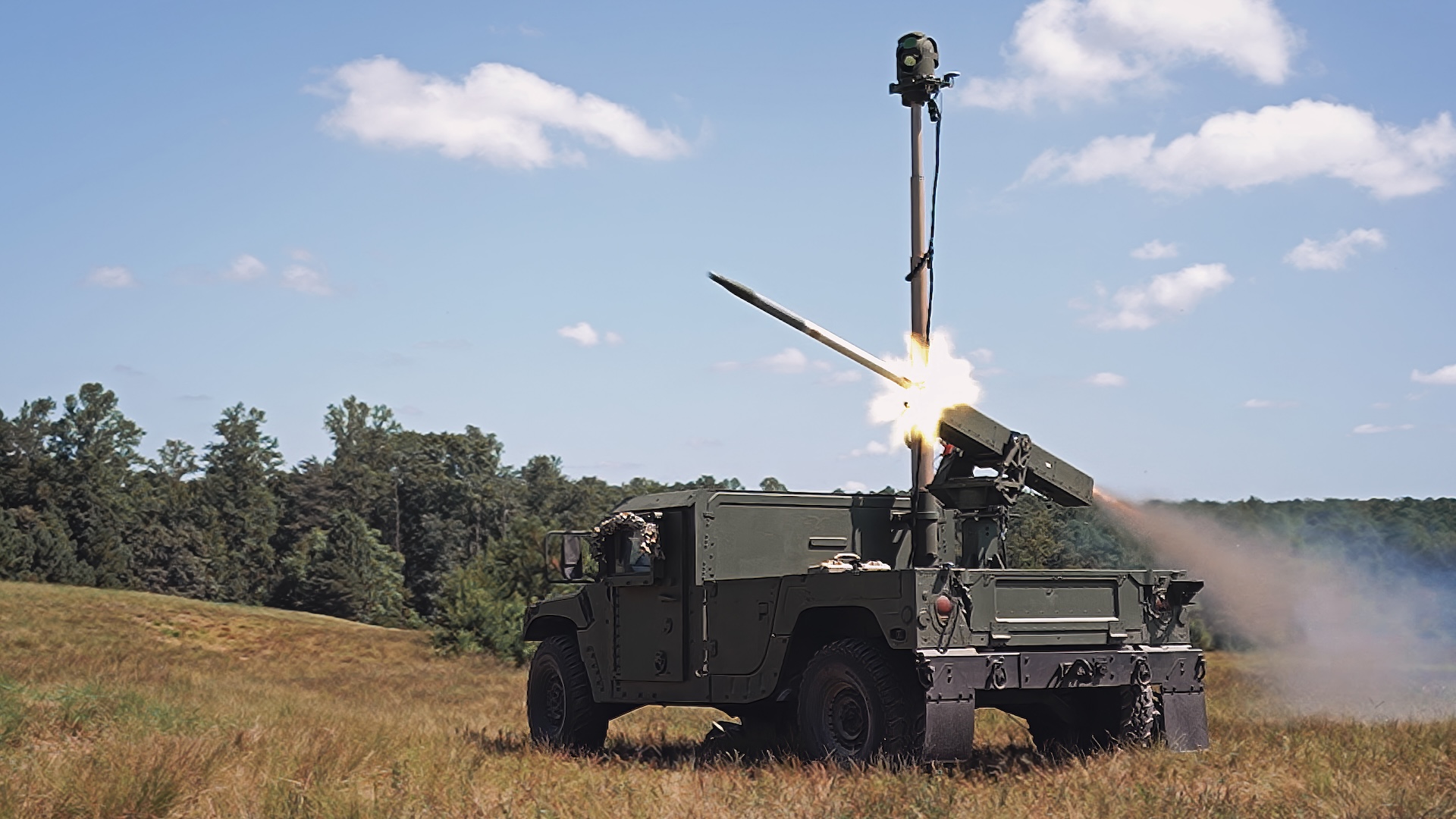
L3Harris has unveiled a roadmap for the further development of its VAMPIRE counter-drone system, a version of which has been delivered to Ukraine, using laser-guided 70mm rockets as effectors and mounted on Humvees. However, in the planned new family of systems based on VAMPIRE, the original Advanced Precision Kill Weapon System II (APKWS II) rockets will not necessarily be central, with options for other types of effectors, combined with a new AI-driven sensor and command-and-control backend.
While the baseline VAMPIRE (which stands for Vehicle-Agnostic Modular Palletized ISR Rocket Equipment) is a land-based system, the expanded family of systems includes additional specialized variants for maritime, airborne, and electronic warfare operations. Once again, the primary role remains defeating drones — although it should be noted that Ukraine has also used its VAMPIRE systems to attack targets on the ground, too. Potentially, the system has also been used to down Russian cruise missiles, as well.

VAMPIRE was originally supplied to Ukraine to meet an urgent counter-UAS requirement and was fielded in less than eight months, entering Ukrainian service in 2023.
“VAMPIRE users have successfully shot down hundreds of enemy drones,” explained Jon Rambeau, president of L3Harris Integrated Mission Systems, in a company press release, referring to its Ukrainian service. “Compared to traditional missile systems, VAMPIRE greatly reduces the cost per effect to defend against drone attacks.” The issue of cost-per-engagement has long been a major discussion point when it comes to shooting down drones, with Ukraine having relied heavily on surface-to-air missile systems, which use very expensive effectors.
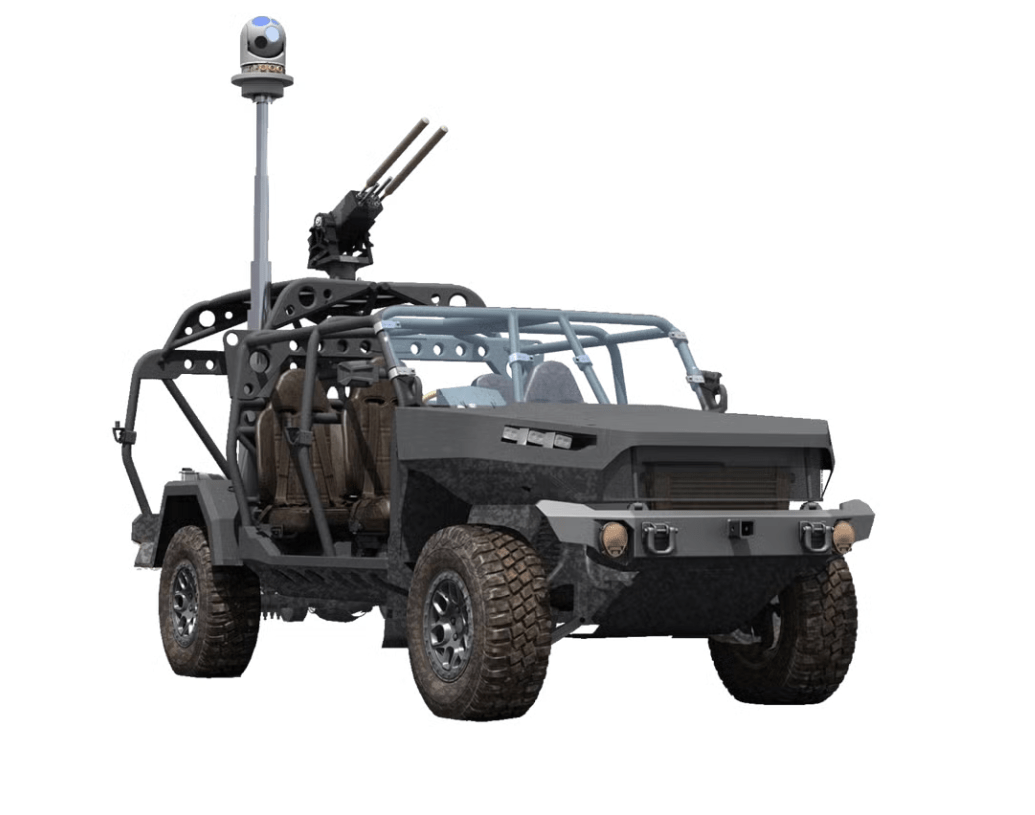
The 14 Ukrainian VAMPIRE systems are mounted on Humvees, but the platform-agnostic nature of the system means it can be installed on most vehicles with a cargo bed.

In renderings that L3Harris has released showing the new VAMPIRE family, the systems are mounted on the M1301 Infantry Squad Vehicle (ISV), but other vehicle options include the Joint Light Tactical Vehicle (JLTV), as used by the U.S. Marine Corps, and the U.S. Army’s Small Multipurpose Equipment Transport (SMET), an uncrewed ground vehicle. One of the ISV-mounted options is the VAMPIRE Stalker XR variant, with a launcher that carries 12 effectors, rather than the standard four, giving a significant increase in firepower.
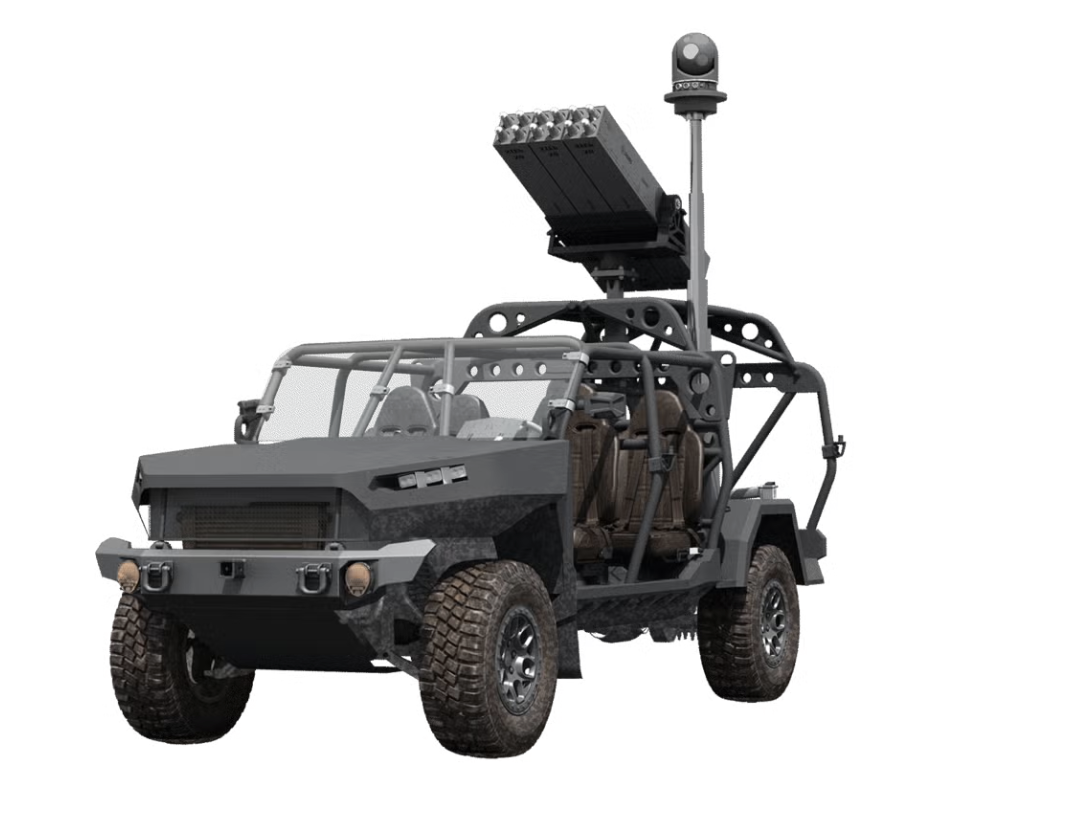
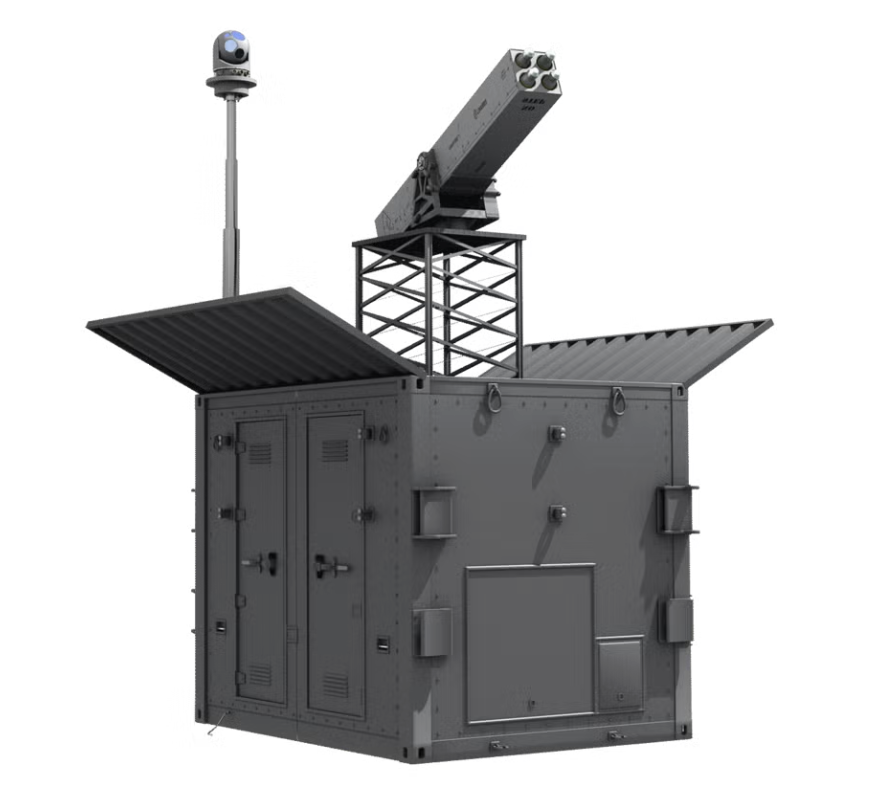
Aside from wheeled vehicles, VAMPIRE is shown mounted in a standard container, known as VAMPIRE CASKET (Containerized Anti-drone System with Kinetic Effects Turret). Notably, the U.S. Army has already been testing a containerized counter-drone system that is very similar in form and function to VAMPIRE CASKET.
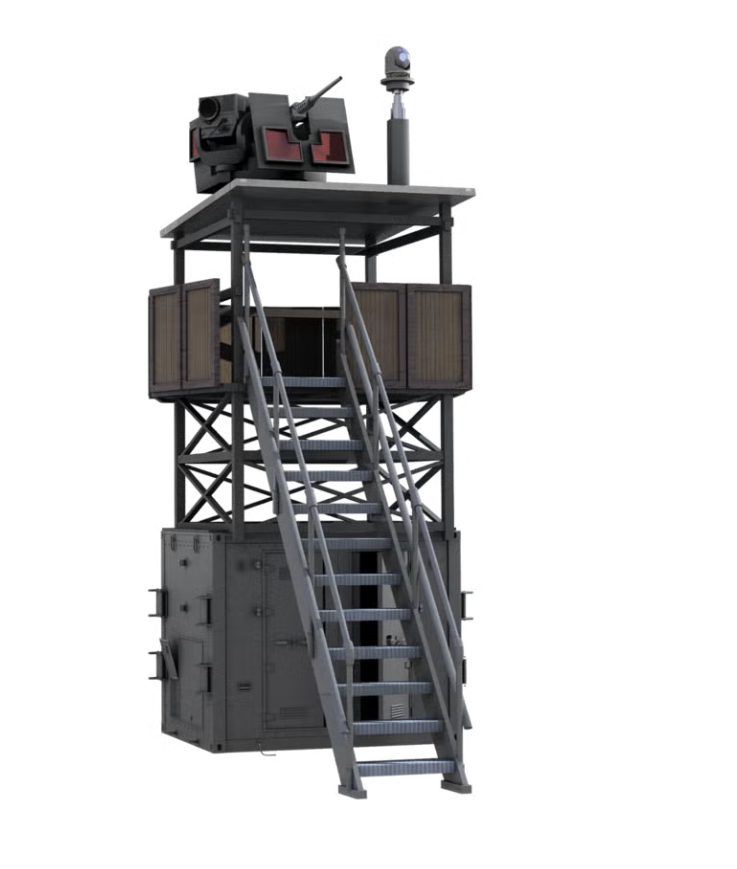
Other variations see the system mounted atop a static tower for point defense of installations as VAMPIRE BAT (Base Anti-drone Turret). In this application, there are no rockets, but kinetic effects are provided by automatic weapons, which are complemented by non-kinetic effects. L3Harris says these could eventually include a high-power microwave (HPM) directed-energy weapon, something that the company is developing in partnership with Epirus. As a directed-energy weapon, a broader category that also includes lasers, an HPM system tackles its target without the use of a projectile. Instead, high-frequency radio waves disrupt or damage critical electronic components inside the drones, leading them to crash or malfunction.
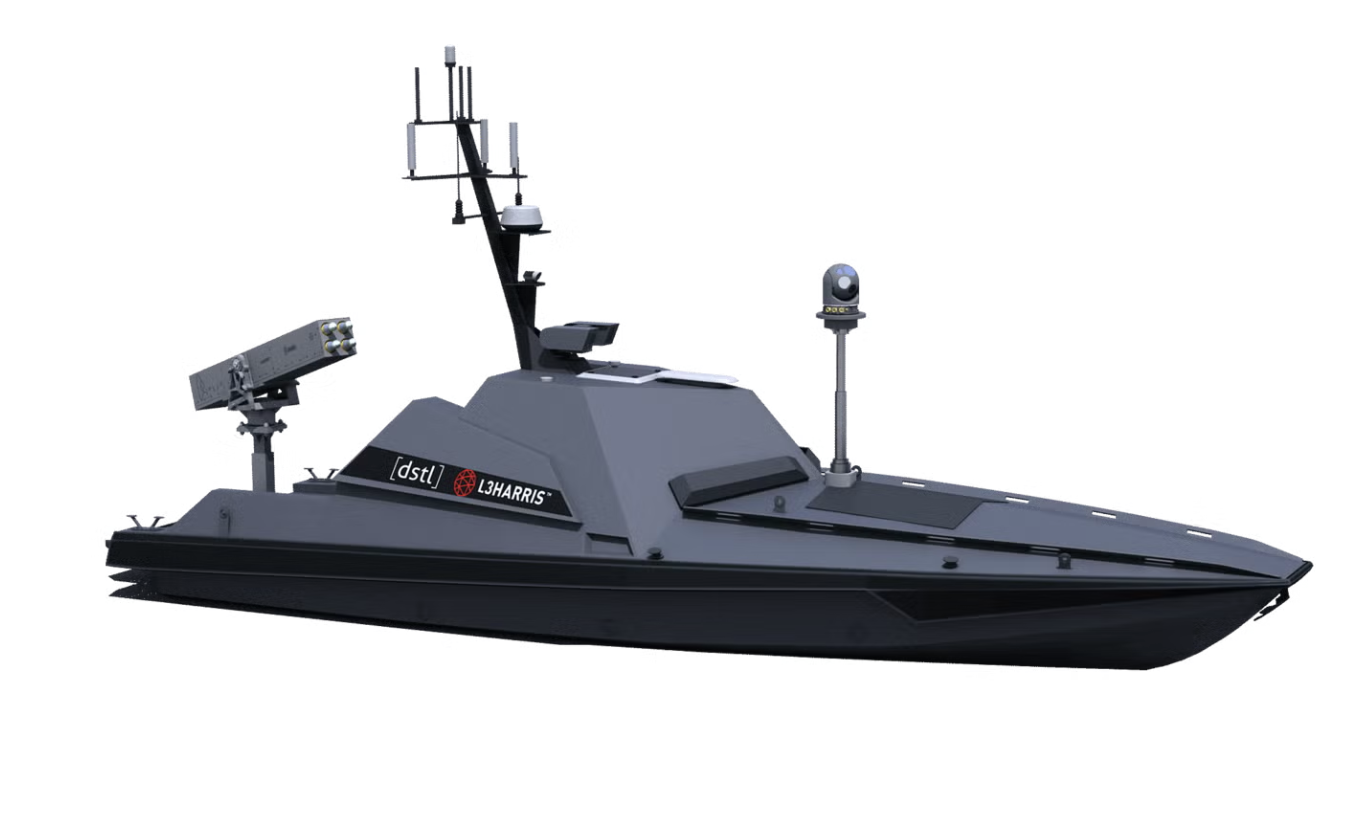
Finally, as Black Wake, the system is mounted aboard an uncrewed surface vessel (USV, or ‘drone boat’). The drone boat in question is the Maritime Autonomy Surface Testbed (MAST) 13, a 41-foot high-speed vessel that uses L3Harris’ ASView proprietary autonomous control system. In this instance, the rocket launcher is mounted at the rear, with the telescopic mast for the sensor turret at the front, in a concept that is loosely reminiscent of rocket-armed USVs developed by Ukraine.
L3Harris is also offering the VAMPIRE Dead Wing as an airborne counter-drone system, which integrates elements of the VAMPIRE on an AH-64 Apache attack helicopter. The APKWS II is already a proven air-launched weapon and has meanwhile achieved notable combat success as an air-to-air anti-drone weapon, albeit launched from fighter jets, rather than helicopters. L3Harris has said that an Apache adapted for Dead Wing would not require Wescam’s MX series sensors, but it might lose some of its performance if these were not fitted. Israel has been using the Apache in an anti-drone role for years, and it is something the U.S. Army is increasingly interested in, using AGM-114 Hellfire missiles, which are traditionally air-to-ground weapons, as well as the 30mm gun.

Compared to the baseline system, the new family also adds undisclosed new electro-optical/infrared sensor/laser designator capabilities from Wescam’s MX series, which can be elevated via the existing telescoping mast. The baseline version of the VAMPIRE, as provided to Ukraine, already uses a Wescam turret in the form of the MX-RSTA.
As well as rockets, the system can support electronic warfare and non-kinetic effectors, which provide an even cheaper way of destroying or disabling drones. At least one projected version of the system, VAMPIRE Killcode, does away with the kinetic effectors entirely and defeats drones using an electronic warfare system.
The armament for the baseline Vampire is the APKWS II, which takes an unguided 70mm rocket and turns it into a precision weapon via a laser seeker guidance section, a control unit that homes in on the spot generated by a laser designator, and a proximity fuze. They can be extremely accurate and cause minimal collateral damage. Each APKWS II round costs roughly between $20,000 and $30,000 all-included (rocket motor, warhead, and guidance kit).
Making the VAMPIRE system compatible with alternative precision weapons as kinetic effectors is also a very significant development, opening up the possibility of the end user integrating weapons already in their inventories. So far, L3Harris hasn’t said what other effectors have been integrated, with Tom Kirkland, vice president and general manager of the targeting and sensor systems sector at L3Harris, stating that “a majority of our customers, like the price-per-kill or price-per-effector of APKWS.”
However, the introduction of other effectors has already started to happen with the baseline VAMPIRE. As TWZ reported earlier this week, a 70mm laser-guided rocket from the European Thales defense contractor has been integrated on the Ukrainian VAMPIRE as an alternative to APKWS II. The Thales rocket also features a specialized airburst warhead that disperses a cloud of thousands of steel pellets, increasing the probability of a kill.

In Ukrainian hands, it appears that the VAMPIRE is primarily being used to destroy Shahed-series long-range one-way attack drones. However, the latest VAMPIRE family also includes artificial intelligence and machine learning, which should make it better able to detect, engage, and defeat “small and elusive unmanned threats,” such as first-person-view (FPV) drones.
Overall, L3Harris says the new-look VAMPIRE family is optimized to target drones from Groups 1 to 3. The smallest of these weigh less than 20 pounds, fly below 1,200 feet, and operate at speeds of less than 100 knots. The higher tier, Group 3, consists of drones weighing less than 1,320 pounds that can fly at altitudes up to 18,000 feet and that have top speeds of 250 knots or less.
A Ukrainian Navy video, seen in the social media post below, shows a VAMPIRE system in use somewhere in the country’s southwestern Odesa region:
Already, the baseline VAMPIRE system offers operators a lot of advantages, including its easy adaptability to different platforms, simplicity, large potential supply of ammunition, and fairly advanced precision capabilities. With the expanded VAMPIRE family, all these attributes are built upon and enhanced.

The manufacturer has also clearly identified the potential to win orders in an area that’s of particular interest right now. Accordingly, it has expanded its production capacity, meaning it will be able to build 20-40 systems per month, if required.
As well as the lessons of the drone war in Ukraine, there has been the long-running campaign to down Houthi drones in the Middle East. Now, incidents in Poland and elsewhere in Europe, as well as in the United States, are demonstrating that the drone threat can also pop up in areas other than theaters of war.
While the VAMPIRE/APKWS II combination has now been proven in combat in Ukraine in ground-based form, future, improved iterations may well see the system migrating to more diverse platforms, not only land vehicles, but also in maritime, air-launched, and containerized applications.
Contact the author: thomas@thewarzone.com
Loading comments…
Comments couldn’t be loaded. Please refresh the page.