
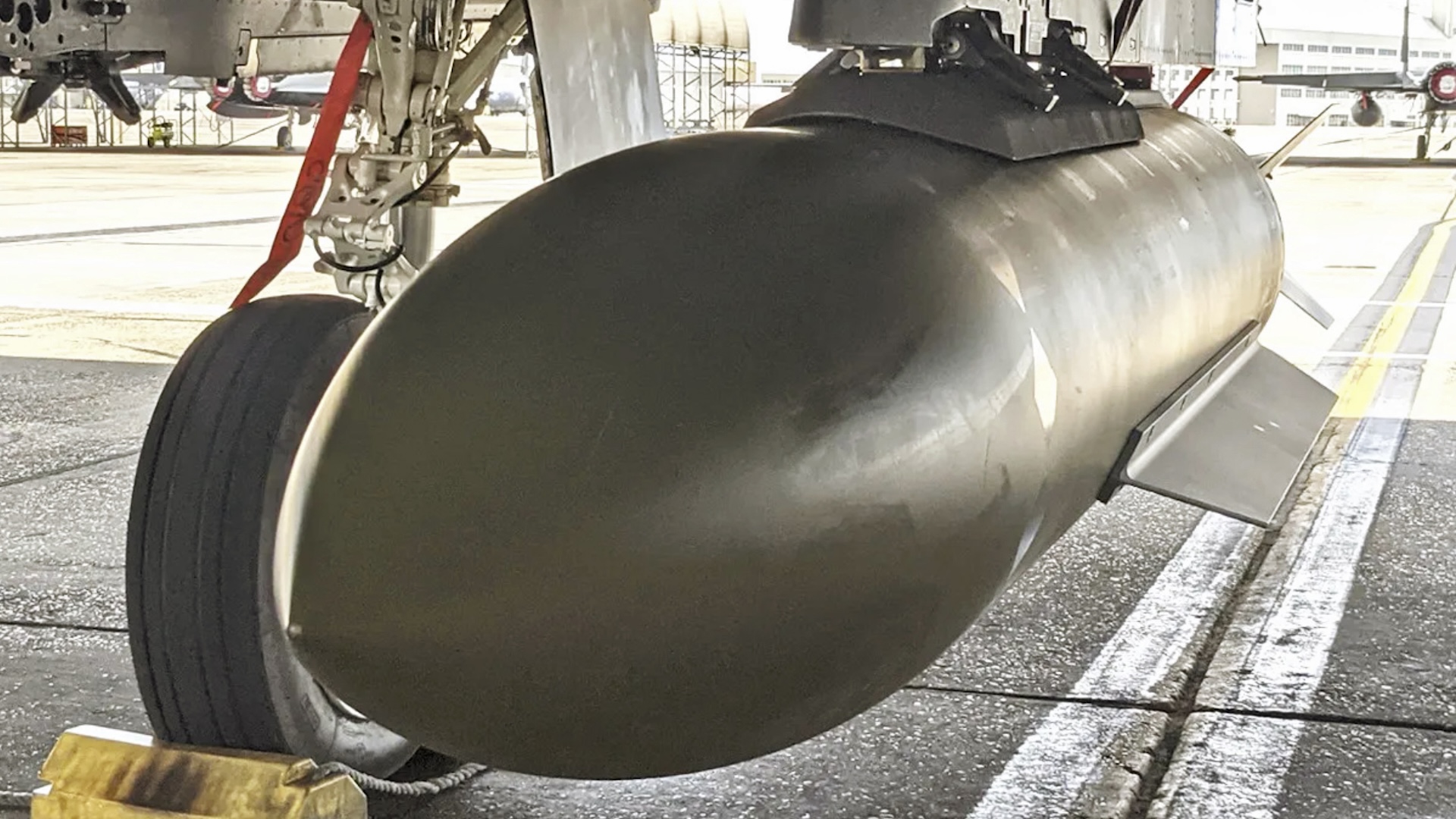
The U.S. Air Force is now reportedly dropping its newest bunker-buster bomb, the 5,000-pound class GBU-72/B, on targets in Iran. The bombs are said to have been used in strikes on hardened Iranian anti-ship cruise missile sites along the highly strategic Strait of Hormuz overnight.
There are also reports that this is the first time GBU-72/Bs have been used in combat, but it is not clear if this is the case.
“Hours ago, U.S. forces successfully employed multiple 5,000-pound deep penetrator munitions on hardened Iranian missile sites along Iran’s coastline near the Strait of Hormuz,” U.S. Central Command (CENTCOM) wrote in a post on X, which did not name the munitions in question, last night. “The Iranian anti-ship cruise missiles in these sites posed a risk to international shipping in the strait.”
“US official confirms this was the GBU-72 Advanced 5K Penetrator,” CNN‘s Haley Britzky subsequently wrote on X. Fox News has also now reported the use of GBU-72/Bs in last night’s strikes.
Whether or not the GBU-72/B has been employed in combat previously is unclear. In 2024, CBS News reported that the Air Force had employed the bombs in strikes on an underground facility belonging to Iranian-backed Houthi militants in Yemen, citing unnamed officials. Fox News also reported again just today that the A5K’s first use had come during previous strikes on the Houthis.
There have also been reports in the past that Israel has at least sought to acquire GBU-72/B, but whether any have been delivered to that country is unknown. It is also still not known what munitions were used in strikes that left three very large and precise holes on the top of a site long linked to Iran’s nuclear program last week. The Israel Defense Forces (IDF) has said they struck that facility, but that does not automatically mean that U.S. forces did not do so, as well.
When reached by TWZ, CENTCOM declined to comment on the specific munitions used in last night’s strikes along the Strait of Hormuz.
The GBU-72/B was developed to replace the older GBU-28/B, which first entered service in 1991. The GBU-28/B is another 5,000-pound class bunker buster, and it is unclear to what degree it remains in U.S. inventory.
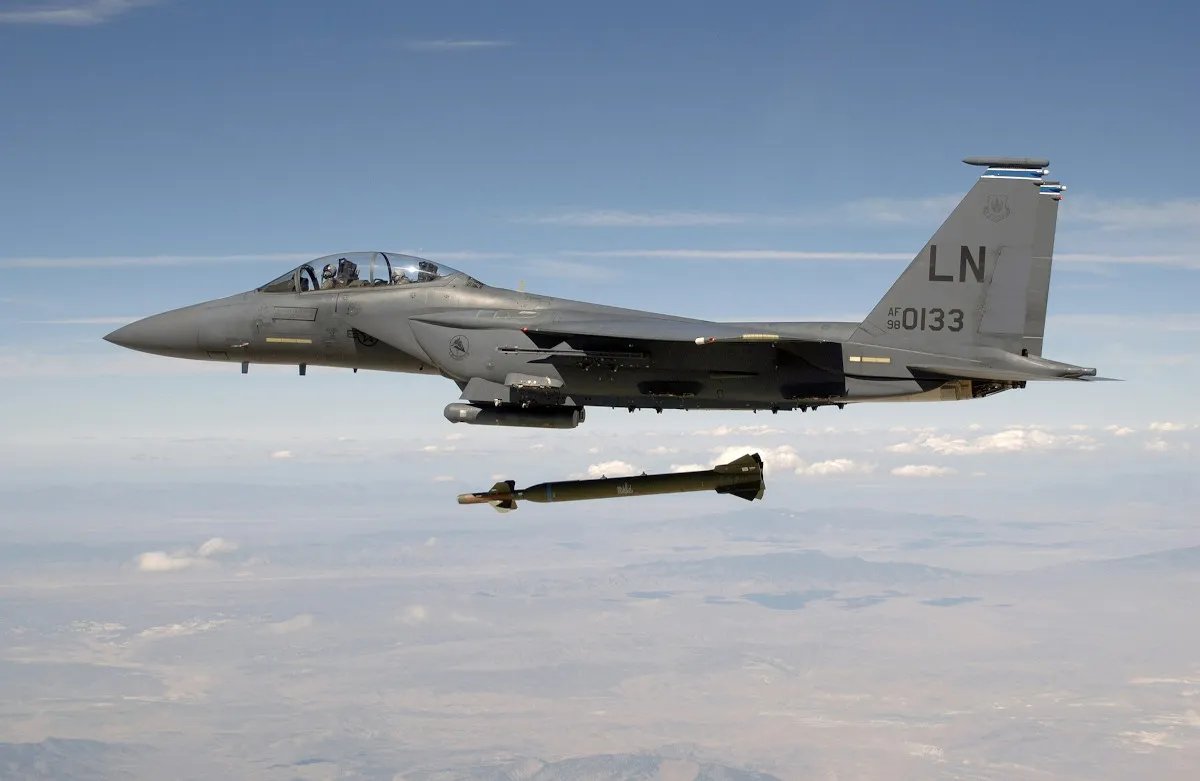
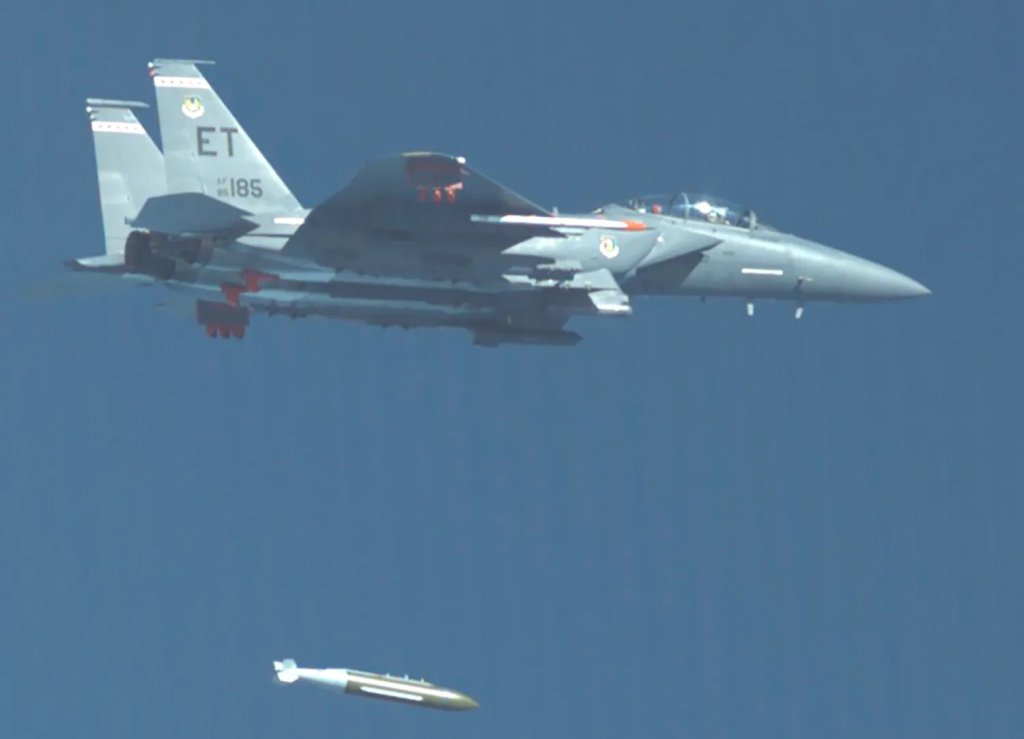
What aircraft are currently cleared to employ the GBU-72/B operationally is also not clear. In 2021, the Air Force announced the successful release of an A5K from an F-15E Strike Eagle in testing. In 2024, pictures emerged of a B-1 bomber carrying one of the bombs on an external pylon under the forward fuselage in another apparent test. The Air Force has also raised the possibility of integrating the GBU-72/B onto the B-2 bomber in the past. F-15Es, B-1s, and B-2s are among the aircraft the U.S. military has been using to carry out strikes on targets in Iran.
In terms of the bomb itself, the A5K combines a BLU-138/B penetrating warhead with a tail kit containing a GPS-assisted inertial navigation system (INS) guidance system. The tail kit is a variant of the one used on 2,000-pound class Joint Direct Attack Munition (JDAM) precision guided bombs. Markings seen on live BLU-138/Bs in imagery the Air Force has previously released show that each warhead weighs around 4,422 pounds, with approximately 1,066.8 pounds of that being a combination of PBXN-109 and AFX-757 explosives. As an aside, those are the same two types of explosives used in the much larger 30,000-pound class BLU-127/B warhead for the GBU-57/B Massive Ordnance Penetrator (MOP) bunker buster bomb.
“With enhanced survivability, increased lethality, smart fuzing and utilization of fielded JDAM Navigation tailkits, the GBU-72 significantly improved performance reducing the number of weapons required to achieve a kill at lower AUR [all-up-round] cost,” according to Air Force budget documents. “A5K will replace the GBU-28.”
While the precise capabilities of the Air Force’s various bunker-busting munitions are a closely guarded secret, the original GBU-28/B bomb reportedly had the ability to penetrate through more than 150 feet of earth and at least 15 feet of reinforced concrete. In some cases, multiple bunker busters can also be dropped on the same aim point in succession to help burrow deeper down to the desired depth.
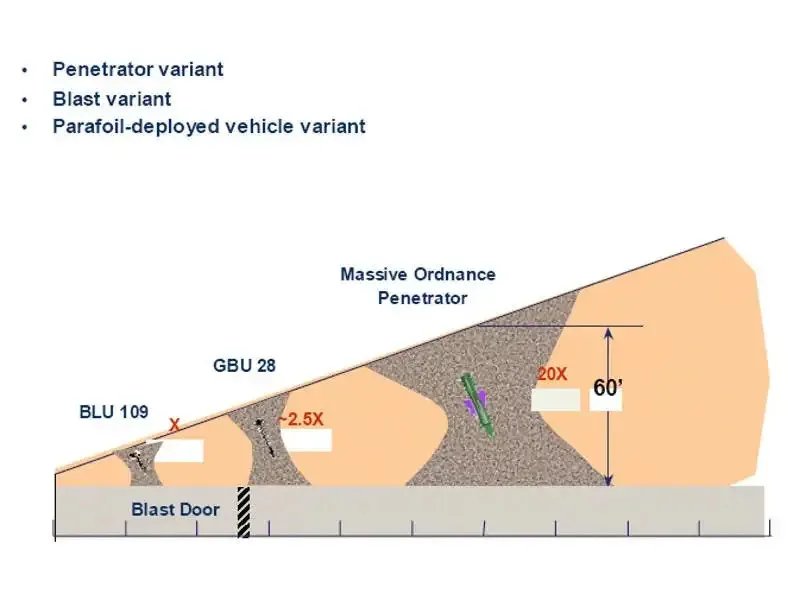
In addition, the GBU-72/B, like the GBU-28/B before it, offers a conventional bunker-buster capability that sits between bombs that use 2,000-pound class BLU-109/B warheads and the MOP. GBU-31/B JDAMs with BLU-109 warheads are already known to be in very active use in strikes on targets in Iran.
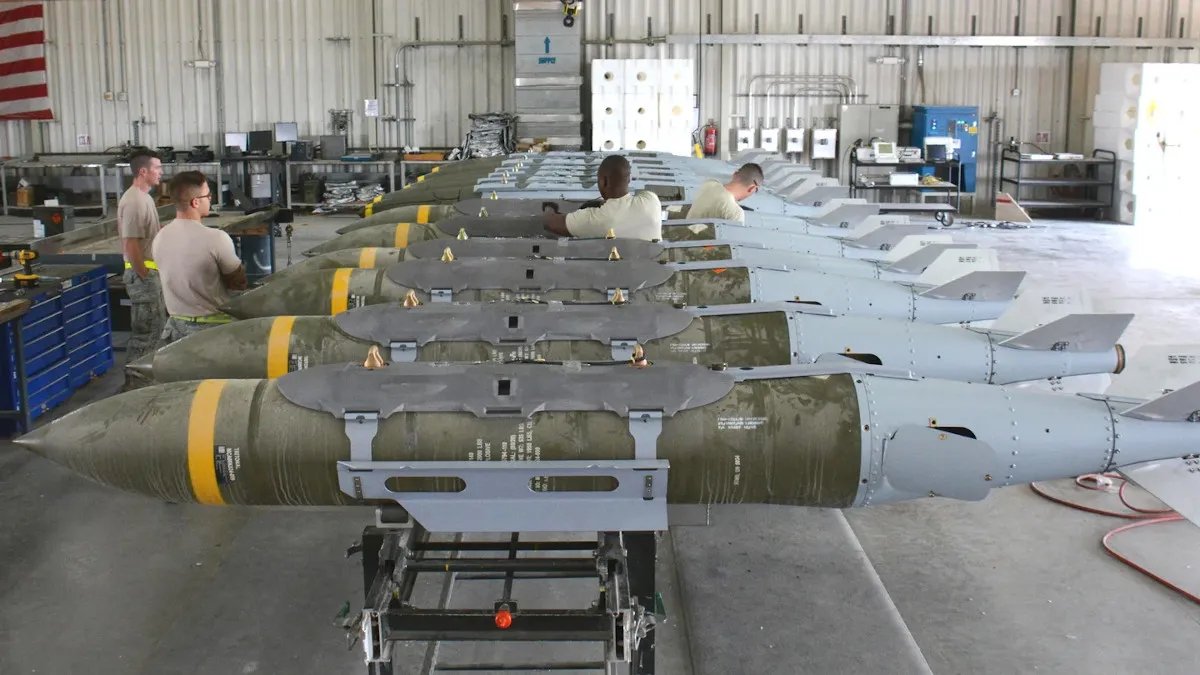
With all this in mind, the GBU-72/B does offer the U.S. military a way to get after deeply buried or otherwise hardened targets in Iran (and anywhere else) that are beyond the reach of the BLU-109/B without having to use GBU-57/Bs. The MOP inventory is understood to be relatively small and largely reserved for use against very high-priority targets. Using GBU-72/Bs could also help ensure the destruction of a target, and do so with a smaller number of total munitions, compared to a strike employing 2,000-pound-class bunker busters.
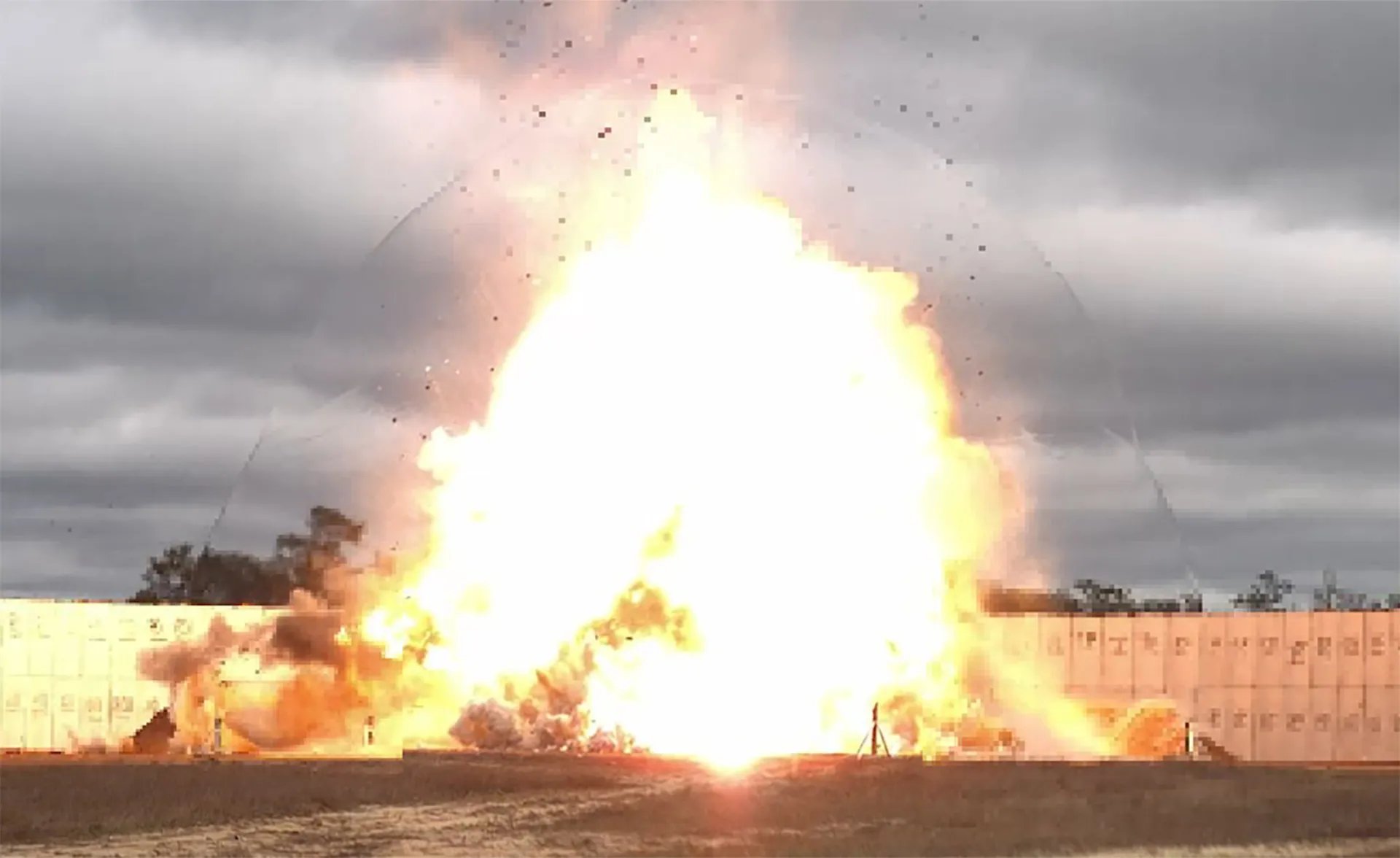
Regardless of the munitions used, U.S. strikes targeting Iranian anti-ship cruise missile sites on the edge of the Strait of Hormuz speak to efforts now to reopen that critical waterway to regular maritime traffic. So far, we have not seen any clear evidence of Iran using its arsenal of thousands of anti-ship cruise missiles, which could turn the Strait into a super weapons engagement zone. Many of these missiles can also be launched from the backs of trucks that are hard to distinguish from civilian types.
Iranian aerial drone, missile, and uncrewed boat attacks, as well as the threat of naval mines, have already brought movement through the Strait to a virtual standstill. A small number of commercial vessels have continued making the transit, but very likely only with the approval of the regime in Tehran. This is already having massive negative impacts on global energy markets, as well as the overall economies of Gulf Arab States.
The U.S. military has been exploring options for escorting convoys of commercial ships through the Strait, but this would still come with significant risks, as TWZ has explored in the past. U.S. President Donald Trump had initially appealed to allies and partners for help, but said yesterday that no assistance was necessary after receiving public rebukes from several countries.
“I wonder what would happen if we ‘finished off’ what’s left of the Iranian Terror State, and let the Countries that use it, we don’t, be responsible for the so called ‘Straight?’ [sic],” Trump wrote today in a post on his Truth Social site. “That would get some of our non-responsive ‘Allies’ in gear, and fast!!!”
A further uptick in strikes on Iranian targets along the Strait of Hormuz, including deeply buried and hardened sites that could necessitate the use of GBU-72/Bs, may now be on the horizon.
Contact the author: thomas@thewarzone.com
Loading comments…
Comments couldn’t be loaded. Please refresh the page.