
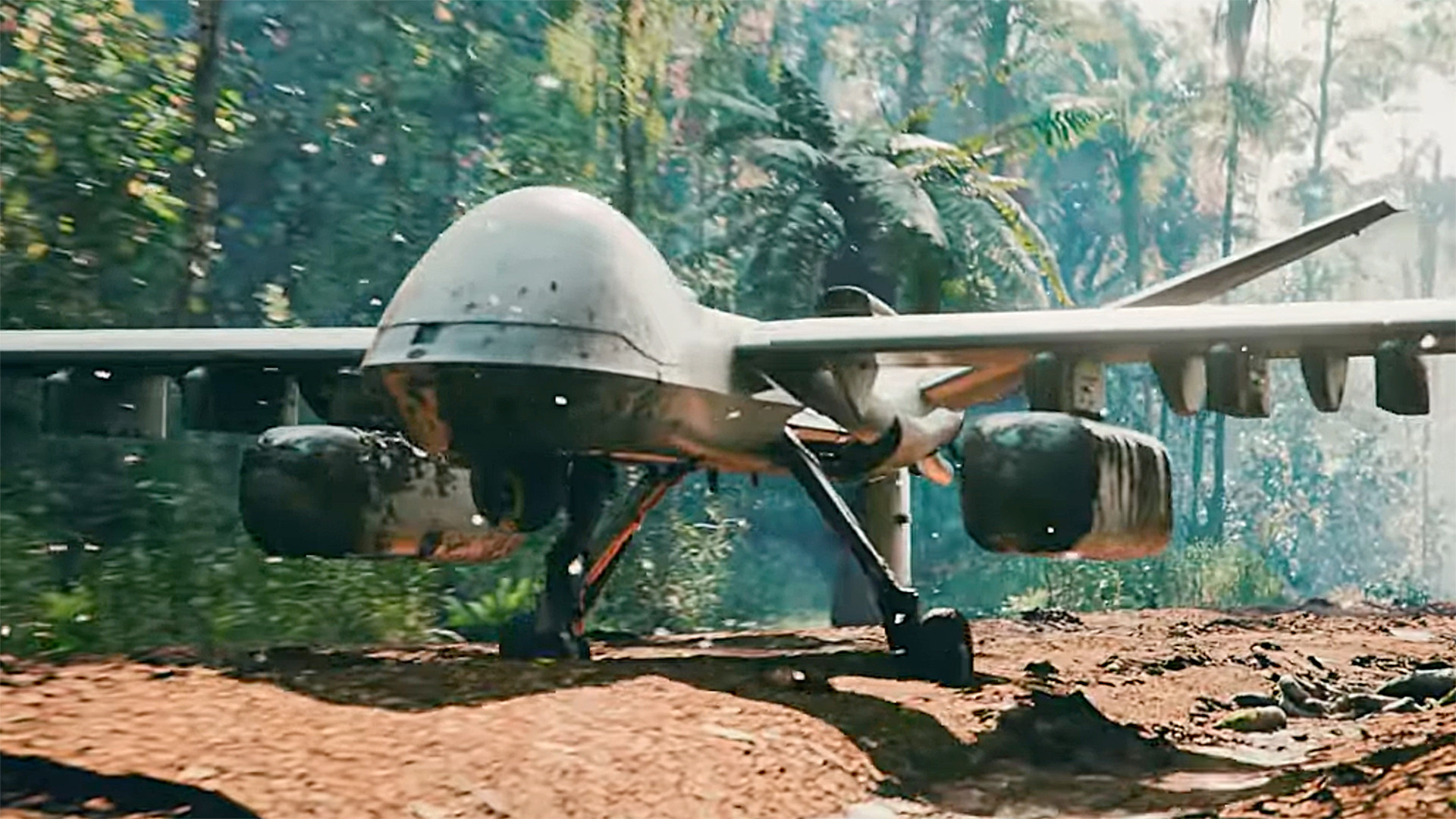
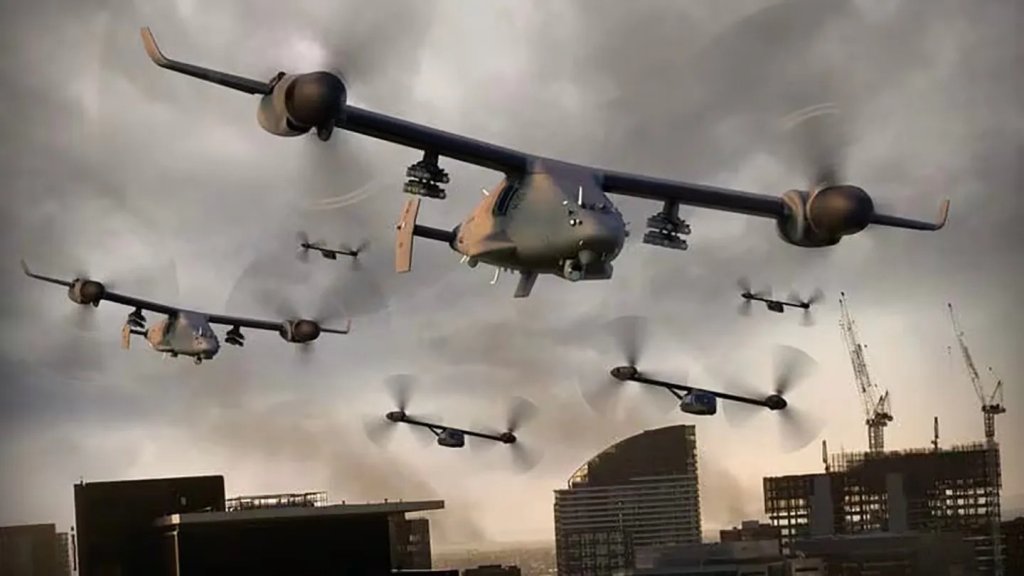
General Atomics is calling attention to a new mission for its Mojave short takeoff and landing (STOL) drone: hunting uncrewed aerial threats with laser-guided Advanced Precision Kill Weapon System II (APKWS II) rockets. The company put a heavy focus on this planned capability in a larger vision for Mojave that rolled out today.
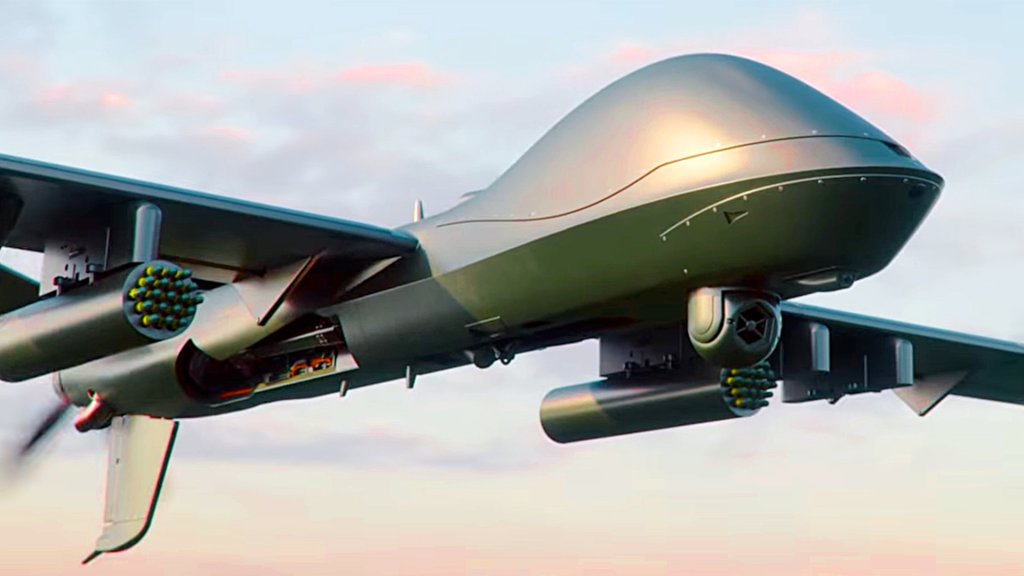
Mojave is also envisioned as launching its own kamikaze drones, escorting friendly helicopters, spotting targets for artillery, and even transporting small cargoes. With its short and rough field capabilities, the drone could also push these capabilities far forward, including to island outposts during a future conflict in the Pacific. This was all showcased in a new computer-generated video, seen below. General Atomics’ Aeronautical Systems, Inc. division (GA-ASI) showed the video first today at the Army Aviation Association of America’s (AAAA) 2026 Warfighting Summit, at which TWZ is in attendance.

General Atomics is also now officially referring to the drone at the center of the video as Mojave STOL. The company has previously used the name Gray Eagle STOL to differentiate planned production models from the already flying Mojave demonstrator, which first broke cover in 2021. Mojave is derived from the MQ-1C Gray Eagle, which itself leveraged the preceding MQ-1 Predator and MQ-9 Reaper designs.
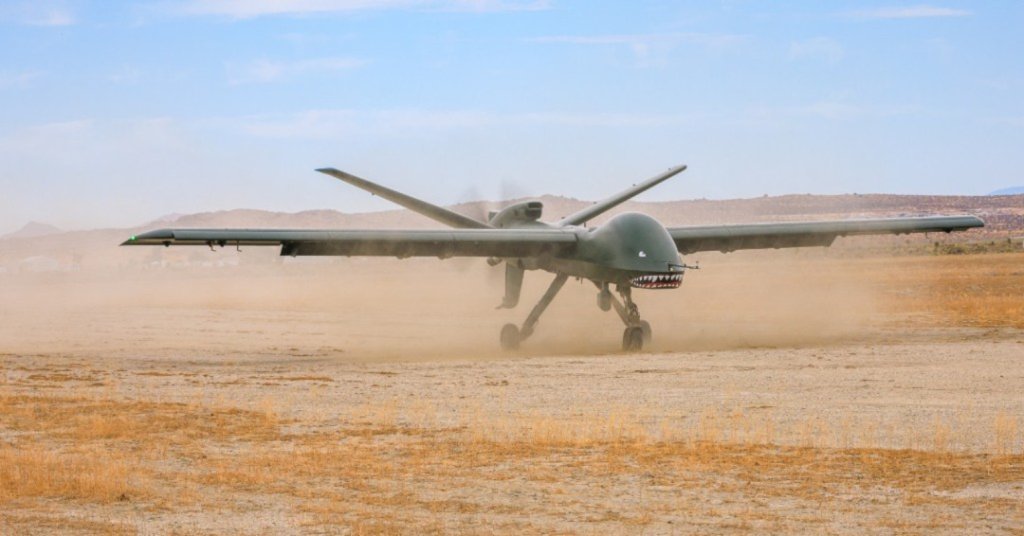
“General Atomics is all-in on providing the best STOL solution for the Army and U.S. allies worldwide,” General Atomics spokesperson C. Mark Brinkley told TWZ. “Everything you see is a capability we can do right now, things already demonstrated on a real, flying aircraft.”
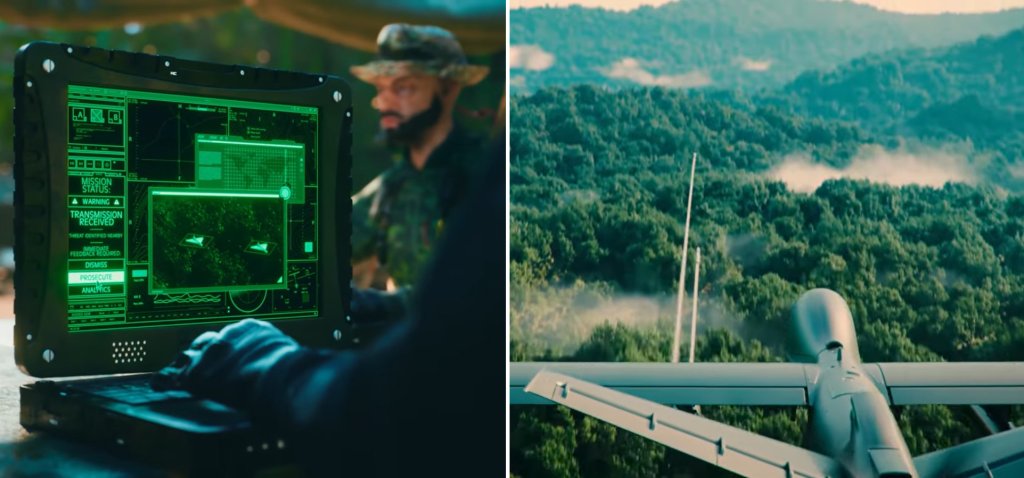
The new video, set “somewhere in the Western Pacific,” focuses first on the rocket-armed drone hunter mission. A Mojave STOL is depicted using an EagleEye multi-mode radar, as well as its infrared sensor in the turret under its nose, to spot and track a pair of kamikaze drones clearly modeled on the Iranian-designed Shahed-136 pattern. EagleEye is another General Atomics product, which was first unveiled in 2022 and has a demonstrated air-to-air target acquisition capability. It also has surface search, synthetic aperture radar (SAR) imaging, and ground moving target indicator (GMTI) modes.
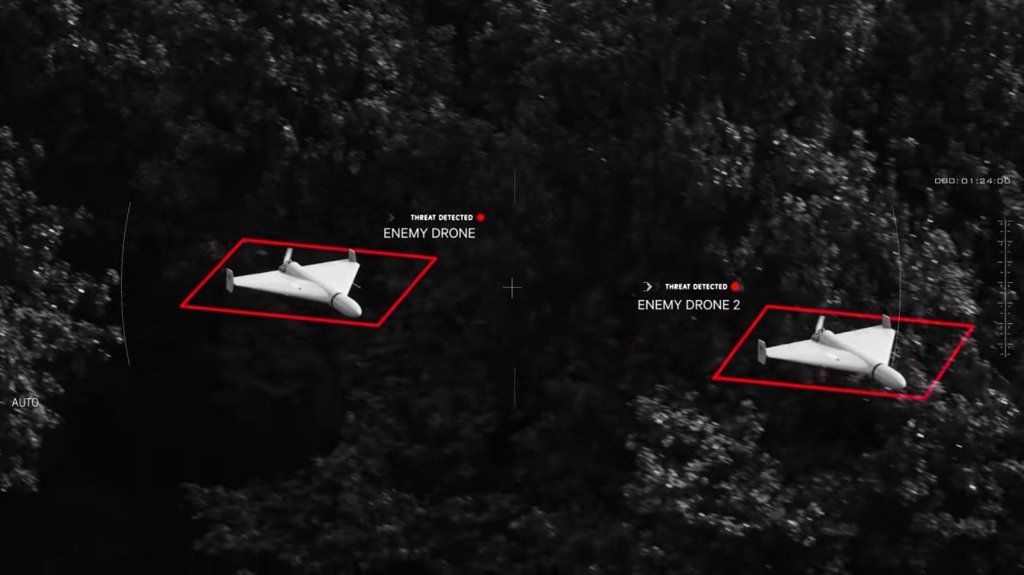
The drone is then shown alerting a forward U.S. outpost to these approaching uncrewed aerial threats via satellite. Using a ruggedized laptop, an operator on the ground then orders the kamikaze drones to be destroyed. A Mojave carrying two 19-shot 70mm rocket pods, one under each wing, then swoops in and shoots them down. Afterward, it is also depicted being rearmed at a very rough-looking, unimproved jungle airstrip.
“We’ve shown APKWS [BAE Systems’ 70mm Advanced Precision Kill Weapon System II laser-guided rocket] mounted to Mojave in a static display at some of the recent U.S. Army shows where Mojave STOL was present,” General Atomics’ Brinkley told us. “Integrating new weapons is a multi-part process. Fit tests, weight considerations, captive carry for airworthiness, software, [and] actual live-fire.”
“For Mojave STOL and other GA-ASI aircraft, we’re inside that process now with APKWS,” he added. “It’s flying and firing soon, [in] weeks not months.”
“APKWS has already been demonstrated on other aircraft against airborne targets, so we know the weapon itself works for this mission,” he also noted. “GA-ASI has successfully destroyed other airborne targets using various weapons, including AIM-9X and Hellfire, so we know we can track, target, and hit flying objects of various sizes and speeds.”
APKWS II has had a meteoric rise in popularity in the air-to-air role since the U.S. Air Force F-16 fighters first began using the rockets this way in combat against Houthi drones in 2024, which TWZ was first to report. APKWS II was originally designed as an air-to-surface weapon and then also adapted to the surface-to-air role against drones. The total number of U.S. military and foreign aircraft cleared to use a variant of the rocket specifically optimized for air-to-air use continues to grow. Other companies that make similar laser-guided rockets are also now adapting them for employment in the anti-air role.
As an anti-air weapon against slower-flying and less dynamic targets, APKWS II offers immense benefits over traditional air-to-air missiles when it comes to cost-per-engagement and magazine depth, as you can read more about here. Just carrying two 19-shot pods, Mojave has an impressive 38 engagement opportunities. The drone has six underwing pylons and could carry additional pods, as well as other stores.
After the drone-hunting vignette, General Atomics’ new Mojave video moves on to show one of the drones leading a group of AH-64 Apache and UH-60 Black Hawk helicopters into apparent hostile territory. The drone fires an AeroVironment Switchblade 600 loitering munition to destroy an enemy mobile surface-to-air missile system to help clear the way. GA-ASI, in cooperation with AeroVironment, has previously demonstrated the ability of Switchblade 600 to be air-launched from the MQ-9 Reaper.
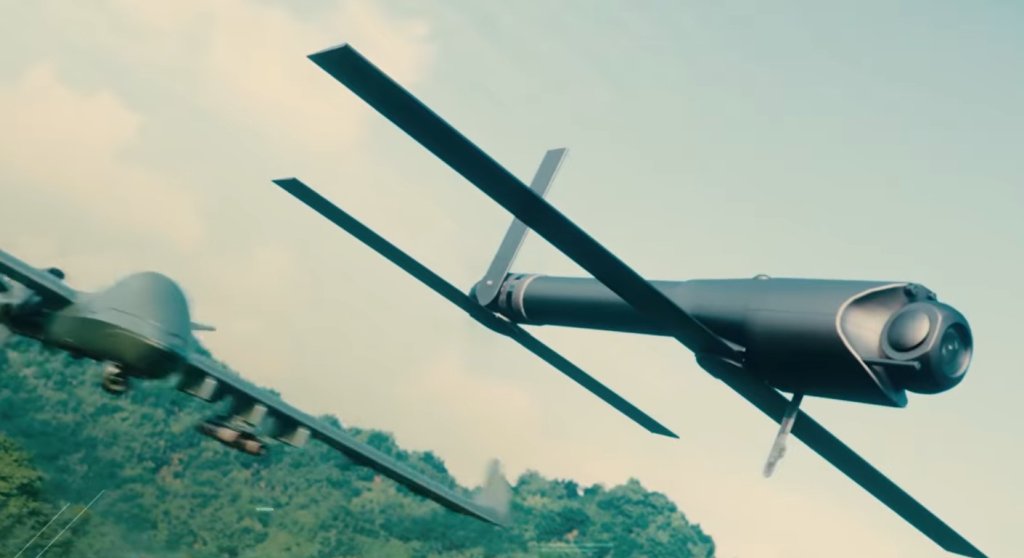
The video also shows Mojave being used to find and fix enemy forces, which are then engaged by friendly 155mm howitzers, as well as to carry cargo in underwing pods to forward locations. GA-ASI has previously showcased the potential value of Mojave in the latter role as part of a larger construct to provide logistics support during future expeditionary and distributed operations, even in actively contested environments.
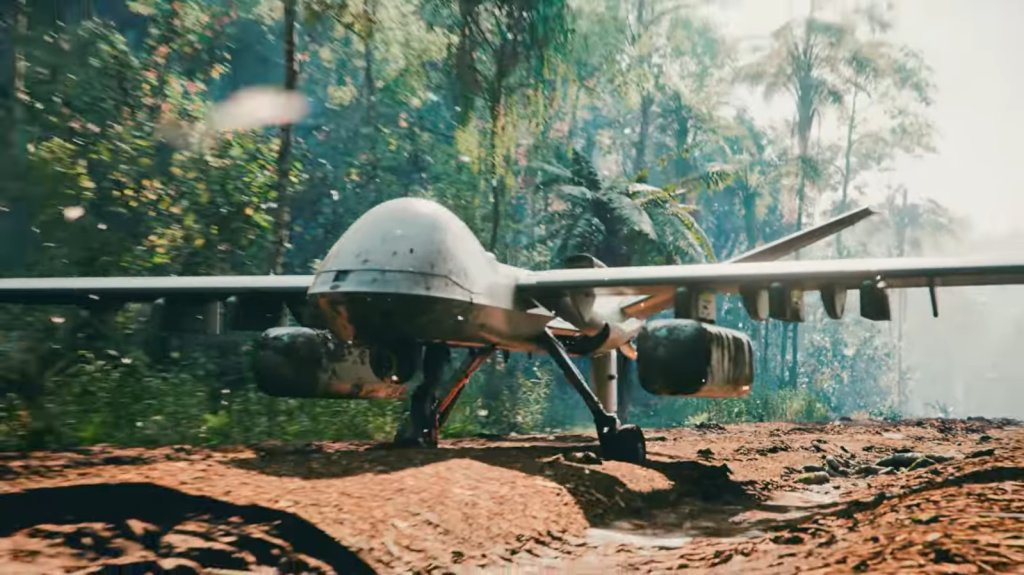
The new video caps off with a Mojave firing on unseen targets with a pair of underwing Minigun pods. This is another capability General Atomics has previously demonstrated in real life. The drone can also carry other stores, including AGM-114 Hellfires and AGM-179 Joint Air-to-Ground Missiles (JAGM), on the pylons under its wings.
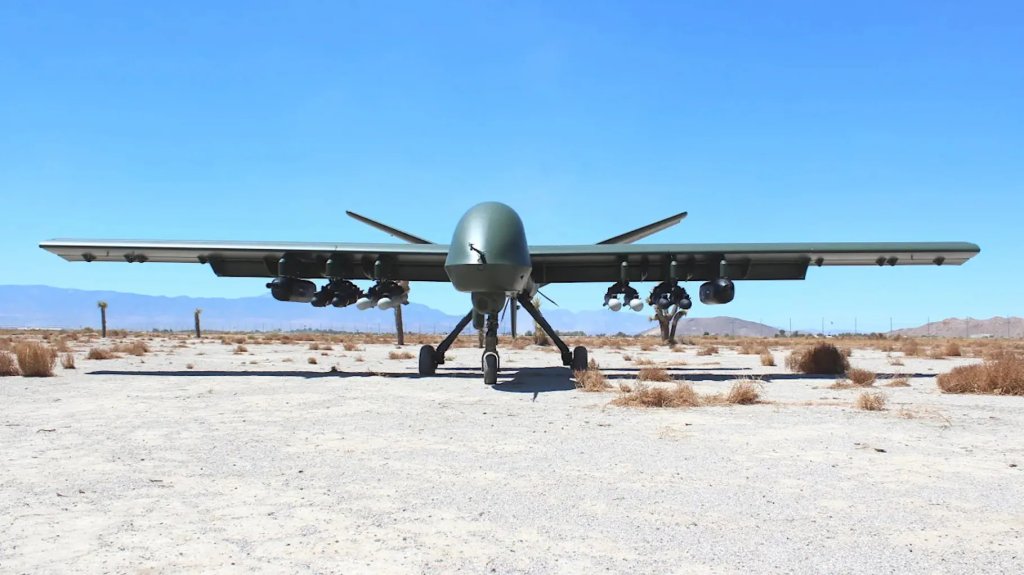
General Atomics is pitching the overall vision presented here for Mojave heavily to the U.S. Army, though it has also been engaged with other potential customers. Testing in cooperation with authorities in the United Kingdom and South Korea has demonstrated how the drone’s short-field capabilities could also translate to naval operations from aircraft carriers and big deck amphibious assault ships. Last year, GA-ASI announced a partnership with Hanwha Aerospace in South Korea to produce what was still then being called Gray Eagle STOL in that country.

“Mojave STOL provides the versatility that the U.S. Army and others need for the future, with the endurance and persistence they’ve come to rely on, underpinned by experience gleaned from almost 10 million total flight hours,” General Atomics’ Brinkley told us. “That’s why Hanwha jumped in as our partner on this, bringing international investment to further buy down risk.”
“The U.S. Army wants to be successful right out of the gate. No stumbling, no fumbling,” he added. “They’re already integrating tactical drones into the force and experimenting with how that will change the nature of American warfare. They’re bringing a new tiltrotor online. It’s a period of massive change for Army aviation.”
The tiltrotor in question is the MV-75A, now officially nicknamed the Cheyenne II, which Bell derived from its V-280 Valor design. You can read more about the Army’s current plans for this aircraft here.
The Army is now in the early stages of formulating plans to acquire uncrewed companions for the MV-75A and its existing fleets of crewed helicopters. However, the focus so far has been on vertical takeoff and landing (VTOL) capable designs rather than a fixed-wing type like Mojave, as TWZ has explored previously. In general, greater independence from traditional runways has been a major area of focus across the U.S. military in recent years when it comes to planning for future aviation operations, especially in the context of a high-end fight in the Pacific against China.
“Our engineers are obsessed with developing the next-generation of uncrewed aircraft. More than a decade ago, they dug deep into VTOL and runway independence,” General Atomics’ Brinkley explained. “What they discovered was payload and endurance tradeoffs with VTOL create a lot of challenges when applied to real combat operations. It’s a tough hand to play.”
“Mojave STOL is flying right now. We have five million square feet of existing manufacturing, ready to go,” he added. “We can help the Army integrate a real, rugged, ready today Mojave STOL into the force with far less risk to success.”
Questions have also been raised in the past about the survivability and general utility of drones like Mojave, as well as predecessors like the MQ-1C and MQ-9, in future high-end operations. The latest conflict with Iran has underscored the vulnerability of the Reaper, in particular. Air-launched drones and stand-off munitions, as well as new self-protection capabilities, can help keep these drones further away from enemy defenses. TWZ has also previously highlighted how a drone like Mojave could be used to provide more localized force protection, including against uncrewed aerial threats, at forward outposts and rear areas in the context of a larger conflict.
It’s also worth noting here that while Mojave would not be as quick to respond to incoming drone threats as a tactical jet, it would be able to loiter in a particular area for a longer period of time. It could also provide strike and intelligence, surveillance, and reconnaissance (ISR) support while on station. Being able to fly from unimproved forward airstrips would also allow it to operate organically with the forces it is assigned to support.
When it comes to the Army, it remains to be seen how that service’s visions for its future drone fleets and crewed-uncrewed teaming evolve. As mentioned, the Mojave STOL’s capabilities, including its ability to act as a rocket-armed drone hunter, could be attractive to other potential operators, who might fly the drones from bases on land or ships at sea.
In the meantime, General Atomics continues to expand on the Mojave concept, which now includes the planned integration of APKWS II laser-guided rockets.
Contact the author: joe@twz.com
Loading comments…
Comments couldn’t be loaded. Please refresh the page.