
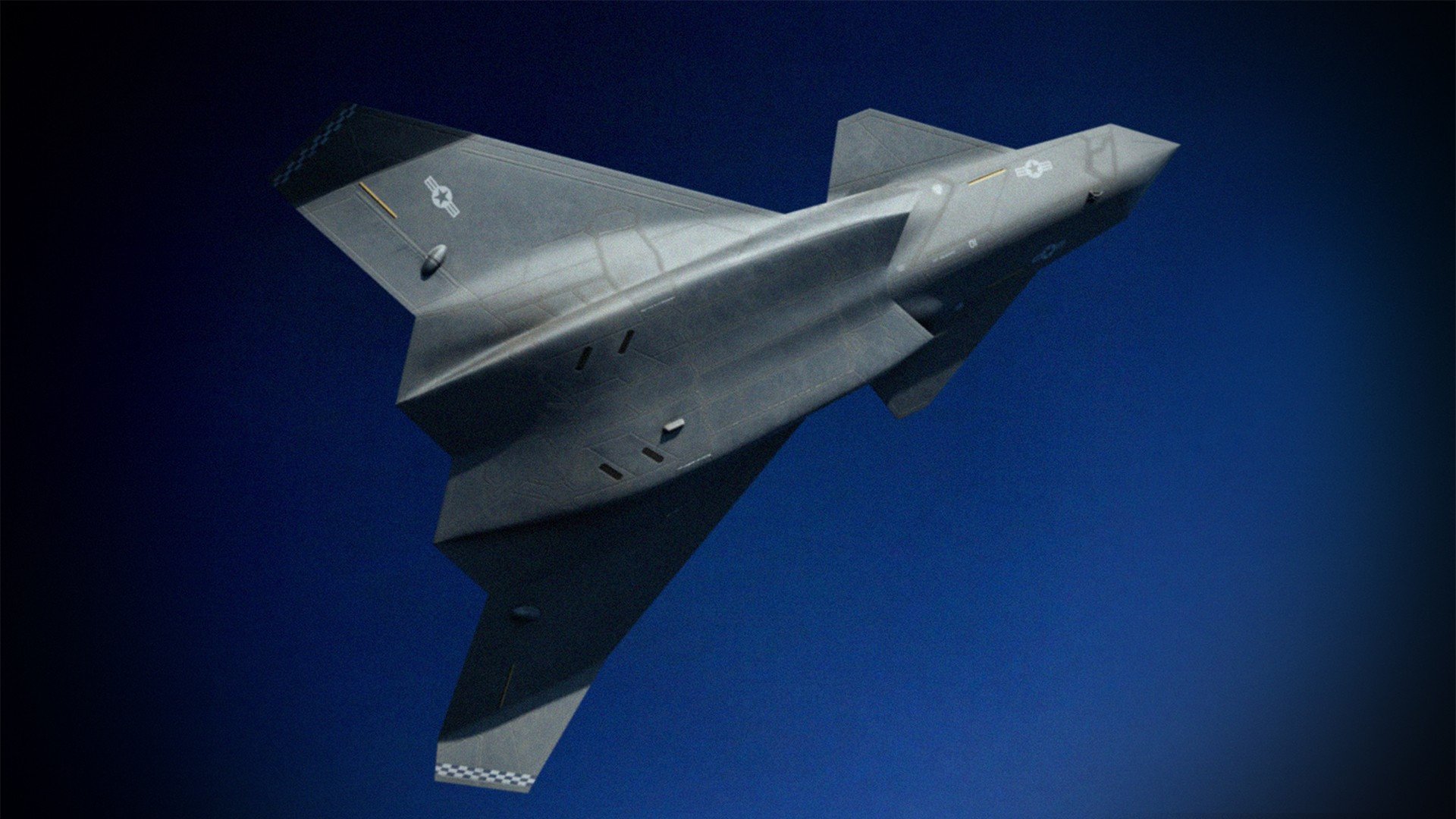
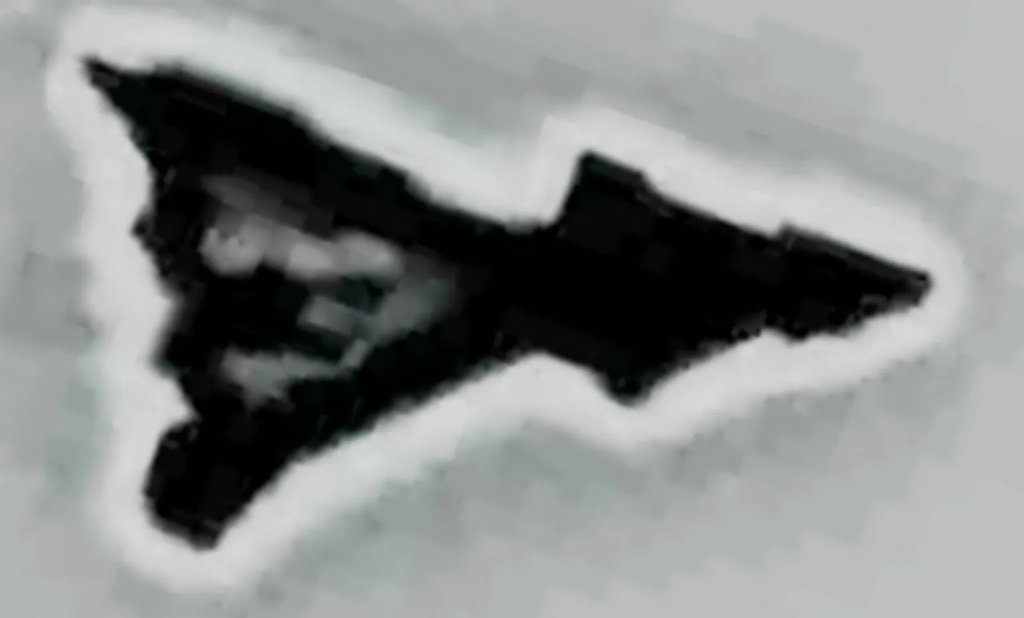
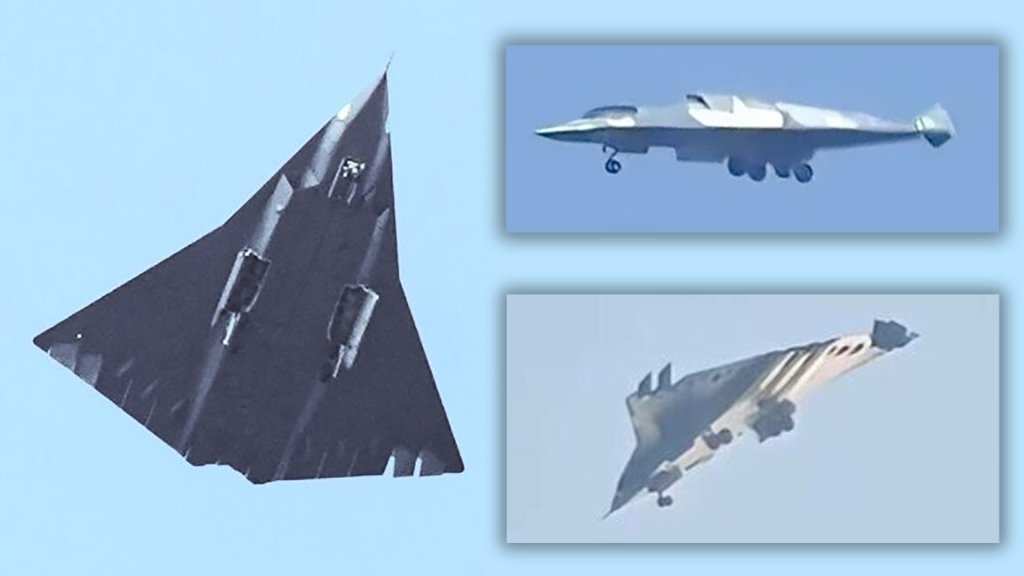
Much discussion and debate continue to surround a video said to have been taken near Area 51 that went viral after it was released last month. The footage shows an exotic aircraft that still looks likely to be a progenitor of Boeing’s F-47 sixth-generation fighter for the U.S. Air Force. Its apparent design, with a long shovel-like nose, large canards, and rear-set swept wings, is much different from the tailless, modified delta-winged heavy fighter that many were expecting to come out of the Next Generation Air Dominance (NGAD) program. This, in turn, raises interesting questions about why certain design decisions may have been made and the broader implications of the resulting tradeoffs.
The Project Fear YouTube channel posted the footage of the aircraft in question online back on June 5. Readers can find our initial assessment of the aircraft and its features here.
The full video from Project Fear can be viewed below. The clip of the mysterious aircraft passing by starts at around 49:34 in the runtime, if it does not automatically start playing at that point.

TWZ talked at length with Darold Cummings to more deeply analyze features of the design that appear to be visible in the video and, by extension, what might be inferred about the F-47. Cummings is an aerospace engineer with decades of experience who played a key role in developing Northrop’s YF-23 Black Widow, which lost out to what became Lockheed’s F-22 Raptor.
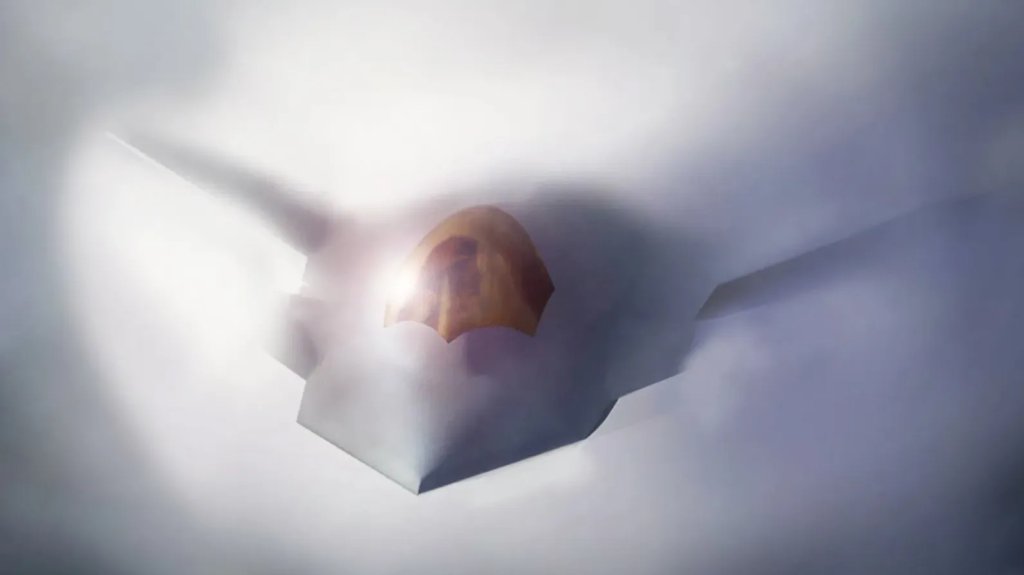
A screen capture that Project Fear had posted as a teaser before the release of the full video had also prompted new interest in another advanced fighter concept that Cummings had crafted in the 1980s. TWZ previously explored this design, nicknamed the “Christmas Tree” because of its planform, in detail. Cummings has worked on a host of other projects over the years for other companies across the aerospace industry and is now president of his own firm, ForzAero. He has also previously shared his own notional concepts for what the F-47, as well as a navalized derivative, might look like.
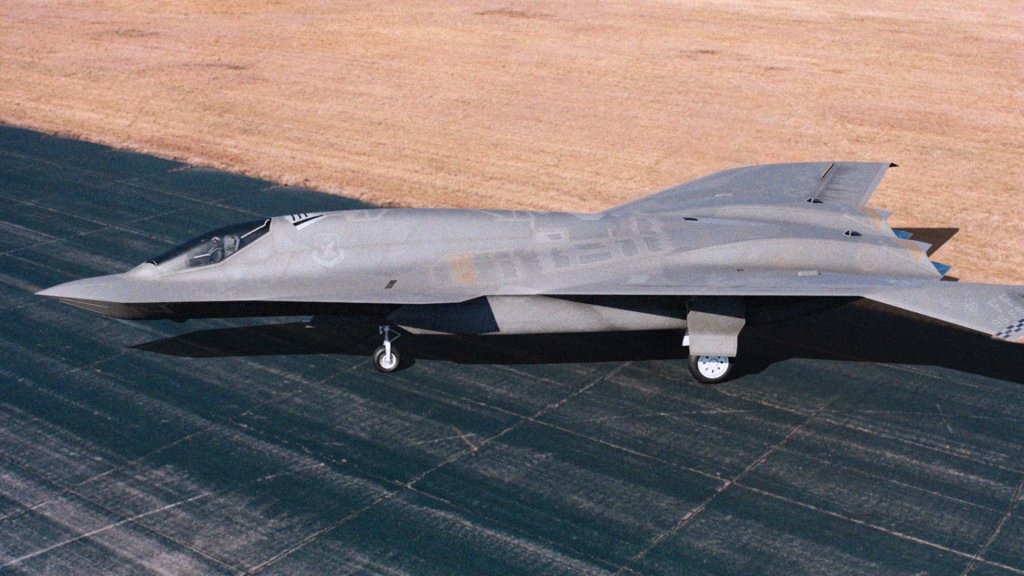
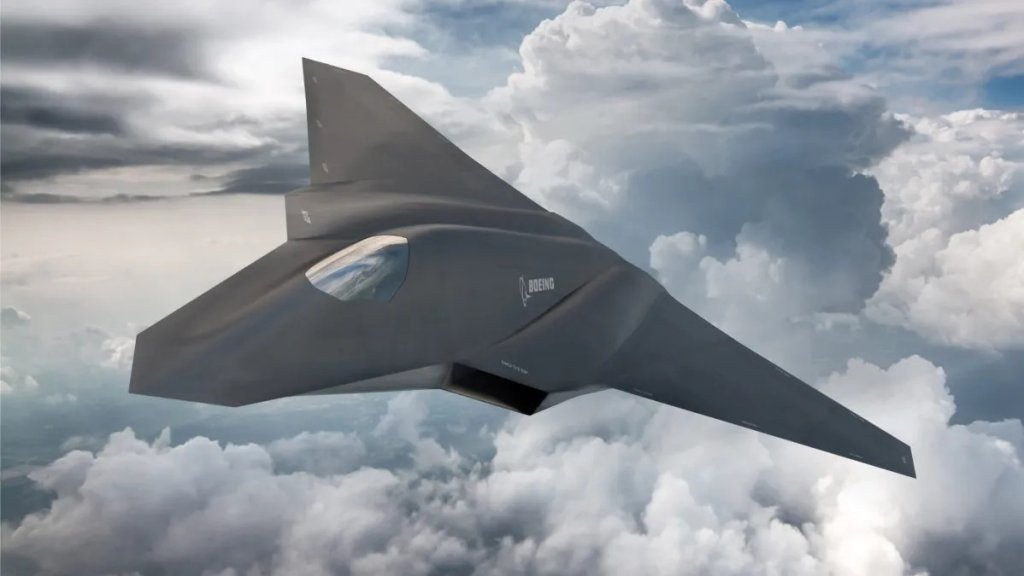
We reached out to other experts and long-time observers to get their views on Project Fear’s footage and the F-47, as well. Olivier Vargas, a 3D artist who goes by the handle @ollysaerospace on X and Instagram, was also kind enough to share his artwork based on what could be seen in the Project Fear video, one of which is seen at the top of this story and others throughout it. These are just extrapolated artist impressions and should not be taken as literal.
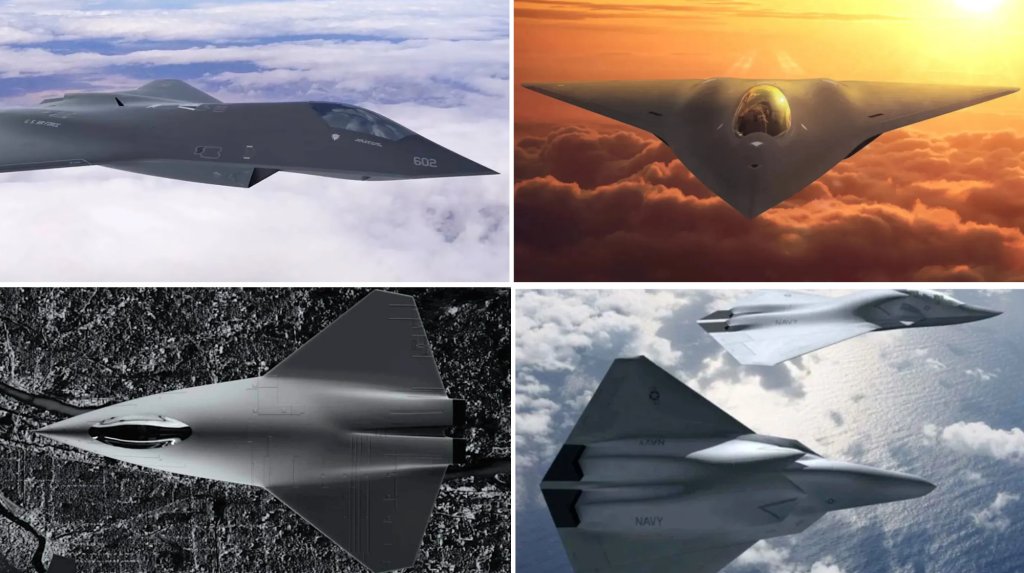
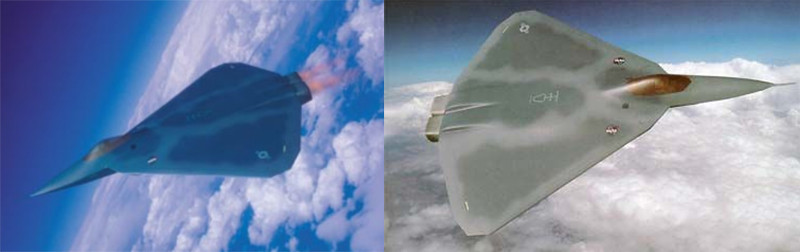
There are also years’ worth of official artwork from Boeing and other U.S. companies, as well as the Air Force itself, depicting concepts for advanced fighters. These have largely revolved around tailless, modified delta-winged designs, a sampling of which is shown in the collage below.
A useful starting framework
Cummings offered a valuable general rubric for considering advanced combat aircraft designs in his interview with TWZ.
When it comes to designing any fighter, “you just have a team of people who bring in all their needs. It’s like I say, the weapons, the landing gear, the wing, structure, and all the doors, all that stuff comes together,” he explained. “And all those people have to say, ‘what is the best I can do to get the [radar] cross-sectional area down?’ How can I move the landing gear to get the cross-sectional area down? How can I make the weapons bay smaller to get the cross-sectional area down? And all that relates to fineness ratio, and all that relates to the Sears-Haack plot.”
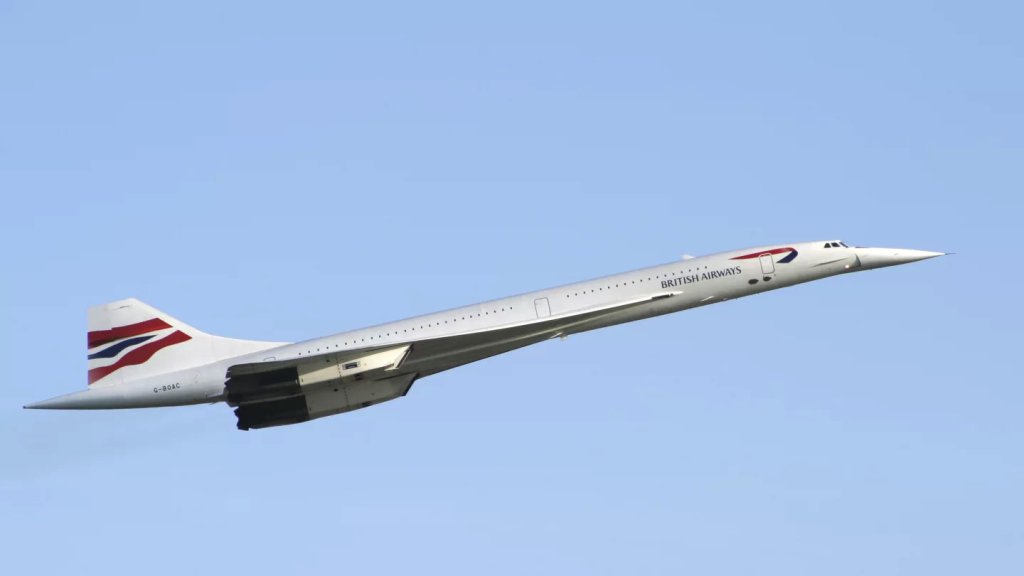
Fineness ratio refers to the ratio of the length of a ‘body,’ such as an aircraft, to its maximum width. The ratio increases the longer and narrower the body is. The Concorde supersonic airliner, with its long, slender fuselage and relatively short wingspan, is a common example of a plane with a very high fineness ratio.
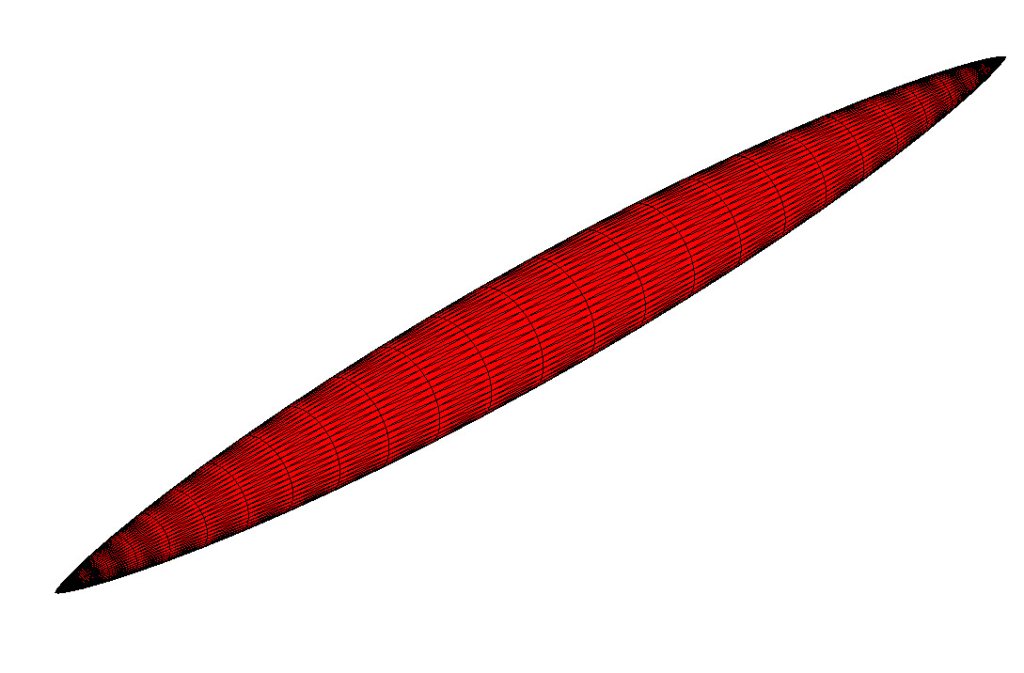
A Sears-Haack plot, or Sears-Haack body, is a shape offering the lowest theoretical drag while traveling at supersonic speed based on a set length and volume. In high-speed aircraft development, the goal then is to devise a planform that is as close to that plot as possible.
“We spent probably a whole year on the Sears-Haack plot on the YF-23,” Cummings recalled. “I remember the structures guy wanted to have me fired because I had to have such [a] thin structure there to get the area down. He wanted to have me tar-and-feathered [sic].”
As noted, the tailless design seen in Project Fear’s video appears to have rear-set swept wings, as well as rhombus-shaped canard foreplanes. From the teaser image that Project Fear released, it had initially appeared that the nose might also have something of a “double arrowhead” shape akin to Cummings’ Christmas Tree concept. However, the full video looks to show a more shovel-like forward fuselage more typically found on low-observable (stealthy) aircraft. Even without the double arrowhead nose, the planform is distinct and notable.
Wings
The wings on the aircraft seen in Project Fear’s footage look to have a significant dihedral, and possibly drooping tips. At the same time, the relative quality of the video, given how far away the subject was, as well as the fact that it was captured in infrared at night, makes it hard to say definitively.
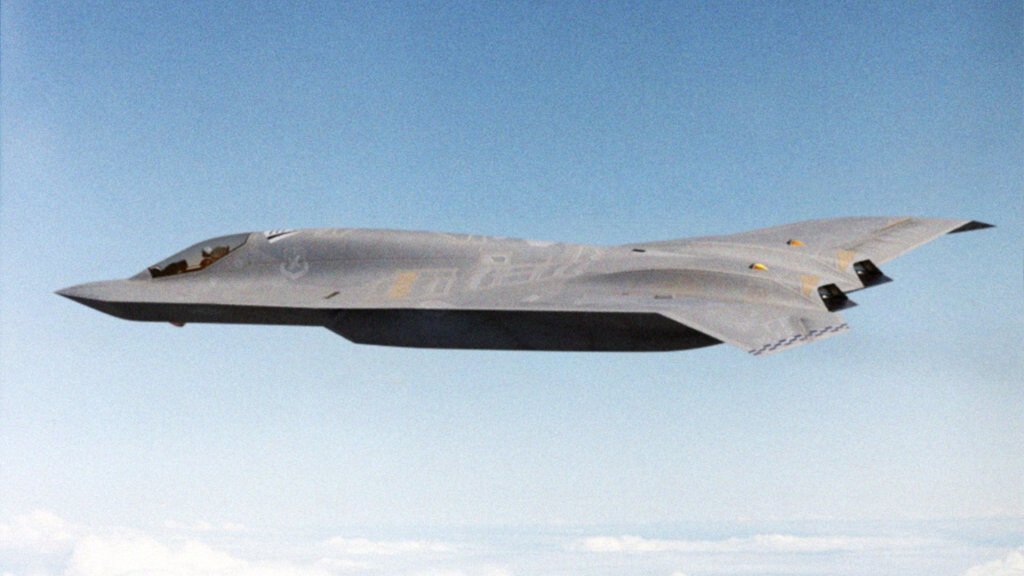
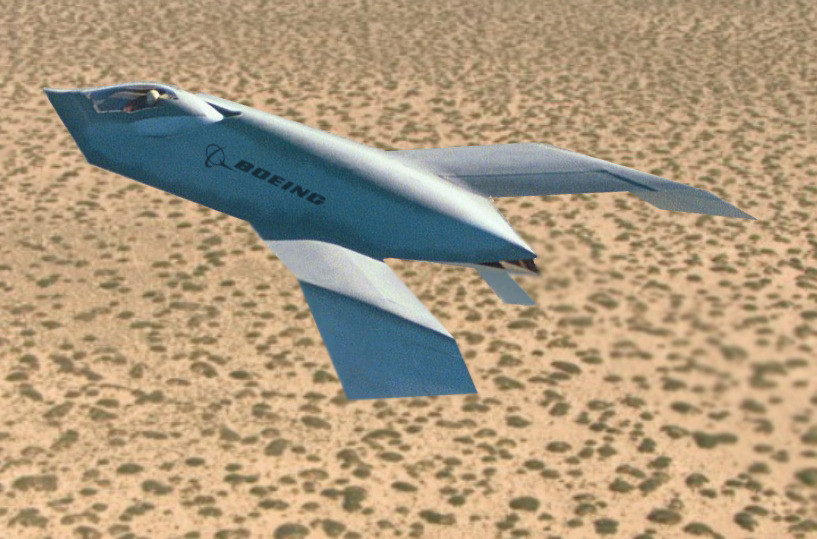
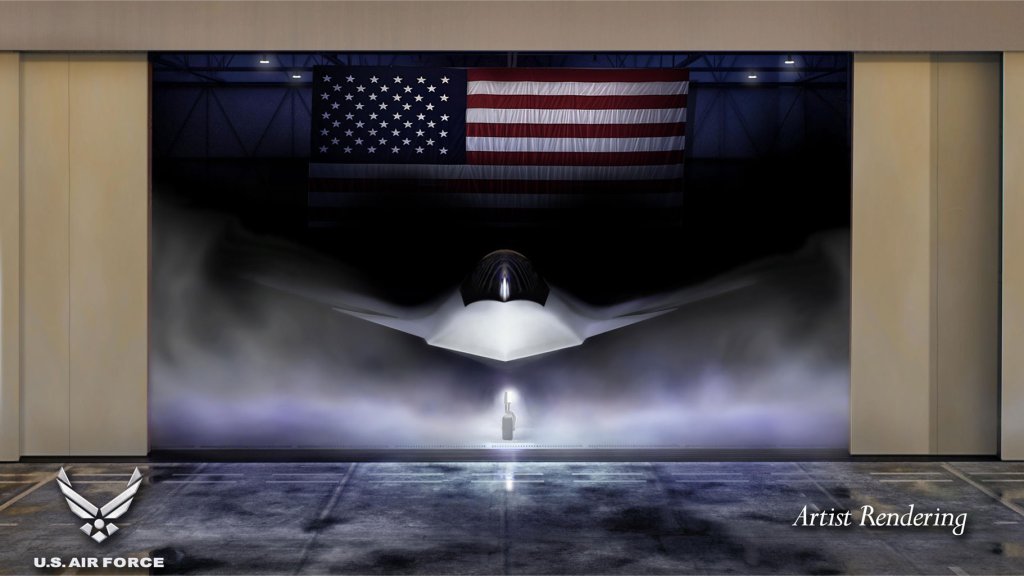
The design has already evoked the memory of Boeing’s Bird of Prey advanced technology demonstrator aircraft, which is understood to have been tested at Area 51 in the 1990s, but was only revealed to the public in 2002. This wing shape would also be in line, broadly speaking, with the renderings of the F-47 that the Air Force has released to date, which also shows the wings have a positive dihedral, though those may not fully reflect the actual design for operational security reasons.
“Now, whether that has the gull wing, up/down, like the Bird of Prey, I can’t tell,” Cummings told us. “I would be surprised if they had the droop [sic] wingtips, like on the Bird of Prey.”
“They’re a little hard to do once you have landing gear in that, because the inboard section would have to have a lot of dihedral to it, and I don’t know what you’re gaining,” he explained.
“Now, that’s not saying that the Bird of Prey doesn’t work. It works. I’m just saying, for simplicity’s sake, and long straight edges,” using “a clipped delta wing with MANTA-type exhaust, to me would be the best solution,” he added, speaking broadly. “Long straight edges for LO [low observability; stealthiness] are the best, no matter what you do. The longer the edges, the better RCS [radar cross section] you have in terms of the types of radars that use – the shorter it is, kind of the worse it is. So, if you can have a nice long straight leading edge and a relatively long straight trailing edge, combined with 3D thrust vectoring, in my opinion, it just doesn’t get much better than that.”
MANTA here refers to the Multi-Axis No-Tail Aircraft (MANTA), a Lockheed design derived from the F-22, which is also known by the designation X-44A. The MANTA never came to be, at least that we know. The designation was later re-applied to a completely unrelated flying wing-type drone, the existence of which was first reported by TWZ.
Cummings also highlighted the stealth advantages, in general, of choosing a tailless planform.
“There’s no intersections. Every time you have an intersection, you have a chance for an RCS reflector. I mean, anytime you have an angle, you have a chance for a reflector. So, if you do [it] with a way without any tails, mostly vertical tails – you can use a horizontal tail like we did on a YF-23, a V-Tail, if you keep it ported, lined up with a wing,” he explained. “You can see that there’s no gap between the wing and the tail [on the YF-23], and if you look at the angles from above, they’re exactly the same. To me, that’s a really ideal configuration. But if you can eliminate the tails completely by using thrust factoring, even better.”
“Ported” in this case means keeping the control surface locked in the same geometric plane as the wing while cruising.
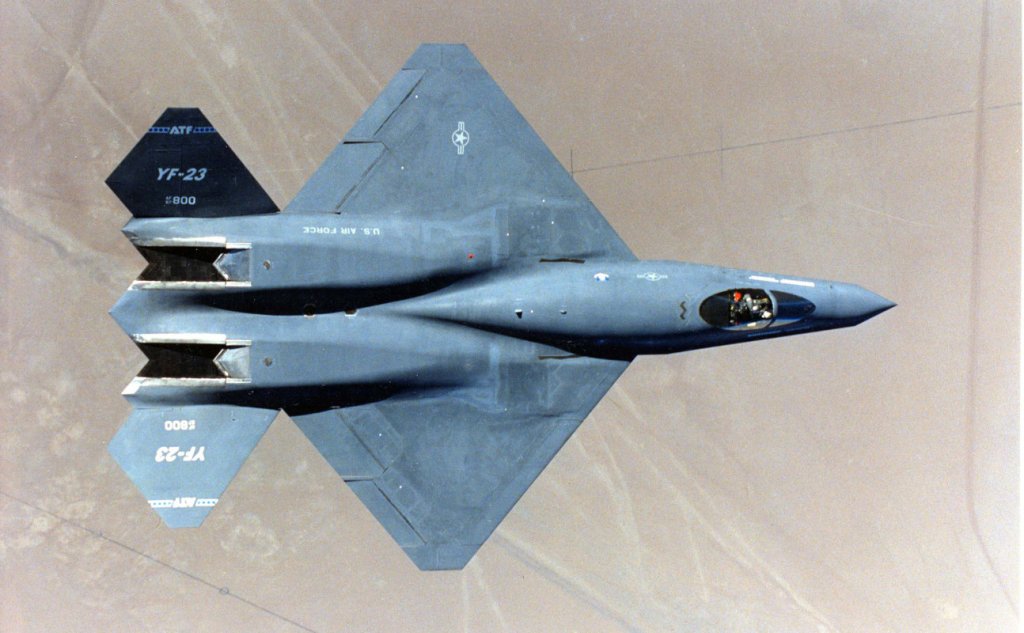
In terms of wing shaping, “ideally it would be the old Dorito chip,” Cummings said, speaking generally. “Remember the ‘Hopeless Diamond,’ the original [Lockheed’s Have Blue demonstrator that evolved into the F-117]? I mean, that would be the optimum shape, but that’s very poor aerodynamically, very poor – very hard to balance, very hard to control.”

“You have a very, very high sweep, very, very long edge, you know, followed up by an angular [sic] on the back, which is less of a threat area. With a nice angled cut off on the back. If you can make it fly,” he continued.
The overall planform does look well-suited to cruising at supersonic speeds. This would be in line with the F-47 being originally envisioned primarily as a replacement for the F-22 Raptor, though that view has since shifted, at least publicly. Supercruise is a signature capability of the F-22.
A combination of high dihedral and drooping tips can be potentially beneficial for supersonic flight, gaining performance from riding on the resulting compression wave. However, Cummings said he did not think this would be applicable in the discussion around the potential design of the F-47.
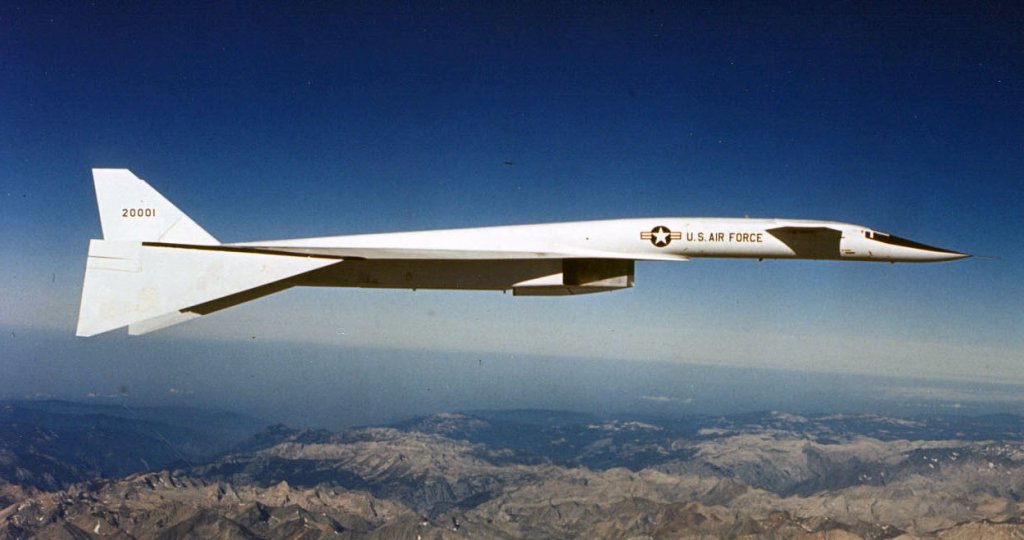
“You really, in my opinion, need to be going more like Mach 3 to really take advantage of that, and this airplane, I’d be surprised if it did more than Mach 2.2,” he said. “Like the Bird of Prey, it was subsonic. I mean, there was no reason at all, from an aero-lift standpoint, to do it that way, from an aero-lift standpoint. There might be some advantage from an RCS standpoint, but not from an aero-lift standpoint.”
Cummings used the XB-70 Valkyrie bomber, which had wingtips that could be canted down into a drooped position during flight, as an example of an aircraft that does benefit from this feature when it comes to aero-lift. The XB-70 was designed to fly at speeds above Mach 3.
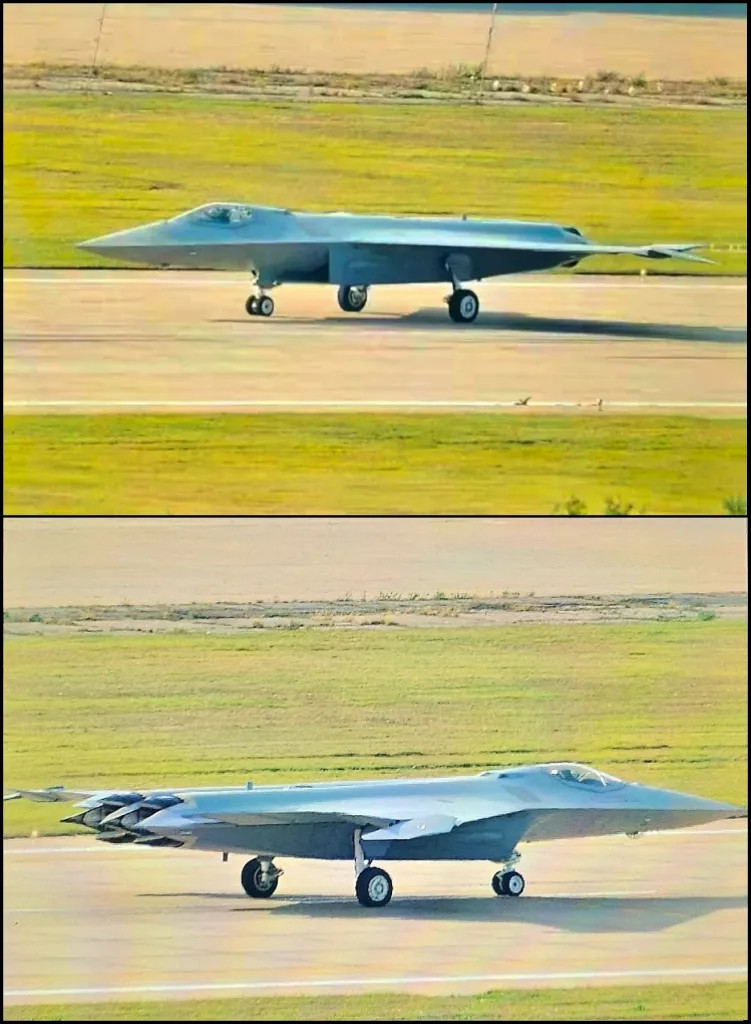
There is the possibility that what looks like ‘droop’ in the wingtips of the design seen in the video Project Fear released could actually depict wingtips that articulate. We cannot say with certainty one way or the other at this time. China’s J-XDS heavy sixth-generation stealth fighter notably has swiveling wingtips, which could help provide critical stability at slower speeds and during hard maneuvering, which are especially sensitive areas of the flight envelope for tailless designs.
Fuel capacity will also be a major factor in the design of the wing. A tailless delta-winged aircraft could offer greater fuel capacity compared to what is seen in the Project Fear video. Significant unrefueled range has long been expected to be a major requirement for the F-47, which we will come back to later on.
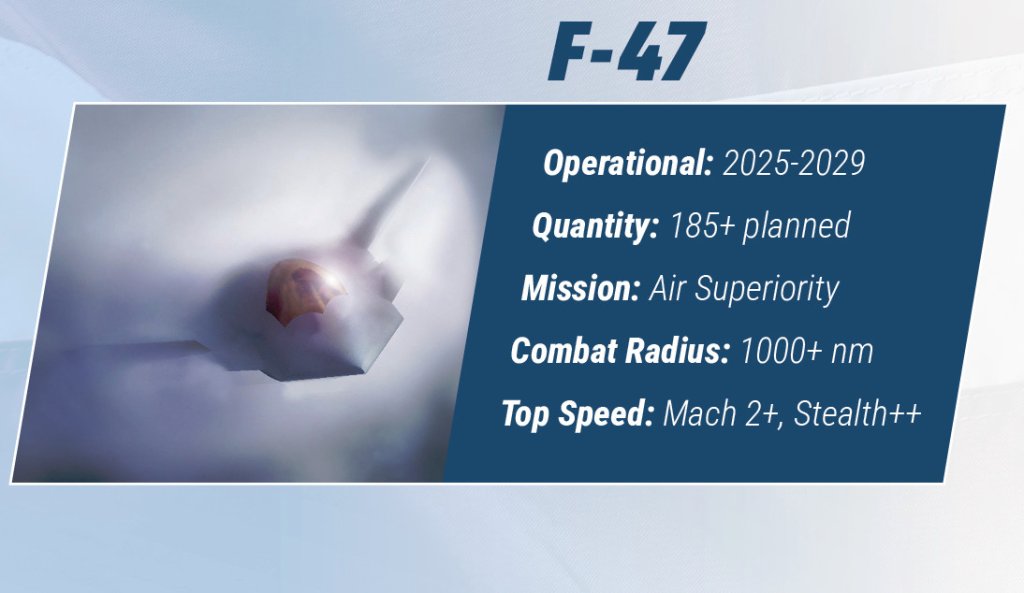
For its part, in May 2025, the Air Force released a graphic with unclassified details about its current and future fighter fleets, which listed the F-47’s top speed as “Mach 2+” and put its combat radius at “1,000+” nautical miles. While this is greater than that of any other fighter in the USAF’s inventory by a relatively sizable margin, it is not what one would expect from a heavy tailless delta, so this makes some sense considering the F-47’s unique planform.
Canards
The presence of canards has been a hot topic of discussion surrounding the F-47, even before Project Fear released its video. Canards were a feature that was visible in one of the official renderings released back in March 2025, and that came as a surprise to many.
Canards do provide additional maneuverability and stability, especially for a delta-wing aircraft, and at high angles of attack. Traditional vertical tails also help with stabilization, so canards could offer further benefits when used in tailless designs. However, they have historically been less than ideal for low observable designs, especially from the frontal aspect, which is of critical importance for the survivability of tactical jets flying into harm’s way. TWZ explored all of this in detail at the time.
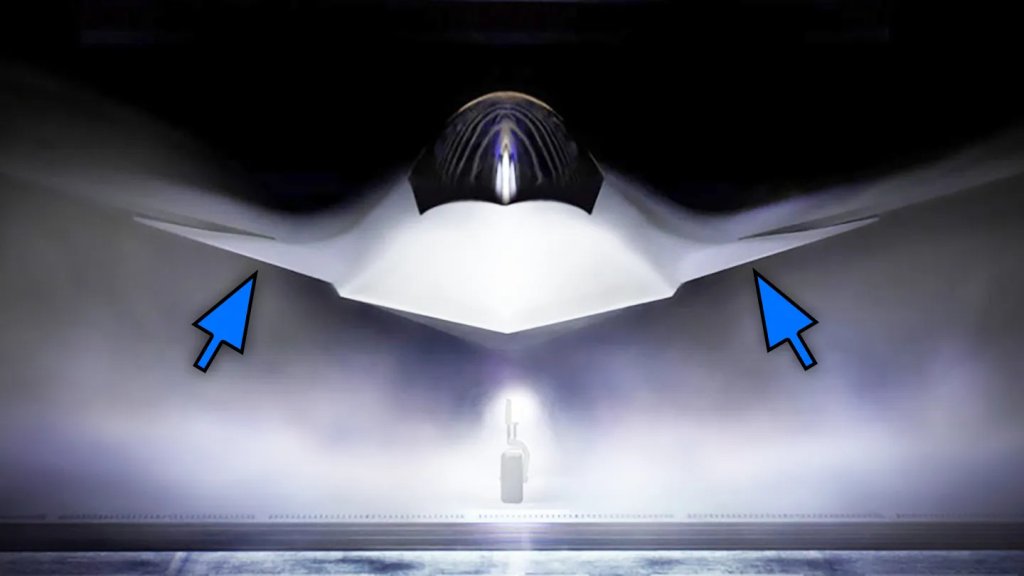
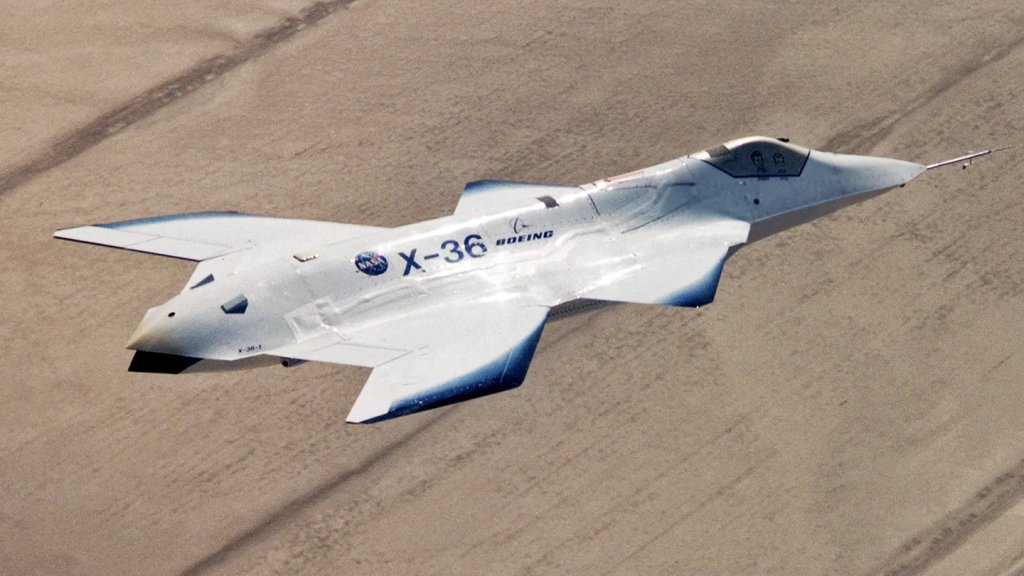
The presence of canards in the F-47 rendering, and now on the design in the Project Fear footage said to have been taken near Area 51, together with the rest of what can be seen of their planforms, has also recalled the design of the X-36 uncrewed demonstrator. Also known as the Tailless Fighter Agility Research Aircraft, this X-plane was developed by Boeing’s Phantom Works advanced projects division, and you can learn more about it here.
“I’ve always liked the X-36. I always thought that was a great place to start if you’re going to have a canard airplane,” Cummings told us. “The X-36 had yaw thrust vectoring, so they eliminated the vertical tails, which was really fantastic. So, yeah, I think X-36 would be a good place to start.”
“I suspect the wing would probably be either level or maybe minus two degrees, and the canard would probably be plus 10 degrees,” he added when asked about whether the F-47’s canards might have the same dihedral as the main wings.
“You need that type of separation to really have the canard be extremely effective throughout the envelope of the airplane. In fact, if you look at the Chinese J-20, I think that’s about exactly what the J-20 use[s],” he explained, noting that this kind of configuration is called a “close couple.”
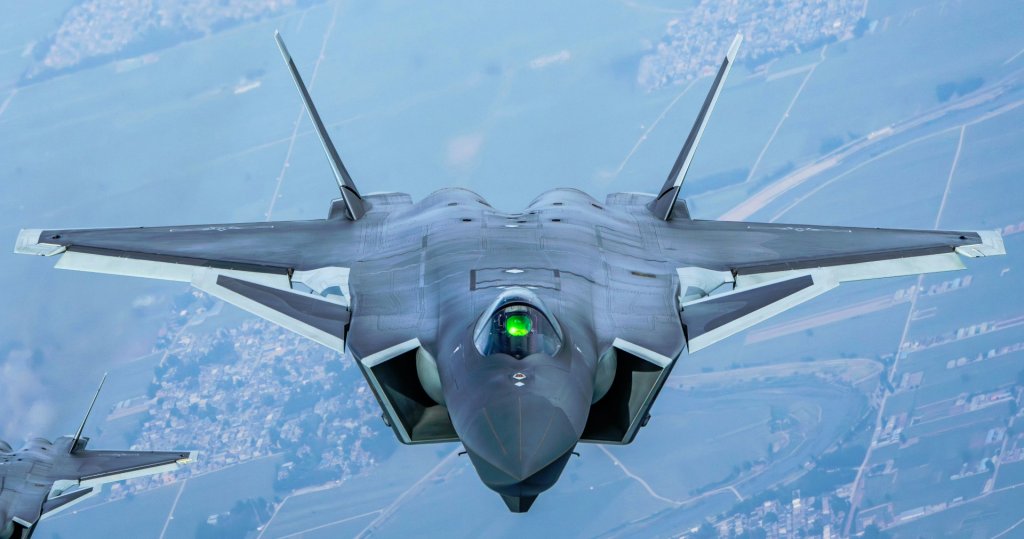
“Now, if you’re widespread, you might be less than that, but if you’re close coupled, I would say, plus 10 on the canard, minus two to three on the wing, would be about optimum,” he added.
The degree to which the canards on the F-47 or the design seen in the Project Fear video might be able to articulate is not clear. The canards on the J-20 and many other existing designs have a wide range of motion up and down, and can deflect asymmetrically.
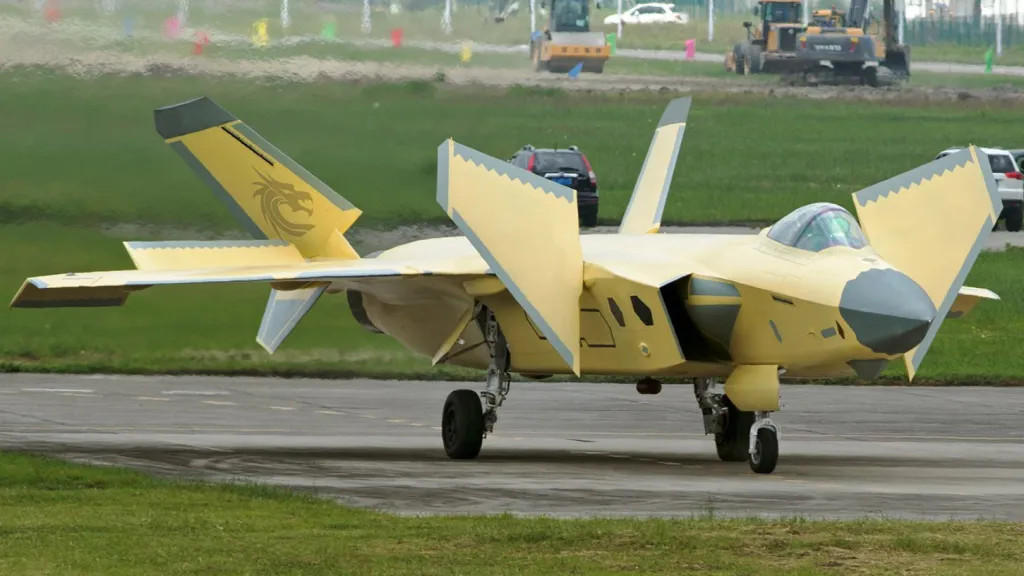
“The original LockMart [Lockheed Martin] design for CALF [the Common Affordable Lightweight Fighter], pre-JSF [Joint Strike Fighter], was a canard,” Bill Sweetman, a long-time aviation journalist, also told TWZ. “You might want to lock the foreplane in cruise to avoid gaps, but all very doable. The key is to maintain the edge alignments.”
CALF was merged with the Joint Advanced Strike Technology (JAST) effort in the early 1990s to create the JSF program, which led to the F-35. CALF had also evolved from earlier Defense Advanced Research Projects Agency (DARPA) efforts called Advanced Short Takeoff and Vertical Landing (ASTOVL) and STOVL Strike Fighter (SSF), which began in the 1980s.
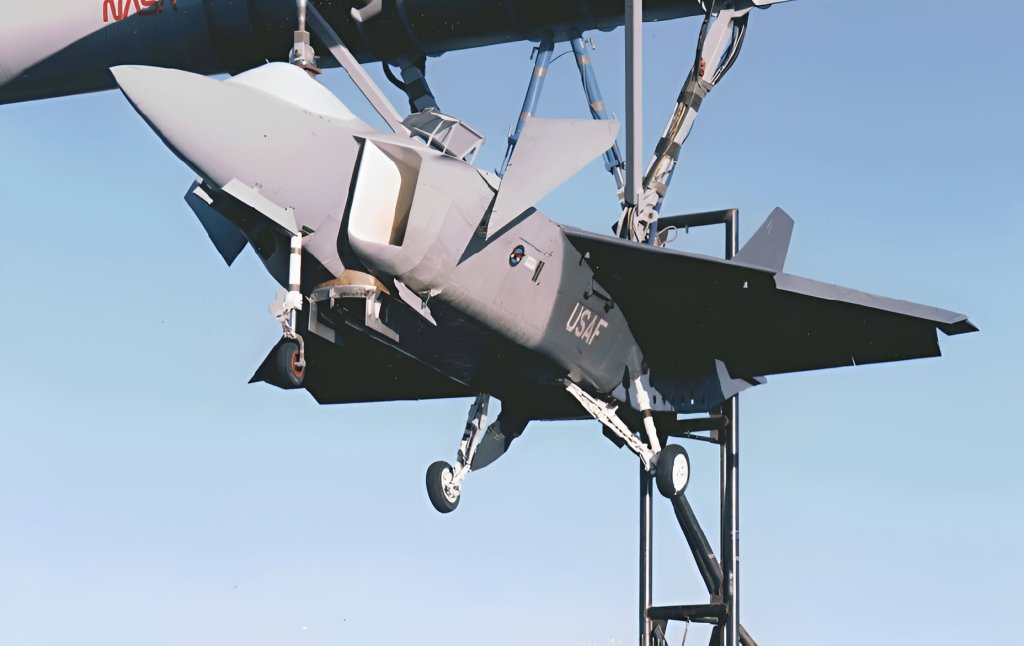
“As for range – might be a toss-up. A delta [wing] gives you huge capacity but a lot of wetted area, and a canard might trim differently in the cruise,” Sweetman also noted, highlighting a potential link between decisions relating to the wing design and canards.
As mentioned earlier, the still image that Project Fear released had also raised the possibility of the design having not just canards, but a “double-arrowhead” configuration. This sparked new interest in Cummings’ “Christmas Tree” fighter concept, also known as the DP-21. From what is visible in the full video, it seems less likely now that the aircraft has this kind of configuration.
“The only advantage of the Christmas Tree design, the only advantage, is it’s a four-spike design,” Cummings said. “No one, to my knowledge, no one in the history of aerospace has made a four-spike fighter.”
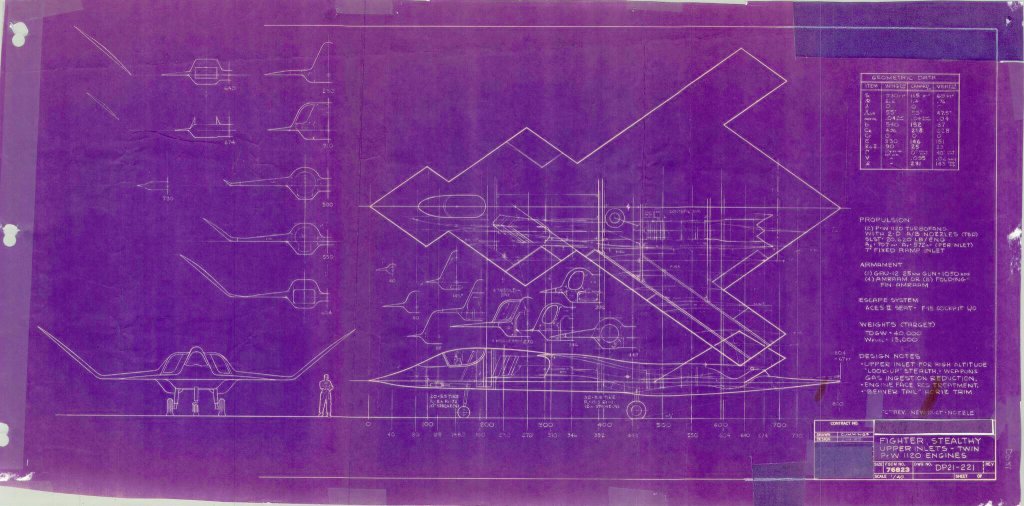
It would be “pretty much invisible to radar, as a four-spike airplane,” he added. “In my opinion, it would be a true breakthrough, because it’s never been done.”
As TWZ has previously explained:
“A four-spike design like the B-2 critically has nothing from the head-on aspect, as well as from the rear, which helps immensely with survivability. These are the most critical signature areas, especially the front as the aircraft is heading into hostile territory. Also, because these are located along the path of flight, these spikes can stay consistent on a threat radar as the aircraft moves directly toward or away from the sensor, and are not fleeting in nature like those from the side. So a four-spike aircraft would be very attractive for a tactical fighter meant to persist in contested territory.”
As an aside, Cummings also talked about the value of a canard configuration for a carrier-based fighter, something we have also touched on in the past. Boeing is also in the running to build a sixth-generation fighter for the U.S. Navy, commonly referred to as F/A-XX. The company has released a rendering of its submission to that competition, which shows distinct similarities to the official concept art of the F-47 that has been released to date.
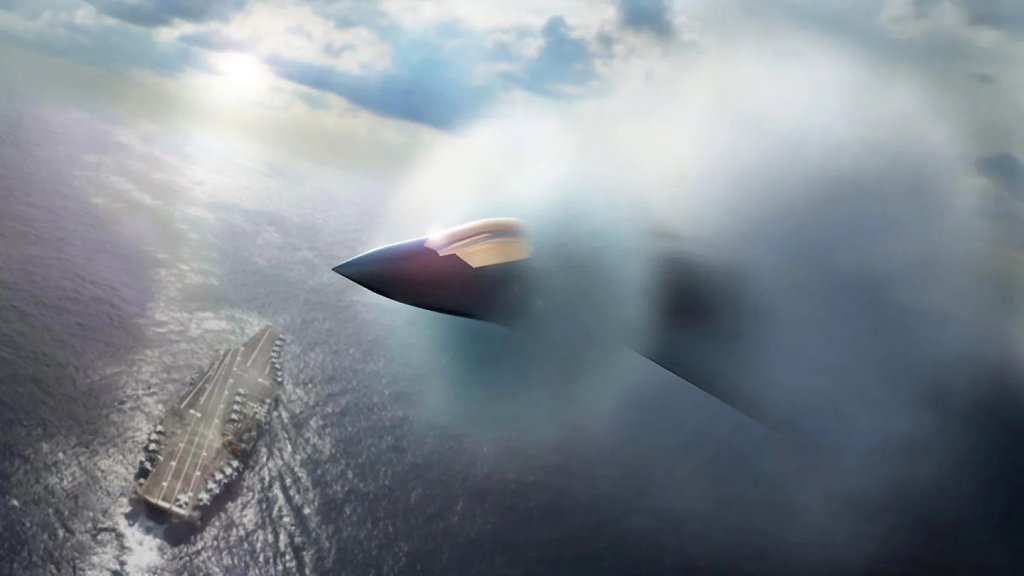
When it comes to a navalized design, canards would be beneficial “mostly for control in landing, and really good control at takeoff,” Cummings said. “If you do it right, you can use the canard in conjunction with thrust vectoring to get everything to do positive lift instead of the wing. You got a wing now that’s giving you pitch-down moment, and now you got a canard giving you pitch-up moment to counter it. So you get the kind of moments you need to get off quickly off the airplane [sic; aircraft carrier] and land in a very, very good aerodynamic situation.”
“Let’s put it this way, we did this same kind of layout on the YF-23, and it worked. Believe it or not, we had a canard version of YF-23. Most people don’t know that, but we actually did, and that was for the Navy, for the same exact reason,” he noted.
Weapons bays
Project Fear’s video does not offer any clues as to the configuration of any weapons bays on the design said to have been spotted near Area 51 or the F-47. However, Cummings spent considerable time in the interview highlighting how these internal bays influence the rest of any fighter design.
“Every fighter design is driven around the weapon bay, period. What weapons do you take? How big are they? How long are they? And you design from the inside out,” he told us. “So, then the question becomes, what can I do to wrap this in an airframe that’s really, really good aerodynamically, and really, really good from an RCS standpoint.”
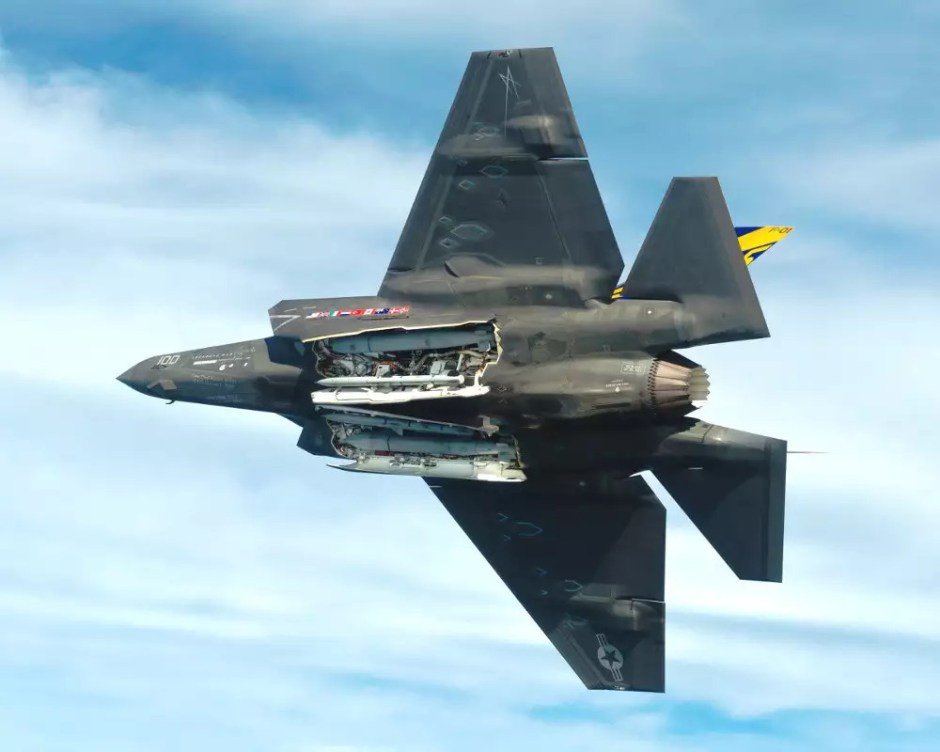
“There’s really two separate issues there. The wing really has very little to do with the actual weapons bay itself. That weapons bay, the airplane’s laid out around the weapons bay, and then the area plot is laid out around the weapons bay and the wing integration,” he continued. “Those things together have to have a nice, beautiful, smooth, Sears-Haack plot. And that’s really hard to do, by the way, it’s really hard to do.”
“Everything wants to be in the CG [center of gravity],” Cummings added. “The wing[‘s] maximum thickness, the weapons bay, the inlet, and the landing gear, they all want to be in the same place where you want the least amount of cross-sectional area. And yet they’re all there, and nobody wants to give anything.”
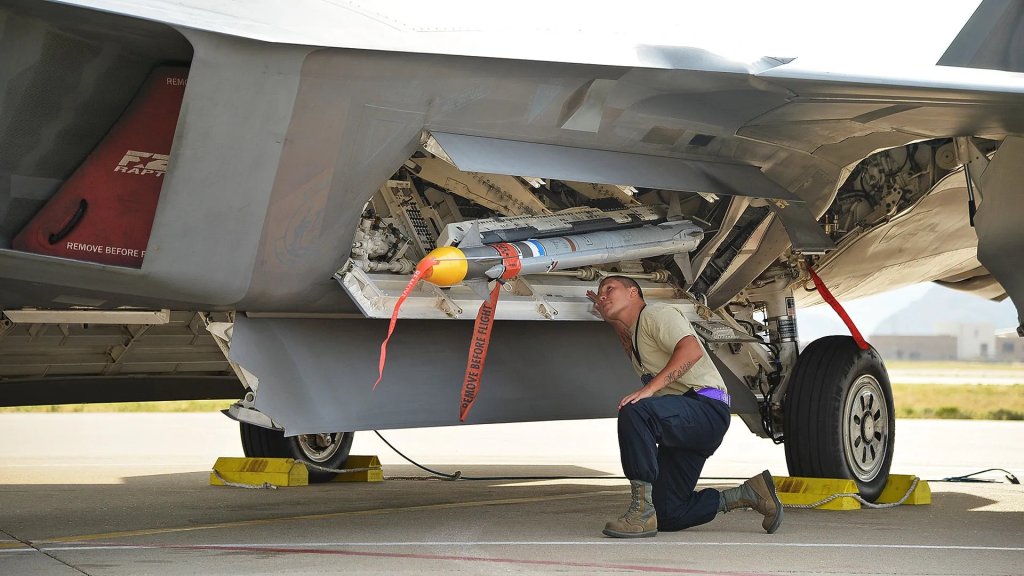
“The thing that would work the best was [sic] if you had really small diameter weapons,” in Cummings’ opinion. “That would be good, because then you could really tighten everything, because you can’t do anything about landing gear size. It’s very difficult to do anything about inlet size. It’s very difficult to do anything about wing thickness.”
“About the only area where you can make any headway is if somehow you could get smaller diameter weapons, or like that new Peregrine weapon,” he added.
Peregrine is an air-to-air missile concept that Raytheon first unveiled back in 2019. It is a truncated derivative of the AIM-120 Advanced Medium-Range Air-to-Air Missile (AMRAAM), as you can read more about here. Other companies have put forward compact air-to-air and air-to-surface munitions over the years, as well, for exactly the reasons Cummings highlighted. TWZ has also long called attention to the value smaller air-launched weapon designs could offer in terms of magazine depth, especially for internal carriage on stealthy aircraft.
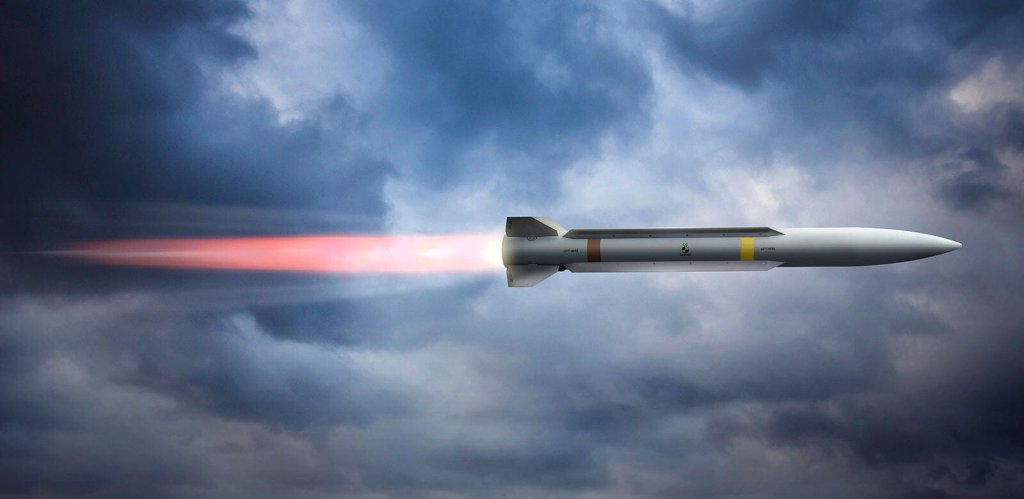
There has been a particular surge in the development of more compact (and lower-cost) air-launched munitions recently, with designs that are increasingly blurring the line between traditional missiles and long-range kamikaze drones. Though the initial focus has been on air-to-surface applications, there is also explicit interest in extending these developments into the air-to-air realm.
“To me, the biggest improvement, the way to get the area down, is if you could put the Peregrine weapon in,” he said. “Then you could slim the weapons bay down. … That would be a home run.”
The new AIM-260 Joint Advanced Tactical Missile (JATM), a joint development effort by the U.S. Navy and Air Force, is also interesting to consider in the context of slimming weapons bays down. A core requirement for the AIM-260 was to have roughly the same form factor as the AIM-120. However, JATM’s only control surfaces are four small fins at the tail, making it narrower than the AMRAAM. The AIM-120 has fins around the middle of the body, as well as at the tail end of the missile. AMRAAM variants have also been developed with mid-body fins with clipped tips, a change originally driven by the constraints of the F-22’s internal bays.
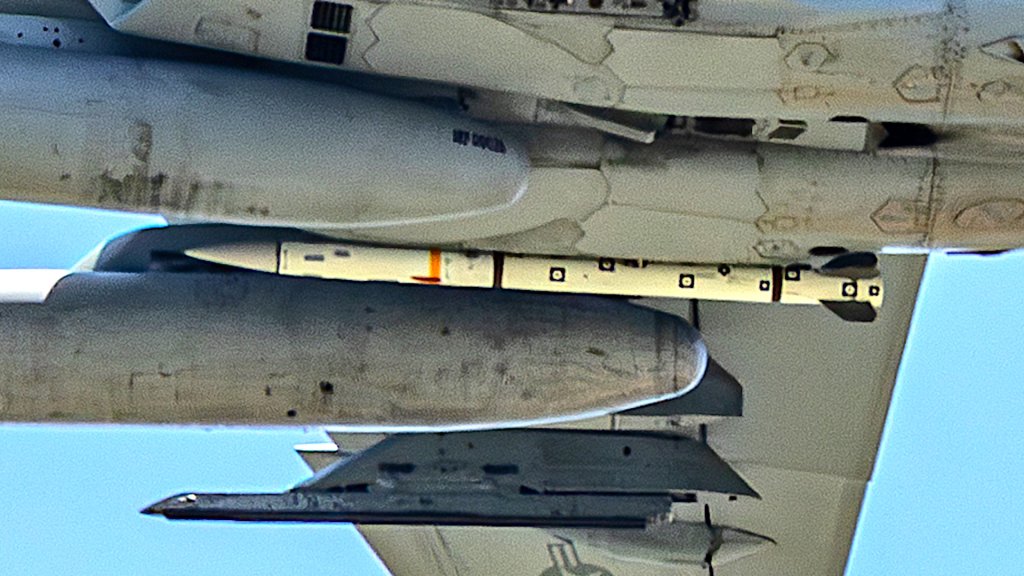
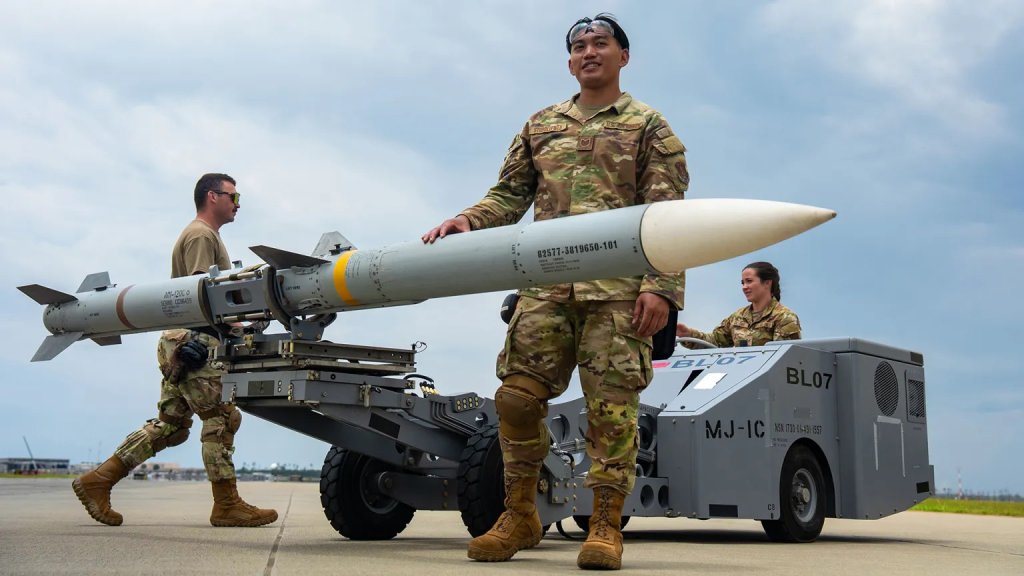
Weaponry may be something of a wild card when it comes to the F-47 due to a new factor in the equation: Collaborative Combat Aircraft (CCA) and other similar loyal wingman-type drones. Acting as quarterbacks for uncrewed aircraft will be a key role for the Air Force’s new sixth-generation fighters. The service’s future CCA fleets will be armed, at least for air-to-air combat, right from the start.
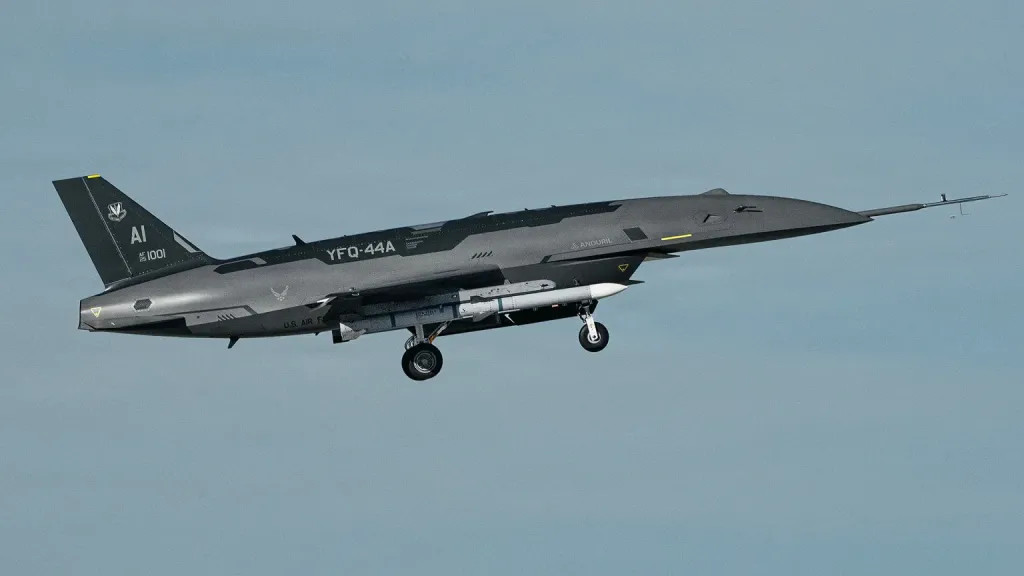
CCAs will open up new operational possibilities that might allow for the F-47’s organic weapons load to be kept more limited, with drones providing the additional magazine depth. It might be possible then to truncate the F-47’s overall design, or optimize it differently, including for higher performance and lower cost, by limiting its organic weapons carriage capacity.
TWZ previously touched on many of these points after the Air Force floated the idea of a new light fighter, potentially as an alternative to the combat jet component of the NGAD initiative, back in 2024. That came amid a deep review of the NGAD requirements, which called its future into question. The service ultimately decided to stick with its original plan, leading to the F-47.
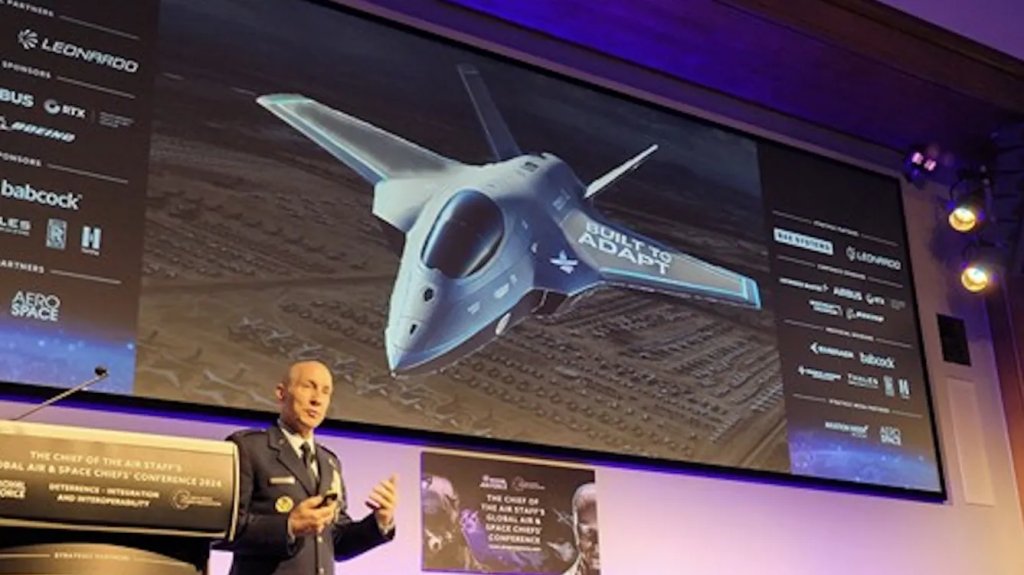
At the same time, the F-47 is supposed to be a heavy-hitting, deep-penetrating fighter in an era where standoff weaponry, even for very stealthy aircraft, is also of increasing importance due to advancements in enemy air defenses. So we will have to wait and find out if weapons carriage capacity was exchanged for other advantages or if the F-47 will pack a major, outsized punch of its own.
Other design aspects
Project Fear’s video does not offer clear insights into a host of other features that would be important factors in the overall design of the plane seen therein, as well as the future F-47. For instance, the shaping and location of the inlets are absolutely critical for safe and reliable engine function, and blending them with other aspects of a stealthy aircraft can be especially complicated. As Cummings noted, other essential components like the landing gear also have to be squeezed into the available volume, and trade-offs have to be made to accommodate everything that is necessary.
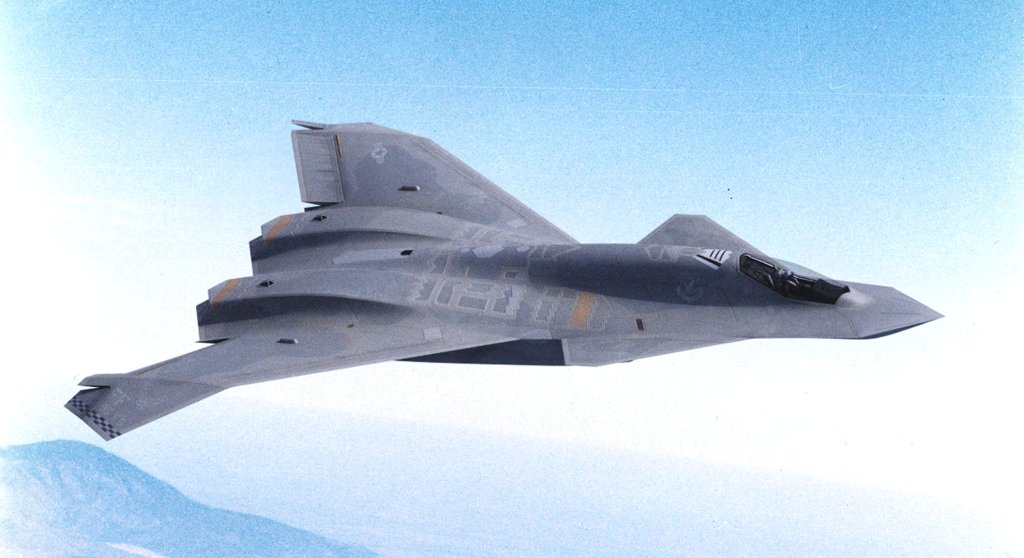
There are still questions about what engines the F-47 will use, even just initially. The Air Force has been pursuing so-called adaptive cycle designs through an adjacent effort known as the Next Generation Adaptive Propulsion (NGAP) program. General Electric and Pratt & Whitney have been working on competing designs, known as the XA102 and XA103, under NGAP.
In very general terms, adaptive jet engines have bypass ratios that can be adjusted on demand while in flight between modes optimized for fuel efficiency or power. With this kind of propulsion, a tactical jet like the F-47 could switch between higher and lower bypass modes as appropriate for general cruising, including transits to and from operating areas, and actual combat. This would help conserve fuel, as well as extend the aircraft’s range and loiter time. As TWZ has noted in the past, this could be particularly valuable in a future high-end fight against China in the Pacific, where tankers would be in high demand and under threat, and available bases could be few and far between.
The General Electric video below offers a general overview of adaptive cycle technology in relation to that company’s XA100 engine, which preceded its XA102 design.
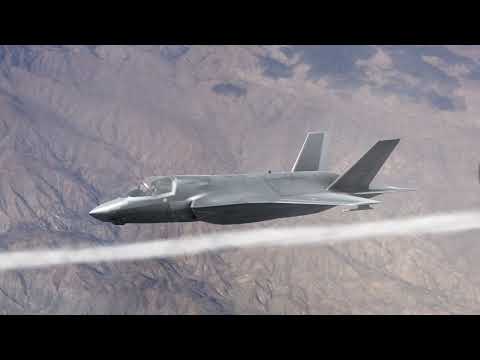
“General Electric’s advanced programs lead, Harvey Maclin, was at the time [of the X-36’s development] talking about fluidic thrust vectoring — injecting air into an engine’s exhaust on one side or the other — as a solution that did not involve stealth-defeating outside flaps,” Sweetman wrote in a piece for the Australian Strategic Policy Institute (APSI), which was published on June 16. “Maclin was GE’s advocate for an engine design (the Controlled Overall Pressure-ratio Engine) that had evolved from the variable-bypass F120, the losing candidate for powering the ATF. This new design could switch from a configuration good for subsonic flight (as a turbofan) to a turbojet mode that could push a fighter through the air supersonically without afterburning – that is, it could cruise supersonically. The design was the direct ancestor of today’s adaptive engines and a perfect match for an X-36-like combat aircraft.”
Supercruise is a huge factor here. As mentioned earlier, this is a key capability for the F-22, with its two F119 turbofans. However, the Raptor also has a notoriously short combat radius. Its design is optimized for higher-speed flight, but it still consumes a lot of gas in supercruise. As such, F-22s typically only use their ability to cruise supersonically for relatively short dashes. The jets also regularly fly with underwing drop tanks to extend their range and on-station time, but this negatively impacts their radar signature. Stealthy drop tanks are now in development as part of a larger Raptor 2.0 upgrade package. TWZ has discussed much of this in the past in a detailed piece that explored what might be expected from the NGAD combat jet in terms of performance, which was published years before the F-47 selection.
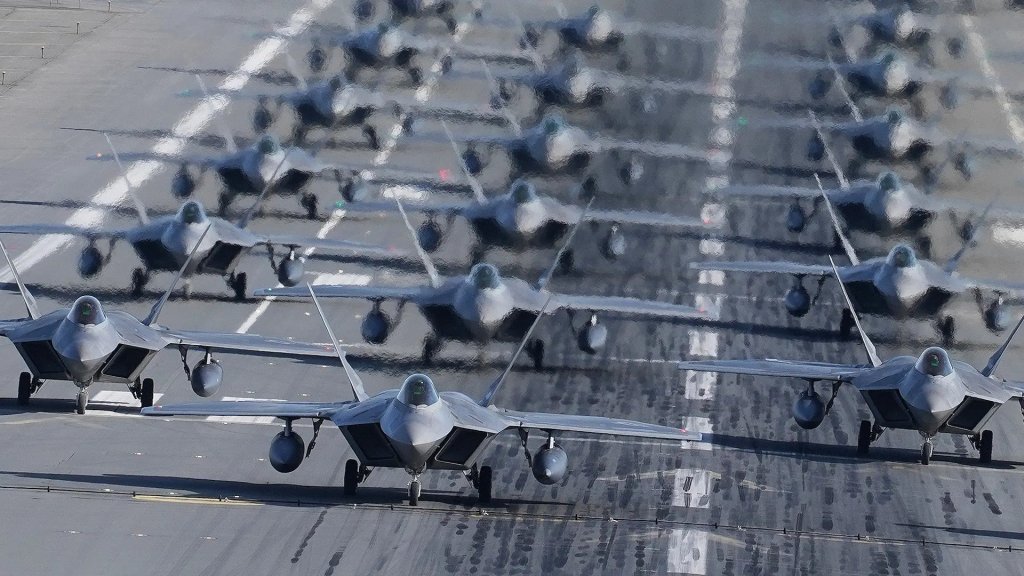
Unrefueled combat radius and maximum range requirements are also key parts of this equation.
“My preference would be one of the newer types that are compound engines with variable flow, where they have [the] capability to operate both as what you call a turbofan and as a turbojet,” Cummings also told us. “They’re more complex, but I think in the end you would get the kind of range you’re going to need out of this airplane in the Indo-Pacific region. I think the range, just my estimations, I think the range is going to be double that of the F-22. I think it’s going to have to be double to get the range in the Indo-Pacific region.”
“It’s not, but I think it will be,” he added when asked if he felt this view was reflected in what has been seen on the F-47 design so far. “I think it will be part of the design. I think the engine will have to meet the needs of extremely long range. That’s my opinion.”
As noted earlier, the Air Force has said the F-47’s combat radius will be “1,000+” nautical miles, which is long, but not necessarily as long as many were expecting. The infographic that provided the specifications for the service’s forthcoming sixth-generation fighter also offered figures for the F-22 (590 nautical miles) and the F-35A (670 nautical miles). Based on the official data, the F-47 will offer at least a roughly 30 percent boost in combat radius over the F-35A. This is broadly similar to what the Navy has said it is aiming for with the F/A-XX in terms of range extension (a 25 percent increase) compared to existing types.
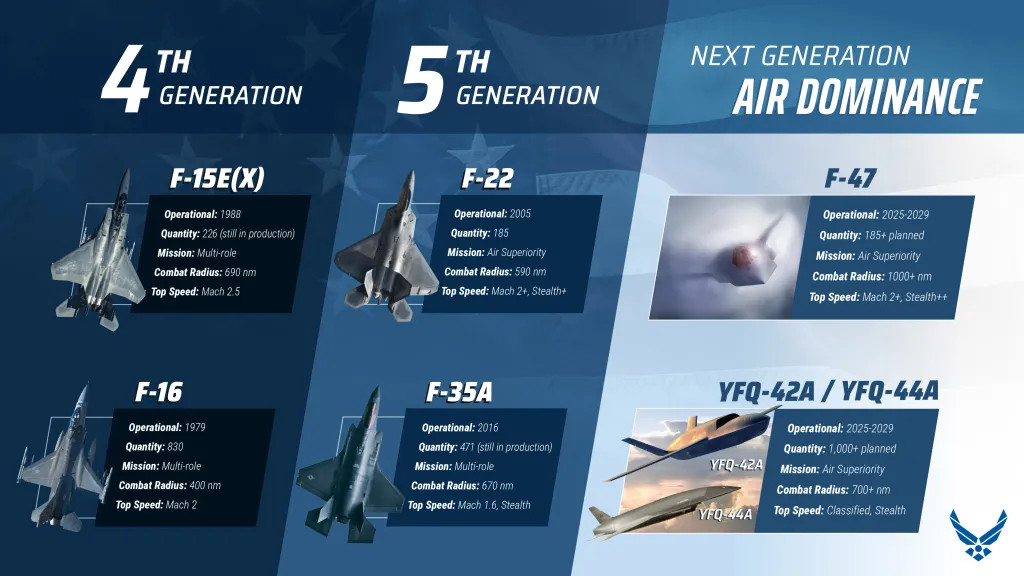
As mentioned in the discussion about the wings, the need to carry sufficient fuel to meet (or even exceed) unrefueled range targets will have impacts on various aspects of the design. This would notably be another potential trade-off when it comes to determining the size and configuration of the weapons bays.
There are other performance parameters to consider, as well, including operational ceiling. F-47’s capability in this regard is expected to be in line with that of the F-22, which is capable of regularly operating at over 60,000 feet. Flying at similar altitudes and being able to remain there longer would be advantageous for the F-47. A perch like this would extend the reach of its weapons and increase the field of view for its sensors. This would also be very beneficial for line-of-sight datalinks, including those used to control drones.
Another outstanding question is whether the F-47 might be a single- or two-seat design.
“I suspect it will be [a two-seat] one. There’s been a lot of talk about having a two-place [design] to operate the CCAs, but I don’t know – it would have to be in the requirements to start with,” Cummings said. “The way they would do it was, there would be, like the F-18 [F/A-18 Hornet], there would be a common fuselage that accommodated both a single and a two-place [configuration] from day one. You would do it from day one. You wouldn’t do it later.”
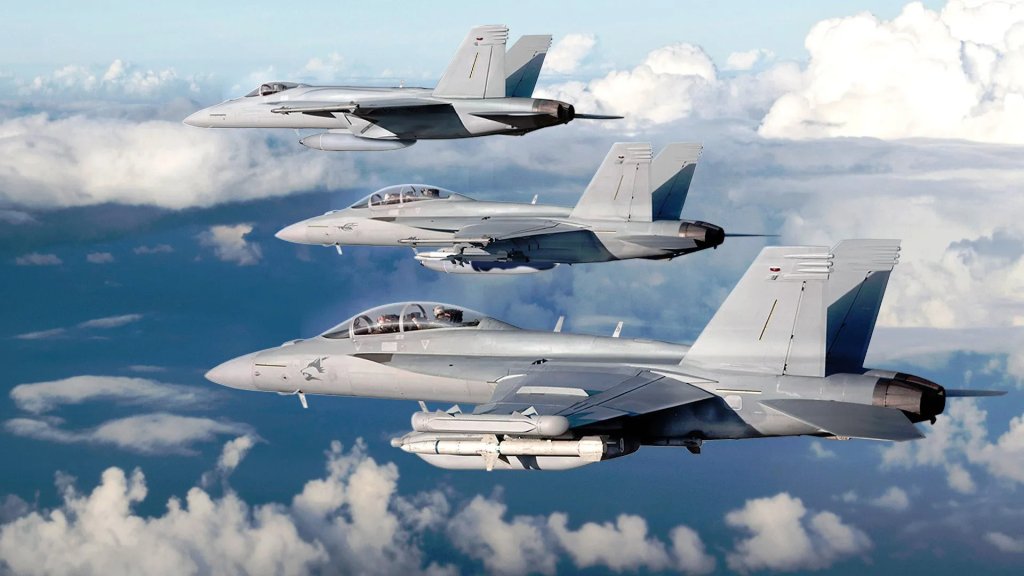
TWZ has long highlighted the value of two-seat designs, including the Air Force’s new F-15EX Eagle II, in the airborne drone controller role. Cumming said that if it were up to him, he would have a two-seat version available for this reason.
“I’m looking at what’s going on with the CCAs. I would at least have a two-place version on paper,” he said. “Because, and again, this is just my opinion, with all the information that’s coming in, especially like on F-35, all the information that’s coming in on all the other threats and everything else that’s going on, to do that, along with operating the CCAs, to me [it] would be a bit overwhelming. And if they’re really, really going to have that many CCAs in the air, again, just to me, it just seems reasonable and logical to have a second seat, at least in some versions.”
Advances in autonomy, helped by developments in artificial intelligence and machine learning, could help reduce the workload to a level that is more manageable by a single pilot. There would still be major tradeoffs to doing this, especially given the broader complexities of the missions that F-47s are expected to be tasked with.
Go with what you know
At the end of the day, one of the biggest factors for Boeing in designing the F-47, and that of its progenitors, may just be efforts to leverage past work on designs like the Bird of Prey and the X-36 to help burn-down risk. Broader institutional practices can also drive companies to lean toward particular designs as a rule.
“It’s been my expectation that Boeing would lean heavily on their experience with Bird of Prey and the X-36. It’s deeper than risk reduction in the traditional sense,” Steve Trimble, another long-time aviation journalist, Aviation Week‘s defense editor, and friend of TWZ, told us. “These companies have a system of design codes that they’ve built up over decades that they stray from at their peril. You build what you know, in other words.”
“Beyond that, it’s difficult for me to comment knowledgeably about why Boeing went this route versus a tailless delta. They obviously committed to that approach three decades ago for a reason,” he added. “Darold Cummings has spoken about how difficult it was to make his Christmas Tree design for Northrop controllable, but Boeing accepted a similar challenge. One would presume that their analysis showed it was worth it. But I don’t feel knowledgeable enough to speculate on their reasons.”
“I didn’t have any particular expectations. Western concept art is usually misleading and has no input from the high side,” Sweetman also told us. “I had seen what I thought was some X-36 legacy in the 2025 concept, but would not have gone there without the connection of Wiechman consulting for the RCO [Rapid Capabilities Office] (and presumably the APO [Aerospace Projects Office] too).”
The Wiechman mentioned here is Alan Wiechman. He “began his career at Lockheed Martin’s Skunk Works, supporting the HAVE BLUE, Sea Shadow, and F-117 Nighthawk” and then later worked for McDonnell Douglas, where he “contributed to many efforts including the F-15, F-18E/F, F-23, X-45, X-36, the Boeing Bird of Prey, and other classified activities,” according to an obituary following his passing in 2023.
The Rapid Capabilities Office that Sweetman referred to is a U.S. Air Force organization that has led work on several cutting-edge, high-priority programs over the years, including the development of the B-21 Raider stealth bomber and the X-37B reusable spaceplane. The Aerospace Projects Office is part of the Defense Advanced Research Projects Agency (DARPA). DARPA had a direct hand in the crafting of at least two classified X-plane demonstrators that fed into the Air Force’s Next Generation Air Dominance (NGAD) program, which birthed the F-47.
“Wiechman’s obituary in 2023 noted that he had ‘most recently’ been an adviser on stealth to the USAF Rapid Capabilities Office,” Sweetman also wrote in his APSI piece. “And now there’s an X-36-like shape over Nevada.”
At several points during his interview with us, Cummings also reiterated his particular design preferences.
“If I were doing the airplane, and I’ve done it, I would use the longest straight edge possible,” Cummings told us. “Looking down from the top or the bottom, you really couldn’t see the inlet, it would be underneath the wing, and you would use the MANTA-type 3D thrust vectoring. To me, that would be the optimum.”
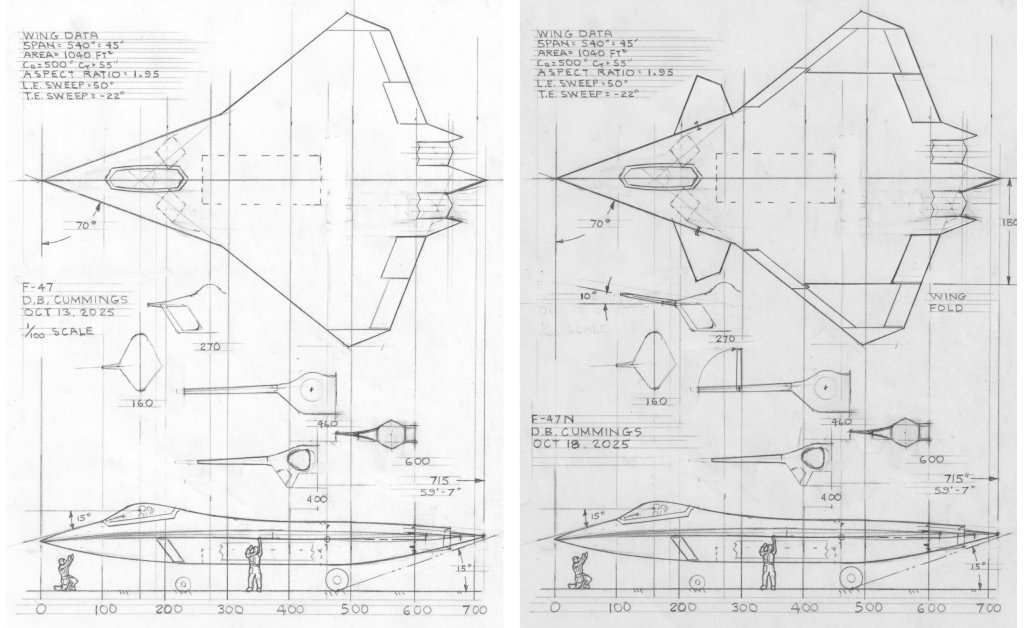
“The ‘Christmas Tree’ design, to me, is not a very maneuverable airplane. It’s not very maneuverable, because it really has difficulties at high-angle-of-attack maneuvering, like tight turns, because you have the way the surfaces are laid out,” he added. “For an overall airplane that’s not a four-spike, I would rather do the designs … like the MANTA type of a layout than what we’re seeing in the pictures of what they’re saying is the Boeing F-47.”
Lingering questions
Many questions still remain as to why the Air Force would pursue a sixth-generation fighter with rear-swept wings and canards rather than a more triangular, modified delta-wing planform. As noted, the design that looks to be emerging now could offer greater maneuverability, but also trade-offs in other capabilities as a result. This is all despite a steady trend in downplaying the importance of maneuverability in future aerial combat and focusing more on engaging threats beyond visual range, hopefully before friendly forces are even detected. This has been going on for decades now, and has been fueled further by the advancement of stealth technology and deeply networked ‘kill webs’ that incorporate assets from across air, land, sea, space, and even cyberspace domains.
“The other thing is, it’s really interesting when we did it with YF-23 – and this is, again, 43 years ago – the whole thing was first shot, first kill,” Cummings noted in speaking with us. “Before the enemy even saw, you killed them. You don’t really need to maneuver.”
As another point of comparison, despite its previous experience with fourth and fifth-generation canard fighters, China has notably gone in the opposite direction with its next-generation J-36 heavy tactical jet and, to a lesser extent, the aforementioned J-XDS. The J-36’s planform is clearly optimized for straight-line performance, combat radius, and payload over maneuverability and agility. The smaller J-XDS presents a more balanced design, but one that is still not likely to possess extreme agility. Much debate remains about the expected mission profiles of both of these aircraft, and how that influenced their design. TWZ explored all of this in far greater detail in a feature last year.
As highlighted at the start of this story, years of prior concept art from U.S. companies, including Boeing, had also largely pointed to a canard-less, tailless delta-wing design being in line to become the U.S. Air Force’s next-generation fighter. Canards have been present, on-and-off, in renderings of notional sixth-generation carrier-based designs for the U.S. Navy.
It’s worth pointing out here that we also have very little information on the designs that lost out to the F-47. In 2025, former Secretary of the Air Force Frank Kendall said that Boeing’s design was distinctly different from the competing entry from Lockheed Martin, but did not elaborate further. He also described both designs as viable. Kendall’s remarks came during an edition of the Defense & Aerospace Report‘s Air Power Podcast.
How the Air Force’s Agile Concept Employment (ACE) concepts of operations could have shaped the selection of the F-47, and the aircraft’s design, is something else worth considering. ACE is a set of concepts for distributed and disaggregated operations that puts heavy emphasis on deploying forces rapidly or in an otherwise irregular manner, to forward locations that may be remote, austere, or otherwise non-traditional in nature.
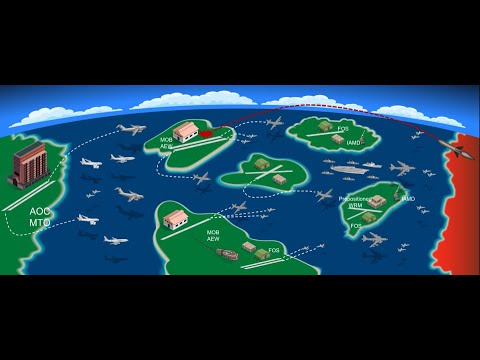
ACE is seen as critical for enabling future operations and reducing the vulnerability of friendly forces, especially in a high-end fight, such as one against China in the Pacific. New logistics and other requirements are also now emerging, particularly when it comes to what will be necessary to push stealthy platforms with more specialized maintenance requirements far forward. The demands of ACE operations are already known to be deeply baked into the Air Force’s requirements for its future CCA drones. It could very well be that this unique canard and rear-set wing design was significantly better than a modified delta for operating from shorter fields, we just don’t know.
The first F-47 is in production now, and the Air Force has publicly said that it is targeting a first flight in 2028. Despite some speculation about what was seen in the Project Fear video, there is no hard evidence so far that it has already entered flight testing. The Air Force will eventually have to show the actual design to the public, at least in part, with the fighter set to be the service’s premier tactical aviation asset, starting hopefully in the early 2030s.
There is always the possibility that the actual F-47 looks quite different from what we have seen so far, and even does away with the canards. We have no indication that this is the case at this time. In fact, now with this demonstrator aircraft, everything points to that not being the case.
As progress continues on the F-47, more insights into what certain design decisions were and what benefits they offer, as well as more details about their origins, should emerge. For now, it is interesting to see a design continue to materialize that is distinctly different from what many were expecting the Air Force’s sixth-generation fighter to look like.
Special thanks again to Olivier Vargas for sharing his interpretation of the design seen in the Project Fear video.
Contact the author: joe@twz.com
Loading comments…
Comments couldn’t be loaded. Please refresh the page.