
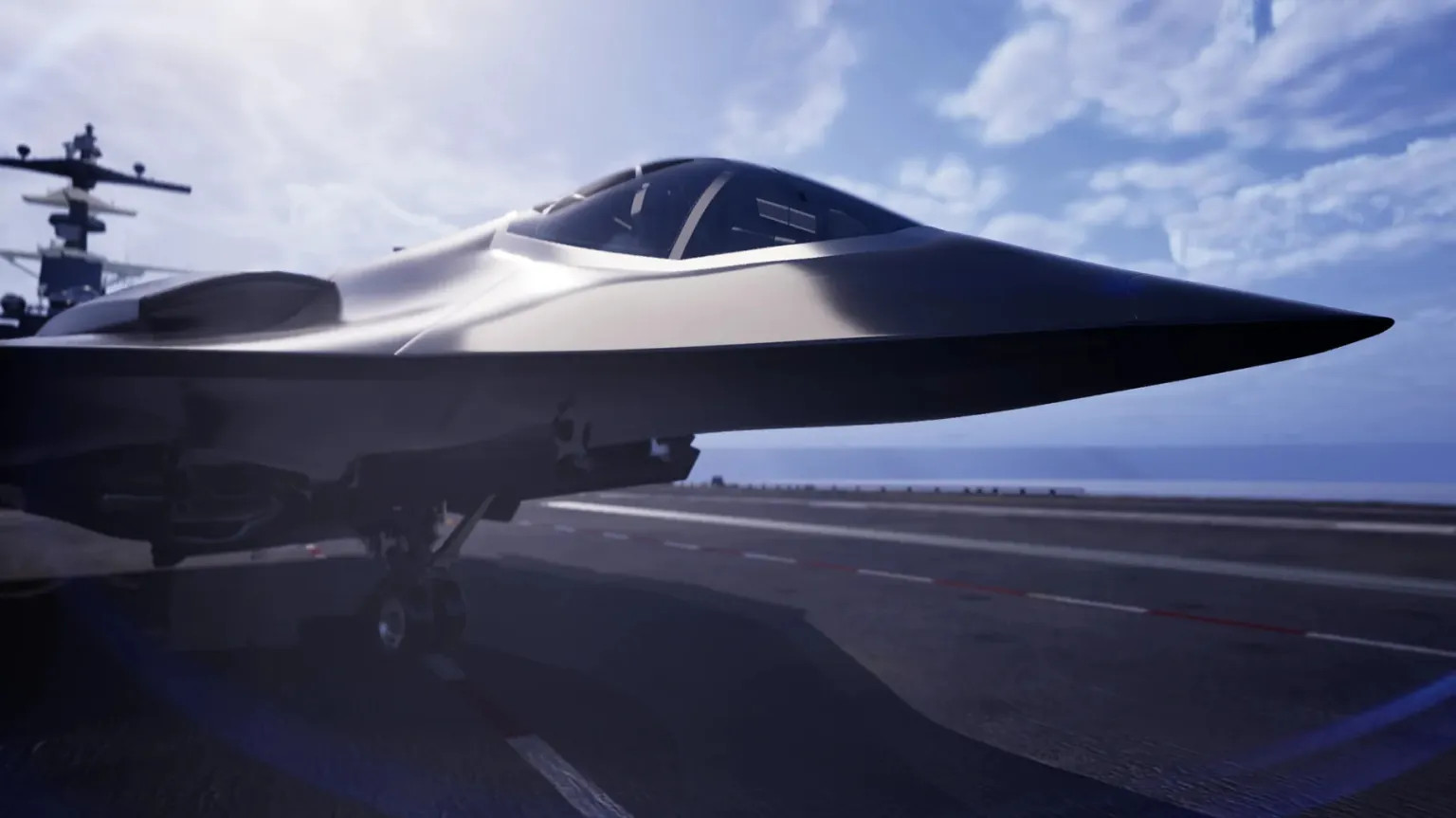
Driven by a race to get ahead of quickly evolving enemy capabilities, the U.S. Navy is now aiming to enter the next step of contracting for its 6th-generation crewed fighter – known as F/A-XX – by August. Despite intervention from Congress, the next-generation carrier-based fighter has remained in limbo since the Pentagon moved to effectively shelve the program last year.
That’s according to Chief of Naval Operations (CNO) Adm. Daryl Caudle, who spoke with reporters Monday at the Sea-Air-Space 2026 exposition near Washington, D.C. In response to a question from TWZ, Caudle acknowledged the uncertainty that has kept F/A-XX in a holding pattern, even as the Air Force’s future fighter, dubbed the F-47, has forged ahead. The current competitors for the F/A-XX are Boeing, which is also the F-47’s prime contractor, and Northrop Grumman.
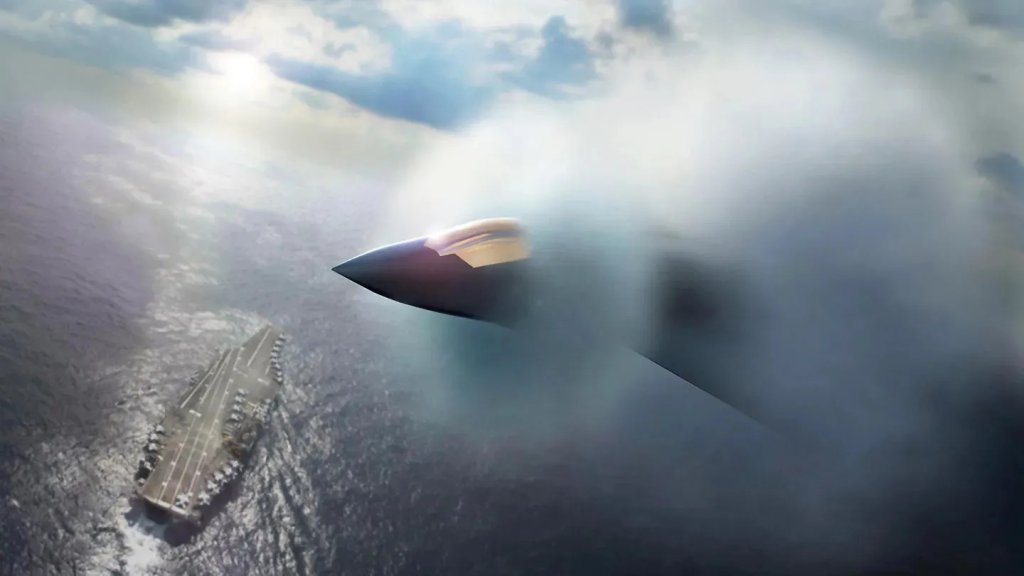
“One of the challenges we’re seeing is, not only [are] our peer competitors improving their capability for anti-air, either air-to-air or surface-to-air, but the lower cost of entry of very capable weapons is also making more players on the field in which that level of stealth and technology is required,” Caudle, the Navy’s top officer, said. “So this is not about the need for a peer adversary. This is just having an aircraft that can operate with a level of uncertainty and with the acceptable level of risk.”
This is in line with arguments Caudle made in favor of moving ahead of F/A-XX in January, where he cited growing threats posed by smaller nation-state adversaries, including Iran, as well as non-state actors.
Today, Caudle again emphasized that he nevertheless had been “very vocal” on the need for a carrier-based next-generation fighter, and had expressed “many times” to Deputy Secretary of War Steve Feinberg that the service had to secure the aircraft. It’s important, Caudle said, for both the future carrier air wing and collaboration and planning with the MQ-25 Stingray, the Boeing-made carrier refueling drone set to reach initial operational capability later this year.
“It ties to our MQ-25 for stealth refueling. It ties to our reach. It ties to the work we’re doing for making the carrier air wing something that remains very effective into the future based on the range in which you can operate safely,” Caudle said. “So the need’s clearly there.”

While it was recently reported that the Navy, bolstered by funding from Congress for the new F/A-XX, planned to award a contract for the program by year end, Caudle said August was now the likely timeframe.
As noted, the Pentagon had moved to essentially shelve F/A-XX in its Fiscal Year 2026 budget request, with the Navy only requesting a relatively meager $74 million for the program. U.S. officials said at the time this decision had been driven largely by concerns about the ability of the U.S. industrial base to support work on two sixth-generation fighters, the other being the F-47, simultaneously.
Congress subsequently interceded, appropriating $1.69 billion for F/A-XX through a combination of regular spending bills and the One Big Beautiful Bill Act. From a budgetary perspective, the Navy’s next-generation fighter program remains well behind the F-47, which has already received billions in funding and could be in line to get approximately $5 billion more in Fiscal Year 2027. The Navy only appears to be requesting an additional $140 million for its new carrier-based combat jet in the $1.5 trillion proposed defense budget for the next fiscal cycle.
“We’ve got a lot of airframes out there. We’ve got an F-35 program. We’ve got a F-47 program. You know, we’re still building the [F/A-18 Super Hornet] … there’s a lot of airplanes being built,” Adm. Caudle said today. “The Air Force has got a lot of demand on the system. The Navy’s got a lot of demand … One of the contractors who would make this plane for us is in a place where they really can’t deliver in the timeframe we need it. So there was, you know, a check twice, cut once, kind of mentality here on this decision. And now there, I think we’re all on the same page on the reason why the hard look needed to be done. I’m good with it.”
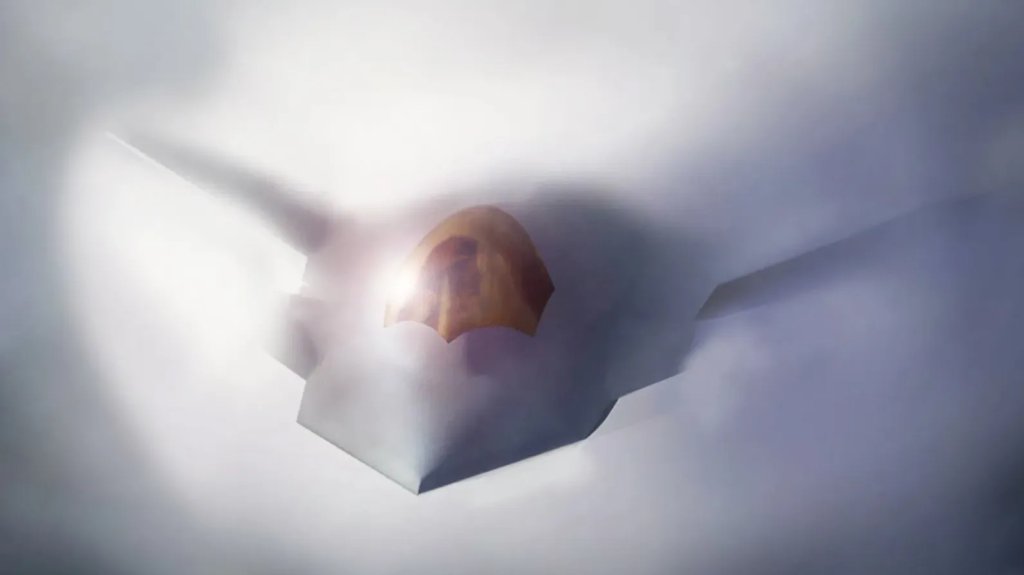
As noted, Boeing and Northrop Grumman are in competition to produce the F/A-XX, a program that first took shape as a Navy request for information in 2012. An earlier down-select reportedly eliminated Lockheed Martin in March 2025. Last August, Northrop Grumman released a rendering of its concept for the aircraft, showing a streamlined nose and landing gear on the front of a carrier with the tagline, “Project Power Anywhere.” Boeing’s concept, released the same month, drew visual comparisons to its F-47 Next-Generation Air Dominance fighter for the Air Force.
Citing classification, Adm. Caudle said today he couldn’t provide any information on design or payload details that give the Navy confidence in pursuing F/A-XX despite the adversary threats he mentioned. However, he suggested speed was increasingly essential to having a chance at maintaining overmatch.
“We monitor very closely, red-team that very hard, and assess that threat with a predicted trajectory of whether or not the existing designs we’ve seen will still overmatch that,” he said. “So I think we’re okay there, but we do know that our existing airframes could become vulnerable to some of those threats by the time [it’s fielded] … because it takes time to deliver that, that our existing airframes could be vulnerable to some of those threats, and we want to make sure the air wing of the future can still participate.”
Despite Caudle’s comments today, it should be remembered that this is not the first time that major progress on the Navy’s next-gen fighter has supposedly been imminent. Last October, Reuters reported the program had been greenlighted by Secretary of War Pete Hegseth, with a contract expected to follow in short order.
Aside from funding moves from Congress to ensure the survival of the F/A-XX program, no public steps have been taken to advance the program since.
Contact the editor: Tyler@twz.com
Loading comments…
Comments couldn’t be loaded. Please refresh the page.