
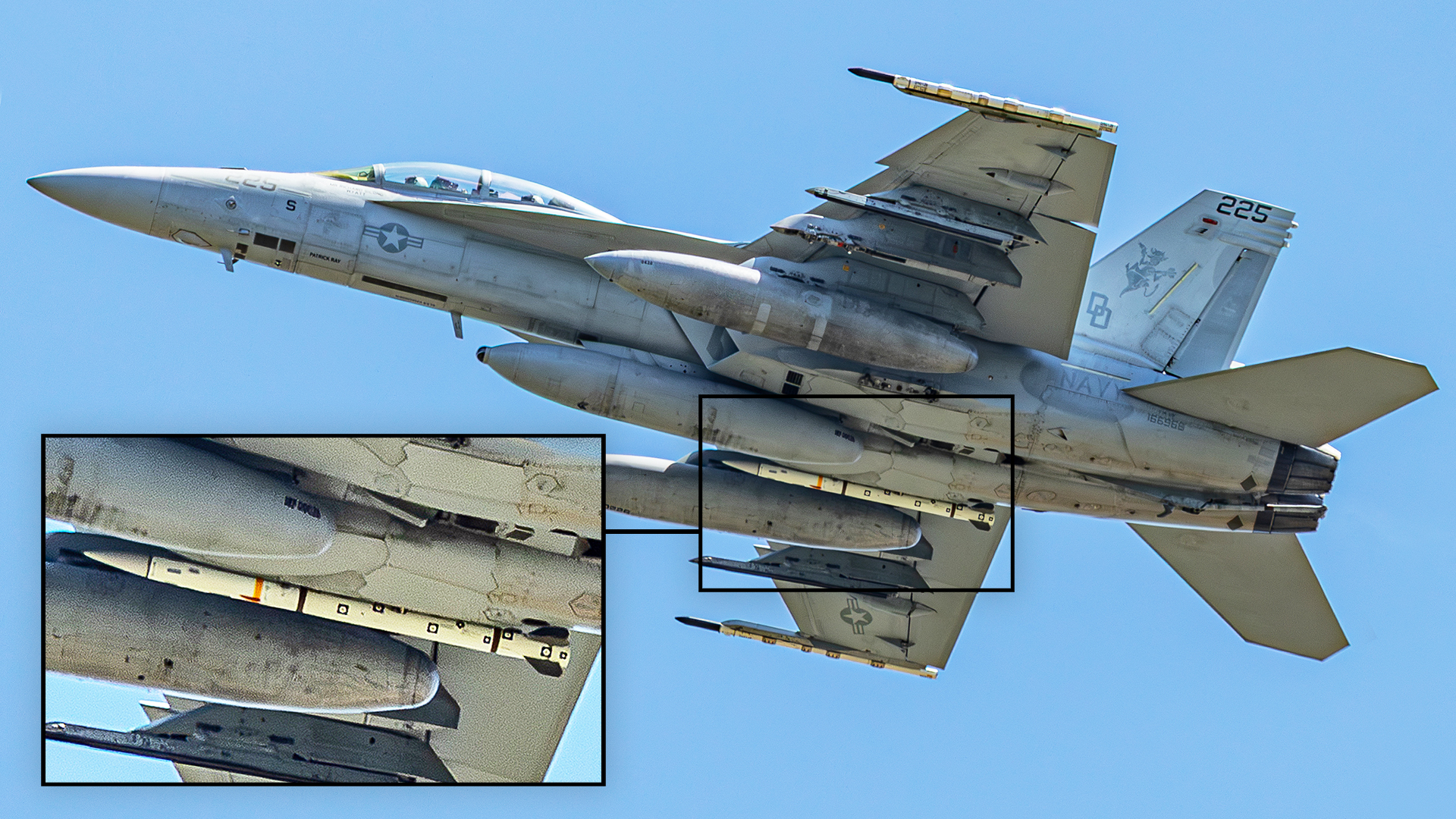
The first picture of the U.S. military’s new AIM-260 Joint Advanced Tactical Missile (JATM) has emerged. Flight testing of the JATM is known to have started years ago, but it has never been seen publicly before now. The missile is expected to augment and ultimately replace the venerable AIM-120 Advanced Medium-Range Air-to-Air Missile (AMRAAM) in U.S. service.
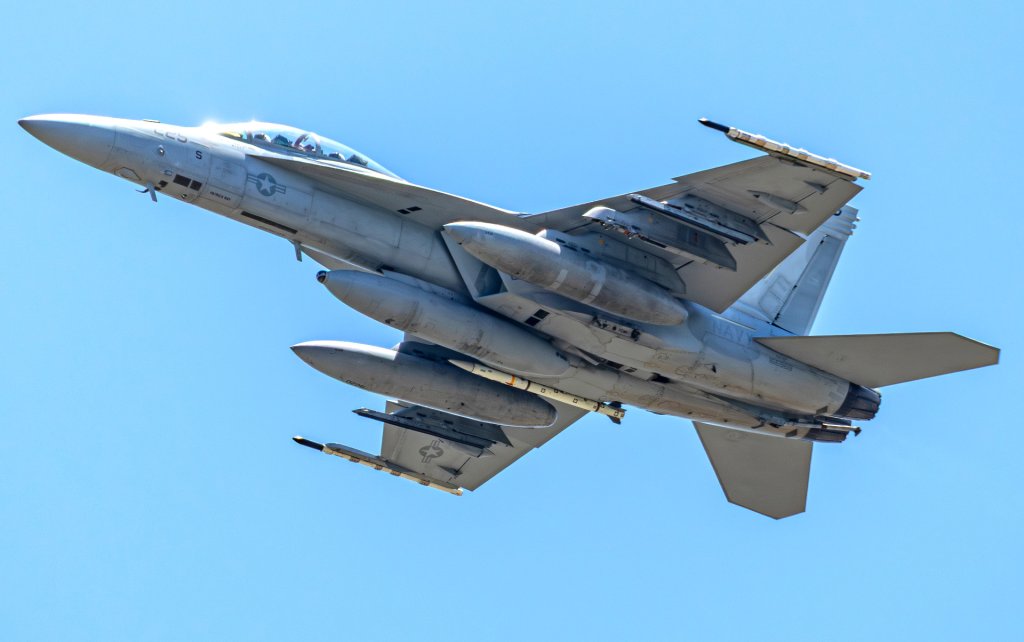
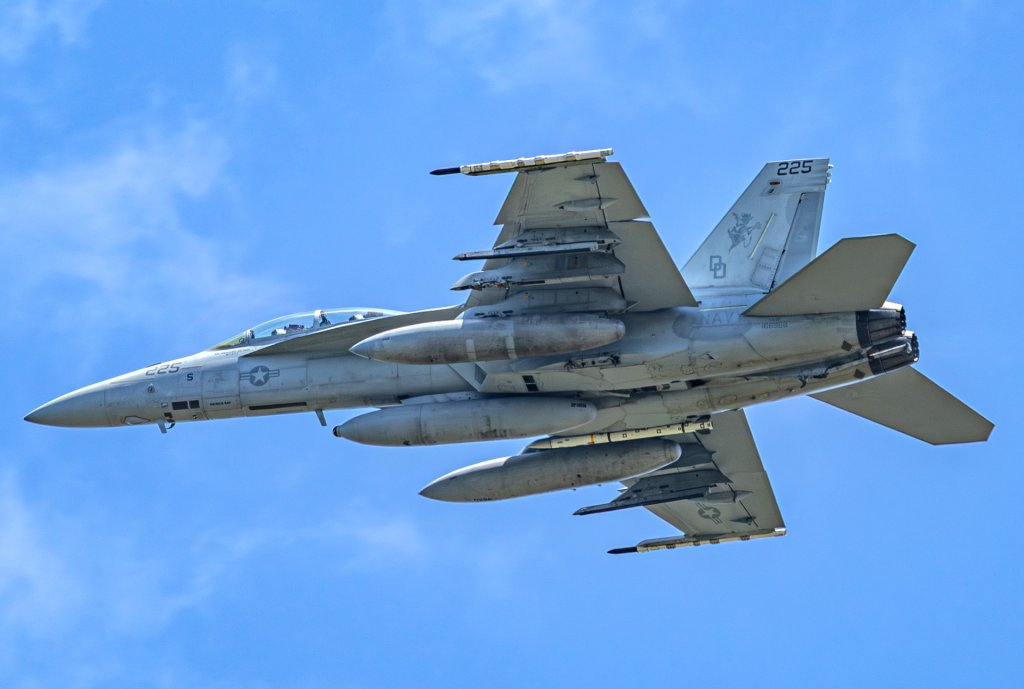
Photographer Jonathan Tweedy took pictures of several U.S. Navy test jets departing Eglin Air Force Base in Florida on May 13. This included an F/A-18F Super Hornet from Air Test and Evaluation Squadron 31 (VX-31) carrying the AIM-260 on the fuselage station outboard of its right engine intake. The jet also has a modified FPU-13/A drop tank with an infrared search and track (ISRT) sensor on its centerline station, as well as flight data pods on its wingtips. The Aviationist was the first to publish Tweedy’s pictures of the VX-31 jet with the JATM.
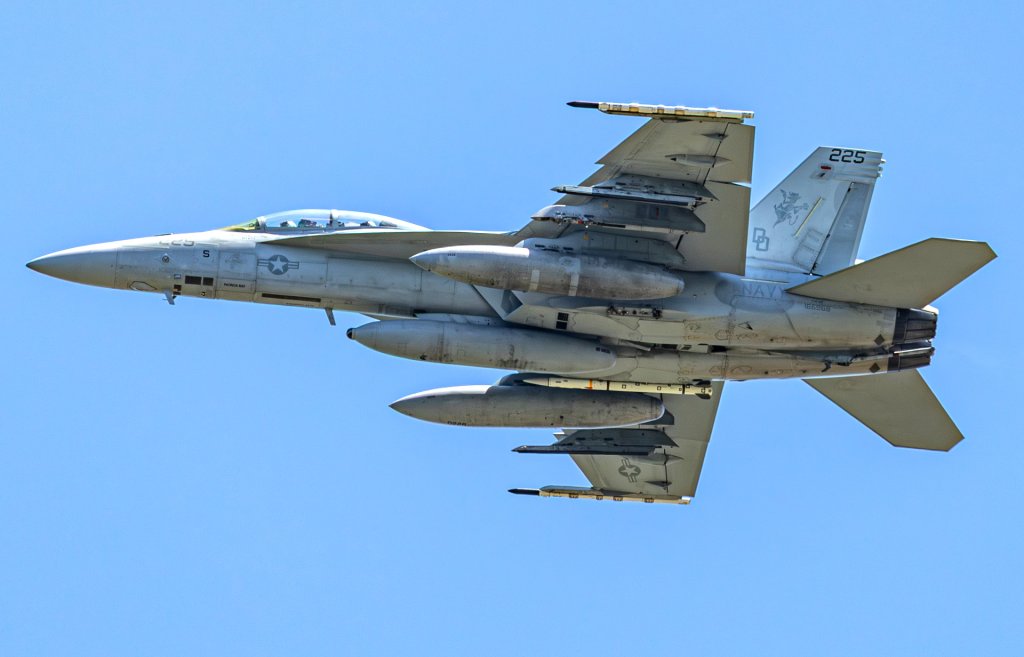
Eglin is routinely used as a staging point for U.S. military aerial weapons testing, as well as other aviation research and development and test and evaluation work. The base is situated right next to extensive over-water ranges over the Gulf of Mexico, off the coast of the Florida panhandle.
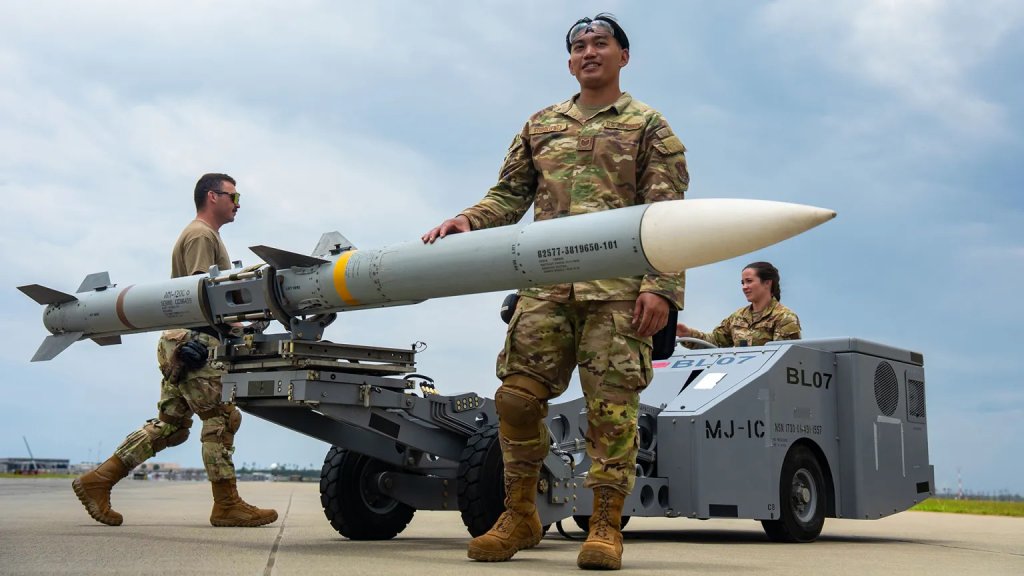
When it comes to the AIM-260, Tweedy’s picture confirms the design is very minimalist, at least externally, with only four fins at the tail. Unlike the AIM-120, it has no mid-body control surfaces, or even strakes running along the sides. The JATM’s overall configuration reflects optimization for maximum speed and range.
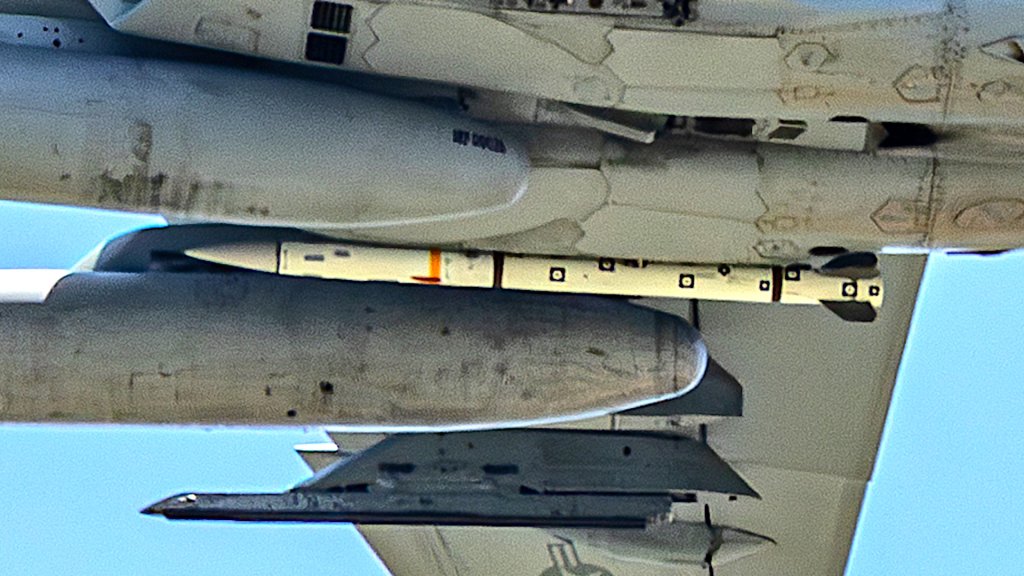
The JATM in this case looks to have a live high-explosive warhead, as indicated by a yellow band at the front end of the body. There are also two black bands toward the rear, which could point to the location of the missile’s rocket motor.
The nose cone has a distinct light gray color compared to the rest of the predominantly white body. There are square markings at various points at the rear of the body, which are often seen on aerial munitions and aircraft during testing to help with visual tracking, as well.
Overall, the AIM-260 seen in Tweedy’s pictures looks entirely in line with what had previously been depicted in official renderings of the JATM, both in terms of its design and markings.
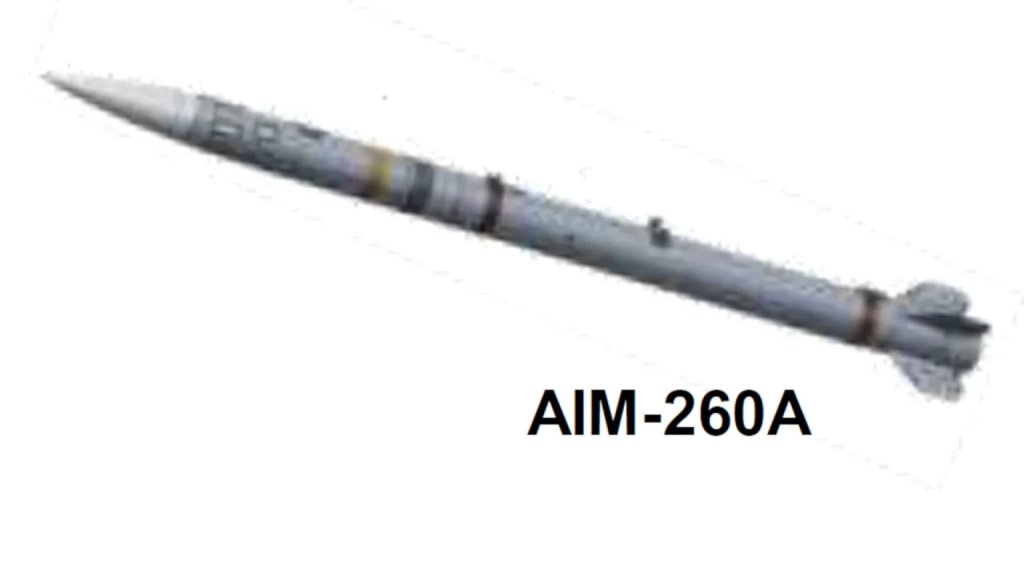

The Navy is developing the AIM-260 in cooperation with the Air Force. In the past, officials have explicitly cited the growing reach of Chinese air-to-air missiles, and the PL-15 in particular, as key drivers behind the JATM program. China continues to develop and field more capable air-to-air missiles, as you can learn more about this past TWZ feature. A boost in maximum range is therefore known to be a central requirement for the AIM-260, which is reportedly designed to hit targets out to at least 120 miles, if not further.
Another known requirement for the AIM-260 is to have a form factor that is roughly the same as the AIM-120, making it easier to integrate on existing aircraft. Details about the JATM otherwise remain limited. As TWZ has previously written:
“An advanced rocket motor with highly loaded propellant has long been seen as a likely route to give the AIM-260A significantly greater range, as well as speed, over the AIM-120 without making the new missile larger. A core known requirement for the JATM is that it has to have the same general form factor as the AMRAAM, in large part to ensure that it can fit inside the internal bays on stealth fighters like the F-22 and the F-35 Joint Strike Fighter. In addition to crewed aircraft, AIM-260As are expected to arm future stealthy drones like the ones under development under the Air Force’s Collaborative Combat Aircraft (CCA) program.”
…
“The AIM-260A’s rocket motor is also likely to be a dual-pulse design that retains energy across the flight envelope to further extend range and help dramatically with endgame maneuverability. Thrust vectoring capability would also be a requisite to give the missile sufficient agility in the absence of additional control surfaces.”
…
“An active electronically scanned array radar (AESA) seeker is likely. Multi-mode seeker capability, potentially with imaging infrared and passive radiofrequency (RF) guidance capabilities, could be extremely valuable in the face of an ever-expanding countermeasure ecosystem, although we have no idea if this is a feature now or not. It’s also possible it could be introduced in later variants. Advanced networking capabilities would be a key feature, allowing the missile to get additional targeting information from an array of third party sources. This is especially imported for engaging targets beyond the reach of the launch platform’s own sensors and it can allow the aircraft firing the missile, especially a stealthy one, to avoid having to switch on its radar and increase its vulnerability to detection as a result. Multiple networked JATMs might even be able to prosecute engagements cooperatively.”
Overall, the JATM program, which traces back to at least 2019, remains largely classified. As noted, flight testing of AIM-260 has been underway for some time and has already included multiple live-fire shots. There has also been movement in recent years to get the missile into production and fielded operationally.
Navy Super Hornets, along with U.S. Air Force F-22 Raptors, are expected to be the first types to fly operationally armed with AIM-260s. The missiles will surely be integrated onto a host of other aircraft, including the Air Force’s future F-47 and whatever design the Navy might choose to become its sixth-generation F/A-XX fighter.
What the projected timeline might be for the AIM-260 entering operational service now is unclear. When the program first emerged publicly in 2019, the goal was for the missiles to be fielded in 2022. There were reports late last year that JATM had suffered a new three-month delay due to funding issues, based on a fact sheet distributed by some members of the U.S. House Committee on Armed Services. However, the committee subsequently said that the information was incorrect.
As an aside, the Navy announced back in 2024 that it had begun limited fielding of another, different very-long-range air-to-air missile, the AIM-174B, which is derived from the surface-launched Standard Missile-6. The AIM-260 is expected to be complementary to the AIM-174B, as you can read more about here and check out our video below.

The first public sighting of an AIM-260 this week certainly points to new progress toward finally fielding this new air-to-air missile.
Special thanks again to Jonathan Tweedy for sharing the pictures of the AIM-260 on the VX-31 Super Hornet with us.
Contact the author: joe@twz.com
Loading comments…
Comments couldn’t be loaded. Please refresh the page.