

Newly teamed-up Northrop Grumman and Embraer are hoping that a boom refueling system-equipped version of the latter’s KC-390 Millennium twin jet engine tanker-transport will catch the eye of the U.S. Air Force. The two companies say the KC-390’s size and other attributes make it ideally suited to kinds of ‘agile’ distributed operations the Air Force sees as essential for success in future conflict, especially one in the Pacific against China. This is exactly the case TWZ laid out in detail when the concept for a version of this aircraft fitted with a boom first emerged four years ago.
TWZ‘s Jamie Hunter spoke with representatives from Northrop Grumman and Embraer about current plans for the boom-equipped KC-390 on the show floor at the Air & Space Forces Association’s (AFA) annual Warfare Symposium. The two firms first announced their new partnership on this aircraft last week. Embraer had originally unveiled this version of the KC-390 together with L3Harris, but the latter was no longer involved in the project, at least at a high level, by October 2024.
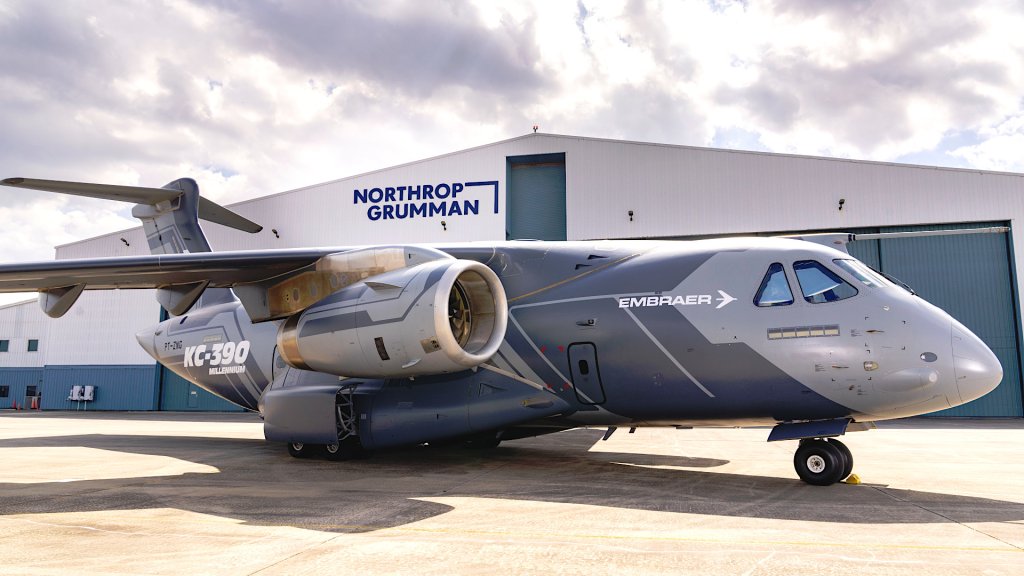
“We are excited to announce the partnership to get started on the development of this capability, because we believe it’s a significant advantage to our U.S. Air Force, as well as our international allies,” Craig Woolston, Vice President and General Manager of Research and Advanced Design within Northrop Grumman’s Aeronautics Systems sector, said at the Warfare Symposium. “Partnering our advanced manufacturing and experience in the past in this domain with a proven design, modern capability, we think is a differentiator in this mobility space.”
“With the KC-390, the boom is adding a capability to the refueling capability that is already there with the probe-and-drogue system,” Frederico Lemos, Chief Commercial Officer for Defense and Security International Business at Embraer, also said. “So, adding that capability, and the target is to maintain the multi-mission capability, to bring the KC-390 even more … Agile Combat Employment type of capability, [and be] able to perform all of these missions in a distributed, dispersed operation type of employment.”
Lemos also said his company is committed to investing in a U.S. production facility for the KC-390, but said those plans, including the choice of location, are still to be finalized. Melbourne, Florida, has been raised as one possibility. Embraer and Northrop Grumman both have facilities already, and they held an event there last week to unveil their partnership.
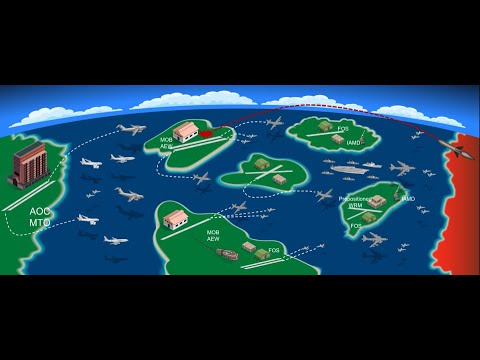
Agile Combat Employment (ACE) is the term the U.S. Air Force currently uses to describe a set of concepts for distributed and disaggregated operations. ACE is focused heavily on short notice and otherwise irregular deployments, often to remote, austere, or otherwise non-traditional locales. We will come back to this later on.
Development of the Millennium dates back to the early 2000s, originally just as a medium-sized jet-powered transport aircraft called the C-390 capable of operating from short and improvised runways. The ability to refuel receivers via the probe-and-drogue method was subsequently added to the design, resulting in its current “KC” designation. The aircraft can itself be refueled using this method via a probe that extends out from the front end of the fuselage above the cockpit. The KC-390 is loosely comparable in size and other respects to the turboprop-powered C-130 Hercules.
Further KC-390 versions configured for maritime patrol, electronic warfare, and intelligence, surveillance, and reconnaissance (ISR) missions are also now in development. Millennium variants are in service today in Brazil, Portugal, and Hungary, with a number of other countries set to begin operating the aircraft in the coming years.

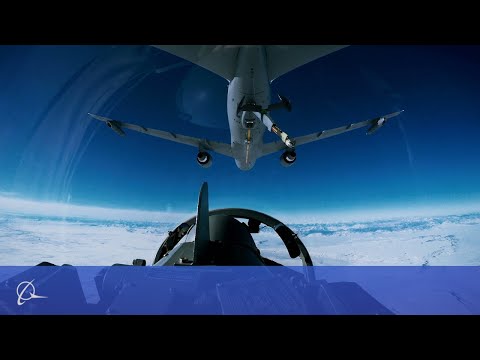
The U.S. Air Force’s preferred aerial refueling method is the boom, and it is used by the vast majority of its aircraft. L3Harris had previously talked about several options for integrating a boom onto the KC-390, including ones involving remote operation, broadly akin to what is found on the KC-46, or more direct operator control, as is the case on the KC-135. On KC-390s currently configured for probe-and-drogue refueling, an operator manages those systems from a station in the cockpit.
“We’re starting that development. We’re exploring the trade space of what is the best solution,” Northrop Grumman’s Woolston said when asked for more details about the boom integration plan. “I’ll say those decisions haven’t been made. Like I said, it’s a trade space to explore.”
Woolston did highlight a particular focus on “autonomous boom” capabilities to help “rapidly integrate with whatever aircraft or system we’re refueling,” but didn’t elaborate further. This may refer to more automated boom capabilities, which Boeing and Airbus have also developed, which can help speed up the refueling process, increase safety margins, and reduce operator strain. The future development and fielding of new aerial refueling-capable air combat drones will also benefit from, if not require, these kinds of capabilities.

“You know the [KC-]390 is a full fly-by-wire airplane, low-workload for the crew,” Embraer’s Lemos noted. “We already have a third position in the cockpit that is there, has access to all the information that comes in and out of the airplane. Helps today with their refueling missions, monitoring the cameras … , good situational awareness of what’s happening.”
Overall, the boom integration depends “on what multi-mission capabilities we want to retain on the KC-390,” according to Woolston.
“We already have additional tanks on the [KC-]390. They are roll-on, roll-out. They are the same size as a pallet, standard 463 pallet,” Lemos added. “So you can combine additional tanks with cargo and with passengers. That’s a big advantage in terms of flexibility, in terms of employment. And you can use the fuel of [sic] those tanks to fly further or to offload the fuel for a receiver. So the moment you connect those tanks to the airplane, it’s an integral fuel system, you can use that fuel the best way you see fit.”
Lemos also stressed that retaining the KC-390’s existing capabilities in the boom-equipped version means the aircraft will still be able to operate from short and/or unimproved runways.

All of this underscores how a version of the KC-390 with a boom could fit into an ACE scenario just like TWZ previously explored in-depth. As we wrote back in 2022:
“Overall, a KC-390 would provide a significantly smaller footprint than that of a traditional boom-equipped tanker, allowing it to work out of tighter airfields. L3Harris says that the boom-equipped KC-390 itself will still be capable of receiving fuel in flight. However, the model at the Air & Space Force Association Conference shows that it will have a boom receptacle above the cockpit instead the standard type’s refueling probe. Paired with its own refueling boom and the ability to carry out ground refueling operations for other aircraft, the KC-390 will be able to provide ACE deployments with a critical fuel lifeline, not just in the air, but also on the ground, and do so at significantly extended ranges.”
“With its own aerial refueling capability, an Air Force KC-390 could fly out to refuel from a larger tanker, such as a KC-46, and then return that fuel to austere airfields to be used by combat aircraft. Currently, only the service’s special operations-configured M/HC-130s can do that and they do not have a boom of their own so they cannot also provide fuel to Air Force receptacle-equipped aircraft, which accounts for nearly all of the force’s fleet. Basically, the KC-390 could allow for true ‘hub and spoke’ tanker operations, including from austere areas, during a major conflict. This could be especially attractive for refueling tactical aircraft, like fighters and eventually drones, from forward locales. Once again, currently, the Air Force doesn’t have a solution for this problem, which could make the KC-390 very attractive.”
“There are also the multi-role capabilities this aircraft provides, being able to move cargo and personnel to far-flung locations at jet speeds. Once again, this would support a hub-and-spoke concept of operations across a vast theater like the Pacific.”
…
“As noted earlier, the ACE concept will become especially prevalent as the United States continues to keep a pulse on China and any corresponding developments in the Pacific. Considering the sheer size of the region, maintaining the flexibility to disperse aircraft and other assets in less condensed groups will not only ensure widespread U.S. presence, but also prevent adversaries like China from targeting and taking out large amounts of aircraft and other capabilities by attacking just a handful of installations. It also greatly complicates the enemy’s own defensive strategy.”
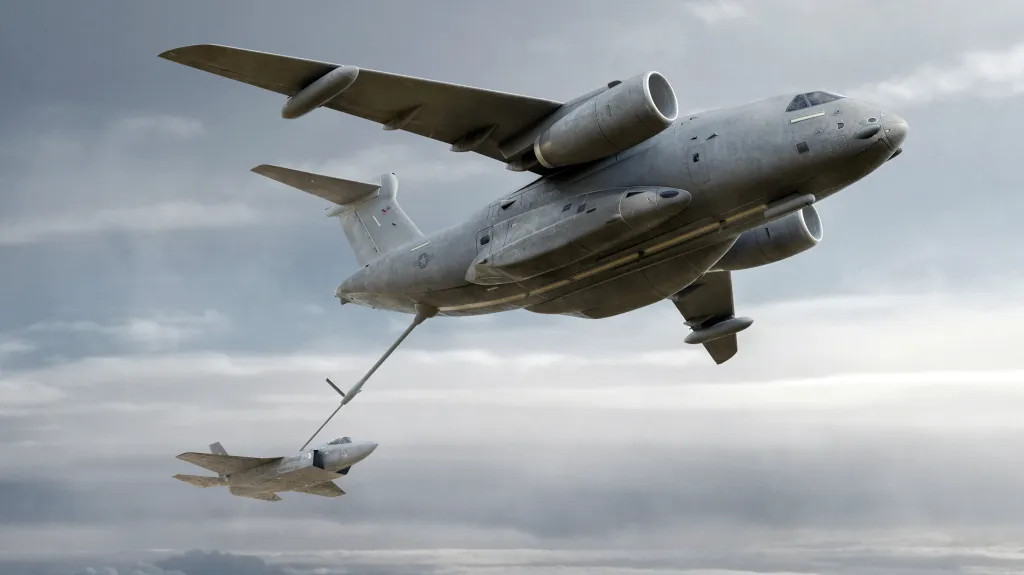
As an additional point, in the scenarios described above, KC-390s could refuel fighters right after takeoff from austere airstrips. Those tactical jets could, in turn, launch with lower gross weights to help get safely airborne from shorter runways. Part of the initial fuel load could also be traded for more munitions while retaining sufficiently low weight. Topping off after takeoff, as well as being able to refuel closer to a forward operating location on the way back from a mission, would give those fighters greater overall operational reach.
The KC-390’s capabilities could be further expanded by the use of podded and/or roll-on/roll-off communications, electronic warfare, and other capabilities. The U.S. Air Force’s Air Mobility Command (AMC) is already heavily investing in new networking and self-protection systems that can be added to tankers and airlifters, as necessary.
Beyond supporting the ACE construct, KC-390s could just help provide the Air Force with valuable added tanker capacity in general, including to help meet day-to-day training and other non-combat requirements. AMC has previously raised the possibility of acquiring a business jet-based tanker, which could also act as a similar gap-filler. U.S. military officials have been sounding the alarm for years now about the strain on existing tanker fleets and raising concerns about their capacity to meet even existing demands, let alone what would be required for a major sustained conflict.
This has been compounded by the growing age of the service’s Cold War-era KC-135 tanker fleet (and previously by that of the now-retired KC-10s), as well as persistent and often serious issues with newer KC-46s. The increasing vulnerability of traditional tankers based on airliner-type designs has also been a cause for concern.
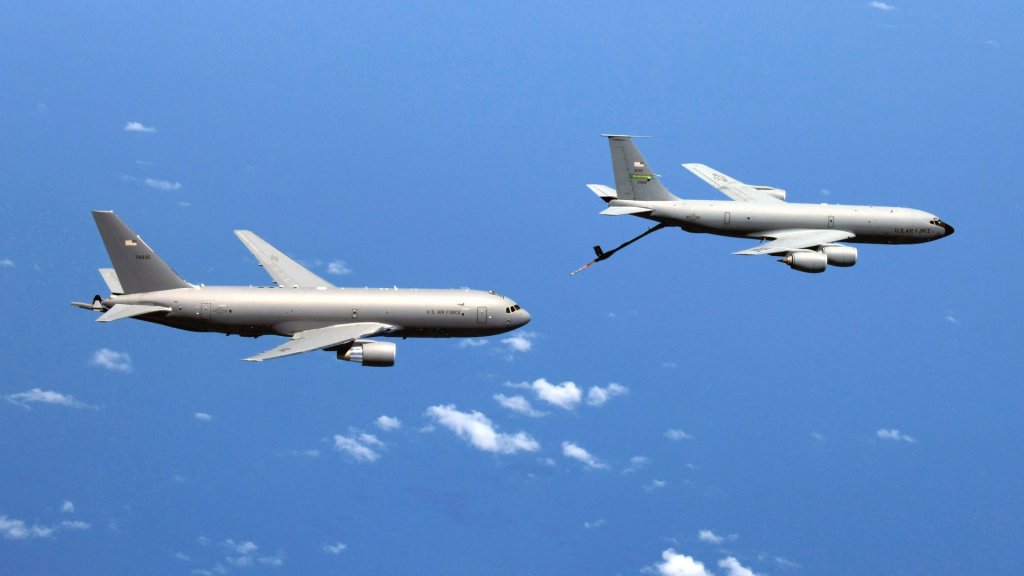
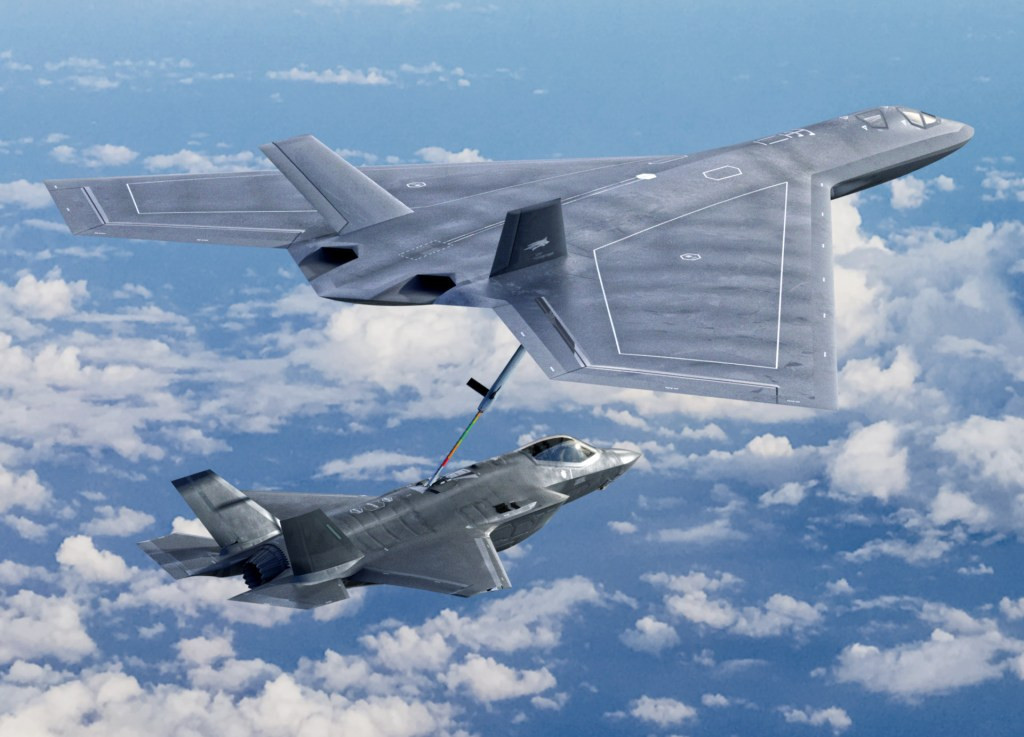
For some time now, the Air Force has been working to refine requirements for what it is currently calling the Next-Generation Air Refueling System (NGAS). The NGAS plan could include new stealth tankers, as well as other types of aircraft and new capabilities for existing types. The service has said in the past that it hopes to see elements of NGAS begin to enter operational service by 2040, if not much sooner.
“I cannot have a 90-year-old tanker refueling a B-21 [Raider stealth bomber],” Lt. Gen. Rebecca Sonkiss, head of AMC, separately told TWZ and other outlets at a roundtable yesterday on the sidelines of the AFA Warfare Symposium. “If you do math, as we reach end of programs for things, that’s reality, right? I cannot have that. I must recap[italize] the tanker force.”
“There is also an element of that, that is the NGAS portion of it, which is a more specific problem set within the theater to be able to ensure that we deliver lethality, effectively and survivably,” she continued, noting that the Air Force is also looking to acquire additional KC-46s.
“They’ve put some money in to maintain that NGAS AOA [analysis of alternatives], and they’re working through [it] right now,” Sonkiss added. “I don’t think they’ve solidified the final pathway to NGAS, and I really don’t want to comment on the half work on that space.”
An analysis of alternatives is a process that the U.S. military uses to assess available options and further refine requirements for further weapon systems and other capabilities.
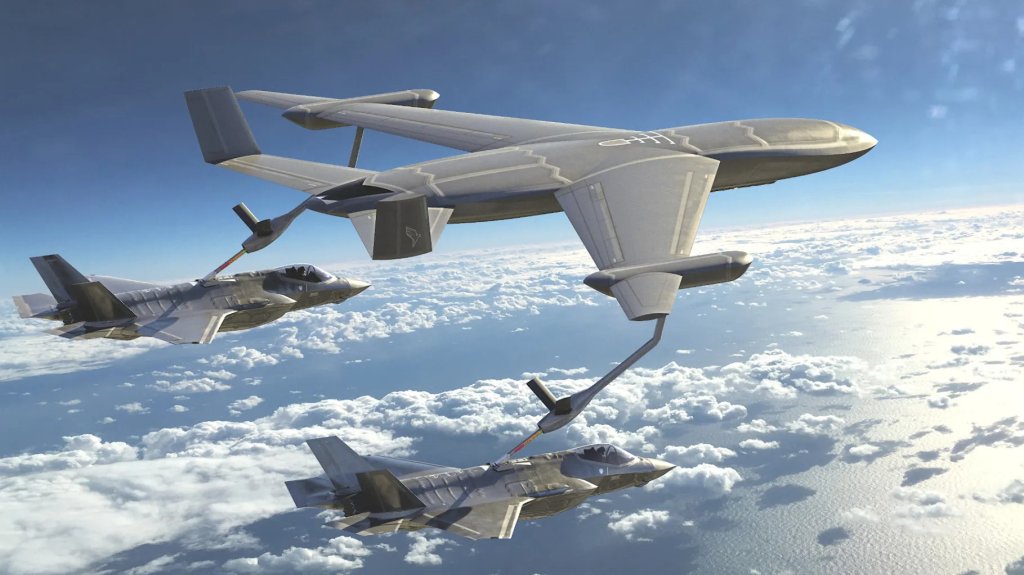
“Of course, we’re open to a family [of] systems,” Lt. Gen. Sonkiss also said. “It has to fit in with the greater Air Force scheme maneuver of what do those platforms need? And then we make the NGAS platform get after that portion.”
“How far do they need to get into the threat ring?” she added, noting that there could be various avenues to providing more protection for aircraft operating in more contested environments. “And that’s what that NGAS piece is going to work through.”
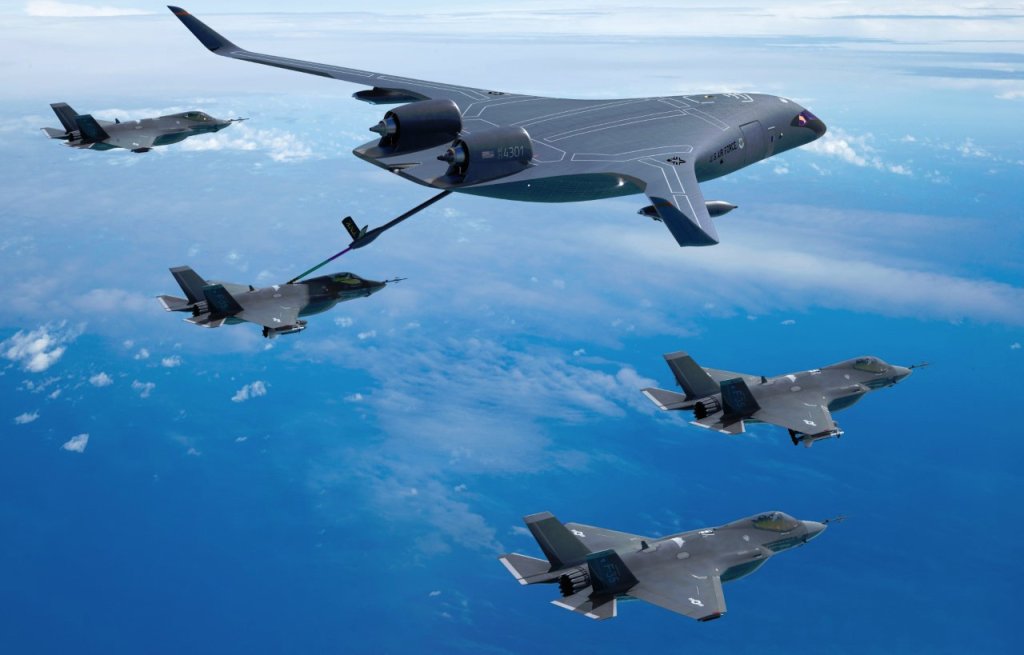
It should be made clear here that there is no expectation that a boom-equipped KC-390 would be a single ‘silver bullet’ solution to the NGAS question. Aviation Week reported last week that Northrop Grumman is presenting it as just one part of a three-tiered proposal for NGAS that also includes a larger blended wing body design and a smaller tanker drone. Northrop Grumman has so far declined to confirm or deny that it is making this multi-part pitch. The company is already partnered with JetZero on a project to build a blended wing body demonstrator for the Air Force that could be configured as a tanker and/or a cargo aircraft, which you can read more about here.
“The reaction we’ve gotten here at AFA has been very positive,” Northrop Grumman’s Woolston told us when asked about current Air Force interest in the boom-equipped KC-390, specifically.
“We are now starting to have that dialog,” he also said when asked about whether there had been any formal meetings with representatives from AMC or other Air Force officials.
“I haven’t really looked at that,” Secretary of the Air Force Troy Meink had told TWZ and other outlets in response to a direct question about whether the KC-390 might have a future in his service’s tanker plans at another roundtable yesterday at the AFA Warfare Symposium.
A boom-equipped KC-390 could also be of interest to non-U.S. air arms that operate aircraft with the ability to refuel via this method. Aircraft built, at least in part, in the United States by an American firm could also open doors to acquiring them through a U.S. government foreign assistance mechanism.
Overall, it remains to be seen how the new partnership between Northrop Grumman and Embraer proceeds now, as well as how the Air Force’s vision for NGAS evolves. Still, as TWZ explored in detail four years ago, a new ‘agile tanker’ like boom-equipped KC-390 would seem to slot right into the operational scenarios the Air Force is now planning around, especially when it comes to a future conflict in the Pacific.
Jamie Hunter contributed to this story.
Contact the author: joe@twz.com
Loading comments…
Comments couldn’t be loaded. Please refresh the page.