
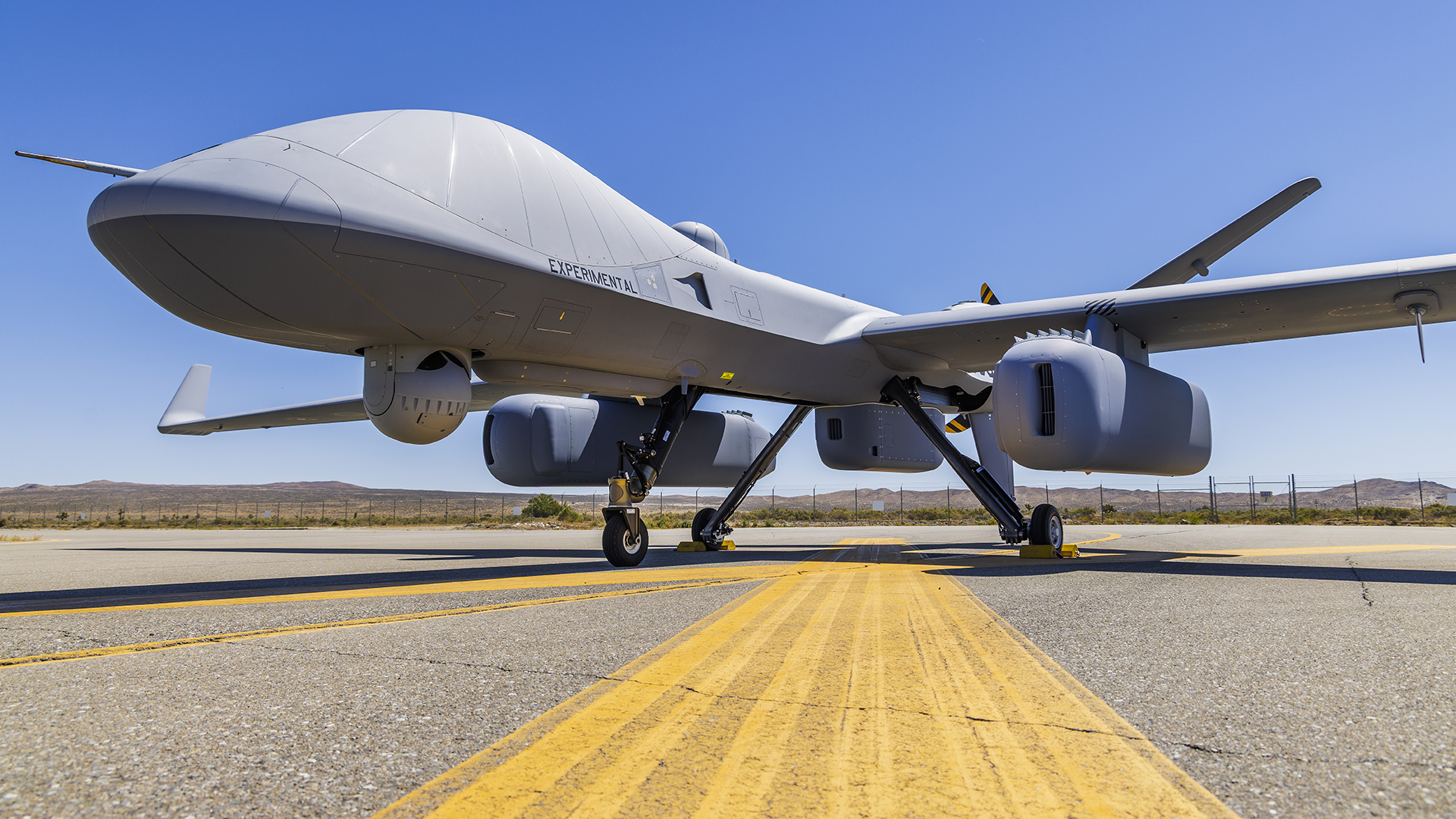
The MQ-9 Reaper and its associated Predator-B family of drones are in an interesting spot these days. On one hand, they are receiving new, highly relevant capabilities and missions at an accelerating pace. They also just proved to be an absolutely star asset for hunting and killing key targets, such as missile launchers and air defenses, deep inside Iran. On the other hand, their vulnerability to air defenses, not even modern ones, is glaring, with major losses in Iran and Yemen. Yet the USAF’s chronic lack of commitment to replace the MQ-9 has left it with dwindling stocks and nothing better to do the job.
Within this jumbled and often misunderstood narrative, one new capability stands out from the rest that would give the MQ-9 extreme value today and for years to come. This is turning the MQ-9 into a radar-toting airborne early warning (AEW) platform for detecting and tracking aircraft, drones, and missiles. A Reaper in this exact configuration just flew for the first time recently.
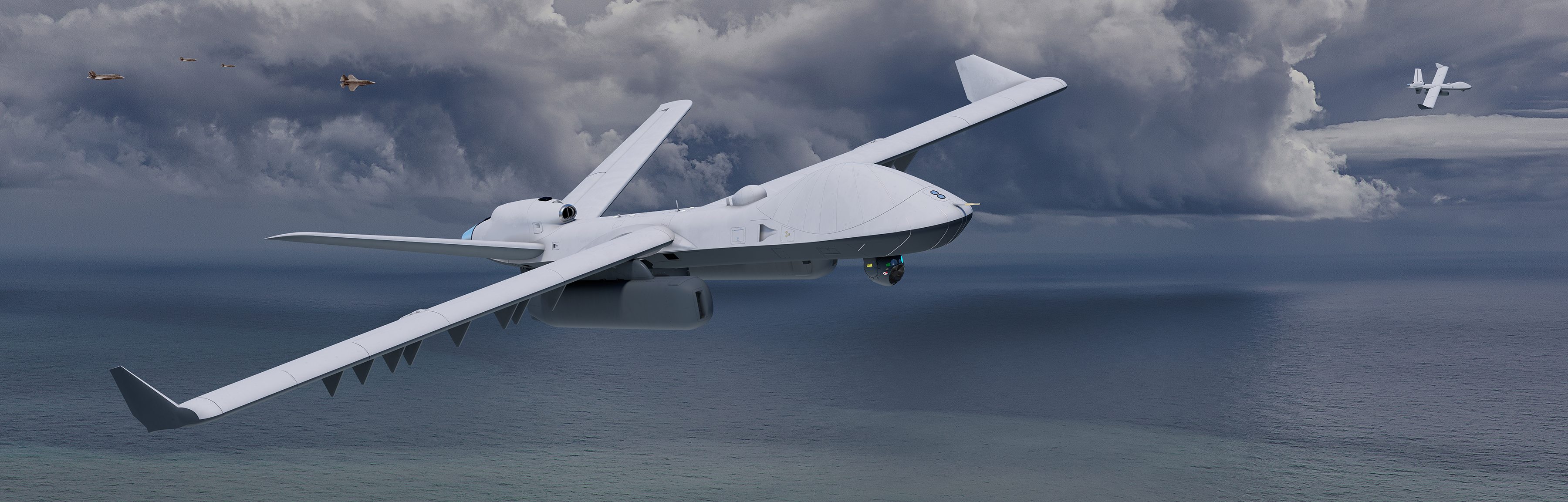
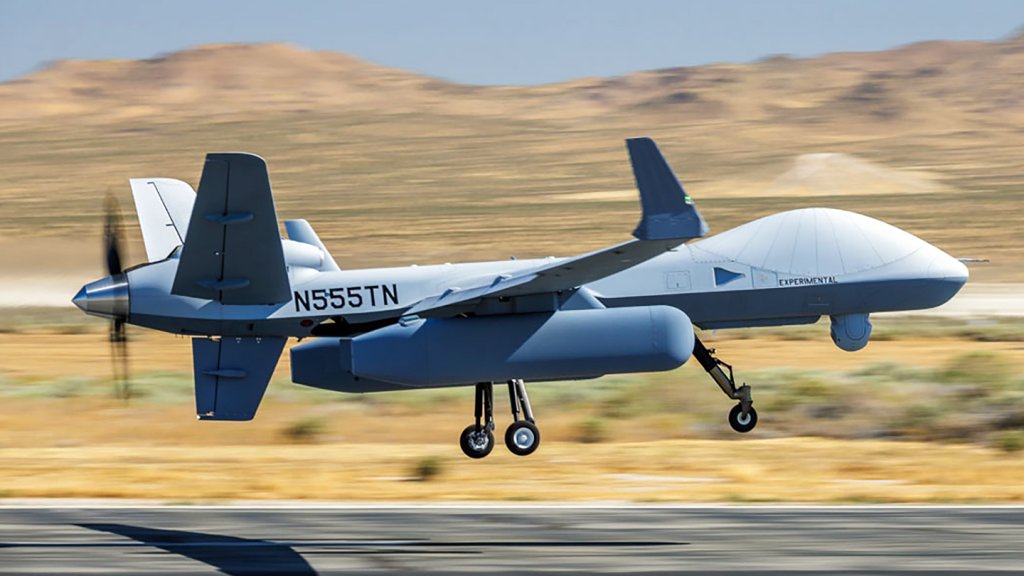
The MQ-9 sortie in question was the product of a partnership between General Atomics and Saab, with Saab, already a leader in AEW systems, providing the podded radar system named LoyalEye. This initial test flight took place on May 19th, and a full demonstration of the pairing’s capabilities is planned for next year.
GA-ASI President David R. Alexander stated the following about the MQ-9 AEW capability:
“AEW for MQ-9B will offer critical aloft sensing to defend against tactical air munitions, guided missiles, drones, fighter and bomber aircraft, and other threats. Operational availability for a medium-altitude, long-endurance UAS is the highest of any military aircraft, and as an unmanned platform, its aircrews are not put into harm’s way.”
For many years now, I have discussed how the most glaring new mission set for a medium altitude, long-endurance drone is AEW. The idea is relatively simple in concept. Take a cost-effective drone that can fly at medium altitudes for long periods and bolt on some radar pods capable of air moving-target indicator (AMTI) functionality. Then configure the datalinks (both line-of-sight and beyond line-of-sight) aboard the aircraft to send the information the pods collect back to controllers, who also remotely operate the drone and the pods from the ground. Such an unmanned aircraft could fly its missions at relatively low cost, and operate in a distributed manner, near where its surveillance capabilities are needed most. Above all else, it would be able to persist for very long periods of time — think of loitering over its launch location for the better part of a day or more — providing persistent long-range look-down radar surveillance, which has never been more important than it is today.
One-way attack munitions, also known as long-range kamikaze drones, are a massive threat to confront on many levels. These unmanned aerial systems blur the definition between cruise missiles and drones. In this case, cruise missiles are also part of the same problem set. While the question of how to shoot down relatively cheap one-way attack drones cost-effectively gets a lot of attention, just spotting them in order to engage them at all, especially at a distance, is also a challenge. Their small signatures and low-altitude flight profiles, as well as their slow speed, can make it so ground-based sensors don’t detect them until it’s almost too late, and aging airborne sensors also have limitations in doing so.
This is where an advanced look-down airborne radar is critical. It can spot these objects from above at long distances and separate them from the ground clutter. The problem is that airborne early warning and control (AEW&C) manned platforms are hugely expensive, resource intensive, and are the very definition of high-value, low-density assets. Many of them can only operate from longer runways, meaning they can only be based far away from where the threats are. Even then, they are top targets, as we saw earlier this year in Saudi Arabia, and their airfields are prime targets too, which can leave them trapped or destroyed on the ground.
The USAF has a dwindling number of geriatric E-3 Sentry Airborne Warning and Control System (AWACS) aircraft, which, despite upgrades, are not the best at spotting low-flying drones. The USAF is now moving begrudgingly forward with stalled E-7 procurement, but these aircraft are also very complex, expensive, and labor-intensive platforms that need long runways to operate from. The Navy has the E-2D Hawkeye, which is more modern and capable in some regards, and less in others, but is also not available in vast numbers as they have other critical taskings, especially to support carrier air wings. These aircraft are better suited to operate from remote forward airfields, and having a smaller logistical and crew footprint, but still require far more support than an MQ-9. Overall, these crewed aircraft are also increasingly vulnerable to long-range air defenses, and, while their sensor range is generous, it is still limited, making their utility questionable in a peer state conflict.
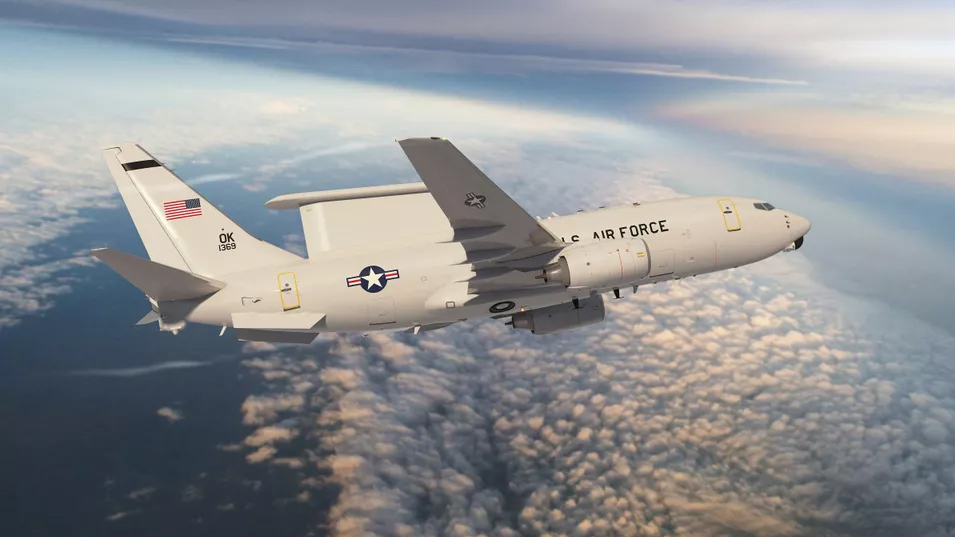
For higher-end missions, where command and control is a major part of what AEW&C platforms will be called upon to do, directing air wars and coordinating defenses, while also supplying networking support, a pod-equipped MQ-9 cannot replace an E-7 or E-2. For providing critical surveillance, especially in areas where there are gaps in crewed AEW&C coverage, or in places that just don’t require that level of support, the AEW-capable MQ-9 is a very attractive solution. Even pushing these uncrewed sensor nodes forward, into higher-threat areas, under certain circumstances, to provide high-fidelity radar coverage where no crewed platform would ever be risked, is a real use case. An MQ-9 is far more expendable than a manned AEW&C asset from human life, cost, and recovery operation requirements (combat search and rescue) perspectives.
The truth of the matter is that even if the E-7 replaces all 15 remaining E-3s, and even if the Navy adds E-2 Hawkeyes, in a future distributed conflict, there is no way these aircraft can give all the coverage needed, persistently, day and night, while providing surveillance for all threatened locales. Not even close. This is especially true as relatively cheap one-way attack drones, such as the Shahed-136, can travel over a thousand miles, drastically expanding potential threat areas at a very low cost to the enemy.
This is where the podded MQ-9 can shine, with a detachment of a few of these aircraft providing persistent coverage (“orbits”) over key areas 24/7 while retaining a small logistical footprint. This would also directly support the USAF’s Agile Combat Employment (ACE) combat doctrine, where small groups of tactical aircraft will move quickly from one forward location to another in hopes of staying ahead of an enemy’s targeting cycle. While that may be the goal, these traveling road-shows of airpower will still need persistent look-down coverage, especially if they are positioned deeply within the enemy’s striking range. AEW&C aircraft will not be able to provide this coverage persistently (if at all). AEW MQ-9s could, and they could drastically increase the situational awareness, range, and overall effectiveness of other key defensive capabilities, such as surface-to-air missile systems and fighter aircraft, with the targeting data they provide.
General Atomics is also turning the MQ-9 family into drone killers themselves with the addition of laser-guided rockets. This could result in ‘hunter-killer’ teaming, where the AEW MQ-9 spots the threat and the laser-guided rocket-equipped MQ-9 intercepts and destroys it. Just the AEW MQ-9 on its own can also use its powerful MTS electro-optical sensor turret to visually identify potential enemy aircraft once they get close enough, allowing for a non-cooperative friend or foe identification capability.

You can even look to the recent fighting in the Middle East, which saw Iran barrage allied bases on the Arabian Peninsula with one-way attack munitions and low-end cruise missiles. Reapers with LoyalEye pods could have provided persistent look-down radar coverage over threatened areas, especially as the USAF’s dwindling and rickety AEW&C fleet was overtasked. They could have also created a radar picket line across the Persian Gulf, Gulf of Oman, and eastern Iraq, providing high-fidelity look-down radar coverage and a true early warning screen for Iranian weapons heading towards their target areas, all without putting a crew at risk.
Now, it’s worth noting that the USAF envisions a future where AEW and general AMTI sensing is largely migrated to an orbital layer of satellites, and they are actively working to realize this capability, which would be absolutely revolutionary if fully realized. Yet, as of now, it’s still an if, and it will take years to fully come to fruition. Even then, relying on a space layer alone for this absolutely critical capability would be a huge vulnerability. Backing it up with a lower-end, flexible airborne solution will likely remain critical for a long time to come. AEW MQ-9s can help efficiently fill out a high-low AEW/airborne moving target indicator mix. This is especially true as the platform itself, the MQ-9, can be reconfigured for a huge range of other missions when AEW capabilities are not in high demand, so the USAF isn’t left with a single mission asset.
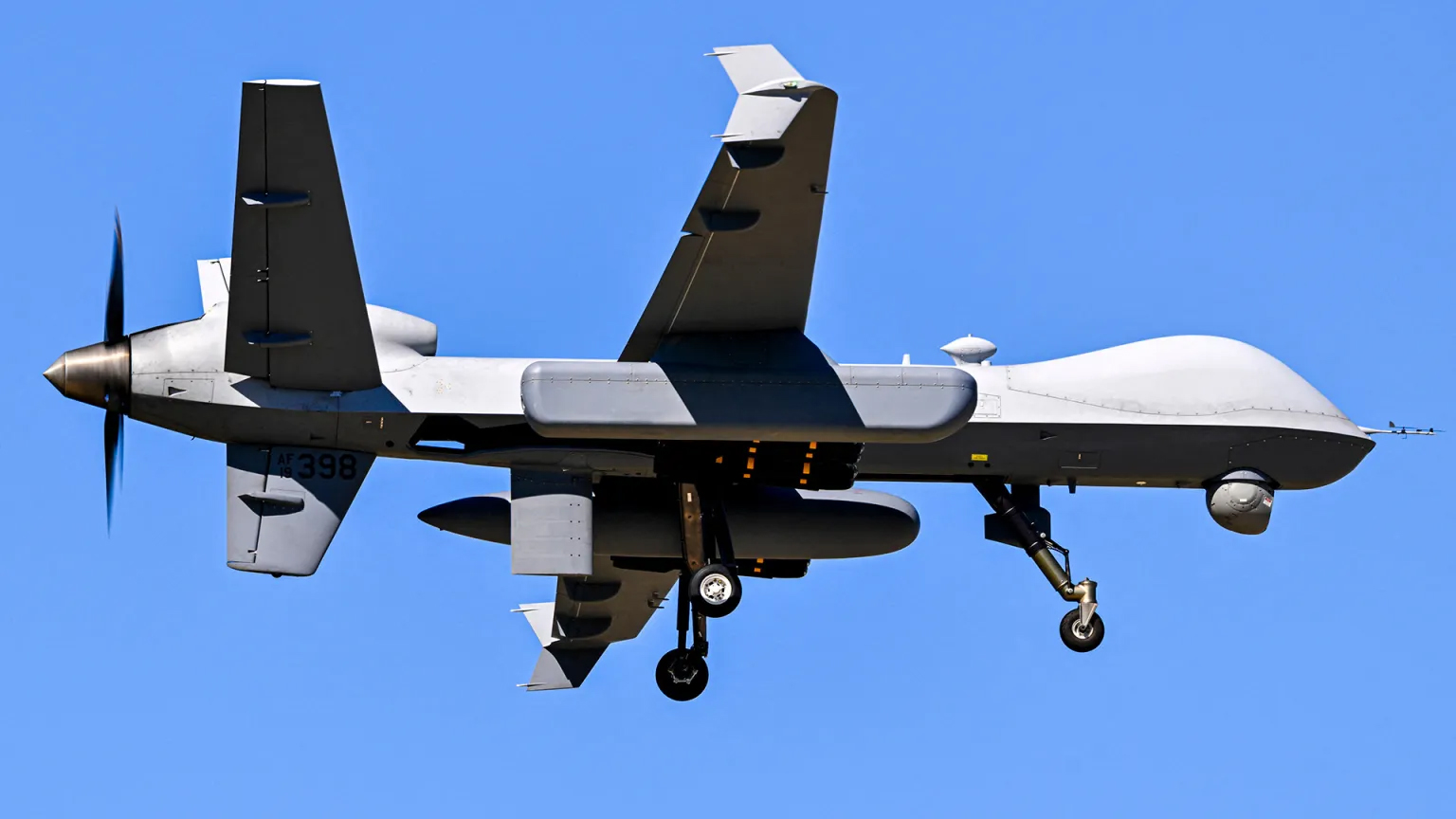
The AEW MQ-9s can also provide their capabilities here at home. America is dealing with a tough future when it comes to defending the homeland, and providing look-down radar capabilities is a major part of adapting to this reality. Outside of tethered aerostats, which have not proven to be a large-scale workable solution yet, AEW MQ-9s would provide flexible, efficient and persistent capabilities in areas where it may be needed, especially in times of heightened defense, like major public events and during a crisis.
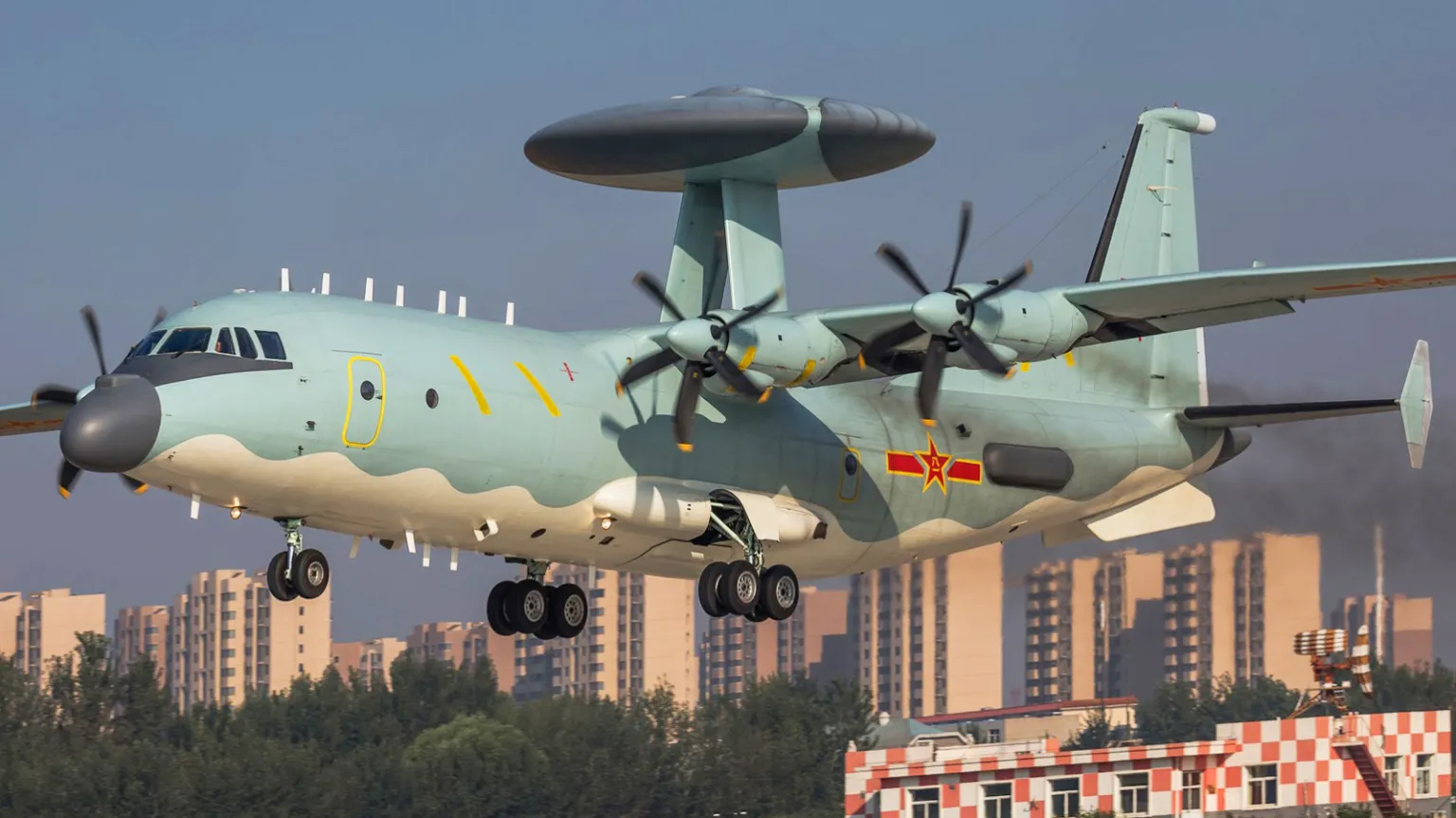
The AEW MQ-9s can also provide their services during large force employment training exercises, including going some way to emulate more capable crewed AEW&C platforms, at least with target track generation, when those manned AEW&C assets are not available. They could also be very valuable in an opposition forces ‘red air’ role, which has historically been sorely lacking in AEW, especially as AEW capabilities proliferate around the globe, particularly with America’s primary pacing threat, China.
The naval side of this is a big deal too. The fact that General Atomics is modifying the MQ-9 family to operate from large deck amphibious assault ships and carriers presents another huge opportunity. It could provide LHA/LHDs with a truly organic fixed-wing AEW asset for the first time — one that doesn’t require large flight crews and that can loiter above the amphibious strike group for very long periods of time. This is becoming more important as enemy missile and drone technology evolves. Having to rely on surface combatants and a small contingent of fighter aircraft, if any at all, for air defense is limiting and can impart extra risk at inopportune times, especially in littoral environments. During a major conflict, these ships could operate too far out to sea to make land-based AEW support plausible and those assets will be over-tasked as it is. AEW MQ-9 seems like a relatively glaring off-the-shelf solution to this problem. It’s also worth noting that the USMC already operates the MQ-9 and integrating it into the shipboard Air Combat Element (ACE) of a Marine Air-Ground Task Force should be relatively straightforward.
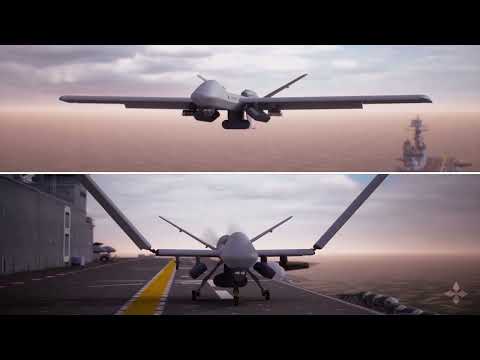
AEW configured examples could also be extremely useful for the Marines’ Expeditionary Advanced Base Operations (EABO) concept, which mirrors elements of the USAF’s ACE doctrine, but goes beyond just the aerial fight. Marines deployed forward in the enemy’s ring of fire under EABO will need look down protection more than pretty much anyone else, which the AEW MQ-9 could provide at low risk. The MQ-9 family is already capable of short field operations and that is only being enhanced with new STOL (short-takeoff-and-landing) members of the MQ-9 family, meaning they can fly from small, austere airstrips and could maintain sortie rates even if those airstrips receive partial damage.
For supercarriers, the AEW MQ-9 could augment the E-2D, providing constant look down radar coverage for the entire carrier strike group when E-2s are not up. This would deeply benefit the CSG’s entire air warfare mission, providing critical sensor data to Aegis warships, fighters, and the carrier. They could also augment E-2D coverage during high-threat periods of vulnerability, including putting additional sensor coverage farther away from the CSG over high-risk vectors of attack. We discussed in detail how an AEW capable version of the Navy’s MQ-25 Stingray could also serve in this general capacity.
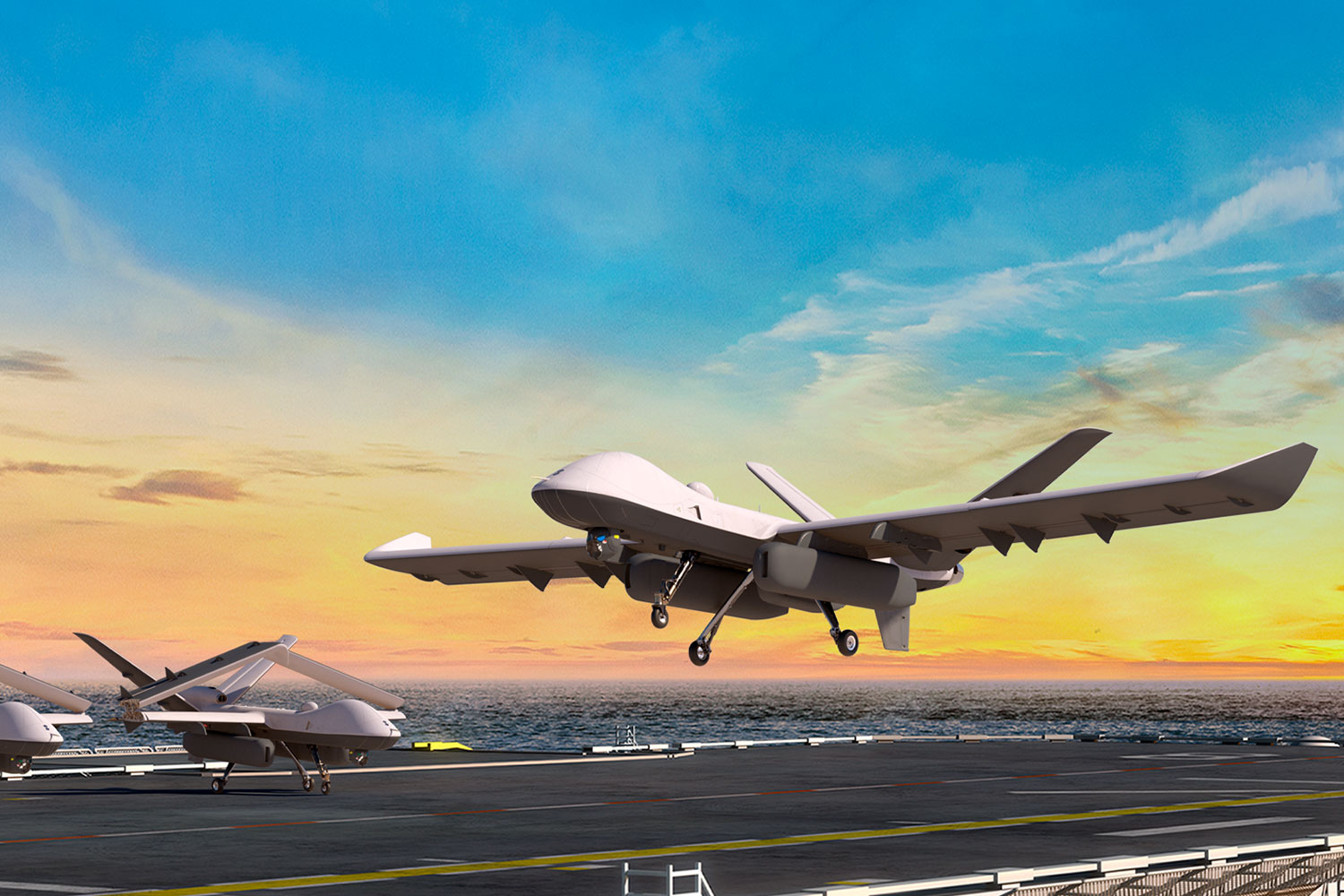
All of this is from a very American point of view, but the AEW MQ-9 concept may be most attractive to foreign air arms that currently have no dedicated AEW capabilities at all, or are looking to augment the limited capacity they do have. Fielding a traditional AEW&C force is very expensive, even for a small cadre of crewed platforms, limiting the realistic application of such a force even if the country can afford it to begin with. AEW MQ-9 could help ‘democratize’ AEW and allow many allies to field such a capability, which a coalition force during multi-national operations could also benefit from, including the U.S. In this way, AEW MQ-9 could be a huge win not just for countries in need of this kind of capability at a lower price point, but also for the U.S., as this kind of sensor information will become far more widespread, putting less pressure on its own organic AEW force. This could be leveraged both in peacetime for surveillance and monitoring, but especially in a crisis.
Just look at what’s happening with the drone threat to Europe for instance. MQ-9s with the radar pods could provide sustainable airborne surveillance for NATO countries. Think of the AEW MQ-9 as the F-5 Freedom Fighter of AEW capabilities. And once again, these allies would be able to use the MQ-9s in many different ways when not configured for the AEW mission, including peacetime monitoring and patrols not related to airborne moving target tracking.
As it sits now, Japan has already expressed interest in the AEW MQ-9 and many other nations are sure to follow.
Finally, it’s worth noting that the idea of AEW functionality on an uncrewed platform isn’t exactly new. It has been experimented with before and China is thought to have added some of this functionality to its far more advanced high-altitude, long-endurance drones. But providing a robust, off-the-shelf solution for the more accessible and flexible medium-altitude, long-endurance drone class, and especially the most proven of all types in this class on the planet, the MQ-9 family, makes glaring sense for an extremely wide set of potential users, including the United States.
Contact the author: Tyler@twz.com
Loading comments…
Comments couldn’t be loaded. Please refresh the page.