
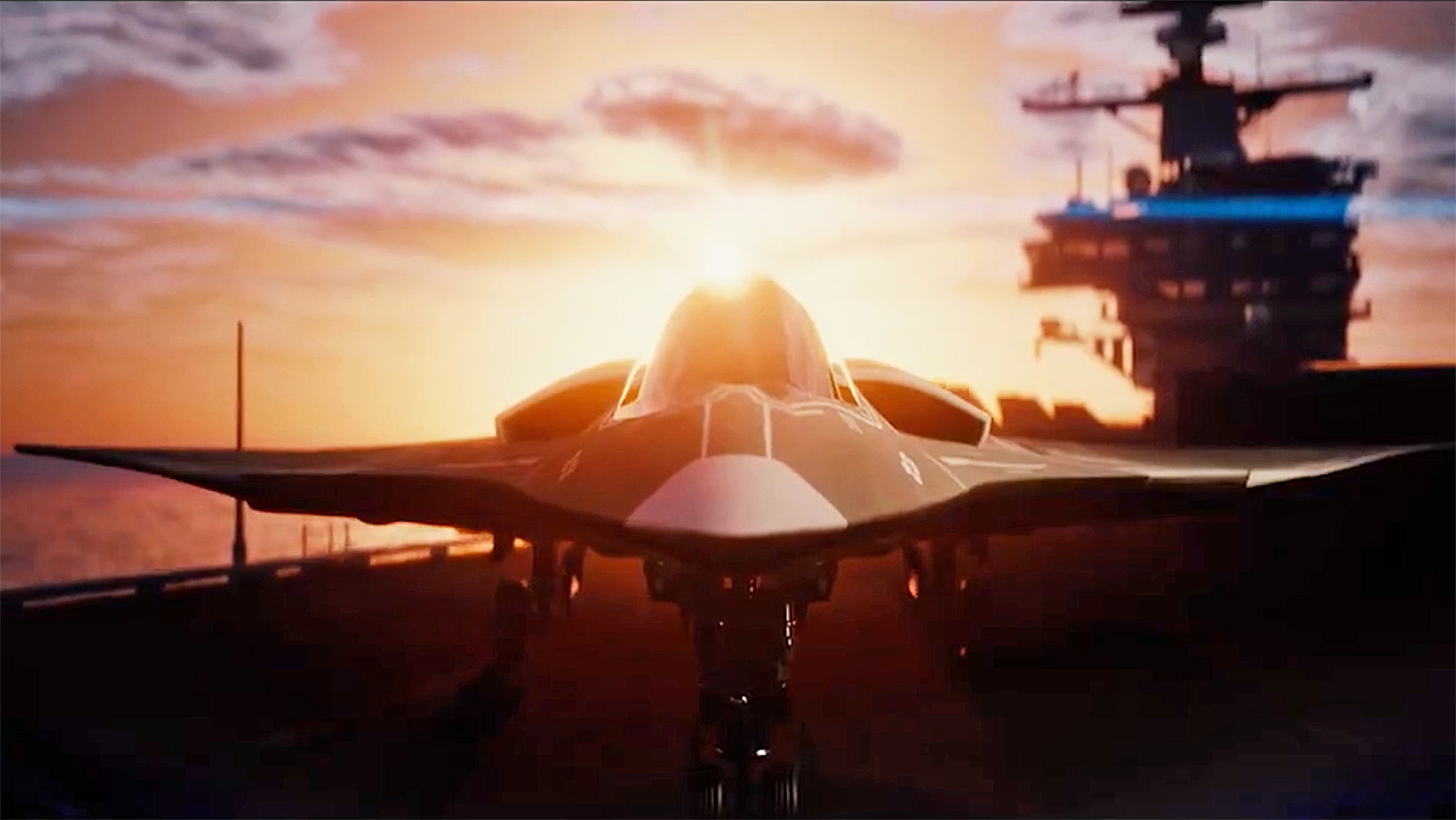
Northrop Grumman CEO Kathy Warden says she is confident in her company’s ability to deliver next-generation carrier-based fighters to the U.S. Navy if it is picked as the winner of the F/A-XX competition. The U.S. Navy’s top officer said yesterday that the goal was to award the F/A-XX contract by August of this year, but also that one unnamed contractor in the running “really can’t deliver in the timeframe we need it.”
Chief of Naval Operations (CNO) Adm. Daryl Caudle offered his latest comments on F/A-XX yesterday in response to a direct question from TWZ at a roundtable on the sidelines of the Navy League’s Sea-Air-Space 2026 exposition. The Pentagon had tried to put the Navy’s future fighter ambitions on hold last year, arguing that the U.S. industrial base did not have sufficient capacity to support work on two sixth-generation combat jets simultaneously. Boeing won the contract to build what is now called the F-47 for the U.S. Air Force in March 2025. Boeing is the only other company known to be in the running now for F/A-XX. Last year, it was reported that Lockheed Martin had been eliminated from the competition.
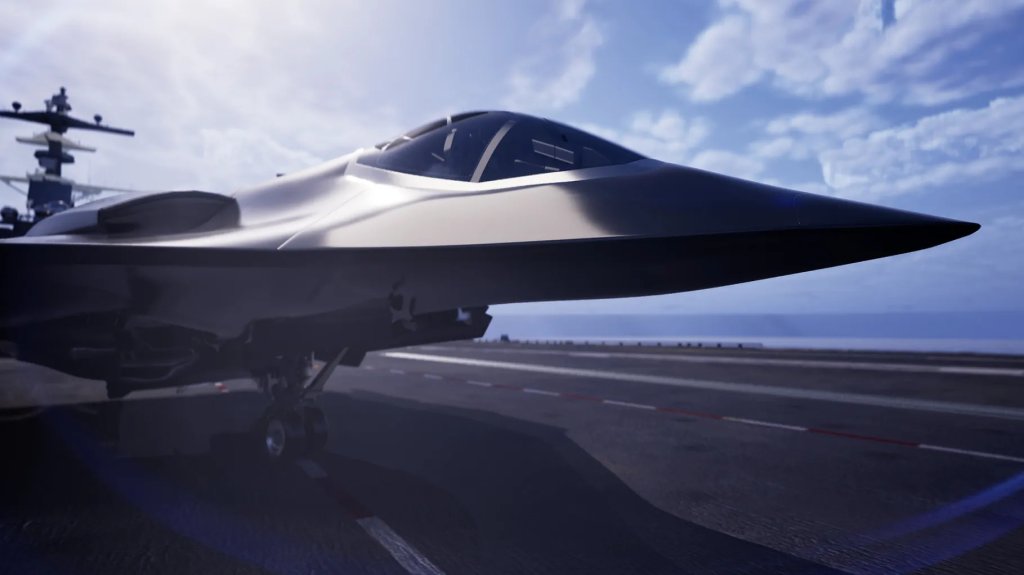
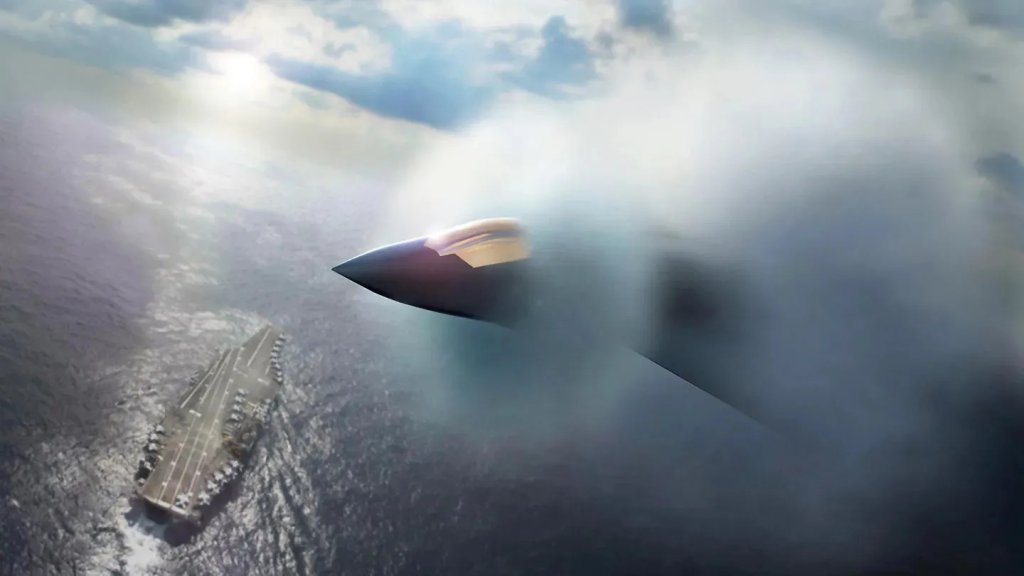
Late yesterday, Northrop Grumman also released a new computer-generated F/A-XX promotional video, seen below. You can read our analysis of what is seen therein here.
“We do expect the Department [of the Navy] to make an award selection in the third quarter,” Northrop Grumman’s Warden said during a routine earning call today in response to a direct question about Adm. Caudle’s remarks. “We are confident in our ability to deliver our solution to the Navy.”
She did not explicitly confirm or deny that the CNO had been referring to Northrop Grumman when he mentioned a contractor’s inability to meet the Navy’s schedule needs on F/A-XX.
“We and our suppliers are prepared to bring the workforce and infrastructure that’s needed to execute the program, and our track record on B-21 demonstrates that ability to deliver a complex aircraft on schedule,” Warden added. “Regarding the financials, we’d expect upside to the sales and earnings from our current guidance, if we are entrusted to build the F/A-XX, and it would be a top priority for our company to do so.”
Air Force officials, as well as members of Congress, regularly describe the B-21 Raider bomber as a model acquisition program that has been able to keep on schedule and budget despite at least some hurdles along the way. Earlier this year, Northrop Grumman reached an agreement with the Air Force to accelerate B-21 production.
It’s also worth remembering that Northrop Grumman withdrew in 2023 from the Air Force competition that would lead to the F-47. The company framed the decision at the time as a voluntary one.
“I’ll just say that, when I noted we have other opportunities we are pursuing, I won’t disclose at this point exactly what those are until a little more information comes out,” Warden, who was also CEO at that time, said when announcing the withdrawal, which was widely seen as a reference to F/A-XX. “You could assume that if we feel we’re well-positioned, and the government is appropriately balancing risk and reward, as I said that that would be a program we would pursue.”
Former top Air Force officials subsequently said that Northrop Grumman’s bid had been on the verge of getting cut.
As mentioned, industrial base capacity questions have swirled around F/A-XX. The Pentagon had tried to effectively shelve the Navy’s next-generation fighter program in its proposed budget for the 2026 Fiscal Year. At the time, a senior U.S. defense official explicitly said that the decision was “due to our belief that the industrial base can only handle going fast on one program at this time, and the presidential priority to go all in on F-47, and get that program right.”

Congress later intervened to appropriate some $1.69 billion in funding to keep F/A-XX moving ahead in the 2026 Fiscal Year.
“I will tell you, we, Northrop Grumman, are ready to execute F/A-XX,” Tom Jones, President of Northrop Grumman’s Aeronautics Systems sector, had also told TWZ and other outlets in response to a question about industrial base capacity in relation to the program back in December. “We’re looking to try and make sure that the customer community knows that we believe that we’re ready to go and we can execute it.”
Boeing Defense and Space CEO Steve Parker had also pushed back on the assertion that the U.S. industrial base could not support F-47 and F/A-XX at the same time last year. The company’s pitch for the Navy’s program appears to be a navalized adaptation of the F-47.
“The Air Force has got a lot of demand on the system. The Navy’s got a lot of demand,” Adm. Caudle had also said yesterday. “So there was, you know, a check twice, cut once, kind of mentality here on this decision. And now there, I think we’re all on the same page on the reason why the hard look needed to be done. I’m good with it.”
Questions about the overall future of F/A-XX do remain, despite clear support from top Navy leaders like Caudle and Congress. The Navy looks set to request just over $140 million for the program in Fiscal Year 2027. This is a very meager sum, especially for a program of this magnitude. In contrast, the Air Force is seeking $5 billion in additional funding for F-47. Billions of dollars have already been appropriated for the Air Force’s next-generation fighter effort.
The Pentagon and the individual services are rolling out more details about their annual budget proposals today, which could offer more insights into the plans now for F/A-XX in the coming years. Securing the contract to build the Navy’s next-generation fighter is still likely to be an important win for whichever company the service selects in the end.
UPDATE: 4/22/2026 –
The U.S. Navy has issued a statement regarding Adm. Caudle’s comments earlier this week, which is as follows:
“During a question-and-answer session at the Sea-Air-Space Exposition, Chief of Naval Operations Admiral Daryl Caudle was asked about the Navy’s sixth-generation strike fighter program (F/A-XX). Adm. Caudle emphasized that the Navy’s priority is ensuring through due diligence the selected vendor can deliver the required capability on the timeline needed by the fleet while also considering broader industrial base capacity. Any reference to ‘a specific offeror’ was intended as a general anecdotal comment and was not directed at any vendors currently under consideration.”
Contact the author: joe@twz.com
Loading comments…
Comments couldn’t be loaded. Please refresh the page.