
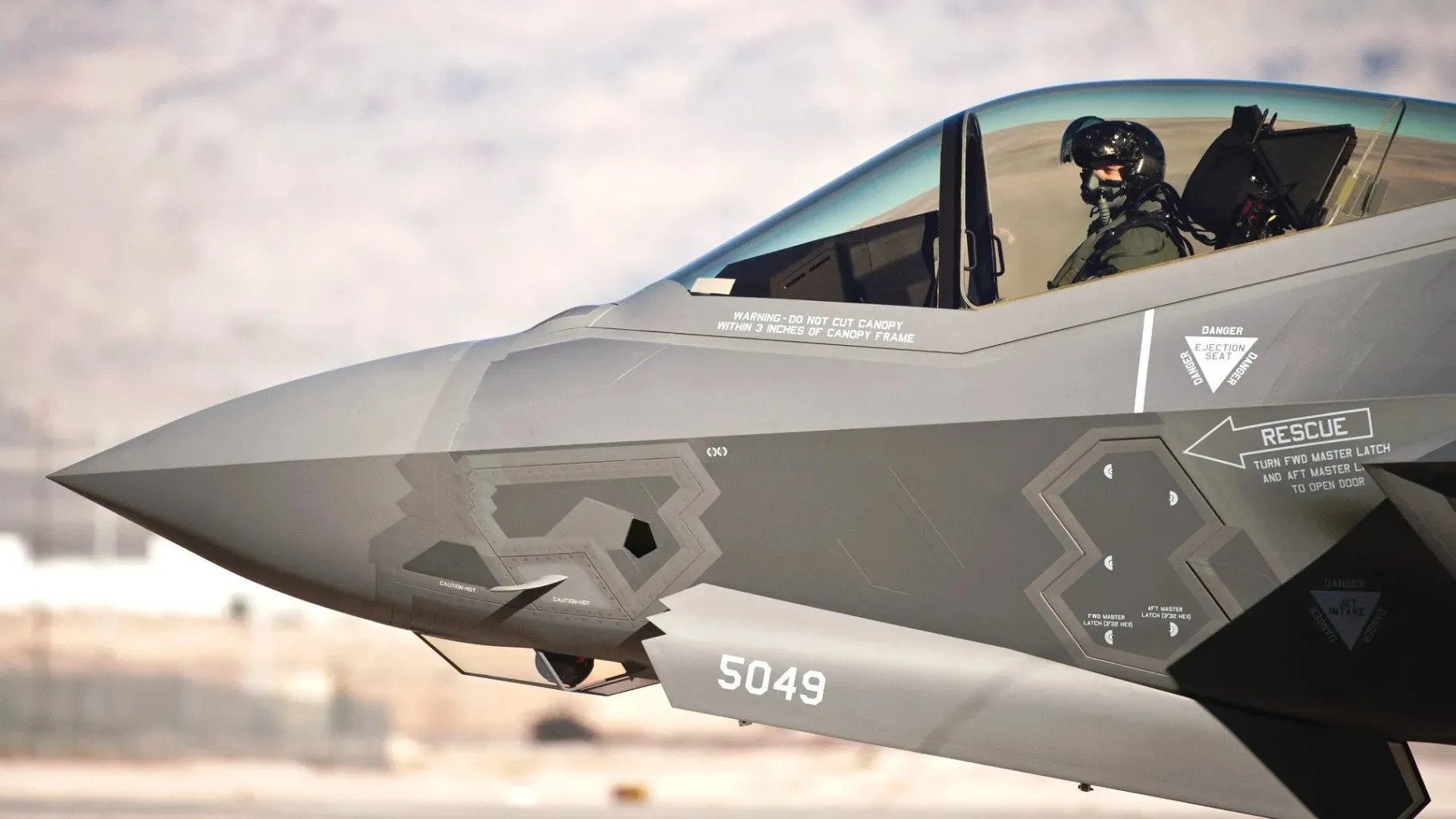
Lockheed Martin has shared new details about how it is using artificial intelligence (AI) technology to help F-35 pilots spot hostile air defenses faster and more accurately. The company says it is also leveraging AI to speed up the process of using new data to refine and improve the jet’s already extensive electronic warfare suite. All of this represents further stepping stones toward more advanced cognitive electronic warfare capabilities, allowing for more agile adaptation to emerging threats, possibly even right in the middle of a mission.
The AI-driven capabilities were demonstrated during a test effort called Project Overwatch, which Lockheed Martin conducted from Nellis Air Force Base in Nevada. The company put out a press release about the project yesterday, around the opening of the Air & Space Forces Association’s annual Warfare Symposium, at which TWZ is in attendance.
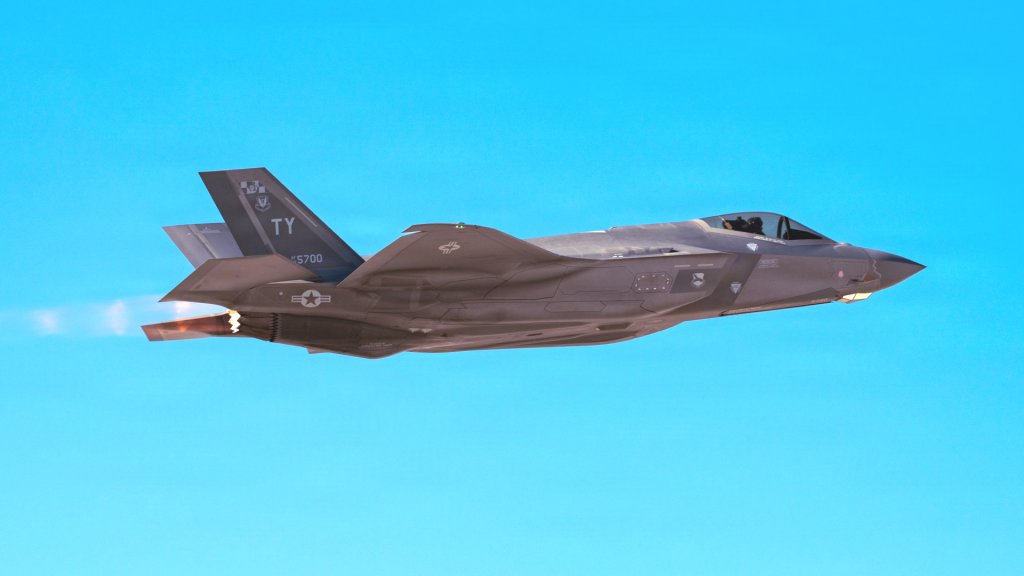
“Lockheed Martin recently flight tested an artificial intelligence (AI)-enhanced Combat Identification (Combat ID) capability integrated into the F-35’s information fusion system,” according to the release. “The successful demonstration … marks the first time a tactical AI model has been used in flight to generate an independent Combat ID on the pilot’s display.”
It should be noted that the F-35 does not have a traditional heads-up display, but instead presents that information, including threat symbology, directly on the visor of the pilot’s helmet. Each jet also has a wide-area display in the cockpit that can be used to show sensor feeds and other additional information.

“During the Project Overwatch test flight … , a Lockheed Martin-built and trained AI/machine learning model resolved ID ambiguities among emitters, improving situational awareness and reducing pilot decision making latency,” the release added. “Engineers then used an automated tool to label new emitters, retrain the AI model to learn the new emitter class within minutes, and reload the updated model for the next flight, all in the same mission planning cycle.”
“Embedding this advanced AI into the F-35’s mission system helps pilots understand threats faster so they can make decisions more quickly, because operators don’t have time to synthesize data in combat,” it continued.
“The new technology is displayed in the same manner as the current Combat ID system. The work done in Project Overwatch serves to augment the information in the current system,” a Lockheed Martin spokesperson also told TWZ directly when asked for more specifics. “During [the] flight test, the pilot was presented with the info from the legacy system as well as the new system.”
“The information is presented to the pilot in flight,” they added. “After each mission, data is downloaded into the system, processed, and results in enhanced intelligence for the next flight.”
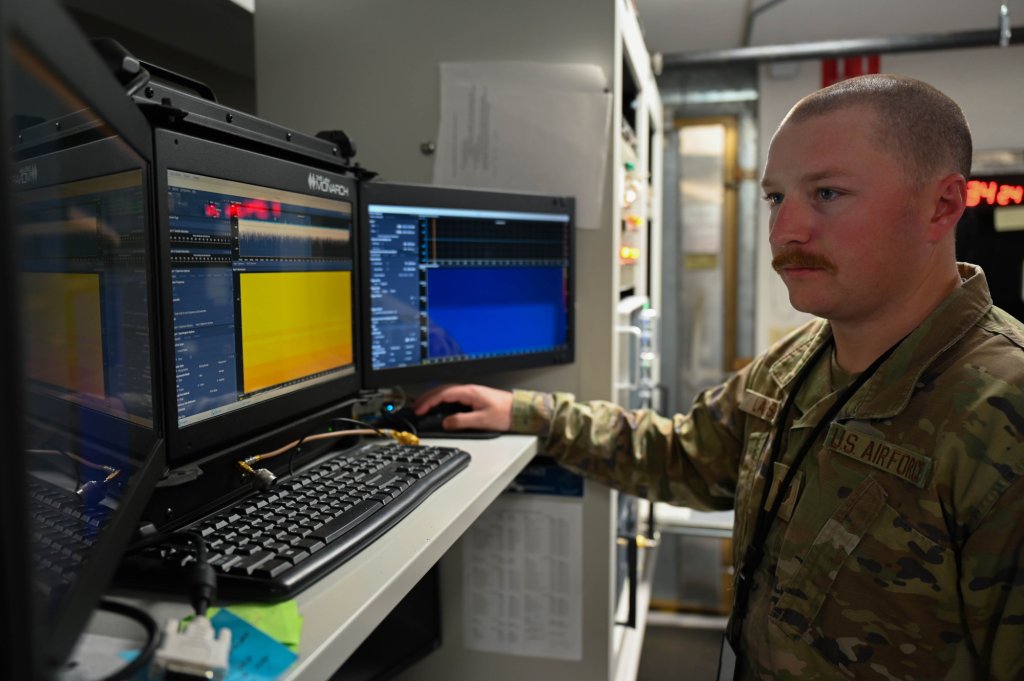
While automated tools are said to have allowed for relevant reprogramming to be completed within minutes, how long it took in total for the engineers to get the data in the first place and then send it back for uploading onto an actual F-35 is unknown.
Lockheed Martin’s press release yesterday does note that Project Overwatch made use of “innovative methods” that “we’ve deployed real-time, over-the-air software updates to the Aegis multi-mission combat system to deployed U.S. Navy ships in the Red Sea to enable rapid counter-measures against advanced drone and missile threats.”
Since at least 2024, Lockheed Martin has been touting work to shorten the time needed to create mission-critical updates for the Aegis combat system “from months to days, and eventually hours,” as well as the ability to transmit them in real-time to deploy ships. As noted above, U.S. operations in response to threats from Iranian-backed Houthi militants in Yemen in and around the Red Sea was the driving factor in the development of those capabilities.

In addition, we do have a sense of how F-35 pilots have been presented with data showing “ambiguities among emitters” in the past, as well as the process for updating the aircraft’s electronic warfare systems based on that new information. In 2023, Air Force Times published a story about lessons learned from Air Force F-35 patrols along NATO’s eastern flank following Russia’s all-out invasion of Ukraine the preceding year.
“We’re looking at an SA-20. I know it’s an SA-20. Intel says there’s an SA-20 there, but now my jet doesn’t ID it as such, because that SA-20 is operating, potentially, in a war reserve mode that we haven’t seen before,” now-retired Air Force Col. Craig Andrle, then head of the 388th Fighter Wing, explained at that time.
SA-20 Gargoyle is the NATO reporting name for the Russian-made PMU-1 (SA-20A) and PMU-2 (SA-20B) variants of the S-300 surface-to-air missile systems.
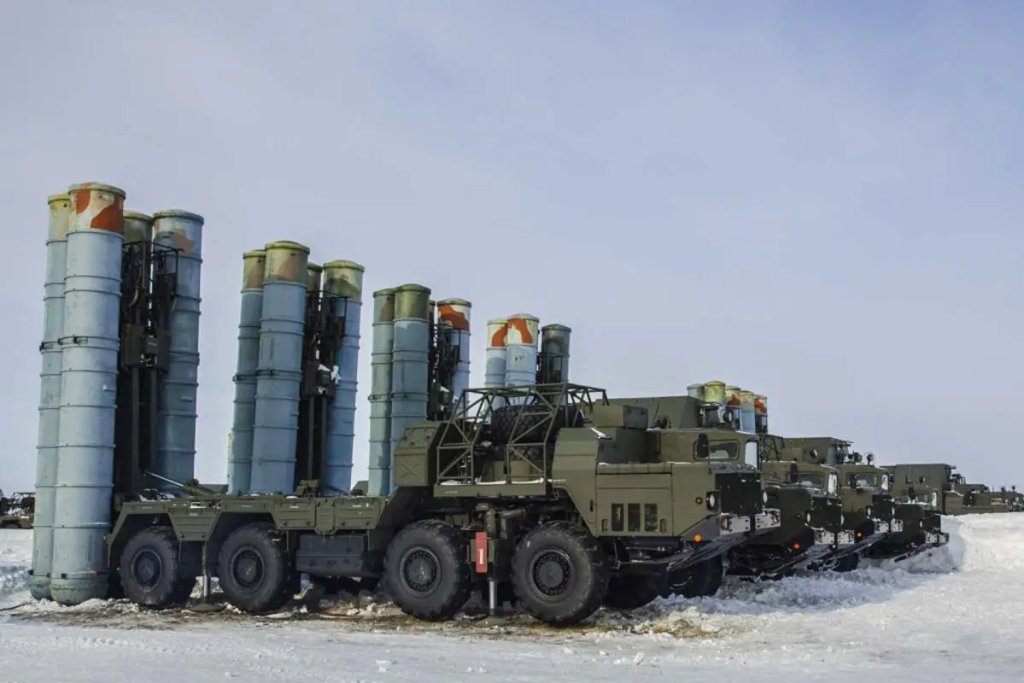
Despite not being able to positively ID the threat, “the F-35 flagged the object for troops who updated and re-uploaded the data into the jet,” according to Air Force Times. “After that, NATO aircraft knew what they were looking at and how to geolocate it.”
All of this underscores the importance of the Project Overwatch test. Even with the advanced electronic warfare capabilities found on F-35s today, which are further fused together with other sensor data, the jets still rely on a built-in threat library of radiofrequency signatures to accurately spot and categorize threats. The jet will clearly still flag objects pumping out signals that are not in the library, or that are otherwise being transmitted in an unusual way, but pilots will have less specific information to work with in those instances. Any further immediate decision-making, such as to avoid a particular area or to press on, would have to take those unknowns and the associated risks into account. The pilot in question could easily be in an already very tense or otherwise task-dense situation, and could be contending with fatigue and other factors.
![BAE Systems - F-35 Stealth Fighter Electronic Warfare Suite [720p] thumbnail](https://i.ytimg.com/vi/kt3o1esn05I/hqdefault.jpg)
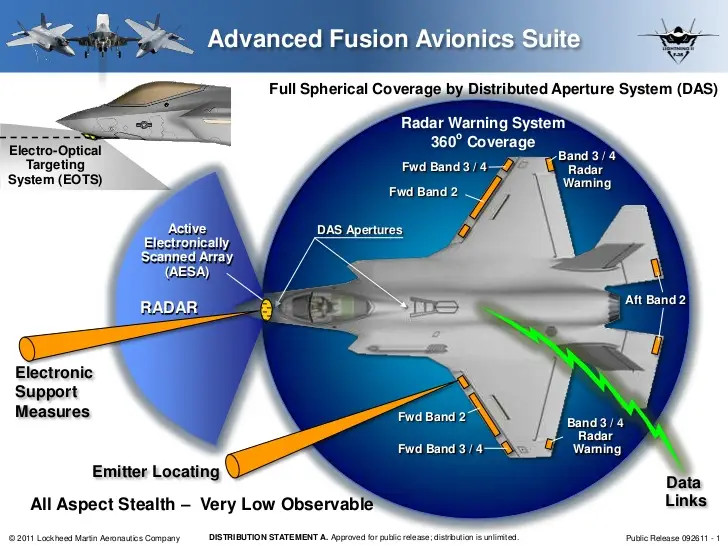
The air defense threat ecosystem is only set to get more complex as time goes on, including when it comes to detecting and classifying radiofrequency signal emissions. For instance, a radar’s basic signature can be changed by operating in different modes and wavelengths, which presents challenges now. Signal hopping and modulation are tactics that air defenders have been using to get around electronic warfare jamming and other countermeasures for decades now. All of this will only be compounded by the proliferation of AI and machine learning technologies on this side of the air defense equation.
This is where cognitive electronic warfare, sometimes also referred to as algorithmic electronic warfare, comes into play. This is a rapidly evolving field of development, but generally covers various tiers of electronic warfare capabilities designed to react automatically to novel signal inputs. This could involve systems capable of recording unknown emissions and doing some level of initial processing ahead of more thorough analysis by engineers or other specialists. A step up from that would be the ability to do that data transfer in real time, as well as the ability to get threat library updates back just as fast. The U.S. Air Force, in particular, has been very actively working on ways to expand in-flight data-processing capacity and to push software updates to aircraft right in the middle of missions, all of which is also tied in with the development of new secure data-sharing capabilities.
A ‘holy grail’ of cognitive electronic warfare is a system that not only has the ability to gather useful information about novel signals and supports rapid reprogramming, but can take that data and autonomously update its capabilities on the fly. Theoretically, such a system would be able to detect a previously unknown threat emission, analyze it independently, and then determine the optimal response, all in real-time, even on an aircraft engaged in active combat. The updated threat data could then also be disseminated to other platforms with compatible electronic warfare suites, and not just ones in the air.
As an aside, all variants of the Joint Strike Fighter are already set to receive a new electronic warfare suite as part of the Block 4 upgrade package, which the U.S. Air Force has previously described as top priority. However, the Block 4 modernization effort has also been beset by delays and cost growth, and it remains to be seen what form it might take in the end.
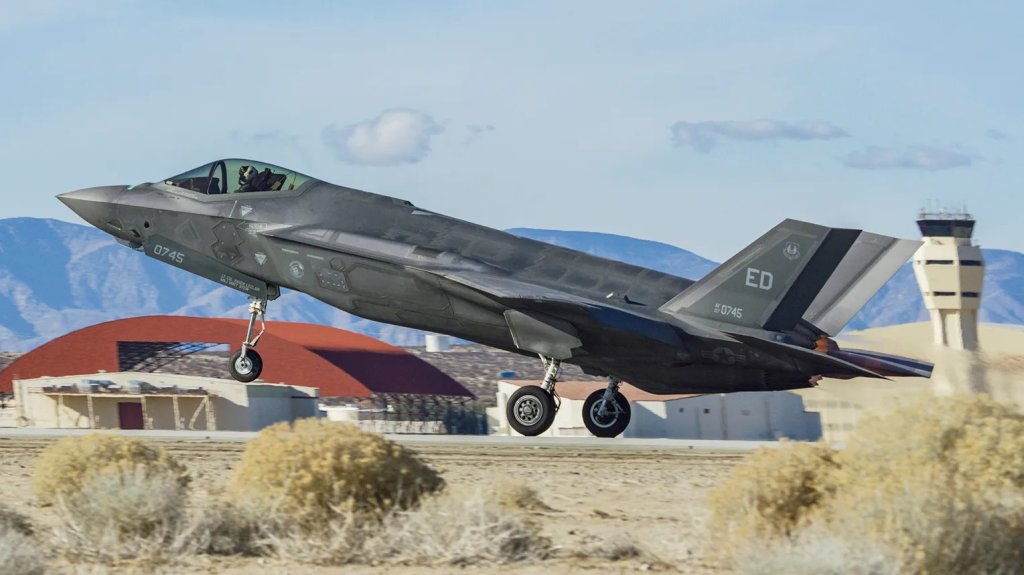
In the meantime, with Project Overwatch, Lockheed Martin has demonstrated another building block toward more advanced cognitive electronic warfare capabilities for the F-35 that looks set to be very valuable, if not increasingly critical, going forward.
Contact the author: joe@twz.com
Loading comments…
Comments couldn’t be loaded. Please refresh the page.