
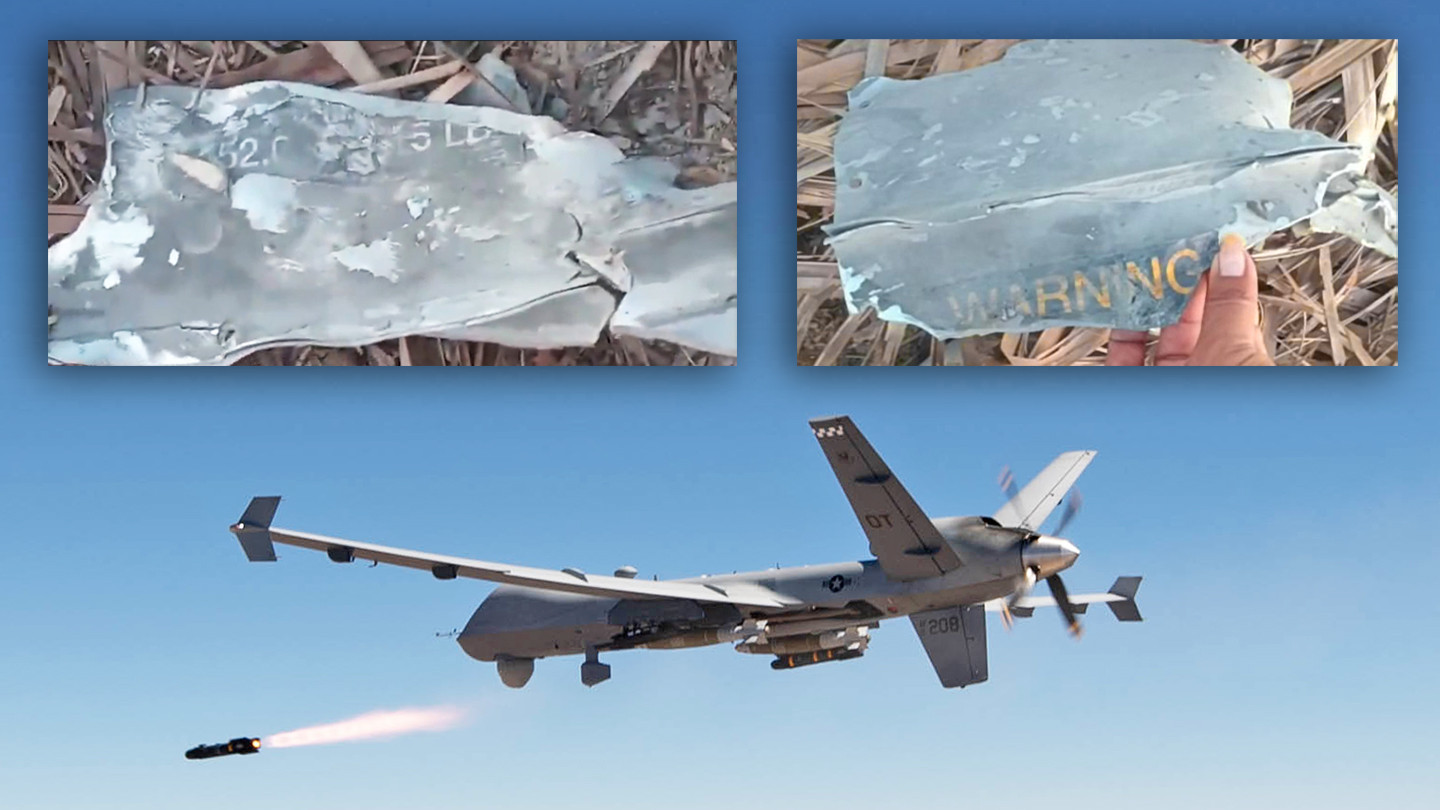
Evidence that the United States employed AGM-114 Hellfire or AGM-179A Joint Air-to-Ground Missiles (JAGM) in a covert strike on a target in Venezuela has now emerged. The U.S. military also recently disclosed an attack on what it says was a trio of drug-smuggling boats sailing in a convoy. Just earlier this week, TWZ highlighted exactly these potential scenarios in the broader context of recent sightings of U.S. MQ-9 Reaper drones flying over the Caribbean with unusually heavy weapons loads.
Spanish-language television network Telemundo, headquartered in Miami, Florida, first broadcast imagery of U.S. missile fragments, which we will come back to in a moment, that it said were recovered in Venezuela’s far northwestern Alta Guajira region. What looks to be the full video clip that those images were taken from is also now circulating online. NBC News had previously reported that members of Venezuela’s Wayuu indigenous community had witnessed a mysterious explosion in Alta Guajira on December 18. U.S. President Donald Trump had first disclosed that the U.S. government had carried out a covert U.S. strike on Venezuelan soil on December 26, but it remains unconfirmed exactly where or when that occurred. Other details, including that the operation targeted a “port facility” or “dock” and that it was carried out by a Central Intelligence Agency (CIA) drone, have been reported since then, as you can read more about here.
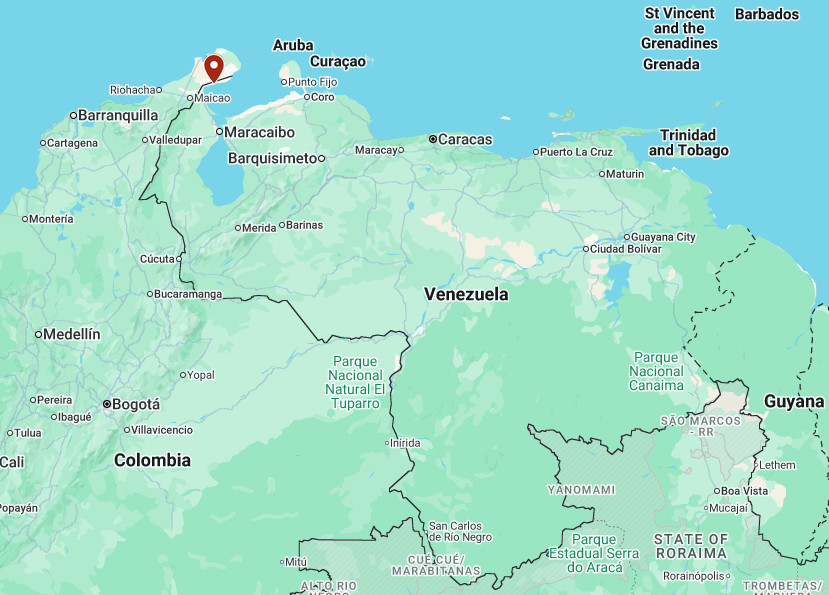
Returning to the missile fragments reportedly found in Alta Guajira, they are relatively small, but have distinctive “WARNING” and “52.0” markings that are clearly visible. This is fully consistent with the markings seen on AGM-179A Joint Air-to-Ground Missiles (JAGM), as well as some variants of the AGM-114 Hellfire. Similar fragments have been seen on many occasions following confirmed and reported U.S. drone strikes around the world, including ones tied to the CIA and the U.S. military’s secretive Joint Special Operations Command (JSOC).
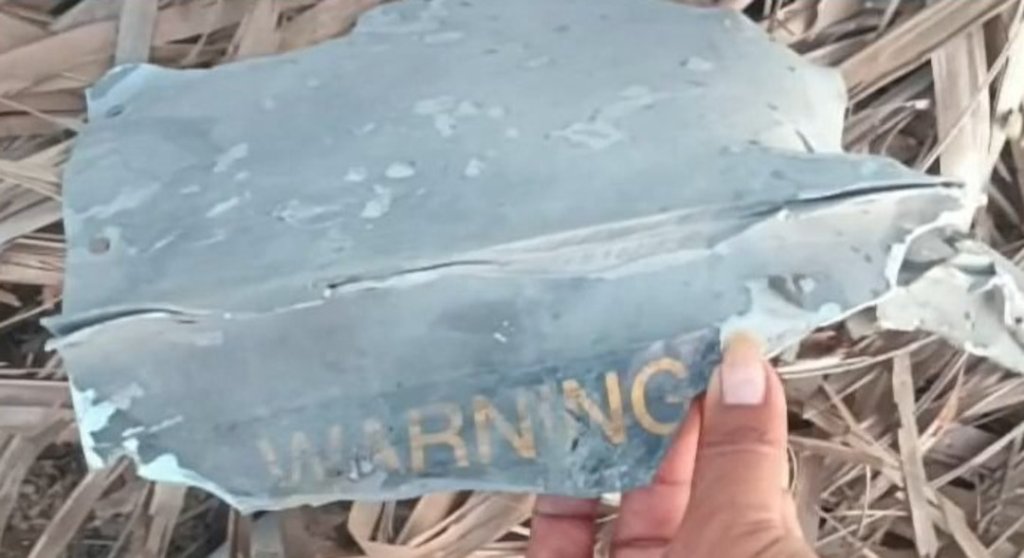
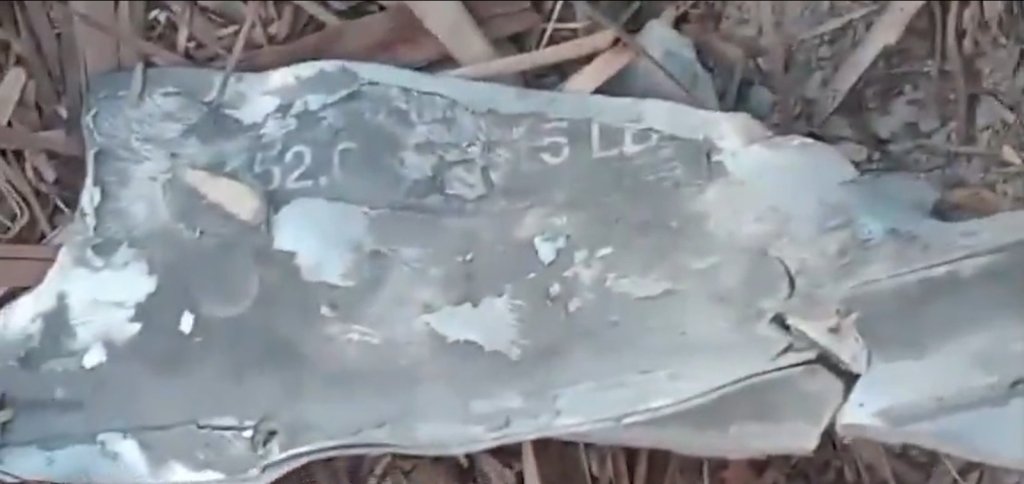

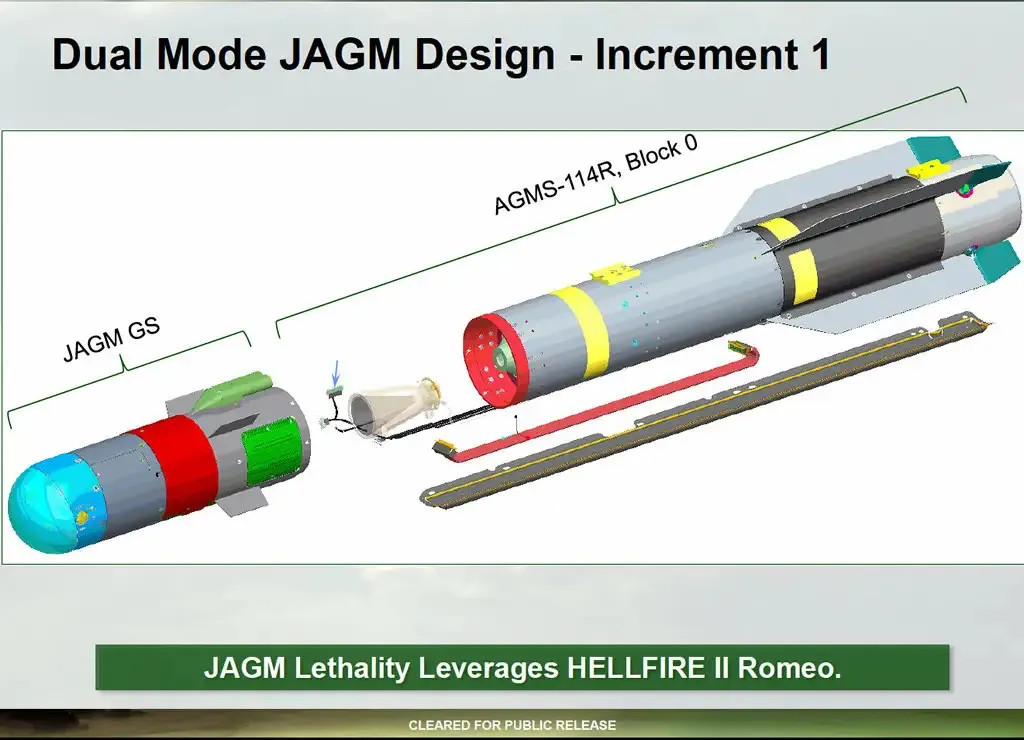
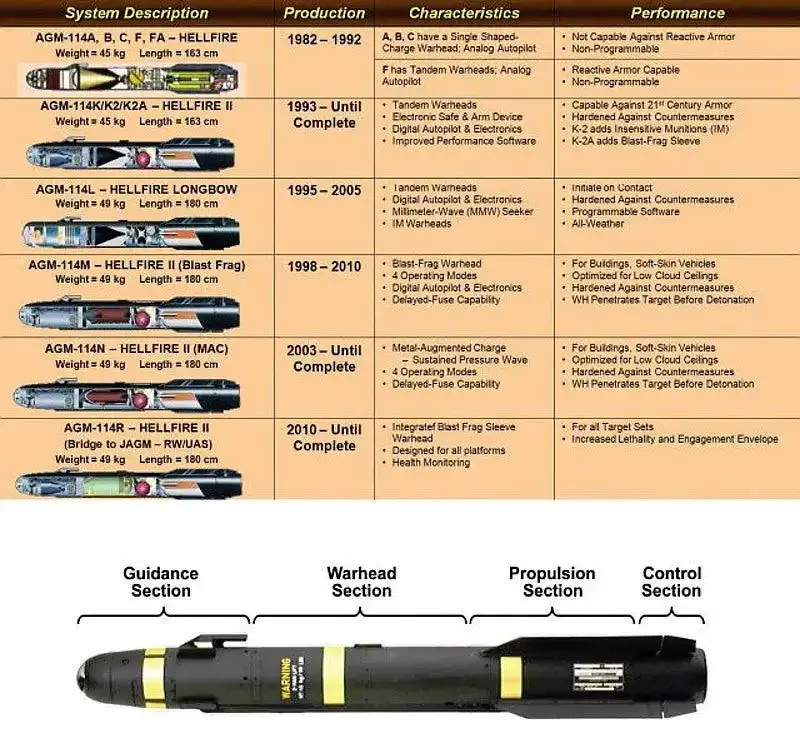
The AGM-179A is derived directly from the AGM-114R variant, and both missiles share an identical rear body. JAGM’s main area of improvement over its predecessor is its new dual-mode seeker, with laser and millimeter-wave radar guidance modes, which gives it more flexibility to engage targets, as you can read more about here. Every JAGM and Hellfire has a label at the tail end that says “WARNING” and “2-MAN LIFT,” and lists their weight in kilograms and pounds. Each JAGM is roughly 115 pounds (52 kilograms). The stated weight of the baseline R model Hellfire is approximately 110 pounds (49 kilograms). However, there are many subvariants of the AGM-114R, some of which have very different configurations from the standard type. This includes the R9X version, which features an array of pop-out sword-like blades instead of a traditional high-explosive warhead.
MQ-9s armed with AGM-114s have been flying from Rafael Hernandez Airport in Aguadilla in Puerto Rico since September 2025, ostensibly in support of expanded counter-drug operations in the Caribbean. Starting last month, local spotters noticed Reapers operating from the airport carrying steadily larger loads of Hellfires, up to as many as 10 at a time. The drones have not been seen with JAGMs, or any other munitions, under their wings. The U.S. military still does not appear to have officially confirmed the integration of JAGM onto the MQ-9, but adding the missiles to the Reaper’s arsenal is at least planned, and there has been evidence in the past that it has already occurred.
The U.S. military does have other aircraft, fixed-wing and rotary, that can employ Hellfires and/or JAGMs. However, the MQ-9 would still be particularly well-suited for a covert strike on Venezuela, given the ranges and other likely operational parameters involved.
As TWZ wrote in our recent exploration of Reaper operations in the Caribbean:
“The aforementioned descriptions of the target [of the covert strike] in Venezuela as being a ‘port facility’ and a ‘dock’ would seem to point to something of substantial size. This, in turn, could well have necessitated the employment of a relatively large amount of ordnance, such as what we’ve recently been seeing on Puerto Rico-based MQ-9s, to ensure adequate destruction.”
“More clandestine assets could still have been used instead, but there also would have been no real need to do so if something like a Reaper could have accomplished the job with a reasonable level of survivability. The strike on the target in Venezuela, which did not prompt any kind of immediate response on the part of Venezuelan authorities, at least that we know of, raises additional questions about the effectiveness of the country’s air defenses. Whether or not any standoff electronic warfare support, of which there is plenty in the region currently in the form of Navy EA-18 Growler jets and at least one Air Force EC-130H Compass Call plane, was utilized during the operation is unknown, but this seems likely to have been the case. As TWZ has explored in detail in the past, Venezuela’s air defense capabilities are limited, but could certainly present real threats.”
It is also worth noting here that Colombian President Gustavo Petro separately claimed this week that the United States had struck a target in or around Venezuela’s port city of Maracaibo, which lies to the immediate south of Alta Guajira. Petro described it as a “factory” tied to Colombian leftist guerrilla group Ejército de Liberación Nacional (ELN; National Liberation Army), where “we fear they mix coca paste there to make it cocaine,” according to a machine translation of a post from his official account on X. At the time of writing, this all remains unconfirmed. The ELN is understood to regularly operate in Alta Guajira, which is in close proximity to the Colombian border.
In addition, Venezuela’s dictatorial president Nicolas Maduro said that he “might discuss” the U.S. government’s direct action against his country “in a few days,” in a recent interview with the Telesur television network. Telesur is jointly sponsored by the governments of Venezuela, Cuba, and Nicaragua. Maduro also took that opportunity to focus blame for drug-trafficking in the region onto Colombian groups, and claim his willingness to work with American authorities on a variety of issues. Maduro is currently under indictment in the United States on charges related to illicit narcotics, including his alleged leadership of a cartel now officially designated as a foreign terrorist organization (FTO).
In TWZ‘s recent detailed look into U.S. MQ-9s flying over the Caribbean with ever-larger loads of AGM-114 Hellfires, we also wrote:
“As already noted, it is not otherwise clear what new mission requirements and/or intelligence streams may have fueled the decision to begin arming MQ-9s flying from Puerto Rico with the significantly larger loads of Hellfires. The need to respond to drug cartels sending out larger waves of boats in order to survive, or to provide armed overwatch due to concerns about surface threats from small boats, are possibilities, but there are no indications so far of either of these being the case.”
On New Year’s Eve, U.S. Southern Command (SOUTHCOM) shared videos of “kinetic strikes against three narco-trafficking vessels traveling as a convoy,” which it said had occurred the day before.
The released footage does include clips that show impacts consistent with aerial gunfire, pointing to the involvement, at least in part, of an Air Force AC-130J Ghostrider gunship. MQ-9s and AC-130Js are among the platforms understood to be involved in this controversial campaign of strikes on alleged drug-smuggling boats, which has been ongoing since September 2025.
SOUTHCOM said the strikes on the trio of boats on December 30 killed “three narco-terrorists,” but that other individuals survived, and that it had contacted the U.S. Coast Guard to conduct a search for survivors. The Coast Guard subsequently confirmed that request, and, by extension, that the strikes had occurred somewhere in the Eastern Pacific Ocean, rather than the Caribbean. At the time of writing, that effort is still ongoing, but there have been no reports of anyone being recovered. Colombian President Petro has also offered his country’s assistance and shared a map showing what he says is the approximate location where the boats were struck.
SOUTHCOM later announced strikes on two more alleged drug smuggling boats on New Year’s Eve, but did not explicitly say whether they had been sailing together or separately. Where those vessels were targeted is not clear.
There is certainly a visible trend now toward the targeting of multiple boats in a single day, which would mark a notable uptick in tempo in these operations. As TWZ has previously noted, between September 2 and December 29, the U.S. military is known to have attacked 31 vessels in the Caribbean Sea, as well as the Eastern Pacific Ocean, an average of one strike on a single boat every four days.
This all follows a major, months-long build-up of U.S. air, naval, and ground forces in the region, which is still ongoing. There has also been a steady ratcheting up of the U.S. government’s pressure campaign against Maduro, specifically, now punctuated by at least one covert strike. Whether that may evolve into overt action against the regime in Caracas still remains to be seen.
In the meantime, there is still-growing evidence that the role of U.S. MQ-9 drones in the region is expanding in scale and scope. Altogether, U.S. operations in and around the Caribbean have already taken an increasingly kinetic turn in recent weeks.
Contact the author: joe@twz.com
Loading comments…
Comments couldn’t be loaded. Please refresh the page.