
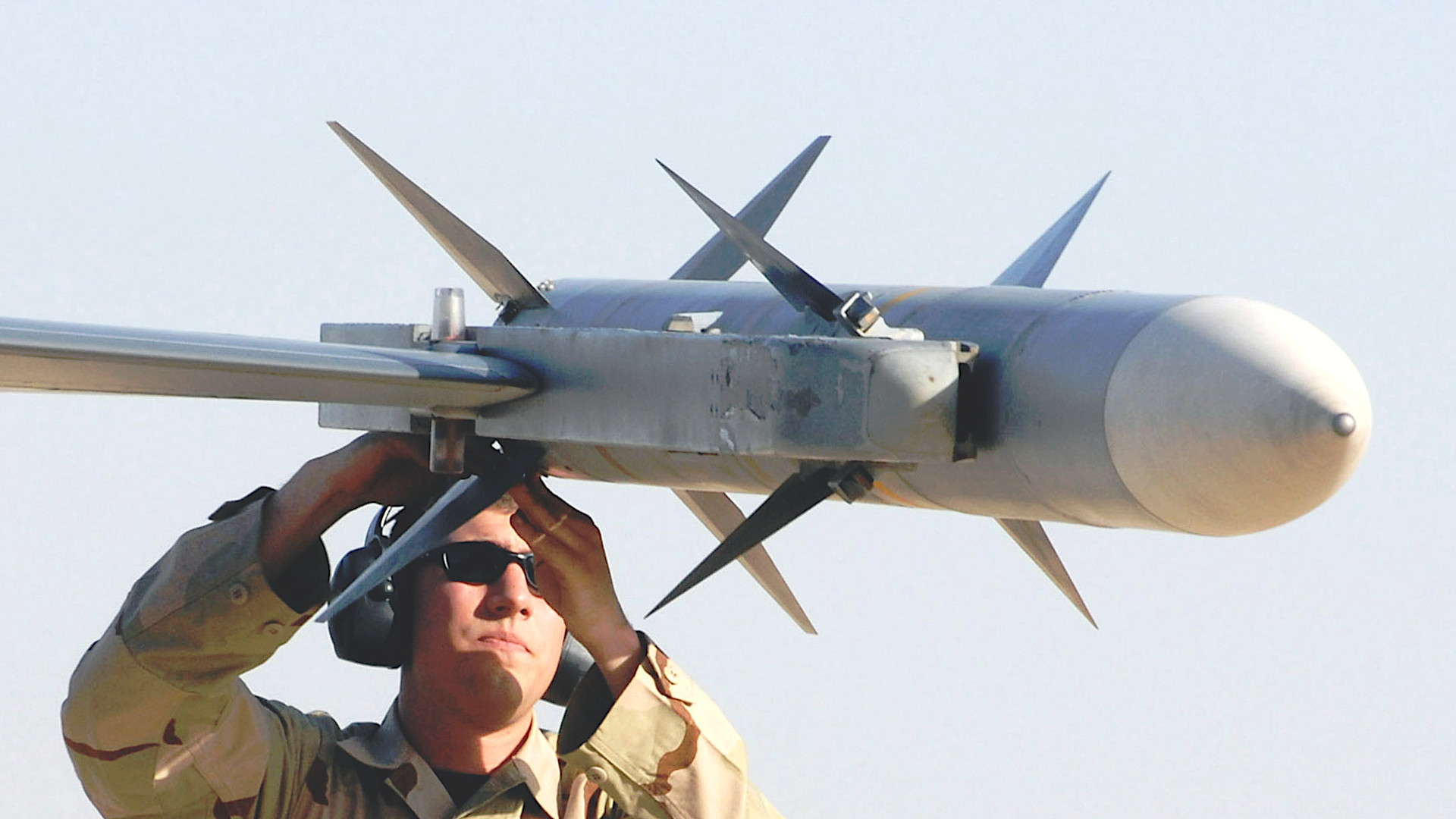
The U.S. Air Force has put out a new call for concepts for a future anti-air missile that costs no more than $500,000 and that could be built at a rate of at least 1,000 per year. The service says the planned Counter-Air Missile Program (CAMP) will build upon frameworks it has been using to develop cheaper cruise missiles for striking targets on land and at sea.
The Air Force Life Cycle Management Center’s Armament Directorate recently released a contracting notice regarding CAMP. The directorate has stressed that it is still in the very early stages of laying out the effort.
However, “the United States Government has identified a need … for the development, procurement, and integration of a low-cost counter-air capability as a future class of the Affordable Mass Munitions portfolio,” according to the notice. “It is the Government’s expectation that the initial CAMP system will provide a ground-launched capability that is a viable pathway to a low-cost air-to-air missile.”
“Low-cost” here is defined as less than $500,000 per unit for a production run of at least 1,000 complete missiles. The target annual production rate is between 1,000 and 3,500 of the CAMP munitions.
“The highest priority of this effort is the development and demonstration of an affordable, open system, modular, and highly producible ground-launched capability. Ground-launch efforts will serve as a risk reduction effort expediting missile design maturation and evaluation for future affordable air-to-air missile capabilities,” the contracting notice adds. “A ground-launch system will also serve as a new weapon class of Enterprise Test Vehicle (ETV), providing a lower cost, rapid capability to integrate and demonstrate future sub-systems and components in a relevant environment prior to integration into a Program of Record weapon.”
In June 2024, the Air Force and the Pentagon’s Defense Innovation Unit (DIU) announced they had hired four companies – Zone 5 Technologies, Anduril, Leidos subsidiary Dynetics, and Integrated Solutions for Systems, Inc. – to design and deliver prototype ETVs. Ostensibly low-cost cruise missiles, the designs in question skirt an increasingly blurry line separating traditional cruise missiles from uncrewed aerial systems, especially longer-range kamikaze drones, as well as decoys.
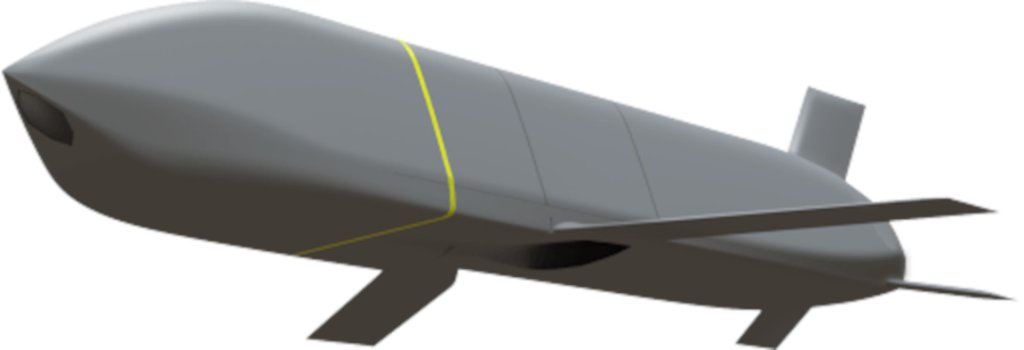
The CAMP contracting notice does not provide any details regarding a desired engagement envelope or other specifications. It does stress a clear focus on a “counter air weapon solution” that trades “exquisite capabilities for affordability and producibility.” It also mentions a need to adhere to an Armament Directorate framework called the “Modular Weapon M-Series approach,” which is intended to balance “performance, affordability, modularity, and producibility.” Open architecture systems and the use of digital design tools are also key elements of the M-Series “playbook.” The Air Force also wants to have a high degree of ownership of the technical data rights surrounding any missile developed for CAMP, as well as for the weapons to be designed with exportability in mind.

As a general point of comparison, the latest versions of the AIM-9X Sidewinder missile have unit costs around $500,000. The U.S. Army is now fielding the AIM-9X in the surface-to-air role, on top of its long-standing use as an air-to-air weapon by the Air Force, as well as the U.S. Navy and Marine Corps. The AIM-120 Advanced Medium Range Air-to-Air Missile (AMRAAM), current generation versions of which cost around $1 million apiece, is the other air-to-air workhorse for the Air Force, Navy, and Marines. The U.S. military also has a small number of National Advanced Surface-to-Air Missile Systems (NASAMS), used to help protect the airspace around Washington, D.C., which can fire AIM-9Xs or AIM-120s. The Air Force’s most recent budget request for the 2026 Fiscal Year says the maximum annual production rates for AIM-9Xs and AIM-120s per year are 2,500 and 1,200, respectively.
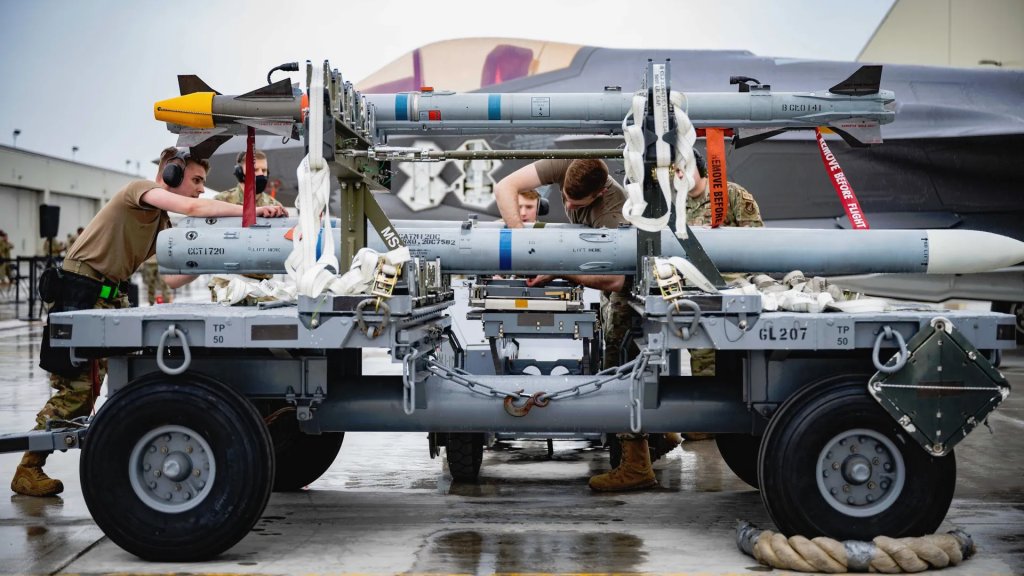
In the past year and a half, an anti-air variation of the Advanced Precision Kill Weapon System II (APKWS II) laser-guided 70mm rocket has also emerged as the Air Force’s go-to aerial counter-drone weapon. One of the key benefits of those rockets, also referred to as Fixed Wing, Air Launched, Counter-Unmanned Aircraft Systems Ordnance (FALCO), is their low cost. All APKWS II rockets consist of three core components: a standardized rocket motor, one of several standard warhead options, and a laser-guidance unit inserted in between. The guidance section is the most costly component, with a unit cost generally between $15,000 and $20,000. The FALCO rockets also offer significant magazine depth benefits over traditional air-to-air missiles, but do have major limitations, as you can read more about here.
In the ground-launched surface-to-air realm, a price tag under $500,000 would put CAMP at the higher end of the cost range of shorter-range interceptor designs that the Army, and the Marines to a lesser extent, have been working to field in recent years. Many of these designs, like Raytheon’s combat-proven Coyote Block 2, which the Air Force is now also operating on some level, are focused primarily on providing added layers of defense against drones. Systems that use APKWS II rockets in the surface-to-air role are increasingly part of the equation, as well. Last month, the Army announced its newest planned addition to this end of its air defense arsenal, AeroVironment’s Freedom Eagle-1. The Army’s Patriot ground-based surface-to-air missile systems lie at the other end of the cost and capability spectrum, being able to fire various interceptors that all cost multiple millions of dollars apiece.
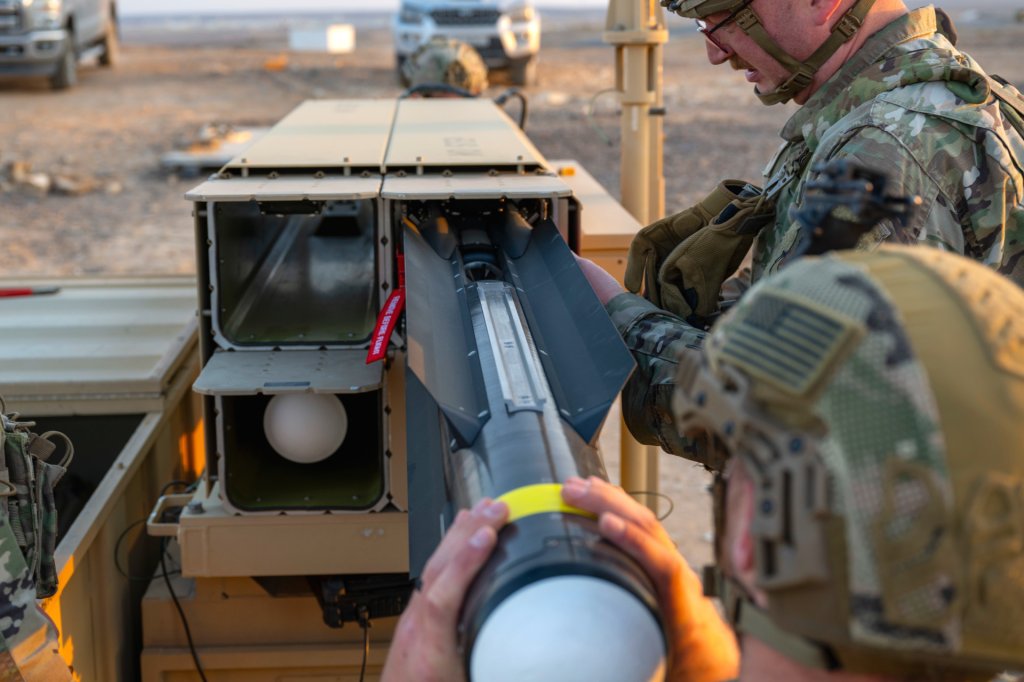
Without more details about what the Air Force is seeking with CAMP, it is difficult to gauge how it might slot into the U.S. military’s existing anti-air missile ecosystem, and exactly what benefits it might offer over current types and in what contexts.
A missile even approaching AIM-120-like capability, in either the surface-to-air or air-to-air mode, at half the price would offer particular value. If that weapon could also be made smaller than the AIM-120, it would open up additional possibilities in terms of launch environments. A modular, scalable design could be even more advantageous in that regard, creating additional flexibility while retaining commonality in components that could help with keeping costs and production times low. Owning key technical data rights would give the Air Force more opportunities to hold competitions for various aspects of the program, fostering competition that could be beneficial.
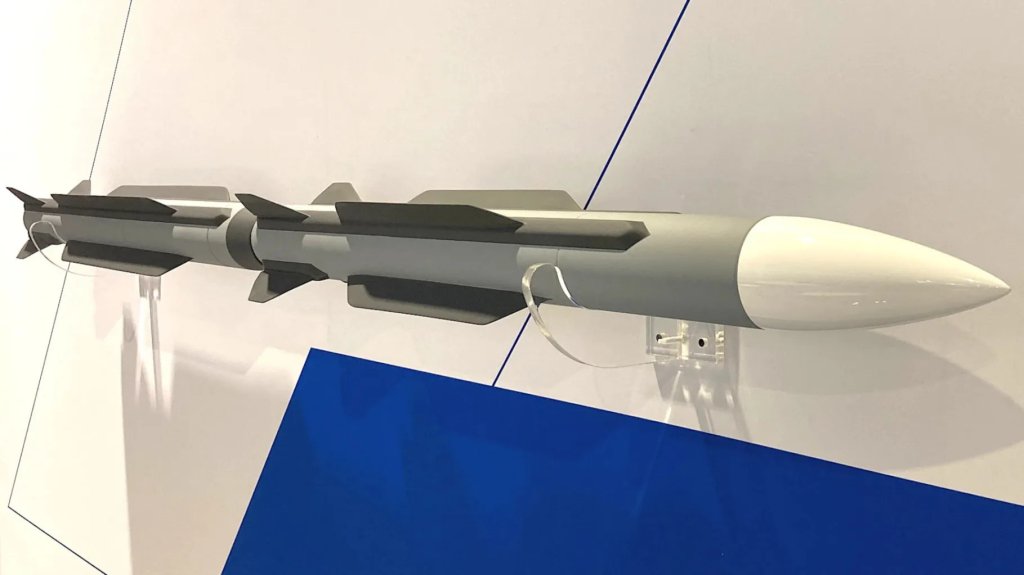
There are inherent challenges to doing all this with anti-air missiles, due to the general performance required, especially to be able to tackle a broader array of aerial threats. Very different capabilities can be required to successfully intercept various tiers of drones and cruise missiles, as well as traditional fixed-wing aircraft and helicopters, all operating with equally different engagement envelopes.
It’s interesting to note here that the Air Force Life Cycle Management Center’s Armament Directorate had also put out a call for information regarding potential designs for what it termed Low-Cost High-Speed Air-to-Air Missiles back in May. That contracting notice laid out more specific requirements for an AIM-120-sized weapon offering “a low-cost solution with maximum range,” as well as one roughly half that size, “to double aircraft loadout while maximizing range.”
The Low-Cost High-Speed Air-to-Air Missile request for information included an even lower target unit cost than CAMP, set at no more than $250,000 each for a production run of at least 1,000 weapons. How these two efforts may be related is unclear. The AIM-120, in particular, looks set to remain in production for years to come, with the AIM-260 Joint Advanced Tactical Missile (JATM) also in development as a more direct replacement.
As mentioned, the CAMP contracting notice also states a clear link to the existing ETV effort. The Air Force Life Cycle Management Center’s Armament Directorate has also previously put ETV together with another program called the Extended Range Attack Munition (ERAM) on a larger ‘roadmap’ for new low-cost air-launched munitions.
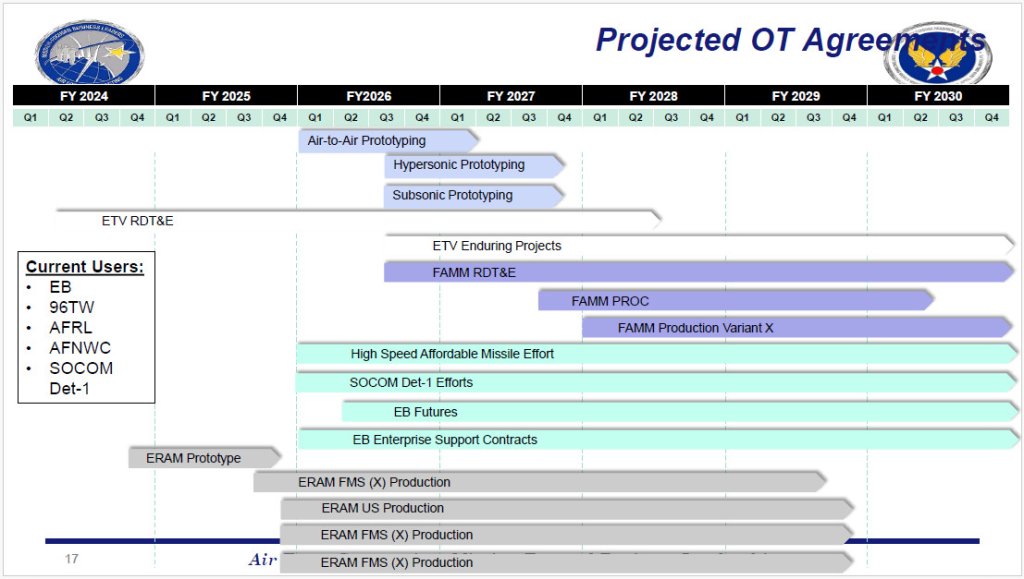
ERAM is a low-cost cruise missile effort focused primarily on delivering additional stand-off strike munitions to Ukraine. CoAspire and Zone 5 Technologies developed separate designs, called the Rapidly Adaptable Affordable Cruise Missile (RAACM) and Rusty Dagger, respectively, under the ERAM program. Ukrainian forces are now in line to get thousands of ERAMs, which may include a mix of both types. Information the Armament Directorate has released in the past indicates that other U.S. allies and partners, and the U.S. military itself, could be on track to benefit from the ERAM effort, as well. In January, the Air Force notably confirmed to TWZ that it was at least exploring adding an anti-air FALCO “capability” onto one of several potential future variants or derivatives of ERAM.

CAMP’s explicit focus on affordability and producibility is certainly in line with the underlying objective of the ETV program, but translated to the anti-air domain.
“These things may not be quite as exquisite, but we can produce them in high volumes at relatively low cost,” now-retired Air Force Gen. James Slife, then Vice Chief of Staff of the Air Force, said about the core goals of the ETV effort last year. “So, that mixture of high volume low-cost munitions, coupled with some of our more exquisite munitions being mixed in provide a very difficult problem for our adversaries to defend against.”
In addition, U.S. military officials have also talked in the past about how ETV, as well as a host of other ongoing low-cost cruise efforts across the services, is as much about shaking up the defense industrial base as acquiring new munitions.
ETV presents a path “to expand our industrial base into non-traditional suppliers that perhaps have not historically been large-scale munitions producers,” Slife had also said in 2024. “If the manufacturing techniques we’re able to leverage pan out, we’ll be able to take advantage of a bigger part of the American industrial base to produce munitions for us.”
Anduril has been developing its Barracuda-500M, seen in the video below, under the ETV program.
Regardless of CAMP’s exact relationship with the ERAM and ETV programs, the proposed Low-Cost High-Speed Air-to-Air Missile, or any other efforts, it is fully in line with a broad U.S. military-wide focus in recent years on the acquisition of large volumes of lower-cost anti-air and air-to-surface munitions. American experiences from operations in the past two years or so against Iranian-backed Houthi militants in and around the Red Sea, as well as to defend Israel from direct Iranian attacks, have underscored the need to expand (and now replenish) existing munitions stockpiles and grow the industry that supplies them. U.S. aid to Ukraine, along with observations from that country’s ongoing conflict with Russia, have only reinforced these viewpoints.
Purchasing new stocks of guided munitions and opening up new pipelines, as well as revamping the underlying acquisition process, are viewed as being particularly critical to success in any future high-end fight, such as one against China in the Pacific. Just last Friday, the Pentagon announced plans for sweeping new changes to how new weapon systems and other equipment are purchased, and how the underlying requirements for them are formulated.
If nothing else, the Air Force has now stated its intention to adapt the frameworks it has been using to help develop and acquire new, lower-cost cruise missiles into work on anti-air interceptors.
Contact the author: joe@twz.com
Loading comments…
Comments couldn’t be loaded. Please refresh the page.