
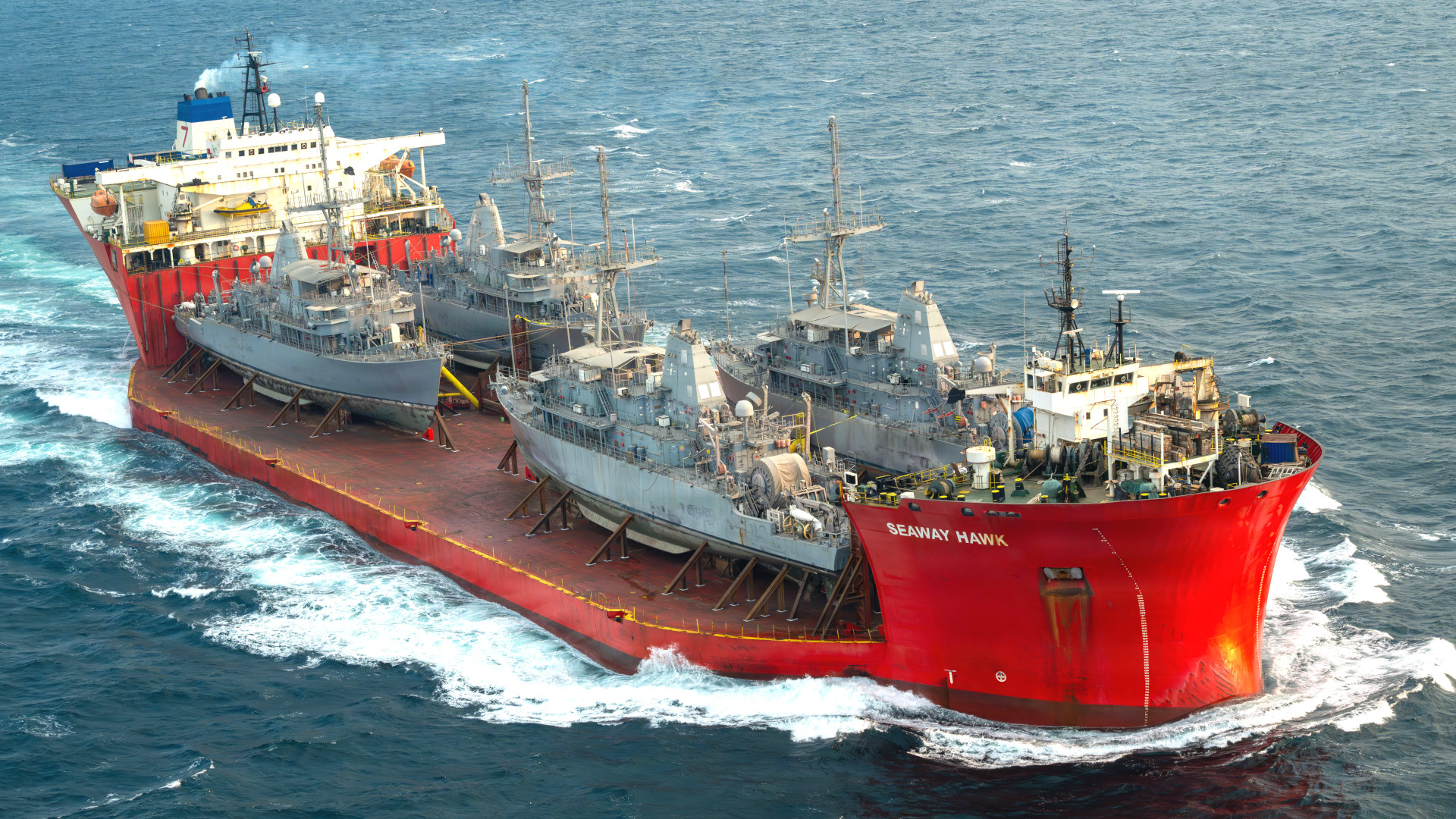
Four decommissioned U.S. Navy Avenger class mine countermeasures ships have left Bahrain on what may be their final voyage aboard a larger heavy lift vessel. Avengers had been forward-deployed to the Middle Eastern nation for years, where critical mine countermeasures duties have now passed to Independence class Littoral Combat Ships (LCS).
The public affairs office for U.S. Naval Forces Central Command (NAVCENT) and U.S. 5th Fleet first released pictures of the M/V Seaway Hawk, a contracted semi-submersible heavy lift vessel, carrying the former Avenger class ships USS Devastator, USS Dextrous, USS Gladiator, and USS Sentry last Friday. The Navy released more images and a brief statement yesterday. The date stamps on the pictures show the Avengers were physically loaded onto the Seaway Hawk in Bahrain on January 9.
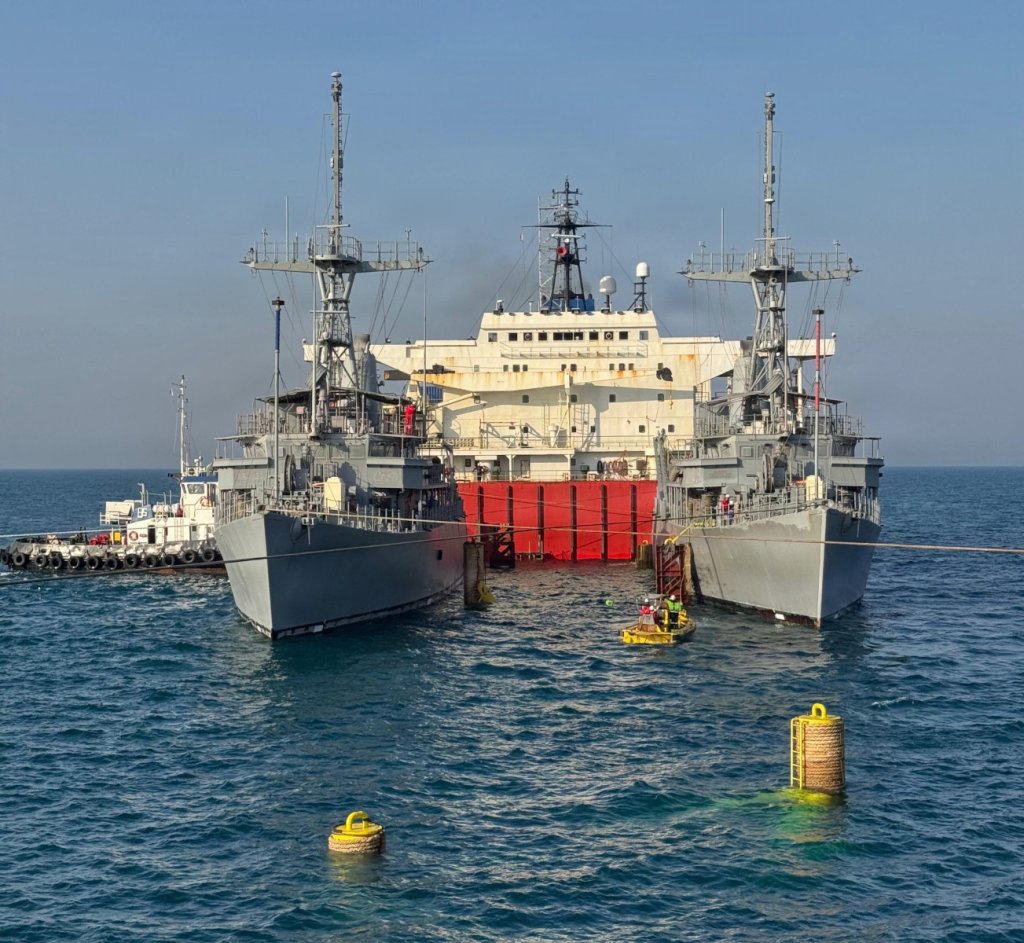
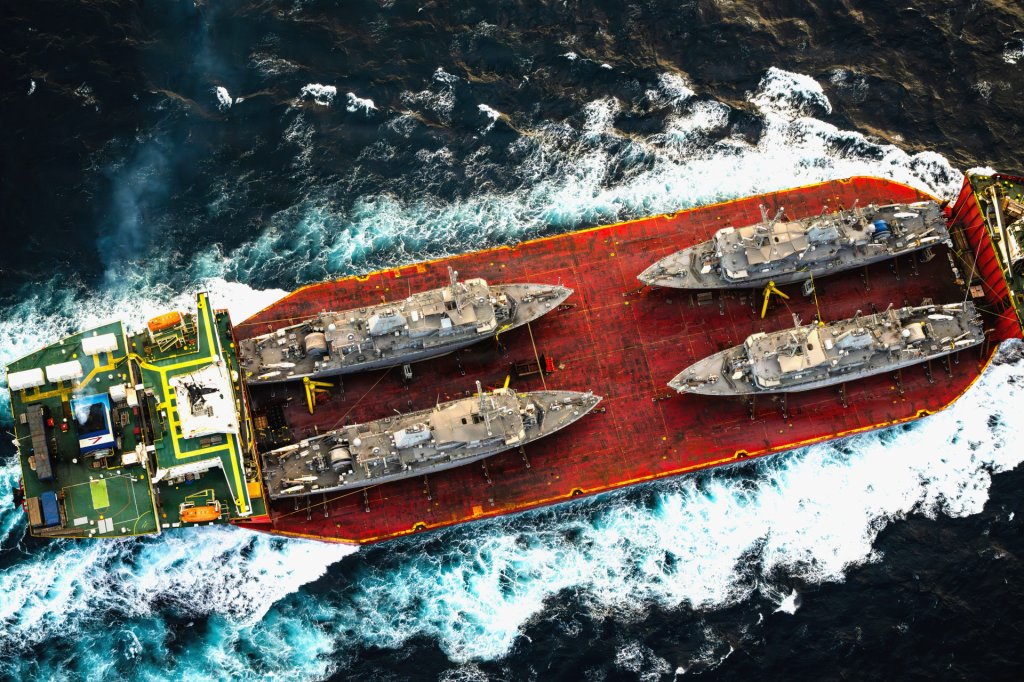
The Navy acquired 14 Avenger class ships between 1987 and 1994. Four of them are still in service, all of which are forward-deployed in Japan, but are also slated for decommissioning in the coming years.
“Decommissioned Avenger class Mine Countermeasures ships were safely moved as part of ongoing U.S. Navy force transition efforts in the region,” per the statement from NAVCENT. “The movement evolution required detailed planning, coordination, and disciplined execution to ensure the safe transport of the decommissioned MCM’s.”
“Mission partners worked together to maintain operational standards, prioritize safety, and ensure accountability throughout each phase of the evolution,” the statement adds. “These efforts support continued fleet readiness and responsible transition of legacy platforms, while sustaining operational momentum and mission effectiveness across the maritime domain.”
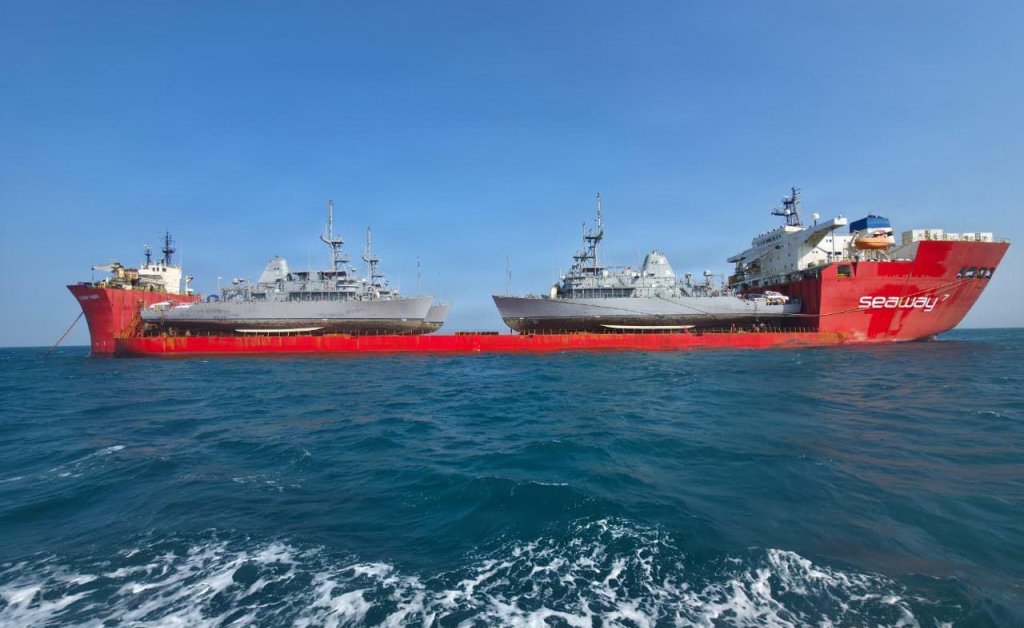
A Navy contracting notice last year said the four decommissioned Avengers would head from Bahrain to Philadelphia, Pennsylvania. Sealift, Inc. subsequently received a contract valued at approximately $7 million for work through February of this year, according to USNI News. In addition, the Navy had said it previously intended to scrap the USS Devastator, USS Dextrous, USS Gladiator, and USS Sentry following their decommissioning. If the ships are due to be broken down, why the decision was made to return them to the United States first is unclear.
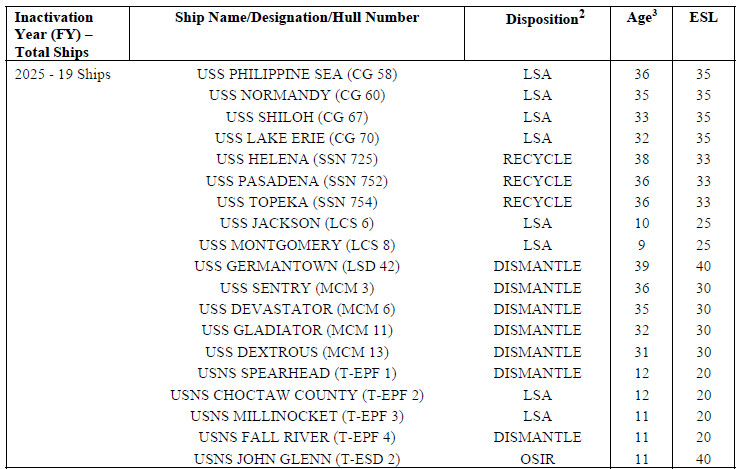
The USS Devastator was the last of the Avenger class ships in Bahrain to be decommissioned, which was marked by a ceremony last September.
“For more than three decades, USS Devastator, USS Dextrous, USS Gladiator and USS Sentry have been critical to maritime missions around the globe – defending the freedom of navigation, promoting stability and deterring and defeating efforts by adversaries to harm the innocent,” Navy Vice Adm. George Wikoff, then commander of NAVCENT and 5th Fleet, said at that time. “To all, past and present, who have served on [these ships], thank you for standing the watch, being true trailblazers in the fleet and maintaining a constant presence in our area of operations… what a proud legacy you leave in your wake.”
The 224-foot-long and 1,312-ton-displacement Avengers are designed to both hunt for and neutralize moored naval mines, as well as those sitting on the sea floor.
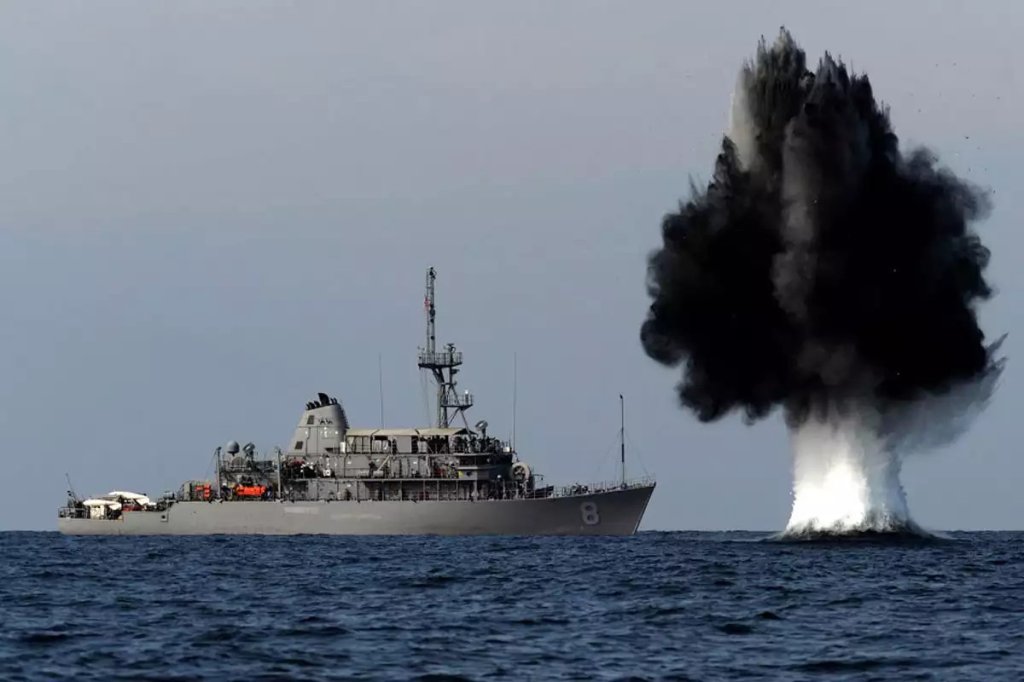
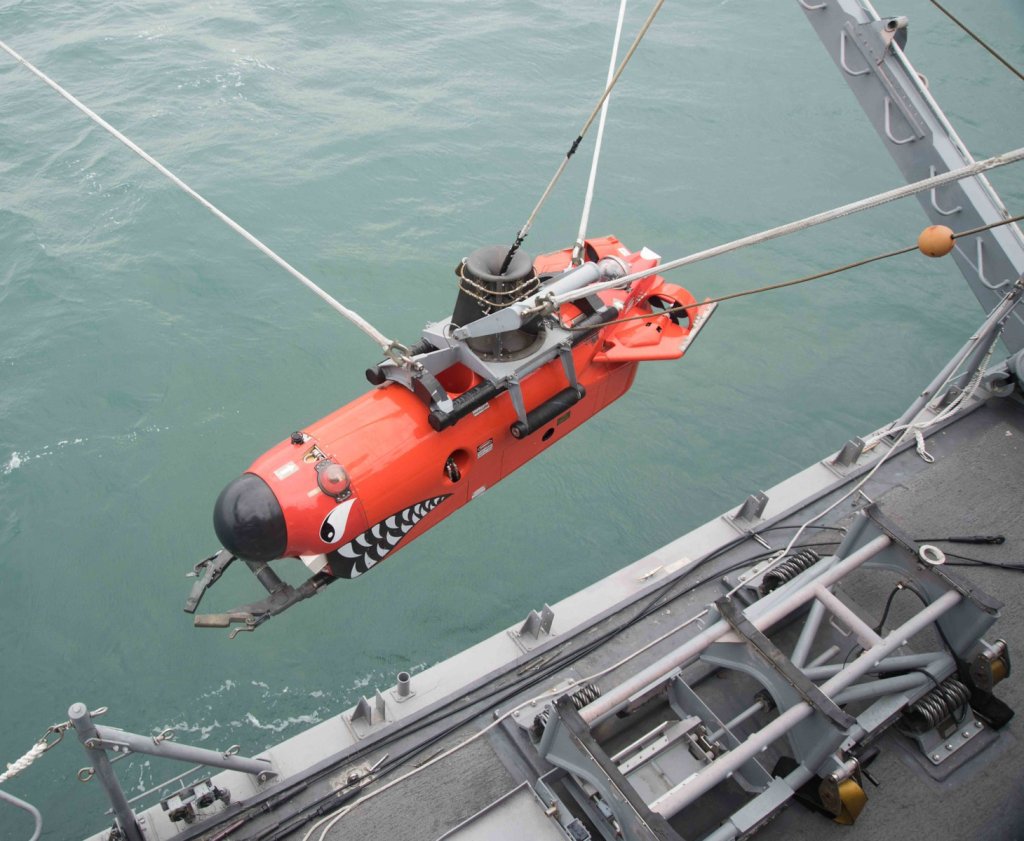
Each of the ships is equipped with a mine-hunting sonar and surface search radar. Each Avenger can deploy towed minesweeping gear that can mimic the acoustic and magnetic signatures of warships, causing certain types of mines to detonate prematurely. They also have remotely-operated underwater vehicles capable of cutting mooring lines and otherwise interacting with underwater objects to help with rendering mines safe, as well as finding and categorizing them in the first place.
The ships themselves have fiberglass-coated wooden hulls to reduce their own vulnerability, particularly to mines that detect targets by their magnetic signature.
The Navy has long intended to replace the Avenger class ships with LCSs configured for the mine countermeasures duties. However, delays with the LCS mine countermeasures and other mission packages, or “modules,” as well as other persistent issues with both subclasses of those ships, repeatedly delayed those plans. The LCS program had also originally envisioned it being possible to readily reconfigure the ships for different mission sets by swapping out modules. However, the Navy is now deploying LCSs in largely fixed configurations. As it stands now, the LCS mine countermeasures configuration includes towed mine-hunting sonar for the ships, Common Unmanned Surface Vehicles (CUSV) with mine-sweeping gear, and mine detection and neutralization systems carried by embarked MH-60 Sea Hawk helicopters.


The Navy only fielded its first two operational mine countermeasures modules, installed on the Independence class LCSs USS Santa Barbara and USS Canberra, last year. Canberra arrived in Bahrain in May 2025. At that time, Santa Barbara, as well as the Independence class USS Tulsa and another ship to be named, were slated to comprise the inaugural rotational deployment of mine countermeasures-configured LCSs in the region. The USS Canberra notably sailed together with the M/V Seaway Hawk for a time after it departed Bahrain with the decommissioned Avengers.
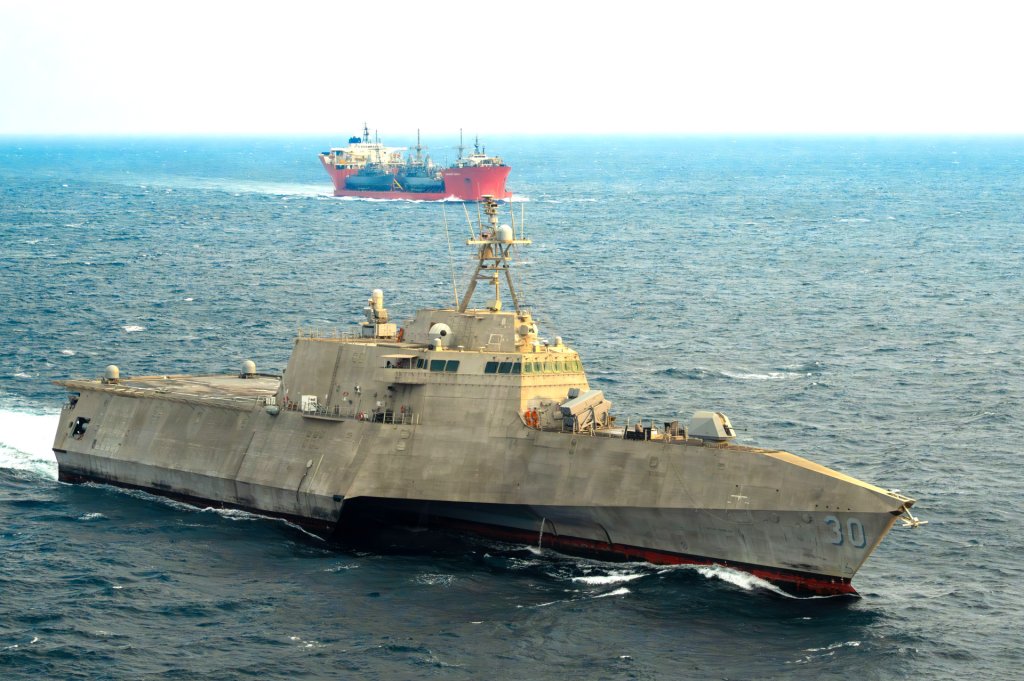
Questions and criticism about the suitability of metal-hulled LCSs to take on the mine countermeasures mission have come up in the past. Both subclasses of LCS are also much larger than the Avenger class design, which could impose limits on how close they can get to mined or potentially mined areas. LCSs are better able to defend themselves against other threats than the Avengers, but they still have relatively limited firepower, which has been a separate source of criticism for years now. There would still be a significant need for tertiary support to protect LCSs during mine-clearing operations, which are slow and complex, and carry significant risks, even in benign environments.
The continued critical importance of naval mine-clearing capacity in the Middle East is underscored now by a new surge in geopolitical friction between the United States and Iran. The regime in Iran regularly threatens to blockade the highly strategic Strait of Hormuz in response to foreign attacks, especially ones that could present an existential danger to the regime in Tehran. The Strait of Hormuz links the Persian Gulf and the Arabian Sea, and is a huge chokepoint for oil and natural gas exports from the Middle East to other countries globally. Naval mining would be central to any blockade, but Iran’s capacity and willingness to launch such an operation, which would have worldwide ramifications, is an open question. TWZ previously explored this issue in depth following the start of the 12 Day War between Iran and Israel last year.
If the Navy has to launch its own mine-clearing operations in and around the Persian Gulf for any reason going forward, LCSs will be front and center now that the Avenger class ships have left the region.
Contact the author: joe@twz.com
Loading comments…
Comments couldn’t be loaded. Please refresh the page.