
A day after several allies rejected his demand they send warships to the Strait of Hormuz, President Donald Trump said he no longer wants their help. In a post on his Truth Social platform, the U.S. leader excoriated the NATO alliance and other countries for not coming to America’s aid when needed.
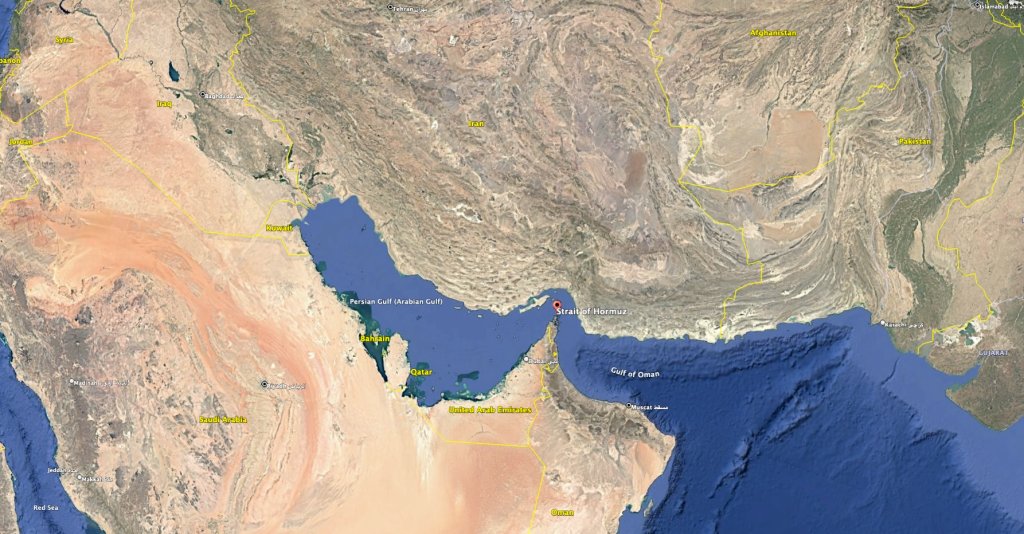
Trump’s comments come as the global economy is roiled by rising energy costs in the wake of Iran closing the Strait of Hormuz for most ships and attacking fuel infrastructure across the Middle East. Trump wanted international help in forcing Iran to reopen the Strait.
“…I am not surprised by their action, however, because I always considered NATO, where we spend Hundreds of Billions of Dollars per year protecting these same Countries, to be a one way street,” Trump fumed. “We will protect them, but they will do nothing for us, in particular, in a time of need.”
“Fortunately, we have decimated Iran’s Military — Their Navy is gone, their Air Force is gone, their Anti-Aircraft and Radar is gone and perhaps, most importantly, their Leaders, at virtually every level, are gone, never to threaten us, our Middle Eastern Allies, or the World, again!,” Trump added. “Because of the fact that we have had such Military Success, we no longer “need,” or desire, the NATO Countries’ assistance — WE NEVER DID! Likewise, Japan, Australia, or South Korea. In fact, speaking as President of the United States of America, by far the Most Powerful Country Anywhere in the World, WE DO NOT NEED THE HELP OF ANYONE!”
As we noted yesterday, the U.K., Germany, Luxembourg, Japan and Australia rejected Trump’s demand while other countries were on the fence. In a post on X, Axios reported that the U.K. has drafted a plan for a Strait of Hormuz coalition and shared it with the U.S. and several other countries.
Highlighting the threat posed by Iran, the United Kingdom Maritime Trade Operations (UKMTO) Center reported that an oil tanker was hit by debris from an interception near the ship, located 23 nautical miles east of Fujairah, UAE. The vessel received minor structural damage and the whole crew was confirmed safe. A maritime industry official told The War Zone that the ship was the Kuwaiti-registered Gas Al Ahmadiah.
Despite increased concerns, this was the first incident involving a ship in the area since March 11, according to UKMTO.
Since the start of Epic Fury, UKMTO has received 21 reports of incidents affecting vessels operating in and around the Arabian Gulf, Strait of Hormuz, and Gulf of Oman. There have been 17 attacks and four suspicious activity reports.
As a result of Iran’s closure of the Strait of Hormuz and attacks on oil facilities throughout the Middle East, energy prices are again climbing.
“Brent crude climbed 3% to trade near $103 as Iran stepped up its attacks on energy infrastructure across the Gulf,” Financial Times reported. Brent still remains below its conflict high of $119.50 but has risen more than 40 percent since the war began, the outlet added.
Diesel fuel prices at the pump “have topped the $5-per-gallon barrier for the second time ever,” according to a post on X by Bloomberg News energy and commodities columnist Javier Blas.
This will have a ripple effect across the country, with everything that moves by truck likely to cost more to make up for the increased fuel costs.
UPDATES
Our coverage has ended for the day. Stay tuned for more.
7:07 PM EST—
Zelensky reposted an address to officials in the UK about Ukrainian counter-drone capabilities, stating that he can provide up to 1,000 interceptors per day and sensor networks for detecting and tracking the drones, as well as the software that underpins it.
A ballistic missile attack on Israel included a very large cluster munition warhead:
Dubai under heavy attack again tonight.
We are now seeing the damage done to the energy storage area in Tehran from IAF strikes:
5:24 PM EST—
NYTs reports that Russia is providing drone components and targeting support to Iran. This would loosely mirror the U.S. in Ukraine. The report reads, in part:
The technology provided includes components of modified Shahed drones, which are meant to improve communication, navigation and targeting, the people said. Russia has also been drawing on its experience using drones in Ukraine, offering tactical guidance on how many drones should be used in operations and what altitudes they should strike from, said the people, who included a senior European intelligence officer.
Russia has been providing Iran with the locations of U.S. military forces in the Middle East as well as those of its regional allies, The Wall Street Journal has reported. That cooperation has deepened in early days of the war, with Russia recently providing satellite imagery directly to Iran, said two of the people, the officer and a Middle Eastern diplomat.
U.S. embassies around the globe are being ordered to review security posture:
4:04 PM EST—
Growlers are now flying in a relatively rare loadout of four AGM-88 HARM-family of weapons under their wings on Epic Fury missions. This underscores that pop-up radar-guided air defenses still are a potential issue. The latest HARMs can also be used to hit targets that are not emitting radiation, as well.
Trump is now threatening to leave NATO after key members rejected sending ships to open the Strait of Hormuz:
Another night of strings of C-RAM 20mm fire being seen at key locations in Baghdad:
Israel is attacking Basij personnel and checkpoints in urban areas in Iran:
A delta-wing fighter was supposedly spotted over the city of Shiraz, indicating a gulf state ally that flies the EF2000, Rafale, or Mirage 2000 could be executing penetrating missions over Iran.
@MarineTraffic writes:
“Strait of Hormuz activity remains limited
According to #MarineTraffic data, a total of 15 vessels transited the strait over the past three days, including 8 dry bulk vessels, 5 tankers, and 2 LPG carriers. Around 87% were outbound transits, with many vessels taking unusual routes through Iranian territorial waters. Only 13% entered the Gulf, highlighting the continued imbalance in traffic flows. Watch the playback of vessel activity in the Strait of Hormuz over the past three days.”
2:28 PM EST –
The United Arab Emirates could take part in a U.S.-led effort to safeguard shipping through the Strait of Hormuz, a senior Emirati official said on Tuesday, Reuters reported on X, adding that no formal plan had been agreed to and discussions were ongoing.
“We all have a responsibility to ensure the flow of trade, the flow of energy,” Anwar Gargash, the diplomatic adviser to the country’s president, said at an online event hosted by the Council on Foreign Relations, an American think tank.
During a meeting with Irish officials at the White House on St. Patrick’s Day, Trump said he could order attacks on Iran’s electrical systems and wipe them out “in a matter of minutes.”
The president also stated he was not afraid to send U.S. troops into Iran if needed.
The United States has encouraged Syria to consider sending forces into eastern Lebanon to help disarm Hezbollah, but Damascus is reluctant to embark on such a mission for fear of being sucked into the war in the Middle East and inflaming sectarian tensions, Reuters reported, citing five people briefed on the matter.
The proposal to Syria’s U.S.-allied government reflects intensifying moves to disarm Iran-backed Hezbollah, which opened fire at Israel in support of Tehran on March 2, prompting an Israeli offensive in Lebanon.
Ukrainian President Volodymyr Zelensky insisted that his country is not just a country seeking assistance.
“I would like the U.S. not to perceive Ukraine as a country that merely asks for help,” he stated on X. “That is not the case. Ukraine is defending interests and values. Of course, the U.S. is right when it says it is farther from this war than Europe. That is understandable. But we see U.S. allies in the Middle East, and we see what – and who – threatens them.”
Speaking of Ukraine, a technology prevalent in the war may now be employed by Iranian-backed militias attacking U.S. facilities in Iraq. Video emerged on social media showing what is likely a first-person view (FPV) drone surveilling the U.S. Embassy in Baghdad. These types of drones have been used by both sides in the Ukraine war to devastating effect.
U.S. counter rocket, artillery, and mortar C-RAM systems have been engaging with drones over Baghdad.
Israeli residents exclaimed “wow” after watching the interception seen in the following video.
2:15PM EST—
Israel announced two decapitation strikes on Iranian leaders, the latest in a series of strikes against top Iranian government and military officials. It claims to have killed Ali Larijani, Secretary of Iran’s Supreme National Security Council and the regime’s effective leader as well as Gholamreza Soleimani, commander of the Basij paramilitary unit for the past 6 years. Tehran has yet to comment on these claims which The War Zone cannot independently verify.
“The Israeli Air Force, acting on IDF intelligence, and through the integration of unique operational capabilities, conducted a precise strike that eliminated Ali Larijani, the Secretary of Iranian Supreme National Security Council, who operated as the de facto leader of the Iranian terror regime,” the IDF claimed. “The strike was conducted while he was located near Tehran.”
“During the most recent wave of protests against the Iranian terror regime, Larijani personally oversaw the massacre that was carried out against Iranian protestors,” the IDF added.
“Under Soleimani, the Basij unit led the main repression operations in Iran, employing severe violence, widespread arrests, and the use of force against civilian demonstrators,” the IDF stated.
The Soleimani killing would add “to that of dozens of senior commanders from the armed forces of the Iranian regime who have been eliminated during the operation, and constitutes an additional significant blow to the regime’s security command-and-control structures,” the IDF added.
In a video posted on X, Israeli Prime Minister Benjamin Netanyahu offered his rationale for ordering the strike on Larijani.
While there was no immediate response from officials in Tehran, after reports of Larijani’s death began to circulate, his X account posted a handwritten memorial to Iranian sailors aboard the IRIS Dena killed in a U.S. submarine attack.
“The martyrdom of the brave members of the Navy of the Army of the Islamic Republic in Dena is part of the sacrifices of the proud nation that has emerged in this time of struggle against international oppressors,” Larijani wrote.
Larijani became Iran’s de facto leader after U.S.-Israeli airstrikes killed top government and military officials. Iran has a multi-faceted leadership structure, ostensibly headed by the Supreme Leader, who is now Mojtaba Khamenei. He was appointed to replace his father, Ali Khamenei, killed in an airstrike on the opening day of the war. While there are claims Mojtaba Khamenei has been killed or badly wounded, Iranian officials insist that despite being wounded, he is still running the country.
In addition to the clerics, Iran also has a very strong security leadership that includes the Islamic Revolutionary Guard Corps (IRGC). Larijani, as security chief, was part of that structure. While his death, if confirmed, will further complicate Iran’s command and control capabilities, it won’t necessarily eliminate it or be followed by regime change.
Israeli Foreign Minister Gideon Sa’ar said that while the Iranian regime can only be toppled by its people, they cannot liberate the nation alone.
Meanwhile, Mojtaba Khamenei said Iran has no plans to de-escalate, according to a Reuters post on X.
In a stunning rebuke of the war on Iran, the director of the U.S. National Counterterrorism Center (NCTC) publicly announced his resignation in a post on X. In his announcement, which largely blamed Israeli influence for the decision to launch Epic Fury, Joe Kent becomes the highest-ranking Trump administration official to publicly disavow President Donald Trump’s decision to attack Iran.
“I cannot in good conscience support the ongoing war in Iran,” Kent stated in his letter. “Iran posed no imminent threat to our nation, and it is clear that we started this war due to pressure from Israel and its powerful lobby.”
Kent, a staunch conservative and noted Trump supporter, said he still backed the president but not his decision to change policy about avoiding wars in the Middle East.
“Until June of 2025, you understood that the wars in the Middle East were a trap that robbed America of the precious lives of our patriots and depleted the wealth and prosperity of our nation.”
Kent added that early in the Trump administration, “high-ranking Israeli officials and influential members of the American media deployed a misinformation campaign that wholly undermined your America First platform and sowed pro-war sentiments to encourage a war with Iran.”
Kent served in the U.S. Army for 20 years and made 11 combat deployments in the Middle East and other high-threat regions, according to his official bio. He served with the 75th Ranger Regiment, Army Special Forces and U.S. Army Special Operations Command, and received numerous military commendations, including six bronze stars. After retiring from the Army in 2018, he served as a paramilitary officer in the CIA’s Special Activities Center.
His wife, Shannon Kent, was a Navy senior chief cryptologist. She was killed in suicide bombing in Syria on Jan. 16, 2019.
In his role as NCTC director, Kent oversaw a staff of more than 1,000 personnel from across the U.S. intelligence community, federal government and federal contractors. The center “produces analysis, maintains the authoritative database of known and suspected terrorists, shares information, and conducts strategic operational planning,” according to its website.
Trump lauded Kent and his wife when nominating the former Green Beret to lead the NCTC.
In addition to his service, Kent “has long had a penchant for conspiracy theories, claiming without evidence that intelligence officials had a hand in the violence around the Jan. 6 attack on the Capitol,” The New York Times noted.
White House Press Secretary Karoline Leavitt strongly pushed back against Kent’s assertions that Iran posed no immediate threat and that Trump was influenced by Israel.
Some Republicans were quick to call out Kent’s remarks on Israel. Representative Don Bacon, a former Air Force brigadier general, took to X, reposting Kent’s letter with the comment “good riddance.”
Kent’s announcement was met with derision from other top Trump supporters as well.
We have reached out to Kent for comment.
In addition to the decapitation strikes, the IDF said it hit command centers and UAV, ballistic missiles and air defense storage sites in Tehran, the internal security forces’ command center and a ballistic missile site in Shiraz and additional Iranian air defense systems in Tabriz.
Iran also struck Israel. Video and images emerged on social media of damage caused by an apparent cluster munition from an Iranian ballistic missile.
Baghdad continues to come under attack as well.
Amid ongoing attacks by the U.S. and Israel, “signs of discontent, low morale, financial strain and desertion are spreading among parts of Iran’s security and military forces,” according to Iran International, a London-based Persian-language news outlet.
“Members of the Special Units Command received a notice on Friday saying salary payments for some units had run into problems, according to people familiar with the matter,” the outlet added. “The delay marked the third time this year that wages for those forces are being paid late.”
We cannot verify this claim, and it should be noted that Iran International has an anti-regime focus.
Israel is sending more troops into southern Lebanon, according to the IDF.
The Israeli Air Force said it struck an underground facility in Lebanon Hezbollah used to store weapons.
CENTCOM released more video of its attacks on Iranian targets.
Iran is continuing to block access to the internet for all but a handful of select individuals, according to NETBLOCKS cyber security and digital governance organization.
China called for the end to hostilities.
In its latest report, the U.S.-China Economic AND Security Review Commission said that “Beijing enables Tehran but the relationship is asymmetric… Iran depends heavily on China, while Beijing calibrates support, offering diplomatic cover & dual-use supplies, but stops short of formal defense commitments that may alienate Gulf partners,” the report notes.
Contact the author: howard@thewarzone.com
Loading comments…
Comments couldn’t be loaded. Please refresh the page.