
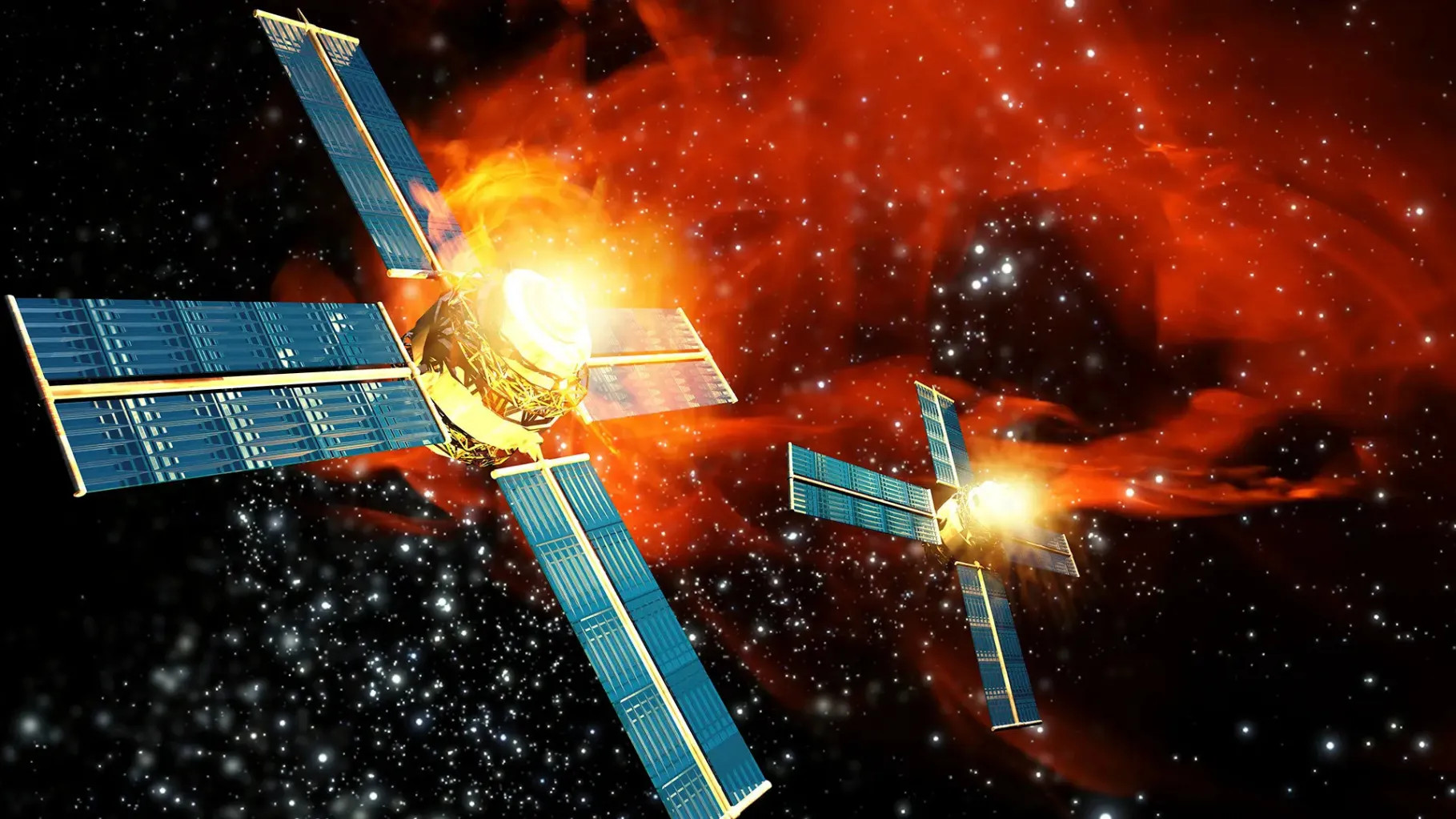
A top U.S. Space Force general sees a clear need to be able to attack threats in space, not just to protect friendly satellites, but to challenge China’s dramatically expanded surveillance capabilities in orbit. Hundreds of satellites give the People’s Liberation Army (PLA) immense capacity to track and target American forces. The main Space Force unit charged with the “orbital warfare” mission is now exploring new ways to maneuver using an experimental satellite, which could lead to future offensive and defensive capabilities.
Lt. Gen. Gregory Gagnon, head of what is now called U.S. Space Force Combat Forces Command (CFC), talked about what will be required to provide “space superiority” in the future at a roundtable, at which TWZ was in attendance, on the sidelines of the Air & Space Forces Association’s (AFA) annual Warfare Symposium yesterday. The Space Force redesignated its Space Operations Command (SpOC) as CFC last November, specifically to put more emphasis on its warfighting functions. U.S. military officials have been stressing that space is now a warfighting domain where active conflict could occur for years now. This, in turn, has also led to increasingly open discussions about new anti-satellite capabilities.
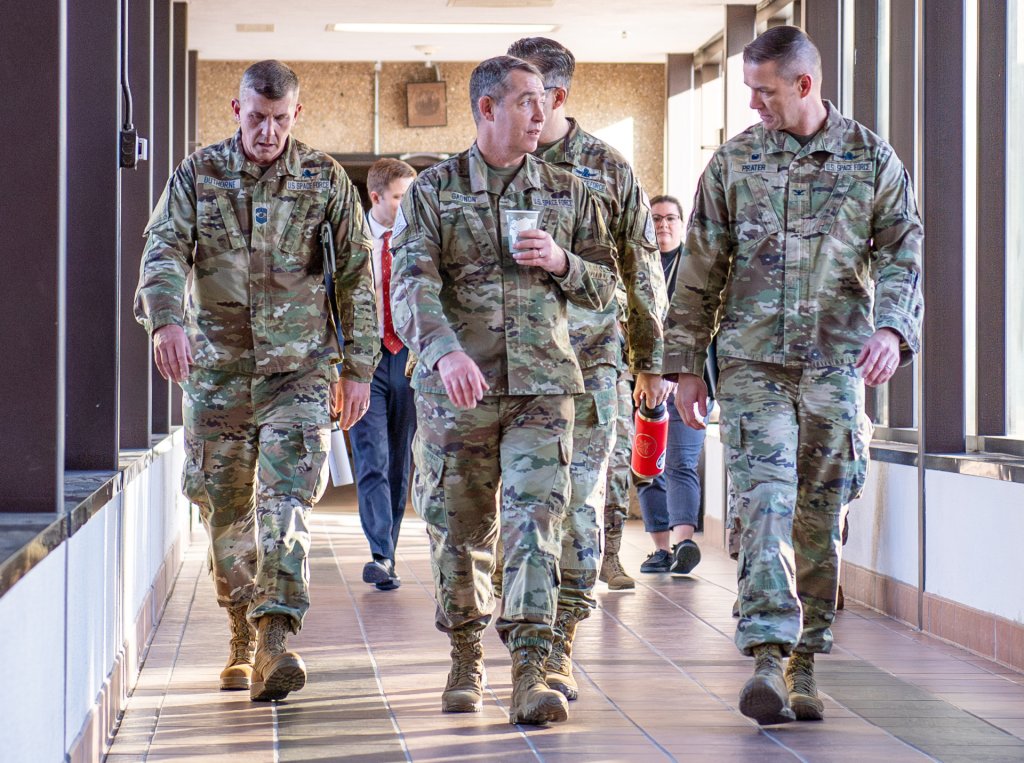
“Protective measures on satellites is just like thinking about protective measures on aircraft, okay? And we’re working through that,” Gagnon said in response to a question from TWZ’s Howard Altman about how his command is responding to threats to U.S. assets in orbit. “I won’t provide specifics, because I want those protective measures to work, right? I don’t want to tell Beijing and Moscow what I’ve done.”
Maneuvering satellites away from threats is known to be a central aspect of the Space Force’s current “protect and defend” concepts of operations. Significant investments are also being made now to develop ways to expand those capabilities, which we will come back to later on.
Deploying new distributed and proliferated constellations with large numbers of smaller satellites to create targeting challenges for opponents, as well as to help reduce the impacts if some satellites are lost, has been another major focus area. The U.S. military is heavily reliant on space-based capabilities for strategic early warning, intelligence gathering, communications and data-sharing, navigation and weapons guidance, and more.
“But protecting and defending satellites can’t simply be done by protect and defend. You can’t run away from a bully forever. Sometimes you got to turn around and punch,” Gagnon continued. “So protect and defend, although necessary is insufficient to deliver space control. We also need, as part of our joint force, the ability to attack.”
He cited two core reasons as driving this demand for offensive capabilities. One was to improve the ability of friendly assets in space to defend themselves. The other is China.
What “[China’s] President Xi [Jinping] has decided to do is build the second-best remote sensing architecture in the world from outer space, and that’s now what they have,” Gagnon said. “So when 2013 started, and he came to power, he had less than 100 satellites that were the total of what China had in outer space. They have about 1,900 today. Over 500 of those satellites are remote sensing satellites, which are purposely designed and networked to track mobile forces such as U.S. carriers, destroyers, and cruisers in the Pacific, as well as aircraft that deploy around the Pacific. Those have been built with a purpose. The purpose is to cue their long-range fire weapons.”
Concerns about the extent to which China can now track U.S. force movements from space, and then use that information to target them, are not new, as TWZ has explored in the past. In 2022, the Pentagon had assessed that “the PLA [Chinese People’s Liberation Army] owns and operates about half of the world’s [space-based] ISR [intelligence, surveillance, and reconnaissance] systems.”
The commercial satellite imagery space in China has also expanded in recent years, giving the government in Beijing even more orbital surveillance capacity. This has been underscored just recently by the steady circulation on social media of annotated satellite images from Chinese firm MizarVision showing aspects of the U.S. military build-up in the Middle East ahead of potential strikes on Iran. The U.S. government similarly makes use of commercially-sourced imagery to bolster substantial space-based ISR capabilities.
Much about the full scale and scope of so-called offensive counter-space capabilities in U.S. inventory today, as well as future planning in this space, remains hidden from the public eye. To date, the U.S. military has only acknowledged having fielded a family of ground-based electronic warfare systems called the Counter Communications System (CCS). Space Force began fielding an upgraded CCS variant, called Block 10.3, and also known by the codename Meadowlands, last year.
In 2022, President Joe Biden’s administration also announced a self-imposed moratorium on destructive direct ascent anti-satellite (ASAT) weapons testing, which refers to firing live interceptors from within Earth’s atmosphere at targets in space. As we noted at the time, this did not rule out the possibility that the U.S. military could use other testing means to help develop those capabilities. It is also unclear whether this policy is still in force. Since then, space-based anti-missile interceptors have also emerged as a central component of President Donald Trump’s Golden Dome missile defense initiative, another thing we will come back to later on.
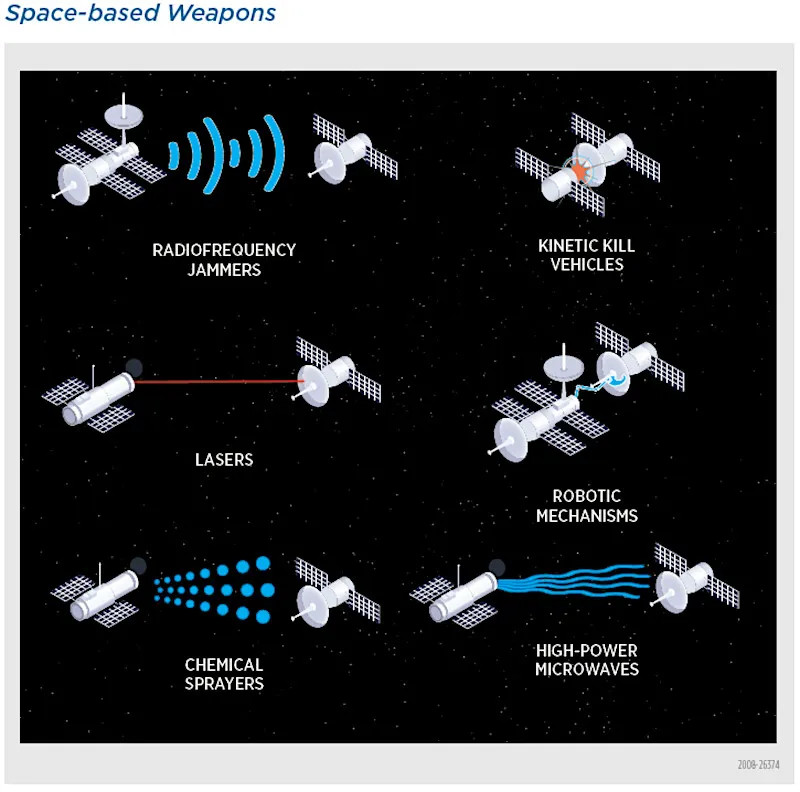
Beyond electronic warfare and interceptors, there are a host of other means, destructive and non-destructive, that can be used to attack assets in space. Other tactics could include targeting optics and other systems with laser and high-power microwave directed energy weapons, as well as spraying aerosols to obscure optics and solar arrays. An offensive space-based system could directly attach itself to another satellite to disable or even deorbit it. That level of precise, close maneuverability capability would also allow for kinetic attacks by just smashing into the target.
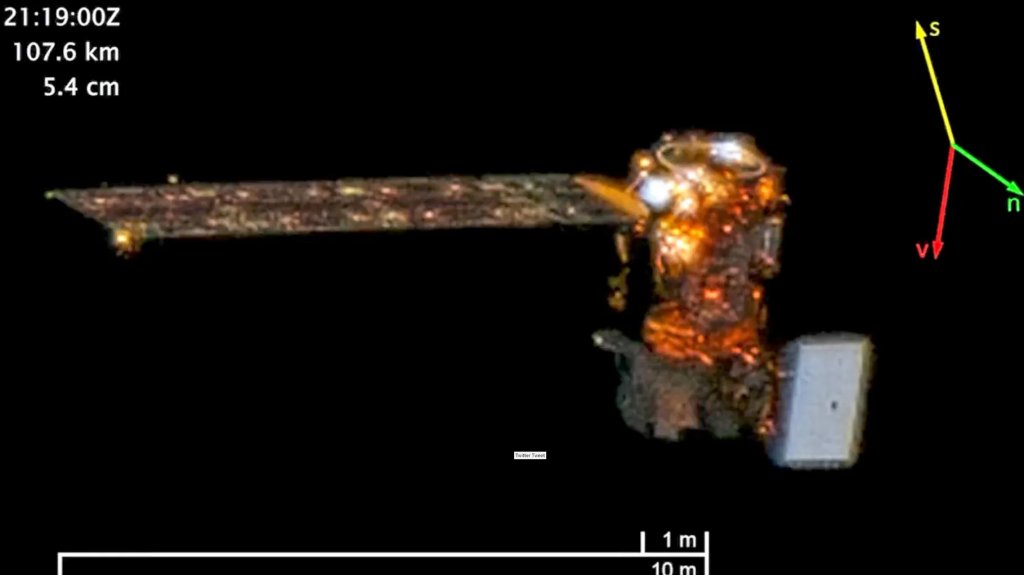
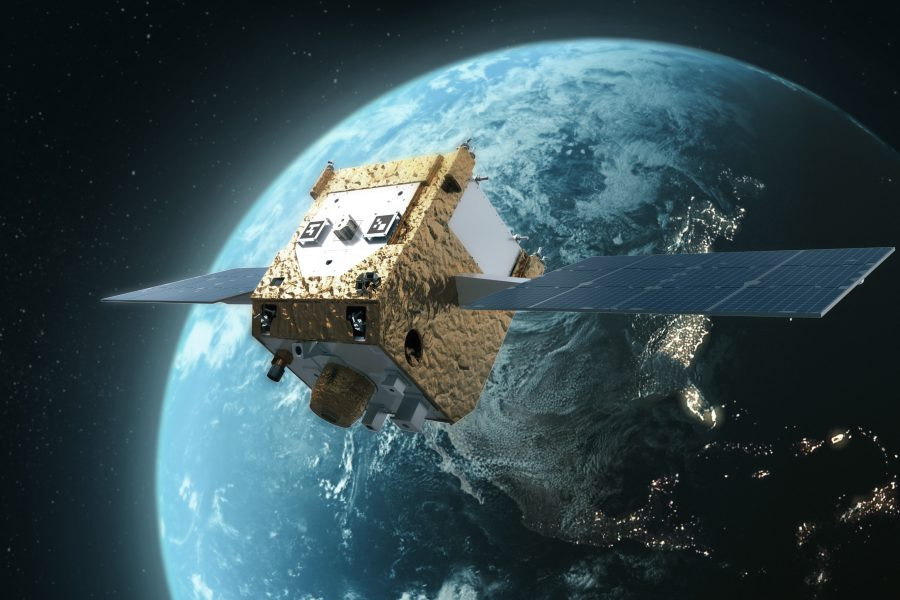
At the roundtable yesterday, Lt. Gen. Gagnon explicitly highlighted the importance of maneuverability in space as part of the development of new offensive and defensive capabilities. On February 12, Space Force put a new prototype spacecraft into orbit as part of the USSF-87 mission. The USSF-87 launch was also used to deploy two Geosynchronous Space Situational Awareness Program (GSSAP) space surveillance satellites.

“This prototype will be operated by my Orbital Warfare Delta. This is the only Orbital Warfare Delta in the United States government. Their job will be working on their maneuvers, which is one of the seven joint functions of warfighting, so that they can deliver offensive and defensive capabilities that are precise and not imprecise,” Gagnon explained. “They’re going to work on driving that spacecraft in a way that we couldn’t drive spacecraft before.”
Space Force uses the term “Delta” to designate units roughly comparable to Wings in the U.S. Air Force. The service’s Delta 9 is charged with the still very nebulous orbital warfare mission, as TWZ was first to report on back in 2021. Delta 9 also notably operates the two secretive X-37B spaceplanes, which are ostensibly used as experimental test platforms. There has been a long-standing speculation about whether the X-37Bs could have offensive capabilities.
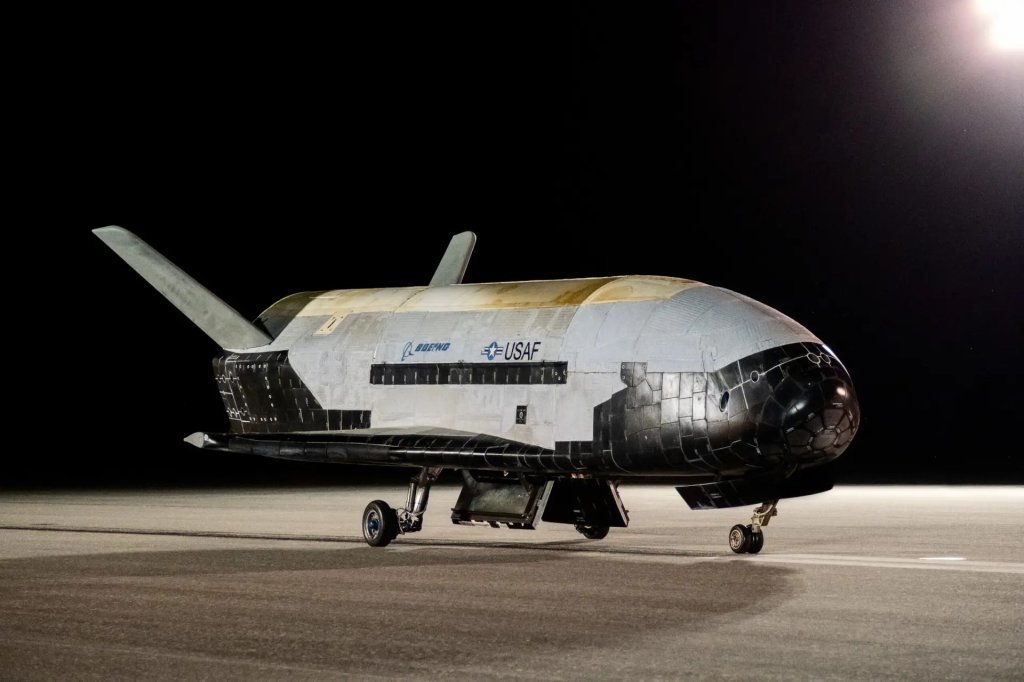
“In the past, we’ve kind of had like a [Boeing] 737, and we practice with that. Now we’re getting a military-grade aircraft to practice with. Now that’s just one example of orbital warfare from Mission Delta 9,” Gagnon said, appearing to speak figuratively about available capabilities. “A second one was last year’s maneuvers by the X-37B orbital test vehicle.”
Last year, one of the X-37Bs used a technique called aerobraking, which involves passing close to the Earth’s atmosphere to use the drag to rapidly maneuver, including to change orbits, as you can read more about here. This had only fueled the aforementioned speculation about the true capabilities of these miniature space shuttles. Though the aerobraking was described as a first-of-its-kind event for the X-37B, then-Secretary of the Air Force Heather Wilson had alluded to the spacecraft having at least similar-sounding capabilities during a talk back in 2019. The X-37Bs are known to be highly maneuverable, in general.

Lt. Gen. Gagnon also highlighted spaceplanes as another area of increasing competition with China.
“That’s the most advanced spaceplane in the world [the X-37B]. It’s not the only spaceplane in the world. The Chinese are on sortie four of their space plane. We’re on sortie eight,” he said. “So what I try to remind everyone is, even though we’re running fast, there’s someone else on the track running just as fast.”
“The benefits that we’ve gotten from the X-37 are fundamental to where we’re headed with a lot of different missions, and we really explored a lot of new technologies,” Chief of Space Operations Gen. Chance Saltzman, the Space Force’s top officer, also said this week at a separate roundtable at the AFA Warfare Symposium. “I don’t see any end to needing to have experimental spacecraft. Having something that’s returnable back where you can evaluate payloads, and some of the collection is also valuable. So I don’t have anything to offer in terms of, ‘hey, here’s the follow-on system,’ or whatever, but I can tell you that those principles, having payloads that are brought back to Earth for evaluation is valuable, and we’re going to continue to experiment.”
Saltzman was responding here to another question from our Howard Altman about current plans for the X-37Bs and potential follow-on capabilities.
Many questions are clearly still to be answered about what future offensive or defensive orbital warfare operations will look like. Lt. Gen. Gagnon noted that just ensuring U.S. forces have situational awareness about what’s going on outside the Earth’s atmosphere will also be critical.

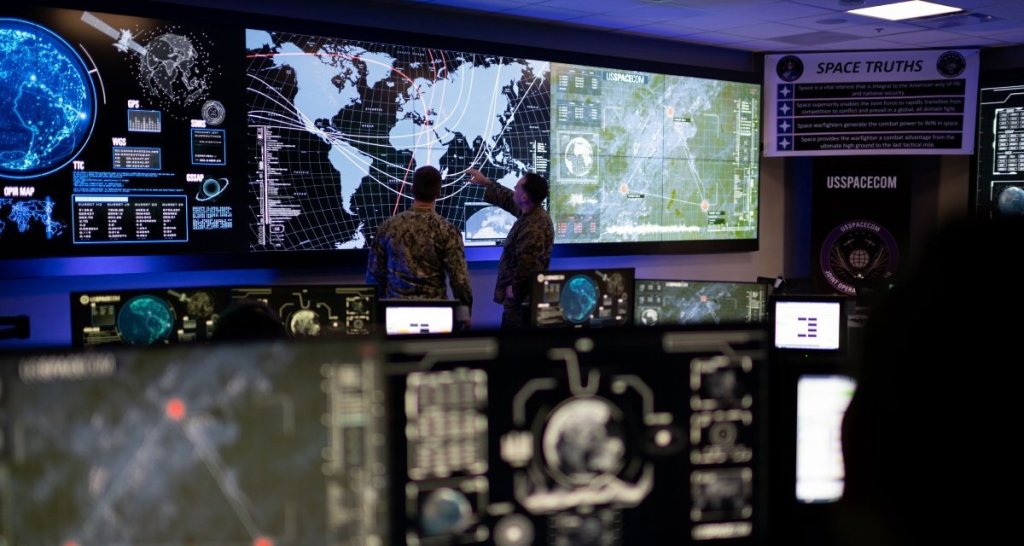
“In order to do space control, you need the ability to sense and see, you need the ability to react, and then you need the ability to do combat assessment on what you’ve done. The first part of that is the ability to sense and see,” he explained. “So in 2025, which was last year, Combat Forces Command operationally accepted 50 new systems, or upgrades to systems. 25 of those 50 systems are actually space domain awareness sensors.
“We’re currently going through ops acceptance right now, one of them in Maui, which is an improved telescope. This telescope allows us to see larger areas of space, see them faster, and see them more clearly. In fact, the numbers are twice as much area coverage, twice as fast revisit rates inside that area coverage with the telescope, with three times the sensitivity and clarity to see,” he continued. “So as adversaries build smaller satellites and more signature managed satellites, to try to hide in the dark, … Combat Forces Command is three times more effective at identifying low-visibility – we call it VISMAG [visible magnitude] – low-VISMAG objects in the Pacific. We’re going to extend that around the world. So if the PLA makes their advancements, the message we’re sending is there’s nowhere to hide.”
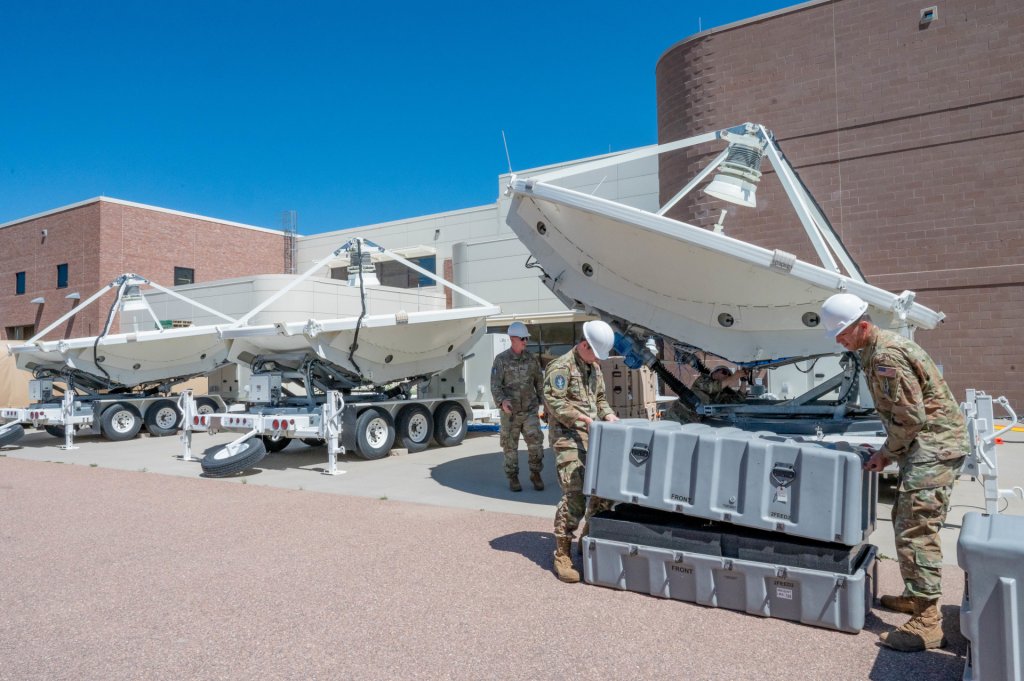
An expanding network of ground-based telescopes is one part of efforts to increase the ability to spot and track objects of interest, as well as to improve overall situational awareness, in space. The aforementioned GSSAP satellite constellation is another component.
As Lt. Gen. Gagnon made clear, new offensive capabilities do not mean that the Space Force is abandoning protect and defend concepts as part of its larger operational vision.
“[Space Force] General [Stephen] Whiting, [head of U.S. Space Command,] has been very clear and consistent in the need for, call it maneuver without regret, dynamic space operations. In my mind, it’s a near term problem, because in a generation, space vehicles are going to be inherently maneuverable,” Space Force Lt. Gen. Philip Garrant, head of Space Systems Command, said at his own roundtable at the AFA Warfare Symposium. “We’re really on the cusp of a lot of propulsion capabilities that are going to make it so that we don’t have to think about it. I don’t have to refuel the gas tank, I don’t have to have a tug move you around, because those vehicles are going to be inherently maneuverable without regret.”
The term “maneuver without regret” here refers to being able to move satellites in orbit without having to use up so much of their onboard fuel supplies that it negatively impacts their ability to perform their assigned missions. On-orbit refueling is something the Space Force has been experimenting with as a more immediate solution to this problem.
“You know, I have satellites on orbit that are defunct, that we have an obligation to be good stewards of space and to remove space debris. Arguably, a satellite that’s defunct is a pretty – it’s not debris, but, you know, we should move it so,” he continued. “So that’s what a lot of these demos are looking at, is, how do we get after the near term problem of maneuvering defunct satellites and then making sure that the strategic assets, the protect and defend mission, can be done while we wait for the propulsion technology to truly enable the newer without regret or dynamic space operations.”
Not said here is how new freedom of maneuverability enabled propulsion capabilities could also open the door to new offensive space-based capabilities.
Any talk of new offensive capabilities in orbit can only fuel concerns about weaponizing space, which has been steadily growing for years now. At the AFA Warfare Symposium, Chief of Space Operations Saltzman pushed back on these concerns in the context of plans now for space-based interceptors as part of Golden Dome, as he has done in the past, in part by highlighting what adversaries like China and Russia are already doing in the counter-space arena.
“We’re basically responding to a warfighting domain where our adversaries have already put interceptors in space, and we want to make sure that we rebalance that in terms of deterrence,” Saltzman said at his roundtable following a question from Howard Altman.
“Interceptors by definition refer to a handful of well-acknowledged capabilities that other countries have, like ground and air-launched anti-satellite missiles or capabilities like the SJ-21, which has a grappling arm,” a Space Force spokesperson also told TWZ when asked for further clarification about the “interceptors in space” Saltzman had mentioned.
Russia and China, in particular, have demonstrated an array of counter-space capabilities in the past decade or so, including ground-based interceptors and projectiles launchable from satellites in orbit. Both countries have also been developing and fielding electronic warfare and directed energy capabilities geared toward anti-satellite operations. As noted above, the grappling arm on the Chinese Shi Jian 21 (SJ 21) is often highlighted as a dual-purpose space-based capability that could be used offensively. More recently, U.S. authorities have accused Russia of at least taking steps toward the deployment of an operational space-based system armed with a nuclear weapon. Directed nuclear strikes, as well as the electromagnetic pulses those weapons create, have been raised in the past as potential options for countering new proliferated constellations.
China has also demonstrated a fractional orbital strategic strike capability in recent years that has added another dimension to the weaponization of space, as you can read more about here.
In the past, “we have built satellites and architectures that were really based on our DNA of having a permissive space environment,” Lt. Gen. Gagnon said yesterday. “Today, as I’m putting missile warning and missile track into space [as an example], I need to account for the fact that the adversary plans to destroy them. So I have to make some decisions.”
“History is not full of stories of countries that only played defense winning,” he added. “To win in warfare, you need to be able to execute all seven of the joint functions, not just play defense. It’s not a great way to design a military. It’s certainly not a great way to defend your freedom.”
Overall, the message from Space Force officials like Gagnon is that being able to go on the offensive is not just valuable, but increasingly critical, especially when faced with the prospect of a future fight with China and its growing orbital reach.
Contact the author: joe@twz.com
Loading comments…
Comments couldn’t be loaded. Please refresh the page.