
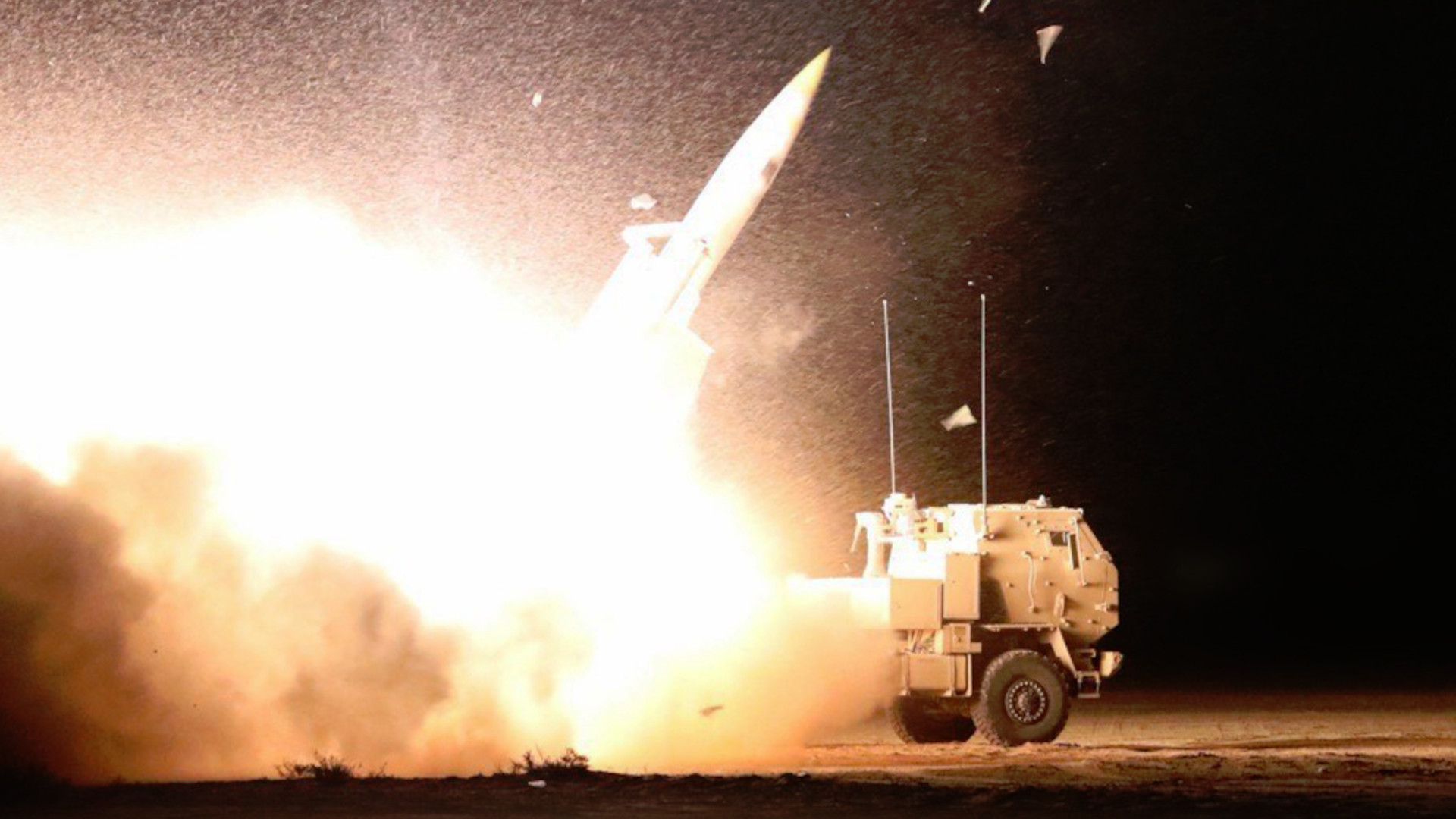
The U.S. military has been using M142 High Mobility Artillery Rocket Systems (HIMARS) to strike Iranian ships as part of Operation Epic Fury. Since the current conflict erupted, the only munitions those launchers have been seen firing are Army Tactical Missile System (ATACMS) and Precision Strike Missile (PrSM) short-range ballistic missiles. PrSM has made its combat debut against Iran, and the newly disclosed operational details raise the question of whether an anti-ship version has been fielded.
Over the first 10 days of Operation Epic Fury, American forces destroyed 50 Iranian naval vessels “using a combination of artillery, fighters, bombers, and sea-launched missiles,” Chairman of the Joint Chiefs of Staff U.S. Air Force Gen. Dan “Razin” Caine said at a press conference at the Pentagon this morning. U.S. officials have consistently stressed that the neutralization of Iran’s naval capabilities is a core objective of the ongoing campaign against Iran.
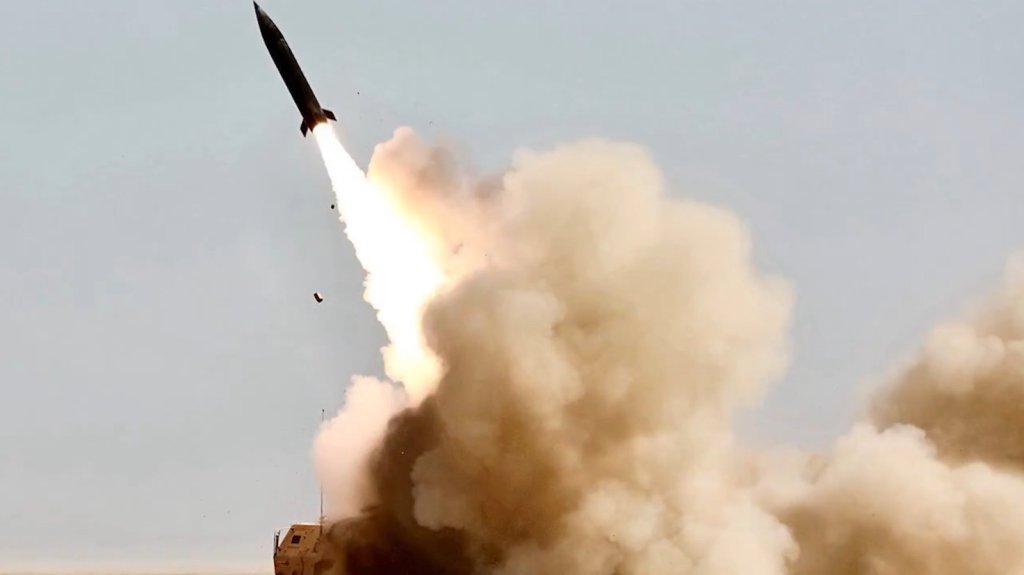
TWZ subsequently reached out for further clarification about what Caine was referring to here when he said “artillery” and for any additional information about the use of those assets against the Iranian Navy. A U.S. official told TWZ that HIMARS were used against Iranian Navy ships, but would not comment on what type of munitions they had fired or which ships were attacked that way.
However, U.S. Central Command (CENTCOM) has released several videos and pictures showing HIMARS operating in support of Operation Epic Fury. As noted, that imagery has only shown them firing ATACMS and PrSM ballistic missiles. CENTCOM has also now explicitly touted the first-ever combat use of PrSM in the current conflict. U.S. officials have yet to confirm where specifically ATACMS or PrSM missiles are being fired from.
Imagery also began circulating on social media yesterday that is said to show an empty ATACMS ammunition ‘pod’ in Kuwait discovered by locals in the midst of ongoing operations against Iran. Wheeled HIMARS launchers, as well as tracked M270 Multiple Launch Rocket Systems (MLRS), fire ATACMS, PrSM, and 227mm guided artillery from pods with standardized dimensions. ATACMS are loaded one to a pod, while pods for PrSM contain two missiles.
A video also emerged online this past weekend showing two HIMARS being employed from a beach in Bahrain. When the footage was captured is unknown. What munitions they see are also unclear.
No evidence has emerged so far that HIMARS are being used to fire 227mm guided artillery rockets, which come six to a pod, in support of Operation Epic Fury. Even new extended-range variants of these rockets can only fly out to around 93 miles (150 kilometers) away, severely limiting the areas in and around Iran they could reach from available launch points in the region, to begin with. For example, the shortest distance between Bahrain and Iranian soil across the Persian Gulf is around 120 miles. The longest ranged variants of ATACMS can hit targets out to around 186 miles (300 kilometers), with PrSM’s maximum range at least 310 miles (500 kilometers).
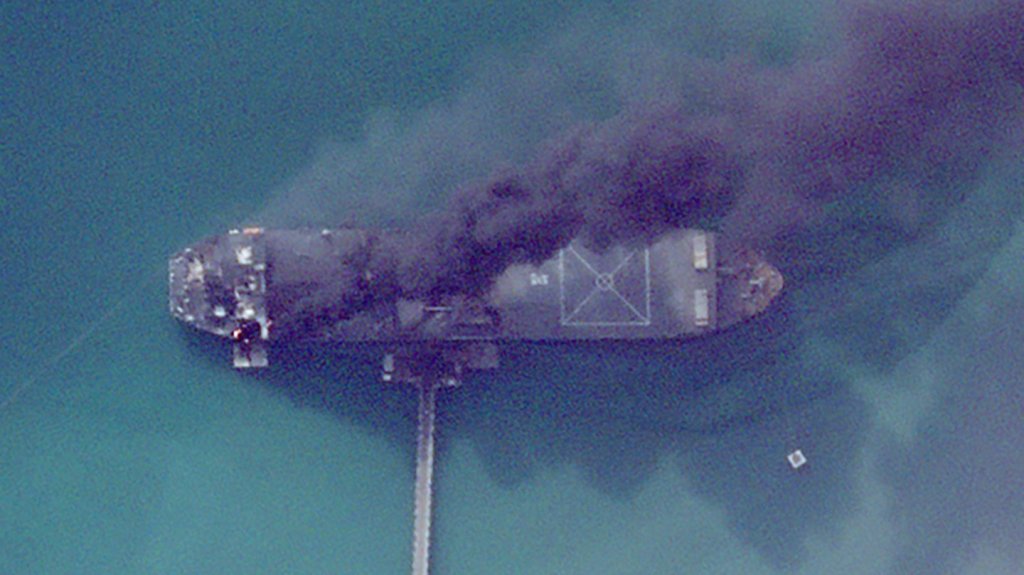
It should also be noted that there is no known operational variant of ATACMS capable of engaging moving targets, meaning that it would have to be used against stationary ships. This is very possible, as we’ve seen multiple examples of Iranian ships struck in port or while appearing to be at anchor offshore already.
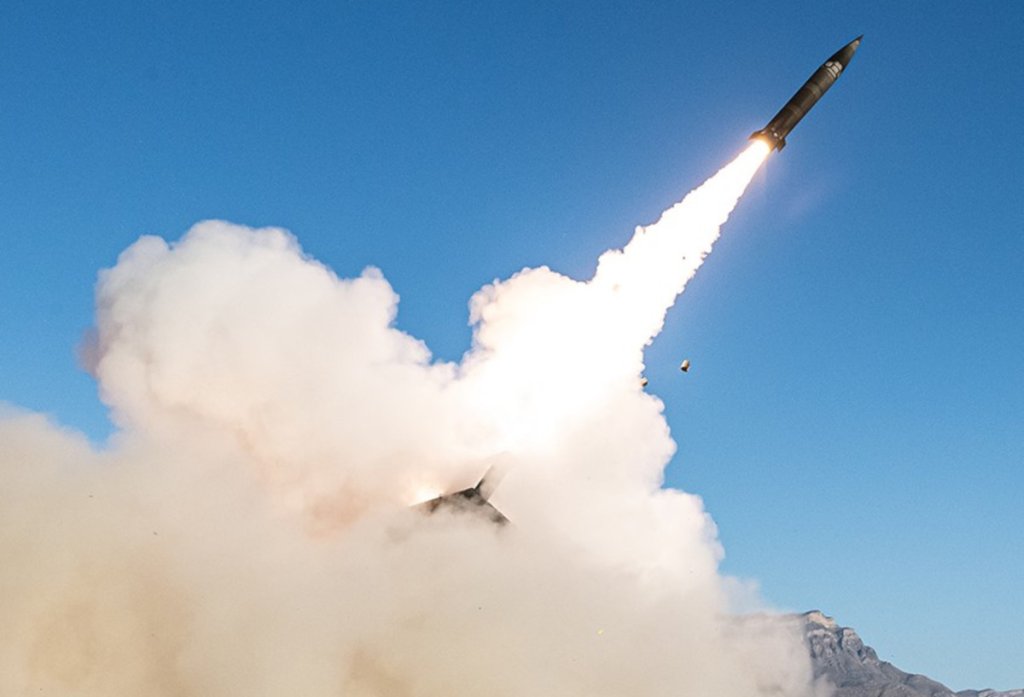
The U.S. Army had pursued an anti-ship version of ATACMS in the past, which would have been capable of targeting vessels on the move. That effort looks to have been subsumed by the development of a ship-killing variant of PrSM featuring an additional seeker, also known as Increment 2.
There have been indications that the U.S. Army has already begun to field PrSMs that can hit ships on the move, though it is unclear if this represents the full planned Increment 2 capability. In 2024, the service announced it had successfully hit a moving vessel with an unspecified version of PrSM in a test exercise in the Pacific. In a report released in 2025, the Pentagon’s Office of the Director of Test and Evaluation (DOT&E) disclosed that the Army had actually “shot two PrSM EOC [early operational capability] missiles at a maritime target in June 2024.” At that time, the service was only known to have reached early operational capability with the baseline version of PrSM, also known as Increment 1.

It is possible that the Army has begun to field Increment 2 PrSMs, at least on a limited level, as well. The Army announced that it had begun initial flight testing of the new seeker system in 2023. Whether or not Increment 1 missiles can be readily converted into Increment 2 versions is also unknown. Like ATACMS, PrSMs without a moving target capability could still be fired at ships that are stationary, as well.
Regardless, Operation Epic Fury looks to be the first known instance of the U.S. military using ballistic missiles to target ships, at anchor and/or on the move, in real combat.
In general, ballistic missiles are especially well-suited to long-range standoff strikes against time-sensitive and well-defended high-value targets based on the speed at which they fly. They also reach especially high velocity as they come down in the terminal phase of flight. This all, in turn, creates additional challenges for enemy defenders attempting to intercept them compared to other kinds of missiles, including some subsonic air-breathing cruise missiles, and compresses the overall time available to react in any way. That speed also gives ballistic missiles an inherent ability to burrow more deeply into hardened targets. This could be particularly valuable when engaging larger and better-armored warships.
The U.S. military has been playing catch-up for some time now when it comes to the development and fielding of anti-ship ballistic missiles, especially compared to the investments that China’s People’s Liberation Army (PLA) has made in this arena. The use now of ballistic missiles against Iranian ships is, in turn, a sign of things to come in other future U.S. operations. PrSM is often discussed as a particularly important new capability in the context of any future high-end fight against China in the Pacific, just on account of its extended range compared to ATACMS. That extra reach would be valuable for engaging targets on land and at sea. TWZ previously highlighted how the use of PrSM in strikes on Iranian targets, in general, could also send signals to other American opponents well beyond the Middle East.
Interestingly, Iran has also spent considerable time and resources developing an array of shorter-range anti-ship ballistic missiles, capabilities that were then proliferated to its Houthi proxies in Yemen. The Houthis became the first in the world to fire anti-ship ballistic missiles in anger in 2023, as part of a campaign against commercial vessels and foreign warships in and around the Red Sea that ultimately stretched into 2025. So far, Iran does not look to have brought these capabilities to bear itself in the current conflict.
If nothing else, HIMARS has now been used in real combat to target enemy naval vessels, very likely with ballistic missiles. In doing so, experience is gained that could be very relevant beyond the current conflict with Iran.
Contact the author: joe@twz.com
Loading comments…
Comments couldn’t be loaded. Please refresh the page.