
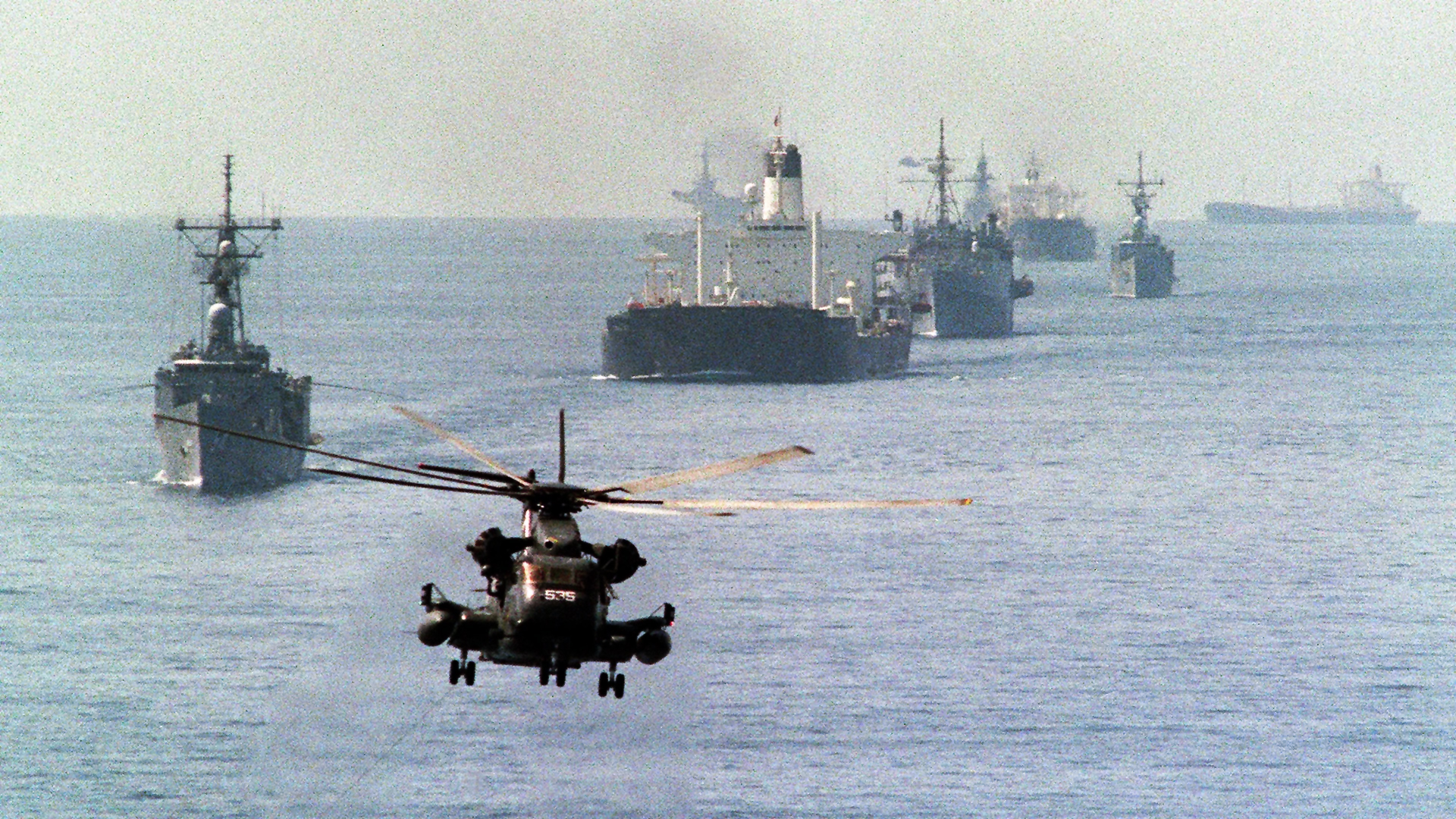
The U.S. Navy is not yet ready to escort oil tankers through the Strait of Hormuz, but it will happen. This is the synopsis provided by U.S. Energy Secretary Chris Wright in an interview with CNBC. The development comes as Iran continues to pummel international shipping in and around the critical channel, which the new Iranian supreme leader, Mojtaba Khamenei, vows to keep closed.
“It’ll happen relatively soon, but it can’t happen now,” Wright said, of the planned naval escort mission. “We’re simply not ready. All of our military assets right now are focused on destroying Iran’s offensive capabilities and the manufacturing industry that supplies their offensive capabilities.” Wright added that the Navy should be able to escort tankers through the strait by the end of this month.
Khamenei, it appears, is also resolute in his plan to keep the strait closed to all maritime traffic, reportedly having turned down approaches from several countries that were seeking an end to the attacks.
U.S. President Donald Trump said on March 3 that “the United States Navy will begin escorting tankers through the Strait of Hormuz, as soon as possible.”
Putting a date of the end of this month on the escort mission is certain to trouble markets that are already feeling the pressure of the conflict. At the very least, this is an indicator that the war or its hostile aftermath will continue for weeks to come.
Equally pessimistically, there have been reports from analysts suggesting that fully reopening the strait may require some kind of ground operation to seize the Iranian coastline adjacent to it.
“Strategic priorities, like opening the Strait of Hormuz and securing what remains of Iran’s nuclear stockpile, will likely require some ground troops if no diplomatic options are pursued,” Brian Katulis, a senior fellow at the Middle East Institute, told The Wall Street Journal. “What we are looking at is potentially a very messy situation.”
Even without boots on the ground, which now seems like a remote prospect, running a tanker-escort mission, which would involve convoys protected by warships and accompanied by mine-clearing assets, is fraught with difficulty. Military unwillingness to take on missions of this kind is an issue we have explored in the past at TWZ.
The warships involved in any such endeavor would also be at extreme risk, especially from Iranian ground-mobile anti-ship missiles, which are relatively small and can be easily disguised in utility trucks. Eliminating that threat is one potential driver for a ground operation along the coast of the strait.
The U.S. military has made extensive efforts in recent days to remove the Iranian minelaying capability, but, according to the U.K. Defense Secretary John Healey, there are now increasing signs that Iran may have started mining the strait. Pointing to the difficulty in demining during wartime, Healey argued that a de-escalation of the conflict is the best option for reopening the strait.
However, Scott Bessent, U.S. Secretary of the Treasury, provided a counter viewpoint, stating that Iranian and Chinese-flagged tankers are still going through the strait, indicating that it has not been mined.
While tanker traffic through the strait remains at a standstill, Iran continues its campaign against commercial tankers elsewhere in the region, with another two vessels set ablaze earlier today in Iraqi waters. Iraq reportedly halted all operations at its oil ports after the attack.
The Ambrey maritime security firm told us that a Malta-flagged crude oil tanker and another merchant vessel were targeted in an attack in Al Basrah Anchorage, Iraq. One fatality was reported. At least 38 individuals were rescued from both vessels, according to the Iraq Port Authority, with further search and rescue operations ongoing as of this morning.
Video footage of the incident shows a vessel engulfed in fire with a large plume of smoke rising from the area of impact. Fire can also be seen in the water as a result of the oil spill.
Unverified reports state that the two tankers were struck by uncrewed surface vehicles (USVs).
Iraq’s State Organization for Marketing of Oil identified the two vessels as crude oil tanker Safesea Vishnu and the combined chemical and oil tanker Zefyros. While the Zefyros is Malta-flagged, the Safesea Vishnu is owned by a U.S. company but was sailing under the Marshall Islands flag. A dramatic video has appeared that is said to show the moment of the explosion that targeted the Safesea Vishnu.
In a statement, the IRGC said that it considered the Safesea Vishnu as an asset of the U.S. military and claims that it was struck after ignoring repeated warnings and alerts from the IRGC Navy.
Ambrey also reports that a container vessel was struck by an unknown projectile 38 nautical miles north-northeast of Jebel Ali, United Arab Emirates. The strike was reported to have caused a small fire on board the vessel, and the crew was reported to be safe.
Another vessel, the Japanese-flagged container ship One Majesty, was reportedly also damaged while anchored in the Persian Gulf. The damage was only discovered later, around 60 miles from the Strait of Hormuz. There were no reports of casualties.
The vessel seen burning in the video below, from the perspective of crew members who evacuated on a liferaft, is the Thai-flagged cargo vessel, Mayuree Naree Bangkok, which was attacked near the Strait of Hormuz yesterday.
The continued attacks on energy infrastructure and shipping by Iran, and concerns over the intensifying conflict in the Middle East, have seen oil prices spike.
The international benchmark Brent crude is back above $100 per barrel.
In an effort to reduce concerns over global oil supplies, the International Energy Agency (IEA) has ordered the largest release of government reserves in its history.
Meanwhile, the government of Denmark is calling upon its citizens to reduce their consumption of fossil fuels.
In a post on his Truth Social site, President Trump said he remained committed to ensuring Iran cannot develop nuclear weapons, despite the impact on the global oil trade.
“The United States is the largest Oil Producer in the World, by far, so when oil prices go up, we make a lot of money. BUT, of far greater interest and importance to me, as President, is stoping [sic] an evil Empire, Iran, from having Nuclear Weapons, and destroying the Middle East and, indeed, the World.”
The day-to-day running of the conflict also comes with a high cost to the U.S. government. According to Reuters, officials from the Trump administration estimated during a congressional briefing this week that the first six days of the war on Iran had cost the United States at least $11.3 billion.
The Israeli Air Force (IAF) has struck a nuclear site in Iran, the Israel Defense Forces (IDF) announced today. The targeting of the Taleghan compound was part of a larger wave of strikes conducted over the past few days, the IDF said. Taleghan is part of the Parchin military complex, located around 20 miles southeast of Tehran.
The development comes after we reported on evidence of some kind of airstrike against the Taleghan compound, including the possibility that the hardened facility was hit by 30,000-pound GBU-57/B Massive Ordnance Penetrator (MOP) bunker buster bombs. You can read that analysis, based on satellite imagery, here.
The Israeli military said that IDF intelligence had determined that Iran had been using the Taleghan compound to develop weapons and conduct experiments as part of AMAD, an Iranian scientific project aimed at developing nuclear weapons.
According to a statement from the Israeli military:
“During Operation Rising Lion, the IDF has operated systematically against knowledge centers and infrastructure related to the Iranian nuclear weapon program in order to eliminate the emerging existential threat to the State of Israel. Despite the significant damage inflicted on the program, the Iranian regime has continued efforts to advance and develop the capabilities required for the development of a nuclear weapon.”
The IDF added that it had recently identified that Iran has taken steps to rehabilitate the compound after it was struck in October 2024.
Israel announced last week that it had struck Minzadehei, another nuclear site in Iran where it said scientists were covertly developing a key component for nuclear weapons.
“The strike is a part of the series of operations carried out throughout Operation Rising Lion aimed at further damaging the Iranian terrorist regime’s nuclear aspirations.”
Other recent targets of the IDF include Abu Dharr Mohammadi, described as the operations commander responsible for the Islamic Revolutionary Guard Corps’ (IRGC) missile unit within Hezbollah.
“Earlier this week (Tuesday), the IDF struck and eliminated the terrorist Abu Dharr Mohammadi … Mohammadi was a central figure in the military coordination between Hezbollah and the Iranian terror regime, while coordinating and connecting between Hezbollah and Iranian senior officials,” the IDF said.
“Mohammadi was a key figure in Hezbollah’s military force build-up as it related to missiles, focusing on rehabilitating the program following Operation Northern Arrows,” the IDF added.
For its part, Hezbollah continues to hit back against Israel.
According to the Israeli military, Hezbollah militants launched around 200 rockets and approximately 20 drones yesterday evening from Lebanon toward Israel. After reportedly detecting signs of an unusual buildup, the IDF said it carried out a preemptive strike to disrupt the firing and thwart terrorists.
The U.S. military has also continued airstrikes on Iran, with a recent video released by Central Command (CENTCOM) showing the destruction of a C-130 Hercules transport and a P-3F Orion maritime patrol aircraft (both of which were supplied to Iran before the 1979 Islamic Revolution) and an Ilyushin Il-76 Candid airlifter.
Of these aircraft, the Islamic Republic of Iran Air Force (IRIAF) P-3F was especially notable, since it was reportedly the last of the type that was still airworthy in Iranian service.
Following attacks on Mehrabad and Bandar Abbas Air Bases, the runways at both have now been blocked by parked buses and helicopters, according to satellite imagery. The reason for this is unclear, but it is possible that it has been driven by concerns about a potential aerial assault on either of these locations. Alternatively, the aircraft and vehicles may have been arranged as decoys. The same thing has been seen in the war in Ukraine, as well as in Venezuela, earlier this year.
U.S. airstrikes against Iranian missile systems have also continued. The CENTCOM video below is noteworthy since it shows (around the 0:07 mark) the destruction of a ballistic missile apparently in the process of being erected from its launch vehicle.
A U.S. strike overnight on three bases associated with the Iranian-backed Ansar Allah al-Awfiya militia reportedly killed dozens of militiamen. The bases near al-Qaim, al-Anbar, were used to fire projectiles at U.S. interests in Jordan. The following video purports to show the results of the attack on al-Qaim.
Footage has also emerged that apparently shows a U.S. military Low-Cost Uncrewed Combat Attack System (LUCAS) kamikaze drone headed toward a militia target in Iraq. Based on the Iranian Shahed-136, these weapons were used in combat for the first time in the opening salvos of Operation Epic Fury and repeatedly since.
Overnight attacks on Iraq also struck Erbil, home to an Italian military detachment in the country. According to reports, this has led to the temporary evacuation of the Italian presence from the base.
Mojtaba Khamenei has vowed to continue attacks on U.S. bases in the region, calling for American forces to leave them immediately, or face further strikes.
While we have regularly seen Iranian ballistic missiles target Israel with cluster warheads, we now also have a view of how the separate munitions disperse, as seen from the vantage point of the cockpit of an IAF fighter jet.
In the United Arab Emirates, authorities have reportedly arrested a British tourist after they allegedly filmed missiles hitting Dubai. The 60-year-old Londoner faces two years in prison after being charged with a cybercrime, The Daily Mail reports.
He is reportedly one of 20 people to have been charged over videos and social media posts relating to recent Iranian missile strikes on the UAE.
The on-off deal to get Ukrainian-made counter-drone technology into U.S. hands has apparently taken another turn.
Taking to X, Ukrainian Prime Minister Volodymyr Zelensky wrote that he had hoped to “sign a big drone production deal with the United States, but we needed the approval from the White House.”
The deal, covering “different kinds of drones and air defense,” has not been signed yet, Zelensky added.
“I hope that maybe [our] American friends will be closer to this decision now, especially after such challenges as we see in the Middle East,” the Ukrainian leader wrote.
A fire broke out aboard the aircraft carrier USS Gerald R. Ford.
“On March 12, USS Gerald R. Ford (CVN 78) experienced a fire that originated in the ship’s main laundry spaces,” Naval Forces Central Command said in a statement on X. “The cause of the fire was not combat-related and is contained. There is no damage to the ship’s propulsion plant, and the aircraft carrier remains fully operational. Two Sailors are currently receiving medical treatment for non-life-threatening injuries and are in stable condition. Additional information will be provided when available.”
Earlier today, a U.S. official told USNI News that the initial fire had been extinguished, but the crew was still working to control the damage.
Meanwhile, for the other U.S. Navy carrier in the region, USS Abraham Lincoln, and its strike group, it appears to be business as usual.
The United Arab Emirates is now using UH-60 Black Hawk series helicopters for counter-drone work, as seen in this video, which captures an engagement over Dubai.
According to a report from Reuters, citing U.S. intelligence officials, most of the Iranian leadership remains intact, and the regime is not currently at risk of collapse, despite the U.S.-Israeli campaign against it.
Certainly, as far as public statements are concerned, the remaining elements of the Iranian leadership remain steadfast in their refusal to give up the fight.
UPDATES:
Our updates have now been concluded.
UPDATE: 2:20 PM EST –
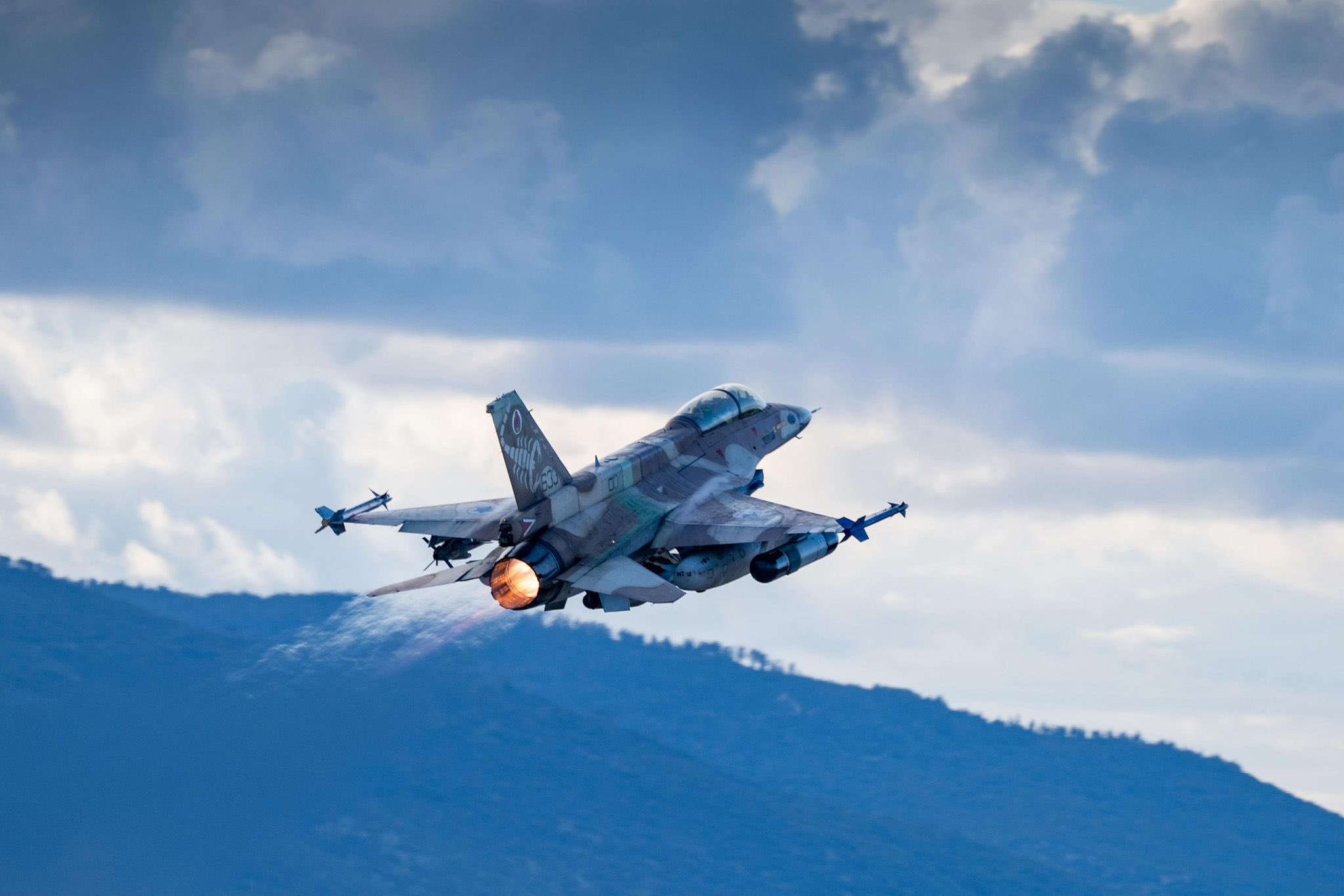
A recently released official photo shows an Israeli Air Force F-16D Barak fighter armed with a Delilah air-launched cruise missile under its port wing (with the datalink pod under the starboard wing). The Israel Military Industries (IMI) Delilah is a highly flexible and extremely accurate standoff weapon. Weighing just over 400 pounds, it can pack different warheads in the 50 to 75-pound weight class and flies to its target at subsonic speeds and at various altitudes. It has long been a frontline weapon of choice for the IAF, and has likely been heavily used against Iranian air defense sites.
Another dramatic video shows what is reported to be a U.S. military LUCAS kamikaze drone in its terminal dive onto what is said to be an Iranian-backed militia target in Iraq.
Tasteful or otherwise, sporting themes have again been chosen by the White House for their latest viral video on Operation Epic Fury. This time, footage of targets being struck in Iran is interspersed with AI-generated sports video games.
UPDATE: 3:40 PM EST –
New satellite imagery gives a better idea of the scale of damage at the IRGC ballistic missile production site in the Shahrud area, which the IDF says it hit last week. According to the military, hundreds of IAF fighter jets struck the site, together with another missile production facility in Parchin.
“This is the facility where most of the missiles fired at Israel were manufactured,” an IDF spokesperson said of Shahrud, in a statement last week.
The IDF has published a video compilation that it says shows recent strikes against Iranian drone facilities — although it should be noted that the footage starts with a direct hit on a ballistic missile concealed in a truck. The Israeli military says it has so far destroyed over 250 drones as well as hundreds of launchers.
UPDATE: 3:50 PM EST –
The former U.S. Ambassador to Israel, Dan Shapiro, has taken to X to post his thoughts on the conflict so far and has urged Trump to find an off-ramp.
“Of the military objectives U.S. commanders have described, there is not that much left to do,” Shapiro contends.
The situation has now driven Tehran to expand the conflict by hitting other states in the region and to shut down the Strait of Hormuz.
“Iran is playing a long game. The regime thinks it will survive this war, weaker and with a degraded military and proxies. But for them, survival is a form of victory.”
To prevent a global economic catastrophe, Shapiro argues that Trump should claim victory now, try to talk to the new leadership about the peaceful dismantling of its nuclear program, and “shift our focus to helping the Iranian people in non-kinetic ways in fighting for their freedom and their nation.”
The U.K. Ministry of Defense has confirmed the aforementioned Erbil attack to Howard Altman of TWZ. “Overnight, a British Counter-Uncrewed Aerial Systems unit in Iraq took down two drones in the region that were threatening lives on the ground,” the MoD said.
The attack took place on a coalition base in Erbil. It “resulted in no significant injuries” to U.S. personnel, a U.S. official told us. “All U.S. personnel involved remain on duty.”
The video below, which is unverified, claims to show militants from an Iranian-backed Iraqi faction using drones to attack the logistics support camp for the U.S. Embassy near Baghdad International Airport, as well as Harir Air Base in the Erbil governorate.
Multiple Israeli security sources have said that the IDF launched its operation against Iran without a realistic plan for regime change. According to an article in The Guardian, there was a general expectation that airstrikes would lead to a popular uprising — something that the security sources slammed as “wishful thinking.”
Now, Israeli Prime Minister Benjamin Netanyahu has reportedly said that one of the Israeli goals of the campaign is to create the conditions for regime change, rather than forcing it directly. Whether regime change is achieved depends on the Iranian people, Netanyahu reportedly asserted.
In a television address, Netanyahu also issued direct threats to Mojtaba Khamenei and to Hezbollah’s secretary-general, Naim Qassem.
UPDATE: 4:10 PM EST –
In his latest missive directed at the Trump administration, Iranian Foreign Minister Abbas Araghchi has criticized U.S. officials for failing to “grasp the technical details” of the Iranian proposal to give up any future plans for nuclear weapons. Araghchi also warned that the United States would not profit from surging oil prices and tariffs, since these serve only to “enrich corporations and crush households.”
UPDATE: 4:20 PM EST –
The following photos show the apparent wreckage of an AGM-158B JASSM-ER stealthy standoff missile, said to have been shot down by Iranian air defenses. Key recognition features include the WDU-42/B warhead and the Williams F107 turbofan engine. AGM-158Bs have been seen being loaded onto U.S. Air Force B-1B bombers at RAF Fairford in England ahead of attacks against Iran.
UPDATE: 5:06 PM EST –
The Kobeissi Letter (KBL), a major global oil market analysis firm, said the Trump administration’s move to release 172 million barrels of oil from the Strategic Petroleum Reserve will have widespread impacts.
“US oil reserves are set to decline by ~41% to their lowest levels since the 1980s after the US announced a 172 million barrel release,” KBL stated on X. “This will drop US oil reserves to ~243.4 million barrels, or just ~34% of total capacity. On top of this, the Strategic Petroleum Reserve must keep about 150 million barrels in place to maintain operational flexibility. This leaves just ~93 million barrels available to draw, or less than 5 days worth of the oil supply that normally passes through the Strait of Hormuz.”
The IRGC Aerospace Force threatened to attack the Leviathan and Karish gas fields in the eastern Mediterranean. The fields are a main source of supply for Israel, as well as Egypt and Jordan.
Moscow is currently providing Iran with various forms of intelligence, including satellite imagery and drone targeting tactics, in an effort to help Iran hit back at US forces in the region, Bloomberg News reported, citing people familiar with US and Western intelligence.
Israel has been using crowd-sourcing from inside Iran to target Basij checkpoints with drones, The Wall Street Journal reported.
The IDF released video of some of those checkpoint attacks.
Several countries slated to participate in NATO’s largest Arctic warfare exercise have withdrawn their military hardware, including warships and fighter jets, amid growing concerns over the widening conflict with Iran, Defense News reported.
UPDATE 5:16 PM EST –
“At least six French soldiers were wounded in a drone attack targeting a joint Peshmerga-French base in the Makhmour area or Iraq, Erbil Governor Omed Koshnaw said a statement and a security source informed of the incident said on Thursday,” acccording to Reuters. We’ve reached out to the French Embassy for more information.
Video has emerged online purporting to show that attack.
Defense analyst Guy Plopsky offered his insights about Israel’s Operation Rising Lion airstrikes on Iran in a new report for the Foreign Policy Research Institute (FPRI).
“The situation with Iran is moving along very rapidly,” Trump proclaimed. “It’s doing very well. Our military is unsurpassed, there’s never been anything like it, nobody’s ever seen anything like it.”
Bloomberg News examined the role AI played in developing plans for Epic Fury.
Video emerged online purporting to show members of Iran’s Basij paramilitary hiding under bridges.
U.S. Sen. Lindsey Graham says there is no need for ground troops in Epic Fury at the moment, but that could change.
UPDATE: 6:11 PM EST –
A KC-135 aerial refueling tanker has crashed in Iraq. You can read about that here.
Contact the author: thomas@thewarzone.com
Loading comments…
Comments couldn’t be loaded. Please refresh the page.