
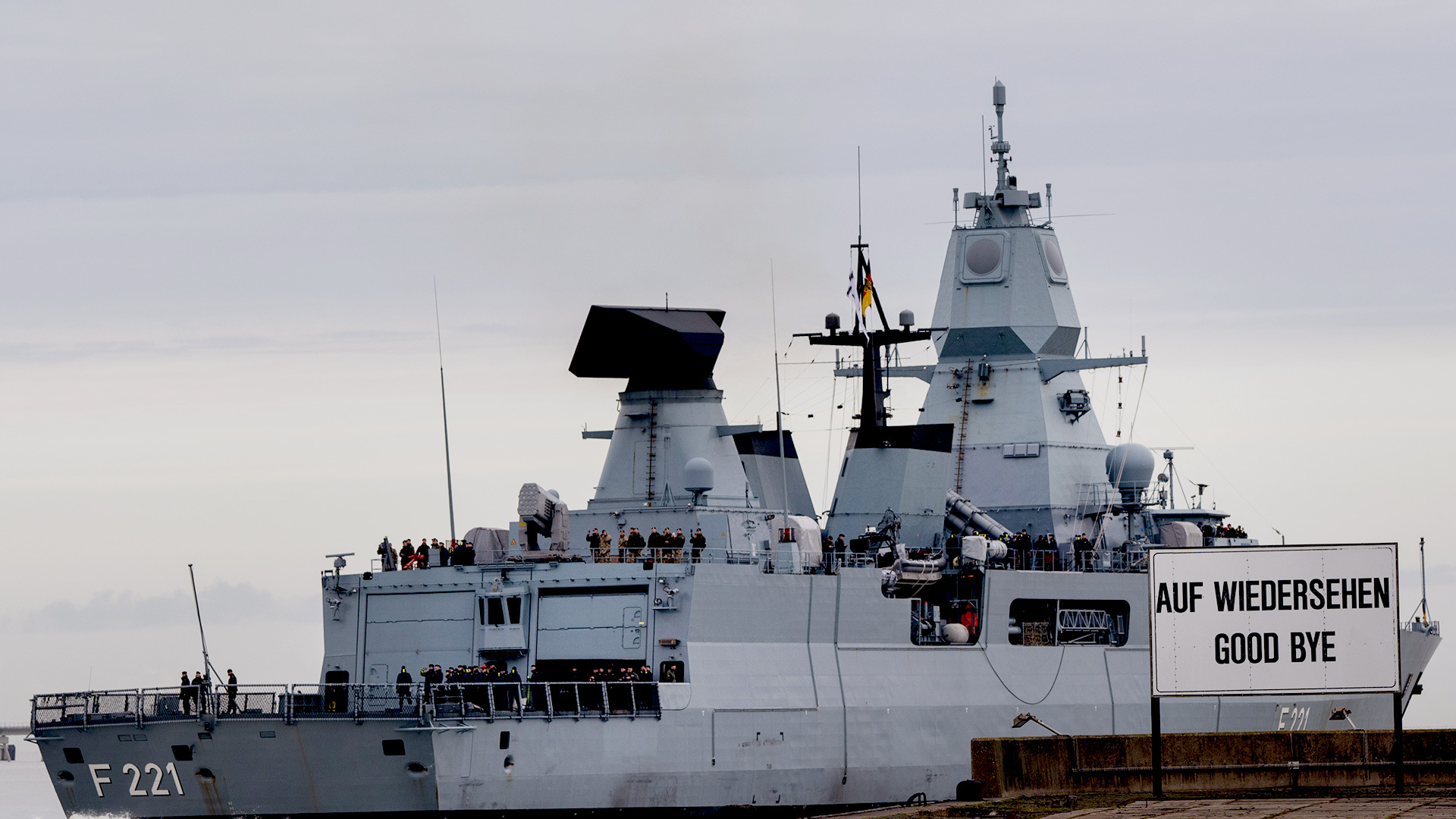
Members of the NATO alliance are denying U.S. President Donald Trump’s demand that they send warships to help protect shipping in the Strait of Hormuz after frequent Iranian attacks. As we noted yesterday, the president said that “If there’s no response or if it’s a negative response I think it will be very bad for the future of NATO.”
Germany on Monday outright rejected the demand.
“This is not our war; we did not start it,” German Defense Minister Boris Pistorius told reporters in Berlin on Monday. “We want diplomatic solutions and a swift end to the conflict, but sending more warships to the region will likely not help achieve that.”
German Foreign Minister Johann Wadephul doesn’t see NATO playing a role in dealing with the blockade of the Strait.
“I don’t see that NATO has made any decision in this direction or could assume responsibility for the Strait of Hormuz,” he said Monday ahead of a meeting of European Union foreign ministers in Brussels. “If that were the case, then the NATO bodies would address it accordingly.”
Wadephul added that despite the volatile situation in the Middle East, Ukraine remained Europe’s top security priority, the BBC noted. When the prices for oil and gas rise, he explained, it contributes to Russia’s war chest.
Luxembourg’s Foreign Minister Xavier Bettel offered a blunter response to Trump’s demand.
“Blackmail is not what I wish for,” he stated, adding that NATO is there to react when members are attacked, not for all defensive or military requests, Bloomberg News noted.
“I want to remind that none of us has been directly attacked,” he said. “There are no grounds for now to invoke Article 5,” he added, referencing the alliance’s collective defense clause.
Germany and Luxembourg joined Japan and Australia in rejecting Trump’s call for help in reopening the Strait, at least for now.
U.K. Prime Minister Keir Starmer said while the Strait must be reopened, it is not up to the alliance to do so.
“Let me be clear, that won’t be, and it’s never envisioned to be, a NATO mission,” he said, adding that Britain will not be “drawn into the wider war.”
Britain “is working with allies on a collective plan to reopen the Strait of Hormuz and restore freedom of navigation in the Middle East but it will not be easy, ” Starmer posited, according to Reuters.
“Ultimately, we have to reopen the Strait of Hormuz to ensure stability in the (oil) market. That is not a simple task,” Starmer told reporters.
Some nations are willing to listen to any plan Trump might present to NATO.
“We have to look into it and consider it,” Lithuanian Foreign Minister Kestutis Budrys told Bloomberg TV in an interview in Brussels. “I would look for an in-depth debate within NATO.”
Polish Foreign Minister Radoslaw Sikorski concurred.
“If there is a request with NATO to discuss the issue, we will of course consider it out of respect and sympathy for our allies,” he said.
EU foreign policy chief Kaja Kallas encouraged member states to consider expanding their Aspides naval mission, originally launched in 2024 while Houthis attacked shipping in the nearby Red Sea.
“If we want to have security in this region, it would be easiest to already use the operation we have in the region and maybe change a bit,” Kallas said.
While the Aspides vessels are currently allowed to navigate in the Strait of Hormuz, its mandate doesn’t allow more than that,” Bloomberg News posited, adding that EU countries would have to unanimously agree to change those directives, which could be difficult.
“There is no change to Aspides mission or posture,” Lt Colonel Socrates Ravanos, an Aspides spokesman, told us on Monday. “EUNAVFOR ASPIDES continues to carry out its mandate, ensuring the protection and security of commercial maritime traffic within its area of operations.”
The operation’s “assets in the area of operation monitor the situation closely and remain vigilant,” he continued. “Maritime security developments in the region are continuously assessed in coordination with partners and relevant maritime authorities.”
Concern over Iranian attacks in the Strait date back many decades. Back in 2012, The Washington Institute estimated that clearing the Strait of Hormuz could require up to 16 Avenger-class (mine counter measure) MCM vessels.
As we previously reported, however, the last four of those decommissioned vessels left Bahrain in January aboard a larger heavy lift vessel.
The Navy has three MCM-equipped Littoral Combat Ships in the region, Hunterbrook noted. As we reported yesterday, two Independence class Littoral Combat Ships configured for mine-sweeping duties that were previously deployed to the Middle East showed up in port in Malaysia. Both the USS Tulsa and USS Santa Barbara had arrived in Bahrain in the past year or so to take the place of a group of now-decommissioned Avenger class mine hunters. You can read more about that in our story here.
In Washington, White House press secretary Karoline Leavitt on Monday reiterated that the administration is forming a naval coalition to escort tankers through the Strait of Hormuz.
“The president is speaking with our allies in Europe and also many of our partners in the Gulf and Arab world to encourage them to step up and do more to open the Strait of Hormuz, and our NATO allies especially need to step up,” she told Fox News. “President Trump has been very frank with our friends in NATO for a very long time… now he’s calling on them to do the right thing.”
In his latest update on Epic Fury, CENTCOM commander Adm. Brad Cooper on Monday said attacks are “zeroed in on dismantling Iran’s decades old threat to the free flow of commerce through the Strait of Hormuz, through a combination of air, land and maritime capabilities. We have successfully destroyed over 100 Iranian naval vessels, and we aren’t done.”
Iranian attacks on shipping seem to have tapered off.
Between the start of Epic Fury on Feb. 28 and March 12, The United Kingdom Maritime Trade Operations (UKMTO) office received 20 reports of incidents affecting vessels operating in and around the Arabian Gulf, Strait of Hormuz, and Gulf of Oman. There were 16 attacks on ships, and four reports of suspicious activity. There have been no verified reports of attacks since March 12, according to UKMTO.
Amid the debate on how to protect Strait shipping, the first non-Iranian ship has transited the Strait with its AIS transponder on, according to the MarineTraffic open-source tracking site. Several observers have noted how close to the Iranian shore these ships are traveling. This could be due to Iranian mines, even though Trump on Monday repeated the assertion that Epic Fury attacks have destroyed all Iran’s mine-laying ships. Mines can be laid by small boats and Iran has practices doing exactly this in the past. This could also just be a safe deconfliction corridor Iran is using for safe passage.
The U.S. is “fine” with some Iranian, Indian and Chinese ships getting through the Strait of Hormuz for now, Treasury Secretary Scott Bessent told CNBC on Monday.
The closure of the Strait has forced several nations to alter their energy policies. Japan started the largest-ever release of oil from its strategic reserves on Monday, according to the Japan Times. The 80 million-barrel effort comes as the Strait of Hormuz stays effectively closed amid the U.S.-Israeli war with Iran and crude oil prices continue to soar.
“The release — 15 days’ worth of domestic demand from mandatory private reserves and one month from national reserves — was the seventh ever conducted in the nation,” the publication noted.
South Korea is also taking action in the wake of the Strait of Hormuz closure. It is lifting a cap on coal-fired power generation (until now set at 80% of capacity) to offset the loss of LNG, explains Bloomberg energies and commodities columnist Javier Blas in a post on X.
Beyond attacking shipping in the Strait, Iran is continuing strikes across the region.
The UAE says it is defending against Iranian missile and drone attacks.
Video emerged from the scene of another Iranian attack on the UAE’s Fujairah Port facility, showing thick plumes wafting into the sky.
An Indian-flagged crude tanker had a close call when the UAE’s Fujairah port came under attack on Saturday while it was loading crude at the oil terminal, according to the Times of India. The vessel sailed out safely the next day with everyone onboard unhurt.
Iran has asked India to release three tankers seized in February as part of talks seeking the safe passage of Indian‑flagged or India‑bound vessels out of the Gulf via the Strait of Hormuz, Reuters reported on X, citing three sources with knowledge of the matter.
In a brief chat with PBS News, Trump repeated his stance, since denied by Tehran, that Iran wants to negotiate.
“We’re doing very well,” he told the outlet, reiterating comments about destroying Iran’s military. He added: “They want to make a deal but they’re not ready to make a deal in my opinion.”
In addition to frequent conversations with Israeli leaders, Trump is also talking regularly to Arab leaders, particularly Mohammed bin Salman, the Saudi crown prince.
“According to several officials, the advice Mr. Trump is getting from the prince is to keep hitting the Iranians hard — essentially repeating the advice that King Abdullah of Saudi Arabia, who died in 2015, repeatedly gave to Washington: “Cut off the head of the snake, according to The New York Times.
Axios reported that “some key officials around Trump were reluctant or wanted more time” before an attack on Iran.
“He ended up saying, ‘I just want to do it,'” the source told the outlet. “He grossly overestimated his ability to topple the regime short of sending in ground troops.”
The America class amphibious assault ship USS Tripoli is continuing to speed toward the Middle East after the Pentagon ordered a Marine Expeditionary Unit (MEU) to bolster forces in the region.
The vessel, along with two Arleigh Burke class guided missile destroyer escorts, was last seen about 420 miles from Manilla, pushing deep into the South China Sea, according to open-source investigator MT Anderson.
“Running an aviation-optimized amphibious assault ship at high speed with a dedicated twin-destroyer escort is a heavily protected, offensive posture,” Anderson assessed. “They are moving with purpose, bringing a major Integrated Air and Missile Defense (IAMD) umbrella with them as they sprint toward the theater.”
The Israel Defense Forces (IDF) said Monday it had begun a “targeted ground operation against key targets” in southern Lebanon, pushing more forces deeper into the area as part of an expanded buffer zone, The Times of Israel reported. The move came after Hezbollah began attacking Israel earlier this month amid the US-Israeli war with Iran.
Defense Minister Israel Katz said the operation would continue until Hezbollah no longer poses a threat to the residents of northern Israel, and said displaced Lebanese would not return to their homes until then.
Hezbollah reportedly used its Almas missiles for the first time in this conflict. You can read more about these weapons in our story here.
The IDF also said it attacked an Iranian space-related compound that researcher Fabian Hinz said was used to conduct research on exoatmospheric guidance.
China’s Foreign Ministry is calling for an immediate halt to military operations in the Middle East, warning that further regional escalation could hit the global economy, Al Jazeera reported on X.
Online flight trackers say a Qatari Air Force C-17A strategic military transport plane flew to Rzeszów, Poland, earlier last week, following a similar flight the week before.
The nature of these flights is unclear. However, with Rzeszów serving as the primary hub for military aid being transshipped to Ukraine, it is possible the flights may have been delivering air defense interceptors originally intended for Ukraine or transporting Ukrainian counter drone specialists. We just don’t know.
The flow of videos out of Iran, already greatly reduced because of the regime’s internet blockage, has slowed even further.
“There’s been a notable drop in the number of videos coming out of Iran in the last 24 hours. I’ve now heard from multiple sources inside Iran that the government has further tightened its imposed internet blackout by closing loopholes and targeting those with Starlink access,” BBC journalist Shayan Sardarizadeh noted on X.
Still, some videos are making it out, like this one purporting to show Iranian Basij paramilitary forces hiding in a school.
UPDATES:
We have concluded our rolling coverage for the day.
UPDATE: 5:48 PM EST –
Iranian Foreign Minister Araghchi pushed back on claims that he has established backchannel communications with U.S. envoy Steve Witkoff.
With speculation rife that is he is badly wounded or perhaps even dead, new Iranian Supreme Leader Mojtaba Khamenei will reportedly give a television speech in the coming days. Khamenie, who Iranian officials have admitted was wounded in an airstrike, has not been seen in public since.
Speaking to reporters at The White House, Trump extolled the virtues of the B-2A Spirit stealth bomber.
“Let me hug that little sucker,” he said while asking an aide to hand him a model of the aircraft the president keeps in the Oval Office.
UPDATE: 5:24 PM EST –
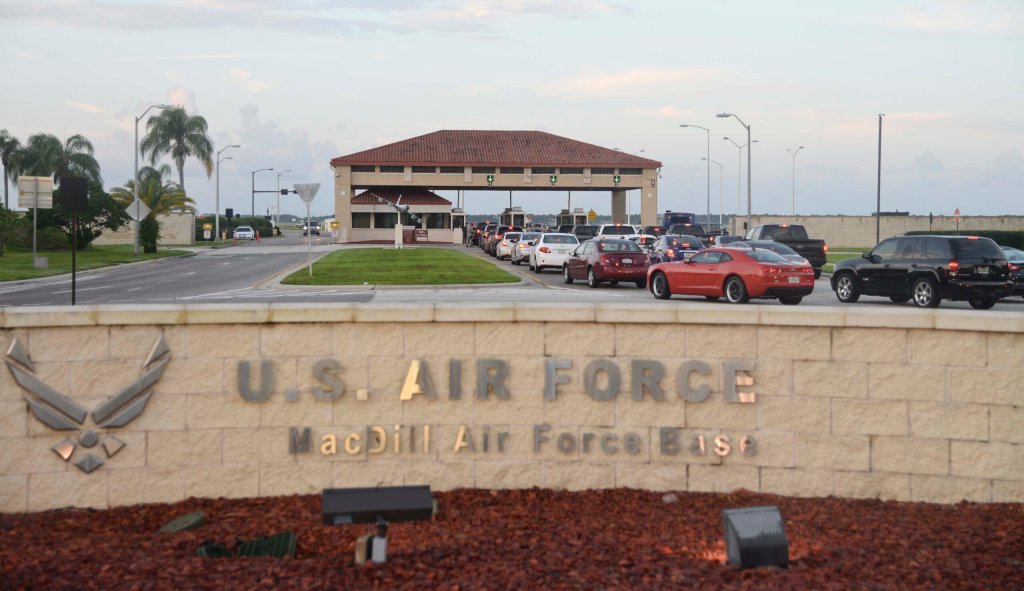
MacDill Air Force Base in Tampa, Florida, home of the command running the war in Iran, is reopening its main gate after a bomb scare earlier today, a spokesman for the 6th Air Refueling Wing, the base host unit, confirmed to The War Zone.
“The incident has been terminated and we are ready to open the main gate and visitor center,” the spokesman told us. The base, however, was not on lockdown.
MacDill is home to CENTCOM, U.S. Special Operations Command as well as the 6th Air Refueling Wing (6th ARW) and the 927th Air Refueling Wing and dozens of other mission partners. Last week, three airmen assigned to the 6th ARW were among six killed in a crash of a KC-135 aerial refueling tanker.
Today’s situation unfolded this afternoon when a suspicious package was found at the Visitors Center near the Dale Mabry entrance gate, according to the FBI. The bureau sent its Special Agent Bomb Techs to the scene, who worked it along with Tampa Police, the FBI said in a post on X.
UPDATE: 4:23 PM EST –
Talking to reporters on Monday, Trump seemed surprised that Iran would actually attack its neighbors if it came under fire.
The president was responding to a question about whether he was briefed about possible Iranian strikes on nations like the UAE, Saudi Arabia, and Qatar.
A direct communications channel between U.S. envoy Steve Witkoff and Iranian Foreign Minister Abbas Araghchi has been reactivated in recent days, Axios reported, citing a U.S. official and a source with knowledge.
Araghchi lashed out at comments made by U.S. War Secretary Pete Hegseth that America would show “no quarter” in Epic Fury.
“When the U.S. Secretary of War declares ‘no quarter.’ he doesn’t project strength,” Araghchi stated on X. “He conveys moral bankruptcy and ignorance about law of armed conflict. We advise him to review the Hague Convention and Rome Statute of the ICC, unless he aspires to join Netanyahu as war criminal.”
The IDF Chief of the General Staff approved plans to continue operations in the Northern Command.
“The impact of the strike and the weakening of the radical regime in Iran is also felt in the campaign against Hezbollah,” said Lt. Gen. Eyal Zamir. “To date, the Northern Command has eliminated more than 400 Hezbollah terrorists.”
UPDATE 3:50 PM EST –
CENTCOM spokesman Capt. Tim Hawkins confirmed to The War Zone that more than 200 troops have been wounded or injured across seven countries since the start of Epic Fury. The injuries took place in Bahrain, Iraq, Israel, Jordan, Kuwait, Saudi Arabia and the UAE.
“The vast majority of these injuries have been minor, and more than 180 troops have already returned to duty,” he explained, adding that 10 troops were seriously injured.
In addition to the wounded, seven U.S. troops have been killed in Iranian attacks, the most serious being March 1 when six Army soldiers were killed in an Iranian drone attack on Kuwait. Another six Air Force airmen died when their KC-135 refueling plane crashed in Iraq, reportedly after colliding with another KC-135.
The Washington Post was first to report the latest casualty figures.
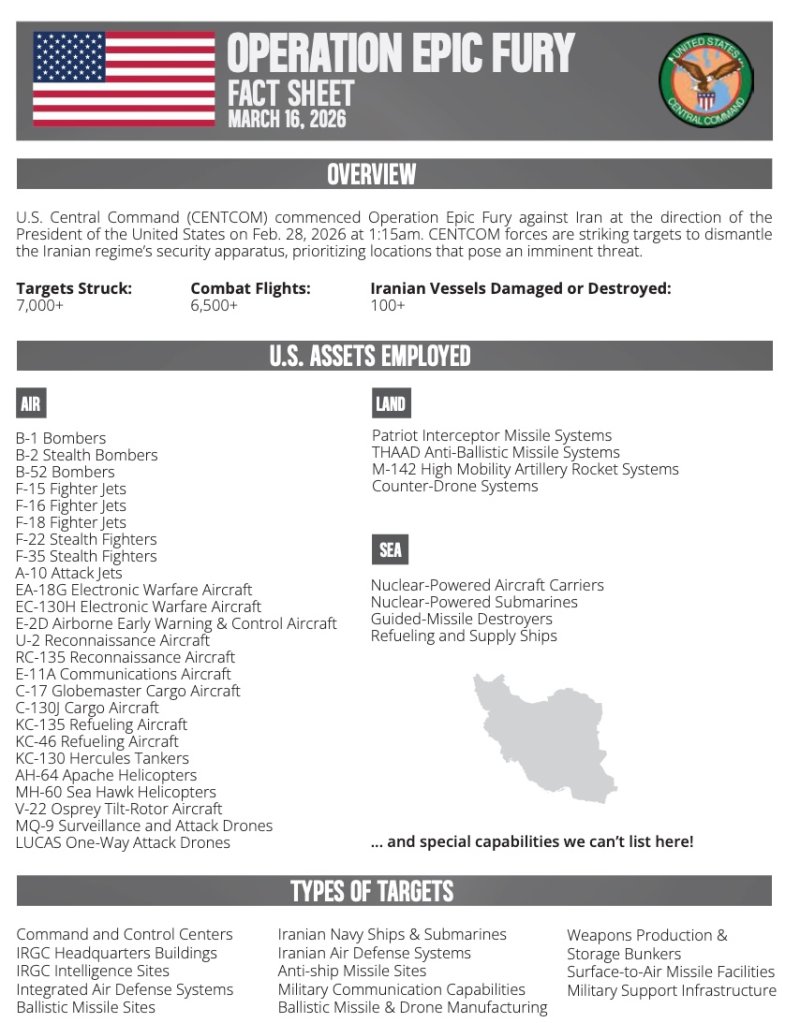
CENTCOM released its latest Epic Fury update, saying it struck more than 7,000 targets, flew more than 6,500 combat sorties and damaged or destroyed more than 100 Iranian ships.
Baghdad continues to be hit.
In what looks like a scene from a video game, a counter rocket, artillery, and mortar C-RAM system is seen engaging with a drone over Baghdad.
Footage of a reported coalition interception of an Iranian drone can be seen in the following video.
Not all the interceptions apparently worked. A drone reportedly slammed into the Royal Tulip al-Rasheed hotel in the Iraqi capital.
The Spanish Ministry of Defense confirmed on Sunday that it temporarily transferred its special forces from Iraq due to worsening safety and failure to conduct missions securely.“The Special Operations Task Group was relocated to safe areas because the security situation prevented it from continuing training operations with Iraqi forces,” according to the ministry.
GPS interference in and around the Strait of Hormuz has continued to rise since the crisis began, suggesting a persistent and geographically dispersed campaign of electronic disruption, according to Kpler.
Wild video was posted on X of an Israeli interception of an Iranian ballistic missile. No injuries were reported, according to Times of Israel military correspondent Emanuel “Mannie” Fabian.
UPDATE: 2:42 PM EST –
The war with Iran is expected to last at least another month, according to Israel media, citing a senior Israeli official.
“Israel is reportedly preparing for an extended phase of fighting as it seeks to further weaken the Iranian regime and capitalize on what it views as signs of internal instability within the country’s leadership,” The Times of Israel reported. “According to the source, U.S. President Donald Trump supports Israel in continuing the campaign.”
We reached out to the White House for comment.
NATO responded to our query about debate over sending warships to the Strait of Hormuz.
“Allies have already stepped up to provide additional security in the Mediterranean,” a NATO official told us. “We are aware that individual Allies are talking with the US and others on what more they might do, including in the context of security in the Strait of Hormuz.”
In the first 96 hours of Epic Fury, the US-led coalition “expended approximately 5,197 munitions across 35 types,” according to a new report from the Foreign Policy Research Institute (FPRI).
“This carries a munitions-only replacement bill of $10–$16 billion in four days,” FPRI posited. “This represents a significant industrial burden for replacing some munitions that cannot be replenished in 4 days, 4 weeks, or even 4 months. Worse, those estimates do not include combat losses of warfighting assets or damage to bases and the high-end air defense enabling architecture.”
Video has emerged showing intense flames at Dubai International Airport’s fuel storage area after an Iranian attack.
CENTCOM posted additional video of its attacks on Iranian targets.
MT Anderson provided an update on the location of the Tripoli. The ship was spotted on AIS North of the Riau Archipelago, transiting the southern South China Sea at 18 knots.
The Iraqi armed faction Kataib Hezbollah announced the death of its spokesperson, known as Abu Ali al-Askari. He was reportedly killed in a U.S. airstrike after a wave of attacks against U.S. facilities in Iraq.
Six people were injured in a Hezbollah rocket attack in Nahariya, according to medics. The town is located about eight miles south of the Lebanese border.
Turkey’s Foreign Affairs Ministry (MFA) condemned the latest Israeli incursion into Lebanon.
“The Netanyahu government’s collective punishment and genocidal policies in Lebanon will lead to a new humanitarian catastrophe in the region,” the MFA said in a statement on Monday. “We reaffirm our solidarity with Lebanon amid these attacks, which violate its sovereignty and territorial integrity.”
UPDATE: 1:50 PM EST –
Speaking at a board meeting of the Trump Kennedy Center, the president claimed he predicted that Iran would attack shipping in the Strait.
The president added that he does not know Iran mined the Strait.
He also said the U.S. has hit 7,000 targets since launching Epic Fury.
France has reportedly boosted its deployment of Rafale fighters to Jordan and UAE to 24, more than double the usual 10, according to French defense observer Tom Antonov. The jets have already intercepted dozens of Iranian drones, he added in a post on X.
The MQ-9 Reaper drones have played a big role in the war, and have been heavily targeted by Iran. To date, the U.S. has lost about a dozen Reapers, including one accidentally shot down by an ally, according to The Wall Street Journal.
NATO is considering boosting its ballistic missile defense capacity in Turkey against threats from neighboring Iran, Bloomberg News reported, citing people familiar with the matter
“The military alliance already deployed a battery in eastern Turkey to protect an early-warning radar used to track missiles across the Middle East,” the outlet stated. “It’s now considering sending another Patriot missile-defense system to bolster an airbase where American troops are stationed.”
Contact the author: howard@thewarzone.com
Loading comments…
Comments couldn’t be loaded. Please refresh the page.