
Neither the U.S. nor Israel seem close to ending their attacks on Iran as the war stretches into its 16th day. U.S. President Donald Trump says he is not yet prepared to make a deal with Tehran while Israeli officials say there are still “thousands of targets” to be hit.
In an interview with NBC News Saturday night, Trump said he wants Tehran to offer a better “deal” before he would agree to ending hostilities.
“Iran wants to make a deal, and I don’t want to make it because the terms aren’t good enough yet,” the president told the network in a 30-minute phone call. He added that the terms offered would have to be “very solid.”
The U.S. leader, however, declined to say what conditions he is seeking.
“I don’t want to say that to you,” Trump stated, while acknowledging that Iran would have to completely abandon any nuclear ambitions as part of any agreement.
Israel, meanwhile, told CNN it plans for at least three more weeks of its campaign in Iran.
“We have thousands of targets ahead,” IDF spokesperson Brig. Gen. Effie Defrin told the cable outlet. “We are ready, in coordination with our U.S. allies, with plans through at least the Jewish holiday of Passover, about three weeks from now. And we have deeper plans for even three weeks beyond that.”
Defrin added that the IDF is “not working according to a stopwatch, or a timetable, but rather to achieve our goals” which are to “weaken the Iranian regime severely.”
At the same time, Chris Wright, Trump’s Energy Secretary, has also said the war will end within the next few weeks:
“I think that this conflict will certainly come to the end in the next few weeks – could be sooner than that. But the conflict will come to the end in the next few weeks, and we’ll see a rebound in supplies and a pushing down in prices after that,”
While another three weeks of war would roughly fit into Trump’s previous statements that the conflict could last as long as five weeks, this is such a fluid situation that it is extremely difficult to make predictions about timelines.
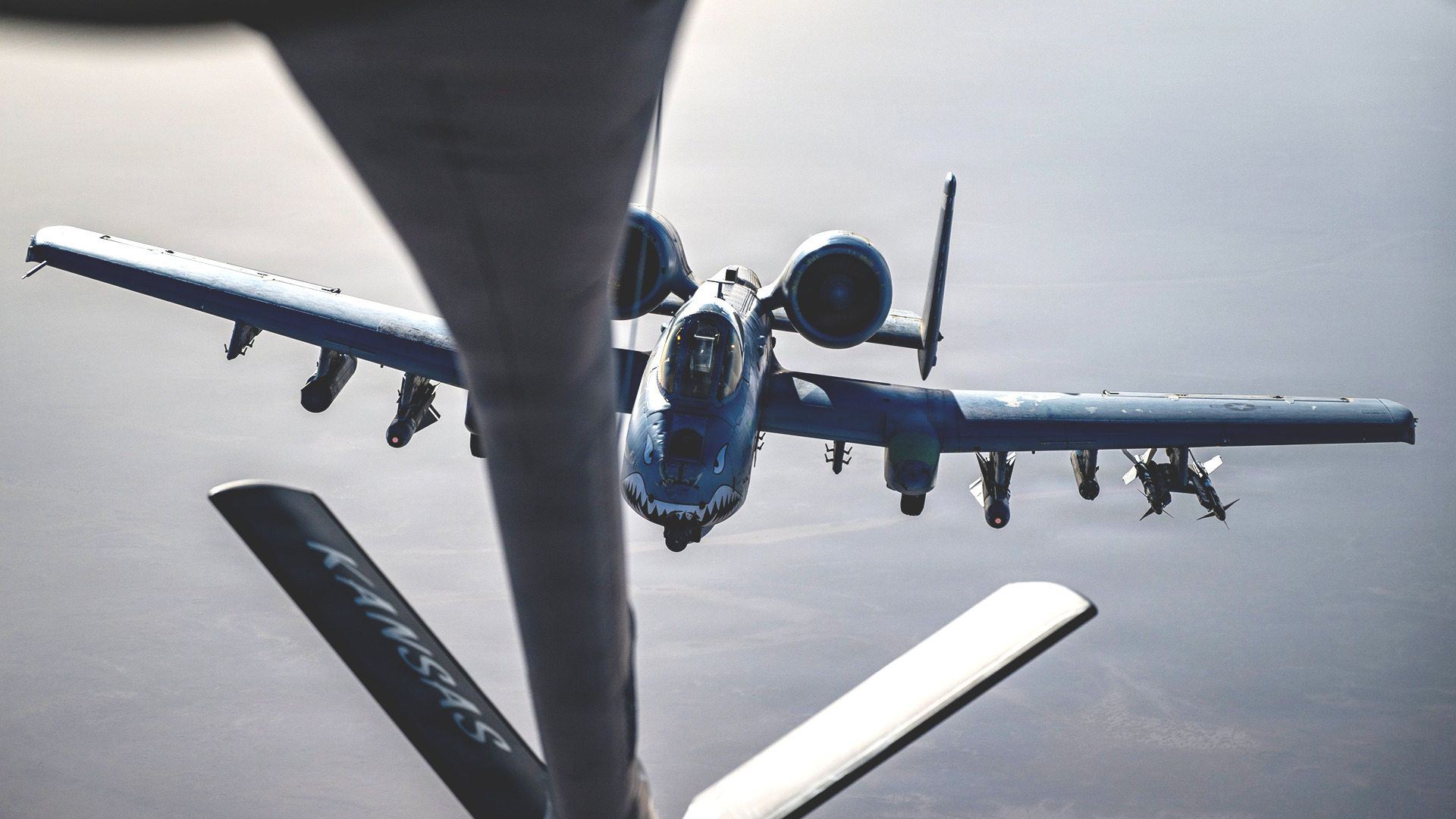
Meanwhile, the U.S. continues to pound targets in Iran, including the continued use of bomber sorties.
The biggest change in targeting came from the U.S. attacking Kharg Island. This is the epicenter of Iran’s oil exporting that sits roughly 20 miles off Iran’s northern coastline along the Persian Gulf.
CENTCOM posted:
“Last night, U.S. forces carried out a precise and wide-ranging strike on Kharg Island in Iran. This strike destroyed naval mine storage depots, missile storage bunkers, and numerous other military sites. U.S. forces succeeded in targeting more than 90 Iranian military targets on Kharg Island, while preserving the oil infrastructure.”
Just a day ago, TWZ Editor-In-Chief Tyler Rogoway stated this would be at the top of the list of targets intended for U.S. Marines heading to the region, as well as one of the smaller islands closer to the Strait of Hormuz, if indeed the Marines from USS Tripoli and its MEU are indeed used. According to one tracking source, USS Tripoli is currently sailing through the South China Sea, moving fast to join U.S. forces amassed in the CENTCOM area of responsibility.
The strikes took out the island’s airfield as well as air defenses and other targets that were military related. They were not focused on the energy transfer services the island provides. These strikes would be critical to preparing the island for future operations.
After the attack, Trump wrote on Truth Social:
“We totally demolished Kharg Island, but we may hit it a few more times just for fun.”
We will be talking a lot more about Kharg Island in the near future.
We are also seeing U.S. aircraft operating over Iranian population centers at lower level, pointing to the degraded state of Iranian air defenses. The video below shows a Super Hornet over Chabahar, which still is a coastal city, so it’s not like the aircraft is seen deep inside Iran, and this seaside town, which is near the border with Pakistan on Iran’s southern shore, was heavily struck during the opening stages of the conflict:
Israel also remains highly active with strikes in Iran:
Israel claims about a third of Iran’s ballistic missile launchers are still usable. This appears to be a similar figure floated over the past week.
Five U.S. aerial refueling tankers were struck by an Iranian ballistic missile that landed at Print Sulan Air Base, Saudi Arabia, according to the Wall Street Journal.
Trump, however, pushed back on the reported claims about the KC-135s, calling them “fake news” and that “Four of the five had virtually no damage and are already back in service.”
Claims about these tankers follow a March 12 mishap that put out of action one KC-135 and destroyed another with six airmen onboard. On Saturday, the Pentagon announced the names of the airmen killed in the above-mentioned incident when two KC-135s reportedly collided with each other.
Maj. John A. Klinner, 33, of Auburn, Ala.
Capt. Ariana G. Savino, 31, of Covington, Wash.
Tech. Sgt. Ashley B. Pruitt, 34, of Bardstown, Ky.
Capt. Seth R. Koval, 38, of Mooresville, Ind.
Capt. Curtis J. Angst, 30, of Wilmington, Ohio
Tech. Sgt. Tyler H. Simmons, 28, of Columbus, Ohio.
A drone attack on the U.S. Embassy in the Green Zone in Iraq destroyed a Giraffe 3D radar system that would be an important component used in the protection of the facility from incoming drone strikes. It isn’t clear if this was a near-field or long-range attack, although a near-field one seems most likely. Regardless, targeting of critical radar systems has been a key component of Iran’s retaliation campaign.
A report from Axios claims Putin said he would move Iran’s enriched uranium to Russia as part of a deal that could see the end of the war, but Trump rejected the offer. This needs to be taken as unconfirmed at this time, but Russia taking the material has long been floated as a potential part of a nuclear deal between the U.S. and Iran. Considering Russia’s tight relationship with Iran, which has only gotten more intense since the war in Ukraine kicked off, and the fact that Russia is not exactly a friendly country to the U.S. and the West, skepticism here is not illogical.
The Economist has a report that states the damage to the world economy is mounting from the closure of the strait and a major further spike in oil prices could send the globe into recession.
The Wall Street Journal is reporting that Trump ignored advice from Joint Chiefs of Staff Gen. Dan Caine about the damage Iran could inflict on shipping in the Strait of Hormuz.
The Wall Street Journal story came a day after War Secretary Pete Hegseth decried as “fake news” assertions that the Trump administration underestimated the Iran war’s impact on the Strait of Hormuz.
Iranian Foreign Minister Abbas Araghchi on Sunday said that the country’s new Supreme Leader, Ayatollah Seyyed Mojtaba Khamenei, “is in good health condition and manages the country strongly.”
Araghchi’s comments come two days after War Secretary Pete Hegseth said Khamenei was wounded and “likely disfigured.”
Regardless of Mojtaba Khamenei’s current condition, his later father had misgivings about his son replacing him, according to CBS News. An analysis by the U.S. intelligence community “showed Khamenei was wary of Mojtaba taking power because he was perceived as not very bright, and was viewed as unqualified to be leader, according to sources,” the network claimed.
The IRGC is unsurprisingly stating they are actively trying to kill Prime Minister Netanyahu. This should come as no surprise, but the message is certainly overt.
Iranian ballistic missiles are still piercing Israel’s air defenses:
There is a report that says Israel is running low on interceptors. Israel has said the report is not accurate. It would be of no surprise that Israel is running low of these advanced weapons, especially after just eight months since the 12-Day War. This issue has been highlighted in multiple reports in the months following that operation. If this is indeed the case, and we cannot confirm it is at this time, it will put more pressure on U.S. THAAD and SM-3 interceptor systems and the stockpile overall.
Iran continues to target gulf allies’ oil production facilities:
An Iranian drone attack on an oil refinery in Erbil, Iraq, caused a major fire:
A video has been released showing Iraqi militia FPV drones attacking Baghdad International Airport. In the clip, it shows two flying around the facility for a prolonged period of time before diving into a soft shelter and a hangar.
President Trump says that Iran wants to make a deal, but the terms aren’t good and that he doesn’t even know if Iran’s newly appointed leader is alive.
Trump appears to be looking to build a coalition to reopen the Strait, including long-time European allies. That ask does conflict with his previous statements on Truth Social about the war already being won and not needing at least one key ally, the UK. At the same time, the UK has opened its bases to U.S. bomber deployments. Trump has also commented that the “last person he needs help from is Zelensky” in regard to Ukraine sending capabilities to the region to defend against drones.
Zelensky, for his part, told CNN that Russia is supplying Iran with Shahed drones and is aiding Iran in targeting U.S. assets in the Middle East. Though Iran initially supplied these weapons to Russia for its war on Ukraine, Moscow has made numerous improvements since as we have frequently noted.
While unofficial, this basic chart can be used as an informal data point in terms of drone and missile launches out of Iran. It shows drone and missile launches had leveled off for a number of days, but drone launches have spiked a bit in the last day or so. Clearly, Iran continues to execute standoff launches that are doing significant damage over two weeks into the conflict.
UPDATES:
UPDATE: 10:20 PM EST—
President Trump is trying to assemble an international coalition to reopen the strait. He says it really doesn’t matter to the U.S., which is ‘oil independent,’ and countries that get their oil through the strait should step up. He also had very ominous words for NATO allies, stating: “If there’s no response or if it’s a negative response I think it will be very bad for the future of Nato.” Apparently, the White House plans to announce who will be in this maritime coalition soon.
Australia looks uninterested in sending ships for the cause:
Japan and the UK appear to be in the same boat:
The need for mine clearing ships for such an effort also came up. The timing is of interest as two of three mine clearing vessels the U.S. had deployed to the Middle East exactly for such a mission have now appeared in the Pacific region. You can read our full report on this bizarre repositioning here.
Trump also said on Air Force One he has no intention of declaring victory yet:
NYTs reports of a tense Oval Office meeting last week where Trump was frustrated with answers from his generals about why the strait could not be easily reopened.
The report, which you can read in full here, states, in part:
Two weeks into a war against Iran that he chose to launch, President Trump faces a stark choice — stay in the battle to achieve the dauntingly ambitious goals he has set, or try to extract himself from an expanding and intensifying conflict that is generating damaging military, diplomatic and economic shock waves.
He has quickly discovered that both options are deeply problematic, littered with consequences that he and his team downplayed when he plunged the United States, alongside Israel, into the biggest war in the Middle East in nearly a quarter-century.
He can continue to fight a weakened enemy that has nevertheless proved adept at extracting a fast-rising economic price for the United States and its allies, tying the global energy markets in knots and striking a dozen countries across the region.
Battling on would put more American lives at risk, accelerate the financial costs and risk further fraying alliances. There is angst within Mr. Trump’s political base over the sharp departure from his pledge to avoid entangling the nation in more wars.
Or he can begin to pull back, even though most of his objectives — including assuring that Iran never again possesses the capability to produce a nuclear weapon — are not yet met. The biggest military accomplishments of the joint U.S.-Israel action so far, officials say, have been wiping out much of Iran’s missile arsenal and air defenses and crippling its navy. Ayatollah Ali Khamenei, the country’s brutal leader for nearly 40 years, is dead.
…
At a meeting in the Oval Office last week, a frustrated Mr. Trump pressed Gen. Dan Caine, the chairman of the Joint Chiefs of Staff, about why the United States could not immediately reopen the Strait of Hormuz.
The answer was straightforward: Even one Iranian soldier or militia member zipping across the narrow neck of the strait in a speedboat could fire a mobile missile right into a slow-moving supertanker, or plant a limpet mine on its hull.
Dubai has been hit again overnight:
Iran’s military has warned those in areas of Dubai and Doha to evacuate:
A video is circulating claiming to show a Super Hornet doing a strafing run in Chabahar. This is the same port town where the video of the Super Hornet flying over the city supposedly came from.
A video claimed to be out of Iran shows the harsh reality of living in a place under bombardment:
B-1Bs continue to rack-up the flight hours in support of Epic Freedom:
Trump fumed over Iran’s propaganda machine, which he declared “Master of Media Manipulation and Public Relations” and the U.S. press all in one post on Truth Social. I am not sure anyone would reasonably believe Iran is the master of media manipulation in any way shape or form.
UPDATE: 4:17 PM EST –
The IDF is preparing to deploy more forces in southern Lebanon and expand its buffer zone to push away the threat of Hezbollah from the border, Times of Israel military correspondent Emanuel “Mannie” Fabian stated on X.
The IDF on Sunday reported that 85% to 90% of Hezbollah’s pre-2023 rocket arsenal has been destroyed, according to The Jerusalem Post.
“The IDF’s update on Sunday suggests that over the course of 2025, and more intensely since Hezbollah entered the war on March 2, the military has gradually reduced that total to between 10,000 and 23,000 rockets,” the publication noted.
IEA has provided an update on the emergency oil stock release, with details on timing, regional split, and crude/product split.
Retired Admiral Kevin Donegan, who commanded the Navy’s Fifth Fleet in the Middle East during President Trump’s first term, told ABC’s This Week that the Trump administration was not taken off guard by Iran attempting to shut the Strait of Hormuz in response to U.S. air strikes.
“If you look at the campaign CENTCOM initiated, this was built into it from the beginning,” he explained. “Think about it in terms of the things that the chairman said and the things that Admiral Cooper said his mission was, one of the things in there was to just to go after the Navy. And what they really meant was, Iran’s capability to control the straits when this is over.”
The Kurdish coalition forces have organized a military and are now awaiting external material support to arrive before they carry out any ground operations in Iran, the Democratic Party of Iranian Kurdistan (PDKI) representative in the UK, Razgar Alani, told The Jerusalem Post on Sunday.
Newt Gingrich suggested setting off a dozen thermonuclear blasts across the UAE to create a new, wider, safer transit than the Strait of Hormuz. It is unclear if the former Speaker of the House of Representatives was being serious or facetious.
UPDATE: 3:38 PM EST –
Israel’s Kann News reports that Jerusalem is recalibrating its objectives for the war because Iranians are not protesting against the regime as much as initially anticipated.
“We need to reassess the war’s objectives. We’re not advancing at the pace we set,” the outlet said security sources told it “In Israel, they explain that the war’s opening strike was ‘beyond expectations,’ and so were the days that followed, However, according to them, there is a significant challenge in getting the Iranian people to pour out into the streets in droves.”
Qatar was attacked by several Iranian drones today, its Defense Ministry stated on X.
Online tracking shows that while few ships are transiting the Strait of Hormuz, the Red Sea is witnessing the arrival of an oil tanker armada to the Saudi terminals there.
German Foreign Minister Johann Wadephul said on Sunday that “he was sceptical about a potential widening of the European Union’s Aspides naval mission to the Strait of Hormuz,” Reuters noted on X. Wadephul said that the mission to help commercial shipments pass through the Red Sea was “not effective.”
The Iran war threatens to deal significant blows to the Gulf’s biggest economies, including Saudi Arabia, the United Arab Emirates and Qatar, if it doesn’t end soon, Bloomberg News reported.
“Qatar and Kuwait could each see their gross domestic product contract by 14% this year should the conflict continue through April, resulting in a two-month halt of the Strait of Hormuz,” the outlet posited, Goldman Sachs Group Inc. economist Farouk Soussa.
U.S. Energy Secretary Chris Wright downplayed concerns that the U.S. was not prepared for Iran’s closure of the Strait.
Israel attacked a site near the Bushehr nuclear reactor without knowing that Russian scientists were there, Israel’s I24 News reported, adding that there were no injuries.
Zelensky said a drone deal with the U.S., centered on the exchange of technologies, expertise and production, was possible despite Trump’s rejection.
At the same time, the Ukrainian leader warned private drone makers in Ukraine not to pursue direct export deals outside of government oversight. You can read more about that effort in our story here.
“I have never heard that the United States isn’t interested. I have heard the opposite – that the United States is very interested,” Zelenskiy told reporters in Kyiv on Saturday.
UPDATE: 1:44 PM EST –
As of Sunday, “neither Israel nor the US has announced any success in neutralizing 400-plus kilograms of 60% enriched nuclear uranium covered in rubble afterIDF attacks on nuclear sites and the Pickaxe Mountain nuclear facility,” The Jerusalem Post reported. “Further, the IDF declined to provide assurances that these two threats would be dealt with before the end of the war.”
The world’s top central banks convene this week facing a renewed inflation threat from the war in Iran and the possibility that they’ll be forced to delay interest-rate cuts and in some cases consider hikes, Bloomberg News reports.
“Changes aren’t imminent yet,” according to the outlet. “The Federal Reserve, the European Central Bank and the Bank of England are all expected to keep borrowing costs steady as they assess how much surging energy costs will feed through to consumer prices and growth.”
An Italian Air Force remotely piloted aircraft was destroyed during a drone attack on Ali Al Salem Air Base in Kuwait, according to the Italian Defense Ministry (MoD). No personnel were harmed in the incident.
The IAF published images and video of its F-35I fighters heading to Iran to carry out strikes.
Days after an Iranian attack on fuel storage tanks at the port of Salalah, Oman, plumes of smoke can be seen rising for dozens of kilometers in satellite imagery.
In a post on X, CBS News published a graphic of targets hit by all parties in the Iran war.
At about 7 p.m. local time (noon EST). Baghdad International Airport and its surroundings came under attack by five rockets, resulting in injuries to four airport staff and security personnel, in addition to an engineer, with varying degrees of wounds, the Iraqi Security Media Cell announced on X.
“In response to the targeting, directives and orders were issued to relieve the sector commanders and intelligence officers in the affected sector, while the competent authorities have begun taking the necessary legal measures, alongside tightening security procedures around the targeted areas,” the media cell added.
UPDATE: 1:05 EST –
Araghchi disputes Trump’s claim that Iran wants to negotiate an end to the war.
“We never asked for a ceasefire or negotiations,” the Iranian foreign minister told Face The Nation Sunday morning. “We are ready to defend ourselves as long as it takes.”
The decision to appoint Mojtaba Khamenei to replace his father was a signal that the regime wants to maintain control of the country, former CIA operative told Face The Nation.
The International Energy Agency (IEA) said oil from an unprecedented stockpile release will be made available immediately in Asia,” Bloomberg News reported. Buyers there “are clamoring to replace barrels lost to war-related disruptions in the Middle East,” the outlet noted.
Though UKMTO reports that there have been no confirmed attacks on shipping in the Strait of Hormuz, Gulf of Oman or Arabian Gulf in the past 72 hours, the situation there remains “at a critical level due to recent attack patterns, continued navigation interference, and persistent operational disruption, to include port facilities, across the region.”
The heavy consumption of MICA air-to-air missiles used by French Air Force Rafale pilots to intercept Iranian Shahed drones over the UAE is creating tensions in Paris, according to the French La Tribune news outlet.
“A crisis meeting is convened Tuesday by Prime Minister Emmanuel Macron to find solutions to maintain capacities over time,” the publication reported.
Contact the authors: tyler@twz.com
howard@twz.com
Loading comments…
Comments couldn’t be loaded. Please refresh the page.