

British Armed Forces assets continue to flow into Cyprus, as the United Kingdom bolsters its military presence in the eastern Mediterranean in response to the war in the Middle East. While the British government has not taken part in direct military action against targets within Iran, the expanding conflict has also put Cyprus under direct threat. Meanwhile, the rush to bolster the U.K.’s military capabilities in the region has highlighted some glaring deficits in the British Armed Forces.
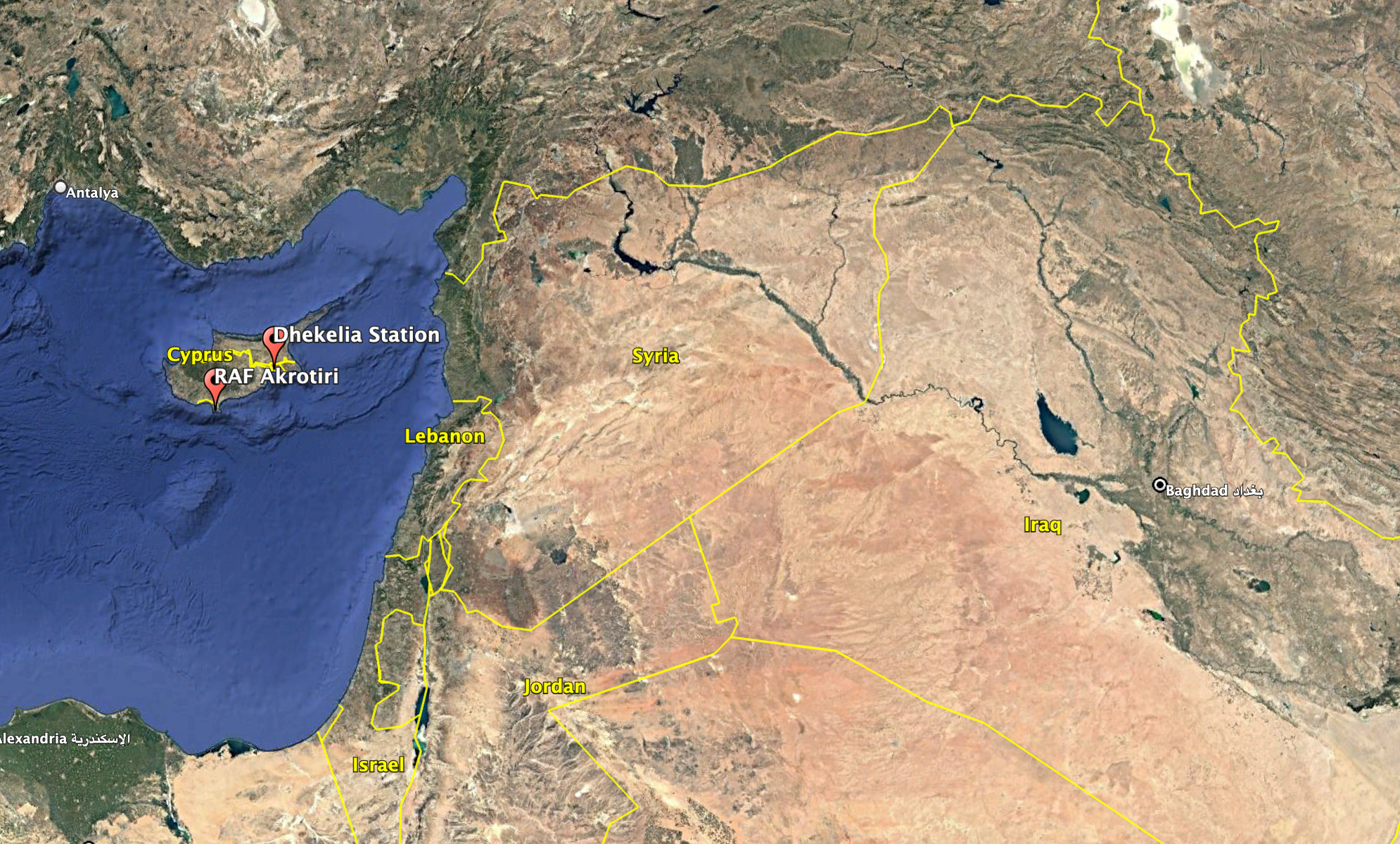
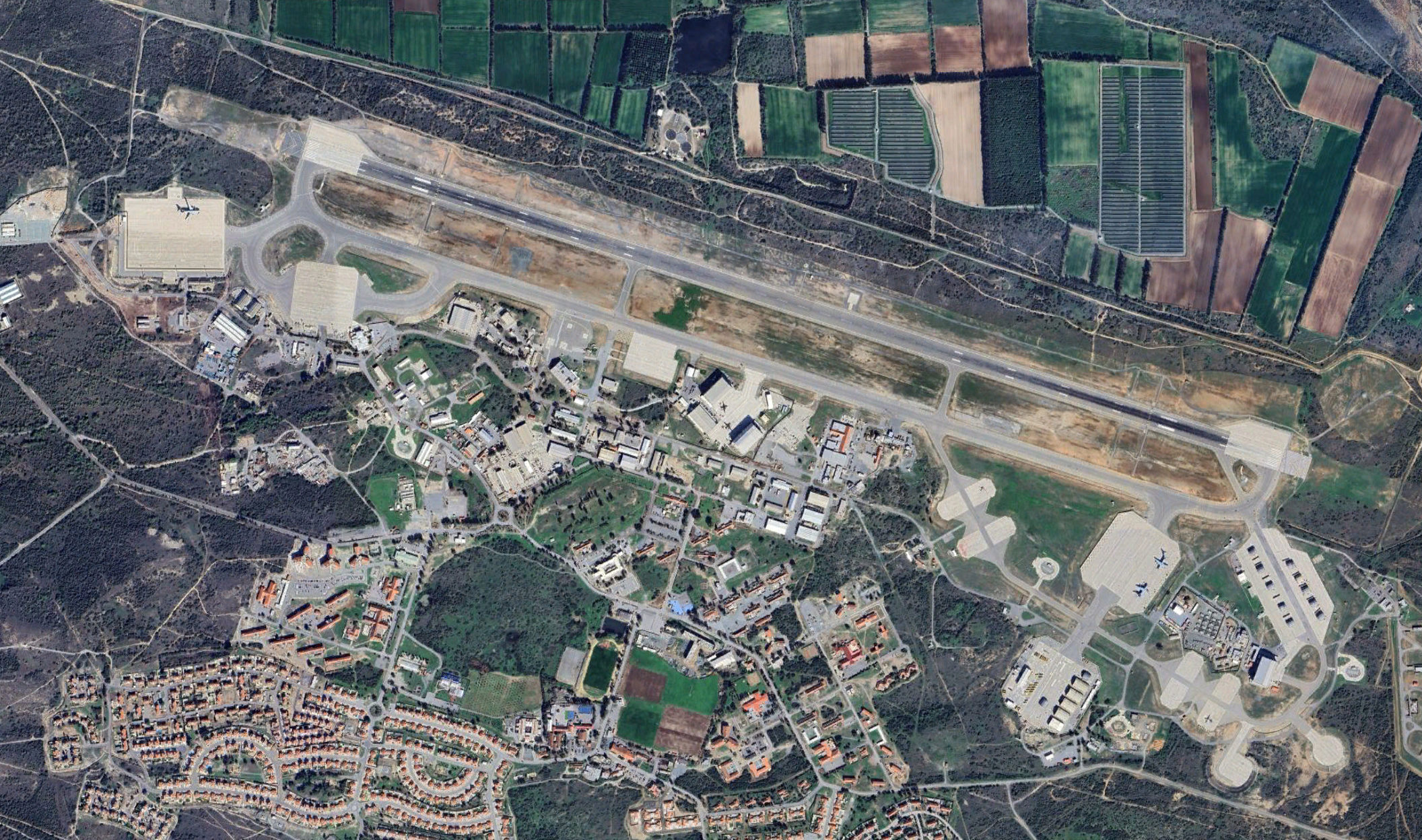
The British military response to the conflict in the Middle East has centered on the island of Cyprus in the eastern Mediterranean, which has long been home to a U.K. Armed Forces presence. As well as providing a ‘landing pad’ for British forces operating in the region, for example, during the counter-ISIS mission, Cyprus has long been used by the British for training and exercises. The so-called Sovereign Base Areas on Cyprus comprise the airbase of RAF Akrotiri and Dhekelia Station (a former airfield), which have been in British hands since the Republic of Cyprus was established in 1960.
Fighter assets
Before the Iran war began, eight Royal Air Force Typhoon multirole fighters were already deployed to Akrotiri, where they were still operating on the U.K. counter-ISIS mission, Operation Shader. Other U.K. Armed Forces personnel were also in Iraq under Shader.
In the wider region, there was also an existing RAF Typhoon footprint in Qatar, where a squadron of the jets is operated jointly with the Qatar Emir Air Force. This unit was strengthened in January, when another four Typhoons deployed there from the United Kingdom, specifically for air defense.
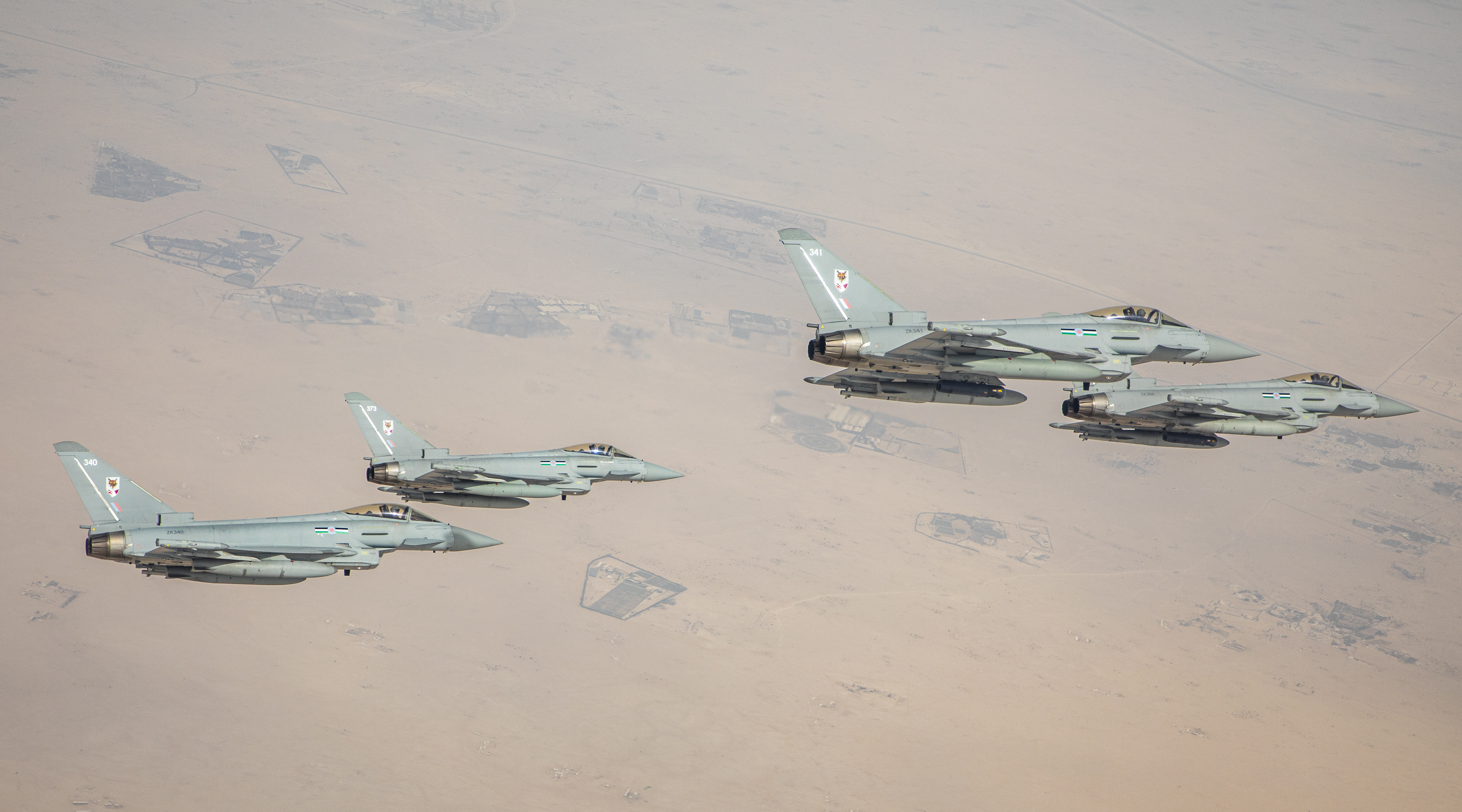
In February, six RAF F-35B Lightnings were sent to Akrotiri in Cyprus, joining the Typhoons already deployed there.
As Iran and its proxies have launched drones and missiles at countries across the region, the U.K. Armed Forces have been active in intercepting drones (and potentially also cruise missiles).
The real wakeup call came overnight on March 1, when a drone launched by Hezbollah in Lebanon hit Akrotiri. There were no reported casualties and only “minimal damage,” although this was, significantly, an impact that tore a hole in the hangar used by the U.S. Air Force U-2 Dragon Lady spy planes that are also regularly detached to Cyprus. Two more drones heading toward Cyprus were reportedly intercepted the same day.
Another two drones heading for Cyprus were intercepted on March 4, according to a Cypriot government spokesperson.
The U.K. Ministry of Defense has confirmed that the four Typhoons in Qatar, as well as the Cyprus-based F-35Bs, have since been active in bringing down hostile drones. The F-35B achieved its first air-to-air victories in British hands when one of the fighters shot down a pair of Iranian drones, announced on March 3.
The pilot involved in that historic engagement was a Royal Navy aviator embedded within the RAF’s joint-force No. 617 Squadron, the “Dambusters.”
The pilot fired two infrared-guided Advanced Short-Range Air-to-Air Missiles (ASRAAM) in the space of 20 minutes, each from a range of less than a mile, to destroy the Shahed-type drones over Jordan. They subsequently told The Telegraph:
“Your adrenaline is pumping pretty hard, you’re working down low at night above the desert in unfamiliar terrain. Emotionally, those things get pushed aside in the moment. It’s not until after landing that it begins to settle in.”
![Pictured: 9th February 2026 – 617 Sqn F-35B Lightning jets conduct QRA (Quick Reaction Alert) training, operating from RAF Akrotiri. F-35B Lightning, a 5th Generation, multi-role, stealth fighter, is usually based at RAF Marham. The Station is also home to a range of engineering support functions, from maintenance to frontline support. [Names have been blurred from jets and surcoats to protect PERSEC]](https://www.twz.com/wp-content/uploads/2026/03/LTNG-20260209-0110-0003-0050.jpg?strip=all&quality=85&%3Bw=683)
Lt. Col. Mike Carty, commanding officer of No. 617 Squadron, added: “The tempo of flying here is greater than anything the Lightning Force has embarked upon before. The sheer amount of sorties and flying hours is quite high. People are being stretched and working incredibly hard, but nobody is under any particular strain. We are set up here to be able to sustain this.”
The continued threat posed by Iranian drones and cruise missiles has also seen the decision made to send another four Typhoons to Qatar. RAF Typhoons have also successfully shot down drones targeting Bahrain, Jordan, and Qatar.
Destroyer deployment
The United Kingdom has also elected to beef up its defensive capabilities in the eastern Mediterranean with the deployment of a Type 45 destroyer. This was the subject of considerable debate before it was finally announced that HMS Dragon would sail for the region. The warship departed yesterday for a voyage that will take around 10 days.
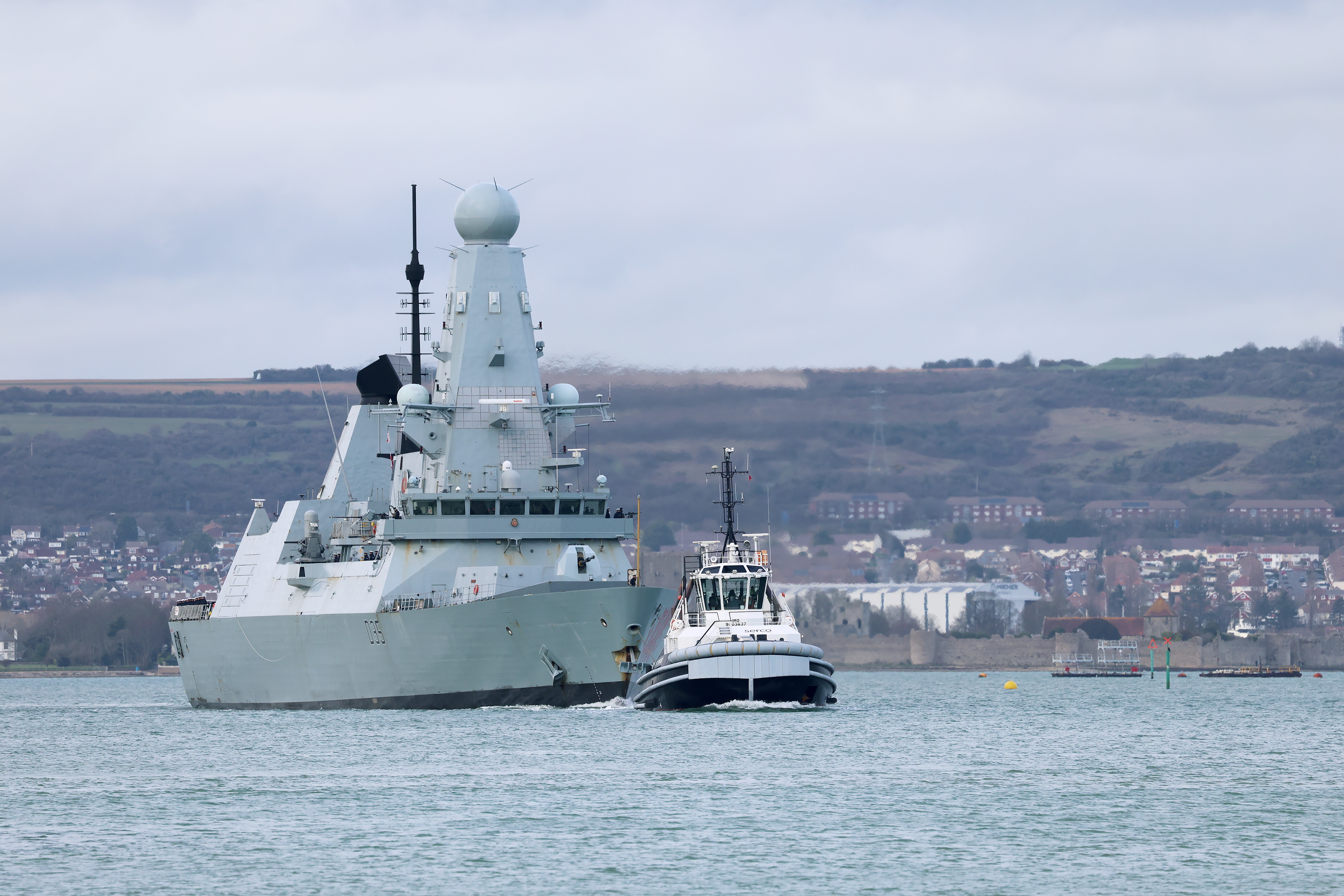
However, the Type 45 is the United Kingdom’s most balanced and capable air defense platform, at least against drones and cruise missiles.
The basic Type 45’s weapons fit includes Aster 30 missiles fired from the Sea Viper system, which represents the Royal Navy’s outer air defense layer. According to the Royal Navy, the Sea Viper is able to track “hundreds” of potential threats to an individual ship or task group at ranges up to 250 miles, using Aster 30 missiles to eliminate them when they close to “around 70 miles.” Other sources suggest the Mach-3 missile has a range of more than 75 miles.
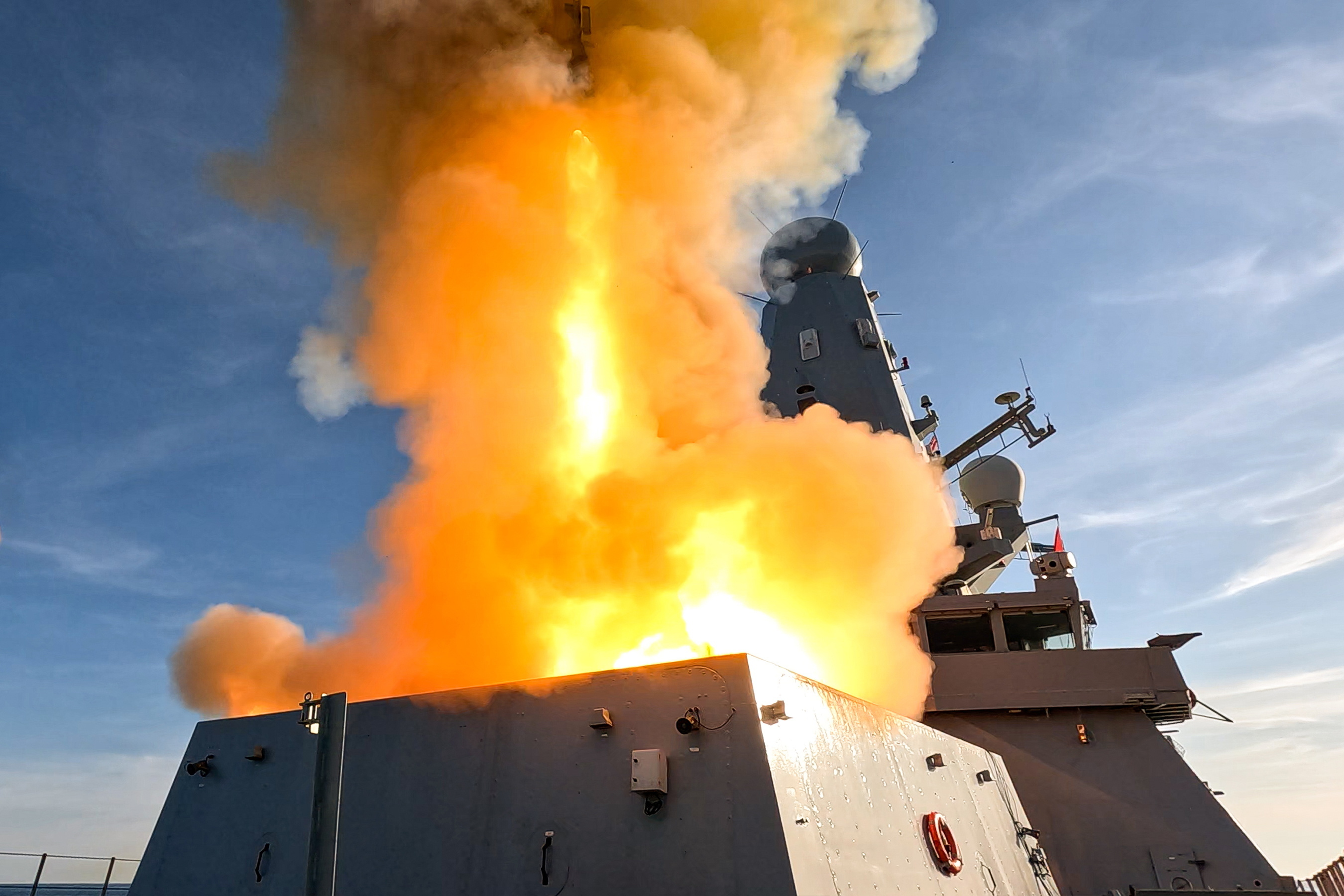
There is also the Aster 15 with a range of around 18 miles, optimizing it for close-in and local-area and point defense. For aerial threats even closer to the warship, the Type 45 can call upon a pair of Phalanx close-in weapon systems (CIWS) armed with 20mm ‘Gatling’ cannons, 30mm guns, and various machine guns.
When it comes to ballistic missile defense, the Type 45 is much more limited, however.
While HMS Diamond did shoot down one of the Houthis’ anti-ship ballistic missiles (ASBMs) in 2024, this is an easier threat to deal with than the medium-range ballistic missiles (MRBMs) that Iran is currently launching toward Israel.
Also in 2024, the U.K. Ministry of Defense announced that it would invest around $515 million to upgrade Sea Viper, making it “even more lethal against new and growing threats from hostile drones and missiles.”
Under the upgrade, the Aster 30 missile will be modernized to improve its capabilities against ASBMs, with an enhanced warhead plus new guidance and seeker software. The upgrade will also address the Sampson multi-function radar as well as the command-and-control system and combat management system.
A second phase will see the evaluation of a new missile, the Aster 30 Block 1NT, currently under development by France, Italy, and the United Kingdom. This missile features a new seeker, which would further improve the ballistic missile defense capabilities of the Type 45. In particular, Block 1NT will be better equipped to intercept MRBMs carrying maneuverable reentry vehicles (MaRVs), which you can read more about here.
However, these upgrades are yet to be fielded.
More generally, there have long been questions about the availability of the Type 45s, despite their undoubted capabilities. These six vessels are still very modern, but they have spent a notably long time in maintenance. Typically, only two are actually available to deploy at any given time. With one of the warships normally earmarked for the North Atlantic and Russia, and another needed to escort one of the U.K. aircraft carriers when that is at sea, there is very little capacity left to play with.
This also brings us to the question of the two British aircraft carriers of the Queen Elizabeth class. With the war entering its second week, HMS Prince of Wales appeared poised to deploy, with the crew at five days’ notice to sail. Earlier this week, however, the Prime Minister’s official spokesman gave the following statement: “HMS Prince of Wales has always been on very high readiness. The MoD is increasing the preparedness of the carrier — reducing the time it would take to set sail for any deployment — but there is no decision taken to deploy her.”
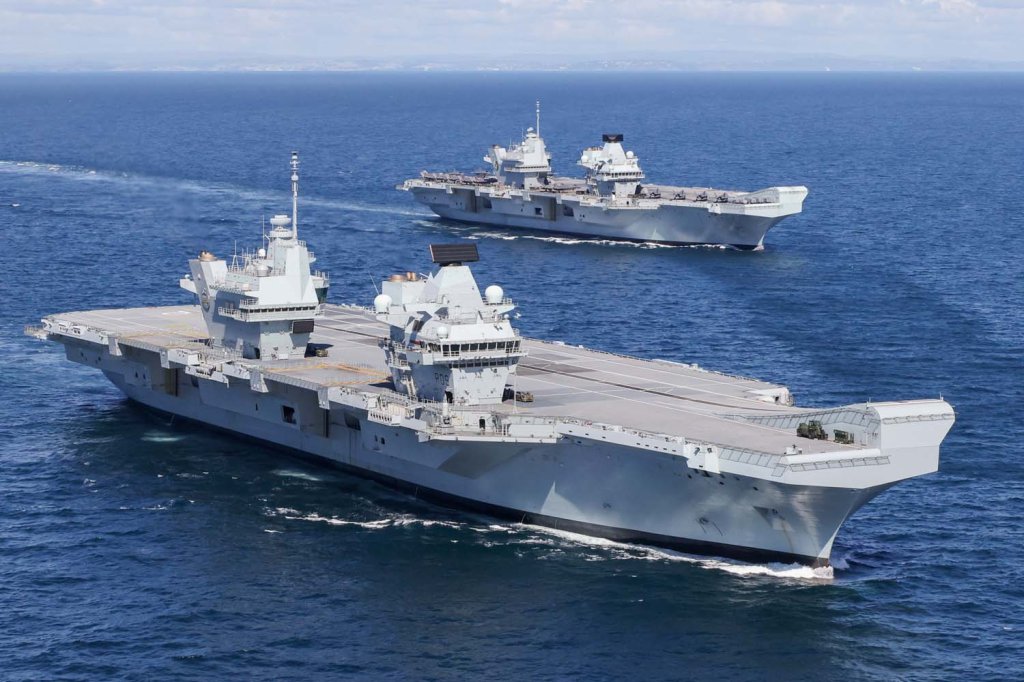
Critics of the hugely costly aircraft carrier program might ask why these warships, which are designed to respond to just this kind of crisis, are being held back.
U.S. President Donald Trump also used the lack of carrier deployment as a stick with which to beat the U.K. government. On his Truth Social platform, Trump said that the United States did not need Britain’s carriers in the conflict and suggested they would have been useful had they deployed before the war began.
Short-range air defense
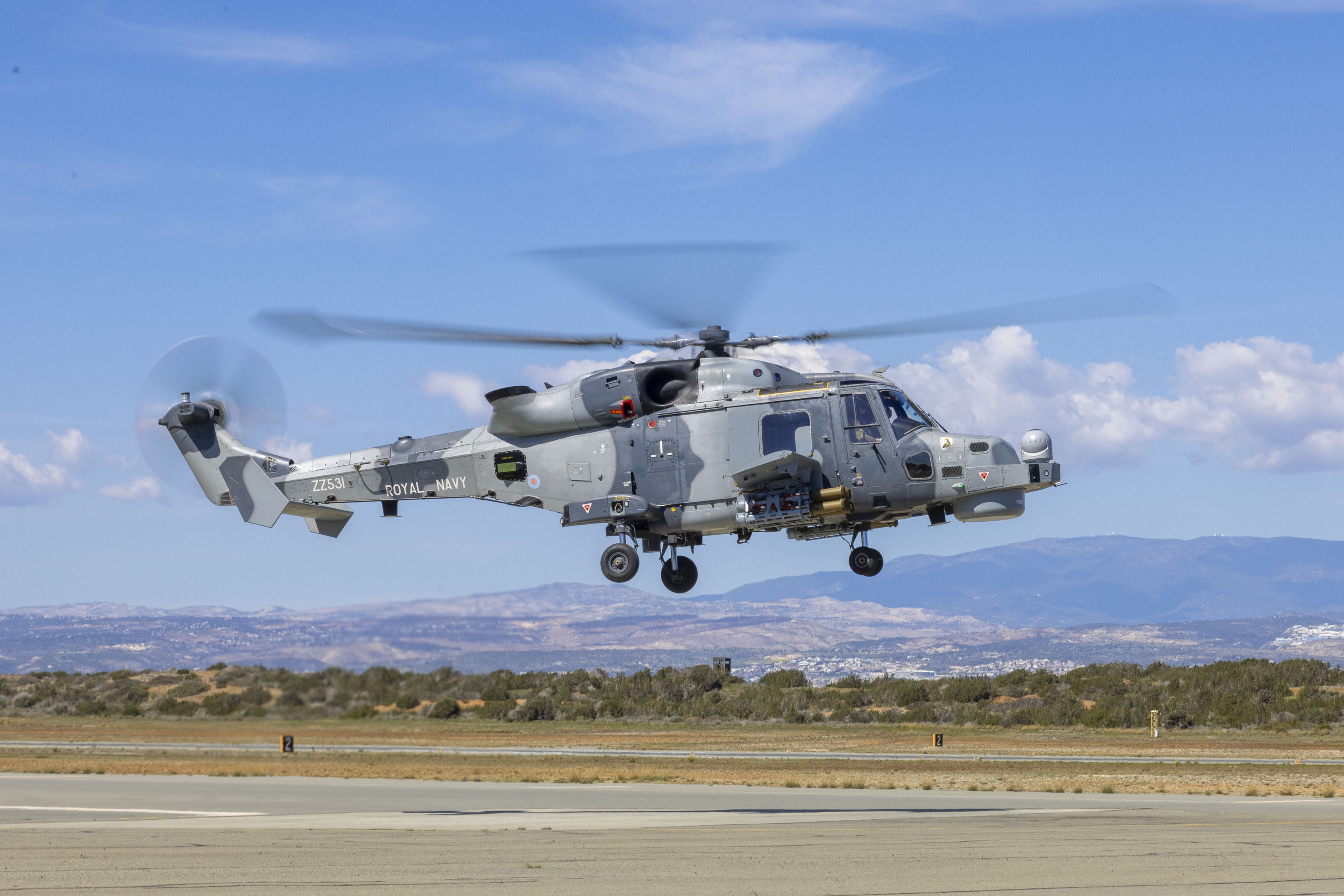
To help cover short-range air defense over Cyprus, the United Kingdom has deployed two Royal Navy Wildcat helicopters armed with Martlet missiles. On the plus side, each helicopter can carry up to 20 of these missiles, which are ideal for bringing down drones. On the other hand, the missiles have a range of only around five miles, and with just two ‘cabs’ available, the Wildcat deployment is really only capable of providing limited point defense.
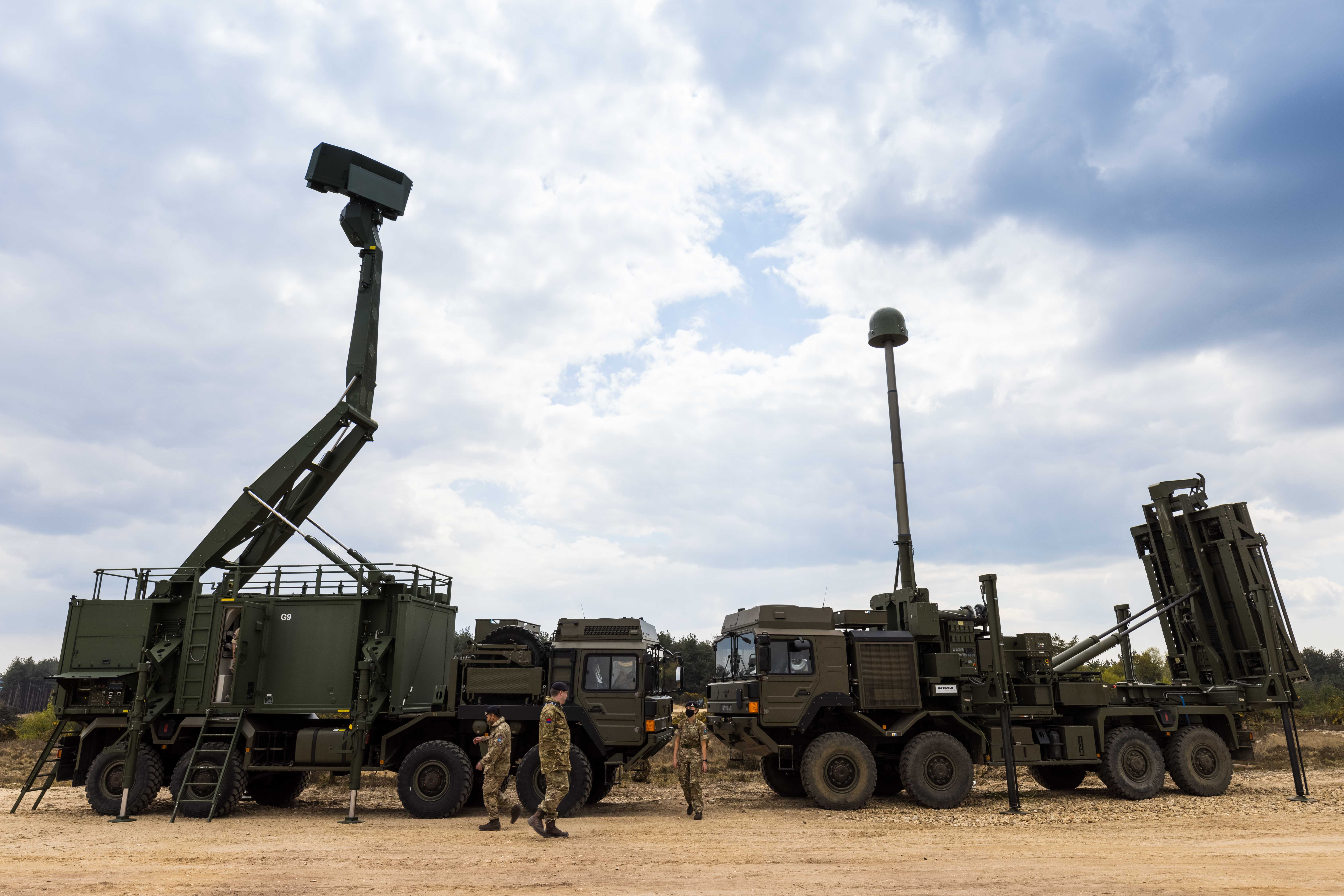
With that in mind, it’s somewhat surprising that the British Army hasn’t deployed any of its Sky Sabre short-range air defense systems to Cyprus, or anywhere else in the region. The Sky Sabre is intended to bring down aircraft, as well as drones and cruise missiles. However, it’s unclear how many batteries are currently deployable. One is stationed in the Falkland Islands, and another has been deployed on NATO’s eastern flank, in Poland, and the 12 batteries on order are still being delivered.
The Sky Sabre fires the Common Anti-Air Modular Missile, or CAMM, also known as the Land Ceptor. The same CAMM missile is also used in naval applications — including aboard Royal Navy warships — as the Sea Ceptor. Fitted with an active-radar seeker, the CAMM is derived from the aforementioned ASRAAM. The CAAM has a reported range of more than 15 miles and is said to be able to tackle a wide range of threats, including low-observable targets, high-speed missiles, drones, and precision-guided air-to-ground weapons.
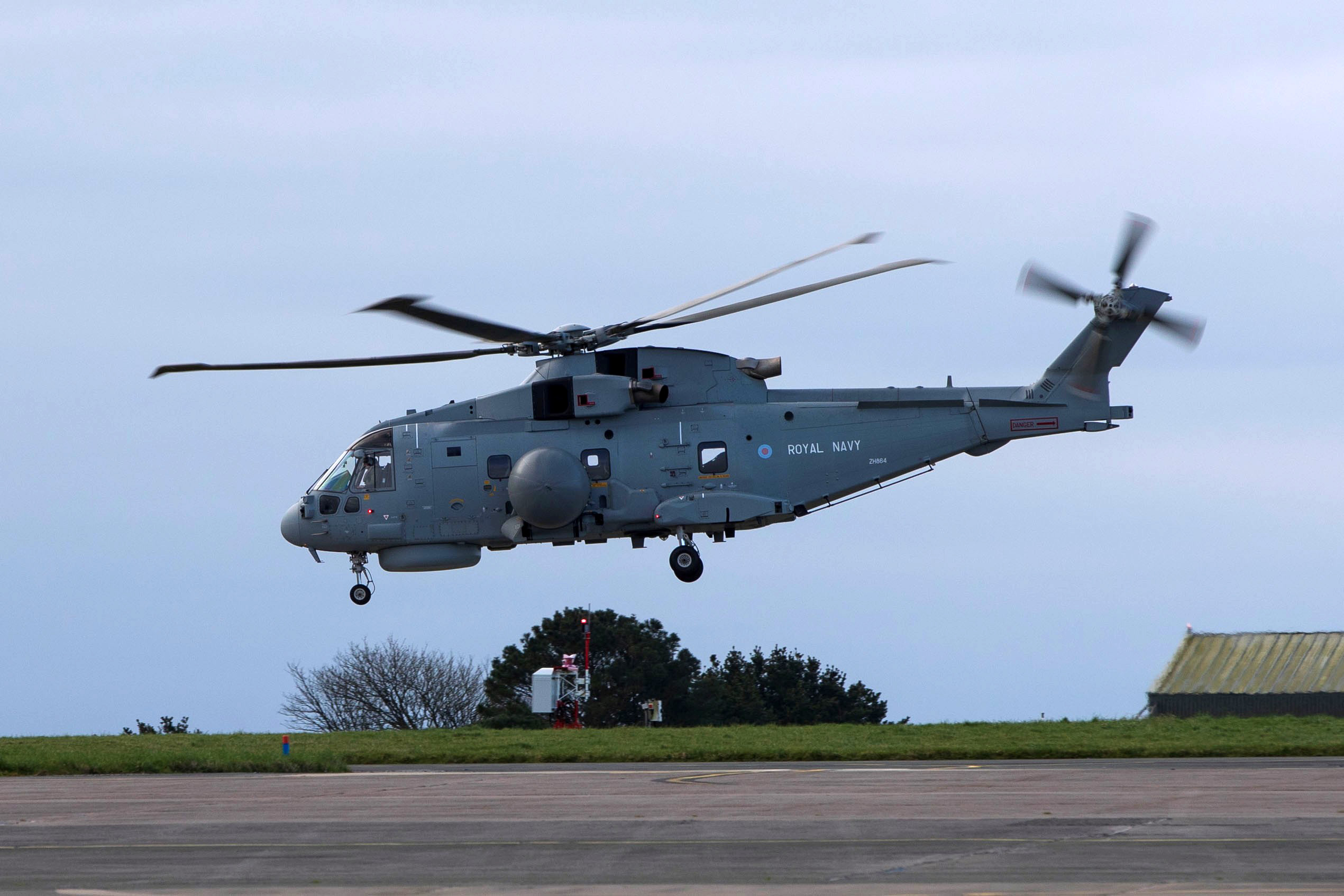
Meanwhile, the ability to surveil the airspace around Cyprus received an upgrade yesterday with the arrival of a Royal Navy Merlin HM2 Crowsnest helicopter, with airborne surveillance and control (ASaC) capabilities.
The Merlin brings a look-down sensor capability, making it something of a ‘pocket’ version of the E-7 Wedgetail. From altitude, the radar has an excellent field of view to spot low and slow-flying targets, even if they are relatively small. This makes it especially useful for tracking drones and cruise missiles.
Other British counter-drone units have also been active in the wider region.
Few details have been provided, but these are likely to consist of non-kinetic systems (like the ORCUS) and man-portable air defense systems (like the Starstreak missile) used by troops who have a limited presence in Jordan and Iraq, where they have been since before the Iran war began.
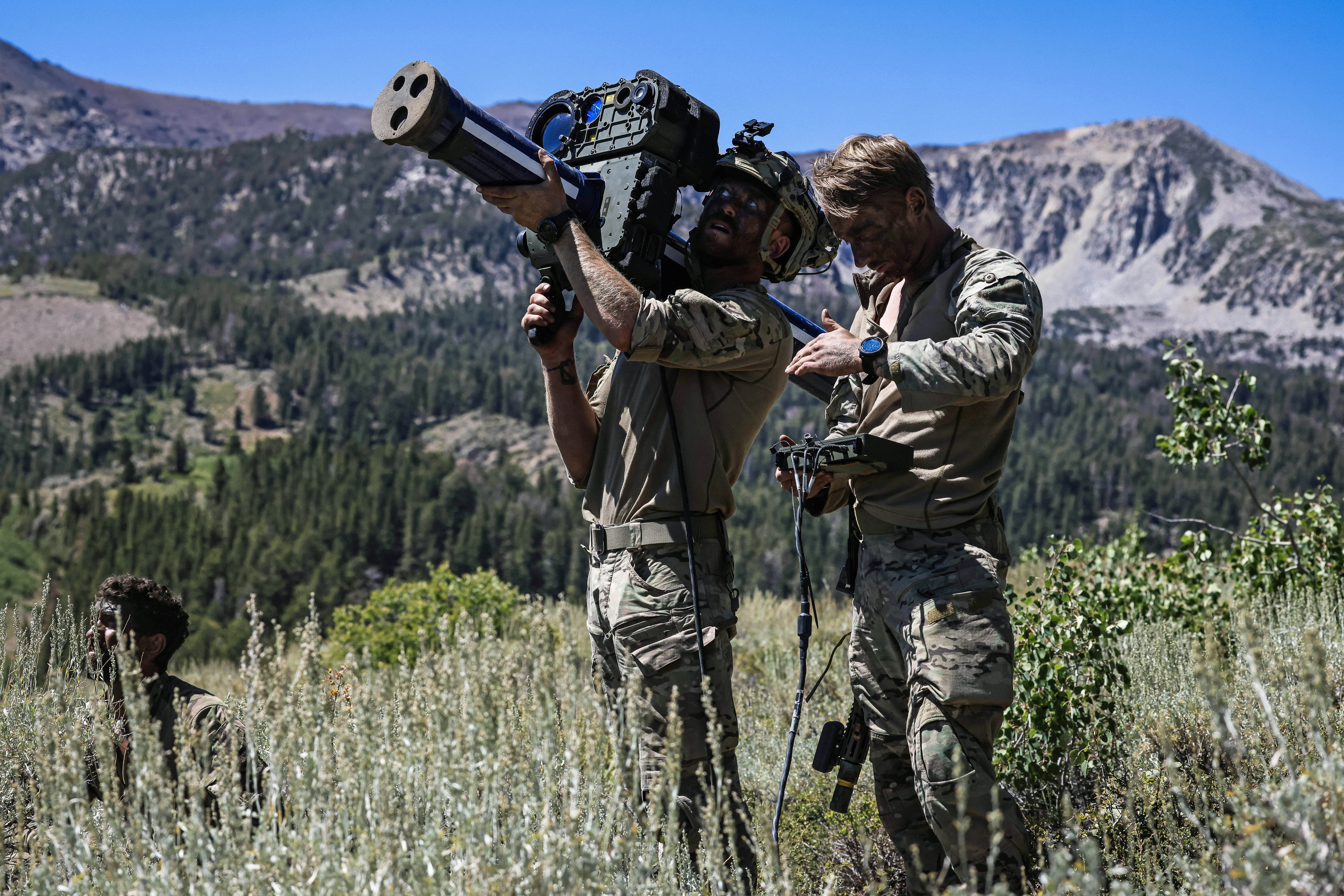
Overall, though, the conflict has highlighted the somewhat limited nature of U.K. ground-based air defense capabilities.
More generally, the deployments so far, in a purely defensive capacity, have raised concerns about the breadth, depth, and readiness of U.K. military power and its relevance in international affairs.
The question of “going kinetic”
The United Kingdom initially denied permission for the U.S. military to use its airbases — including Diego Garcia in the Indian Ocean — for strikes against Iran, as we discussed at the time. This was soon revised, with Prime Minister Keir Starmer saying his government had agreed to a U.S. request to use British military bases for “defensive” strikes.
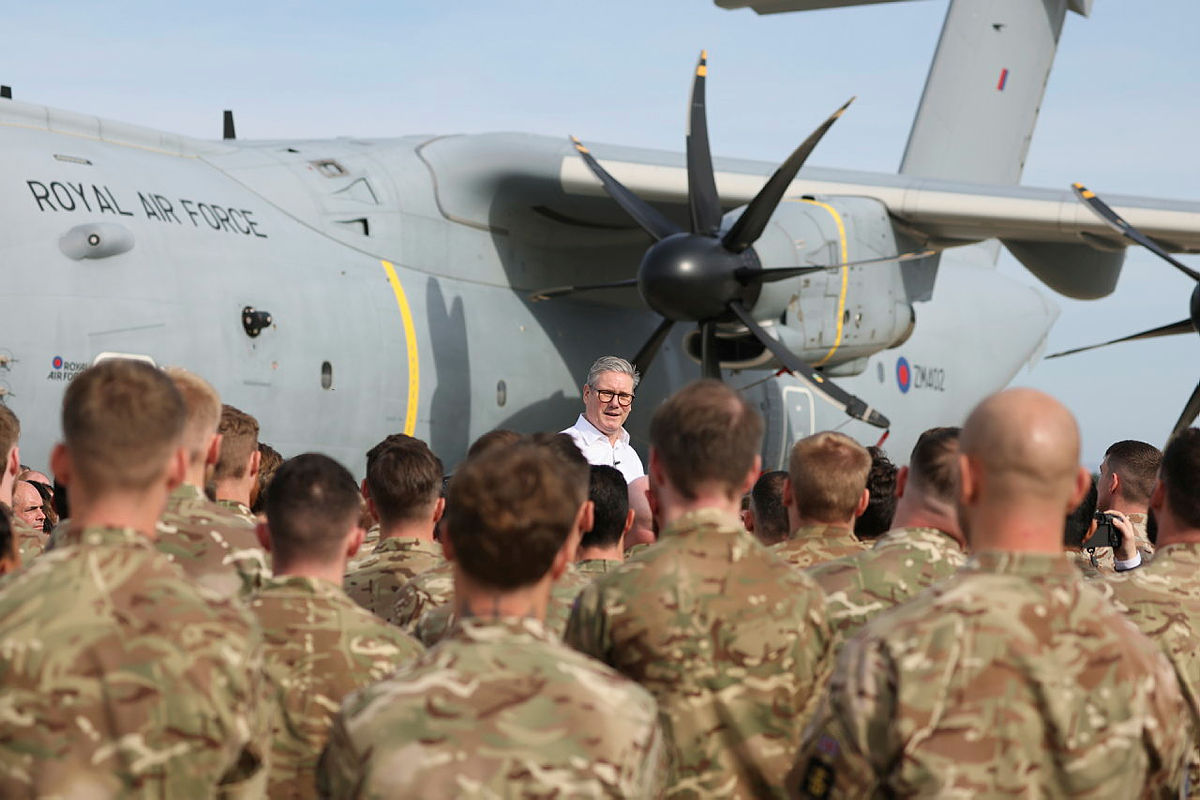
Were the British stance to change, it is questionable whether RAF jets, as currently deployed, would be able to make a significant contribution, based on their small numbers, their other taskings, and the long distance to targets in Iran.
According to an assessment by the U.K.-based Royal United Services Institute (RUSI) think-tank, realistically, the fighter force at Akrotiri would only have been able to fly 28 strike sorties against Iran, had they been committed to Operation Epic Fury. This is very much a best-case scenario, and would also have required significant tanker support.
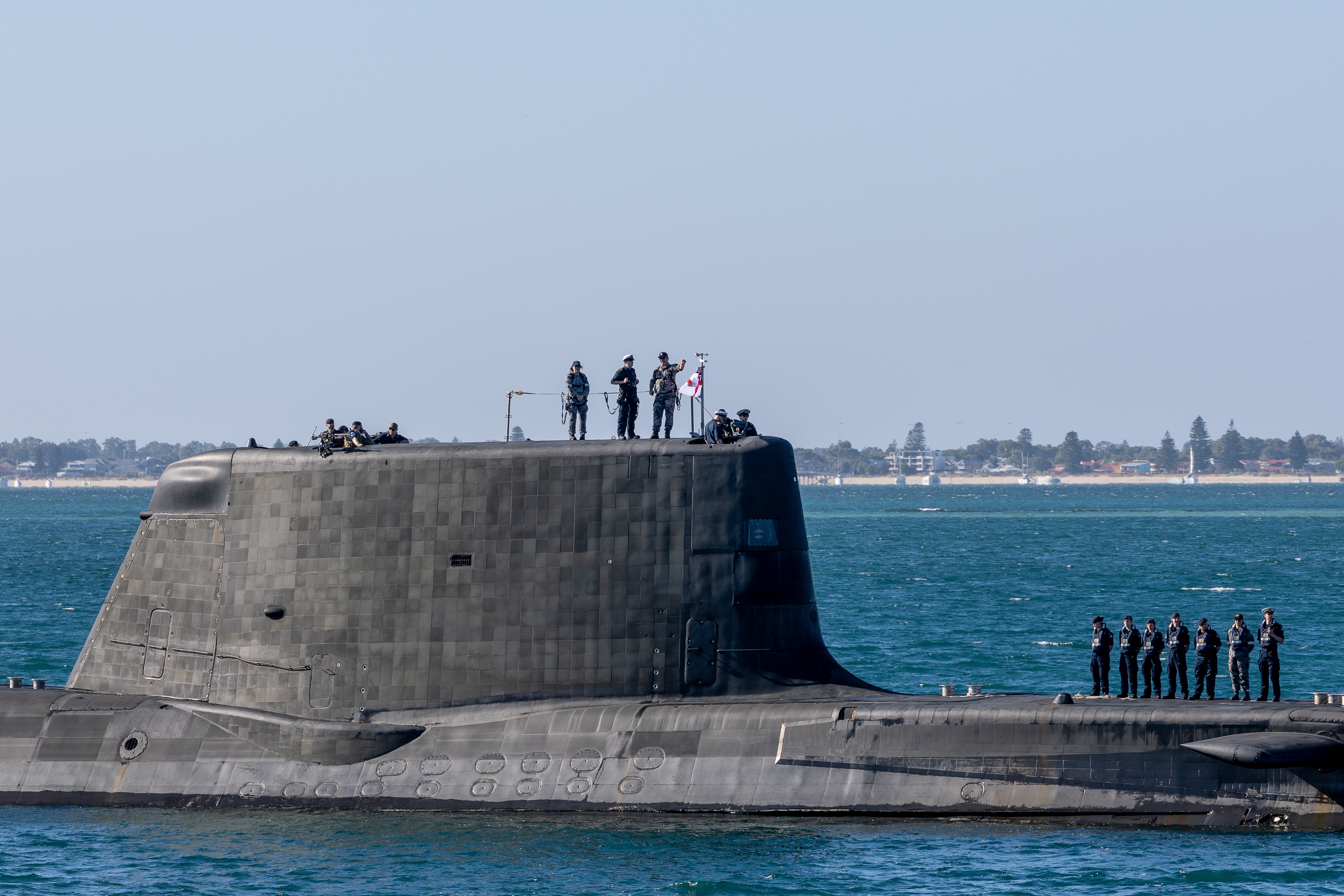
A British offensive campaign against Iran would otherwise rely primarily upon the Royal Navy, which operates nuclear-powered attack submarines that can launch Tomahawk Land Attack Missiles (TLAM). However, this is a capability that has suffered from poor availability in recent years. Currently, only one of five in-service Astute class submarines, HMS Anson, is at sea, and it was in the Indo-Pacific region as of January.
So far, however, the U.K. government has held back from committing to any kind of direct offensive action against Iran, although there have been voices raised across the political spectrum urging that the United Kingdom should back the United States more actively, including taking part in strikes. Kemi Badenoch, leader of the opposition Conservative Party, berated Starmer this week for not doing more to “stop the people who are attacking us” and said the U.K. Armed Forces should “do more than catch the arrows” and should “catch the archer” — a reference to striking missile and drone facilities directly.
For the time being, the U.K. Armed Forces, ravaged by decades of post-Cold War cuts, are bringing some useful but fairly limited in capacity air defense capabilities to the region. Should the U.K. government’s policy regarding Iran become aligned with that of the United States, then much more serious questions will be answered about the relevance and resilience of British military power in an operation of this kind.
Contact the author: thomas@thewarzone.com
Loading comments…
Comments couldn’t be loaded. Please refresh the page.