
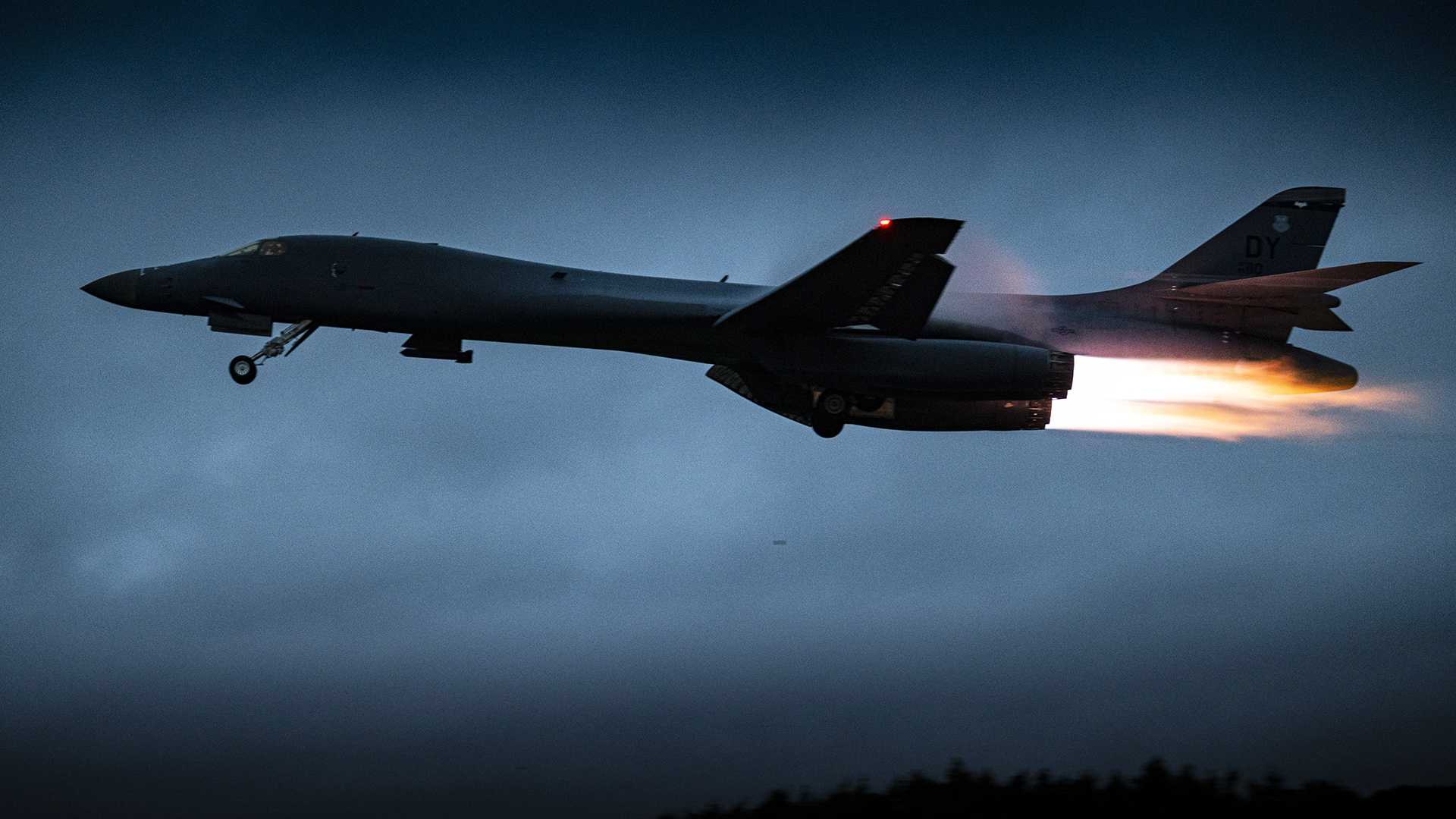
A video out of RAF Fairford in England shows American B-1Bs getting prepped for a strike mission against Iran. In addition to the staple AGM-158 JASSM cruise missiles being readied for loading onto the ‘Bones,’ we see GBU-31 Joint Direct Attack Munitions (JDAMs) equipped with BLU-109 2,000-lb bunker buster warheads. We can also see the revolving weapons rack being extracted from the B-1’s weapons bay. The move from cruise missiles to JDAMs, at least for some targets, is a sign that air supremacy over Iran is becoming more assured, at least in some areas. You can read all about how the U.S. and Israel had not achieved air supremacy last week in our report linked here.
The videos were posted on X by journalist Richard Gaisford and can be seen below:
The bomber force at RAF Fairford has expanded even larger over the last couple of days. There were nine American bombers at Fairford — three B-52s and six B-1s — as of the start of this week. Now there are 15 total — three B-52s and 12 B-1Bs.
Bomber aircraft can achieve far greater and more varied effects if they are allowed to directly strike targets instead of relying on cruise missiles fired at standoff ranges. This is especially true for delivering withering assaults on large target areas via a belly full of JDAMs. It also allows the aircraft to do this against targets that require bunker-buster capabilities. So far, we only know of the B-2 that has executed large-scale bunker buster attacks in Iran, using its stealth capabilities, as well as support from the total force, to ensure it can safely return from the mission. Fighters have been able to deliver much smaller numbers of these weapons onto targets deeper in Iran. Opening up these same target sets to forward-deployed B-1s and B-52s would help change the pace and impact of the air campaign.
Potential targets include large industrial complexes used for long-range weapons production and development, command and control bunkers, nuclear-program related sites, and, maybe most likely, keeping Iran’s underground ‘missile cities’ entombed by bombing their entrances so that the weapons that are housed inside can not be put to use.

Still, B-1s and B-52s will likely operate over western Iran, where degradation of enemy air defenses has been the focus for nearly two weeks. Venturing into the eastern part of the country, which has seen far less attention, probably remains too risky. This is underscored by the map below, which the Pentagon released yesterday, showing the distribution of strikes across Iran during the first 10 days of the conflict (February 28 to March 9).

We still don’t know if the U.S. military will activate Diego Garcia as another forward operating location for its bombers. The U.K. government approved the use of both Fairford and Diego Garcia last week after denying that access leading up to the war. We have seen some heavy transport movements in satellite imagery to the remote island outpost in the Indian Ocean, and KC-135 tankers and force protection F-16s are still there, so it’s possible this could occur or has already happened. Cloud cover has kept the island obscured in satellite imagery for the last few days. Of course, such a deployment all depends on how long this campaign will actually last, with conflicting signals from the Trump administration as to its planned duration and exit strategy.
Regardless, it looks like the B-1s are going to be using their extremely large payload capacity to directly attack hardened Iranian targets in the very near future.
Contact the author: Tyler@twz.com
Loading comments…
Comments couldn’t be loaded. Please refresh the page.