
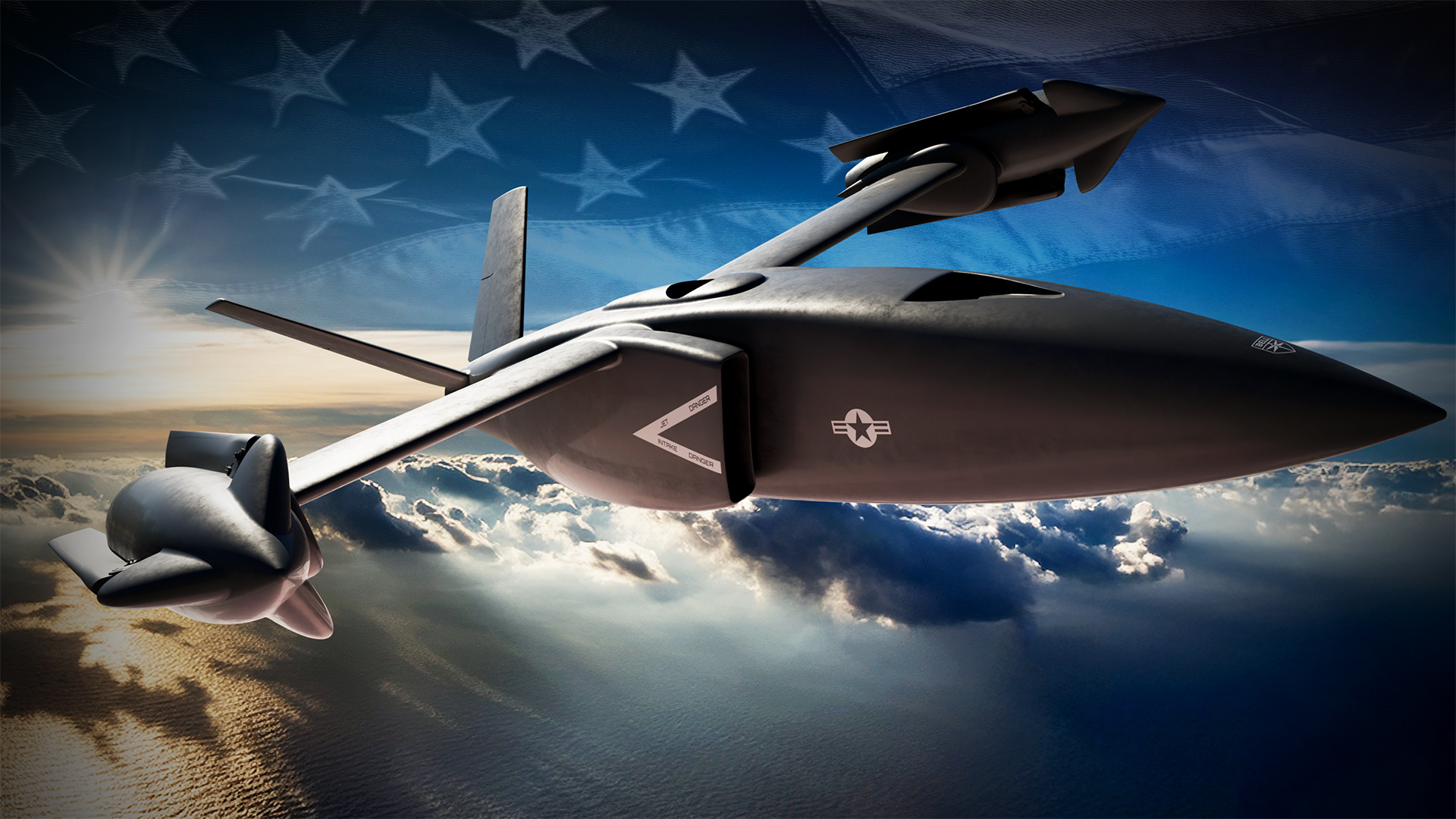
The latest addition to the legendary X-plane family is Bell Textron’s demonstrator for the Speed and Runway Independent Technologies (SPRINT) program. The chosen X-76 designation (for the year 1776) is intended to reflect the 250th anniversary of the United States.
“Bell is honored to receive the X-76 designation and continue the spirit of American innovation, honoring the founding of the United States in 1776,” said Jason Hurst, Bell SVP, Engineering, in a company media release. “This is an important milestone as the Bell and DARPA team advances to a historic first in aviation history and fulfills our mission of developing next-generation vertical-lift aircraft.”
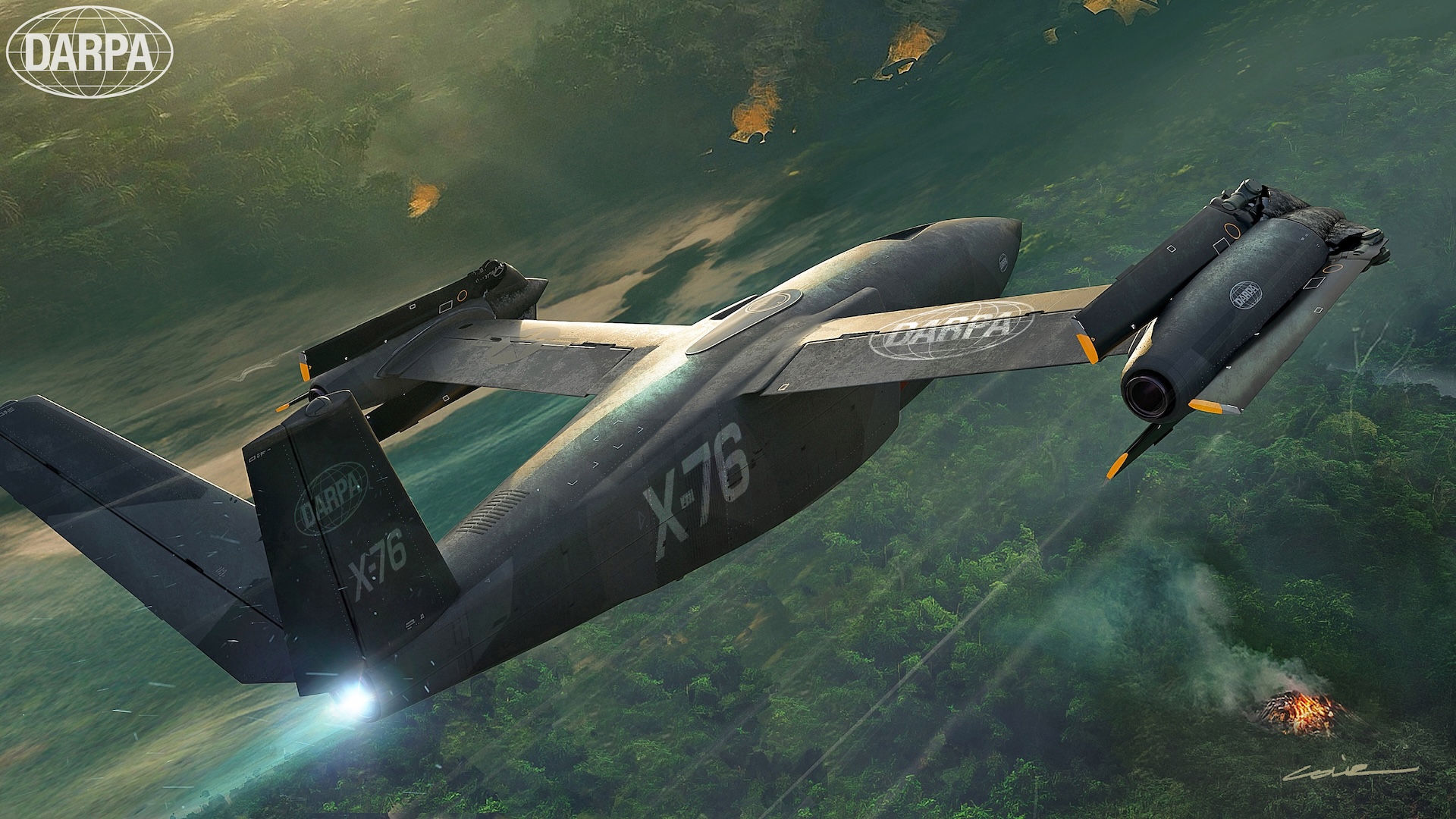
SPRINT, which we have discussed in the past, is a Defense Advanced Research Projects Agency (DARPA) effort that is being run in conjunction with the U.S. Special Operations Command. Last year, DARPA selected Bell in favor of Boeing subsidiary Aurora Flight Sciences to move to the next phase of SPRINT — an experimental flying demonstrator. It should also be noted that SPRINT is paired with the High-Speed Vertical Takeoff and Landing (HSVTOL) program, something that Bell has discussed with TWZ in depth in the past.
The core goal of SPRINT is to demonstrate a concept for a vertical takeoff and landing (VTOL) aircraft that can cruise at speeds between 400 and 450 knots. In the words of DARPA, the aim is to “[eliminate] one of the battlefield’s most difficult choices — between the high speed of an aircraft that needs a runway and the go-anywhere flexibility of a slower helicopter.”
Bell’s X-76 design centers on wingtip proprotors with blades that fold away after the transition from hover to level flight, as you can read more about here. The company calls this the Stop/Fold rotor system.
As we have described in the past:
At its most basic, the Stop/Fold concept is intended to offer vertical takeoff and landing capability, as well as the ability to hover, but with a tilting rotor system that can be stowed in a lower-drag configuration to allow for higher-speed level flight. A separate traditional jet propulsion system provides forward thrust in the latter mode.

DARPA announced today that the X-76 had successfully completed its critical design review (CDR) and has now entered production. CDR followed Bell’s selection in May 2025, after which SPRINT entered Phase 2 of the program.
Once built, the X-76 demonstrator is planned to mature technologies necessary for the following capabilities:
- Achieve cruise at speeds exceeding 400 knots
- Hover in austere environments
- Operate in and out of unprepared surfaces
“For too long, the runway has been both an enabler and a tether, granting speed but creating a critical vulnerability,” said Cmdr. Ian Higgins, U.S. Navy, program manager for DARPA SPRINT. “With SPRINT, we’re not just building an X-plane; we’re building options. We’re working to deliver the option of surprise, the option of rapid reinforcement, and the option of life-saving speed, anywhere on the globe, without needing any runway.”
Eventually, Phase 2 will be followed by a flight-test program, known as Phase 3, which is planned for early 2028.
Bell has shown renderings of multiple crewed and uncrewed variations of aircraft based on its Stop/Fold concept in the past.
In its announcement today, DARPA also released a rendering showing the X-76, apparently uncrewed. It was presented together with a rendering showing a potential production aircraft (seen below) based on the X-76/SPRINT, this time optionally crewed.
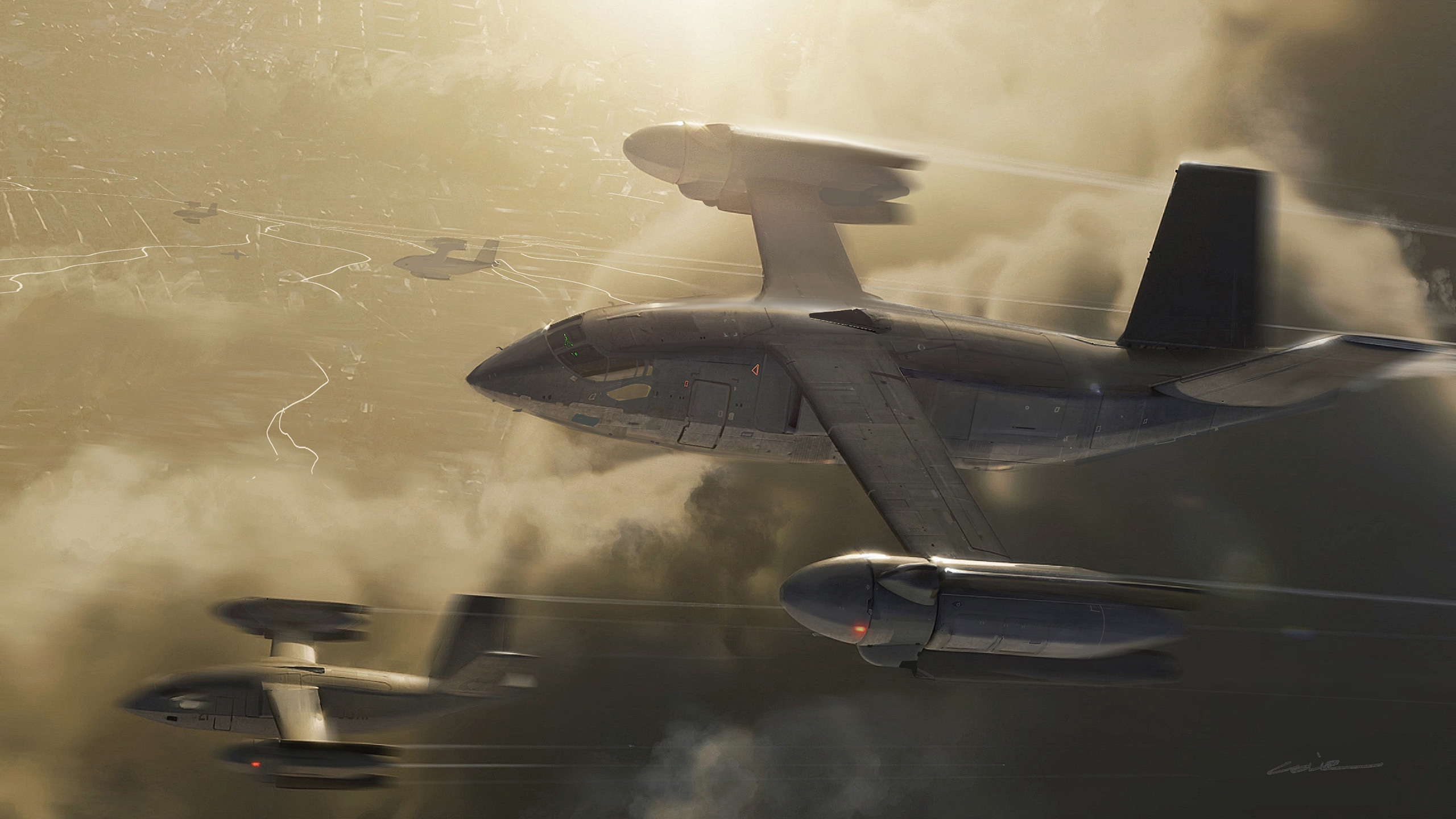
These renderings are broadly similar to those (crewed and uncrewed) that Bell released in 2024 and which we discussed at the time.

While it’s not immediately clear how the crewed and uncrewed aircraft in the latest renderings differ in size, it’s worth noting that Bell previously showed two different sizes of crewed Stop/Fold rotor concepts, plus one uncrewed.

Beyond the aspiration to demonstrate cruising speeds in excess of 400 knots, DARPA’s press release does not include any other details about expected flight performance or other capabilities. Previously, Bell has said the technology is scalable, so it could apply to designs with gross weights ranging from 4,000 to 100,000 pounds. In contrast, Air Force Special Operations Command’s (AFSOC) CV-22B version of the Osprey tiltrotor has a maximum gross weight of 60,500 pounds and a top speed of 280 knots.
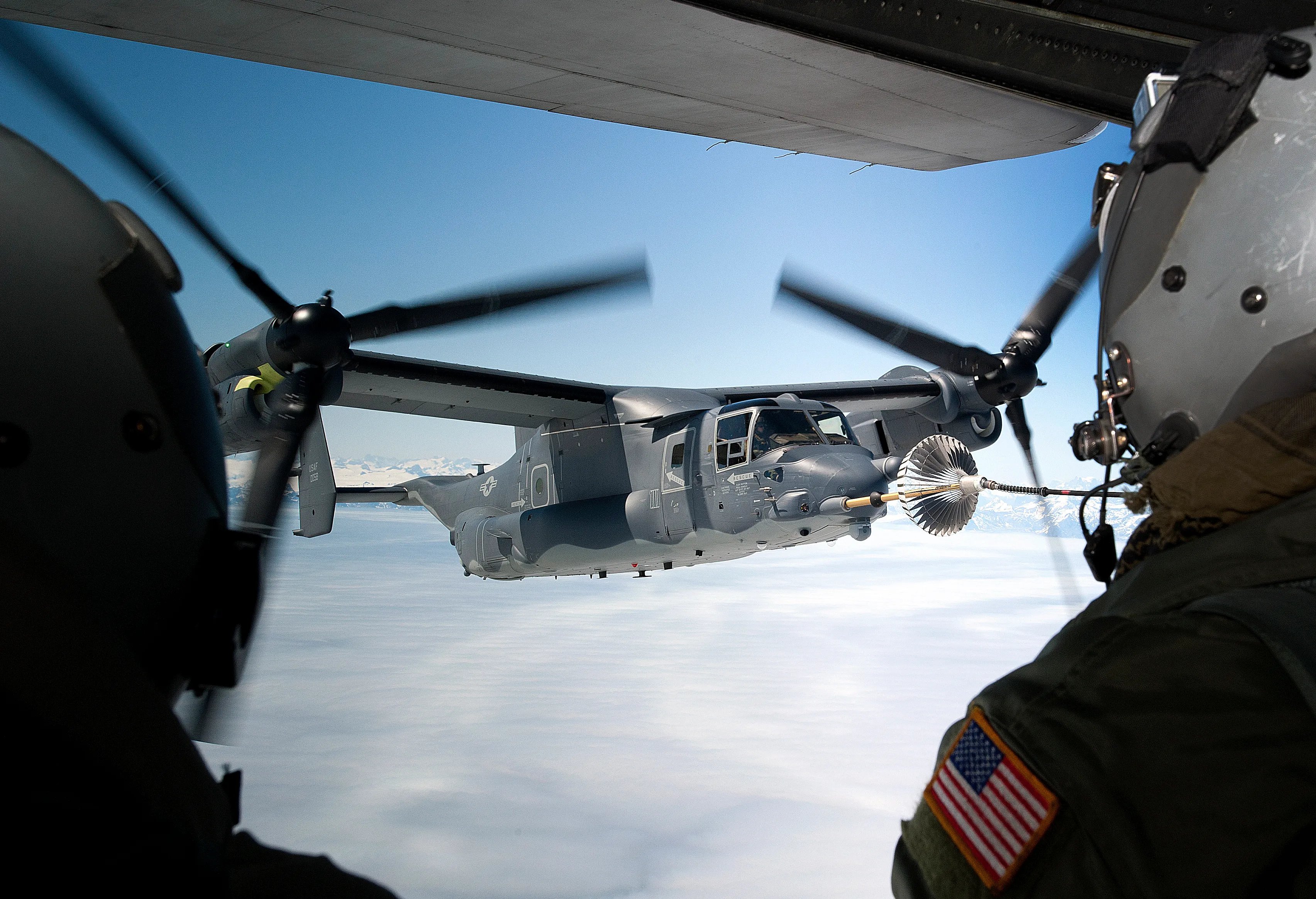
SPRINT has so far focused primarily on designs capable of transporting cargo and personnel. However, Bell has shown renderings of multiple crewed and uncrewed variations, including types that could be configured for offensive missions. You can read more about what the company has previously disclosed about the fold-away rotor concept in this TWZ feature.
Other missions could include combat search and rescue (CSAR), intelligence, surveillance, and reconnaissance (ISR), air-to-air combat, and air-to-surface strike.
Of these, CSAR is currently of particular relevance, with growing questions about how this highly demanding mission will be conducted going forward, especially when it comes to high-end conflicts against adversaries with more capable air defense networks. An X-76-derived platform could be a suitable basis for a future CSAR aircraft.
More generally, the U.S. military is looking at ways to advance its runway-independent capabilities. Runway-independent aircraft, as well as platforms with more limited runway requirements, both crewed and/or uncrewed, are increasingly seen as critical to being able to take on China in a future high-end conflict in the Indo-Pacific region. In Europe and the Middle East, too, where traditional runways can also be targeted by a growing range of threats, the kinds of technologies that the X-76 will explore could also be highly relevant.
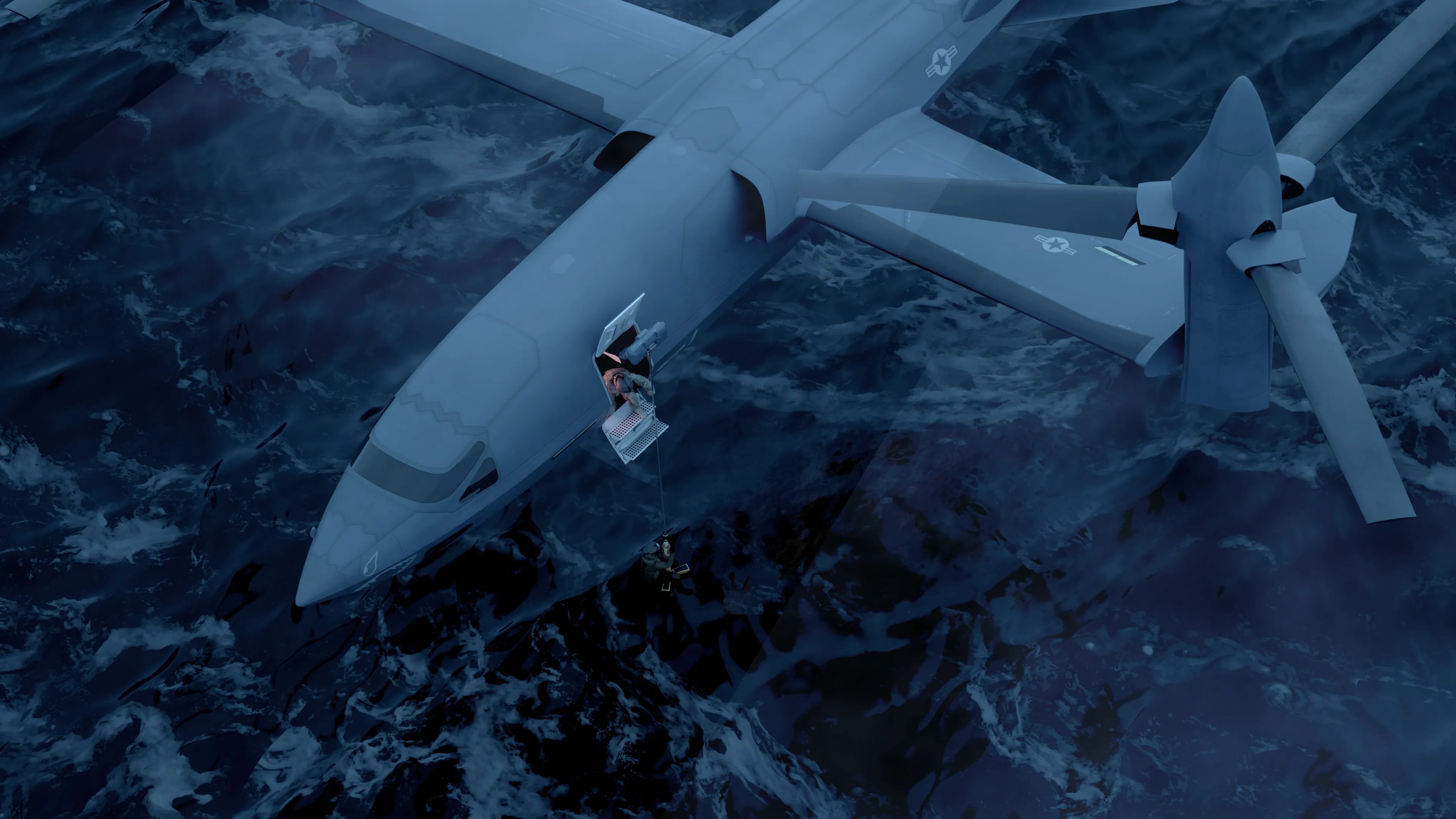
Regardless of theater or mission, VTOL is a central part of the X-76 and SPRINT. The ability to operate from a greater number of locations, including austere ones close to the battle, would help reduce vulnerability and increase overall flexibility, as well.
As well as freedom from conventional runways and infrastructure, the high speed of the X-76 would bring considerable benefits in terms of being able to rapidly deploy over longer distances, improved response time, and enhanced survivability, which is always a major factor for conventional rotorcraft.
While Bell is confident in the potential of its Stop/Fold rotor system, and DARPA has identified it as a concept worth exploring with a demonstrator aircraft, it is not the only option on the table when it comes to meeting growing demands for new VTOL-capable special operations airlift and other runway-independent capabilities.
Beyond the technical hurdles that lie ahead of the X-76 in particular, and new-generation VTOL concepts in general, it should also be recalled that, despite decades of interest and multiple research efforts, the U.S. military has, as far as we know, so far only fielded one tiltrotor platform. While multiple efforts to develop a truly high-speed VTOL platform in this class have so far failed to yield an operational aircraft, the X-76 should, at the very least, demonstrate whether the Stop/Fold rotor system could be one answer to this requirement.
Contact the author: thomas@thewarzone.com
Loading comments…
Comments couldn’t be loaded. Please refresh the page.