
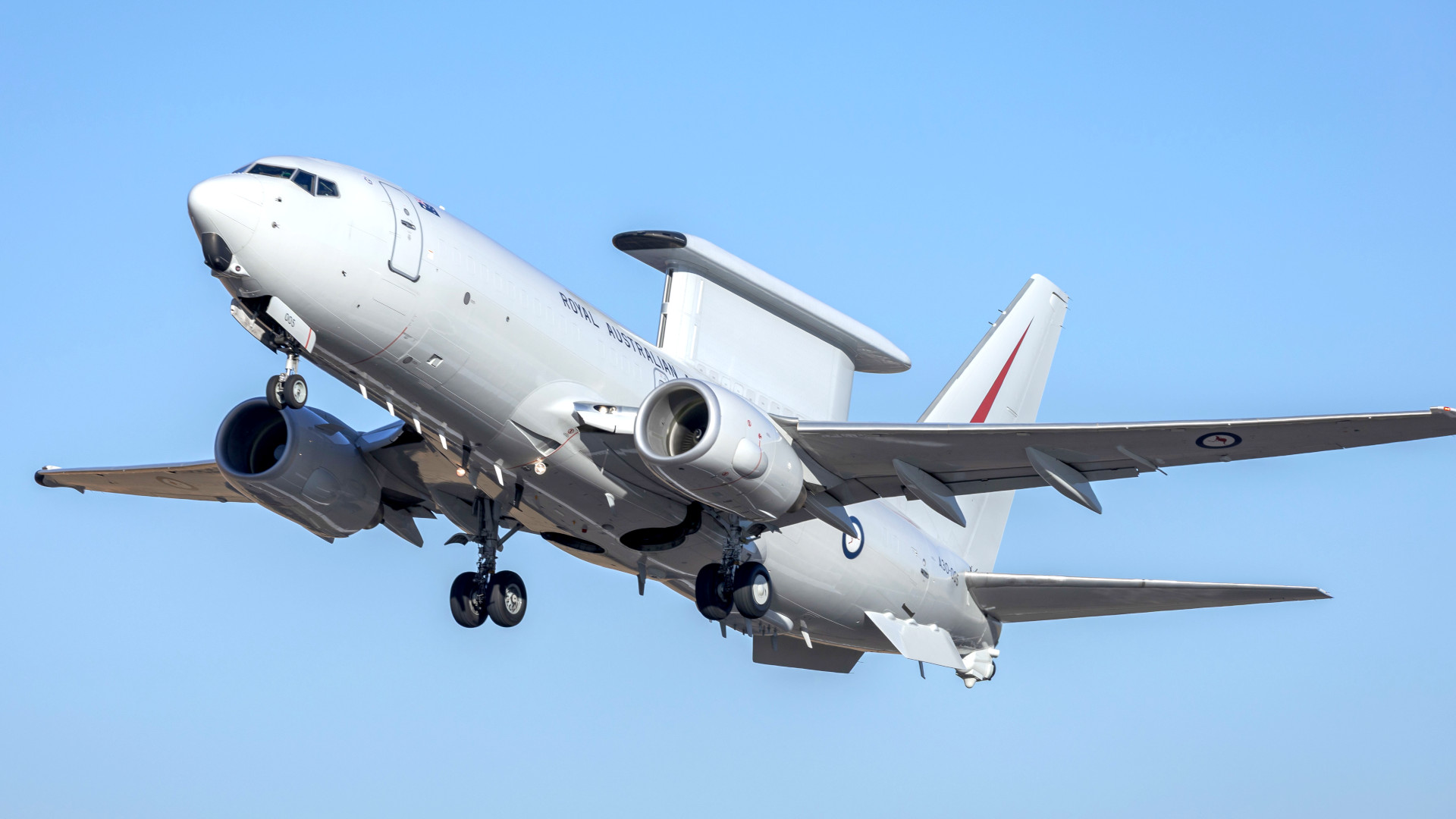
An Australian E-7A Wedgetail airborne early warning and control plane is headed for the Persian Gulf. This comes as Gulf Arab states continue to be subjected to Iran’s attacks in retaliation for ongoing U.S. and Israeli strikes. The E-7A is arguably the best airborne look-down sensor platform in the world at present, and will provide a particularly important boost in capability for spotting low-flying Iranian kamikaze drones and cruise missiles.
Australian Prime Minister Anthony Albanese announced the impending deployment of the E-7A to the Middle East at a press conference yesterday. The Royal Australian Air Force (RAAF) currently operates a fleet of six Wedgetails.
“Twelve countries across the region, from Cyprus through to the Gulf are continuing to be targeted. The United Arab Emirates alone has been forced to shoot down over 1,500 rockets and drones,” Albanese said. “This growing wave of dangerous and destabilising attacks from Iran puts civilian lives at risk, of course including Australian lives, of which there are more than 20,000 people based in the UAE.”
“In responding to requests, following a conversation that I had with the President [of the UAE,] Mohammed bin Zayed [Al Nahyan; also Crown Prince of Abu Dhabi], and other requests, Australia will deploy an E-7A Wedgetail, to the Gulf to help protect and defend Australians and other civilians,” Albanese continued. “The Wedgetail will provide long-range reconnaissance capability, which will help to protect and secure the airspace above the Gulf. The Wedgetail and supporting Australian Defence Force personnel will be deployed for an initial four weeks in support of the collective self-defense of Gulf nations.”
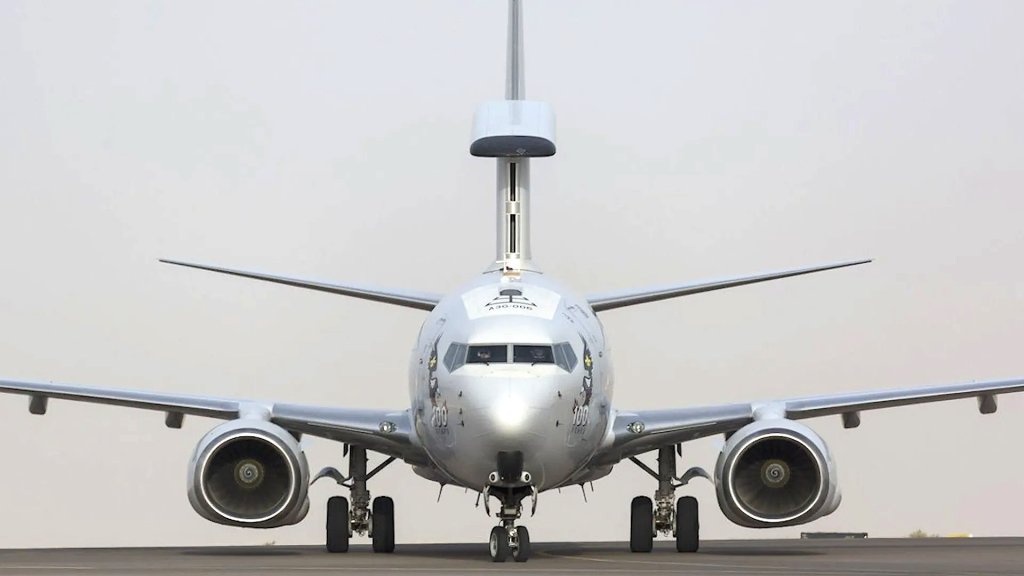
The E-7A is based on the Boeing 737-700 Next Generation airliner airframe. Its most prominent feature is the Northrop Grumman Multi-role Electronically Scanned Array (MESA) sensor installed on top of the fuselage, which offers 360-degree coverage and can scan for aerial and maritime threats. It also has an extensive suite of communications and data-sharing capabilities, backed by modern processing power, allowing for the rapid exchange of information with other friendly assets in the air and in other domains. You can read more about the aircraft here.

“As the Prime Minister has said at the request of the UAE, we will be deploying an E-7 Wedgetail to the Gulf. This is one of the leading capabilities in the world in terms of airborne long-range reconnaissance and command. And we are one of the leading nations in the use of the E-7,” Richard Marles, Deputy Prime Minister of Australia and the country’s Minister for Defense, also said at the press conference yesterday. “There will be in the order of 85 personnel who will go with this airframe and that’s the normal crew. The airframe will be leaving Australia today and the expectation is that it will be in the region in the middle of the week and operational by the end of the week.”
Albanese and Marles also said the Australian government planned to send a tranche of AIM-120 Advanced Medium Range Air-to-Air Missiles (AMRAAM) to the UAE. In addition to ground-based air defense, Emirati fighters have been working to intercept incoming Iranian threats.
As noted, the biggest boost in capability the RAAF’s E-7A will bring to the Gulf is its look-down sensor capability. From the aircraft’s high perch, the MESA sensor has an excellent field of view to spot low and slow-flying targets, even if they are relatively small. Wedgetail would also be able to see threats as far out into the Persian Gulf, or even possibly beyond.
Having another eye in the sky to provide additional alerts about incoming threats and more overall situational awareness will be a boon for defenders in the air and on the ground, in general. The E-7A can also be refueled in flight, meaning it can stay on station longer.
The UAE, which is the clear focus of the Australian deployment, does have a fleet of 5 Saab GlobalEye airborne early warning and control aircraft, but the extent to which they are operating now is unknown. While a modern and capable design, GlobalEye does not provide the same level of coverage and capability as the E-7A, and is also based on the smaller Bombardier Global 6000 business jet, which cannot refuel in flight.

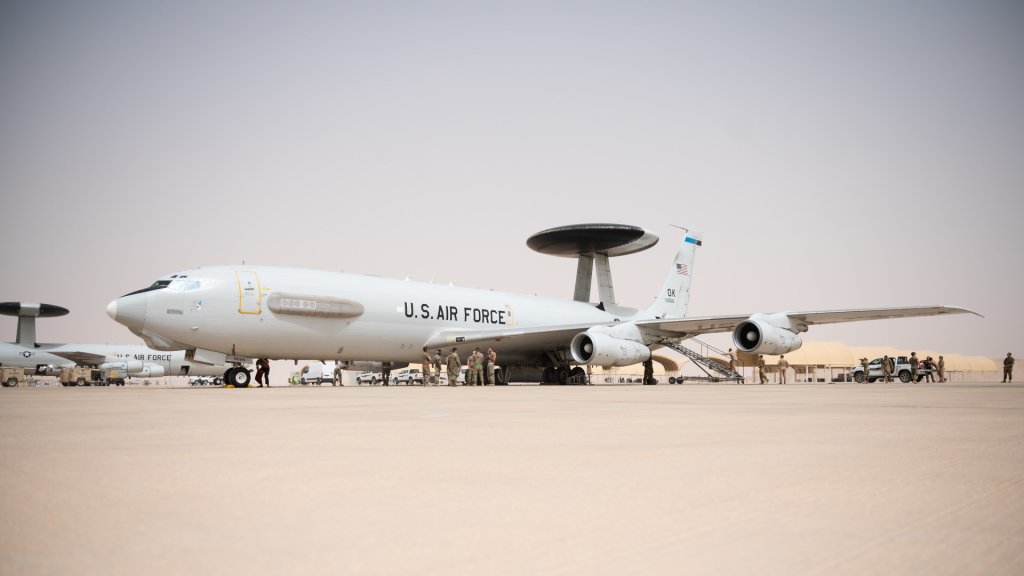
There is more airborne warning and control coverage elsewhere in the Gulf, including six U.S. Air Force E-3 Sentry Airborne Warning and Control System (AWACS) aircraft forward-deployed to Saudi Arabia just ahead of the current conflict with Iran. Saudi Arabia has its own E-3s and GlobalEye jets. How effective the aging Cold War-era E-3, in particular, is at this point at spotting and tracking low-flying kamikaze drones is unclear. In general, the E-7’s active electronically-scanned array MESA sensor offers clear advantages over the Sentry’s older radar, especially when it comes to smaller, slower, and lower-flying targets.
For years now, the U.S. E-3 fleet, overall, has struggled with readiness issues, which you can read more about here. As an aside, the strain on the E-3 fleet, now magnified by the current conflict, together with Australia’s deployment of an E-7 to the region, makes the Pentagon’s attempt last year to cancel the U.S. Air Force’s Wedgetail program seem even more bizarrely short-sighted.
In speaking yesterday, Australia’s Marles drew a comparison between sending the E-7A to the Middle East now and the past deployment of a Wedgetail to Poland to provide coverage along that country’s border with Ukraine. However, that mission was ostensibly focused on watching for threats to cross-border transfers of aid to the government in Kyiv.
The need for E-7A in the Gulf now is substantially more pressing.
Since the current conflict began, the UAE has been providing particularly granular data about incoming Iranian missile and drone attacks, as well as interception rates, offering a good sense of the current threat ecosystem in the Gulf. As of the last official tally from the UAE’s Ministry of Defense, the country’s forces have intercepted 1,385 kamikaze drones, 241 ballistic missiles, and eight cruise missiles since February 28.
Still, UAE authorities say that 90 kamikaze drones and 19 ballistic missiles have been able to reach the ground, causing casualties, as well as damage to military facilities and civilian infrastructure. All of this is broadly reflective of the experience of other Gulf Arab states that have been subjected to attacks from Iran over the past 11 days.
Overall, Iranian retaliatory attacks have notably slowed in recent days across the region, but they have not stopped. Based on its own data, the UAE saw a notably high number of Iranian drones get past its defenses yesterday. This comes amid persistent media reports of concerns among several Gulf Arab states, as well as the U.S. military, about the dwindling stockpile of anti-air interceptors and what has turned into a war of attrition with Iran. Publicly, American and regional authorities have pushed back on this reporting. At the same time, Australia’s plan to rush AIM-120s to the UAE is certainly evidence of demand for additional munitions.
There is also a question of where the Australian E-7A will be based and what threats there might be as a result to the aircraft, aircrew, and the rest of the 85-person contingent. Albanese and Marles do not appear to have explicitly said where the jet will be flying from to provide coverage over the UAE and other parts of the Gulf region.
With Iran showing no intention of halting its drone and missile attacks across the Gulf, Australia’s E-7A Wedgetail, wherever it might be stationed, looks set to bring immensely valuable added look-down surveillance coverage to the region.
Contact the author: joe@twz.com
Loading comments…
Comments couldn’t be loaded. Please refresh the page.