
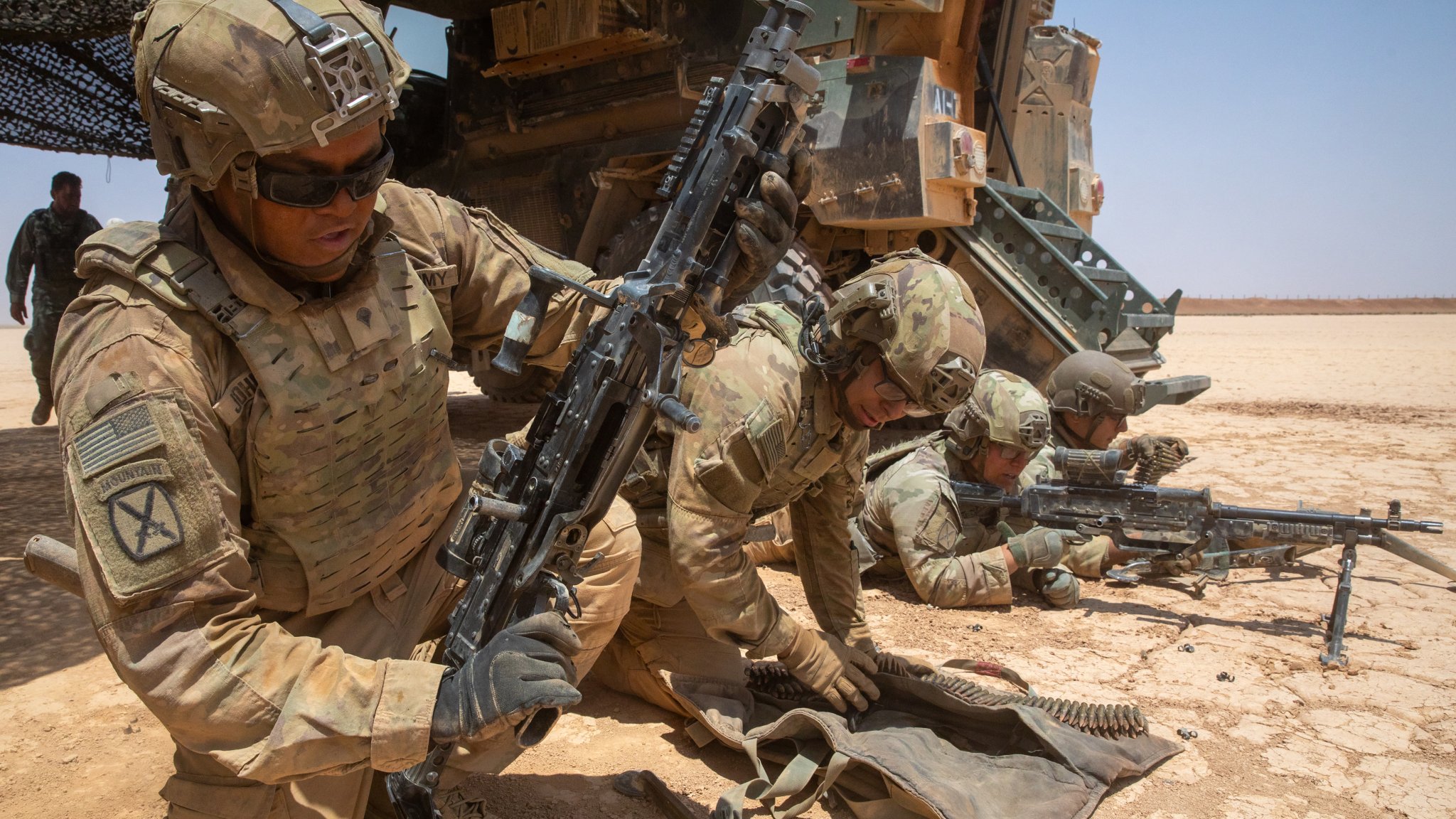
A deal engineered by U.S. Central Command (CENTCOM) allowing Syrian Democratic Forces (SDF) to leave the prison from where they have been under siege by Syrian government forces is a move that will protect U.S. troops in that country, a U.S. official told The War Zone Friday morning. There are still about 1,000 U.S. troops in Syria, tasked with continuing the fight against ISIS, the official added.
The Syrian government has been battling the Kurdish-led, U.S.-backed SDF fighters for weeks as it tries to assert its control over the entire country after the December 2024 overthrow of dictator Bashar Al-Assad. The government wants to subsume SDF into its own security apparatus. That fighting, said the official, is allowing ISIS greater freedom of movement. Two U.S. Army soldiers and an interpreter were killed last month in an ISIS ambush.
The deal to allow SDF fighters to leave Raqqah is an effort to keep a fragile truce, which expires Jan. 24, from falling apart, the official noted. The truce was arranged on Jan. 20 in an effort to stop the bloodshed between the government and SDF after a previous ceasefire broke down.
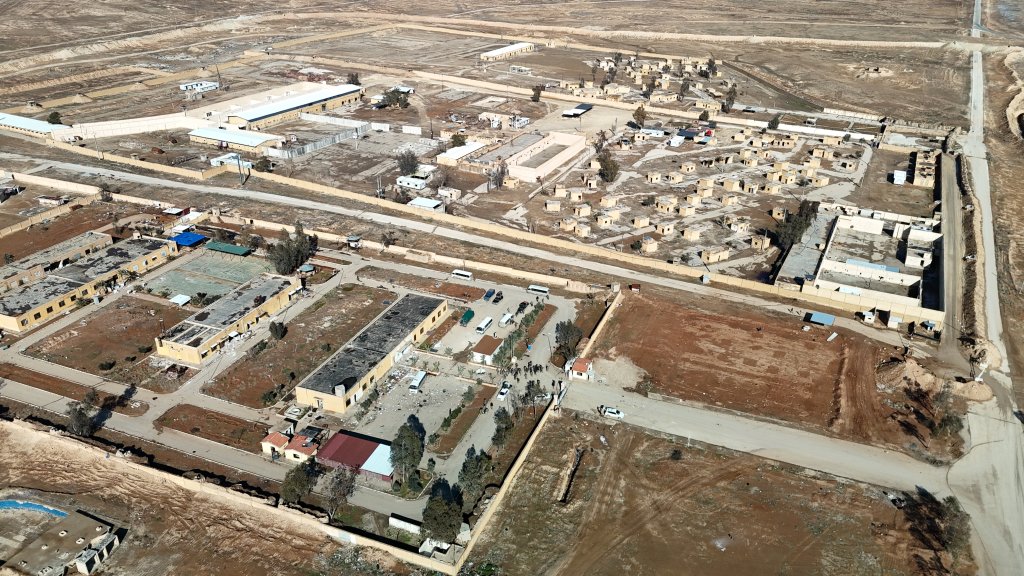
“In a rare sign of goodwill in Syria, Syrian President Al Sharaa agreed to allow 800 SDF fighters and civilians safe passage from Raqqah to Kobani,” said the official, speaking on condition of anonymity to discuss operational details. “SDF were holed up for the last week in the Raqqah prison, where they sought temporary refuge in the fighting. Earlier today, a convoy of more than 160 vehicles arrived safely in Kobani, a traditionally Kurdish region.”
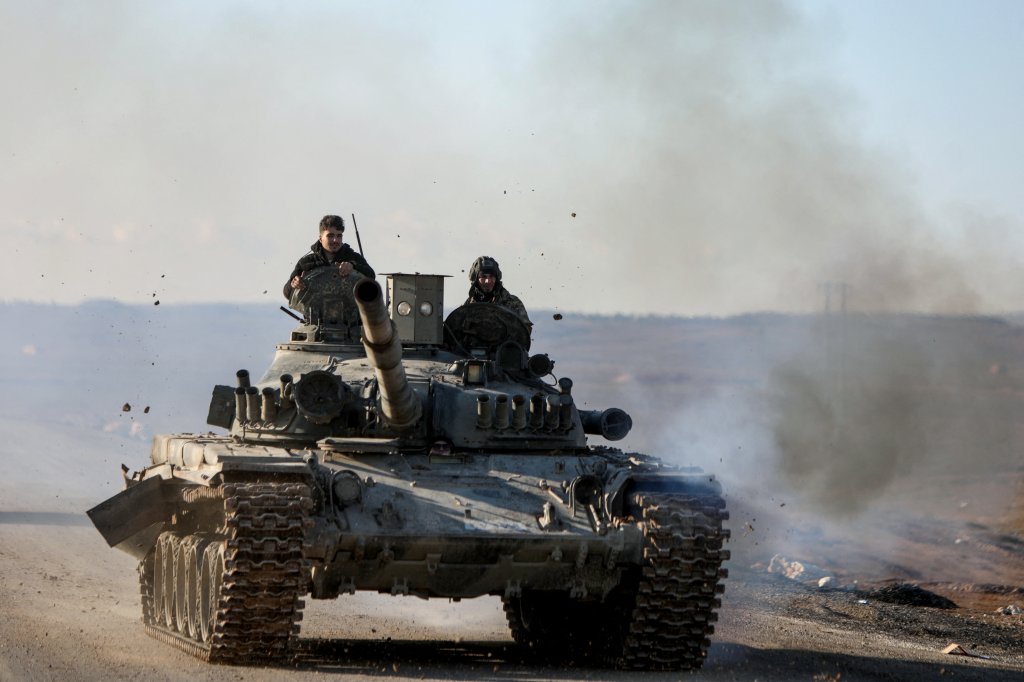
“The deal was brokered by U.S. Central Command as a measure to cool things down in Syria after weeks of intense fighting between the Syrian Government and SDF,” the official added. CENTCOM declined comment.
The safe passage decision comes as U.S. troops have elevated security concerns as they transport some 7,000 ISIS prisoners from Syria to Iraq, a highly complex operation. CENTCOM has carried out three waves of attacks against ISIS leaders in the wake of the deadly ambush, called Operation Hawkeye Strike, and U.S. officials are wary of retaliation.

“We are closely coordinating with regional partners, including the Iraqi government, and we sincerely appreciate their role in ensuring the enduring defeat of ISIS,” CENTCOM commander Adm. Brad Cooper said earlier this week. “Facilitating the orderly and secure transfer of ISIS detainees is critical to preventing a breakout that would pose a direct threat to the United States and regional security.”
Continued fighting between the two groups would imperil U.S. troops, the official explained.
“We don’t want to put U.S. troops in the middle” of fighting “between the Syrian government and the SDF,” said the official. “It would have fomented further instability and violence that would have made an already complex operation transferring ISIS prisoners even more challenging.”
The official declined to offer specifics of how the transfer is being carried out, but said that the U.S. is “looking to do it in days, not weeks.”
All this comes as CENTCOM has been working to ease tensions between the Syrian government and the SDF. That group has been a major ally against ISIS, but has also been embroiled in fighting against not just the government, but Turkish-led forces in the north as well, adding to regional instability.
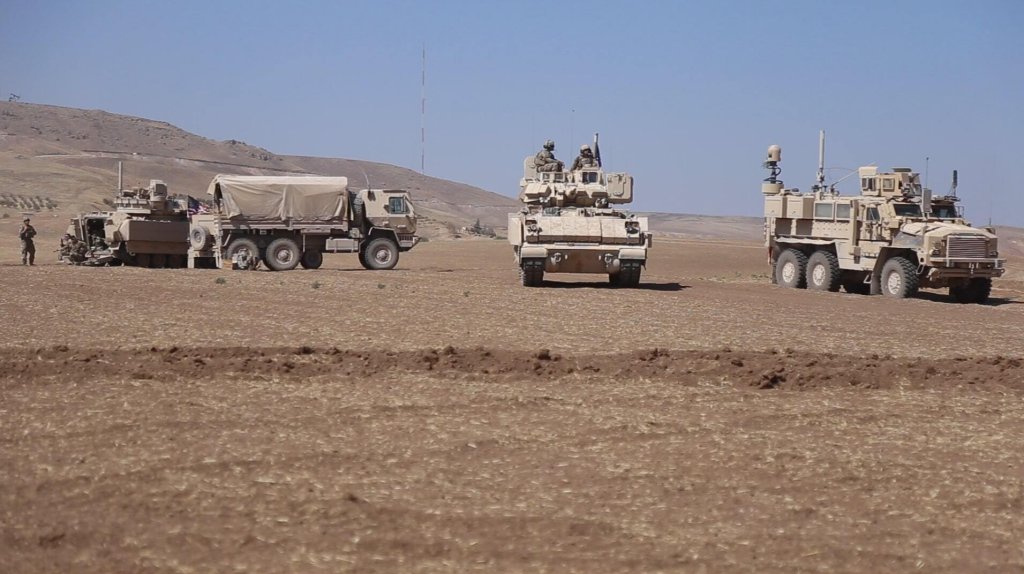
“We have been working to support the negotiated integration of SDF forces into Syrian government forces,” the official posited; however, several previous such efforts have broken down and hostilities resumed. For his part, SDF leader Mazloum Abdi expressed optimism about this latest ceasefire.
“We convened a productive and constructive meeting in the Kurdistan Region of Iraq with U.S. Ambassador [to Turkey] Tom Barrack and Admiral Brad Cooper, Commander of U.S. Central Command,” Abdi explained on X. “The support of the United States and President Trump’s policy for the ceasefire [is] of utmost significance and greatly appreciated. Additionally, Ambassador Barrack’s commendable efforts to facilitate dialogue and negotiations between us and the Syrian government are serious, essential and highly valued. We will diligently and with all our capabilities work to achieve genuine integration and maintain the current ceasefire.”
U.S. forces in Syria are mostly based in the northeast, but there is also a base in southern Syria, called Al-Tanf, located along the borders of Jordan and Iraq. U.S. forces across Syria have been subjected to attacks by Iranian-backed militias as well as ISIS, prompting frequent kinetic responses.
The current level of U.S. troops in Syria is about half what it was a year ago, when a U.S. official told us there were plans to drastically reduce the American footprint in that country. There may be a new effort underway that would eliminate the U.S. military presence from the country, where America and allies have been battling ISIS since it took over large swaths of land in Syria and Iraq in 2014.
“Washington is considering a complete withdrawal of American troops from Syria,” The Wall Street Journal reported on Thursday, citing anonymous U.S. officials. CENTCOM declined comment about that story when we asked.
The potential of having no troops in Syria raised alarms by some Republican senators worried that the lack of a U.S. presence in that country would create a dangerous security risk.
“Wow, if true, ISIS would love that,” Lindsey Graham (R-SC) exclaimed on X. “A small footprint of Americans working with locals is an insurance policy against the reemergence of ISIS and an attack on our homeland. I believe it’s time for a new approach and new eyes on Syria. I am confident that many senators – on both sides of the aisle – share my concerns about the implications of withdrawal when Syria is so unstable.”
Reducing the number of troops in Syria has been a goal of U.S. President Donald Trump. He called for a sudden, complete withdrawal during his first term in 2019, however, that was never fully implemented before he left office.
Whether Trump can pull off removing all U.S. forces from Syria during his second term remains to be seen. The country is still a very volatile place in a strategic area bordering Israel, Jordan, Iraq and Turkey that has seen many parties wage hostilities there. And, as long as ISIS remains a force in Syria, it will continue to foster instability.
Contact the author: howard@thewarzone.com
Loading comments…
Comments couldn’t be loaded. Please refresh the page.