
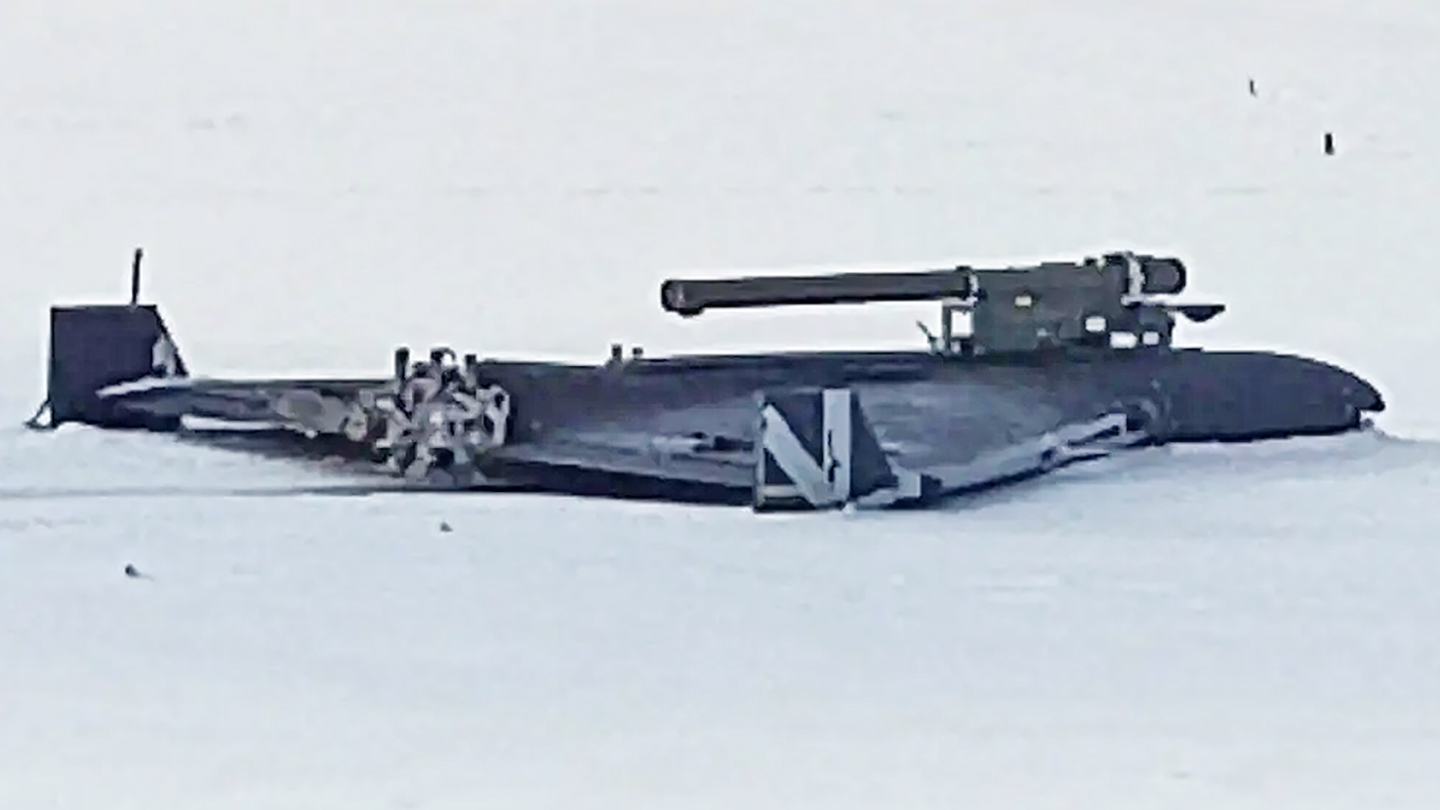
Russia is continuing to adapt and evolve its copies of the Shahed-136 long-range one-way attack drone, known locally as the Geran, now arming it with a man-portable air defense system (MANPADS). These are more often referred to as shoulder-fired heat-seeking missiles. The development follows a previous version of the drone carrying a single R-60 air-to-air missile, which you can read more about here. It also emerges as Russia makes additional alterations to the drone, including improved line-of-sight control capabilities and self-protection systems.
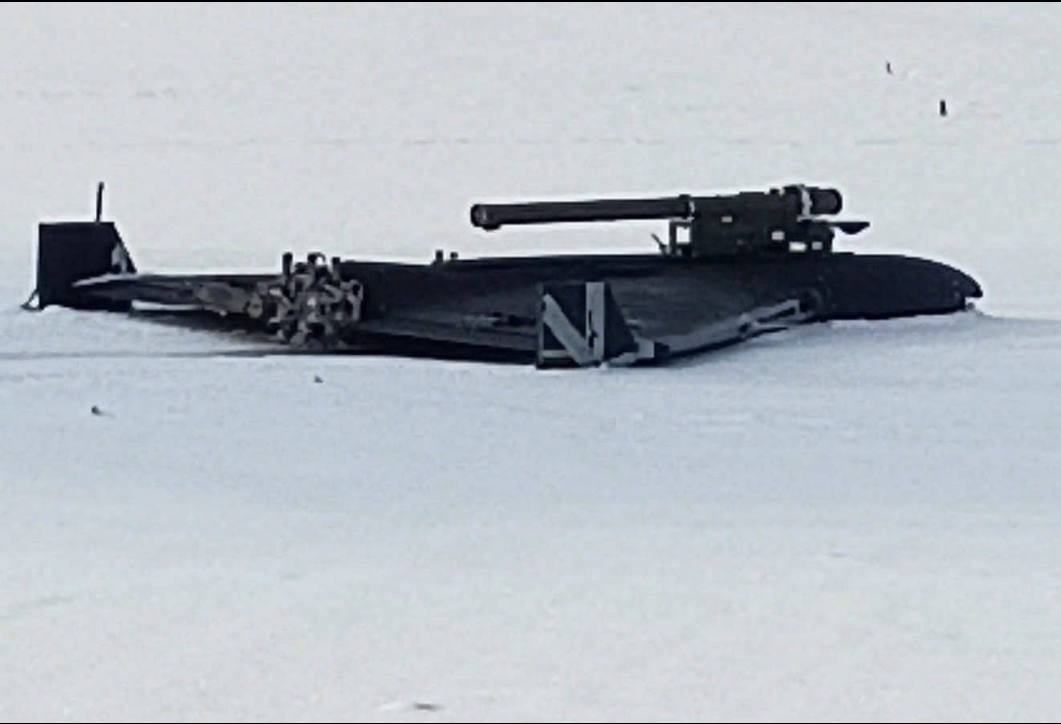
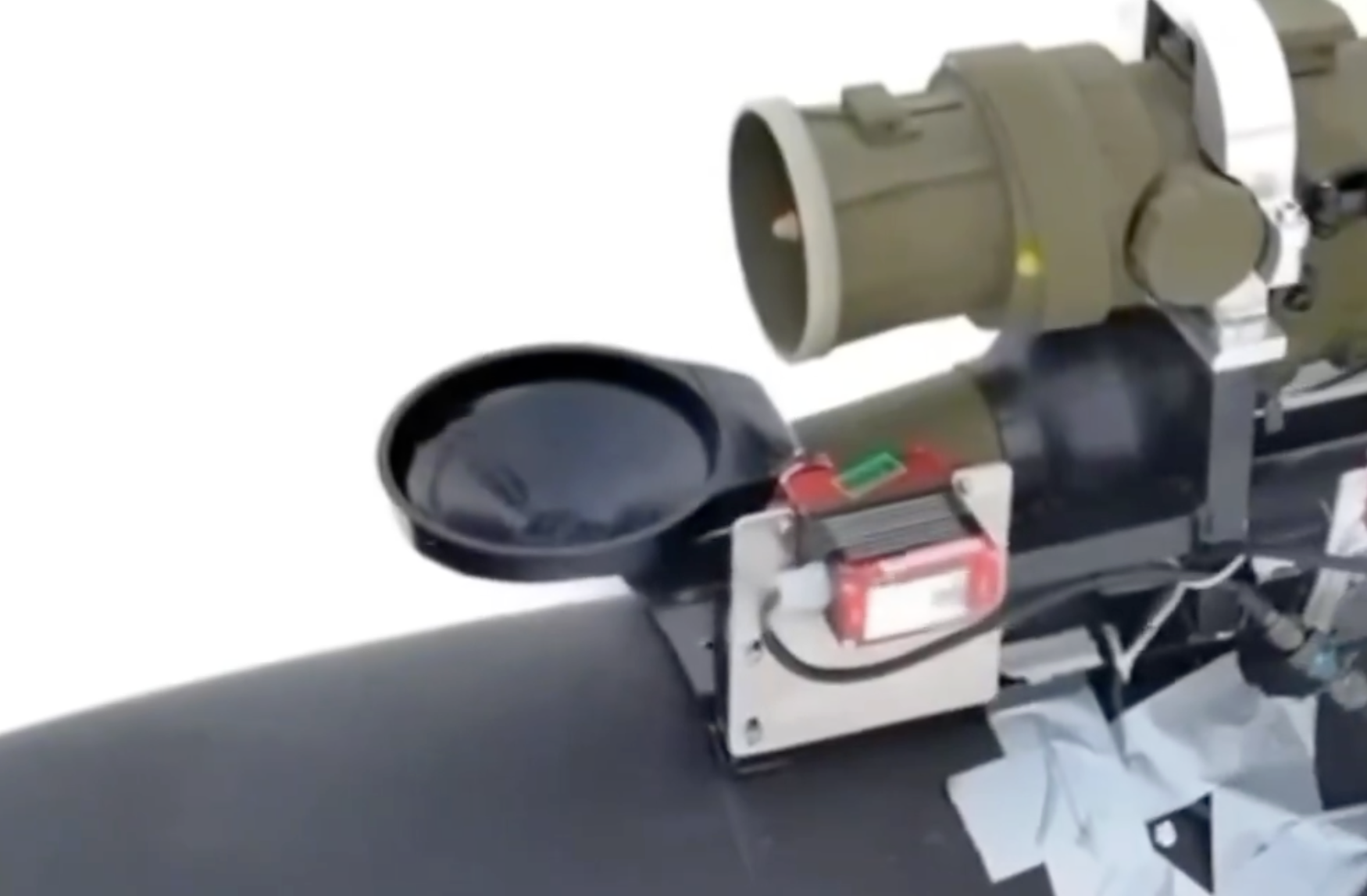
An example of a MANPADS-equipped Shahed/Geran is seen in recent imagery, including a video, that shows the drone lying in the snow, after it came down intact in Ukraine, reportedly in the Chernihiv region in the north of the country. According to Ukrainian accounts, as well as the rail-mounted missile on the top, the drone is equipped with a camera and a radio-frequency modem.
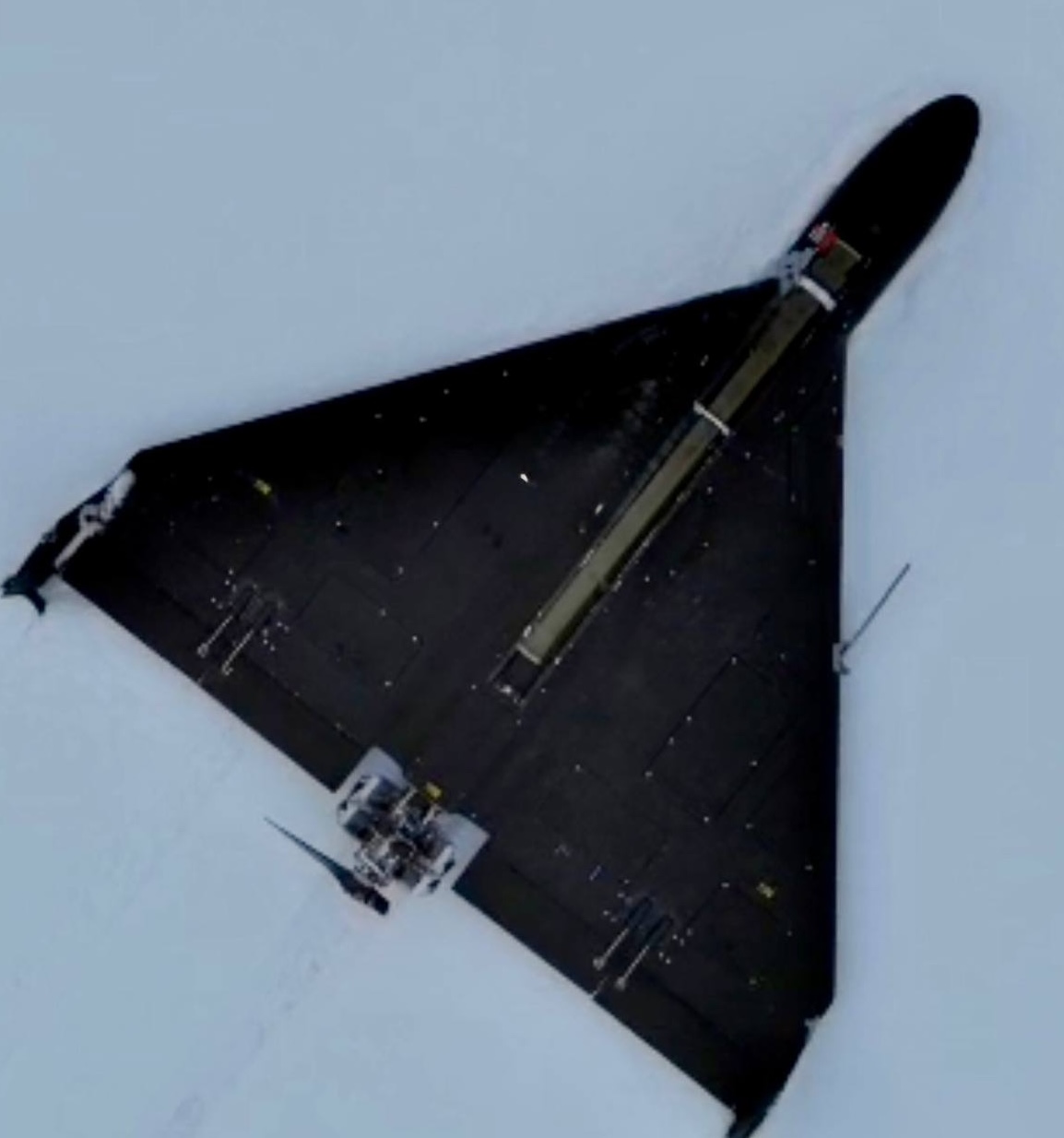
The missile itself has been widely reportedly as an Igla-S, among the latest models of this widespread MANPADS. Known in Russia as the 9K388, and to NATO as the SA-24 Grinch, the weapon has a maximum range of around 3.7 miles, and improvements over earlier Igla missiles include a more sensitive infrared seeker, a heavier warhead, and an improved fuze.
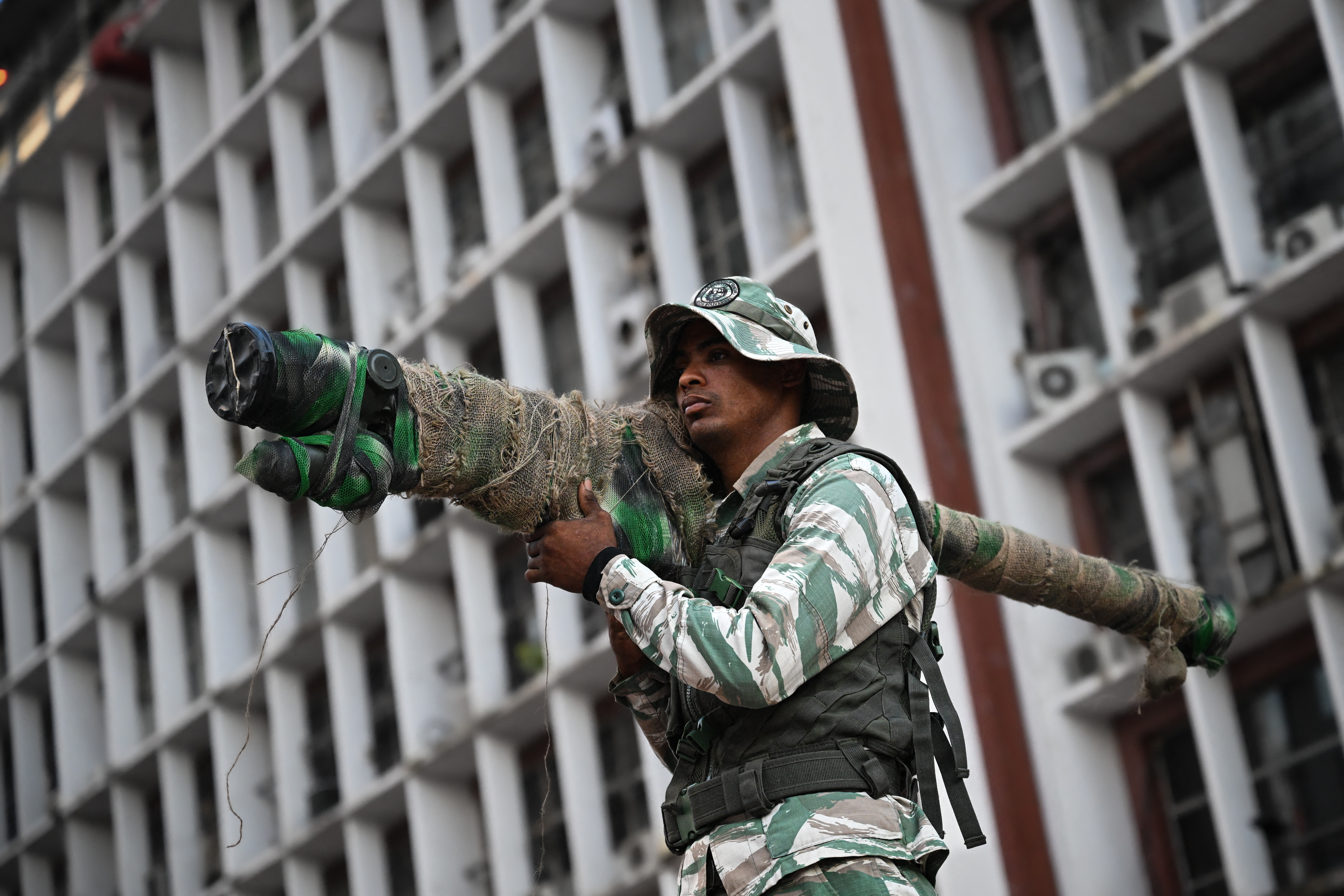
On the other hand, the inscription on the top of the launch tube appears to read 9K333, which would indicate it is the more modern Verba (SA-29 Gizmo), which was developed as a replacement for the Igla. Its primary advantage is its advanced multispectral seeker, operating in the ultraviolet, near infrared, and mid-infrared bands, for improved discrimination between targets and decoys.

Adapting the MANPADS to the Shahed/Geran appears more straightforward than the R-60, with no need for the launch rail adapter; instead, the MANPADS is simply attached to the drone within its standard launch tube. The complete Igla, for example, is also much lighter: around 40 pounds in its tube, compared to close to 100 pounds for the R-60, minus the launch rail.
As for the drone, the original Shahed-136 is Iranian in origin. Multiple variants and derivatives of the Shahed-136, including a jet-powered type, are now produced in large numbers in Russian factories, where they are known locally by the name Geran, the Russian word for geranium. Steady improvements have been made to these drones, including a degree of dynamic targeting capability, as you can read about here.
As we have discussed in the past, adding a heat-seeking anti-aircraft missile to the Shahed/Geran in theory provides the drone with a means to engage Ukrainian fixed-wing aircraft and helicopters. At the very least, giving the drone the ability to hit back at these threats offers a deterrent capability. Overall, the effectiveness of this combination is questionable. Particular challenges include the need for a high degree of situational awareness, perhaps requiring cameras around the airframe, and the need to maneuver the drone to get it into a boresight location to achieve a lock-on. However, Russia clearly considers that the adaptation is worth exploring, even just as a deterrent strategy to keep drone hunting aircraft at bay.
For some time now, Russia has been working on a man-in-the-loop (MITL) control capability for the Shahed/Geran, a feature that was confirmed when they started to appear with cameras and cellular modems, something TWZ explored in detail at the time. These developments allow the drone to be connected to an operator. Standard Shaheds fly autonomous routes to pre-planned targets on autopilot with no man-in-the-loop control. They are ‘fire and forget’ weapons.
Meanwhile, the range at which MITL can be achieved has been steadily increased. At first, the drones were adapted to exploit patchy cellular networks to provide additional connectivity when available. More recently, Shaheds have been flying with antennas allowing for direct line-of-sight control close to the front lines. This allows them to hit targets dynamically like an FPV drone, while packing a much heavier punch and being able to loiter for long periods of time. You can read all about this development here. Now, the datalink range is being extended using airborne signal relays, possibly creating a mesh network with multiple line-of-sight links. We are also now seeing Russian drones will Starlink terminals, which could provide a vastly superior beyond-line-of-sight capability and could prove to be a big problem for Ukraine if Russia can produce such a configuration in large volumes. These developments are now blurring the classification of the Shahed/Geran from its original long-range one-way attack drone to a loitering munition, with an onboard imaging capability.
Potentially, a Shahed/Geran armed with a MANPADS or an R-60 could use beyond-line-of-sight capabilities to operate the missile. But bearing in mind we know Russia is using the drones closer to the front lines, this would need only a line-of-sight link with operators near the front, or at least by receivers/transmitters placed there. Drone controllers behind the lines could also ‘pick them up’ once in the area, but such an operation is far more complex and fraught with additional risks.
Nevertheless, target acquisition and engagement of a missile-armed drone is still far from straightforward. It’s likely that the modern seeker used by the Igla-S or Verba makes it easier to engage aerial targets, compared to the R-60, with a reduced need to ‘point’ the drone directly at the target. Still, the operator would have to trigger the launch of the missile after receiving the signal indicating a lock-on has been achieved.
At the same time, the Shahed/Geran remains a slow and not particularly agile launch platform, and certainly not one that was designed with air-to-air combat in mind. Adding a top-mounted missile likely also degrades its maneuverability and affects its stability, but less than would be the case with an R-60.
When it comes to finding aerial targets, the most likely scenario involves operating entirely reactively to what is seen visually on cameras around the drone or otherwise searching for targets of opportunity. Another option would involve the drone operator receiving target information from offboard assets, where applicable, but this seems less likely.
Bearing in mind the performance of the Shahed/Geran and the range of the MANPADS, the most likely targets would be the Mi-8/Mi-17 Hip series armed transport helicopters and the Mi-24 Hind series gunships that are routinely tasked with counter-drone missions. We have already seen that lower and slower-flying helicopters face a notable risk from relatively small kamikaze drones that simply fly into them. Ukrainian F-16s, MiG-29s, Su-27s and Mirage 2000s have also been tasked heavily as ‘Shahed hunters,’ but engaging fighters with these weapons would be even tougher. Still their very existence would add a credible threat to fighters approaching them.
While it remains to be seen just how effective the combination of Shahed/Geran with a MANPADS (or R-60) is, these developments reflect a previous precedent for arming drones with air-to-air missiles. The deterrent effect of this can be seen in at least one instance from 2002, when a U.S. Air Force MQ-1 Predator drone fired a Stinger heat-seeking anti-air missile at an Iraqi MiG-25 Foxbat fighter that was trying to shoot it down, which can be seen in the video below.

These measures are also indicative of efforts being made by Russia to better defend the Shahed/Geran drones. Another recent development involves the apparent addition of infrared countermeasures to defeat drone interceptors and possible missiles fired by fighters. Attached to the rear of the drone’s stabilizing endplates, these appear to employ electrically heated cylindrical blocks to generate blooming infrared energy, like the Hot Brick system.
For now, we have no evidence of a missile-equipped Shahed/Geran attempting to engage a Ukrainian aircraft, let alone bringing one down. However, having long-range one-way attack drones fitted with air defense missiles provides another complicating factor for Ukraine and illustrates the continued modifications being made to these weapons.
Contact the author: thomas@thewarzone.com
Loading comments…
Comments couldn’t be loaded. Please refresh the page.