
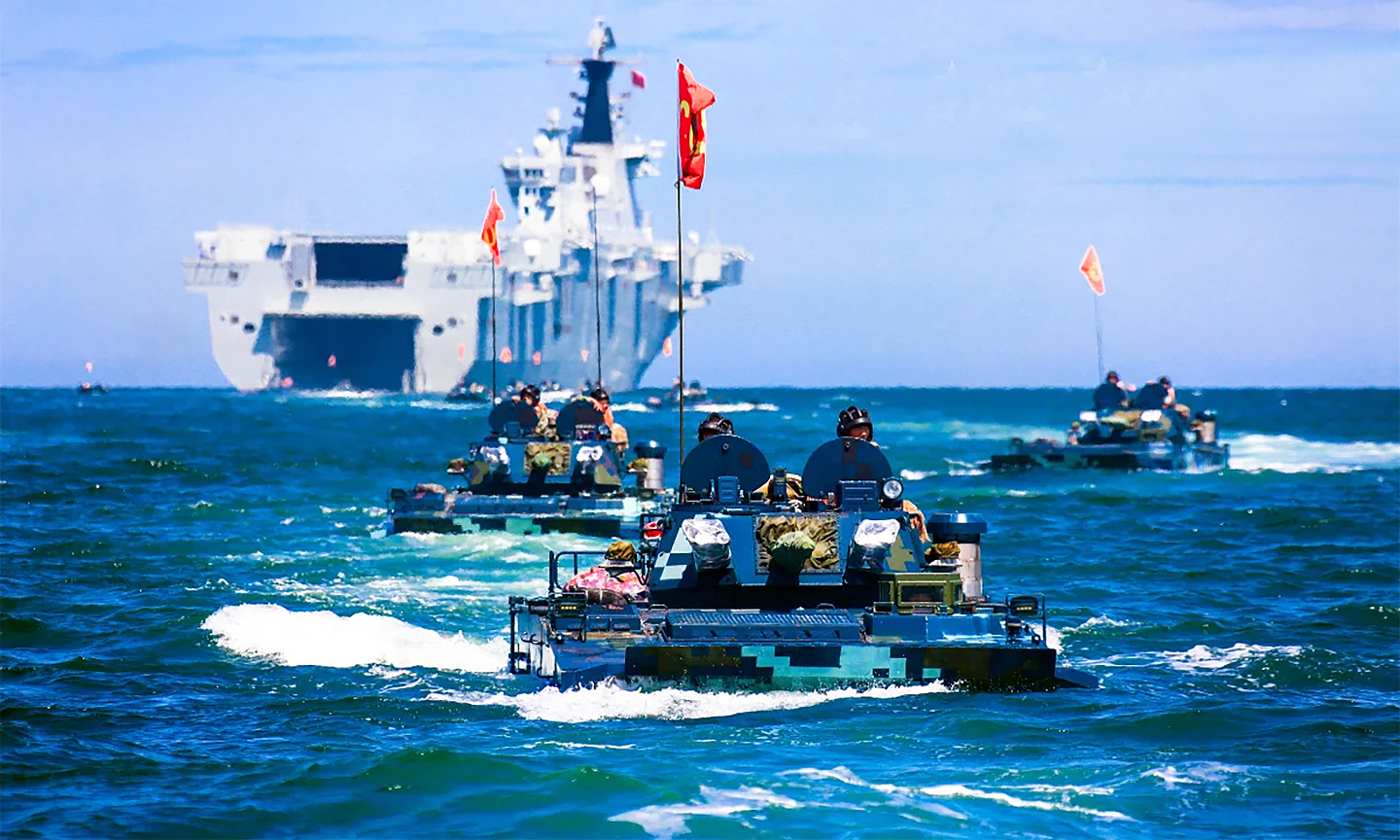
As a relationship of convenience between Beijing and Moscow grows over a mutual desire to change the world’s power balance, there are questions about how much these two nations would cooperate should China opt to invade Taiwan. NATO Secretary General Mark Rutte recently suggested that the cooperation could be significant.
“There’s an increasing realization, and let’s not be naïve about this: If Xi Jinping would attack Taiwan, he would first make sure that he makes a call to his very junior partner in all of this, Vladimir Vladimirovich Putin, residing in Moscow, and telling him, ‘Hey, I’m going to do this, and I need you to keep them busy in Europe by attacking NATO territory,’” Rutte told The New York Times on July 5. “That is most likely the way this will progress.”
Rutte was responding to a question about the relationship between U.S. President Donald Trump and NATO allies. The alliance leader did not provide a timeline or any other details, other than to say that NATO has to be “so strong that the Russians will never do this. And second, working together with the Indo-Pacific — something President Trump is very much promoting.”
Should China decide to invade Taiwan, there are reasons to believe it could pressure Russia to assist. Chief among them is the aid China is providing to the Russian war machine through components and other supplies for its war on Ukraine. GUR recently claimed that a recovered Russian Geran-2 drone contained between 60% and 65% Chinese parts, making them even more dangerous.
Rutte’s comments come as China is dramatically increasing pressure on Taiwan. Adm. Samuel Paparo, commander of U.S. Indo-Pacific Command (INDOPACOM), recently said that Chinese military pressure on Taiwan has reached a “rapid boil,” the Atlantic Council recently noted. In his April testimony before the Senate Committee on Armed Services, Paparo said there has been a 300 percent annual increase in Chinese military pressure against Taiwan. He later added that the People’s Liberation Army (PLA) is “stretching their legs” to meet President Xi Jinping’s 2027 military readiness goal of being capable of taking Taiwan by force.
It’s one thing to suggest that Xi would tell Putin to attack NATO. How realistic that is remains an open question.
“Not now, it’s absolutely impossible,” the head of Ukraine’s Defense Intelligence Directorate (GUR) told us on Monday. “Later, it is possible.”
Lt. Gen. Kyrylo Budanov would not disclose what his assessment was based on, telling us the information remains classified.
A major reason, of course, is that Russia remains bogged down in Ukraine and paying a very heavy price in terms of personnel and equipment to gain small bits of territory. Given the losses it suffers in Ukraine, Russia would not likely be able to rebuild its military enough to attack any NATO countries for several more years, Rutte stated last month.
Moscow could be ready to use force against the alliance “within five years,” he said in a speech. “Let’s not kid ourselves, we are all on the eastern flank now.”
A top German military official last year offered a similar timeline. It would be 2029 at the earliest that Russia would be ready to launch such an attack, Lt. Gen. Carsten Breuer told reporters during a visit to Poland in April 2024.
“By then, based on our analysis, Russia (will have) reconstituted its own forces to a degree that an attack against NATO soil could be possible,” said Carsten.
Last month, Ukrainian President Volodymyr Zelensky offered the same general assessment, telling Sky News that it would be five years before Russia would have regenerated enough combat power to strike a NATO nation.
Still, several NATO members aren’t waiting to take action. Among other things, they are wary of a Russian buildup along the border with Finland. Fearing a Russian attack somewhere on NATO, nearly all alliance nations have bolstered their defense budgets and many have even begun building out defensive lines along their borders.
The timeline for a potential Russian attack on NATO posited by Rutte, Breuer and Zelensky broadly dovetails with U.S. assessments for when China could be militarily ready to attack Taiwan. U.S. officials have previously stated that China could be ready to do so by 2027. In 2021, then-U.S. INDOPACOM commander Adm. Phil Davidson told the Senate Armed Services Committee that the Chinese threat to Taiwan “is manifest during this decade, in fact in the next six years.”
The assessment of the so-called ‘Davidson window’ was backed two years later by the Central Intelligence Agency (CIA).
“President Xi has instructed the PLA [People’s Liberation Army], the Chinese military leadership to be ready by 2027 to invade Taiwan,” then-CIA Director Bill Burns stated.
U.S. Defense Secretary Pete Hegseth raised the ante, suggesting in May a Chinese invasion “could be imminent. We hope not. But it certainly could be.”
For years, successive American administrations have talked about a so-called ‘pivot to Asia’ and declared China the nation’s biggest threat. However, ongoing military actions in the Middle East, as well as supplying Ukraine with tens of billions of dollars worth of military supplies, have made such a move difficult to fully accomplish.
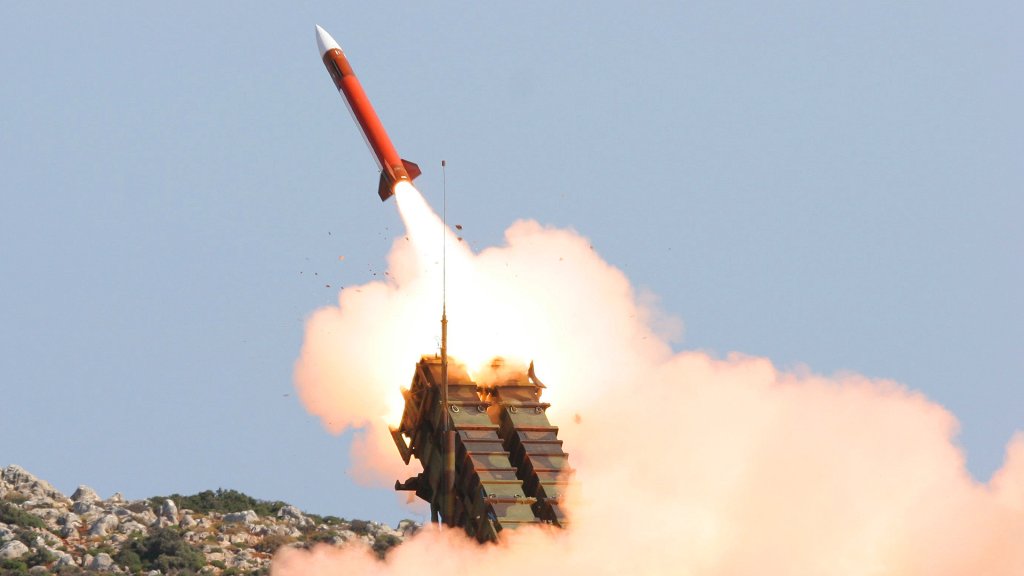
Highlighting concerns about U.S. military actions outside of Asia, last month it launched Operation Midnight Hammer, in which U.S. Air Force B-2 Spirit stealth bombers dropped 14 30,000-pound GBU-57/B Massive Ordnance Penetrator (MOP) bunker buster bombs on Iranian nuclear facilities. That the Trump administration felt it necessary to strike Iran is an indication that Russia is not China’s only means of keeping the U.S. busy. There are currently two aircraft carrier strike groups deployed to the Middle East region as well as plus-ups in ground-based aircraft and air defense systems. Though Iran and its regional proxies have been hit hard by Israel, the Houthis of Yemen are still lobbing missiles at the Jewish state and on Sunday began to strike commercial shipping after a seven-month hiatus. The U.S. has expended a great deal of resources fighting the Houthis.
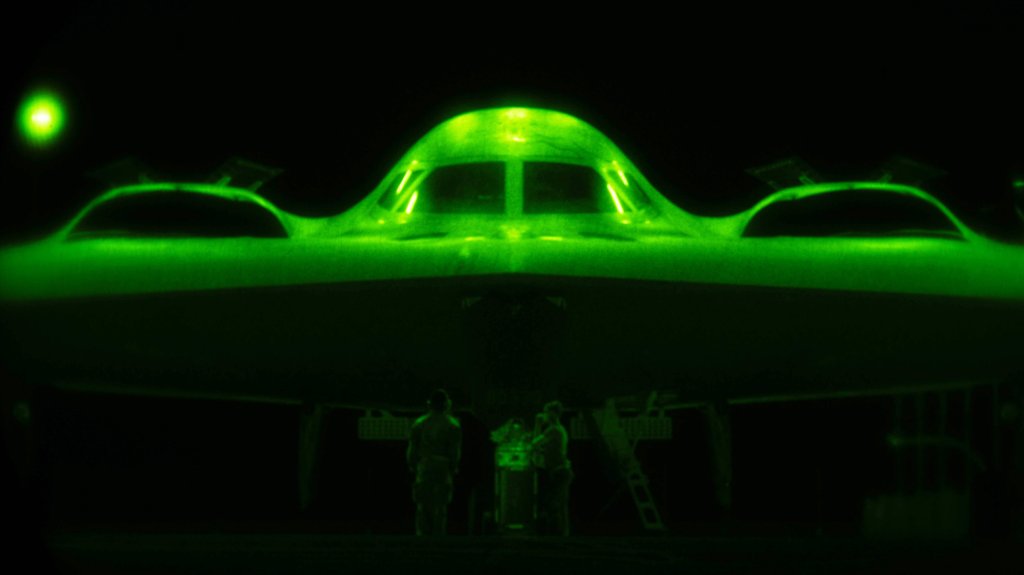
On the other hand, Trump’s decision to bomb Iran could put a chill into any Chinese ambitions toward Taiwan — at least for now.
“After the Iran strikes, I suspect that Chinese leaders will now be more nervous about testing President Trump’s resolve” on Taiwan, Zack Cooper, a senior fellow at the American Enterprise Institute, recently told The New York Times. “Caution is warranted, both because Trump appears more willing to use force than many expected, but also because his actions seem less predictable.”
For his part, Trump has signaled to Xi that the U.S. intends to support Taiwan. He plans to “ramp up weapons sales to Taipei to a level exceeding his first term as part of an effort to deter China,” Reuters reported in May. That same month, Hegseth warned that “any attempt by Communist China to conquer Taiwan by force would result in devastating consequences for the Indo-Pacific and the world. There’s no reason to sugarcoat it. The threat China poses is real.”
Still, even if the U.S. were to defend Taiwan, getting the requisite resources in time to do so across the vast Pacific is already a tremendous challenge even with the full focus of the Pentagon’s forces. That would be greatly exacerbated if America were fighting on two continents at once or even having to prepare for possibly an imminent direct fight with Russia in Europe.
Then there is North Korea. Dictator Kim Jong Un frequently threatens South Korea and the U.S. Beyond that, Pyongyang has been beholden to China for food and other vital supplies. China has also been a longtime ally of North Korea when few others were. It has been long-predicted that China would activate its ‘junkyard dog’ during an invasion operation to split off U.S. and allied forces further.
Neither North Korea or Moscow wouldn’t even have to invade and commit to an all-out conflict. Just creating a credible threat and engaging deeply in gray-zone actions that could be prelude to such an operation would require the U.S. and its allies to dedicate resources to the threat as a contingency.
Contact the author: howard@thewarzone.com
Loading comments…
Comments couldn’t be loaded. Please refresh the page.