
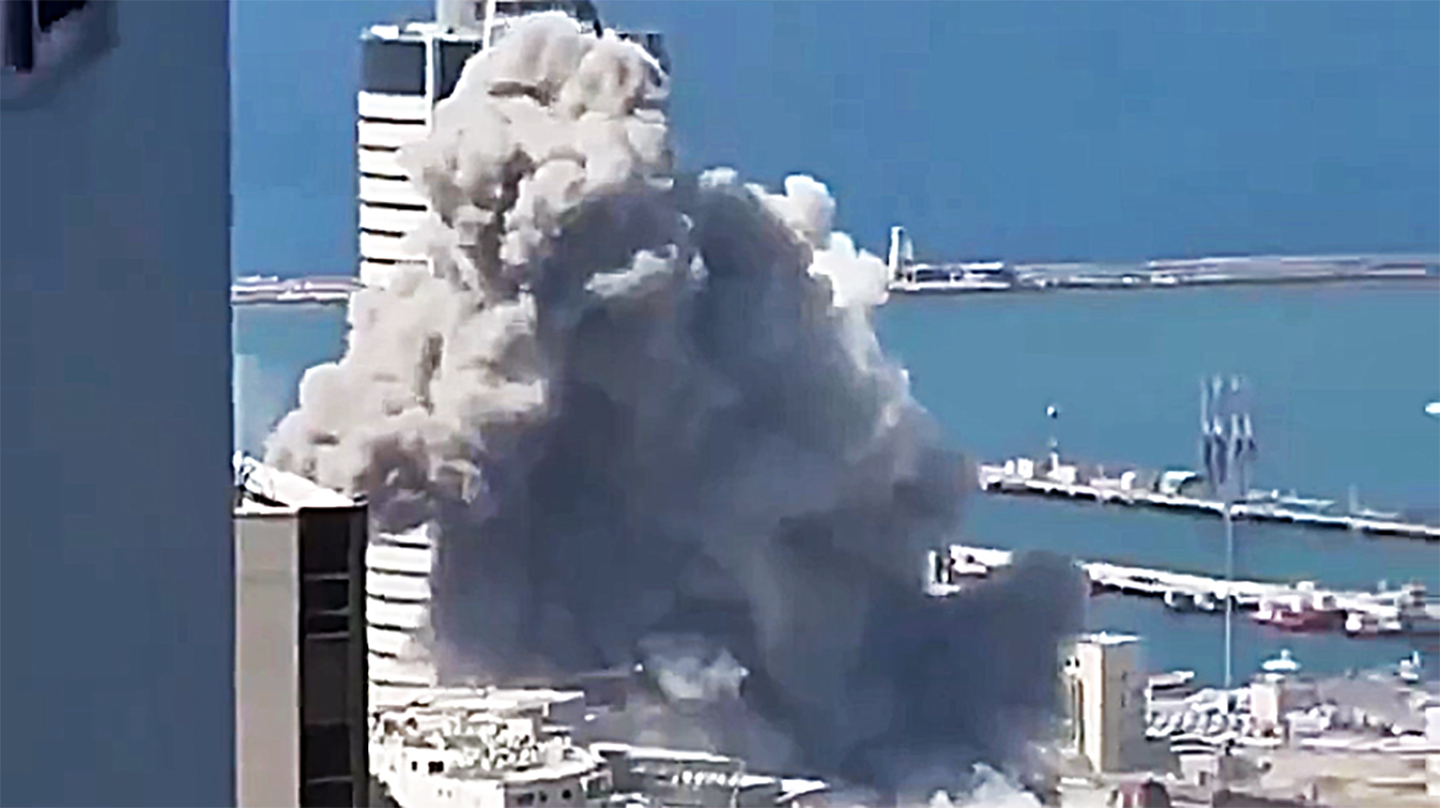
Israel and Iran traded more blows overnight and on Friday, as the conflict continued into its eighth day. Among the most notable targets struck in Israel today was the port city of Haifa. Local mayor Yona Yahav confirmed that Iran had struck “two strategic points” in the city. Visiting the impact site, he said: “I am very depressed. To the residents of Haifa, I say — strictly follow the instructions.”
There were reports of two people injured in Haifa, one of them seriously, according to Haaretz. The same source stated that at least 20 missiles were identified as part of this wave of strikes, with some hitting areas of Beersheba and others coming down in Haifa.
Haifa is home to the main naval base of the Israel Defense Forces, home to submarines, corvettes, and other vessels. It remains unclear at this point whether this was the intended target and whether or not it was hit.
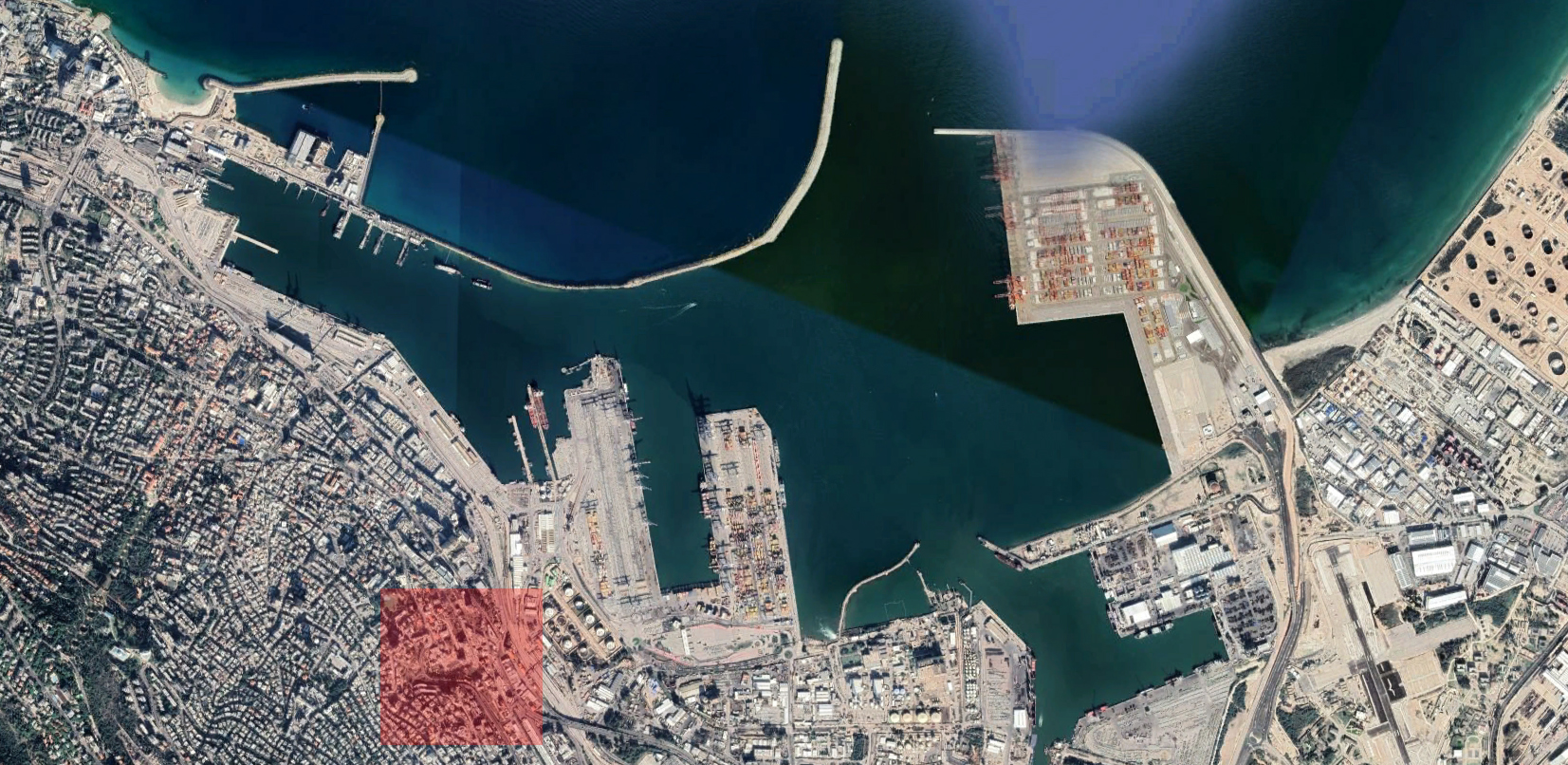
Israeli Channel 12 TV reported today that the international shipping company Maersk has decided to suspend all of its shipping movements to the port until further notice.
You can catch up on our coverage of Israel’s Operation Rising Lion, designed to keep Iran from developing nuclear weapons and dismantle its long-range weapons capabilities, here.
The Latest
The Israel Defense Force (IDF) said more than 60 fighter jets using approximately 120 munitions hit dozens of Iranian military areas overnight, including targets inside the Iranian capital.
In a post on X, the IDF said it struck several industrial sites in Tehran, which it claimed were used to manufacture missiles. “During the night, several industrial sites used to manufacture missiles were struck in the Tehran area. These sites were developed over many years and served as a key industrial center for the Iranian Ministry of Defense,” it said.
The IDF said it hit the headquarters of Iran’s military research and development organization, the Organization of Defensive Innovation and Research (SPND), which it claims was involved in Iran’s nuclear weapons development. The SPND was established in 2011 by Mohsen Fakhrizadeh, the founder of Iran’s nuclear weapons program.
Other targets were said to be sites producing missile components and facilities manufacturing raw materials used in casting missile engines. Additionally, a site producing an undisclosed critical component of the Iranian regime’s nuclear weapons program was targeted, the IDF said.
Reportedly, a key Iranian nuclear scientist was killed in a strike on a building in Tehran. This was reported by Reuters, citing a story from Israel’s national broadcaster, Kan, which quoted an Israeli source. They said there was evidence that a scientist was killed in a drone attack on an apartment in the Iranian capital.
The IDF’s focus on targets within Tehran reflects efforts by Israel to destabilize the Iranian regime.
Today, Israeli Minister of Defense Israel Katz said that he had offered the military to intensify attacks on “symbols of the regime” in the Iranian capital.
“We must strike at all the symbols of the regime and the mechanisms of oppression of the population, such as the Basij, and the regime’s power base, such as the Revolutionary Guard,” Katz said in a statement.
A paramilitary volunteer militia, the Basij comes under the IRGC and is notorious for cracking down on public protests. Successive waves of unrest in Iran since the 1979 revolution have been dealt with by the Basij militia, serving as something like the shock troops of the Islamic regime.
The IDF also said that more than 25 Israeli Air Force (IAF) fighters destroyed over 35 missile storage and launch facilities in Iran on Friday morning. These targets were in the areas of Tabriz and Kermanshah in Iran, the Israeli military said.
Additionally, explosions were heard overnight in the Safidrood industrial town near the Iranian town of Kolesh Taleshan, in the northwest of the country, shortly after Israel told people in the area to evacuate.
On social media, footage posted by eyewitnesses showed an apparent Israeli airstrike on Rasht, in northwest Iran, which may be related to the presence of a carbon-fiber plant close to the city. This followed another IDF order for civilians to evacuate from areas around the Sefidrud Industrial Park in Rasht.
After a week of Israeli strikes, it is estimated that at least 657 people have been killed and 2,037 others wounded. These figures come from the Washington-based Human Rights Activists group. Of those dead, the group identifies 263 civilians and 164 security force personnel.
The following video, posted on X by the IDF, provides an interview with an IAF pilot, named only as Maj. B, who has flown combat sorties over Iran. The pilot describes being aware that Iranian fighters were taking off during these missions, but says that they turned away rather than confront the Israeli jets. Maj. B also says the first 24 hours of the campaign focused on suppression and destruction of enemy air defense (SEAD/DEAD) sorties to remove the threat posed by Iranian air defenses.
Iran has ruled out — at least publicly — talks with the United States over ending its nuclear weapons program as long as Israeli “aggression” continues. This comes after U.S. President Donald Trump signaled yesterday that he would decide on whether to order the U.S. military to strike Iranian nuclear facilities within the next two weeks and has demanded Iran return to the negotiating table.
Iranian Foreign Minister Abbas Araqchi said the country’s leadership will not hold talks with Washington as it is a “partner to Israeli crimes against Iran.” Reuters reports that Araqchi had told Iranian state TV: “There is no room for negotiations with us until Israeli aggression stops.”
Among the targets that Iran struck in Israel overnight was the city of Beersheba in the south of the country. A hospital in the city was also hit yesterday, Iran claiming that the intended target in that instance was a nearby “large [IDF] command and intelligence headquarters and [a] military intelligence camp.”
A blaze was reported near a Microsoft office after a missile hit Beersheba early on Friday, emergency services reported. The Magen David Adom rescue service posted a photo of several vehicles on fire. Israeli media later reported that five people had sustained minor injuries.
Iran’s Revolutionary Guard Corps (IRGC) said Microsoft was the intended target. In a statement, it said it had targeted the company “because of its close cooperation with the Israeli Army and its being part of the system supporting aggression, and not just a civilian entity. The cyber area that was attacked also includes the residences of people from the espionage and artificial intelligence fields, who operate in direct cooperation with the enemy army and its security apparatus.”
An Israeli military official said that Iran had fired a single missile and that an interceptor that was fired in response had failed to intercept it.
Reports out of Israel suggest that the missile that struck Beersheba may have been fitted with a cluster warhead, evidenced by multiple small impacts in footage of the impact. You can read more about Iranian ballistic missiles with warheads containing multiple submunitions in this previous story.
The IDF said that it intercepted four Iranian drones targeting Israel overnight. Footage has appeared on social media that purports to show an IAF F-16 shooting down a Shahed-series drone, said to be over Syria.
Meanwhile, there are reports that the Israeli Navy has, for the first time, used the Barak Magan surface-to-air missile system in combat to intercept a drone that crossed into Israeli territory.
This is likely a reference to the Israeli version of the Rafael Barak-8 surface-to-air missile, which is launched from 32 vertical launch cells on the Sa’ar 6, the latest Israeli Navy corvette, which you can read more about here. The Barak-8 is intended to engage targets out to around 60 miles.
There have been more statements from Russian officials about the course of the conflict.
The Kremlin spokesperson Dmitry Peskov warned of the risk of the Middle East more generally falling into an “abyss of instability and war.” Peskov also told reporters that he didn’t know when Russian President Vladimir Putin might meet with Trump. “The situation is extremely tense and is dangerous not only for the region but globally,” he added.
Peskov also told Sky News that Russia would react “very negatively” if Iran’s Supreme Leader Ayatollah Ali Khamenei were to be killed. “The situation is extremely tense and is dangerous not only for the region but globally,” Peskov said.
Regime change in Iran would be “unacceptable,” Peskov added, and that the assassination of the country’s supreme leader would “open Pandora’s box.”
This came a day after the Israeli defense minister said Ayatollah Ali Khamenei “can no longer be allowed to exist.”
Peskov did not say how Russia would respond if Khamenei were assassinated, but warned that it would trigger a response “from inside Iran.” He explained: “It would lead to the birth of extremist moods inside Iran, and those who are speaking about [killing Khamenei], they should keep it in mind.”
In related news, Russian specialists are still working at the Bushehr nuclear plant in Iran, according to the head of Russia’s nuclear energy corporation. Alexei Likhachev said the situation at the plant in the southern port city was normal and under control amid Russia’s warnings to Israel not to attack the site, according to a Reuters report.
The movement of U.S. Air Force aircraft into Europe, and then forward to bases in the Middle East, continues.
In the past, we have reported specifically about the deployment of tankers and fighters to locations closer to the conflict zone.
The departure of F-22 Raptor stealth fighters from RAF Lakenheath in England has also been observed today, with the likely destinations being U.S. airbases in the Middle East, as evidenced by the movement of aerial refueling tankers to support them on their trip.
Meanwhile, in the last couple of days, there has been extensive evidence of U.S. Air Force transport aircraft movements. Publicly available flight-tracking data reveals that at least 20 C-17 Globemaster III airlifters have been on the move from Europe to bases in the Middle East in the last 24 hours.
The arrival of a C-5 Galaxy strategic transport aircraft was also noted today at Prince Sultan Air Base in Saudi Arabia.
Iranian aircraft are on the move, too.
This follows the highly unusual movement of Iran’s primary presidential plane and two other government airliners to the Omani capital Muscat, as we reported earlier in the week.
The latest movements concern a pair of Boeing 737s from Saha Airlines and a single Airbus A320 from Meraj Airlines.
With Trump yet to commit to a U.S. military strike on Iranian nuclear facilities, Israel now appears to be looking into the possibility of going it alone.
According to Lucas Tomlinson of Fox News, options available to the IDF for the destruction of the deeply buried Iranian nuclear enrichment facility in Fordo include a commando raid, a possibility that TWZ has been discussing now for many years.
“One option could involve sending in elite Israeli Air Force commandos from Unit 5101 Shaldag, who launched a similar operation in September in Syria to destroy an underground missile site used by Iran. Another option would be to cut power to Fordow. Without power, the centrifuges enriching the uranium could become permanently disabled,” Tomlinson wrote.
This is a developing story. Stay with The War Zone for updates.
UPDATE: 1:15 PM Eastern –
IAF AH-64 Apaches have been something of an unsung hero of Israel’s air defense architecture. They continue to shoot down long-range one-way attack drones. The Apache has come into its own as a counter-drone asset, which Israel largely pioneered.
The IDF says Iran has fired 520 ballistic missiles at Israel and 25 have impacted the ground, equaling roughly a 5% hit rate. That does not mean they struck their intended targets though. That number would be significantly lower.
The WSJ states that Israel’s air defense operation is costing $200M a day.
Hezbollah, severely weakened after its war with Israel, has still not defended its benefactor, Iran. That could change based on threats, which Israel’s defense minister has responded to.
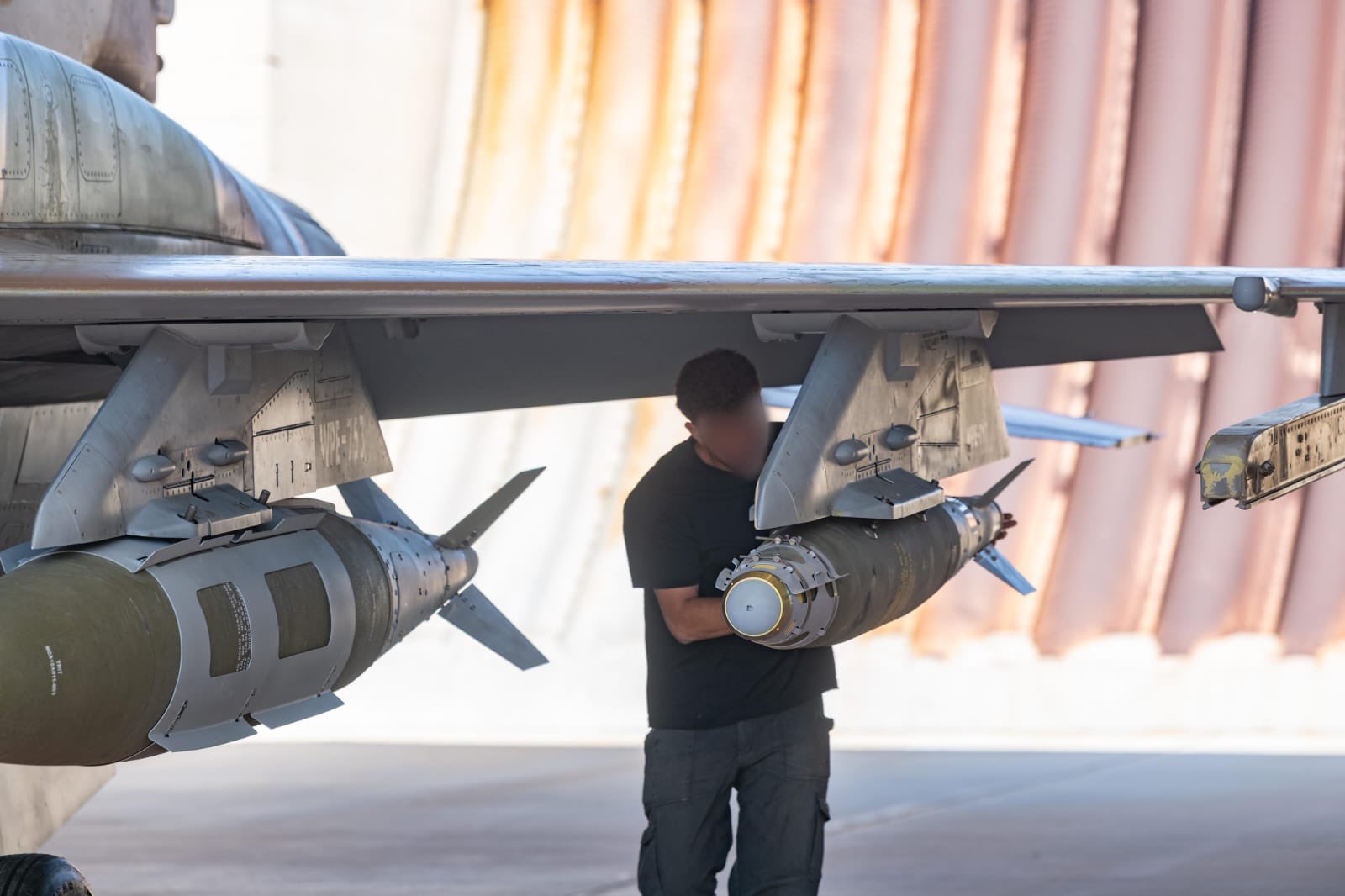
Israel’s catalog of man-in-the-loop guided air-launched standoff munitions — which include Popeye and Delilah cruise missiles, and the Spice series of guided bombs, have been center-stage in this conflict. The ability for the controller — usually in the launching aircraft — to ‘fly’ the weapon right to impact has allowed for extremely accurate strikes, especially on opportunistic targets. The cruise missile and glide-bomb capabilities also allow for the launching aircraft to stay away from high-threat areas where air defenses are most likely to be. Most of the strike video coming from the IAF shows these weapons in action.
There are multiple unconfirmed reports that the ballistic missile that impacted Haifa landed right next to a mosque.
European-led talks with Iranian officials on their nuclear program and a way to stop the war have reportedly failed in making significant progress on either front.
Israel’s Channel 13 says Israeli officials who have been engaged with the U.S. on joining the conflict say that Trump is close to jumping in.
Update: 6:44 PM Eastern –
During a press gaggle earlier on Friday before boarding Marine One, Trump offered some additional insights into his thinking on the Israel-Iran war.
Trump seemed to rule out having the U.S. involved in a ground battle in Iran.
“Well, I’m not going to talk about ground forces,” he said in response to a question about whether an air campaign was sufficient to stop Iran’s nuclear weapons ambitions. “The last thing you want to do is ground force.”
As for his comments about giving Iran two weeks before the U.S. could strike, Trump said that “We’re going to see what that period of time is, but I’m giving them a period of time, and I would say two weeks would be the maximum.”
Trump said he wasn’t inclined to press Israel to stop airstrikes so negotiations with Iran can continue.
“I think it’s very hard to make that request right now,” he explained. “If somebody is winning, it’s a little bit harder to do than if somebody is losing, but we’re ready, willing and able, and we’ve been speaking to Iran, and we’ll see what happens.”
Trump said he might support a ceasefire, but added: “It’s very hard to stop when you look at it, Israel’s doing well in terms of war, and I think you would say that Iran is doing less well. It’s a little bit hard to get somebody to stop.”
Israel has limited capacity to destroy Iran’s facilities.
Trump also took issue with assessments by the Intelligence Community that there is no evidence Iran is building a nuclear weapon.
“Then my intelligence community is wrong,” Trump said. “Who said that?
“Your Director of National Intelligence Tulsi Gabbard,” the reporter responded.
“She’s wrong,” Trump retorted.
Gabbard, meanwhile, took to social media to say her comments were misrepresented by the “dishonest media…spreading fake news as a way to manufacture division.”
It appears that the U.S. Navy has increased its presence near Israel to help intercept Iranian ballistic missiles. Earlier this week, The War Zone was told that the Arleigh Burke class destroyers Arleigh Burke, Thomas Hudner and The Sullivans were in the eastern Mediterranean. Now it appears that the Oscar Austin and Paul Ignatius have joined them.
Update: 7:35 PM Eastern –
The shutdown of the internet in Iran is making new videos and images from the conflict there scarce. A recently posted video, shot a few days ago, shows a massive Israeli airstrike on Tehran.
New satellite imagery shows an underground facility Israel hit about 20 kilometers west of the Fordo nuclear site.
Amid all the bombardment, Iran was hit by a “moderately strong, 5.1-magnitude earthquake,” The New York Times reported, citing the United States Geological Survey.
“The temblor happened at 9:19 p.m. Iran time about 22 miles southwest of Semnan, Iran, data from the agency shows,” the publication explained. “As seismologists review available data, they may revise the earthquake’s reported magnitude. Additional information collected about the earthquake may also prompt U.S.G.S. scientists to update the shake-severity map.”
Sappers in southern Syria were seen neutralizing the remains of an Iranian Shahed-136 suicide drone intercepted today by Israel over Daraa province. As you can see in the following video, the warhead was intact.
The IDF reported yet another wave of missiles heading toward Israel.
“A short while ago, sirens sounded in several areas across Israel following the identification of missiles launched from Iran toward the State of Israel,” the IDF reported on Telegram. “The public is requested to follow the instructions of the Home Front Command.
At this time, the IAF is operating to intercept and strike where necessary to eliminate the threat.”
“The defense is not hermetic,” IDF continued, “therefore, it is essential to continue following the instructions of the Home Front Command.”
A short while later, however, the all-clear was given.
UPDATE (June 21): 12 PM Eastern –
B-2 bombers area heading west over the Pacific. See our latest update here.
Contact the author: thomas@thewarzone.com
Loading comments…
Comments couldn’t be loaded. Please refresh the page.