
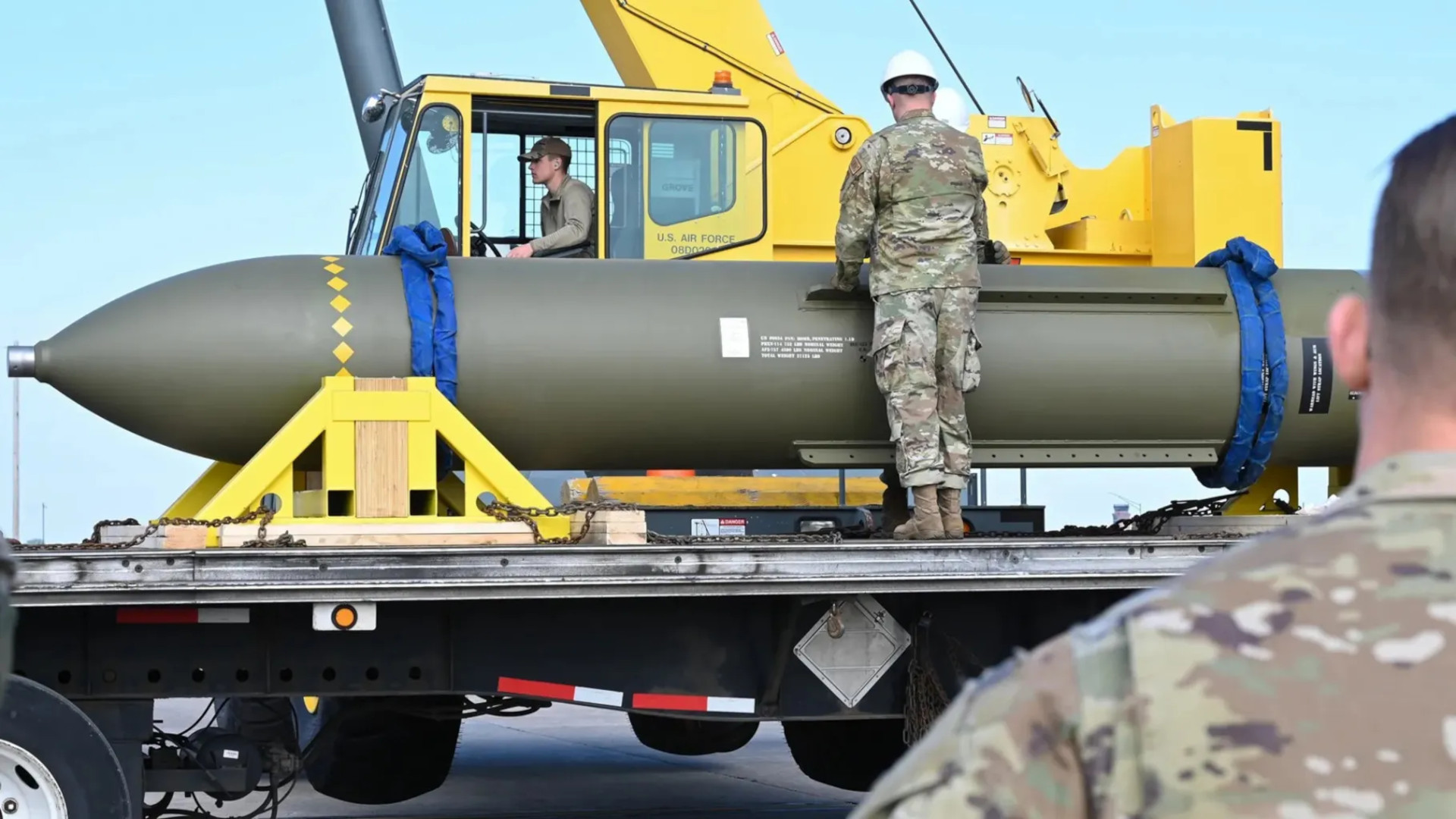
Last year, the U.S. government was able to reverse engineer a critical subcomponent for the 30,000-pound GBU-57/B Massive Ordnance Penetrator (MOP) bunker buster bomb. Leveraging technology from the Army Tactical Missile System (ATACMS) short-range ballistic missile saved years of work that would have otherwise been necessary to “eliminate obsolescence issues and meet operational demands.” The reverse-engineering effort also highlights the impacts of being locked into a single vendor, and underscores why the Pentagon is now pushing to make changes to, if not end this practice.
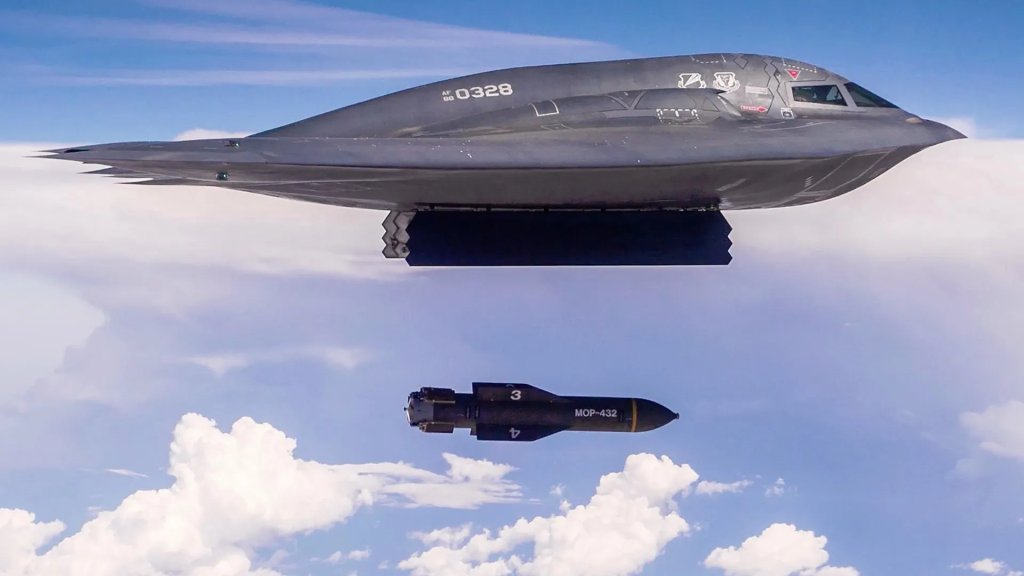
Details about the reverse-engineered component and other aspects of the MOP program were contained in a recent U.S. Air Force contracting announcement regarding efforts to replenish stocks of those bombs following Operation Midnight Hammer. During that operation, B-2 Spirit stealth bombers dropped 14 GBU-57/Bs on Iranian nuclear facilities. The Air Force Life Cycle Management Center (AFLCMC) had to produce a detailed justification for awarding a sole-source contract to Boeing for the production of new MOPs and the sustainment of the existing inventory. Boeing is the bomb’s current prime contractor. A redacted copy of that document is available online.
“The Government has a follow-on need for additional production of [redacted] MOP Tail Kits with projected delivery starting 10 January 2028 to replace expended units and reach the United States Air Force’s [redacted],” the so-called Justification & Approval (J&A) document explains. “The Government has a need for replenishment production of GBU-57 MOP weapon system components.”
It is unclear what the total size of the GBU-57/B inventory was before or after Operation Midnight Hammer. As of 2015, prime contractor Boeing had delivered at least 20 of the bombs, according to the Air Force. However, additional orders have been reported over the years. In 2024, a story from Bloomberg had also said that a facility in Oklahoma was being expanded to help triple or even quadruple the annual output of these bombs.
The MOP’s tail kit, also designated KMU-612/B, contains the bomb’s GPS-assisted inertial navigation system (INS) guidance package and other systems. It is combined with a BLU-127/B penetrating “warhead” and other components, including advanced fuzes designed to help produce the maximum destructive effect on a target after burrowing deep down into the ground, to create a complete GBU-57/B bomb, or all-up-round (AUR).

“In August of 2025, the Government successfully reverse engineered a critical subcomponent of the MOP weapon system saving 4-years of design work and enabling the utilization of existing Army ATACMS technology to eliminate obsolescence issues and meet operational demands,” according to the J&A document. “However, the time to reverse engineer all MOP components would result in unacceptable delays in meeting mission requirements.”
The MOP J&A does not elaborate on the ATACMS technology in question, or what company or companies may now be in line to produce the resulting subcomponent for the bombs. Lockheed Martin is the current prime contractor for ATACMS, a family of short-range ballistic missiles that you can read more about here. It should also be noted that the U.S. military’s reverse-engineering parts of key weapon systems is not entirely uncommon, especially if the original source of the components in question has gone out of business or otherwise no longer exists.

The J&A document says it would take an estimated 60 months, or five years, to create an entirely new MOP tail kit design and then go through the required processes to certify it for operational use. It also explains why the KMU-612/B tail kit, specifically, is so central to the need to award a new sole-source contract to Boeing.
“With regards to IP [intellectual property] rights, The [Redacted] Company is the Original Equipment Manufacturer (OEM) of the MOP weapon system and retains ownership of the intellectual property data associated with the munition’s tail kit,” it explains. “In particular, [redacted] owns the technical data package and manufacturing process methodologies of the tailkit unit entirely. [Redacted] has uniquely acquired expertise over a period of ~18 years of adapting this specialized weapon to meet evolving mission needs as MOP transitioned from proof-of-concept to full operational capability. This expertise pertains, but is not limited to, knowledge of the guidance algorithms, navigation systems, hardware components, specialized test equipment, and software critical to producing and sustaining the MOP weapon system.”
“The other components and sub-components, as noted above, have been proprietary to [redacted] from the inception of this weapon system. The USG [U.S. government] does not own or control, via license or by other IP rights, any computer software, methodologies, or technical drawings,” the document adds. “[Redacted] was queried in August 2025 as to the potential of selling IP rights to the USG for the MOP weapon system and the USG was denied.”
That being said, “over the course of the ~18 years of MOP development to the AURs acquired today the USG has, at certain junctures, been able to separate from the sole-source environment for this weapon with Boeing,” the J&A notes. “The USG was able to break away the Warhead Cases for the MOP under a weapon design agent effort, thereby giving the USG complete IP control over the Warhead TDP. Based on the IP ownership of this TDP the USG awards contracts competitively.”

The prospect now of new U.S. strikes against targets in Iran, including deeply buried nuclear sites and other facilities, highlights the continued importance of the depth and readiness of the GBU-57/B inventory. There is clear evidence that Iranian authorities have taken new steps to try to shield key elements of the country’s nuclear program from future attacks, either from the air or on the ground. MOP has been and continues to be the only conventional munition capable of prosecuting many of these targets, and was specifically designed from the outset with sites in Iran top of mind. A conflict with Iran is not the only scenario where the bombs would be relevant. North Korea and China, among others, have also invested heavily in underground and other hardened facilities.
The huge bunker busters are otherwise the definition of high-value, low-density munitions. At present, they can only be employed operationally by B-2 bombers. Each B-2 can also only carry two of the bombs at once. MOP is expected to be an important part of the arsenal of the future B-21 Raider, which is smaller than the B-2 and is expected to be able to carry a single one of these bunker busters.
The details in the MOP J&A document also underscore broader issues surrounding IP rights and ‘vendor lock’ in the U.S. defense contracting space that have increasingly been coming to the forefront in recent years. Competition inherently creates opportunities to lower costs and diversify supply chains. A broader supplier base also offers benefits when it comes to scaling up production of key subcomponents and complete systems.
The continued extent of Lockheed Martin’s control over the F-35 Joint Strike Fighter program is perhaps the most widely known example of the negative impacts of vendor lock. U.S. officials have been outspoken about the maintenance and sustenance challenges this has created, especially when it comes to the timely sourcing of spare parts, and the operational risks this creates. TWZ previously explored the particular issues surrounding the F-35 in an in-depth feature.
Foreign F-35 operators, especially in Europe, are now also facing regular questions about what could happen to the jets if the U.S. were to cut off access to various sustainment pipelines in light of new diplomatic strains with Washington. Just this past weekend, Dutch State Secretary for Defense Gijs Tuinman caused a stir when he asserted it would be possible to “jailbreak an F-35 just like an iPhone” if necessary, as you can read more about here.
In recent years, successive U.S. administrations have made securing greater IP rights and ensuring opportunities for competition key elements in negotiating new defense contractors. As an example, the Air Force previously made clear that avoiding the F-35 program’s vendor lock was a top priority for the acquisition of the F-47 sixth-generation stealth fighter. President Donald Trump’s administration is now pursuing a host of new contracting reforms, in part to further break up the locks that private companies have on programs like the Joint Strike Fighter.
“We will enable third-party integration without prime contractor bottlenecks. Success will be measured by the ability of qualified vendors to independently develop, test and integrate replaceable — excuse me, replacement modules at the component level throughout the system life cycle,” War Secretary Pete Hegseth said in a speech last November. “There’s no more complacency and no more monopolies.”
At that time, Hegseth had also acknowledged Byzantine processes and other contracting hurdles that the U.S. military had created for itself over the years.
How “the sole-source environment” surrounding the GBU-57/B continues to evolve now remains to be seen. A successor to that bomb, called the Next Generation Penetrator (NGP), is also now in development, and Boeing is involved in that effort, too. The Pentagon’s experiences with MOP, together with the new contracting reform push, are likely to inform how the replacement weapons are acquired.
In the meantime, U.S. authorities continue to try to free elements of the MOP program from vendor lock, including now by repurposing technology originally designed for the ATACMS short-range ballistic missile.
Contact the author: joe@twz.com
Loading comments…
Comments couldn’t be loaded. Please refresh the page.