
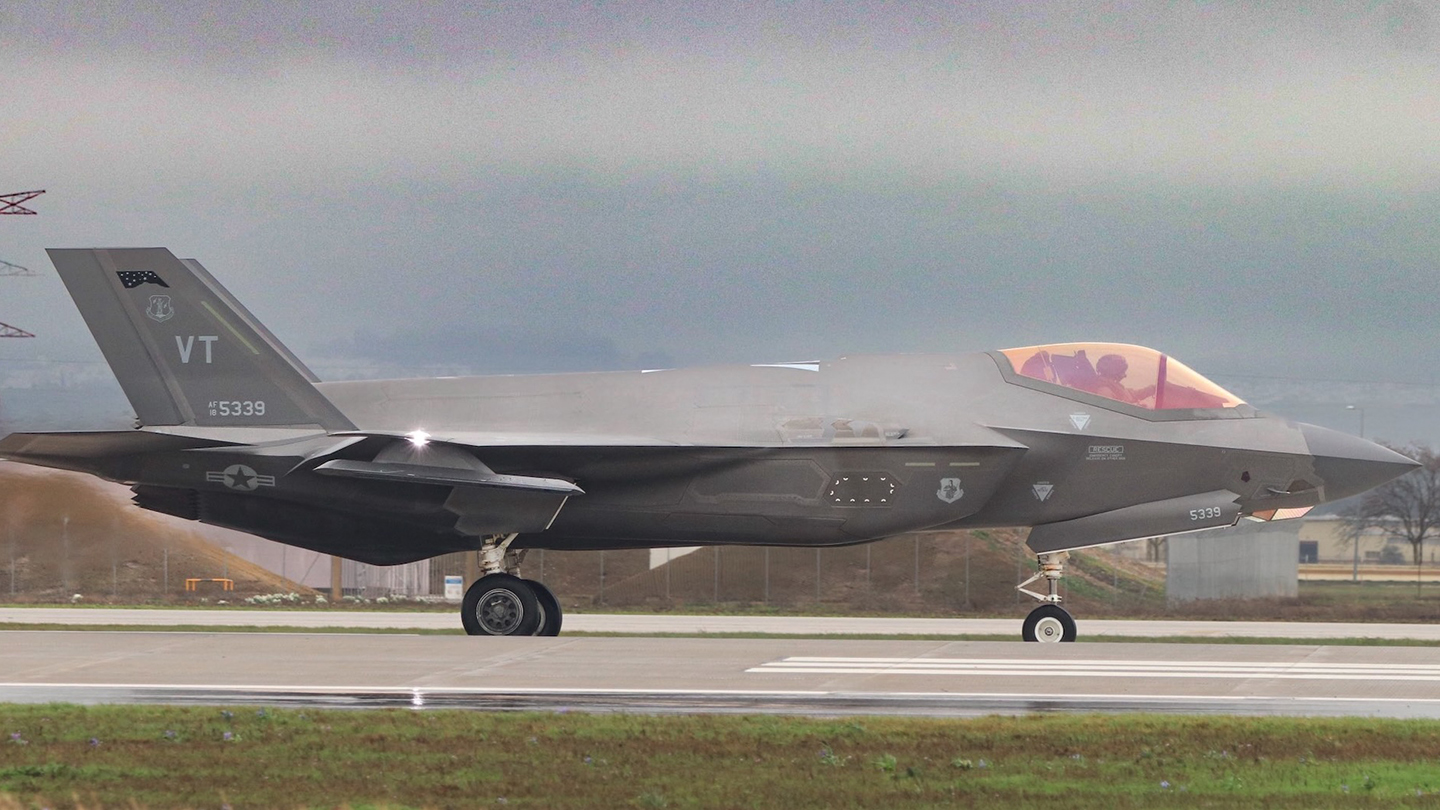
F-35A stealth fighters from the Vermont Air National Guard (VANG) are edging nearer to potential deployments to the Middle East. The movement of these aircraft comes as the U.S. is building up a large force in the U.S. Central Command region ahead of a possible conflict with Iran.
Six jets that were stuck at Rota Air Base in Spain moved to Moron Air Base in Spain today. That move was delayed following a KC-46A Pegasus aerial refueling jet’s mishap at the base. Another half dozen F-35s arrived at Lakenheath Air Base in the U.K. last night.
All these F-35As had been deployed to the Caribbean and took part in the mission to capture Venezuelan dictator Nicolas Maduro.
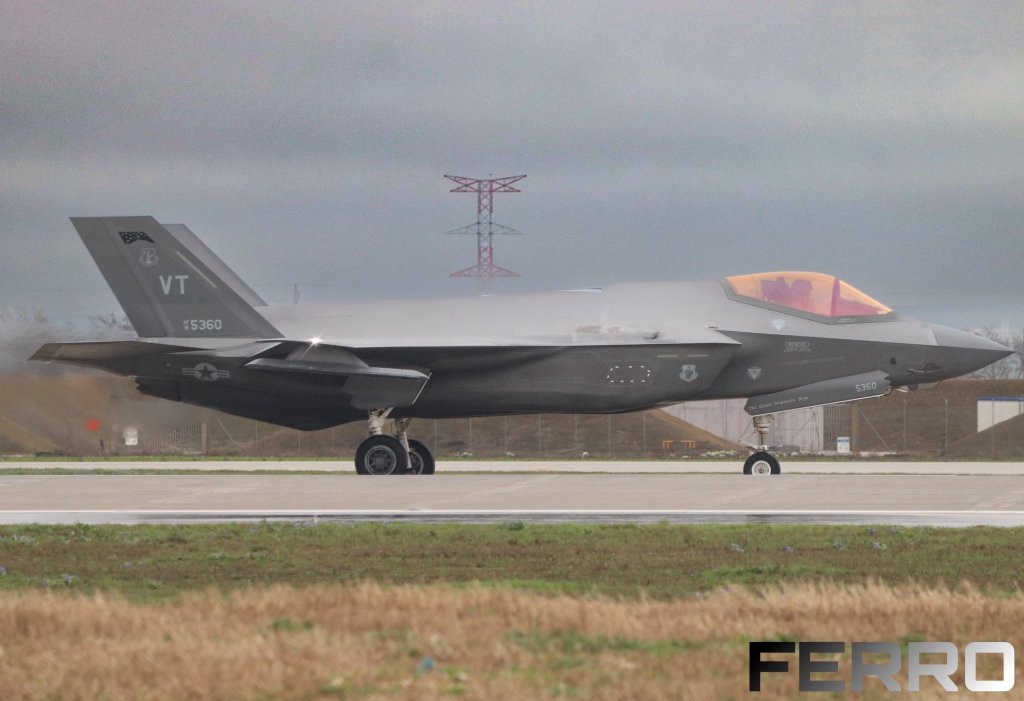
The jets that landed in Moron had been diverted to the U.S. base in Rota, Spain, after a KC-46 Pegasus aerial refueling tanker suffered a mishap at Moron Air Base in Spain. We were the first to report that they landed in Lajes, Portugal, and were possibly slated to head to Jordan, but it isn’t clear if or when those aircraft will relocate to the Middle East. They flew across the Atlantic directly from the Caribbean.
Ethan Ferro, an aviation photographer in Moron, using the FerittoAviation Instagram account, provided us with the following photos of some of those jets.
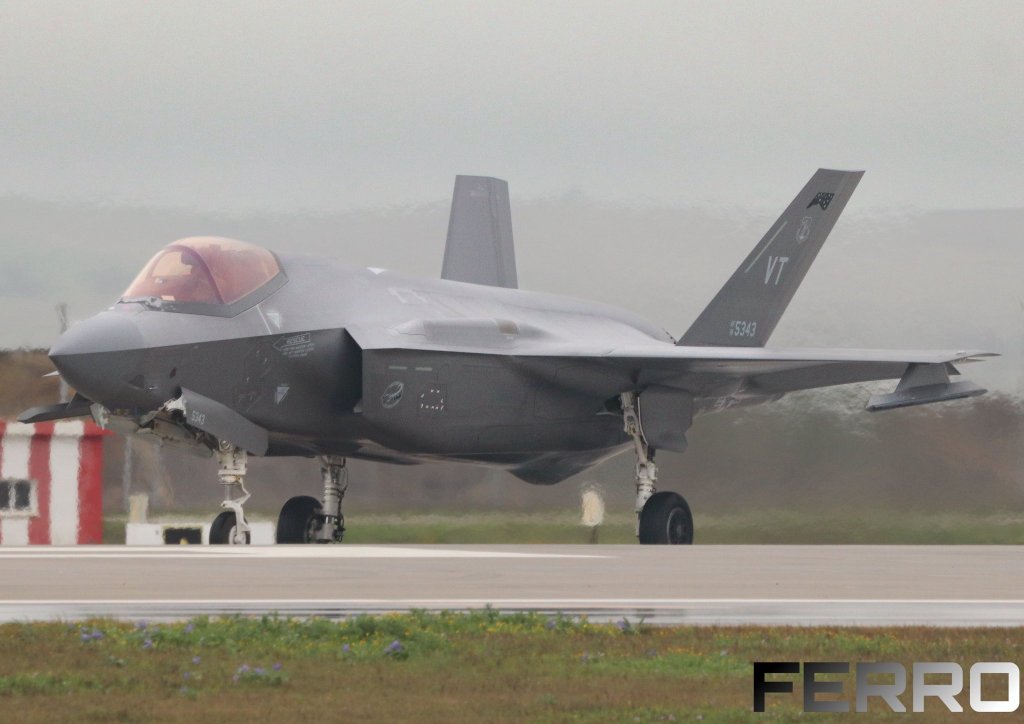
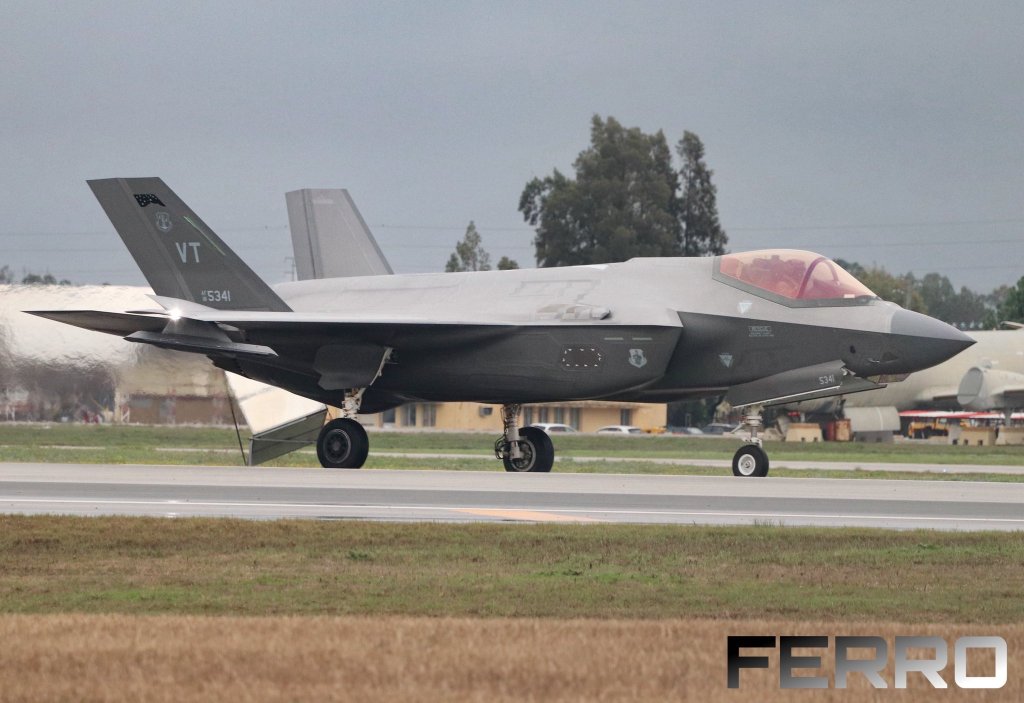
The F-35As that landed in Lakenheath initially flew back to Vermont from the Caribbean before making the transatlantic flight. The six jets landed in the U.K. at about 8 p.m. local time (3 p.m Eastern), aviation photographer David Lloyd told us. David, who uses the davidlloyd3780 Instagram account, shared photos with us of two of those jets.
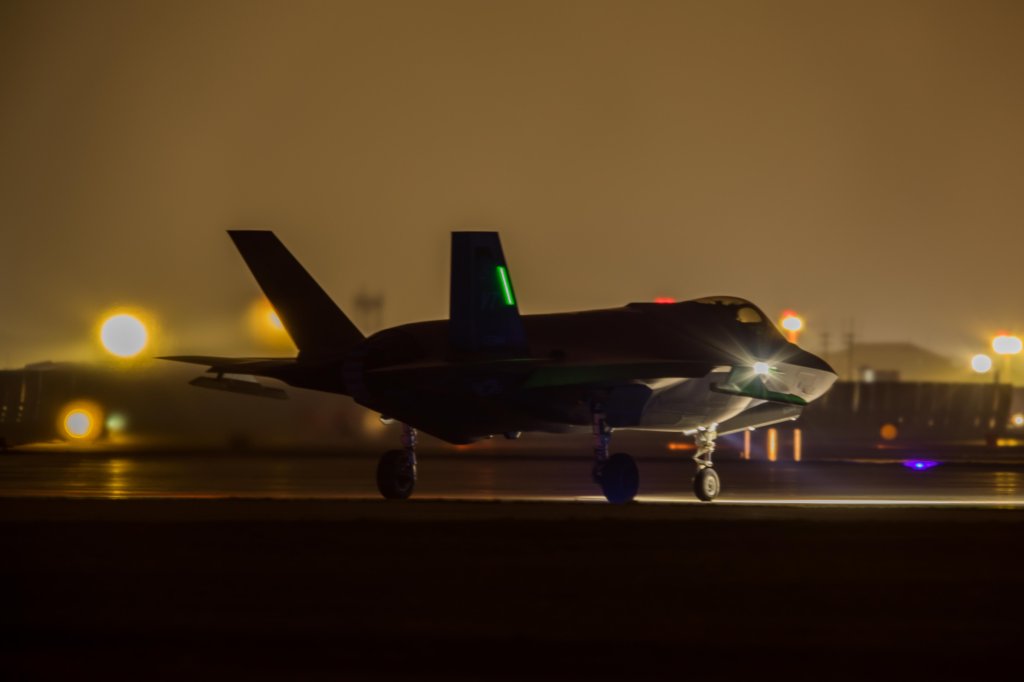
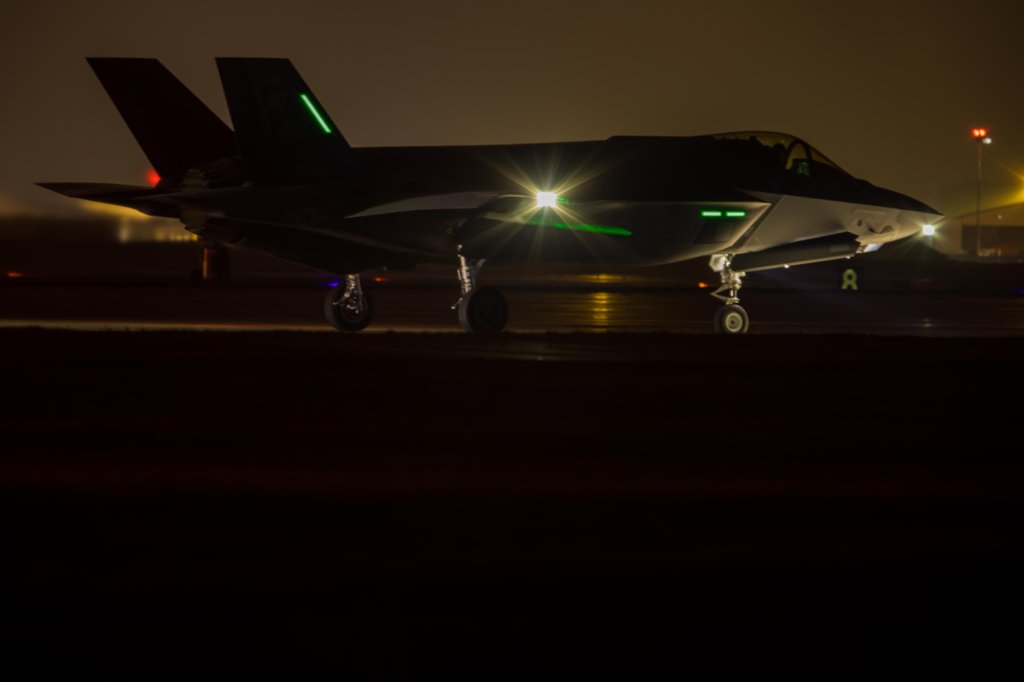
Lakenheath, which has its own F-35As, is a major transit hub for flights to the Middle East. Air & Space Forces Magazine was the first to report the VANG jet arrivals.
If all 12 F-35As deploy to the Middle East, they would join a growing force of tactical aircraft in the region on land and sea. There are detachments from at least three F-15E Strike Eagle squadrons, including one that recently arrived, at Muwaffaq Salti Air Base in Jordan. A-10 Thunderbolt II close support jets and E/A-18G Growler electronic warfare jets are now there as well. On the sea, there are F-35C stealth fighters, F/A-18E-F Super Hornets and EA-18G Growlers embarked on the aircraft carrier USS Abraham Lincoln, which recently arrived in the CENTCOM region from the South China Sea.
The tactical aircraft join a stream of well over 100 cargo jets bringing air defense systems and other assets to the Middle East.
However, there doesn’t appear to be any movement of strategic aircraft. As we have seen during prior tensions with Iran, the U.S. moved B-2 Spirit stealth bombers and B-52 Stratofortresses to the Indian Ocean island of Diego Garcia. As one example of how bombers operate over long distances, during the Operation Midnight Hammer mission that attacked Iranian nuclear sites last June, the B-2s made a round-trip from the U.S.
Still, the U.S. might boost its forces in the region with an additional aircraft carrier.
Trump told Axios in an interview on Tuesday that he’s considering sending a second aircraft carrier strike group to the Middle East to prepare for military action if negotiations with Iran fail.
“We have an armada that is heading there and another one might be going,” Trump said, adding that he’s “thinking” about sending another aircraft carrier strike group.
A U.S. official confirmed to Axios that there had been discussions about sending a second aircraft carrier strike group to the region.
If he does decide to move another carrier group to the Middle East, Trump has limited options. The USS Gerald R. Ford Carrier Strike Group remains in the Caribbean following the Maduro operation, a U.S. Navy spokesman told The War Zone Tuesday. Others are in various states of readiness.
As we have frequently pointed out, even with these recent additions, there is not enough tactical airpower in the region for a major sustained operation. A carrier strike group, as well as a few dozen F-15Es, which would mainly be used to protect the U.S. and Israel against incoming Iranian missiles and drones, A-10s, and the addition of a dozen F-35s doesn’t fully alter this calculus. Another carrier group would help in this manner, but we should still expect to see more U.S. Air Force tactical aircraft movements for any kind of sustained kinetic operation against Iran. It’s also worth noting that Israel remains a wildcard here and their Air Force could work alongside U.S. assets to achieve common objectives. Still, the U.S. is lacking fighters in the region to a peculiar degree.
President Donald Trump first threatened military action against Tehran as its crackdown against anti-regime protestors resulted in thousands of killings, but has since shifted his emphasis to demanding Iran give up its nuclear ambitions.
In the wake of inconclusive negotiations last week between the U.S. and Iran in Oman, Trump recently indicated that he would be willing to accept a deal that only includes “no nuclear weapons.”
Israel, however, has tried to push the U.S. for a far more comprehensive agreement “to ensure that any deal with Iran includes Tehran giving up its stockpile of enriched uranium, ceasing enrichment altogether, placing limits on its ballistic missile program and ending its support for regional proxies,” CNN noted. “The list matched a set of earlier US demands for a broader set of discussions about Iran’s military capabilities and regional activities.”
With Trump’s ultimate decision about Iran still unknown, Israeli Prime Minister Benjamin Netanyahu is heading to Washington, D.C., for a meeting with Trump tomorrow.
Before boarding Wing of Zion – Israel’s version of Air Force One – for his flight, Netanyahu told reporters that he will “present to the president our approach around our principles on the negotiations.”
“On this trip, we will discuss a series of issues: Gaza, the region, but first and foremost, the negotiations with Iran,” Netanyahu said. “I will present the president with our views regarding the essential principles of the negotiations – principles that, in our eyes, are vital not only for Israel but for anyone in the world who desires peace and security in the Middle East.”
Iranian officials have proclaimed they will never give up their nuclear program or ballistic missiles, but that stance may have softened slightly.
“However, on Monday, Iran’s atomic energy chief Mohammad Eslami said Tehran is open to diluting its highly enriched uranium if the US ends sanctions, signalling flexibility on a key American demand,” Al Jazeera reported. “Eslami said the prospects of Iran diluting its 60 percent enriched uranium, a threshold close to weapons-grade, would hinge on ‘whether all sanctions would be lifted in return.’”
Meanwhile, both the U.S. and Iran continue to threaten each other.
“President Trump has been clear to Iran, he wants a negotiated settlement,” War Secretary Pete Hegseth said on Monday. “I think it would be a wise choice for them to take him up on that deal. The world saw America’s capabilities, peace through strength and deterrence in action.”

Mohammad-Javad Larijani, an Islamic Republic insider and former senior adviser to Iran’s Supreme Leader Ayatollah Ali Khamenei, “said any US military strike would trigger a harsh response that could kill many American troops,” according to Iran Insight.
Larijani said Tehran would abandon proportional retaliation and instead move to strike what he described as the “roots” of American interests across the region.
“In response to a potential act of aggression, we are not looking to respond tit for tat,” Larijani said. “Our posture would move from defensive to offensive, striking points where we believe we must hit the roots of that force’s presence in the region.”
His statements continue Iran’s threats against U.S. bases in the region and Israel.
Amid the dueling rhetoric, both the U.S. and Iran are taking precautions.
Al Udeid Air Base in Qatar, the largest U.S. facility in the region, is reportedly stepping up its security posture.
For its part, Iran appears to have covered up entrances to its nuclear facilities at Isfahan with soil for protection. It was one of the three sites attacked during Midnight Hammer. As we previously reported, even before that attack, Iran appears to have covered another facility with dirt to shield it against a potential ground raid.
As more U.S. assets flow into the region, we will continue to monitor this situation and provide updates when warranted.
Contact the author: howard@thewarzone.com
Loading comments…
Comments couldn’t be loaded. Please refresh the page.