
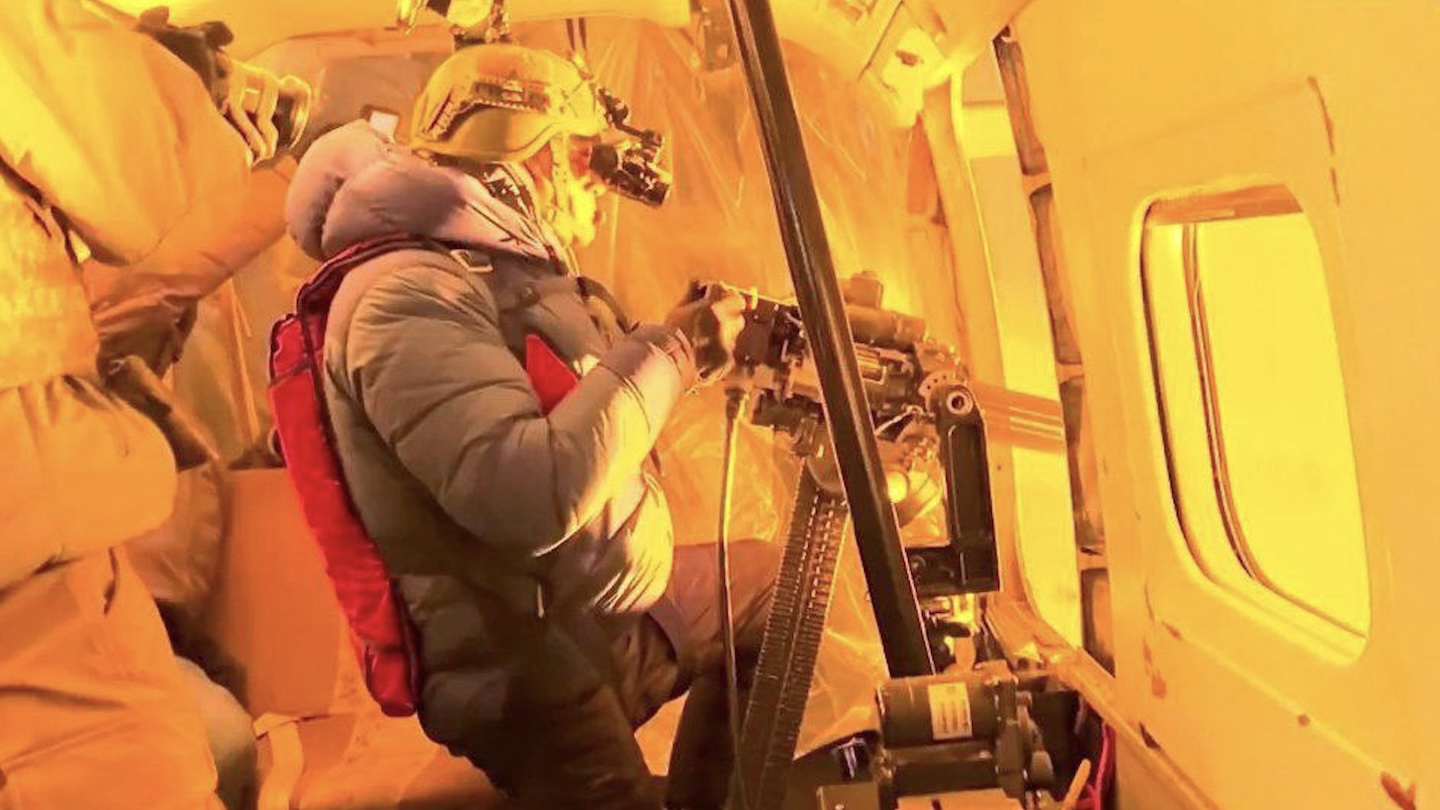
New footage has emerged showing how Ukraine is using at least one adapted Antonov An-28 Cash twin-turboprop utility aircraft as part of its anti-drone inventory. While images of the aircraft, replete with multiple drone kill marks, had previously been published, we now get to see the aircraft’s armament — a six-barrel Gatling-type M134 Minigun — in action, too.
The video in question was published by the French television channel TF1 and can also be found at this link. The French journalists got to see the An-28 during a nighttime combat sortie, including opening fire with its 7.62mm M134, which is pintle-mounted in the cabin door. The An-28’s high-wing configuration provides a notably wide field of fire.
The Minigun is well-proven in aerial applications. It was a key feature in the genesis of the AC-47 and later side-firing gunships converted from cargo planes, as well, albeit intended to engage targets on the ground. Typical firing rates for Miniguns are generally between 3,000 and 6,000 rounds per minute, or 50 and 100 shots every second.


The date and location of the An-28 footage were not revealed, but one of the aircraft crew members describes hunting Russian drones “in the southeast” of Ukraine.
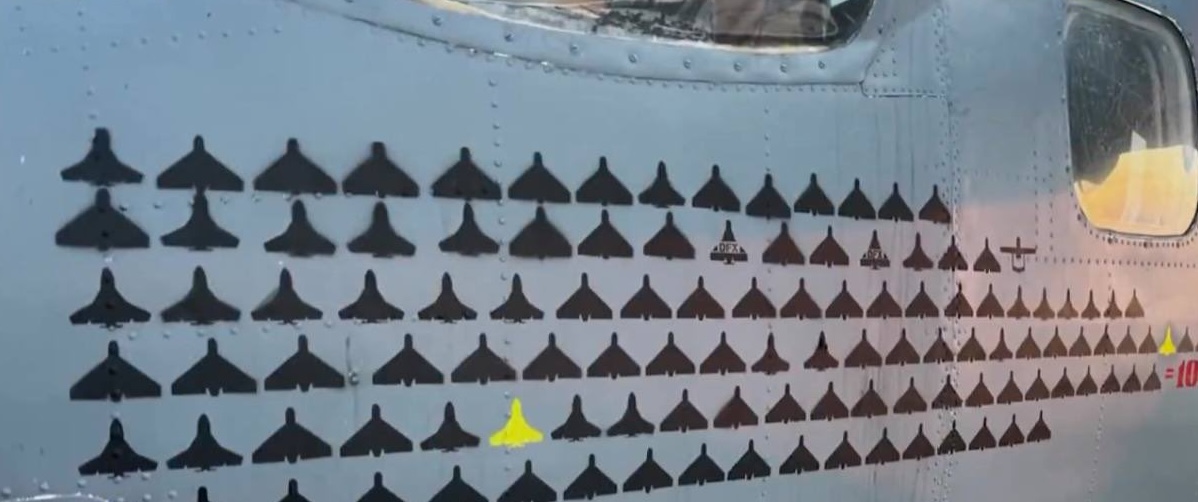
Below the An-28’s cockpit are 115 painted silhouettes of Shahed/Geran-type long-range one-way attack drones, two of which are painted in yellow. The significance of these is unclear, but they may refer to 10 kills of the same drone types. This would tally with the French report’s statement that, overall, the An-28’s four-person crew has destroyed almost 150 Russian drones. A single kill marking also indicates that another twin-boom-type drone was brought down.
On this occasion, the crew had 10 minutes to scramble into the air, with an overall flight time of five hours.
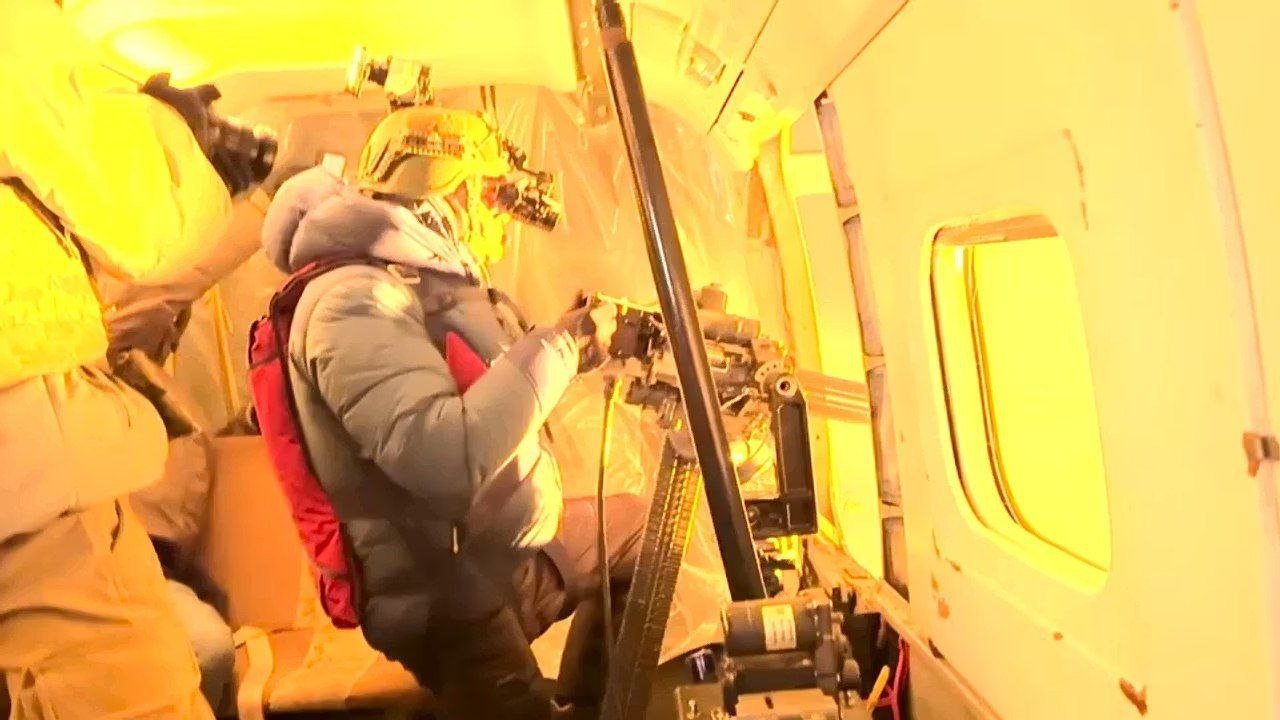
In the course of the sortie in the video, the crew shot down five Shahed/Geran drones. One of these was intercepted while flying over a Ukrainian village. They waited until it was over an unpopulated area before engaging that, too.
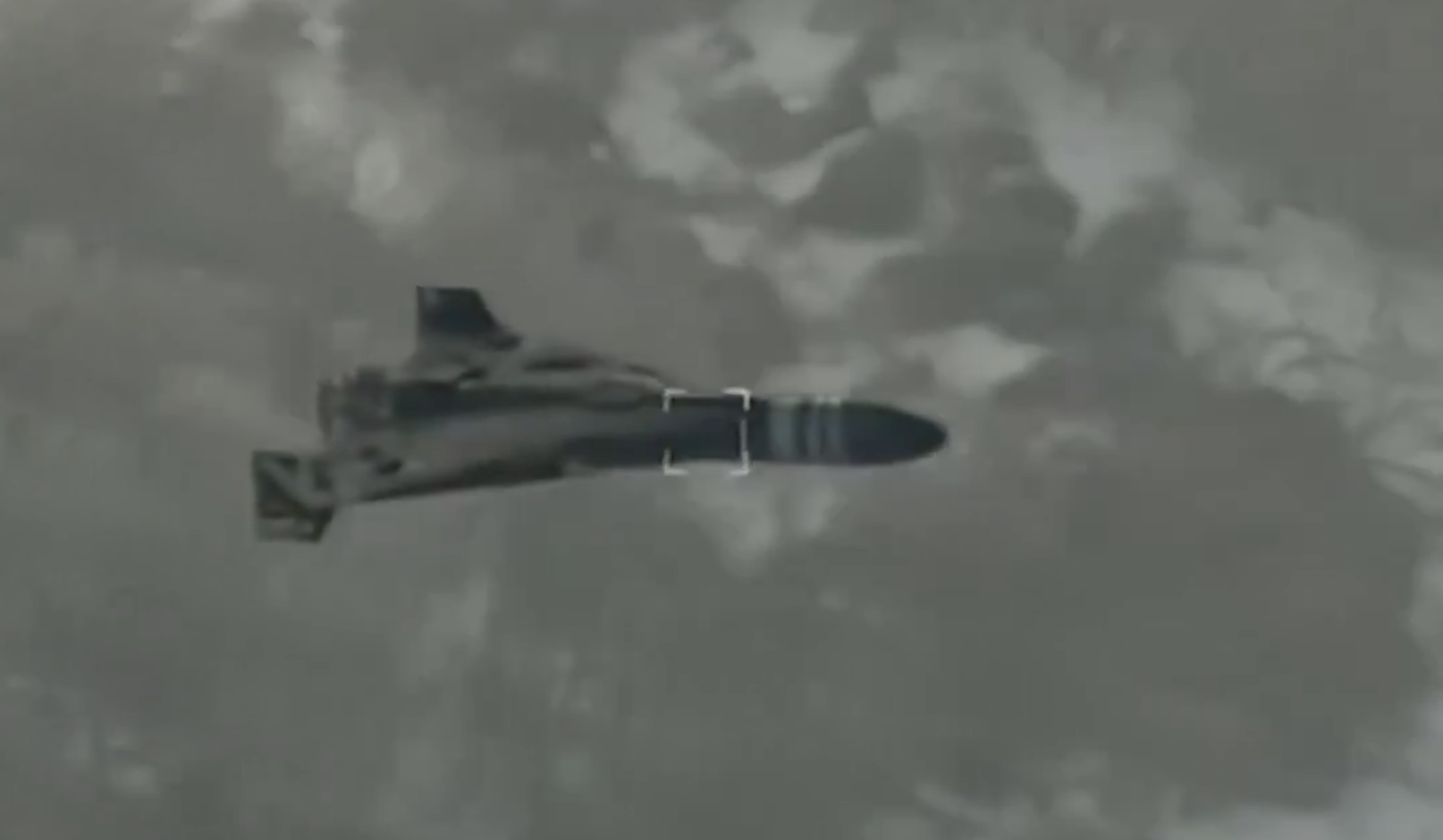
The report also explains the basic mode of operation.
The An-28 crew initially relies on air traffic controllers to guide them to the area where Russian drones are known to be flying. One of the crew is a ‘camera operator,’ who is seen sitting in front of a screen, which appears to show the feed from an infrared camera, presumably mounted externally on a turret. The gunner, and at least one other member of the crew, is provided with night-vision goggles (NVGs).
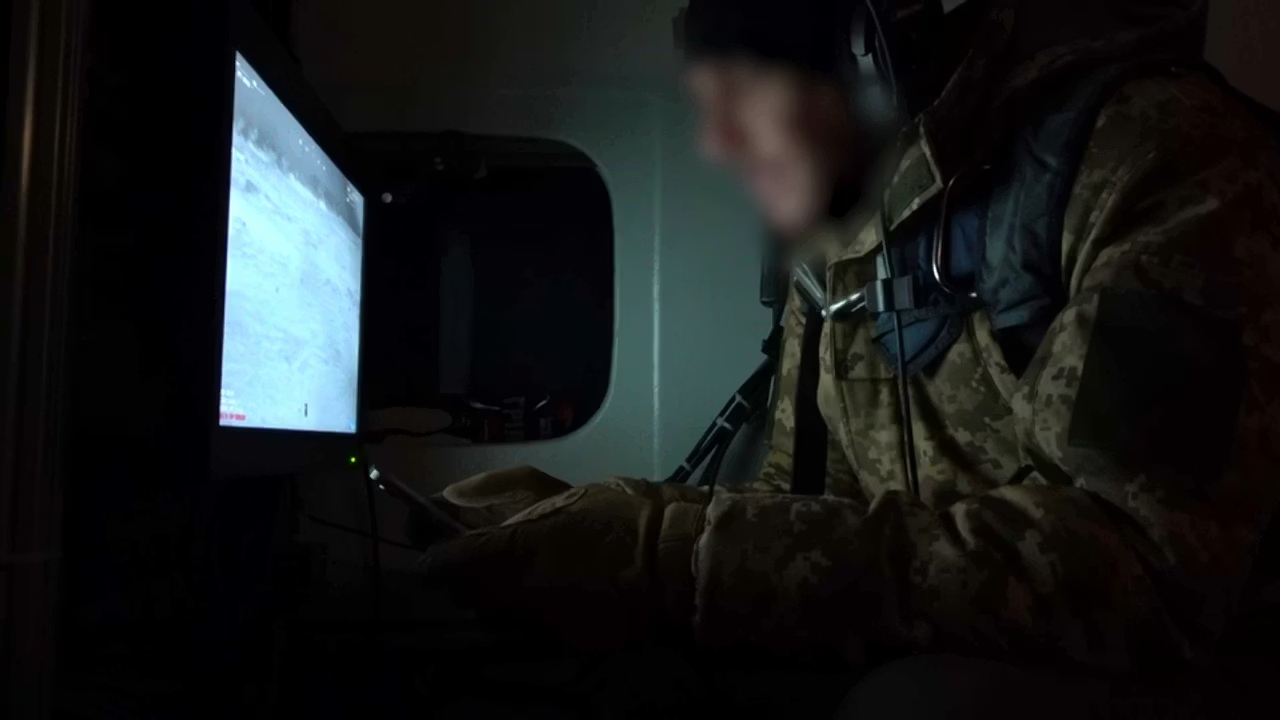
Various hazards face the An-28 crew. First, the presence of Russian cruise missiles means they have to leave the area, due to the high risk of collision.
The Russian drones are also presenting more threats to interceptors.
In the course of this year, Russia has begun to arm the Shahed/Geran with both man-portable air defense systems (MANPADS) and R-60 air-to-air missiles. These developments come as Russia makes additional alterations to the drone, including self-protection systems.
Reportedly, the An-28 crew is made up of civilian volunteers, paralleling the effort made by pilots and gunners flying Yakovlev Yak-52 prop trainers on behalf of the Ukrainian Army Aviation. You can read more about their activities here.
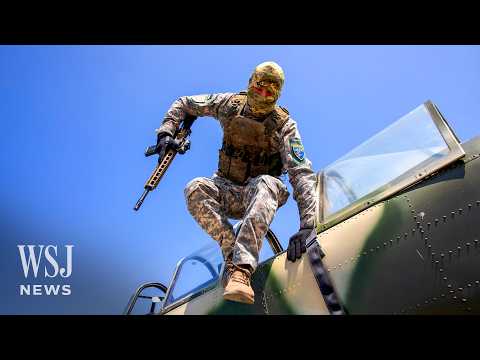
Developed in the former Ukrainian Soviet Socialist Republic by the Antonov Design Bureau, the An-28 is a twin-engined light turboprop transport, first flown in 1969 and primarily intended for Aeroflot service as a short-range airliner. It has a notable short takeoff and landing (STOL) capability, making it ideal for operating in and out of shorter and more austere airstrips, of the kind that Ukraine makes extensive use of in the conflict with Russia.
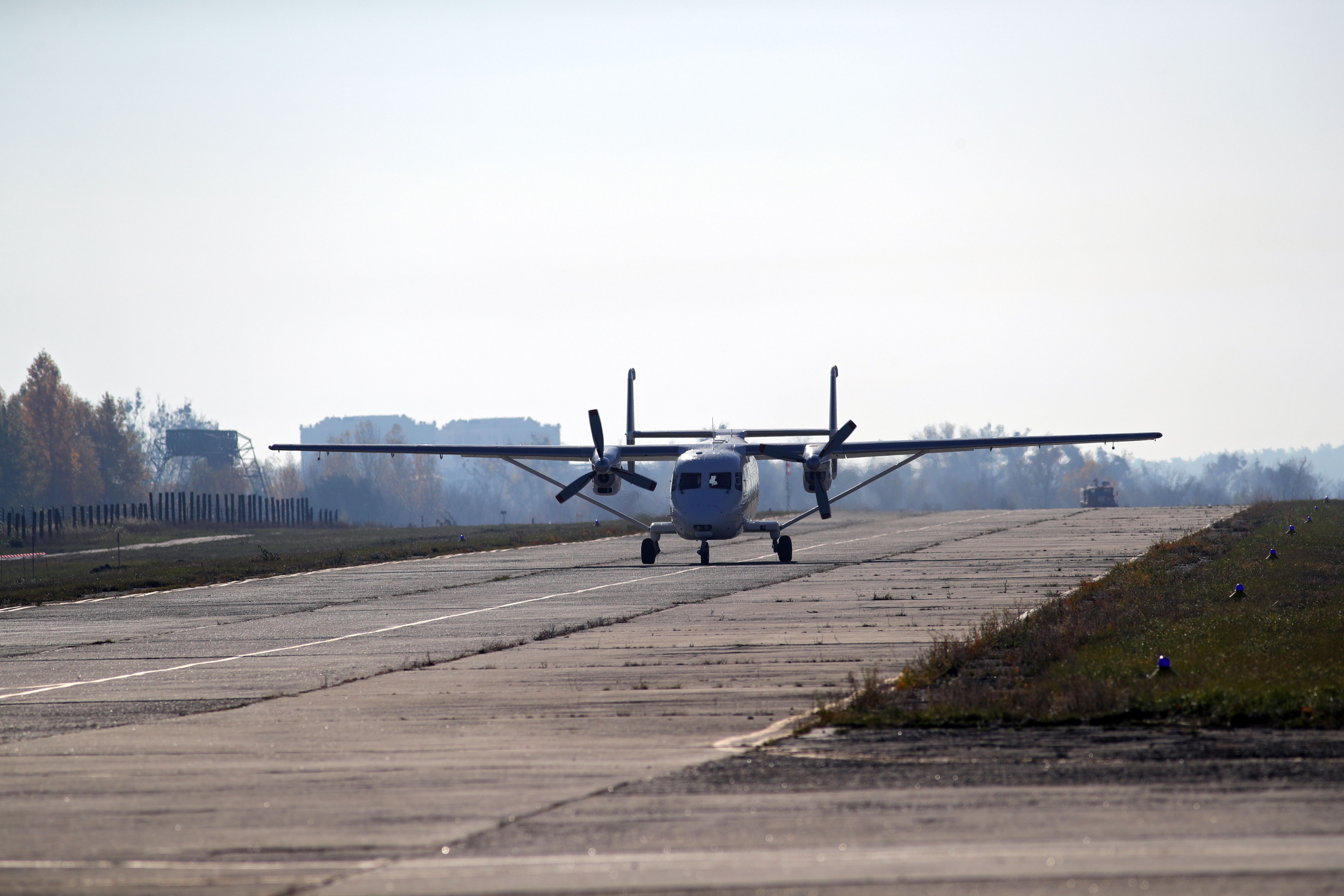
A little under 200 were built, with most of the production being undertaken in Poland by PZL-Mielec. The Polish company developed an improved variant, the M28 Skytruck.
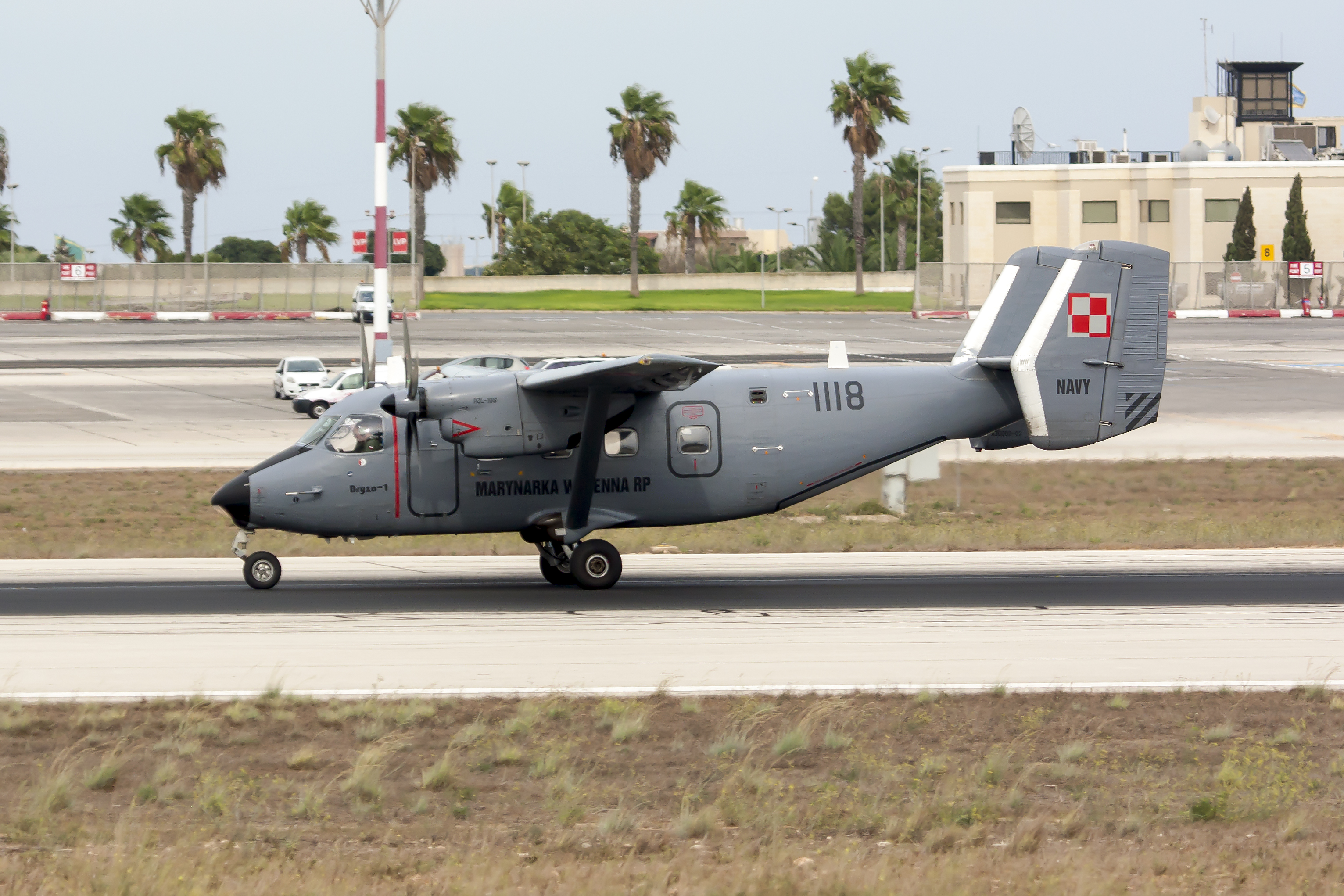
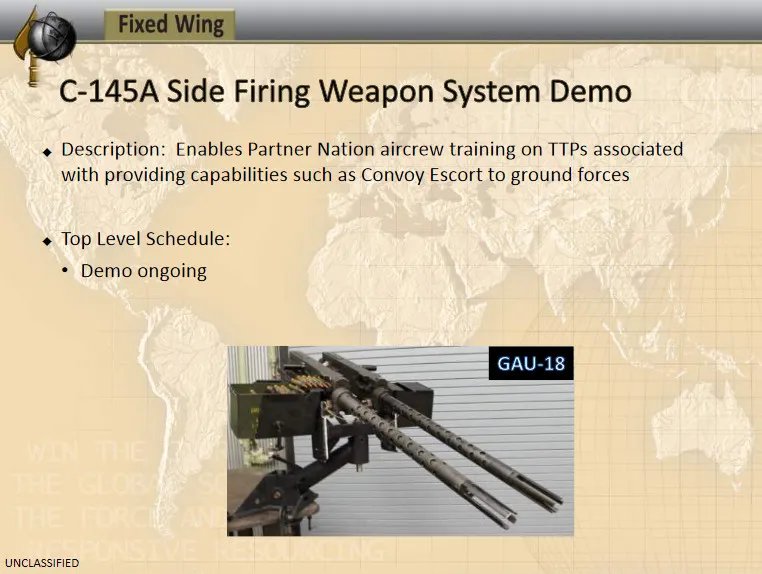
Versions of the M28 have seen more extensive military service than the An-28, notably with the United States as the C-145A Combat Coyote, which was formerly used by Air Force Special Operations Command (AFSOC).
It’s interesting to note that, back in 2013, AFSOC actually explored the possibility of converting C-145As into small side-firing gunships, a sort of miniature take on the AC-130 concept, with an eye toward potentially being able to transfer that capability to American allies and partners. This, however, was armed with twin 50-caliber GAU-18 machine guns.
It remains unclear, for now, how many An-28s have been adapted as ‘Shahed-hunters.’ It is also hard to find accurate data on how many airworthy An-28s are available to Ukraine. On the other hand, there is the possibility that more aircraft could be transferred from Polish or U.S. military stocks, or even from other civilian or armed forces operators.
Certainly, there seems to be a place for lighter aircraft, like the Minigun-armed An-28, in Ukraine’s drone-killing force.
As we have reported in the past, light aircraft and helicopters are said to be responsible for downing between 10 and 12 percent of all drones claimed by Ukrainian air defenses of all kinds. Fixed-wing aircraft are also generally considered more survivable than helicopters, allowing them to operate closer to the front lines.
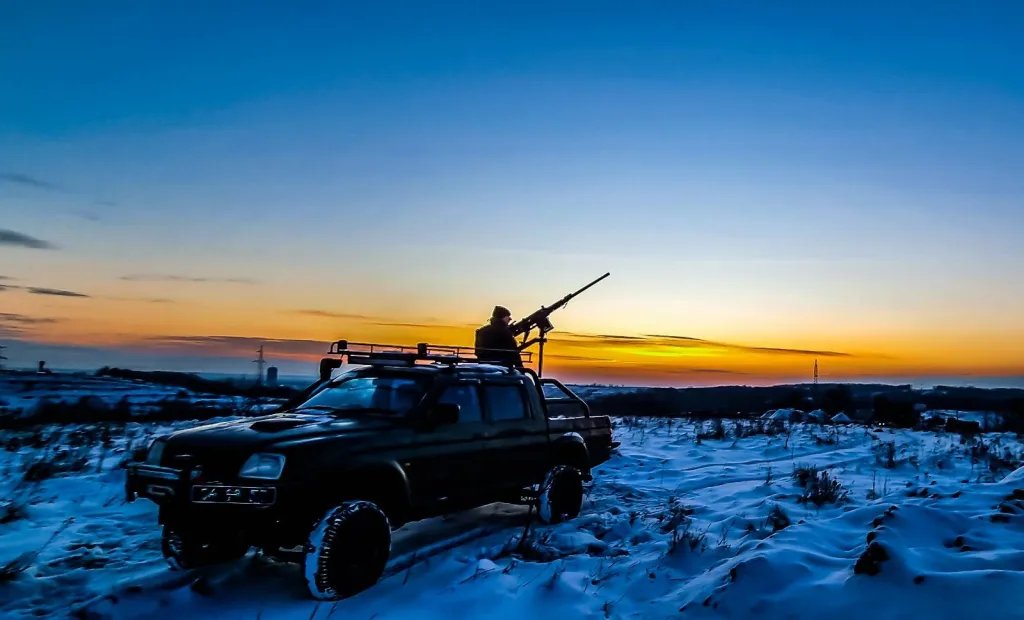
With Russia using huge numbers of drones, alongside ballistic and cruise missiles, and decoys, against critical infrastructure targets and cities in Ukraine, the country has assembled a multi-layered air defense network. This ranges from advanced Western-supplied Patriot surface-to-air missiles and F-16 fighters at one end of the scale, via Soviet-era systems and hastily developed “FrankenSAMs,” all the way down to light aircraft, ultralight aircraft, and mobile fire teams equipped with machine guns and searchlights. In addition, there are a growing number of non-kinetic options, such as electronic warfare, too. A network of acoustic sensors all over the country and an app that ties this information to spotter reports are also key elements of Ukraine’s unique air defense network.
The challenge is only set to grow. Russia, as we have previously noted, now manufactures Shahed/Geran drones at the rate of 2,000 per month and plans to nearly triple that in the not-too-distant future.
Based on available accounts, the Minigun-armed An-28 appears to be a very efficient part of Ukraine’s anti-drone defenses, and with the level of Russian drone activity over the country growing, we are likely to see further such innovations in the future.
Contact the author: thomas@thewarzone.com
Loading comments…
Comments couldn’t be loaded. Please refresh the page.